
今世缘

Search documents
今世缘半年报:营收净利双降背后的行业寒冬与战略突围
Sou Hu Cai Jing· 2025-09-18 10:19
Core Insights - The core market for high-end products is experiencing structural shocks, leading to a significant decline in revenue for the company [1][10] - The company is facing challenges in both domestic and provincial markets, with a notable drop in sales and market share due to increased competition and changing consumer preferences [3][11] Revenue Performance - The revenue from core A+ products decreased by 7.37% year-on-year, totaling 4.311 billion yuan [1] - The company's provincial revenue fell to 6.254 billion yuan, marking a 6.07% decline, the first negative growth in a decade [3] Inventory and Supply Chain Issues - The company's total inventory reached 5.723 billion yuan, equivalent to 50% of annual revenue, with a significant portion being finished products [6] - Inventory turnover days have increased to 980 days, indicating a severe mismatch between market demand and production pace [6][16] Market Strategy and Competition - The company is implementing a "10+N" strategy focusing on key cities, but is reducing its budget for provincial expansion by 12% [11] - Increased competition from national brands and regional players is squeezing the company's market share, particularly in the lower price segments [11][12] Product and Pricing Strategy - The company is experiencing declines across all product categories, with A, B, and C/D class products seeing year-on-year drops of 10.04%, 6.34%, and 39.38% respectively [10] - There is a need to shift focus towards high-end products in the 400-500 yuan price range to capture upgrading consumer demand [12] Operational Adjustments - The company is advised to pause non-core capacity expansions and focus on smart brewing and quality improvements [16] - Digital transformation initiatives are necessary to enhance inventory visibility and consumer profiling, aiming to reduce channel costs and improve sales efficiency [14]


民生证券:25H1白酒行业报表释压 加速筑底
智通财经网· 2025-09-18 06:25
Core Viewpoint - The report from Minsheng Securities indicates that the Chinese liquor industry is experiencing a significant downturn, with major companies reporting negative revenue and profit growth for the first half of 2025, marking the first negative growth in revenue during this cycle [1][4]. Group 1: Financial Performance - In the first half of 2025, 17 major liquor companies reported revenues and net profits of 236.83 billion and 94.46 billion yuan respectively, showing a year-on-year decline of 0.4% and 0.9% [1][4]. - For Q2 2025, these companies achieved revenues and net profits of 86.72 billion and 31.34 billion yuan, reflecting a year-on-year decline of 4.7% and 7.3% [1][4]. - Excluding Moutai, the revenue and net profit for the first half of 2025 were 145.74 billion and 49.06 billion yuan, with declines of 5.5% and 8.6% year-on-year [4][5]. Group 2: Market Dynamics - The industry is transitioning from "passive clearing" to "active adjustment," indicating a phase of accelerated bottoming out due to ongoing pressures from inventory and cash flow [1][4]. - The report highlights a shift in market focus from short-term recovery signs to long-term trends, emphasizing the importance of brand strength and market share in determining pricing [2][3]. Group 3: Consumer Behavior and Demand - The demand for liquor is expected to recover during the Mid-Autumn Festival and National Day, driven by cultural events such as banquets and gatherings, which are seen as resilient demand scenarios [2][6]. - The report notes that the high-end liquor demand has been negatively impacted by government restrictions, leading to a trend of increasing volume but decreasing prices [5][6]. Group 4: Investment Recommendations - The report recommends strong brands such as Kweichow Moutai, Wuliangye, and Luzhou Laojiao, as well as regional leaders with growth potential like Gujing Gongjiu and Jinhui Liquor [7].
万联晨会-20250918
Wanlian Securities· 2025-09-18 01:14
Core Viewpoints - The A-share market saw collective gains on Wednesday, with the Shanghai Composite Index rising by 0.37%, the Shenzhen Component Index by 1.16%, and the ChiNext Index by 1.95%. The total trading volume in the Shanghai and Shenzhen markets reached 23,764.76 billion yuan. The leading sectors included power equipment, automobiles, and home appliances, while agriculture, retail, and social services lagged behind [2][8] - The U.S. Federal Reserve announced a 25 basis point cut in the federal funds rate, bringing it to a target range of 4.00% to 4.25%. This marks the first rate cut of 2025 and follows three cuts in 2024. The Fed noted a slowdown in economic activity and rising inflation, with high uncertainty in the economic outlook [3][9] - The Hong Kong government introduced measures to enhance the stock market, including support for tech companies to raise funds in Hong Kong and optimizing listing regulations. These initiatives aim to boost the market's vitality and competitiveness [4][10] Industry Insights Banking Sector - In August, the social financing stock growth rate was 8.8%, a decrease of 0.2% from July. New social financing totaled 2.57 trillion yuan, down by 0.47 trillion yuan year-on-year. The decline was attributed to a slowdown in government bond issuance and credit growth [11][12] - The M1 growth rate was 6%, with M2 growing by 8.8%. The anticipated smooth deployment of fiscal funds may continue to support economic growth, although the increase in monetary growth is expected to narrow [12][14] - The banking sector is expected to see gradual recovery in revenue and profit growth, supported by attractive dividend yields and regulatory encouragement for insurance funds to increase market participation [14] Media Sector - The media industry reported a revenue increase of 3.86% in H1 2025, totaling 254.86 billion yuan, with net profit rising by 28.85% to 21.78 billion yuan. The gross margin remained stable at 32.90% [15][16] - The gaming sector showed significant growth, with revenue reaching 54.45 billion yuan in H1 2025, a 22.17% increase, and net profit soaring by 74.95% to 8.05 billion yuan [15][16] - The film and television sector experienced a revenue increase of 15.24% in H1 2025, driven by successful releases, although Q2 saw a decline in revenue and an increase in losses [16][19] Food and Beverage Sector - The food and beverage industry saw a revenue increase of 2.41% in H1 2025, totaling 5,806.35 billion yuan, but net profit decreased by 0.56% to 1,275.08 billion yuan. The sector's growth rates ranked 14th and 20th among 31 sub-industries [22][23] - The beverage segment, particularly soft drinks and condiments, showed strong revenue growth, while the beer segment maintained positive growth in both revenue and profit [23][24] - The liquor industry faced challenges, with a slight decline in revenue and profit, particularly in the mid-range segment, while high-end brands remained resilient [25][26] Electronics Sector - The SW electronics industry reported a revenue increase of 19.10% in H1 2025, totaling 1,846.095 billion yuan, with net profit rising by 29.29% to 84.04 billion yuan [30][31] - The semiconductor sector performed well, driven by AI demand and domestic substitution, while consumer electronics benefited from government subsidies [31][32] - The optical and electronic sectors saw significant profit growth, particularly in the panel segment, which experienced a 193.31% increase in net profit [32]
白酒板块2025年中报业绩综述:报表释压,加速筑底
Minsheng Securities· 2025-09-17 10:35
Investment Rating - The report suggests a recommendation for strong brands such as Guizhou Moutai, Wuliangye, and Luzhou Laojiao, as well as Shanxi Fenjiu, which has a clear growth path in a counter-cyclical environment [5]. Core Insights - The industry is currently in a phase of accelerated bottoming, transitioning from "passive clearing" to "active adjustment" due to ongoing pressures from excess supply and demand scenarios [3][5]. - The first half of 2025 saw a negative growth in revenue and net profit for major liquor companies, marking the first negative growth in this cycle [15]. - The report highlights a structural opportunity during the volume adjustment period, with market pricing increasingly favoring dividend yield and market share [3][5]. Summary by Sections Industry Overview - The white liquor industry faced challenges in the first half of 2025, including slow macroeconomic recovery and strict alcohol prohibition policies, leading to a decline in consumption scenarios and continued pressure on demand [5]. - The overall revenue and net profit for 17 major liquor companies were 2368.3 billion and 944.6 billion respectively, with a year-on-year decline of 0.4% and 0.9% [15]. Performance Analysis - In Q2 2025, the revenue and net profit for the industry were 867.2 billion and 313.4 billion respectively, reflecting a year-on-year decline of 4.7% and 7.3%, marking the first negative growth in revenue during this cycle [15]. - High-end liquor maintained positive growth, while the mid-range and regional brands experienced declines [20][22]. Market Dynamics - The report indicates that the market is shifting focus from short-term recovery scenarios to verifying the bottom of demand trends through year-on-year comparisons [3]. - The report anticipates a recovery in the third quarter, driven by seasonal consumption events such as Mid-Autumn Festival and National Day, which may accelerate the bottoming process of the fundamentals [5]. Investment Recommendations - The report recommends focusing on brands with strong market positions and growth potential, including Guizhou Moutai, Wuliangye, Luzhou Laojiao, and regional leaders like Guyi Gongjiu and Jinhui Jiu [5].




今世缘在南京成立新公司,含供应链管理服务业务
Qi Cha Cha· 2025-09-17 06:51
Group 1 - The core point of the article is the establishment of a new company by Nanjing Jinshiyuan Liquor Co., Ltd., which includes supply chain management services among its business operations [1] - The new company is indirectly wholly owned by Jinshiyuan (603369) [1] - The business scope of the new company includes liquor operation, daily necessities sales, gift and flower sales, and marketing planning [1]
今世缘在南京成立新公司含供应链管理服务业务
Xin Lang Cai Jing· 2025-09-17 04:37
Group 1 - Nanjing Jinshiyuan Liquor Co., Ltd. has been established recently with Yang Dong as the legal representative [1] - The company's business scope includes liquor operation, daily necessities sales, daily goods wholesale, gift and flower sales, and supply chain management [1]
今世缘在南京成立新公司 含供应链管理服务业务
Zheng Quan Shi Bao Wang· 2025-09-17 03:56
Core Viewpoint - Nanjing Jinshiyuan Liquor Co., Ltd. has been established, indicating potential expansion in the liquor industry by the company [1] Company Summary - The legal representative of Nanjing Jinshiyuan Liquor Co., Ltd. is Yang Dong [1] - The company's business scope includes liquor sales, daily necessities sales, daily necessities wholesale, gift and flower sales, supply chain management services, and marketing planning [1] - Jinshiyuan indirectly holds 100% ownership of the newly established company [1]
中国白酒行业 - 第三季度前瞻 - 理性发货下的低谷,需求仍与政策、宏观相关;股价反映市场情绪触底-China Spirits_ 3Q Preview_ trough on rational shipment w_demand still tied to policy_macro; ;stocks reflect sentiment bottoming,
2025-09-17 01:51
Summary of Conference Call on China Spirits Industry Industry Overview - The spirits industry in China is currently facing challenges due to the ongoing impact of the anti-extravagance policy, which has affected consumer demand and retail momentum. [1][2][11] - The third quarter of 2025 (3Q25) is expected to be the trough for the industry, with a projected sales decline of 5% to 27% across various brands, excluding Moutai and Jiugui. [1][2][21] Key Points and Arguments Demand and Sales Trends - Retail momentum is anticipated to remain weak, particularly during the peak season due to fewer holiday days compared to previous years. [1] - A significant decline in retail volume is expected, with estimates of a 30% drop in August and a 15-20% decline during the peak season. [11] - The wholesale pricing remains under pressure, with notable declines in prices for key brands like Feitian Moutai and Common Wuliangye. [19][27] Shipment and Inventory Management - Spirits companies are prioritizing channel health by implementing deeper destocking and tighter shipment controls to ease distributor financing burdens. [1][2] - The trend of controlling shipments is crucial for maintaining channel inventory and supporting wholesale prices, especially for high-end spirits. [18][27] Financial Forecasts and Revisions - Sales and net profit forecasts for super-premium and upper-mid-end spirits have been revised down by up to 6% and 17% respectively for 2025E-27E. [2][42] - Despite the cautious outlook, target multiples have been raised by 9-19% to reflect a more normalized valuation level amid market re-rating. [2] Product Strategy and Market Positioning - Companies are focusing on product strategy to navigate the current market challenges, including reinforcing mid-end and mass portfolios and innovating lower-degree liquor products for younger consumers. [11] - The emphasis on residential banquets and product mix shifts is seen as a potential catalyst for recovery. [11] Dividend and Shareholder Returns - There is potential for enhancement in shareholder returns, with increased dividend payout forecasts for companies like Wuliangye. [11][43] Additional Important Insights - The anti-extravagance policy's impact is expected to gradually normalize, potentially boosting sentiment during the 2026 Chinese New Year holiday season. [11] - The affordability of high-end spirits has improved, which may support residential demand as policy headwinds ease. [31] - The spirits sector has seen a rotation towards laggards, indicating a market sentiment shift towards recovery narratives. [12][42] Conclusion - The China spirits industry is navigating a challenging environment with significant policy impacts affecting demand and pricing. However, strategic adjustments in shipment control, product offerings, and potential improvements in affordability may provide pathways for recovery in the coming years. [1][2][11][12]




白酒公司纷纷踏上体育赛场
Xin Lang Cai Jing· 2025-09-16 03:20
Group 1 - The core viewpoint of the articles revolves around the increasing trend of regional liquor companies leveraging local sports events for marketing, highlighting the emotional connection with local consumers and the potential for deeper engagement through digital interactions and content operations [1][3][13] - The collaboration between liquor brands and local sports events is seen as a way to directly engage with the core consumer base, enhancing brand visibility and integrating advertising with on-ground activities [1][3] - The performance of liquor companies in regional markets shows mixed results, with some brands like Jinshiyuan experiencing revenue declines despite high visibility from sponsorships, raising questions about the effectiveness of sports marketing [2][3][9] Group 2 - Companies like Guotai are exploring niche sports like frisbee to reach younger audiences, aiming to refresh brand image while integrating traditional liquor culture into modern consumption contexts [5][10] - Major liquor brands such as Wuliangye are expanding their sports marketing strategies globally, participating in high-profile events like the World Games and the FIFA World Cup, which are seen as significant investments for brand value enhancement [6][8][9] - The effectiveness of sports marketing investments is under scrutiny, with companies needing to demonstrate actual sales conversions and market share growth to validate their strategies [7][10][11] Group 3 - The trend in sports marketing is shifting from simple sponsorships to more integrated approaches that combine online and offline interactions, aiming for deeper content promotion and consumer engagement [11][13] - Companies are diversifying their strategies in sports marketing, with some focusing on specific sports to create a strong brand association, while others are pursuing broader international exposure [10][13] - The long-term success of these marketing efforts will depend on the ability to convert consumer interest into actual sales and brand loyalty, which remains to be seen [10][13]

今世缘(603369):25Q2释放压力寻求长期高质量成长
Guotou Securities· 2025-09-15 14:01
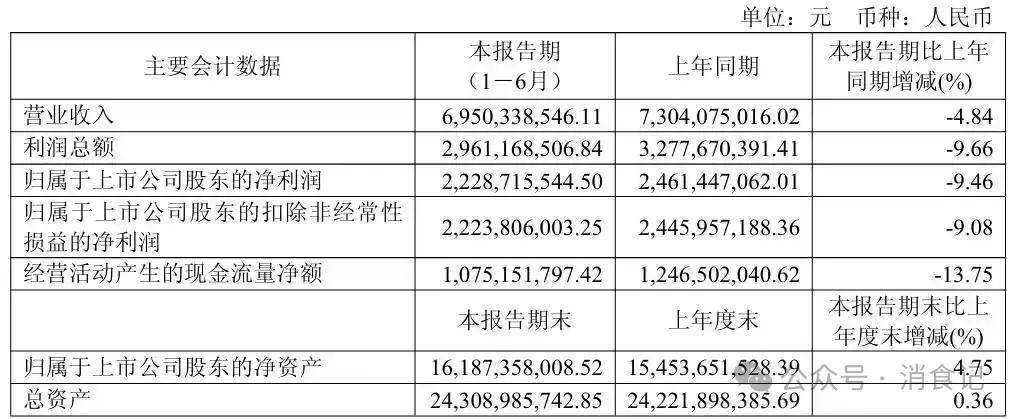
Investment Rating - The report maintains a "Buy-A" investment rating for the company with a 6-month target price of 51.65 CNY, corresponding to a 22.05X valuation for 2025 [4][7]. Core Insights - The company reported a decline in revenue and net profit for the first half of 2025, with revenue at 6.95 billion CNY, down 4.84% year-on-year, and net profit at 2.23 billion CNY, down 9.46% year-on-year [1][2]. - The second quarter of 2025 saw a significant drop in revenue and net profit, with revenue at 1.85 billion CNY, down 29.73% year-on-year, and net profit at 585 million CNY, down 37.03% year-on-year [1][2]. - The company is focusing on long-term quality growth by enhancing market penetration in domestic towns and expanding the production scale of premium liquor [2]. Financial Performance Summary - For the first half of 2025, the revenue breakdown by product category shows a decline in the Special A+ category by 7.37% to 4.31 billion CNY, while the Special A category saw a slight increase of 0.74% to 2.23 billion CNY [2]. - Revenue from domestic sales was 6.25 billion CNY, down 6.07% year-on-year, while revenue from outside the province increased by 4.78% to 628 million CNY [2]. - The gross margin for Q2 2025 was stable at 72.81%, with a slight decrease of 0.21 percentage points year-on-year, but the net profit margin fell to 31.58%, down 3.69 percentage points due to increased expense ratios [3]. Future Projections - The company is projected to experience revenue growth rates of -8.4%, 5.7%, and 8.3% for 2025, 2026, and 2027 respectively, with net profit growth rates of -13.9%, 7.3%, and 11.3% for the same years [4][5].