
中国财险

Search documents
债市信用挖掘系列之一:2026年票息策略的几条底线思维
GF SECURITIES· 2026-02-14 01:32
Core Insights - The report emphasizes that the current market is likely to experience a divergence in expectations, moving from a long-term bullish sentiment to a more uncertain and volatile environment, making interest rate strategies more favorable [1] - The primary risk associated with interest rate strategies is default risk, which has evolved over time, particularly in the context of credit bonds [1] Group 1: Credit Bond Default Risk Reassessment - Historical default rates show that private enterprises have a higher proportion of defaults, particularly in the real estate sector, while state-owned enterprises and banks have experienced occasional unexpected risks [11] - The current landscape of industrial bonds is dominated by state-owned enterprises, with a low probability of events similar to "Yong Coal," indicating that risk industries have reached a bottom [12] - The preference for holdings in public bond funds is shifting towards state-owned enterprises, counter-cyclical industries, quality regions, and leading institutions, reflecting a low exposure to risk [12] Group 2: Market Volatility and Interest Rate Strategies - The report outlines two main strategies for navigating the anticipated market volatility in 2026: - Strategy One focuses on credit downshifting and long-duration bonds with yields above 2.5%, targeting stable liabilities and absolute returns, particularly in city investment bonds and state-owned enterprise bonds [2] - Strategy Two emphasizes high liquidity and low volatility bonds with yields above 2.0%, aimed at defensive allocations in strong regions and leading enterprises [2] Group 3: Market Dynamics and Economic Indicators - The report notes that the lack of sufficient negative factors, combined with a weak economic recovery and unchanged monetary policy, suggests that the market will likely remain in a state of fluctuation [2] - The report highlights that while there is some room for interest rate cuts, the timing will depend on the verification of increasing economic recovery pressures [2] - The bond market is currently constrained within a range, leading to a higher probability of volatility [2]
险资投资黄金“周年记”:面对暴涨,需要“克制”
Sou Hu Cai Jing· 2026-02-13 17:09
Core Viewpoint - The insurance industry in China has begun to invest in gold, with six out of ten approved insurance companies becoming members of the Shanghai Gold Exchange, reflecting a cautious approach to this new investment opportunity [2][3][4]. Group 1: Investment Progress - The pilot program for insurance companies to invest in gold was initiated a year ago, with ten companies approved to participate [3]. - As of now, six insurance companies have become members of the Shanghai Gold Exchange, with the first transactions successfully executed by several companies [3][4]. - The investment scope includes various gold-related contracts and products, allowing for a diversified approach to gold investment [3]. Group 2: Regulatory Framework - Insurance companies are required to adhere to strict investment limits, with the total investment in gold not exceeding 1% of their total assets, theoretically allowing for a maximum allocation of nearly 200 billion yuan [4]. - The regulatory framework aims to enhance the risk management capabilities of insurance funds, particularly in the context of inflation and economic pressures [4]. Group 3: Market Context - The gold market has shown strong performance, with significant price increases noted, particularly in early 2025 [9]. - Long-term returns on gold investments have been favorable, with annualized returns of 8.6% in USD since 1971 and 9.8% in RMB since the establishment of the Shanghai Gold Exchange [7]. Group 4: International Perspective - Internationally, insurance companies have a history of investing in gold, with U.S. firms actively using gold to enhance risk-adjusted returns, especially during financial crises [5]. - In contrast, Japanese insurance companies have been more conservative regarding gold investments, reflecting a lower risk tolerance [6]. Group 5: Future Outlook - Despite the current high prices and volatility in the gold market, institutions remain optimistic about gold's long-term potential as a stabilizing asset in investment portfolios [10]. - The cautious approach of Chinese insurance companies towards gold investment is attributed to the need for time to develop investment frameworks and expertise in this area [10].


盘点58家财险2025车均保费:超半数同比下降
Mei Ri Jing Ji Xin Wen· 2026-02-13 12:38
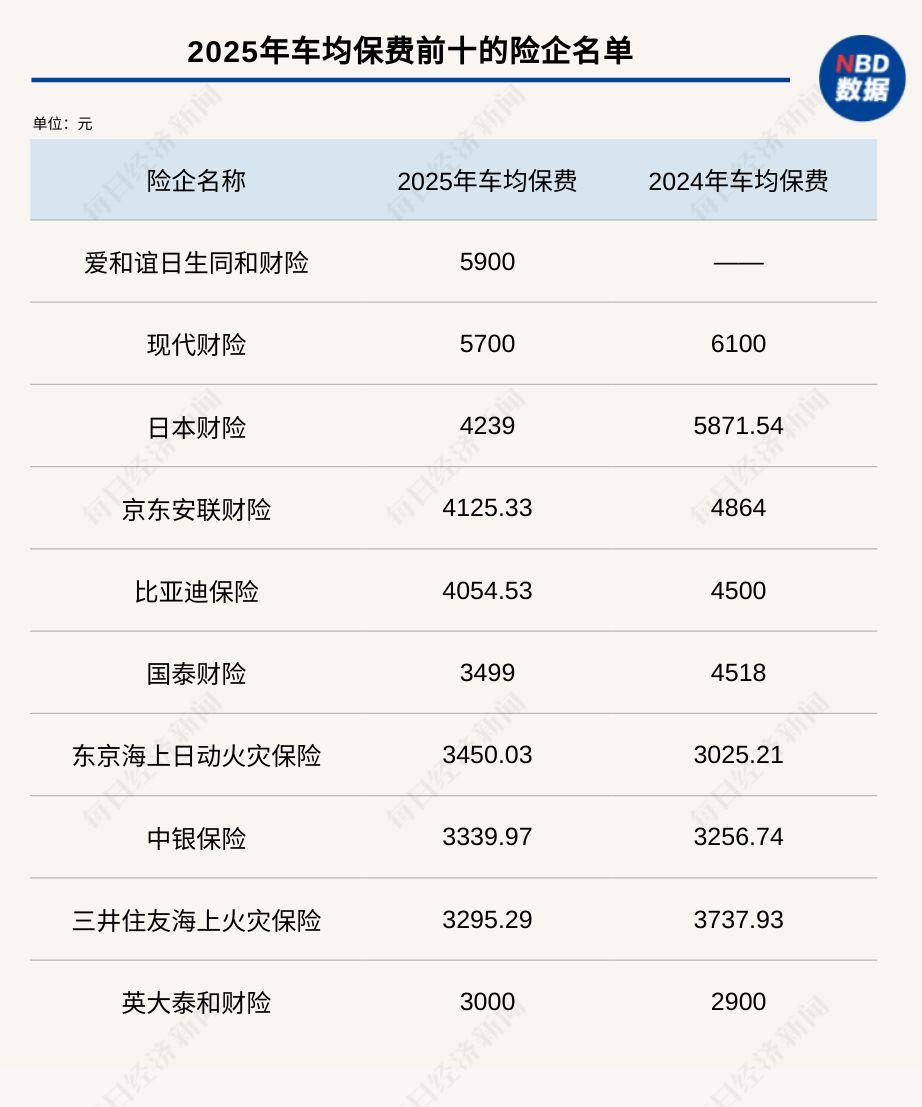
Core Insights - The average car insurance premium for 2025 shows a declining trend for over half of the insurance companies, with the overall premium gap narrowing compared to 2024 [1][2][5] - The average car insurance premium across 58 disclosed companies ranges from 841.99 yuan to 5900 yuan, indicating a concentration of premiums between 1000 yuan and 3000 yuan for most companies [2][4] Group 1: Premium Trends - More than 50% of insurance companies reported a decrease in average car insurance premiums for 2025 compared to the previous year, although the overall decline is not significant [1][5] - The average car insurance premium for 2025 is expected to stabilize due to the structure of existing policies, with a notable impact from the insurance of new energy vehicles [6][7] Group 2: Company Performance - The top ten insurance companies by average car insurance premium for 2025 include: - Ai He Yi Ri Sheng Tong He Insurance: 5900 yuan - Modern Insurance: 5700 yuan (down from 6100 yuan in 2024) - Japan Insurance: 4239 yuan (down from 5871.54 yuan in 2024) [3] - The lowest average premiums are reported by companies such as Xin An Automobile Insurance at 841.99 yuan and Dou Bang Insurance at 870 yuan, with over 70% of companies having premiums between 1000 yuan and 3000 yuan [4][5] Group 3: New Energy Vehicle Insurance - The insurance market is closely monitoring the trends in new energy vehicle insurance, which has previously faced challenges in pricing and coverage [7][8] - As of the end of 2025, the total number of new energy vehicles in China is projected to reach 43.97 million, accounting for 12.01% of the total vehicle population, indicating that nearly 90% of vehicles are still fuel-powered [6] - The profitability of new energy vehicle insurance is improving, with major insurers reporting underwriting profits in this segment [7] Group 4: Future Challenges - The introduction of L3 level conditional autonomous driving vehicles is expected to pose new challenges for car insurance, particularly in risk assessment and pricing models [8] - The complexity of evaluating risks associated with autonomous driving features will require insurance companies to adapt their pricing strategies and product offerings [8]
新春走基层 | 天寒地冻,守护不减
Jin Rong Jie· 2026-02-13 10:32
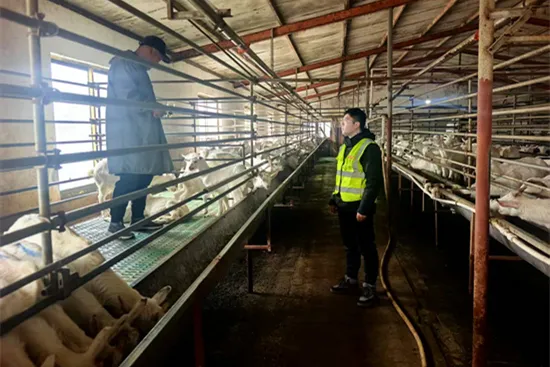
Core Viewpoint - The extreme cold weather in Inner Mongolia's Hulunbuir City has prompted the insurance team from PICC to actively engage in on-site inspections for livestock insurance, emphasizing the importance of risk management in agriculture during harsh conditions [1][6]. Group 1: Company Actions - The PICC team has been conducting on-site inspections for dairy cattle insurance despite temperatures dropping to minus 37 degrees Celsius [1][3]. - The team has completed the verification of 707 dairy cattle over the course of one month, providing risk coverage amounting to 5.656 million yuan [6]. Group 2: Industry Context - Dairy cattle farming is a crucial source of income for local herders and serves as the foundation for the region's "milk can" project [6]. - The extreme weather significantly increases the risks associated with livestock farming, highlighting the critical role of insurance in safeguarding agricultural production [6].

新春走基层 | 笋农的“新年礼物”
Jin Rong Jie· 2026-02-13 10:31
Core Viewpoint - The introduction of a comprehensive income insurance for bamboo shoots in Qingyuan City has provided significant financial support to local farmers, enhancing their confidence in the industry and contributing to rural revitalization efforts [1][3][4]. Group 1: Insurance Implementation and Impact - The first batch of insurance compensation amounting to 1.68 million yuan was delivered to local enterprises and farmers, marking a positive step towards stabilizing the bamboo shoot industry [1]. - Farmers like Zeng Yalin, who planted 600 acres of bamboo shoots, received timely compensation of 204,000 yuan due to market price drops, which reassured them about their income stability [3]. - The insurance scheme is designed to trigger compensation when the market price falls below a set target price of 0.9 yuan per pound, with the average market price dropping to 0.73 yuan triggering the claims process [3][4]. Group 2: Financial Support and Agricultural Development - The insurance product aims to create a dual protection system against natural disasters and market price fluctuations, thereby safeguarding farmers' incomes [4]. - A total of 69 bamboo shoot operators have received risk coverage amounting to 24.56 million yuan, demonstrating the effectiveness of the insurance in mitigating market risks [4]. - The Qingyuan branch of PICC is committed to enhancing the "insurance, prevention, rescue, and service" system to strengthen the resilience of the bamboo shoot industry and contribute to the development of a 100 billion yuan agricultural industry cluster [4]. Group 3: Future Prospects - By 2025, the total planting area for bamboo shoots in the city is expected to reach 863,900 acres, with a comprehensive output value exceeding 10.746 billion yuan, indicating robust growth in the sector [4].

新春走基层 | 两天 两访 两份安心
Jin Rong Jie· 2026-02-13 10:31
Core Insights - The article highlights the rapid response of the insurance company to a crisis faced by a sheep farmer, demonstrating the importance of timely support in agricultural insurance [1][3] - The company aims to enhance its agricultural insurance services by transitioning from merely compensating losses to promoting development and risk reduction [4] Group 1: Crisis Response - A sheep farmer in Jiangsu faced a sudden crisis with newly introduced lambs showing symptoms of illness, prompting immediate action [3] - The insurance company's agricultural service team quickly arrived at the farm to assess the situation, documenting the health of the sheep and determining the extent of the losses [3] - The farmer received an insurance payout of 16,500 yuan (approximately 2,500 USD) for 62 deceased lambs within a day, alleviating his immediate financial burden [3] Group 2: Preventive Measures - Following the initial assessment, the insurance company collaborated with veterinary experts to address the root causes of the disease outbreak [3] - Experts identified issues such as the lack of isolation for new sheep and inadequate disinfection practices, providing the farmer with a comprehensive disease prevention plan [3] - The insurance company plans to expand its services in the agricultural sector, focusing on risk reduction and ongoing support for farmers [4]
开源量化评论(121):港股CCASS优选20组合的年度回顾及最新持仓
KAIYUAN SECURITIES· 2026-02-13 06:43
- The "Hong Kong CCASS Preferred 20 Portfolio" was constructed using a two-step screening method: "select brokers first, then select stocks"[3][4] - The first step involves selecting top-performing brokers by standardizing and equally weighting their excess Sharpe ratio and monthly win rate, then selecting the top 10 brokers[4][16] - The second step involves equally distributing funds to the 10 selected brokers, aggregating their latest holdings, and retaining the top 20 stocks by weight for equal allocation[5][17] - The portfolio has shown significant outperformance over the Hang Seng Index, with an annualized excess return rate of 19.3% and an excess Sharpe ratio of 2.45 over the period from 2020 to 2025[3][12][15] - The portfolio demonstrated defensive characteristics during market adjustments, achieving a positive return of 2.05% from October 8, 2025, to December 31, 2025, while the Hang Seng Index fell by 4.47% and the Hang Seng Technology Index dropped by 15.32%[3][12] - The latest holdings of the portfolio as of February 2026 include a low valuation and high dividend yield configuration, with the banking and non-bank financial sectors accounting for about 45%, the energy sector about 10%, and the technology and internet sectors about 20%[6][19][22] Portfolio Performance Metrics - Annualized return: 19.3%[15] - Annualized volatility: 7.9%[15] - Sharpe ratio: 2.45[15] - Maximum drawdown: -7.6%[15] - Monthly win rate: 75.3%[15]
机器人“上岗”谁来兜底? 保险业加速布局机器人保障
Jin Rong Shi Bao· 2026-02-13 01:52
Core Viewpoint - The emergence of a comprehensive insurance system for robots is crucial to alleviate concerns from both suppliers and users, enabling the integration of robots into real-world applications [2][3]. Group 1: Insurance Development - The first "lifetime liability insurance for elderly care robots" was launched in Shanghai, addressing key concerns for both robot manufacturers and care institutions [2]. - A new insurance sector focused on robots is rapidly developing, with policies emerging to support various types of robots, including consumer-grade exoskeletons [2][3]. - The Chinese humanoid robot market is projected to reach 8.239 billion yuan by 2025, accounting for approximately 50% of the global market [3]. Group 2: Risk and Challenges - The complexity of robots introduces various risks, including hardware damage, software failures, and human-robot interaction issues, which pose challenges for insurance product design and pricing [5][6]. - Real-world incidents have highlighted the necessity of insurance, as accidents involving robots can lead to significant damages and liabilities [3][5]. - Insurance companies face difficulties in obtaining necessary operational data from robot manufacturers, which hinders accurate risk assessment and pricing [6]. Group 3: Collaborative Solutions - Policy guidance is essential for the development of insurance products in emerging fields like robotics, with local governments providing subsidies to stimulate market demand [7]. - Collaborative data sharing between insurance companies, industry players, and academic institutions is recommended to build a comprehensive risk database for humanoid robots [7]. - The rapid technological evolution of robots necessitates flexible insurance products that can adapt to new applications and scenarios [8]. Group 4: Market Potential - The humanoid robot market is expected to grow significantly, with projections indicating a market size of 20 to 50 billion yuan by 2028 and potentially reaching 10 trillion yuan by 2045 [8]. - The establishment of a robust insurance framework is vital not only for risk transfer but also for fostering the overall development of the robotics industry [8].



常德市分公司被罚 人保财险开年已累计15度收监管处罚
Zhong Guo Jing Ji Wang· 2026-02-12 23:13
Group 1 - The China People's Property Insurance Company has faced multiple administrative penalties for various violations, including false reporting of insurance data and improper use of approved insurance terms [1][2][3][4][5][6][7][8][9] - Specific fines include 600,000 yuan for the Jiangxi branch, 140,000 yuan for the Changde branch, and 280,000 yuan for the Maoming branch, among others [1][2][3][4][5][6][7][8][9] - Several individuals within the company have also received warnings and fines, with penalties ranging from 1,000 yuan to 140,000 yuan for various infractions [1][2][3][4][5][6][7][8][9] Group 2 - The company has been penalized for failing to maintain accurate financial data and for fabricating insurance intermediary business [3][7] - Violations include misrepresentation of insurance claims and improper handling of cash payments from clients [2][4][5][6][9] - The regulatory actions highlight ongoing issues with internal controls and compliance within the company, leading to significant financial penalties [1][2][3][4][5][6][7][8][9]
投保农业保险 农户可以自选保险公司吗?
Jin Rong Shi Bao· 2026-02-12 12:18
Core Viewpoint - The article discusses the selection process for agricultural insurance companies in China, emphasizing that while farmers have the right to choose, their options are limited to designated companies within their region [1][3]. Group 1: Agricultural Insurance Selection Process - Farmers can choose insurance providers, but they are typically restricted to those selected through a competitive bidding process by local governments [1][3]. - In regions like Heilongjiang, a list of qualified insurance companies for the period from January 1, 2024, to December 31, 2026, includes several major firms such as PICC Property and Casualty, Sunshine Agricultural Mutual Insurance, and others [2]. Group 2: Rationale Behind the Selection Process - The selection process aims to maintain a balance between adequate competition and service quality, as agricultural insurance relies heavily on local service networks [3][4]. - A stable relationship with selected insurance companies encourages long-term investment in disaster prevention and loss reduction infrastructure, which is crucial for effective agricultural insurance [3][4]. - The process allows for competition during the qualification phase, where companies must demonstrate their capital strength and service capabilities, followed by performance evaluations during the operational period [4].