
天士力

Search documents
尖峰集团发预增,预计2025年年度归母净利润同比增加325.97%左右
Zhi Tong Cai Jing· 2026-01-27 09:51
Core Viewpoint - The company expects a significant increase in net profit for the year 2025, projecting approximately 460 million yuan, which represents a year-on-year increase of about 325.97% compared to the previous year [1] Financial Performance - The projected net profit attributable to shareholders for 2025 is around 460 million yuan, an increase of approximately 352.01 million yuan compared to the previous year [1] - The substantial increase in net profit is primarily due to the non-recurring gains from the sale of equity assets by the company's equity-accounted affiliate, Tian Shili Group [1] Non-Recurring Gains - The profit increase is largely attributed to non-recurring income from the sale of equity assets by Tian Shili Group, which significantly boosted the reported profits for the period [1]


调研速递|华润三九等接待淡马锡、中金公司等10家机构 CHC业务突破百亿,“十五五”战略聚焦三大健康领域
Xin Lang Zheng Quan· 2026-01-23 14:13
Group 1 - The retail industry is shifting towards consumer-centric approaches, focusing on brand and academic integration, driven by aging population demands for health solutions [2] - The "14th Five-Year Plan" strategy is structured around a "one body, two wings" framework, with each of the three listed companies focusing on different core areas: consumer health, prescription drugs, and silver-haired health [3] - The company aims to drive growth through both internal and external strategies, focusing on management, brand, and product line synergies while pursuing acquisitions in key areas [4] Group 2 - The CHC business has surpassed 10 billion in revenue during the "14th Five-Year Plan," with significant achievements in market expansion and brand development [5] - The sales expense ratio is expected to remain stable, with the prescription drug business benefiting from collaborative synergies post-acquisition [6][7] - The company is currently in a strategic adjustment phase, focusing on channel restructuring and brand building to reduce reliance on prescription drugs [8]


华润三九(000999) - 2026年1月13日-1月23日投资者关系活动记录表
2026-01-23 13:50
Group 1: Industry Outlook - The retail industry is expected to focus on consumer-centric approaches, returning to brand and academic fields, with a long-term growth trend driven by industry innovation [2][3] - The integration of online and offline services will shape the competitive landscape for the next five years, with an increasing demand for health solutions driven by an aging population [3] Group 2: Strategic Planning - The "14th Five-Year" plan is currently in progress, with three major companies focusing on core business areas: CHC for China Resources Sanjiu, prescription drugs for Tianshili, and traditional Chinese medicine for Kunming Pharmaceutical [4] - The strategic framework is "one core and two wings," aiming for leadership in the pharmaceutical industry through collaboration and mutual empowerment among the three companies [4][5] Group 3: Mergers and Acquisitions - Future acquisitions will focus on both "in-depth" and "external" growth strategies, with an emphasis on consumer health, medical health, and silver health sectors [5] - The company will seek potential brand assets in the CHC sector and explore innovative opportunities in prescription drugs [5] Group 4: Innovation and Product Development - The company has established partnerships for innovative projects, particularly in cardiovascular diseases, with a focus on heart failure treatments [6][7] - The company aims to expand its product pipeline in chronic diseases, especially diabetes, and will adopt diverse methods to acquire new products [7] Group 5: Sales and Financial Performance - The sales model is divided into CHC (retail) and prescription drugs (hospital), with sales expense rates influenced by seasonal factors [8] - The company anticipates stable sales expense rates in the long term, with a projected revenue growth exceeding the industry average, aiming for double-digit growth [9][10] Group 6: Product Progress and Market Position - The 999 Yiqi Qingfei Granules, developed in collaboration with academic experts, fills a market gap for respiratory infection recovery medications and has been included in the National Medical Insurance Directory [11] - The prescription drug business is expected to improve, leveraging synergies with Tianshili to enhance management and operational efficiency [12] Group 7: CHC Business Development - The CHC business has surpassed 10 billion RMB during the "14th Five-Year" period, focusing on brand and product expansion [13][14] - The company aims to maintain market leadership in various health sectors by adapting to consumer needs and optimizing brand strategies [14]
力生制药:2025年净利同比预增116.77%—138.44%
Zheng Quan Shi Bao Wang· 2026-01-23 09:06
人民财讯1月23日电,力生制药(002393)1月23日发布业绩预告,预计2025年归母净利润4亿元—4.4亿 元,同比增长116.77%—138.44%。报告期内,公司持续加大市场拓展力度,产品销售有所提升;加之 天士力(600535)生物医药产业集团有限公司分红因素影响,归属于上市公司股东的净利润同比增幅较 大。 ...

力生制药:预计2025年净利润同比增长116.77%-138.44%
Xin Lang Cai Jing· 2026-01-23 09:01
力生制药公告,预计2025年度净利润为4亿元-4.4亿元,同比增长116.77%-138.44%。报告期内,公司持 续加大市场拓展力度,产品销售有所提升;加之天士力生物医药产业集团有限公司分红因素影响,归属 于上市公司股东的净利润同比增幅较大。 ...
从国台数智酿造,看白酒行业的科技硬实力
Zheng Quan Ri Bao Wang· 2026-01-20 09:51
Core Viewpoint - The Chinese liquor industry has undergone multiple technological iterations, evolving from traditional methods to a digital and intelligent brewing era, with Guotai Liquor as a leading representative in establishing intelligent brewing standards for sauce-flavored liquor [1][2]. Group 1: Historical Development - The evolution of Chinese brewing technology spans from the Han Dynasty's invention of "jiuqu" to the Tang Dynasty's introduction of pressing and filtering devices, leading to the emergence of clear liquor [1]. - The Yuan and Ming Dynasties saw the adoption of distillation equipment, which allowed distilled liquor to replace lower-alcohol beverages, while the Qing Dynasty categorized various types of liquor based on local techniques [1]. - The 1970s marked the beginning of mechanization in the brewing industry, transitioning from manual to automated processes [1]. Group 2: Guotai's Intelligent Brewing - Guotai Liquor has developed China's first intelligent brewing standard system for sauce-flavored liquor, ensuring consistent quality and flavor through scientific methods [1][3]. - The company has spent 20 years, divided into two ten-year phases, to learn traditional brewing techniques and convert them into a complete digital production system [2][3]. Group 3: Technological Innovations - Over the past decade, Guotai has undergone six iterations, resulting in breakthroughs in data management, hardware, and technology, with numerous patents generated each year [3]. - The intelligent brewing standard system integrates multiple advantages, including digitalization, standardization, and comprehensiveness, enhancing product quality and technological advancement [3]. Group 4: Detailed Brewing Process - The brewing process for sauce-flavored liquor is complex, involving 30 procedures, 274 steps, and 1508 technical indicators, significantly more than traditional methods [4][5]. - Each step of the brewing process, from grain preparation to fermentation and distillation, is meticulously quantified and controlled through advanced technologies [5][6]. Group 5: Quality Control Measures - Guotai has established a three-tier quality assurance system that includes sensory evaluation, gas chromatography fingerprinting, and quantitative control of key indicators [12][13]. - The company has introduced 12 key flavor indicators and 8 harmful substance controls, ensuring the liquor's quality and safety exceed national standards [13]. Group 6: Recognition and Future Outlook - Guotai was recognized as the only liquor enterprise selected for intelligent transformation applications by the Guizhou Provincial Industry and Information Technology Department in 2021 [13]. - In 2023, Guotai received dual national-level awards for intelligent brewing, solidifying its position as a leader in the liquor industry [13].
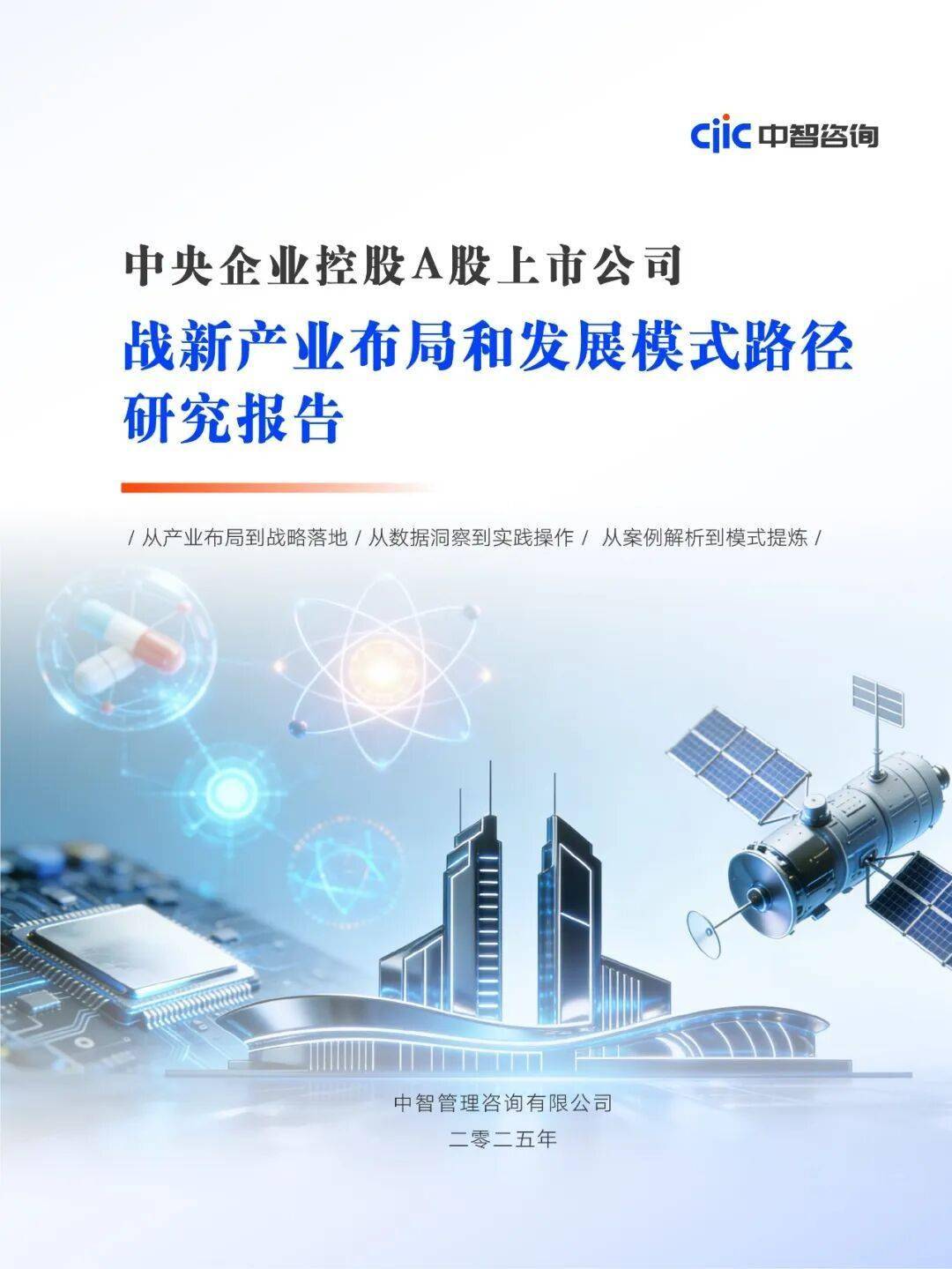
报告发布丨中智咨询《央企A股上市公司战新产业布局和模式路径比较研究报告》
Sou Hu Cai Jing· 2026-01-20 08:25
Core Insights - Strategic emerging industries have become the core battlefield for state-owned enterprises (SOEs) to explore a "second growth curve" under the national strategy of cultivating new productive forces [1] Group 1: Industry Overview - A report by Zhongzhi Consulting indicates that among 402 SOE-controlled A-share listed companies, 257 have over 30% of their revenue from strategic emerging industries, which are included in the study [6] - By the end of 2024, strategic emerging industry enterprises are expected to contribute 26% of operating income and 31.27% of total profit with approximately 25% of total assets, showing a net asset return rate superior to traditional industries [7] Group 2: Structural Layout - Nearly 80% of enterprises focus on advantageous fields such as new-generation information technology, new materials, and new energy, but there is a relative weakness in key areas like industrial mother machines and biomanufacturing, necessitating increased investment to enhance industry influence [8] - 43.85% of manufacturing enterprises in strategic emerging industries are actively upgrading to high-value-added segments like new materials and high-end equipment, while the share of strategic emerging business in transportation and financial service companies is less than 1% [9] Group 3: R&D Investment - Overall R&D investment intensity in strategic emerging industry enterprises is higher than that of traditional industries, but sectors like biotechnology, new materials, and energy conservation have lower R&D investment intensity compared to the average level of SOE A-shares (5.86%), indicating a gap with industry leaders [12] Group 4: Sector-Specific Insights - In the new energy sector, SOEs have established a full industrial chain layout covering power generation operations, equipment manufacturing, and technical services, transitioning from "scale competition" to "quality and efficiency competition" [14] - In the new materials sector, advanced steel materials face industry pressures, while advanced non-ferrous metal materials show high profitability and R&D investment, with companies adopting niche market and industry chain extension strategies [16] - In the biotechnology sector, many enterprises are positioned in relatively mature areas like raw materials and trade, but there is insufficient investment in innovative drugs and precision instruments, indicating a need to strengthen overall industry resilience [18] Group 5: Strategic Recommendations - Establish a full-cycle evaluation and adjustment mechanism for emerging industries, transitioning from experience-based to data-driven decision-making [21] - Implement a "one enterprise, one strategy; one industry, one model" incubation path to guide enterprises in selecting flexible combinations of business extensions, platform incubation, equity cooperation, and fund investment [21] - Optimize resource allocation mechanisms driven by innovation and capital, enhancing collaborative innovation resources and establishing special funds for emerging development [21] - Focus on creating an economic empowerment organization characterized by "small teams, large platforms" to enhance industry leadership and ecological construction capabilities [21]

华润医药(03320):国内第一大OTC制造商,品牌势能集聚
Shenwan Hongyuan Securities· 2026-01-19 12:27
Investment Rating - The report initiates coverage with a "Buy" rating for the company [1] Core Views - The company is the largest OTC manufacturer in China, with a strong brand presence and a projected revenue compound annual growth rate (CAGR) of 7.5% from 2019 to 2024 [6][26] - The pharmaceutical manufacturing segment ranks second in the industry, while the pharmaceutical distribution segment ranks third [6][65] - The company has a robust pipeline of acquisitions to expand its business scope, particularly in traditional Chinese medicine and healthcare products [7][38] Summary by Sections Company Overview - China Resources Pharmaceutical Group Limited is a leading integrated pharmaceutical company, covering manufacturing and distribution of pharmaceuticals, healthcare products, and medical devices [20] - The company has a significant market presence, with a market capitalization of HKD 285.23 billion and a closing price of HKD 4.54 as of January 16, 2026 [1] Financial Performance - The company’s revenue for the first half of 2025 reached CNY 1,319 billion, with a year-on-year growth of 3% [26] - The distribution business accounted for approximately 80% of total revenue, with distribution revenue of CNY 1,045 billion, growing by 2% [26] - The pharmaceutical business generated CNY 218 billion in revenue, increasing its share from 15% in 2019 to 17% in the first half of 2025 [26] Pharmaceutical Manufacturing - The company produces 944 products, including traditional Chinese medicine, chemical drugs, biological products, and medical devices, covering a wide range of therapeutic areas [32] - The pharmaceutical business is expected to grow at a CAGR of 10.4% from 2022 to 2024 [36] Pharmaceutical Distribution - The company’s distribution revenue for the first half of 2025 was CNY 1,100 billion, ranking third in the industry, behind China National Pharmaceutical Group and Shanghai Pharmaceuticals [8][65] - The distribution model is evolving from traditional distribution to a dual approach of distribution and deep marketing [8] Profit Forecast and Valuation - The projected net profit attributable to ordinary shareholders for 2025-2027 is CNY 34.9 billion, CNY 37.6 billion, and CNY 40.5 billion, respectively, with growth rates of 4.0%, 7.9%, and 7.7% [9] - The report assigns a price-to-earnings (PE) ratio of 8.7x for 2026, suggesting a market value of HKD 353 billion, indicating a 24% upside potential from the current market value [8] Key Assumptions - The pharmaceutical business is expected to grow at rates of 4.1%, 6.0%, and 6.5% from 2025 to 2027 [12] - The distribution business is projected to grow at rates of 2.6%, 5.0%, and 5.3% during the same period [12] - The retail business is anticipated to grow at rates of 11.8%, 12.0%, and 12.0% from 2025 to 2027 [12]



拿下19单IPO,深圳产业升级步伐持续加速
Sou Hu Cai Jing· 2026-01-19 10:42
Group 1 - The IPO market in Shenzhen is experiencing significant growth, with 19 new companies listed in 2025, including 6 on A-shares and 13 on overseas markets, indicating a vibrant capital market environment [3][4] - The Hong Kong Stock Exchange has become the world's leading IPO destination in 2025, with 117 companies raising HKD 285.69 billion, a more than twofold increase from the previous year [3] - Shenzhen's new listed companies are characterized by strong technological capabilities and rapid international expansion, with examples including Fengcai Technology and Yingshi Innovation [4] Group 2 - Shenzhen has completed 146 merger and acquisition (M&A) projects since 2025, with a total disclosed transaction value of CNY 86.645 billion, ranking second in the country by number and third by value [6] - Major M&A projects include China Resources Sanjiu's acquisition of a 28% stake in Tianjin-listed Tianshili for CNY 6.074 billion and China General Nuclear Power's acquisition of 100% of a subsidiary for CNY 1.204 billion [6] - The local government is actively promoting M&A to enhance the quality of listed companies, aiming for a total market value of CNY 20 trillion by the end of 2027 [7]

跨国药企“必备”肿瘤药中国药企还有机会卖
Jing Ji Guan Cha Wang· 2026-01-16 16:20
Core Viewpoint - The recent exclusive licensing agreement between Rongchang Biologics and AbbVie for the dual-specific antibody drug RC148, targeting PD-1/VEGF, highlights the competitive landscape in the oncology drug market, with significant financial implications for both companies [1][5]. Group 1: Licensing Agreement Details - Rongchang Biologics has entered into an exclusive licensing agreement with AbbVie for RC148, which is currently in Phase II clinical trials [1]. - The deal includes an upfront payment of $650 million and potential milestone payments up to $4.95 billion, along with tiered royalties on net sales, bringing the total potential value of the agreement to $5.5 billion [1]. - Following the announcement, Rongchang Biologics' stock surged, with a 20% increase in A-shares and a 7.87% increase in Hong Kong shares [1]. Group 2: Market Context and Comparisons - The PD-1/VEGF target has seen multiple drugs developed, with over five similar drugs already in the market, leading to skepticism about the market share for later entrants [1][4]. - Other Chinese biotech firms have also engaged in significant licensing deals for PD-1/VEGF drugs, with notable transactions including a $500 million upfront payment from Summit to Kanyos Biologics and a $1.25 billion upfront payment from a partnership involving 3SBio and Pfizer [4]. - Despite being ranked lower in the market, Rongchang Biologics' deal value is comparable to that of Kanyos Biologics, raising questions about the valuation of later-stage products [5]. Group 3: Future Prospects and Trends - There is an expectation for continued licensing transactions in the PD-1/VEGF space, driven by efficacy, different indications, and combination therapies [8]. - Companies with PD-1/VEGF candidates that have not yet been licensed are actively seeking opportunities, with the potential for significant deals depending on product data and market conditions [8]. - Major multinational pharmaceutical companies, including Eli Lilly, Novartis, and AstraZeneca, have not yet announced new PD-1/VEGF acquisitions, indicating potential future market activity [9].
