百利天恒

Search documents
科创综指ETF鹏华(589680)红盘向上,OpenAI推出首款采用Cerebras芯片的模型
Xin Lang Cai Jing· 2026-02-13 02:50
Group 1 - Semiconductor chips are gaining strength, with OpenAI launching its first AI model GPT-5.3-Codex-Spark based on Cerebras Systems' chips, aimed at competing in the AI programming assistant market [1] - Wanlian Securities indicates that the demand for computing power is on the rise, with the PCB and storage sectors expected to maintain a favorable cycle. The development of AI is driving upgrades in PCB technology, increasing demand for high-layer and HDI PCBs [1] - China's PCB industry leads globally, with major domestic PCB manufacturers accelerating capital expenditures to expand high-end PCB production capacity. The demand for copper-clad laminates (CCL) is expected to benefit from PCB expansion, with recent price increases likely to enhance corporate profitability [1] Group 2 - As of February 13, 2026, the STAR Market Composite Index (000680) saw significant gains in component stocks, with Jingjin Electric up 12.77% and Fuchuang Precision up 12.11% [2] - The STAR Market Composite Index ETF (Penghua, 589680) closely tracks the STAR Market Composite Index, reflecting the overall performance of STAR Market listed companies, including dividend income [2] - The top ten weighted stocks in the STAR Market Composite Index as of January 30, 2026, include Haiguang Information and Cambrian, accounting for 22.79% of the index [2]
生物医药企业赴港上市热潮持续升温
Xin Lang Cai Jing· 2026-02-12 00:41
Group 1 - The core viewpoint of the articles highlights a surge in local biopharmaceutical companies applying for listings on the Hong Kong Stock Exchange, driven by favorable market conditions and the need for funding to support research and development [1][5][8] - A significant portion of the companies applying for listings are early-stage, unprofitable biotech firms, with many utilizing the special listing channel for unprofitable companies established under Chapter 18A of the Hong Kong Stock Exchange [2][3] - The current wave of IPOs is characterized by a mix of newly established biotech firms and more mature companies with established business models, indicating a diverse range of funding needs and market strategies [3][4] Group 2 - The capital market's cyclical recovery has provided a crucial external window for these listings, with the Hang Seng Innovation Drug Index showing a rebound of over 200% in the past two years, reflecting a renewed focus on quality assets [5][6] - The internal dynamics of the biopharmaceutical industry, combined with the improved liquidity and sentiment in the Hong Kong market, have created a conducive environment for these companies to seek public funding [7][8] - However, there is a growing concern about market congestion, with over a hundred biopharmaceutical companies in the IPO preparation queue, leading to potential differentiation challenges among these firms [8][9] Group 3 - The market is expected to experience significant polarization, with a clear divide between high-value companies and those with weaker clinical data or less innovative pipelines, which may struggle to attract investment [9][10] - Companies that can withstand market fluctuations are those with unique pipelines and a focus on addressing real clinical needs, as opposed to those merely following trends [10][11] - The long-term success in the biopharmaceutical sector will depend on the ability to build competitive advantages through innovative solutions that meet clinical demands, rather than relying on speculative concepts [11]
创新药2026年策略深度报告-中国药企加速融入全球新药市场-26年多赛道管线进展可期
2026-02-11 15:40
Summary of Key Points from Conference Call Records Industry Overview - **Industry**: Innovative Pharmaceuticals - **Global Drug Approvals**: In 2025, a total of 46 new drugs were approved globally, which is a decrease from the previous two years but still above the historical average of 36 since 1993 [1][2] - **Trends**: The approval landscape is shifting towards precision medicine and unmet medical needs, particularly in oncology, where 16 drugs were approved, representing approximately 15% of total approvals, higher than the past five-year average [4] Core Insights and Arguments - **FDA Performance**: Despite personnel turnover and regulatory challenges, the FDA maintained high output efficiency, approving 46 new drugs in 2025, including 34 new molecular entities and 12 biologics [2] - **Emerging Technologies**: The FDA is advancing platforms such as Antibody-Drug Conjugates (ADC) and bispecific antibodies, with ADC becoming a cornerstone in oncology [5][29] - **China's Global Integration**: In 2025, China saw a significant increase in license-out transactions, with 154 deals worth $14.19 billion, marking a 46.7% and 150% year-over-year increase, respectively [6][31] - **Clinical Trial Quality**: China's clinical trial quality has improved significantly, with compliance rates surpassing those of Europe and the U.S., addressing international concerns about data reliability [10] Company-Specific Developments - **Innovative Drug Companies**: - **Kangfang Biotech**: Achieved significant progress with its EVSTAN antibody, showing superior progression-free survival (PFS) and overall survival (OS) benefits [11] - **Hanyu Pharmaceutical**: Reported impressive results for its independent monoclonal antibody for ESCC, with a two-year overall survival rate of 88.3% [12] - **Hengrui Medicine**: Advanced in ADC technology, evolving to XDC, and has multiple ADC drugs in late-stage clinical trials [14] - **Rongchang Biotech**: Plans to expand indications for its core product, with several key clinical data expected in 2027 [15] - **Kelong Botai**: Entered the global registration phase for its lung cancer drug, FKB267, with significant data disclosures [16] - **Baiyi Shenzhou**: Made strides in hematology with multiple important data readouts [17][18] Additional Important Insights - **Market Positioning**: China's position in the global transaction market has significantly improved, with 339 transactions recorded in 2025, accounting for 24.5% of the global market [7][8] - **Regulatory Environment**: The FDA's stable policies and efficiency improvements are expected to facilitate the entry of innovative products from China into overseas markets [31] - **Emerging Drug Classes**: ADCs and similar conjugates are identified as the most certain and highest pricing power segments in the global innovative drug market [29][30] This summary encapsulates the key points from the conference call records, highlighting the innovative pharmaceutical industry's dynamics, regulatory environment, and specific company advancements.
科兴制药冲击A+H双重上市,市值62亿,创新成色或不足
Ge Long Hui· 2026-02-11 10:03
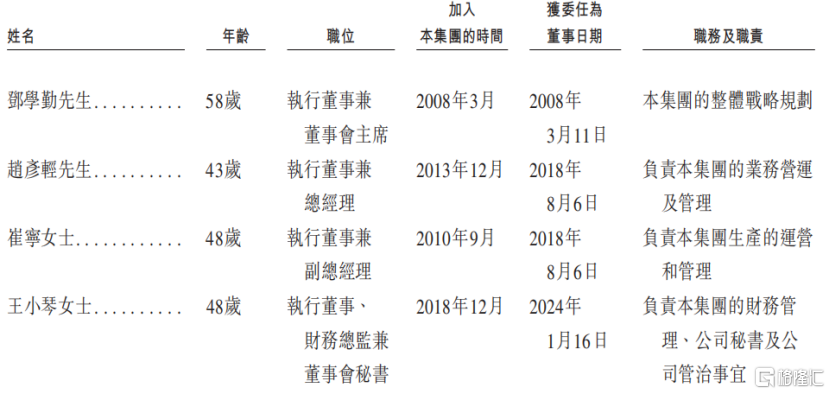
Core Viewpoint - The recent surge in "A+H" listings has seen over 100 A-share companies at various stages of seeking listings in Hong Kong, with a notable presence of biopharmaceutical companies like Kexing Pharmaceutical, which has submitted its application for dual listing [1][2]. Company Overview - Kexing Pharmaceutical, established in 1989 and restructured into a joint-stock company in 2019, is headquartered in Jinan, Shandong [4][3]. - The actual controller of the company, Deng Xueqin, holds 56.27% of the voting rights as of October 2025 [5]. - The board of directors consists of eight members, including four executive directors [6]. Financial Performance - Kexing Pharmaceutical's revenue has fluctuated in recent years, with figures of 1.31 billion, 1.26 billion, 1.40 billion, and 700 million RMB reported for 2022, 2023, 2024, and the first half of 2025, respectively [25]. - The company achieved profitability in 2024, with net profits of 27.05 million RMB and 78.96 million RMB in the first half of 2025 [26]. - Sales expenses have been high, totaling 2.369 billion RMB over three and a half years, while R&D expenses were approximately 788 million RMB, accounting for 16.8% of total revenue [27]. Product Portfolio - Kexing Pharmaceutical has established a product matrix consisting of commercialized products, a research pipeline, and introduced products [9][12]. - The company has four main commercialized products, including SINOGEN, which holds a 55.2% market share in China's short-acting interferon α1b market [10][11]. - The revenue from these products for the years 2022, 2023, 2024, and the first half of 2025 was 1.314 billion, 1.254 billion, 1.392 billion, and 680 million RMB, respectively [12]. Research and Development - Kexing Pharmaceutical has a pipeline of 5 products in clinical stages and 10 in preclinical stages, focusing on oncology, autoimmune diseases, and degenerative diseases [13][18]. - The company has developed a "3KX technology platform" to enhance the R&D process, integrating various advanced technologies [14]. - The most advanced products in the pipeline are GB05 and GB-K02, both currently in Phase III clinical trials [19][20]. Market Position and Challenges - The company is facing challenges due to a lack of blockbuster products and a relatively weak R&D capability compared to other biotech firms [30]. - The sales team may struggle with centralized management due to a dispersed pipeline layout, leading to higher sales expenses [30].


中国创新药BD交易进入“后签约时代” 争议解决或成行业必修课
2 1 Shi Ji Jing Ji Bao Dao· 2026-02-10 23:15
Core Insights - The Chinese innovative drug industry is entering a new decade of development in 2025, with a significant increase in business development (BD) transactions, reaching a total value of $135.655 billion and 157 transactions, both setting historical records, indicating the growing global appeal of Chinese innovative drugs [1] - Milestone payments from previously established collaborations are beginning to materialize, providing cash flow relief for companies and marking substantial progress in global development [1] - However, potential risks associated with BD collaborations are emerging, including the premature termination of agreements and disputes leading to arbitration or litigation, signaling a need for caution in the industry [1] Industry Trends - The surge in BD transactions in 2025 is driven by the long-accumulated innovative potential of China's biopharmaceutical sector, with expectations for continued growth in cross-border transactions between China and the US/Europe [2] - The BD trend began in 2022, but many companies have not yet experienced the full lifecycle of BD transactions, leading to potential undisclosed issues in long-term performance [2] - The period from 2026 to 2028 may see an increase in BD disputes, as the industry transitions from rapid growth to a more regulated and mature phase [2] Financial Highlights - In May 2025, a record-breaking upfront payment of $12.5 billion was secured by a collaboration between Sangamo Therapeutics and Pfizer, with potential total payments reaching $48 billion [3] - In July 2025, China National Pharmaceutical Group announced a $300 million milestone payment from Merck for a collaboration on a PD-1/VEGF dual antibody [3] - In October 2025, a $250 million milestone payment was triggered for a collaboration between SystImmune and Bristol-Myers Squibb, marking the largest single milestone payment for an ADC asset disclosed in China [3] Payment Structures - The "upfront payment + milestone + sales royalty" model remains the dominant approach for Chinese companies in BD transactions, but only 22% of biopharmaceutical companies achieved milestone events by mid-2025, a decrease from previous years [4] - Among 128 transactions with at least one milestone node, 45% did not generate any revenue, highlighting the uncertainty of milestone payment realizations [4] - Increasing the proportion of upfront payments to secure immediate cash flow has become a consensus among companies to mitigate risks [4] Contractual Strategies - Companies are advised to enhance negotiation strategies by creating competitive environments and optimizing milestone payment terms to reduce ambiguity and disputes [5][6] - Specific, quantifiable conditions for milestone payments should be established to minimize subjective interpretations and risks of disputes [5] - The interrelation of contractual terms should be considered to avoid imbalances in rights and obligations, which could lead to significant disagreements during project execution [6] Legal Considerations - The potential for a wave of litigation in the BD sector is rising, driven by long-term contracts and various uncertainties affecting performance [7] - Companies often prioritize commercial negotiations to resolve disputes, but if unsuccessful, they must rely on the agreed dispute resolution mechanisms, emphasizing the importance of precise contract language [7][8] - Early identification of dispute trajectories and effective crisis management can significantly influence the outcome of legal proceedings [8] Future Outlook - As of January 2026, 17 BD transactions have occurred, totaling $133.61 billion, with significant projects continuing to emerge [9] - The ADC sector, small nucleic acid drugs, and in vivo CAR-T therapies are expected to be key areas for BD transactions in the next 1-2 years, with a shift in focus towards clinical data validation [10] - The industry is moving towards a more mature and regulated phase, with an emphasis on risk awareness and compliance as essential elements for successful cross-border BD initiatives [10]

机构观点 | A股缩量盘整 Seedance概念掀涨停潮
Shang Hai Zheng Quan Bao· 2026-02-10 18:12
Group 1 - Seedance2.0 is expected to be a pivotal moment for AI in the film industry, particularly in the production of AI comics and short dramas, leading to significant cost reductions and efficiency improvements in content creation [2] - The release of Seedance2.0 has sparked widespread evaluation and discussion within the industry, showcasing impressive capabilities in multi-modal thinking and video generation from various input types [2] - The film and television sector saw a substantial increase, with the film industry index rising by 13.83%, significantly outperforming other sectors, driven by the excitement around AI applications [2] Group 2 - The innovative pharmaceutical sector is experiencing a resurgence, with notable stock price increases among companies such as Wanbangde and Guangshengtang, indicating renewed investor interest [3] - The National Medical Products Administration announced that by 2025, China's pharmaceutical industry will accelerate its internationalization, with cumulative overseas licensing transactions for innovative drugs expected to exceed $130 billion [3] - A strategic cooperation agreement between Shiyao Group and AstraZeneca could yield up to $18.5 billion, marking a significant milestone in the company's business development transactions [3] Group 3 - Emerging technologies remain a key focus for the market, with a recommendation to concentrate on sectors benefiting from AI applications and international expansion [4] - The recent volatility in the Chinese stock market is attributed to global financial tightening concerns and pre-holiday cautious sentiment, but there is optimism regarding the domestic economic outlook [4] - The semiconductor sales growth is projected to accelerate, with high demand for domestic chips and related industries expected to continue through 2026 [4][5]
A股缩量盘整 Seedance概念掀涨停潮
Shang Hai Zheng Quan Bao· 2026-02-10 18:09
AI应用主线热度扩散 昨日,市场焦点在AI应用主线。受Seedance视频模型火爆"出圈"的提振,"AI+影视"方向大幅领涨。以 申万二级行业划分,影视院线指数昨日收涨13.83%,涨幅远超其他行业,光线传媒、幸福蓝海、捷成 股份收获20%幅度涨停,华谊兄弟、华策影视等涨超10%。 张大伟 制图 机构观点 Seedance2.0发布或为AI影视的"奇点"时刻,有望在AI漫剧、AI短剧等短内容方面率先得到广泛应用, 进一步推动漫剧、短剧制作大幅降本提效和产能供给释放 ◎记者 费天元 2月10日,A股全天窄幅盘整,沪指日内振幅仅0.41%,为开年以来最低,同时市场量能也出现萎缩,显 示春节假期前资金面趋于平淡。 截至收盘,上证指数报4128.37点,涨0.13%;深证成指报14210.63点,涨0.02%;创业板指报3320.54 点,跌0.37%;科创综指报1802.46点,涨0.31%。沪深两市合计成交21055亿元,较前一日缩量1439亿 元。 机构:新兴科技仍是主线 从2月9日的太空光伏到昨日的AI应用,节前市场重回科技成长主线。在部分机构看来,当前,新兴科 技仍是驱动A股盈利复苏的主要动力,建议聚焦"A ...

港股创新药底部或夯实,资金面与情绪面同步回暖,港股创新药ETF(513120)盘中最高涨近4%,近5日获资金流入近8亿元
Xin Lang Cai Jing· 2026-02-10 05:37
Group 1 - The core viewpoint of the news highlights significant advancements in the biotech sector, particularly in the collaboration between Innovent Biologics and Eli Lilly, which focuses on new drug development in oncology and immunology, with a deal size exceeding expectations [1] - The collaboration employs a "China PoC + global development" model, leveraging Innovent's efficient clinical validation capabilities in China while utilizing Eli Lilly's global commercialization network to mitigate risks, marking a key step in the globalization of Chinese innovative pharmaceutical companies [1] - The assets involved in the collaboration, such as IBI363 and IBI343, have entered global multi-center Phase III clinical trials, with a combined potential market space of $60 billion [1] Group 2 - The ADC commercialization process is accelerating, with 20 ADC drugs approved globally, six of which have consistently been in the "billion-dollar club" for two years; approximately 60 are in Phase III clinical trials or awaiting market approval [2] - Local companies are increasingly gaining advantages due to their self-commercialization capabilities, as seen with Rongchang Biologics transitioning from outsourcing to in-house production, and Keren Biotechnology and Baillie Tianheng accelerating the establishment of their own production bases [2] - The Hong Kong Innovation Drug ETF has seen a strong performance, with a 3.10% increase as of February 10, 2026, and a total scale of 25.98 billion yuan, indicating a positive trend in investment within the sector [2]
大面积涨停!603000,1分钟封板!超23万手封死
Zhong Guo Ji Jin Bao· 2026-02-10 04:18
Group 1: AI Application Sector - The AI application sector has seen a collective surge, with significant gains in cultural media, short drama games, and internet sectors, leading to multiple stocks hitting the daily limit up [1][2] - Notable stocks that reached the limit up include Reader Culture (20% increase), Chinese Online (20% increase), Light Media (20% increase), and others [2][3] - ByteDance's recent launch of Seedance 2.0, a video generation model, has been a key catalyst for this surge, showcasing impressive capabilities in video creation from various media inputs [3][4] Group 2: Innovative Drug Sector - The innovative drug sector experienced a rebound, with stocks like Haixiang Pharmaceutical and Wanbangde hitting the daily limit up, while several others rose over 5% [5][6] - The total transaction scale for China's innovative drug license-out is projected to reach a record $135.7 billion by 2025, indicating strong global value for domestic innovative drug pipelines [6][7] - Recent collaborations in January, including major deals like the one between Shiyao and AstraZeneca worth $18.5 billion, further validate the potential of Chinese innovative drugs [6][7]

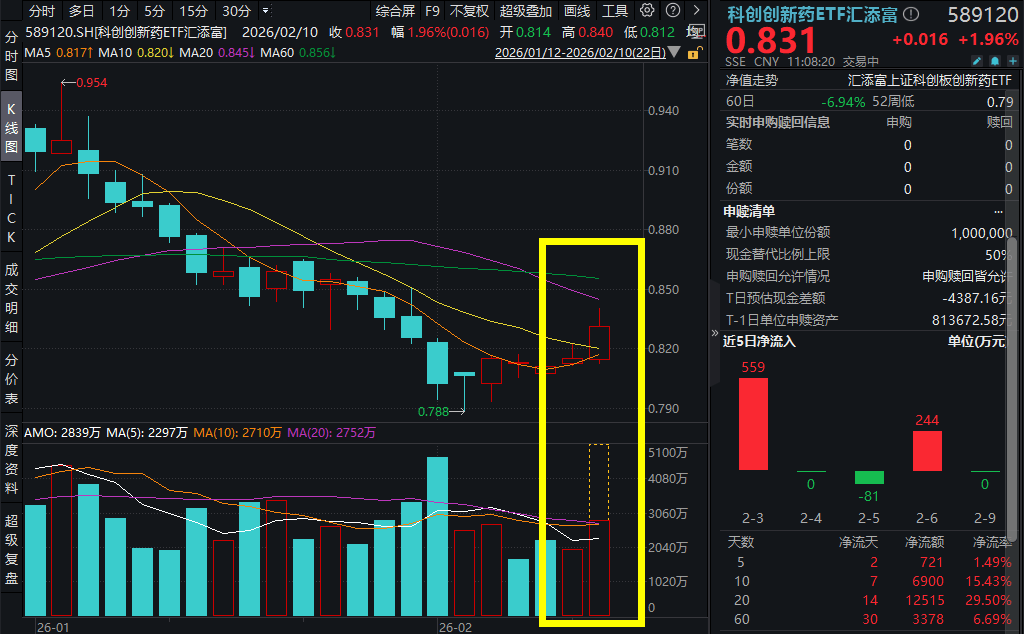
国内首款VAV1分子胶降解剂进入临床,诺诚健华涨超2%!科创创新药ETF汇添富(589120)爆量涨2%,冲击两连阳!重磅BD来袭,关注科创创新药主线
Sou Hu Cai Jing· 2026-02-10 04:05
Core Viewpoint - The A-share market is experiencing a strong upward trend, particularly in the innovative drug sector, with significant gains in the ChiNext Innovative Drug ETF [1][3]. Group 1: Market Performance - As of 11:08 on February 10, the ChiNext Innovative Drug ETF (589120) surged by 2%, marking a potential two-day consecutive rise [1]. - Major component stocks of the ETF, such as Rongchang Biopharma and Baili Tianheng, saw increases exceeding 5%, while others like Baijie Shenzhou rose over 4% [3]. Group 2: Key Component Stocks - The top ten component stocks of the ChiNext Innovative Drug ETF include: - J-Z**KD with a 4.04% increase and an estimated weight of 10.43% - Baili Tianheng with a 5.10% increase and an estimated weight of 7.89% - Rongchang Biopharma with a 5.51% increase and an estimated weight of 6.35% [4]. Group 3: Industry Developments - Innovent Biologics announced the approval of its ICP-538, a VAV1 molecular glue degrader, for clinical research, marking it as the first of its kind in China and the second globally [4]. - Baili Tianheng's recent shareholder meeting approved significant resolutions, including the issuance of debt financing tools and extending the validity of H-share issuance [5]. Group 4: Strategic Collaborations - Innovent Biologics entered a strategic partnership with Eli Lilly to advance the global development of innovative drugs in oncology and immunology, receiving an upfront payment of $350 million and potential milestone payments totaling up to $8.5 billion [5]. Group 5: Industry Growth and Trends - The Chinese innovative drug sector is transitioning from "pipeline expectations" to "performance realization," with over 70% of companies projected to achieve revenue growth by 2025 [8]. - The total value of License-out transactions for Chinese innovative drugs skyrocketed from $2.562 billion in 2017 to an estimated $140.274 billion by 2025, indicating a significant increase in global recognition [6]. Group 6: Investment Opportunities - Three key investment themes for 2026 in the innovative drug sector include: 1. Accelerated BD (Business Development) overseas, focusing on ADC, dual antibodies, and GLP-1RA [9]. 2. Policy support for innovative drug development, enhancing commercialization opportunities [9]. 3. Monitoring critical clinical data and commercialization milestones for new drugs [10].