雷鸟

Search documents
CES官方发布AI趋势:硬件将成AI落地核心载体
3 6 Ke· 2025-12-04 10:31
Core Insights - CES 2026, scheduled from January 6 to 9, 2026, in Las Vegas, will focus heavily on AI as the central theme, marking a significant evolution in the integration of AI with hardware products [1][3] - The event will feature a new exhibition area called "CES Foundry," dedicated to showcasing how AI technology can be integrated into various hardware products and industry scenarios, emphasizing user experience transformation [3][4] - Major companies like NVIDIA, AMD, and Siemens will present their latest AI innovations and strategies, highlighting the growing importance of AI in industrial applications and consumer electronics [11][14][17] Group 1: AI as the Central Theme - AI will be the absolute focus of CES 2026, moving beyond mere parameter comparisons of large models to practical applications in hardware [3][4] - The CES Foundry will host immersive discussions and demonstrations on the future of AI in various sectors, including manufacturing and infrastructure [3][6] - The event will showcase AI's integration across multiple domains, including smart glasses, PCs, mobile devices, and healthcare [6][7] Group 2: Key Industry Players and Innovations - Siemens will present its advancements in AI and digital twin technology, aiming to drive the large-scale implementation of industrial AI applications [11][13] - AMD will showcase its AI solutions and new products, including the Ryzen AI 400, which is expected to enhance AI computing capabilities in consumer devices [14][16] - Lenovo will host its innovation conference during CES 2026, highlighting AI's impact on various sectors, including sports and personalized consumer experiences [17][19] Group 3: Emerging Trends and Products - The event is expected to feature new AI hardware products, with companies like Insta360 and HOLLYLAND introducing innovative technologies [20][22] - AI applications in education, healthcare, and smart home technologies will be prominently displayed, reflecting the growing trend of AI integration in everyday products [32][39] - The CES 2026 will likely see a competitive landscape among major tech firms as they unveil their AI-driven hardware solutions, marking a pivotal moment in the AI hardware market [31][34]




全球AR市场增长逻辑与投资机遇:消费级AR眼镜系列报告(一):破局与展望
Minmetals Securities· 2025-12-04 03:11
Investment Rating - The report does not explicitly state an investment rating for the industry, but it emphasizes the potential growth and investment opportunities in the AR glasses market. Core Insights - The development of consumer-grade AR glasses has been relatively slow due to the challenge of achieving both lightweight design and affordability. The current trend is towards a "gradual iteration" paradigm, starting with audio glasses, moving to AI glasses, and eventually to AI+AR glasses [2][3]. - The global market for AI smart glasses is projected to reach 1.52 million units in 2024, while traditional AR glasses are expected to sell 500,000 units. The acceptance of "AI+social" product positioning is reflected in the sales growth of Meta's upgraded Ray-Ban Meta glasses, which are expected to reach nearly 3 million units by Q2 2025 [2][3]. - The traditional eyewear market, with annual sales exceeding 1.5 billion units, provides a substantial replacement market for smart glasses. If the AI+AR solution matures, the penetration rate could rise from 0.01% in 2023 to 4.44% by 2030, with the global AR smart glasses market projected to grow from 735 million RMB in 2023 to 118.7 billion RMB by 2030, reflecting a CAGR of 106.7% [3][4]. Summary by Sections Industry Turning Point - The XR industry is diversifying, with AR emerging as a new growth engine. The report outlines the historical challenges and commercialization phases of AR technology, highlighting the shift from initial excitement to a recovery growth phase driven by technological advancements [12][16][24]. Competitive Landscape - The competition is evolving from a focus on hardware products to building ecological barriers. Major players like Meta and Google are adopting different strategies, with Meta focusing on AI+AR technology and Google moving towards an open ecosystem model. Domestic companies are categorized into those focusing on rapid hardware iteration and those leveraging their mobile ecosystems for cross-device collaboration [4][5][6]. Industry Chain Analysis - The report emphasizes the importance of focusing on core segments of the industry chain that hold significant value. The cost structure of AR glasses is detailed, with optical display units accounting for 43% of the BOM cost, followed by chip-based computing units at 31% [5][6]. Market Outlook - The report predicts a significant growth trajectory for AR glasses, with a gradual increase in sales expected as the technology matures. The AI glasses market is expected to see substantial growth, with sales projected to reach 3.5 million units by 2025, while traditional AR glasses are forecasted to sell only 650,000 units [49][52]. Conclusion - The report concludes that the gradual iteration path taken by AI glasses is more aligned with market demands, providing a foundation for the future development of AR glasses. This approach is expected to facilitate the overcoming of initial technological bottlenecks and accelerate market penetration [34][41][42].


江西省南昌市红谷滩区 VR+AI赋能数智转型 借势筑强数字经济产业高地
Jing Ji Ri Bao· 2025-12-02 22:09
Core Insights - Nanchang's Honggutan District is leveraging opportunities in the digital economy, focusing on the virtual reality (VR) industry as a key driver for high-quality development [1][4] - The district has established itself as a core area for VR in Jiangxi Province, attracting top companies and fostering innovation across various sectors [1][2] Group 1: Industry Development - The VR industry in Honggutan has seen significant growth, with the number of digital economy core enterprises increasing from 4,002 in 2021 to 6,198 in 2024, marking a substantial rise [2] - The district has gathered 7 of the national top 50 VR companies, creating a comprehensive innovation ecosystem that covers technology research, application, and results transformation [1][2][4] Group 2: Investment and Projects - During the 2025 World VR Industry Conference, 13 projects were signed with a total investment of 2.32 billion yuan, focusing on key areas such as VR optical display and AI algorithms [2] - Major projects like the Jiangxi Artificial Intelligence Computing Center and the National Virtual Reality Innovation Center are enhancing the region's innovation capabilities and industry chain [6][9] Group 3: Policy and Environment - Honggutan District has implemented supportive policies, including a 19.5% increase in digital economy policy funding to 23.9 million yuan for 2025, aimed at fostering enterprise innovation and expansion [3] - The district emphasizes a high-quality business environment as essential for industry development, establishing a service system that integrates online and offline support for enterprises [3][4] Group 4: Talent and Education - The National Vocational Education Virtual Simulation Demonstration Training Base has trained 3,000 individuals and hosted 7,000 visitors, contributing to the development of skilled talent for the industry [7] - Local companies are thriving under supportive policies, with firms like Lingxing Information and Xiaohutao Technology making significant strides in VR education and gaming [4][6] Group 5: Future Outlook - The Future Science City is being developed to integrate industry and urban growth, attracting major digital economy enterprises and enhancing the region's competitive edge [8][9] - Honggutan aims to become a global VR industry hub, supported by a 3 billion yuan VR industry fund and high-standard infrastructure for AI and smart manufacturing [9][10]
CES2026超前瞻:AI是核心议题,中国企业或将再度霸展
3 6 Ke· 2025-12-01 04:09
Core Insights - CES 2026 is set to showcase significant advancements in AI technology, with major companies like Siemens, Caterpillar, AMD, and Lenovo focusing on AI in their presentations [5][8][19] - The event will highlight a variety of AI hardware products, including AI glasses, AI PCs, AI smartphones, and humanoid robots, indicating a strong trend towards AI integration in consumer electronics [18][19] - Chinese brands are expected to dominate CES, showcasing their technological innovations across various categories, reflecting their growing influence in the global market [40][41] AI as the Central Theme - AI will be the overarching theme of CES 2026, with confirmed keynote speeches from industry leaders emphasizing its importance [5][19] - Companies like Siemens will demonstrate how AI and digital twin technology can transform manufacturing and infrastructure [8] - Lenovo plans to unveil innovations related to AI-driven experiences, including applications in sports and personalized user interactions [11] PC and Gaming Innovations - Intel, AMD, and NVIDIA are anticipated to launch new products, including Intel's Panther Lake mobile processors and AMD's R9 9950X3D processor with enhanced cache capabilities [19][21] - The introduction of new gaming processors and graphics cards is expected to attract significant attention from the gaming community [21][22] Display Technology Competition - Major TV manufacturers, including TCL and Hisense, are expected to showcase advancements in RGB display technology, competing with international brands like LG and Samsung [25][26] - The CES 2026 will feature a variety of display technologies, including Micro RGB LCD and Mini LED, highlighting the competitive landscape in the display sector [25][26] Smart Cleaning Devices - Chinese smart cleaning brands are set to unveil new products, including robotic vacuums and lawn mowers, reinforcing their leadership in the global smart cleaning market [27][30] - The focus will be on comprehensive cleaning solutions that leverage AI and advanced navigation technologies [30] Accessory and Audio Innovations - Accessory brands like Baseus and Ugreen are expected to expand their product lines beyond traditional charging devices, venturing into audio and smart home solutions [31][34] - The introduction of high-end audio products and smart home security devices will be a key focus for these brands at CES 2026 [36] AI Glasses and New Hardware - AI glasses are anticipated to be a major highlight, with various brands competing in this emerging category [38] - The presence of established players and new entrants in the AI hardware space will create a dynamic showcase of innovative products [39] Chinese Brands' Dominance - Chinese companies are projected to play a pivotal role at CES, with a significant share of exhibitors and a focus on technological innovation rather than just cost competitiveness [40][41] - The event serves as a platform for Chinese brands to demonstrate their rapid product development and engineering capabilities across multiple tech sectors [40][41]

三季度国内消费级AI/AR市场销量同比激增186%,消费电子ETF(561600)涨超1.1%
Xin Lang Cai Jing· 2025-11-28 05:28
Group 1 - The core viewpoint of the articles highlights the strong performance of the consumer electronics sector, particularly in the AI/AR market, which saw a significant year-on-year sales increase of 186% in Q3 2025 [1][2] - The consumer electronics ETF (561600) has shown a consistent upward trend, achieving a 1.14% increase and marking its fourth consecutive rise [1] - Major companies in the consumer electronics index, such as Longying Precision and Shunluo Electronics, have experienced notable stock price increases, with Longying Precision rising by 11.79% [1] Group 2 - CINNO Research reported that the AR market continues to grow, with sales surpassing 129,000 units, and one-piece AR glasses achieving a remarkable growth rate of 355% [1] - The top ten weighted stocks in the consumer electronics index account for 56.3% of the total index, indicating a concentration of market influence among leading firms [2] - Despite a slowdown in overall smartphone shipment growth, demand for storage chips and related materials remains strong, driven by AI-related needs [2]






Q3’25国内消费级AI/AR市场销量同比增幅186%,阿里、百度入局,雷鸟、影目等新品不断
CINNO Research· 2025-11-27 09:29
Group 1 - The core viewpoint of the article highlights the significant growth in the domestic consumer-grade AI/AR market, with a year-on-year sales increase of 186% in Q3 2025, particularly driven by the AR segment which saw sales surpassing 129,000 units [1] - The domestic consumer-grade AR market experienced a year-on-year sales growth of 109% in Q3 2025, with notable contributions from brands like Thunderbird, Rokid, and XREAL [1][3] - The one-piece AR glasses category achieved remarkable growth, with sales soaring by 355% year-on-year, indicating a strong market expansion driven by new product launches from brands like Leqi and Yingmu [1] Group 2 - The market for non-screen AI glasses, while lacking display functionality, is actively cultivating the market, with notable performances from Xiaomi's AI smart glasses and Thunderbird V3 glasses in Q3 [2] - During the Double Eleven shopping festival, AI/AR glasses saw rapid growth across major e-commerce platforms, with new products from Alibaba and Baidu selling out quickly, demonstrating the strong impact of new product launches combined with promotional events [6] - Thunderbird maintained its leading position in the AR brand landscape, while Rokid surged to second place with significant sales growth, showcasing its strong market presence [3][8] Group 3 - Future developments in AI/AR glasses are expected to focus on multiple directions, including enhanced user experience through lightweight designs, improved display technology, and innovative battery solutions to address power concerns [7][8] - The price of AR glasses is anticipated to decrease, making them more accessible to a broader consumer base, which will further expand the market [8] - AI functionality is projected to become a core competitive advantage for AI/AR glasses, with brands continuously exploring and optimizing AI features to provide smarter and more convenient services to users [8]

AI眼镜中小ODM代工厂欲突破“魔界” 找品牌商“陪跑”
Di Yi Cai Jing· 2025-11-26 10:06
Core Insights - The article discusses the competitive landscape of the AI glasses market, highlighting the strategies of Antawave, a small to medium-sized ODM manufacturer in the Pearl River Delta, as it navigates challenges and opportunities in the industry [1][2][3]. Group 1: Company Strategies - Antawave's general manager, Yan Pengfei, is actively seeking to expand the scale of AI glasses production through partnerships with both B2B and B2C clients, despite facing financial pressures from inventory sales [1][3]. - The company has launched a low-cost AI translation glasses priced at 119 yuan during the Double 11 shopping festival, aiming for a sales target of 500,000 units [2][3]. - Antawave plans to introduce a new model priced at 399 yuan in December, which will feature improved AI translation and navigation capabilities compared to its previous 599 yuan model [2][3]. Group 2: Market Dynamics - The AI glasses market is seeing increased competition, with major brands like Xiaomi and Rokid focusing on higher-priced models, while Antawave and similar manufacturers target the budget segment [2][3]. - The emergence of domestic chip solutions is enabling smaller manufacturers to offer more affordable and lightweight AI glasses, enhancing their competitiveness against larger firms [3][4]. - IDC forecasts that by 2026, the global smart glasses market will exceed 23.68 million units, with China's market expected to surpass 4.915 million units, indicating significant growth potential in the sector [5][6]. Group 3: Technological Advancements - Antawave is leveraging local supply chains in the Pearl River Delta to reduce costs and accelerate product iterations, with a development cycle of approximately six months for new models [3][5]. - The article notes that advancements in domestic AI glasses chips are expected to lead to more diverse functionalities, including multi-modal interaction and improved power efficiency [4][5]. - Other companies in the sector, such as Yijing Virtual and Gudong Intelligent, are also innovating with lightweight designs and advanced features, indicating a trend towards more integrated and user-friendly AI glasses [6].
AI眼镜中小ODM代工厂欲突破“魔界”,找品牌商“陪跑”
Di Yi Cai Jing· 2025-11-26 09:50
小米、雷鸟、Rokid等主要做1500元以上AI眼镜,是在"仙界";中小代工厂做百元级的白牌AI眼镜,是在"魔界",一些有研发能力的中小代工厂想破界。 作为一家珠三角的中小型AI眼镜ODM代工厂的负责人,安塔威总经理鄢鹏飞今年过了双11仍然在忙碌。尽管他们双11在抖音上卖119元的AI翻译眼镜销量不 错,但是Rokid双11卖了5000万元、上万副眼镜,这在鄢鹏飞看来已是一家独大。 "我们如果现货卖,资金压力大",鄢鹏飞正积极与ToB、ToC和ODM的客户洽谈,以扩大代工AI眼镜的规模。安塔威在东莞正建设新厂,其科技园展厅即将 投入运营。11月21日,鄢鹏飞在深圳办公室已接待了包括品牌商在内的四家重要客户。 不甘心只做百元AI眼镜 以智能手表等可穿戴电子产品起家的安塔威,看好AI眼镜的新赛道,今年年初已开始研发搭载国产芯片方案的低成本AI眼镜。在7月小米推出近2000元AI眼 镜的次日,安塔威立马跟进推出了599元的带AI翻译和导航功能的AI眼镜。 这款百元级AI眼镜随后几个月在华强北、抖音直播间和代理商渠道销量猛增,月出货量曾突破2万台。前不久,大朋等纷纷跟进国产芯片方案,在双11也推 出599元的AI眼镜 ...
希荻微:高性能电源管理芯片产品已通过ODM厂商进入Meta供应链
Zheng Quan Shi Bao Wang· 2025-11-26 08:49
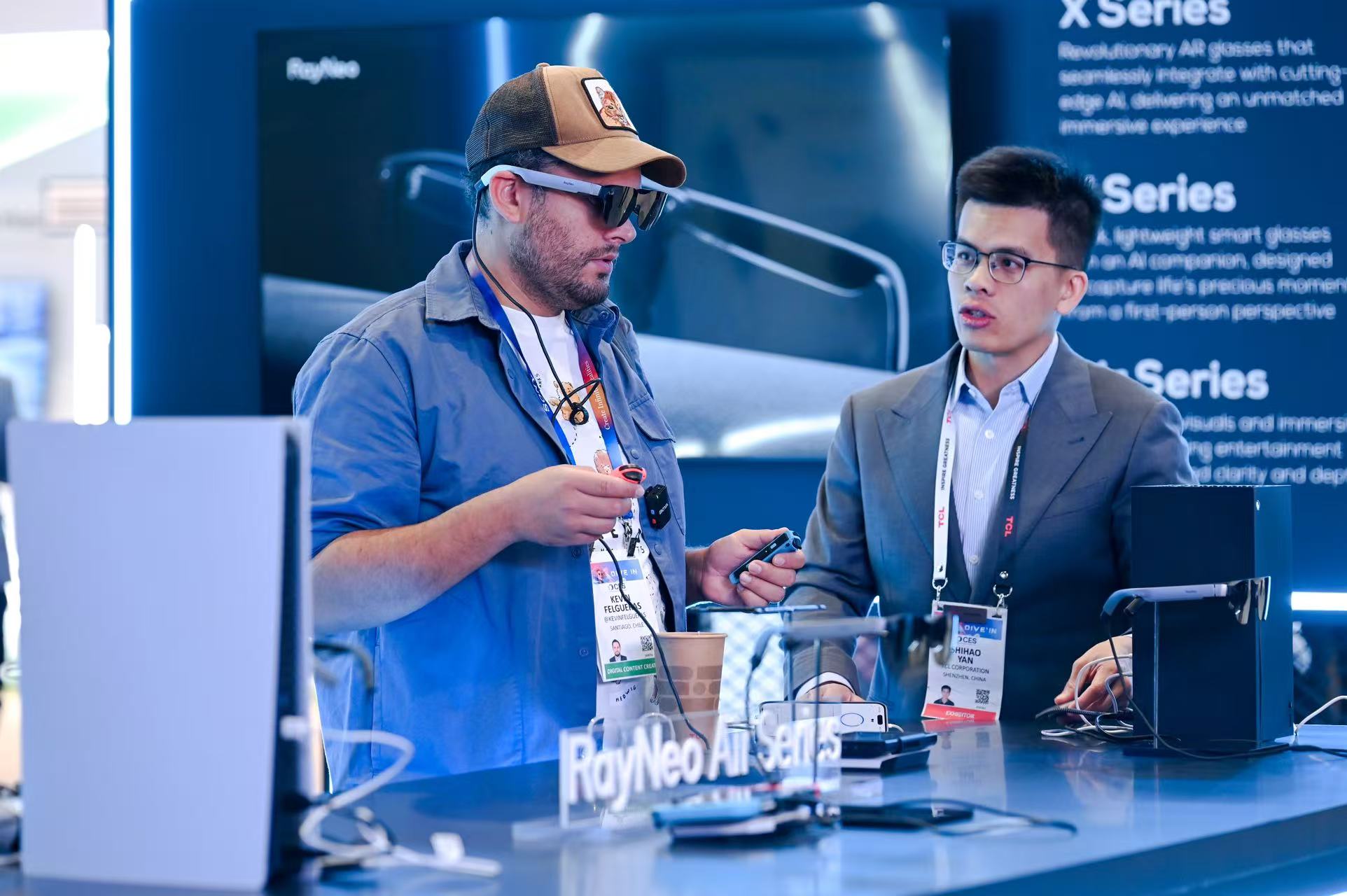
Core Insights - The company has successfully integrated its high-performance power management chips into Meta's supply chain for smart glasses, with ongoing orders being shipped [1] - The company's products are also widely used by various domestic and international brands, including Thunderbird and Yijing, in their AI/AR glasses [1] Company Developments - The company's power management chips have passed through ODM manufacturers and are now part of Meta's product offerings [1] - Continuous shipment of related orders indicates strong demand and operational efficiency [1] Industry Impact - The integration into Meta's supply chain highlights the growing importance of power management solutions in the AI/AR glasses market [1] - The collaboration with multiple brands suggests a robust market presence and potential for future growth in the sector [1]

艾为电子称AI眼镜将替代手机,2025年出货量或增247%
Mei Ri Jing Ji Xin Wen· 2025-11-24 09:40
【艾为电子:#AI眼镜或将替代手机# 】#AI眼镜出货量将暴涨247%# "目前,AI眼镜已具备手机的多种 功能,未来,AI眼镜将替代手机。" ——艾为电子董秘余美伊在股东会上表示。在消费电子领域,艾为 电子展现了对AI眼镜的高度重视。Meta是公司在AI眼镜领域的一大客户,除此之外,公司芯片也应用 在了其他品牌的AI眼镜中,如Google、小米、雷鸟等。余美伊表示:"手机市场目前已成为存量市场, 但AI眼镜产品是0到1的过程,未来增长空间巨大。"根据IDC数据,智能眼镜品类在2025年的出货量将 增长247.5%,整个市场的硬件出货量到2029年将达到4310万台,复合年增长率高达31.8%。(科创板日 报,泽塔) ...