
默沙东

Search documents
保费翻倍时刻迫近之际 特朗普施压健康险巨头们下调价格
Zhi Tong Cai Jing· 2025-12-20 00:58
Group 1 - President Trump plans to convene major health insurance companies to pressure them into lowering healthcare costs for Americans facing premium increases after the expiration of Obamacare subsidies [1][2] - The meeting is expected to take place in the coming weeks, with Trump emphasizing the need for insurance companies to reduce their profits significantly [2][3] - The health insurance industry, represented by AHIP, stated that premiums reflect healthcare costs and that insurance companies are doing their best to protect Americans from rising medical expenses [2] Group 2 - Over 20 million Americans are projected to see their healthcare premiums double by 2026, which could strain middle and low-income voters already concerned about living costs [3] - Congressional lawmakers left Washington without extending subsidies, leaving little time to address the critical premium issue before the open enrollment period ends on January 15 [3] - Trump's public pressure on insurance companies may create uncertainty regarding future profit margins and rates, negatively impacting the sector's short-term valuations [3] Group 3 - Trump announced agreements with nine pharmaceutical companies to lower drug prices for low-income and disabled individuals, claiming it as a significant victory for patients [4] - The pharmaceutical companies involved have committed to providing discounted drugs directly to consumers and launching new drugs at prices comparable to those in overseas markets [4] - Trump expressed optimism that drug prices in the U.S. will soon become the lowest among developed countries [4]
礼来股价登顶万亿美元:因替尔泊肽大获成功
GLP1减重宝典· 2025-12-17 13:43
Core Insights - Eli Lilly's market capitalization briefly surpassed $1 trillion, making it the first pharmaceutical company to achieve this milestone, reflecting its significant growth and market leadership [6][10]. Market Position - As of November 21, Eli Lilly's market cap reached approximately $1 trillion, compared to other pharmaceutical giants like Novo Nordisk ($211.4 billion), Merck ($242.6 billion), Novartis ($244.2 billion), Johnson & Johnson ($491.2 billion), and Pfizer ($142.3 billion) [6]. - Eli Lilly's market cap is 4.18 times the total market cap of all A-share pharmaceutical companies valued over $100 billion, indicating its dominant position in the industry [10]. Financial Performance - In Q3 2025, Eli Lilly reported revenues of approximately $17.6 billion, a 54% year-over-year increase, marking a record high for the company [11]. - The adjusted EPS for Q3 was approximately $7.02, significantly higher than the previous year [11]. - The strong performance was driven by the sales of Tirzepatide, with Mounjaro (diabetes) generating about $6.5 billion and Zepbound (chronic weight management) generating about $3.6 billion in Q3, together exceeding $10 billion in a single quarter [11]. Growth Drivers - The ongoing success of Tirzepatide in various indications, including MASH and obstructive sleep apnea, enhances market expectations for Eli Lilly's long-term growth [13]. - In pivotal Phase III trials, Tirzepatide demonstrated an average weight loss of approximately 20% over 72 weeks, solidifying its leading position in the weight loss sector [14]. - The SURMOUNT-4 study confirmed the sustainability of weight loss effects, with participants maintaining weight loss and improvements in metabolic indicators such as blood pressure and blood sugar levels [14].

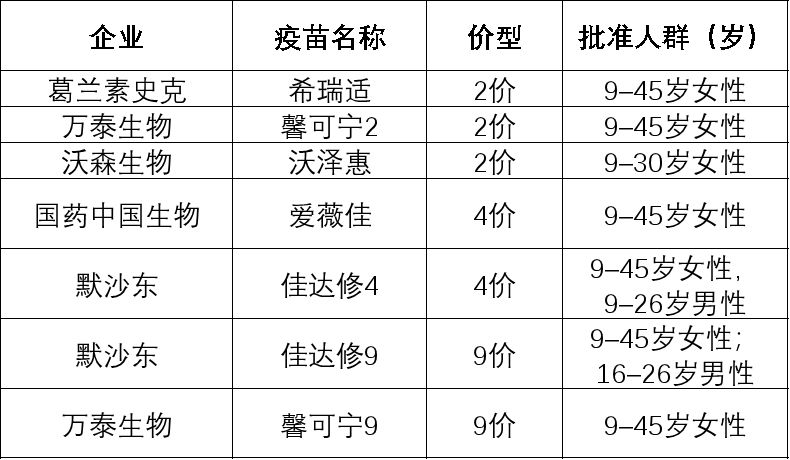
万泰争锋默沙东:HPV疫苗“最甜”的市场已经没了 | 海斌访谈
Di Yi Cai Jing· 2025-12-11 15:05
Core Viewpoint - The launch of Wantai Biological's nine-valent HPV vaccine in Shanghai marks the beginning of competition with Merck, which has dominated the market for seven years, raising concerns about the clarity of commercial returns for vaccine companies [1][4]. Group 1: Market Dynamics - Wantai's nine-valent HPV vaccine is priced at 499 yuan, requiring only 2 doses for women aged 9-17 and 3 doses for those aged 18-45, making it more affordable compared to Merck's vaccine [3][5]. - Merck's vaccine has seen a significant drop in monthly administration numbers in Shanghai, from 2000 to around 200, indicating a potential saturation in the market [4][6]. - The introduction of Wantai's vaccine is expected to increase vaccination rates among women, particularly those who previously found Merck's vaccine too expensive [5][6]. Group 2: Clinical and Production Insights - Wantai employs a lower-cost production method using E. coli, which allows for more stable output compared to Merck's vaccine [5]. - Wantai's vaccine has undergone five clinical trials involving approximately 11,000 Chinese women, with mostly mild adverse events reported [5]. - Merck's vaccine has a longer history of real-world data, but the introduction of Wantai's vaccine may lead to a decrease in prices for both products [5][8]. Group 3: Competitive Landscape - The HPV vaccine market in China is facing concerns of oversupply, with Merck's nine-valent vaccine experiencing a 38% year-on-year decline in batch approvals [8]. - Merck's distributor, Zhifei Biological, is under pressure to clear inventory, which may lead to price reductions [8]. - Other companies, such as Watson Bio and Ruike Bio, are also developing HPV vaccines, but their market entry timelines are uncertain, with Ruike's vaccine expected to be approved by late 2026 or early 2027 [9][10].

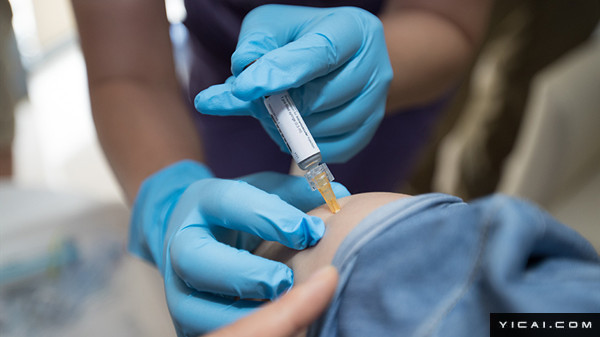
国产九价HPV疫苗北京“首针”落地,北大医院毕蕙:国内接种率低,不仅仅因为价格
Mei Ri Jing Ji Xin Wen· 2025-12-05 07:24
Core Insights - The first domestic nine-valent HPV vaccine was officially administered in Beijing on December 4, marking a significant step in cervical cancer prevention efforts in China [1] - Despite the approval of multiple HPV vaccines, the overall vaccination rate in China remains below the global average, indicating challenges in public awareness and accessibility [2][10] Industry Overview - China has the largest variety of HPV vaccines globally, with two domestic bivalent vaccines having received WHO pre-qualification, ensuring their safety and efficacy [2][3] - The vaccination coverage rates for HPV among women aged 9-45 in mainland China were reported at 10.15% for the first dose and 6.21% for the full series in 2022, with only 4.00% for girls aged 9-14 [3] Public Health Goals - The WHO's 2020 strategy aims for 90% of girls to complete HPV vaccination by age 15 by 2030, with a target incidence rate of cervical cancer below 4 cases per 100,000 women [4][7] - Countries with high vaccination coverage, such as Australia and Finland, have seen cervical cancer rates drop significantly, demonstrating the effectiveness of vaccination and screening programs [7] Challenges and Opportunities - Public awareness and willingness to vaccinate remain low, with factors such as pricing and lack of information contributing to the hesitance [10][11] - The inclusion of HPV vaccines in the national immunization program aims to provide free vaccinations for eligible girls, potentially increasing uptake [8] Recommendations for Improvement - Enhanced public education initiatives are necessary to inform parents about the importance of HPV vaccination, particularly targeting the appropriate age for administration [10][11] - A comprehensive management system integrating health consultation, vaccination, screening, and treatment is recommended to improve overall cervical cancer prevention efforts [11]
ADC与PD-1红海之外,宝济药业如何找到生物医药的“第二增长曲线”?
智通财经网· 2025-12-05 05:49
Core Viewpoint - The Chinese biopharmaceutical industry is experiencing both opportunities and challenges, with Shanghai Baoji Pharmaceutical Co., Ltd. adopting a differentiated strategic path to address unmet clinical and market needs through its three core products: KJ103, KJ017, and SJ02, which target specific therapeutic areas rather than competing in saturated markets like ADC and PD-1 [1][13]. Group 1: KJ103 - Best-in-Class Antibody IgG Degrading Enzyme - KJ103 is the world's first and only low-pre-existing antibody IgG degrading enzyme that has reached the registration clinical stage, targeting urgent treatment needs in autoimmune diseases [2][3]. - KJ103 demonstrates rapid efficacy, with over 90% reduction in IgG levels within one hour and 95% within six hours, providing a critical "time window" for treating severe conditions like anti-GBM disease and Guillain-Barré syndrome [2][3]. - The product has received "Breakthrough Therapy Designation" from regulatory authorities for its indications, which may expedite its review and approval process [3]. Group 2: Market Potential of KJ103 - KJ103 is expected to fill a significant gap in the organ transplantation field, potentially becoming China's first approved IgG degrading enzyme, thereby increasing transplant success rates [4]. - In the acute autoimmune disease sector, KJ103's rapid action could revolutionize treatment standards, preventing severe outcomes like organ failure [4]. - The drug's mechanism allows for potential use in hundreds of IgG-mediated autoimmune diseases, opening vast long-term market opportunities [4]. Group 3: KJ017 - Subcutaneous Administration Enabling Platform - KJ017 is positioned as a key enabler for the transition from intravenous to subcutaneous administration in biopharmaceuticals, addressing the physical limitations of traditional delivery methods [6][7]. - It is the first and only recombinant human hyaluronidase in China to reach the NDA stage, breaking the global technical monopoly held by Halozyme [7]. - KJ017's commercial model is designed to provide a stable income stream with low risk, as it is linked to the sales of downstream biopharmaceuticals [9]. Group 4: Market Landscape for KJ017 - The global recombinant human hyaluronidase market is projected to reach $9.094 billion by 2033, with the Chinese market expected to reach 6.980 billion RMB [8]. - KJ017's applications include single-agent therapies and collaborations with antibody drugs to facilitate the transition from IV to SC formulations, addressing both high-end and grassroots medical markets [8][9]. Group 5: SJ02 - Long-acting FSH Fusion Protein - SJ02 is the first approved long-acting FSH product in China, designed to improve patient experience in assisted reproduction by reducing injection frequency from daily to weekly [10][11]. - The Chinese assisted reproductive drug market is projected to reach 14.9 billion RMB by 2033, with the long-acting FSH market expected to reach 3.6 billion RMB [11]. - The company has secured a sales agreement with Anke Bio for commercialization in Greater China, ensuring market entry and potential growth [12]. Group 6: Strategic Overview - The three core products of Baoji Pharmaceutical—KJ103, KJ017, and SJ02—reflect a unified development strategy focused on upgrading existing therapies rather than pursuing new targets, leading to shorter commercialization cycles and higher certainty [13]. - Each product aims for a "first in China" or "global leading" position, addressing clinical pain points and enhancing patient quality of life [13]. - The company leverages its expertise in complex recombinant biopharmaceuticals to establish a robust commercial defense system, positioning itself for long-term value creation in the global biopharmaceutical landscape [13].
业景气前瞻-宠物食品、宠物保健专家交流
2025-12-03 02:12
Summary of Key Points from the Conference Call Industry Overview - The domestic pet food market is highly competitive, with domestic brands holding over 70% market share, including brands like Guobao, Royal Canin, Xianlang, and NetEase Tiancheng [1][4] - The pet food market is experiencing intensified price competition, with major brands engaging in price wars to capture market share, which is squeezing the survival space for smaller brands [1][5] - Online sales channels have become mainstream, contributing to 80% of brand sales, while offline channels help capture loyal customers [1][10] Market Trends - Domestic companies are expected to adopt international strategies, including establishing overseas factories to expand their global market presence [1][4] - The pet health product market is projected to exceed 15 billion yuan (factory price) and nearly 30 billion yuan in retail sales by 2025, with a trend towards more refined and personalized products [1][11] Competitive Landscape - Guobao is a leading player with significant supply chain advantages, controlling meat and grain sourcing and reducing costs through overseas factories [1][8] - Zhongchong operates a multi-brand strategy and has made extensive investments in raw materials and supply chains, showing strong growth potential [1][8] - The market is divided into four tiers, with Guobao and Royal Canin leading, followed by Xianlang and emerging brands like NetEase Tiancheng [4][8] Pricing Dynamics - Economic conditions have led to decreased consumer willingness to spend, prompting brands to engage in aggressive pricing strategies [5][6] - Major players are expected to continue using price wars to gain market share while maintaining strict quality control to avoid losing consumer trust [6][5] Channel Strategy - Brands face challenges in balancing online and offline investments, with many opting to establish online reputations before investing in offline channels [7][10] - The trend indicates that brands that can balance price and quality will stand out in an increasingly competitive market [7] Consumer Perception and Brand Trust - Consumers generally perceive imported pet health products as superior to domestic ones, which affects the market dynamics [13] - Domestic brands need to improve research and development and raw material selection to enhance product quality and consumer trust [13][16] Regulatory and Trade Challenges - The U.S. tariff policies pose significant challenges for Chinese brands, leading to increased uncertainty and pressure on smaller enterprises [17][18] - Chinese brands are responding by establishing overseas factories to mitigate tariff impacts and enhance competitiveness [21] Future Outlook - The pet industry is expected to see significant growth by 2026, particularly in pet healthcare, pet health products, and pet food sectors [19] - The market for pet food is projected to reach 120 to 150 billion yuan (factory price) and 280 to 300 billion yuan in retail sales, with a growing share of high-end products [19] Emerging Trends and Opportunities - Emotional consumption products and niche markets for exotic pets are experiencing rapid growth, with significant potential for local brands [22][23] - The pet funeral service sector is emerging as a high-profit area, although it requires strong empathy and faces regulatory challenges [23]
宝济药业-B今日起招股 引入安科生物香港等3家基石投资者认购2.006亿港元发售股份
Zhi Tong Cai Jing· 2025-12-01 23:18
Company Overview - Baoji Pharmaceutical is set to launch an IPO from December 2 to December 5, 2025, offering 37.9117 million shares, with 10% allocated for Hong Kong and 90% for international sales. The maximum public offering price is HKD 26.38 per share, with an entry fee of approximately HKD 2,664, and shares are expected to begin trading on December 10, 2025 [1] - The company has attracted significant investment, with a total funding exceeding CNY 1.5 billion from various investors, including local industry capital and market-oriented funds, resulting in a post-investment valuation of approximately CNY 4.87 billion, which is 23 times the initial post-investment valuation [1] Investment and Partnerships - The IPO has secured a strong cornerstone investor lineup, including well-known institutions such as Anke Bio, DC Alpha SPC, and Guotai Junan Securities, with a total subscription of HKD 200.6 million, accounting for about 21.77% of the total fundraising [2] - The presence of cornerstone investors highlights market recognition of the company's technological capabilities and commercial potential, providing a solid foundation for the smooth progress of the issuance [2] Product Pipeline and Technology - Baoji Pharmaceutical focuses on four key areas: antibody-mediated autoimmune diseases, large-volume subcutaneous injections, reproductive medicine drugs, and transformative products replacing traditional biochemical extraction methods. The company has developed a robust pipeline with seven clinical-stage candidates and seven preclinical candidates [2] - The core pipeline includes KJ017, a recombinant hyaluronidase for large-volume subcutaneous delivery, which is currently under review for market approval; KJ103, an IgG degrading enzyme in Phase III clinical trials for autoimmune diseases; and SJ02, the first long-acting follicle-stimulating hormone approved in China, which received approval in August [3] Commercialization and Market Position - The commercialization of the hyaluronidase technology has led to partnerships with several antibody drug companies, and an exclusive sales agency agreement with Anke Bio for SJ02 in Greater China has been established [3] - The focus on large-volume subcutaneous injection technology positions Baoji Pharmaceutical as a key player in the biopharmaceutical sector, offering advantages over traditional intravenous administration by reducing adverse events and significantly shortening administration time from 30-180 minutes to 2-5 minutes [3] Industry Landscape - Halozyme is identified as a leading company in the global hyaluronidase subcutaneous injection technology, with its technology applied to several major antibody drugs. The trend of developing subcutaneous versions of various drugs, including oncology treatments, is gaining momentum [4] - Baoji Pharmaceutical aims to become the "Halozyme of China," leveraging its expertise in hyaluronidase technology and core pipeline to empower its products and assist other domestic antibody drugs in achieving subcutaneous delivery upgrades, thereby capturing a significant market position in the biopharmaceutical innovation wave [4]

宝济药业-B(02659)今日起招股 引入安科生物香港等3家基石投资者认购2.006亿港元发售股份
智通财经网· 2025-12-01 23:15
Company Overview - Baoji Pharmaceutical-B (02659) plans to conduct an IPO from December 2 to December 5, 2025, offering 37.9117 million shares, with 10% allocated for Hong Kong and 90% for international sales. The maximum public offering price is set at HKD 26.38 per share, with an entry fee of approximately HKD 2,664 [1] - The company has attracted significant investment, with total funding exceeding CNY 1.5 billion from various investors, including local industry capital and market-oriented funds, resulting in a post-investment valuation of approximately CNY 4.87 billion, which is 23 times the initial post-investment valuation [1] Investment and Partnerships - The IPO has secured a strong cornerstone investor lineup, including notable institutions such as Anke Bio Hong Kong and Guotai Junan Securities, with a total subscription of HKD 200.6 million, accounting for about 21.77% of the total fundraising [2] - The company has established a comprehensive pipeline with 7 clinical-stage candidates and 7 preclinical candidates, focusing on areas such as antibody-mediated autoimmune diseases and large-volume subcutaneous injections [2] Product Pipeline - The core pipeline includes KJ017, a recombinant hyaluronidase for large-volume subcutaneous delivery, currently under review for market approval; KJ103, an IgG-degrading enzyme in Phase III clinical trials for autoimmune diseases; and SJ02, the first long-acting follicle-stimulating hormone approved in China, which received approval in August [3] - The commercialization of the hyaluronidase technology has led to agreements with several antibody drug companies, and a unique sales agency agreement with Anke Bio for SJ02 in Greater China [3] Industry Positioning - Baoji Pharmaceutical is positioned to become a Chinese counterpart to Halozyme, leveraging its hyaluronidase technology to enhance the commercialization of its pipeline products and assist other domestic antibody drugs in achieving subcutaneous delivery upgrades [4] - The industry is witnessing a shift towards subcutaneous administration, with major companies like Merck and Daiichi Sankyo developing subcutaneous versions of their drugs, indicating a growing trend in the biopharmaceutical sector [4]
华创医药周观点:血液净化器械行业专题 2025/11/29
华创医药组公众平台· 2025-11-29 13:04
Core Viewpoint - The article discusses the blood purification device industry, highlighting the increasing prevalence of End-Stage Renal Disease (ESRD) and the growth potential of blood purification technologies in response to this global health challenge [18][21]. Market Overview - The global ESRD patient population is projected to grow from 91.33 million in 2019 to 148.51 million by 2030, with a CAGR of 4.2% [18][19]. - In China, the ESRD patient population is expected to increase from 3.025 million in 2019 to 6.132 million by 2030, with a CAGR of 5.8% [20][18]. Treatment Methods - Blood purification is the most widely used treatment for ESRD, offering higher survival rates compared to kidney transplantation and conservative treatment [21]. - The number of patients receiving blood purification treatment in China rose from 736,000 in 2019 to 1.069 million in 2023, with a CAGR of 9.8%, and is expected to reach 3.791 million by 2030, with a CAGR of 19.8% [21][23]. Blood Purification Technologies - The main blood purification methods include hemodialysis, peritoneal dialysis, blood perfusion, and blood filtration, with hemodialysis being the most mature and widely applied [29]. - Hemodialysis effectively removes harmful substances and excess fluid from the blood, making it suitable for patients at various disease stages [29]. Market Size and Growth - The Chinese blood dialysis device market is projected to grow from CNY 11.63 billion in 2019 to CNY 51.52 billion by 2030, with a CAGR of 19.9% from 2023 to 2030 [30][28]. - The market share of blood dialysis devices in China is expected to see significant growth, with specific segments like blood dialysis machines and consumables also experiencing robust growth rates [30]. Competitive Landscape - Domestic companies are rapidly catching up with international competitors in the blood purification consumables sector, achieving nearly 50% market share in dialysis filters [31]. - The competitive landscape for blood dialysis machines is evolving, with domestic manufacturers improving their technology and performance to match imported products [37][33]. Policy and Market Dynamics - The article notes that the Chinese government has been implementing centralized procurement policies, leading to significant price reductions and accelerating the domestic replacement process in the blood purification market [36][35].


科伦博泰生物-B(06990.HK):PD-L1阳性NSCLC 1L的III期临床达到主要终点 一线治疗市场广阔
Ge Long Hui· 2025-11-28 04:57
Core Viewpoint - The company announced that its TROP2 ADC sac-TMT combined with pembrolizumab has achieved significant improvements in progression-free survival (PFS) in a Phase III clinical study for PD-L1 positive non-small cell lung cancer (NSCLC) [1] Group 1: Clinical Study Results - The OptiTROP-Lung05 study reached its primary endpoint, showing statistically and clinically significant improvements in PFS, with a trend towards benefits in overall survival (OS) [1] - Sac-TMT is the first ADC to achieve the primary endpoint in first-line NSCLC treatment, and the company plans to communicate with the CDE regarding the NDA submission [1] - The study involved patients who were negative for EGFR sensitive mutations and ALK fusion genes, with the treatment regimen being sac-TMT (4 mg/kg Q2W) combined with pembrolizumab (400 mg Q6W) [1] Group 2: Market Potential and Demand - The first-line treatment market for NSCLC is vast, with approximately 1 million new lung cancer cases annually, of which about 85% are NSCLC, and around 50% of these patients have PD-L1 TPS ≥ 1% [2] - In mainland China, about 60% of patients are EGFR negative, and approximately 95% are ALK negative, indicating a significant unmet treatment need [2] - The 2025 CSCO guidelines still primarily recommend PD-(L)1 monoclonal antibodies and chemotherapy for first-line treatment of driver gene-negative NSCLC [2] Group 3: Comparative Efficacy - Sac-TMT shows promising potential in first-line treatment for NSCLC, with a median PFS of 17.8 months in PD-L1 positive patients, outperforming Trodelvy combined with pembrolizumab, which had a median PFS of 13.1 months [3] - In patients with low PD-L1 expression (TPS < 1%), sac-TMT achieved a median PFS of 12.4 months, surpassing Dato-DXd's 9.3 months in a similar population [3] - The company is awaiting OS data and specific Phase III results for sac-TMT in wild-type NSCLC [3] Group 4: Ongoing Development and Future Potential - Merck is actively advancing the clinical development of sac-TMT, with 15 global Phase III trials across six cancer types, including lung cancer [4] - The company is conducting four clinical trials in the NSCLC field, focusing on various combinations and treatment regimens [4] Group 5: Efficacy in Specific Patient Populations - In the OptiTROP-Lung04 Phase III study, sac-TMT demonstrated an overall response rate (ORR) of 60.6% compared to 43.1% for chemotherapy, with a median PFS of 8.3 months versus 4.3 months [5] - The analysis indicated that sac-TMT significantly improved OS compared to chemotherapy, reducing the risk of death by 40% [5] Group 6: Financial Projections - The company expects revenues of 2.084 billion, 2.876 billion, and 4.663 billion yuan for the years 2025 to 2027, with net profits of -622 million, -130 million, and 561 million yuan respectively [5]