
Burberry

Search documents
Bloomingdale's, Burberry CEOs Bet Big on Holiday Season
Bloomberg Television· 2025-11-28 13:48
Holiday Season Performance & Strategy - Bloomingdale's CEO expresses cautious optimism about consumer spending during the holiday season, noting positive trends in recent months [1] - Bloomingdale's is investing heavily in creating engaging in-store experiences to attract customers, focusing on personalized services and unique events [3][4] - Bloomingdale's has experienced four consecutive quarters of same-store sales growth, indicating a successful turnaround [5] - The National Retail Federation estimates that 44% of consumers will do their holiday shopping at department stores this year [6] Bloomingdale's Reinvention & Brand Partnership - Bloomingdale's aims to rebuild its iconic status by reinventing the customer experience and fostering relationships [7][8] - Bloomingdale's has a 70-year partnership with Burberry, highlighting a collaboration for the holiday season, including wrapping the flagship store in a giant Burberry scarf [9][10] Burberry's Performance & Strategy - Since July 2024, when Joshua Shulman took over, Burberry's shares have rallied 50% [11] - Burberry is emphasizing its British heritage and offering a range of luxury products, from $130 candles to $3,000 trench coats [12] - Burberry aims to maintain broad universal appeal while remaining true to its luxury brand status [13] Luxury Market Trends - A JP Morgan report indicates that consumer demand for luxury goods in the U S has remained strong despite economic challenges [14] - The S&P Global Luxury Index, tracking 80 major luxury brands, shows no signs of slowing down [14] Future Outlook - Bloomingdale's is already planning for future holiday displays and strategies, looking as far ahead as 2027 and 2036 [15]


Bloomingdale's, Burberry CEOs Bet Big on Holiday Season
Youtube· 2025-11-28 13:48
Core Insights - Bloomingdale's is optimistic about the holiday shopping season despite ongoing inflation and supply chain challenges, with a positive trend observed in recent months [1][5] - The company is focusing on enhancing customer experience and engagement, aiming to recreate a destination shopping experience [3][7] Company Performance - Bloomingdale's has reported four consecutive quarters of same-store sales growth leading into the holiday season, indicating a successful turnaround after years of sales declines [5] - The National Retail Federation estimates that 44% of consumers will shop at department stores this holiday season, which Bloomingdale's hopes will support its recovery [6] Marketing and Partnerships - Bloomingdale's is implementing various experiential marketing strategies, including personalized offerings and collaborations with iconic brands like Burberry [3][9] - The partnership with Burberry, which has lasted over 70 years, is highlighted as a key element in enhancing the shopping experience and brand appeal [9][13] Product Offerings - Burberry's product range at Bloomingdale's includes items priced from $130 for candles to $3,000 for trench coats, catering to diverse consumer preferences [12] - The luxury goods market in the U.S. remains resilient, with the S&P Global Luxury Index showing sustained momentum despite economic challenges [14] Future Outlook - Bloomingdale's is already planning for future holiday seasons, indicating a proactive approach to long-term growth and customer engagement strategies [15]

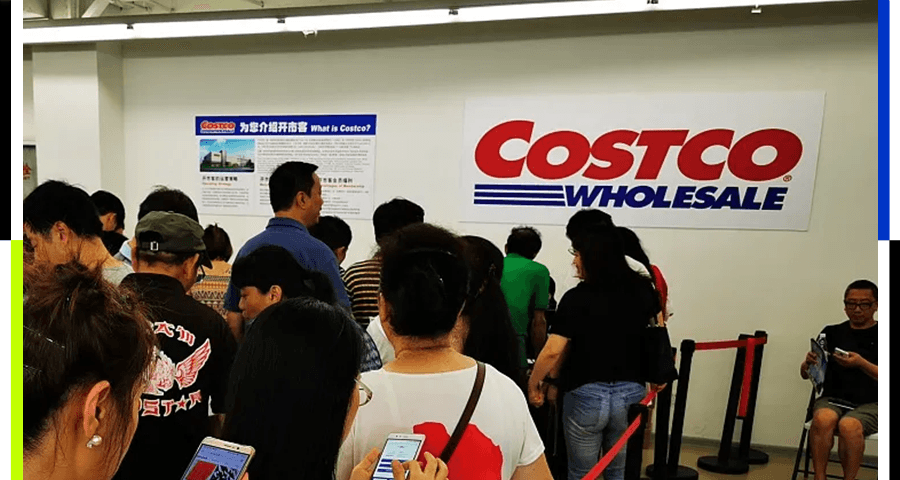
年销691亿,Costco成了全球服装巨头
Xin Lang Cai Jing· 2025-11-28 07:23
Core Insights - Costco has quietly become a global apparel giant with sales reaching $9.7 billion in fiscal year 2025, surpassing major brands like Prada and Coach [3][4] - The company's apparel sales have grown by 40% from 2019 to 2024, with a compound annual growth rate (CAGR) of nearly 7%, while the overall clothing market in China and the U.S. has slowed down [3][4] - Costco's unique selling proposition lies in its ability to offer both affordable basics and luxury brands, appealing to a younger demographic that is increasingly skeptical of traditional luxury pricing [7][9] Apparel Strategy - Costco's clothing strategy focuses on selling basic items with a limited selection, maintaining only 4000 SKUs in total, which is significantly lower than traditional supermarkets [12] - The company employs a bundling sales approach to increase turnover and reduce costs, allowing for lower prices while still maintaining profitability [12][13] - Despite a lower gross margin of 14-15% in its apparel segment, Costco's massive sales volume allows it to outperform many fashion brands [13][14] Membership Model - Membership fees are the primary profit driver for Costco, contributing $5.32 billion in fiscal year 2025, which accounts for 65.7% of net profit [17][18] - The company has a high membership renewal rate of nearly 90%, indicating strong customer loyalty and satisfaction [20] - Costco's strategy of placing luxury items prominently and offering exclusive member benefits is designed to enhance customer retention and encourage repeat visits [18][22] Market Position - Costco's overall revenue for fiscal year 2025 reached $275.24 billion, positioning it among the top five global retailers [16] - The company's apparel business, while significant, is still considered a secondary operation compared to its core fast-moving consumer goods (FMCG) offerings [16][21] - The success of Costco's apparel segment in markets like China demonstrates the effectiveness of its business model in diverse regions [21][22]

可选消费W47周度趋势解析:AI泡沫论调和12月减息可能性降低影响全球资产表现-20251124
Haitong Securities International· 2025-11-24 14:05
Market Performance - The US hotel sector increased by 2.8%, with Marriott and Hilton rising by 3.8% and 1.83% respectively, demonstrating resilience under pressure[6] - The overseas sportswear sector decreased by 0.2%, with Amer Sports surging by 12.2% due to strong Q3 performance, leading to a revenue increase of 30%[14] - The jewelry sector fell by 2.1%, influenced by AI bubble concerns and reduced expectations for a December rate cut, strengthening the dollar[14] Sector Analysis - The domestic sportswear sector dropped by 2.4%, with major OEMs like Shenzhou International and Crystal International declining by 6.7% and 2.6% respectively due to geopolitical tensions[14] - The retail sector saw a decline of 4.0%, with China Duty Free falling by 10.5% as investors took profits amid uncertain policy outlooks[14] - The pet sector decreased by 5.7%, with concerns over sustainability as sales expenses outpaced revenue growth[14] Valuation Insights - The expected PE for the overseas sportswear sector in 2025 is 29.0x, which is 54% of the past 5-year average[15] - The expected PE for the domestic cosmetics sector is 27.6x, representing 52% of the past 5-year average[15] - Most sectors are valued below their historical 5-year averages, indicating potential investment opportunities[15]
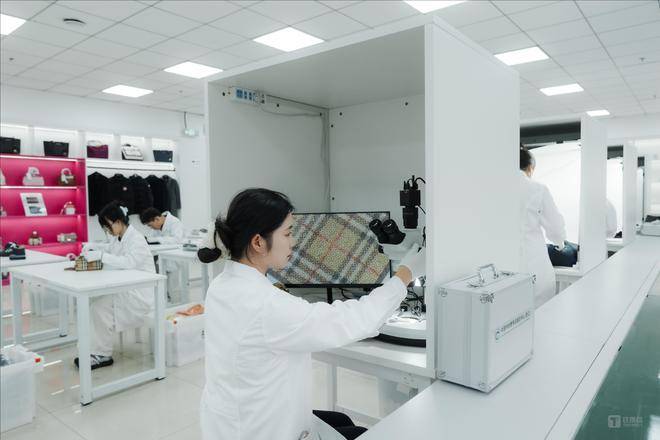
中国中检驻仓全检,“又好又省”或成奢侈品消费主流
Sou Hu Cai Jing· 2025-11-24 13:41
Core Insights - The luxury goods consumption landscape is shifting towards a focus on quality and value, driven by changing consumer preferences and government initiatives to promote quality e-commerce [3][4][5] Group 1: Market Trends - The luxury goods market is experiencing a significant transformation, with a shift in consumption focus from the West to China, which is projected to capture 25% of the global luxury market by 2030 [4] - Discount channels are becoming increasingly popular, with sales in discount luxury goods rising by 30% year-on-year in the first nine months of the year [7][8] - Consumers are prioritizing high cost-performance luxury goods, indicating a move away from the traditional mindset of "brand supremacy" to a more rational evaluation of price, service, quality, and practicality [5][8] Group 2: Quality Assurance Initiatives - The partnership between China Inspection and Testing Institute (CITI) and the discount e-commerce platform Vipshop aims to enhance the quality assurance of luxury goods through independent and comprehensive authentication [3][8] - CITI's involvement includes a rigorous inspection process where each luxury item is evaluated by three independent appraisers, ensuring a high level of trust and credibility in the quality of products sold on e-commerce platforms [8] - The trend towards "good and affordable" luxury goods is expected to become mainstream, as consumers increasingly seek both quality and value in their purchases [8]

细分赛道显复苏迹象,高端消费和新零售优成长
GOLDEN SUN SECURITIES· 2025-11-23 11:53
Investment Rating - The report maintains an "Increase" rating for the industry [6] Core Viewpoints - The report indicates signs of recovery in the retail sector, particularly in high-end consumption and new retail, supported by recent quarterly performance disclosures from consumer companies [1] - The recovery is attributed to both low base effects from the previous year and the resilience of specific market segments, suggesting a strengthening foundation for domestic consumption [1] Summary by Sections Brand Performance - Richemont Group reported a 14% revenue increase in Q3 2025, with a 7% growth in mainland China, driven primarily by jewelry sales [2] - Burberry's same-store sales turned positive for the first time since 2024, with a 3% increase in China, benefiting from a low base effect [2] Property Performance - Swire Properties reported retail sales growth of 41.9% in Shanghai and 7.8% in Beijing for the first three quarters of 2025, indicating improving retail performance [3] - China Resources Land's total contract sales in October 2025 were approximately 15.2 billion yuan, a decrease of 51%, but recurring income showed a 3% increase [3] New Retail Developments - Walmart's Q3 2026 revenue reached $179.5 billion, a 5.8% year-on-year increase, with a 21.8% growth in China and a 32% increase in e-commerce sales [4] - Miniso reported a 28% revenue growth in Q3 2025, with a net profit increase of 12% and a total of 8,138 stores globally [5] Industry Trends - The retail index showed a decline of 7.24% recently, underperforming the Shanghai Composite Index by 3.34 percentage points [14] - The report highlights the importance of new consumption trends and the potential for growth in sectors like duty-free shopping and cross-border e-commerce [10] Company Dynamics - Yum China announced a new strategic plan aiming for significant growth in store numbers and profitability over the next three years [21] - Huitongda Network plans to acquire a 57% stake in Cognition Boundary, enhancing its market position [21] Industry Developments - Good Sale has introduced coffee sales in select stores, maintaining a low-price strategy [23] - JD's discount supermarket is set to open a new location, expanding its market coverage [23] - Hema's new discount community supermarket model is entering the Guangdong market, indicating strategic expansion [24]
双11奢侈品消费“翻红”
Sou Hu Cai Jing· 2025-11-23 05:06
如果大家去商场逛逛,会发现那些奢侈品专柜确实冷清了不少,然而实际上,购买奢侈品的"大军"其实依旧庞大,只不过当 中许多人似乎换了一个购买方式,从"正价入手"来到了"折扣捡漏"赛道。 就拿最近双11数据来说,网上有声音也说今年是有史以来"最沉默"的一届双11,没想到奢侈品的表现却意外亮眼,据天猫公 布,10月20日正式开售后,平台奢牌整体成交同比两位数增长,Balenciaga、Burberry、Canada Goose、Coach、MiuMiu、 Ralph Lauren等品牌均在天猫实现高双位数增长。 年年都说奢侈品卖不动了,事实真的如此吗? 何况这些特卖平台的商品来源,一般都是利用供应链优势,直接与经销商甚至品牌方谈下来的合作,既保证了折扣低价,又 保证了正品品质,消费者可以花更合理的价格买到心仪的品牌,这何乐而不为呢? 特别是主打品牌特卖的唯品会(VIPS.US),今年1-9月,其奢侈品销售额同比增长就超过了30%。双11期间,多个大牌表现尤 为亮眼,其中EA7涨了38%,BALLY涨了35%,Burberry涨了22%,汤丽柏琦更是猛增60%。 这些数据无一不证明,消费者不是不爱买奢侈品了,只不过不再 ...
奢侈品门店密集调整 北京高端商业新比拼
Bei Jing Shang Bao· 2025-11-20 16:30
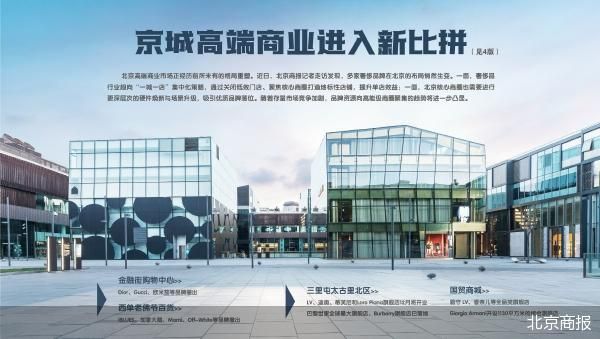
Core Insights - The luxury goods market in Beijing is undergoing significant changes, with brands like Gucci and Dior closing stores in traditional high-end shopping areas, while new flagship stores are emerging in more vibrant districts like Sanlitun [1][3] - The trend indicates a shift towards a "one store per city" strategy among luxury brands, focusing on flagship locations in prime commercial areas to enhance single-store efficiency [1][6] - The competition among shopping districts is intensifying, with a clear divide between the declining western commercial areas and the thriving eastern districts, particularly in Chaoyang [3][8] Group 1: Market Dynamics - Financial Street Shopping Center has seen the closure of major luxury brands due to expired leases, while other brands like Burberry and LV continue to operate [3] - Westside shopping areas, such as the West Wangfujing area, are experiencing a significant reduction in luxury brand presence, contrasting sharply with the "luxury frenzy" in the Chaoyang district [3][8] - The luxury brand selection criteria have evolved, with a focus on the alignment of brand positioning with shopping district characteristics and the necessity for high-quality infrastructure [6][7] Group 2: Strategic Adjustments - High-end shopping centers are actively upgrading their offerings to attract luxury brands, introducing trendy brands and unique experiences to enhance their appeal [4][6] - The introduction of flagship stores and unique retail experiences, such as themed pop-ups and interactive spaces, is becoming a strategy to maintain competitiveness in the luxury market [4][6] - The luxury market's focus on experiential retail is growing, with brands increasingly valuing the ability of shopping centers to create engaging content and experiences for consumers [7][10] Group 3: Future Opportunities - Despite the current challenges, there are still opportunities for luxury brands in the western regions of Beijing, particularly in areas like Haidian, which have affluent consumer bases [8][9] - The potential for luxury brands to establish a presence in western districts hinges on improving the quality of commercial spaces and enhancing transportation connectivity [8][9] - Strategies such as introducing high-end watch brands and leveraging local technological advancements could help attract luxury brands to underperforming areas [9][10]
Get the luxe look for less this Christmas with Abbott Lyons’ designer alternatives
Retail Times· 2025-11-19 09:08
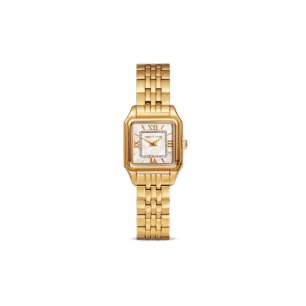
Abbott Lyon has got 35% off all items on its website or two for one.Here are a few of the brand’s top highlights:Similar to Tiffany & CoOval Link Chain Bracelet, £55A modern chain with polished oval links. It’s a standout piece that works for everyday styling or a dressed-up moment, making it an effortless, go-to gift for anyone who loves a touch of luxe.Similar to Cartier Essence Gold 23 Watch, £149This watch offers a classic, timeless look with its gorgeous gold tones and minimalist feel. It’s the perfect ...
中泰证券:奢侈品复苏主线明确 中国市场需求回归
Zhi Tong Cai Jing· 2025-11-19 05:46
Core Insights - The luxury goods industry is showing signs of recovery in Q3 2025, with Greater China emerging as a key driver for performance improvement [1][2] - Many brands have either narrowed revenue declines or achieved positive growth, indicating a gradual restoration of consumer confidence [2][3] Industry Overview - The luxury goods sector is experiencing a clear bottoming-out and recovery trend, particularly in the Greater China market, which is crucial for boosting market confidence [2] - Despite some brands still facing slight revenue declines year-on-year, the rate of decline is decreasing, and several companies have reported their first positive growth since the pandemic [2][3] Brand Performance - **LVMH**: Achieved a quarterly sales rebound for the first time in 2025, with Q3 total revenue at €18.2 billion, down 4% year-on-year but showing 1% organic growth, driven by strong performance in Greater China [3] - **Prada**: Reported a 9% increase in net revenue to €4.07 billion for the first three quarters of 2025, with Q3 growth at 8%, highlighting significant improvement in mainland China sales [3] - **Hermès**: Q3 revenue grew by 9.6% to €3.9 billion, with improvements noted in the Chinese market, although slightly below market expectations [4] - **Kering**: Revenue declined by 10% to €3.42 billion in Q3, but the decline was less severe than previous quarters, indicating a recovery trend, particularly in the North American market [4] - **Burberry**: Reported a 3% growth in comparable store sales in Q2 FY26, indicating a recovery trajectory in Greater China, with adjusted operating profit turning from a loss to a profit [5][6] - **Moncler**: Experienced a 1% revenue decline to €616 million in Q3, reflecting challenges in brand strategy and market competition [6] Investment Recommendations - The luxury goods sector in the Asia-Pacific region is seeing a significant narrowing of sales declines, with some brands already showing year-on-year increases, suggesting a bottoming out of mid-to-high-end consumption [7] - The focus of the market has shifted from concerns about deep recession to validating the strength and sustainability of recovery, with the performance in China being a critical variable for future luxury goods performance [7] - Companies with strong brand power, clear strategies, and effective execution in the Chinese market are expected to better capitalize on the recovery, with recommendations to focus on LVMH, Prada, Hermès, and Burberry [7]
