
GEV

Search documents
英伟达电力大会在即,2026年AI电力出海核心板块逻辑梳理
傅里叶的猫· 2025-12-14 12:37
Core Insights - The article discusses the challenges and opportunities in the U.S. power supply, particularly in the context of AI and energy demands, highlighting the "impossible triangle" of energy policy, economic growth, and AI needs [5][6]. Group 1: Energy Supply Challenges - The U.S. power grid is aging, with an average establishment time of over 40 years, leading to structural issues and a mismatch between supply and demand [5]. - The Biden administration's goal to eliminate 100GW of fossil fuel power generation by 2030 is threatened by the sudden surge in AI energy demands, creating a dilemma for energy policy [5]. - The U.S. power system lacks the capability for large-scale inter-regional energy distribution, unlike China's "West-to-East Power Transmission" [5]. Group 2: AI Power Export Opportunities - The article outlines three main directions for AI power export to North America by 2026: power sources (gas turbines, SOFC), power grid equipment (transformers, large-scale storage), and energy-saving technologies for data centers (SST) [6][19]. - The demand for gas turbines is expected to grow significantly, with an average annual demand of 80-110GW projected from 2026 to 2030, driven by the need for stable and green energy sources [8][9]. Group 3: Gas Turbine Market Dynamics - The supply side of the gas turbine market faces challenges due to complex production processes and a shortage of skilled labor, with an average training period of 1-2 years for workers [8]. - Major gas turbine manufacturers like Siemens Energy, GE, and Mitsubishi Heavy Industries dominate the market, leading to a tight supply situation with orders extending to 2028-2029 [9][10]. Group 4: SOFC and Energy Storage - The demand for SOFC is expected to reach 1.5-2GW by 2026, with a growth rate of over 30-50% annually, driven by major tech companies' procurement needs [14]. - The large-scale storage market in North America is projected to see demand exceed 70-80GWh by 2026, supported by favorable economic returns and declining system costs [17]. Group 5: Data Center Energy Efficiency - SST technology is anticipated to significantly reduce energy consumption and space requirements for data centers, with a projected market space of $25-35 billion by 2027 [19]. - The SST market is expected to see a penetration rate of 15-20% by 2027, with major players including Eaton and emerging domestic manufacturers [19][20].

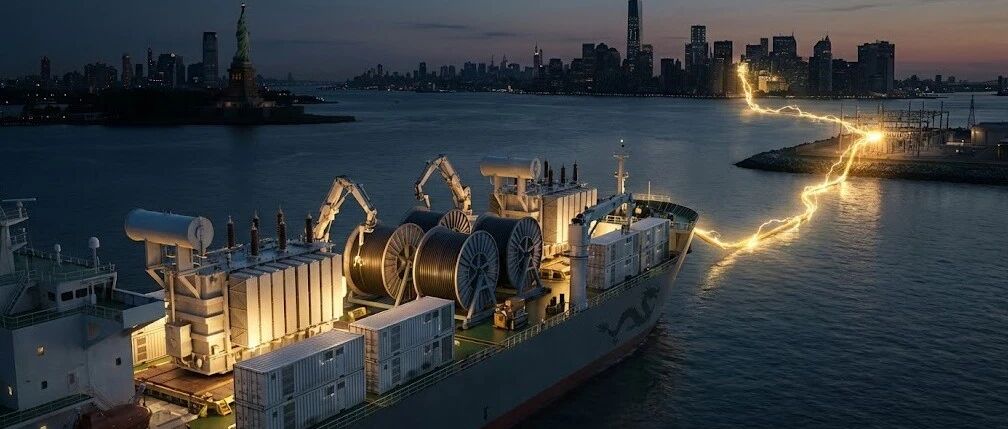
机械行业研究:看好拖拉机、中东天然气、燃气轮机和核聚变
SINOLINK SECURITIES· 2025-12-14 08:33
Investment Rating - The report does not explicitly state an investment rating for the industry Core Insights - The SW Machinery Equipment Index increased by 1.38% in the last week, ranking 4th among 31 primary industry categories, while the CSI 300 Index decreased by 0.08% [11] - Year-to-date, the SW Machinery Equipment Index has risen by 35.94%, outperforming the CSI 300 Index, which increased by 16.42% [15] Summary by Sections Market Review - The SW Machinery Equipment Index has shown strong performance, ranking 4th among industry categories for the week and 6th year-to-date [11][15] Key Insights - Tractor exports in October saw a significant increase of 54% compared to the previous months, indicating a positive outlook for 2026 [20] - The Middle East is accelerating its natural gas investments, with a projected 97% increase in capital expenditure from 2023-2024 compared to the average from 2014-2022 [22] - GEV has raised its gas turbine production target, indicating a robust demand for turbine blades, with a focus on domestic leader Yingliu [22] - The nuclear fusion sector is entering a new phase with multiple bids expected to be awarded soon, signaling a potential increase in orders for leading supply chain companies [22] Sector Performance Indicators - General Machinery: Continues to face pressure with a PMI of 49.2% [21] - Engineering Machinery: Shows signs of upward momentum with excavator sales increasing by 7.8% year-on-year [30] - Railway Equipment: Maintains steady growth with fixed asset investment around 6% [39] - Shipbuilding: Experiences a slowdown in price decline, indicating stabilization [42] - Oilfield Equipment: Bottoming out with stable demand in the Middle East [44] - Industrial Gases: Demand expected to rise as raw material prices decrease [50] - Gas Turbines: Strong growth with GEV reporting a 39% increase in new orders [51]


机器人零部件丝杆催化,工程机械周期底部趋势向上,全市场最大工程机械ETF(560280)连续6日上涨!重仓股恒立液压盘中涨近4%
Xin Lang Cai Jing· 2025-12-05 03:52
Group 1 - The 2025 Global Smart Machinery and Electronic Products Expo is held in Macau and Zhuhai, focusing on themes of smart electronics and machinery, with over a thousand participating companies [1] - Tesla's Optimus humanoid robot has achieved running speeds of 2.5-3 meters per second, indicating significant advancements in robotics technology [1] - The U.S. government is actively promoting the robotics industry, with initiatives to accelerate robot technology and advanced manufacturing, highlighting the strategic importance of robotics in national competition [2] Group 2 - China's industrial robot production increased by 17.9% in October 2025, driven by government policies that stimulate equipment upgrades [3] - The engineering machinery ETF has seen significant growth, with a 1.92% increase on December 5, 2025, and a cumulative rise of over 7% in the past two weeks [3] - The engineering machinery ETF has experienced a substantial increase in scale and shares, with net inflows of 63.09 million yuan over 22 trading days [3]



国金证券:中东天然气设备内需出口双驱扩产 “开采-处理-储运-应用”共赴出海
Zhi Tong Cai Jing· 2025-12-02 03:13
Group 1 - Middle Eastern countries are accelerating their natural gas industry layout, with Saudi Arabia and Qatar planning to increase production by 60% and 44% respectively by 2030, while large gas field developments continue to advance [1] - The natural gas industry in the Middle East has significant development potential, with 80% of supply directed towards regional economic demand and 20% for net exports, primarily in the form of Qatar's LNG exports [1] - The demand for natural gas in the Middle East is expected to rise due to large-scale economic growth plans and infrastructure investments, with core countries projected to maintain economic growth above 3% in the coming years [1] Group 2 - The natural gas industry encompasses the entire process from extraction to application, involving EPC engineering projects and the use of various equipment such as compressors, valves, cryogenic equipment, and gas turbines [2] - The Middle East and North Africa's oil and gas projects are projected to reach $101.2 billion in contracts in 2024, a 112% increase from 2022, with Chinese enterprises expected to see a 116.7% year-on-year increase in project contracting [2] - The demand for natural gas compressors is anticipated to remain high due to the expansion of natural gas extraction in the Middle East, with specific types of compressors required for different stages of the process [2] Group 3 - Companies to watch include Jereh Group, Zhongtai Co., and Yingliu Co. [3]

中东天然气设备:内需出口双驱扩产,“开采-处理-储运-应用”共赴出海 | 投研报告
Zhong Guo Neng Yuan Wang· 2025-12-02 02:05
Group 1: Industry Overview - The Middle East is accelerating its natural gas development, with Saudi Arabia and Qatar expected to increase production by 60% and 44% respectively by 2030, driven by the development of large gas fields like Jafurah and North Field [1] - 80% of the natural gas supply in the Middle East is for regional economic demand, while 20% is for net exports, predominantly in the form of liquefied natural gas (LNG) from Qatar [1] - Natural gas is crucial for electricity generation in the region, accounting for 45% of domestic demand, with the remaining used for industrial and hydrogen applications [1] Group 2: Economic Growth and Demand - Major Middle Eastern countries are pursuing large-scale economic growth plans, with expected economic growth rates above 3% in the coming years, which will increase electricity supply demand and subsequently natural gas demand [1] - The Asia-Pacific region is the primary export market for Middle Eastern natural gas, with projected annual demand reaching 1186 billion cubic meters (bcm) by 2030, a 32% increase from 2023, driven by significant growth in China and India [1] Group 3: Equipment and EPC Market - The natural gas industry encompasses the entire process from extraction to application, requiring various equipment such as compressors, valves, and turbines [2] - The Middle East and North Africa's oil and gas projects are projected to reach $101.2 billion in contracts in 2024, a 112% increase from 2022, with Chinese companies expected to see a 116.7% year-on-year increase in project contracts [2] - The demand for natural gas compressors is expected to remain high due to the expansion of natural gas extraction in the region, with specific types of compressors needed for different stages of the process [2] Group 4: Investment Recommendations - Companies with established channel layouts and those positioned in capacity-constrained segments are likely to benefit significantly from the ongoing expansion in Middle Eastern natural gas production [3] - Recommended companies to watch include Jereh Group, Zhongtai Co., and Yingliu Co. [3]
SOFC深度报告:北美负荷需求迎大级拐点,SOFC迎发展新机遇
2025-12-01 00:49
Summary of SOFC Industry and Company Insights Industry Overview - **Industry**: Solid Oxide Fuel Cells (SOFC) - **Market Potential**: The SOFC market in the U.S. is projected to reach 7.3 GW under neutral scenarios and up to 20 GW in optimistic scenarios over the next five years, with a potential market space of 40 GW if penetration rates increase to 20% [9][10][12] Key Advantages of SOFC - **High Efficiency**: SOFC can achieve over 60% efficiency, significantly higher than natural gas generators (35%) and gas turbines (40%) [4][6] - **Rapid Deployment**: SOFC systems can be delivered quickly, with companies like Bloom Energy providing 50 MW in 90 days and 100 MW in 120 days [2][4] - **Fuel Flexibility**: SOFC can utilize various fuels, including natural gas, methanol, and hydrogen, making it adaptable to the diverse energy landscape in the U.S. [4][7] - **Thermal Utilization**: SOFC operates at high temperatures (over 600°C), allowing for combined heat and power systems that enhance overall energy efficiency [4] Economic Analysis - **Cost Comparisons**: - Natural gas + heat pump system: $0.09 per kWh - Natural gas + CHP system: $0.12 per kWh - Hydrogen + heat pump system: $0.26 per kWh - Hydrogen + CHP system: $0.27 per kWh [5][6] - **Long-term Potential**: Although hydrogen systems are currently more expensive, there is significant potential for cost reduction in the future, improving their economic viability [6] Company Insights - **Weichai Power**: - Plans to establish 1 GW capacity by 2030, potentially generating over 20 billion RMB in revenue and 4 billion RMB in profit, akin to creating a new heavy-duty engine business [12][14] - Collaborates with Sirius for technology integration, enhancing its competitive edge [12] - Expected to ship 1,300 units this year, with half targeting overseas markets, indicating strong customer foundations for North American expansion [12][14] Gas Turbine Industry Trends - **Market Growth**: The gas turbine industry is experiencing significant order growth, with Siemens and GEV reporting over 40% and 39% increases in orders, respectively [15][16] - **Key Players**: Companies like Hangyu Technology and Wanze Co. are making notable advancements in the gas turbine sector, with clear revenue growth prospects [15][16] AI Data Center Impact - **Electricity Demand Surge**: The rapid development of AI data centers is expected to drive global electricity demand significantly, with projections of up to 100 GW of capacity by 2030 [17][19] - **Equipment Orders**: Major power equipment companies are seeing substantial increases in new orders, indicating a tight supply situation in the market [17] Conclusion - The SOFC industry is poised for explosive growth driven by high efficiency, rapid deployment capabilities, and increasing electricity demand from AI data centers. Companies like Weichai Power are strategically positioned to capitalize on these trends, while the gas turbine sector also shows robust growth potential in the North American market.

XLI: High Quality Growth At A Reasonable Price
Seeking Alpha· 2025-11-29 14:14
What sector combines defense, aerospace, electricity grids, transportation, and heavy machinery, all with clear growth drivers and not dominated by AI or data center build-out? The broader industrial sector, as part of the S&P 500 index (Experience is difficult to learn. After 30 plus years of critically analyzing the nuts and bolts of businesses as diverse as airlines, oil, retail, mining to fintech and ecommerce plus the macro, monetary and political drivers. I continue to immensely enjoy learning and app ...

AI的尽头是核电
格隆汇APP· 2025-11-25 09:24
Core Insights - The article emphasizes that the bottleneck for AI development is not funding or algorithms, but rather the availability of electricity and data centers to support AI operations [2] - Major tech companies are increasingly turning to nuclear power as a reliable energy source to meet the growing demands of AI [20][21] Group 1: AI's Energy Consumption - AI systems are consuming vast amounts of electricity, with a single training session for models like GPT-5 requiring 100,000 MWh, enough to power a medium-sized city for a week [3][6] - Daily operations of AI applications like ChatGPT consume over 500,000 kWh, which is 17,000 times the average daily electricity usage of a U.S. household [4] - The energy consumption for inference operations can exceed that of training, leading to a long-term energy demand that is unsustainable without reliable power sources [5] Group 2: Current Energy Landscape - Data centers in the U.S. currently account for 2.5% of total electricity consumption, projected to rise to 15% by 2028, with global data center energy demand expected to grow by 105% annually due to AI [6] - The existing energy infrastructure is struggling to keep pace with AI's rapid growth, with significant delays in building new power plants and transmission lines [6][11] - Renewable energy sources like wind and solar are not sufficient to meet AI's continuous power needs, as their utilization rates are low [7][9] Group 3: Nuclear Power's Resurgence - Nuclear power is gaining traction as a stable energy source for AI, with a utilization rate of 92%, making it a reliable option for continuous operation [14][18] - Major companies like Microsoft and Google are investing in nuclear energy, signing long-term agreements for nuclear power to support their AI data centers [20][21] - The integration of AI into nuclear operations can enhance efficiency and reduce operational costs, making nuclear power more attractive [23][24] Group 4: Future Outlook - The demand for nuclear energy is expected to increase significantly as AI capabilities expand, with projections indicating a 3-5 times rise in nuclear power needs by 2030 [29][30] - The collaboration between AI and nuclear power is seen as a mutually beneficial relationship, where AI can optimize nuclear operations while nuclear power provides the necessary energy for AI [33][37] - The article concludes that the future of AI is closely tied to nuclear energy, positioning it as a critical component for sustaining AI's growth [38]


国盛证券:AIDC高景气下美国电缺口加剧 聚焦SOFC上游材料
智通财经网· 2025-11-24 08:47
Core Insights - The demand for AIDC is expected to grow significantly, driven by the "power shortage" in the US grid, which is boosting the Onsite Power market [1][2] - SOFC (Solid Oxide Fuel Cell) is identified as the most promising Onsite Power solution due to its advantages over gas turbines, including sufficient capacity, rapid deployment, compact size, and high power density [3][4] - The materials used in SOFC are crucial, with the current industrialization primarily relying on ceramic support structures [4] Group 1: AIDC Demand and Market Dynamics - The US Department of Energy projects that electricity demand from data centers will increase 2-3 times from 2023 to 2028, reaching 325-580 TWh, which will raise its share of total US electricity demand from 6.7% to 12% [1] - The aging US power grid and lengthy construction timelines for new lines are causing delays in AIDC deployment, leading developers to consider self-built power sources [2] - By 2030, the proportion of self-built power data centers is expected to rise significantly from 13% in April 2024 to 30% [2] Group 2: SOFC Technology and Competitive Landscape - SOFC is becoming increasingly important as a primary power source rather than just a backup, with competition primarily between SOFC and gas turbines [3] - SOFC's advantages include rapid deployment and high power density, making it a viable solution for AIDC developers facing long delivery times from traditional suppliers [3] Group 3: SOFC Material Composition and Industrialization - SOFC units consist of four main components: cathode, electrolyte, anode, and interconnect, with the stack cost accounting for 65% of the total cost [4] - The current mainstream industrialization involves ceramic electrolyte supports, with Bloom Energy's fifth-generation technology achieving a power density of 0.7 W/cm² and a lifespan exceeding 80,000 hours [4] Group 4: Relevant Companies - Key players in the SOFC market include Bloom Energy (BE.US), and domestic companies such as Weichai Power (000338.SZ), Sanhuan Group (300408.SZ), Yishitong (688733.SH), Zhongzi Technology (688737.SH), and Fuan Energy (002911.SZ) [5]



投资者提问:近期美国燃机龙头GEV发布三季报,其披露燃机积压订单62GW,...
Xin Lang Cai Jing· 2025-11-18 03:47
Core Viewpoint - GEV, a leading gas turbine manufacturer in the U.S., reported a backlog of 62 GW for the third quarter, with expectations to reach 70 GW by the end of the year, which is over four times its current production capacity [1] Group 1: Company Performance - GEV plans to expand its production capacity to 20 GW annually by the third quarter of 2026, representing an increase of over 50% [1] - Due to severe supply-demand imbalances, GEV's gas turbine prices are expected to rise starting in the fourth quarter of 2024, and the company is currently in an upward pricing trend [1] Group 2: Market Dynamics - The pricing of the company's HRSG (Heat Recovery Steam Generator) products will be adjusted based on market supply and demand conditions [1] - The company has multiple potential customers in its Vietnam base undergoing preliminary factory inspection processes [1]