
康师傅控股

Search documents
无糖茶增速放缓厂商加码有糖茶,冰红茶大战硝烟再起
Sou Hu Cai Jing· 2025-08-13 01:41
Core Insights - The beverage industry is witnessing a shift back to sugary tea drinks as the market for sugar-free tea slows down and consumer preferences evolve towards sweeter options [1][4][10] Market Trends - The sugary tea market, valued at nearly 100 billion, is experiencing renewed interest with new and established brands entering the space [1][10] - Major players like Nongfu Spring and Yuanqi Forest are launching new products, indicating a competitive landscape in the sugary tea segment [6][11] Consumer Preferences - There is a growing demand among younger consumers, particularly Gen Z and post-2000s, for sweeter beverages, which is driving the resurgence of sugary tea [4][10] - Despite health concerns, the demand for sugary tea remains, suggesting that consumer preferences are shifting rather than disappearing [11] Competitive Landscape - The sugary tea market has traditionally been dominated by brands like Master Kong and Uni-President, which hold significant market shares [9][10] - Recent statistics show that the market concentration has slightly decreased, indicating potential opportunities for new entrants [11] Product Innovation - Companies are focusing on product differentiation, with brands like Dongpeng Beverage combining tea with juice and Yuanqi Forest emphasizing real tea and reduced sugar [11][16] - Innovations in flavors and product types are being introduced to attract consumers, although many remain in niche markets [16] Market Dynamics - The sugary tea segment is characterized by a long-standing presence of products like iced black tea, which has been a staple since the 1990s [7][14] - The market is also seeing a shift towards lower-tier cities, where there is a higher acceptance of sugary beverages [16][17]




8点1氪:小米门锁误识外卖员人脸开锁成功;麦当劳招聘退休员工:弹性工作,月薪3–4k;人工智能初创公司拟345亿收购Chrome
36氪· 2025-08-13 00:25
Group 1 - Xiaomi's smart lock misidentified a delivery person's face, leading to unauthorized access [4] - The model involved is Xiaomi Smart Lock 2 Pro, which has previously required multiple face scans for accurate recognition [4] - Xiaomi's customer service stated they would investigate the incident and send an engineer for inspection [4] Group 2 - McDonald's is recruiting retired employees with flexible work schedules and a monthly salary of 3,000 to 4,000 yuan [4][6] - The recruitment targets individuals who have reached retirement age, offering benefits such as triple pay on public holidays and employee discounts [4][6] Group 3 - Perplexity, an AI startup, has made a bid of $34.5 billion to acquire Google's Chrome browser, significantly exceeding its own valuation of $18 billion [6] - The bid is seen as a challenge to Google's dominance in the search engine market, with varying estimates of Chrome's value between $20 billion and $50 billion [6] Group 4 - iPhone 17 Pro is expected to feature a redesigned antenna layout, enhancing signal efficiency and reducing latency in high-density areas [8] - The new design aims to improve wireless performance, particularly for 5G and next-gen Wi-Fi [8] Group 5 - Tencent Music reported a total revenue of 8.44 billion yuan for Q2 2025, a year-on-year increase of 17.9% [27] - The adjusted net profit for the same period was 2.64 billion yuan, reflecting a 33% increase [27] Group 6 - NIO's stock fell nearly 9% while other Chinese tech stocks saw gains, with Tencent Music and Alibaba both rising over 3% [28] - NIO's decline is part of a broader trend affecting several Chinese electric vehicle manufacturers [28] Group 7 - Kweichow Moutai's new product has seen resale prices exceed 10,000 yuan per bottle, significantly higher than its original price of 7,000 yuan [16][17] - The limited edition product sold out within two minutes of its release [17] Group 8 - China Unicom reported a revenue of 200.2 billion yuan for the first half of 2025, marking a 1.5% year-on-year increase [31] - The company's pre-tax profit reached 17.8 billion yuan, up 5.1% from the previous year [31]
冰红茶大战开启,有糖茶回归
3 6 Ke· 2025-08-12 23:51
Core Insights - The tea beverage market is witnessing a resurgence in sugary tea products as the market for sugar-free tea slows down and consumer preferences shift towards sweeter options [1][3][12] Market Trends - The sugary tea market, previously overshadowed by the rapid rise of sugar-free tea, is now experiencing renewed interest with major brands re-entering the segment [4][5] - The sugary tea market is valued at nearly 100 billion, with significant competition emerging as brands like Nongfu Spring and Yuanqi Forest launch new products [5][11] Consumer Preferences - A new generation of consumers, particularly Gen Z and younger demographics, is increasingly seeking sweeter beverage options, indicating a shift in taste preferences [3][15] - Despite health concerns, the demand for sugary tea remains, suggesting that the market has room for growth and innovation [15][20] Competitive Landscape - Major players in the sugary tea market include Master Kong and Uni-President, which dominate the market share, with Master Kong projected to generate 21.7 billion in revenue from tea beverages in 2024 [10][16] - The market concentration has slightly decreased, with the top three companies' market share dropping from 73.38% to 72.67% between 2023 and 2024, indicating potential opportunities for new entrants [15] Product Innovation - Brands are focusing on product differentiation to revitalize the sugary tea segment, with innovations such as low-sugar options and unique flavor combinations [16][18] - The introduction of new product lines, such as carbonated sugary tea, reflects an effort to attract consumers looking for novel beverage experiences [16][18] Market Dynamics - The sugary tea market is expected to grow, particularly in lower-tier cities where consumer acceptance of sweetened beverages is higher [20] - The competitive landscape is evolving as brands adapt to changing consumer preferences and seek to capture market share through innovative offerings and strategic marketing [15][20]

茶饮料不好卖了?康师傅茶饮少卖7亿元
2 1 Shi Ji Jing Ji Bao Dao· 2025-08-12 23:40
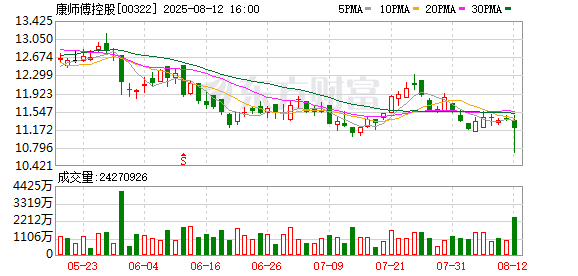
21世纪经济报道记者贺泓源、实习生李晴 狂奔的茶饮料市场似乎到了拐点。 康师傅披露财报显示,在2025年上半年,其茶饮料收入同比下滑6.3%至106.7亿元,跌幅达到7.22亿 元。受此影响,康师傅饮料收入同比下滑2.6%至263.59亿元。 此外,康师傅茶饮料下滑,或许也与市场调整有关。康师傅在有糖茶赛道占据优势,而无糖茶则是农夫 山泉旗下东方树叶近乎占据半壁江山。 这代表着,康师傅茶饮料收入下滑,或许更多指向有糖茶市场需求变化。 另外,康师傅渠道数量正在收缩,这可能也影响了销售。在今年上半年,该公司营销商数量从去年同期 的67215家降至63806家,直营零售商数量从去年同期的220623家降至今年的219124家。 对于茶饮料市场的种种变化,康师傅称其即饮茶通过一系列举措构建"大众爆款+ 健康升级+ 精品创 新"的立体化产品矩阵,既巩固年轻消费群体的品牌黏性,又通过健康化、高端化布局把握行业升级趋 势,为未来可持续增长奠定坚实基础。 可不能回避的是,康师傅茶饮料收入收缩,确实显示着该市场竞争走向残酷。 8月12日,康师傅控股报收11.2港元/股,跌幅1.75%。 同日,上证消费80指数报收4911.92 ...
茶饮料不好卖了?康师傅茶饮少卖7亿元丨消费参考
2 1 Shi Ji Jing Ji Bao Dao· 2025-08-12 23:37
Group 1 - The tea beverage market is reaching a turning point, with Master Kong's tea beverage revenue declining by 6.3% year-on-year to 10.67 billion yuan in the first half of 2025, resulting in a drop of 722 million yuan [1] - Master Kong's overall beverage revenue decreased by 2.6% to 26.359 billion yuan, with water sales down 6.0% to 2.377 billion yuan and juice sales down 13.0% to 2.956 billion yuan [1] - In contrast, carbonated and other beverages saw a revenue increase of 6.3% to 10.256 billion yuan [1] Group 2 - Nongfu Spring's tea beverage business has shown significant growth, with revenue growth rates of 48%, 51%, 83%, and 32% from 2021 to 2024, reaching 16.7 billion yuan in 2024 [1] - Tea beverages now account for 39% of Nongfu Spring's revenue, surpassing packaged water to become the largest product category [1] - Despite Master Kong's decline, Uni-President's tea beverage revenue increased by 9.1% to 5.068 billion yuan in the same period [1] Group 3 - The decline in Master Kong's tea beverage sales may indicate changes in demand for sugary tea, as the company has a strong position in this segment while Nongfu Spring's sugar-free tea dominates the market [2][3] - Master Kong's distribution channels are shrinking, with the number of marketing merchants decreasing from 67,215 to 63,806 and direct retailers from 220,623 to 219,124 [2] - Master Kong aims to build a diverse product matrix for ready-to-drink tea to maintain brand loyalty among young consumers and adapt to industry trends towards health and premiumization [2]
麦当劳回应招募退休人员;上海两大机场取消进航站楼时人身和行李安检丨消费早参
Mei Ri Jing Ji Xin Wen· 2025-08-12 23:20
Group 1: Airport Security Changes - Shanghai's two major airports, Hongqiao and Pudong, have optimized security measures by eliminating personal and luggage checks at terminal entrances, retaining only explosive detection for luggage, effective from August 12 [1] - This simplification is expected to enhance passenger flow efficiency, benefiting airport commercial operations and customer conversion rates, although the short-term impact on airport operators is limited [1] Group 2: Smart Glasses Market Growth - Global smart glasses shipments surged by 110% year-on-year in the first half of 2025, driven by strong demand for Ray-Ban Meta smart glasses and the entry of new players like Xiaomi and RayNeo [2] - Meta's market share in the global smart glasses segment reached 73% in the same period, attributed to robust market demand and capacity expansion by its main production partners [2] - The influx of new competitors and Meta's capacity growth signal a booming smart glasses market, benefiting domestic OEMs and optical supply chains, though potential price wars and inventory pressures loom in the latter half of the year [2] Group 3: McDonald's Employment Strategy - McDonald's China has responded to discussions about recruiting retired employees, stating that it adheres to legal employment policies and offers flexible employment options, including re-employment of retirees [3] - This strategy alleviates labor shortages in frontline positions while reducing social security costs, positively impacting store efficiency and profit margins in the short term [3] - The market sentiment around the "silver economy" is rising, but the scale of employment remains limited, leading to a neutral impact on overall performance [3] Group 4: Tingyi's Market Challenges - Citigroup has expressed structural concerns regarding Tingyi's ongoing weak revenue performance and continuous market share loss, assigning a target price of HKD 10.1 and a "sell" rating [4] - The preference order in China's food and beverage sector remains unchanged, favoring brands like Nongfu Spring and Uni-President, which exhibit sustainable growth models [4] - If Tingyi's revenue continues to lag behind peers in the second half of the year, its valuation premium may be rapidly compressed, with funds potentially flowing out towards competitors with stronger channel and product innovation advantages [4]
丝路电商班列(西安—乌鲁木齐)开行量超过500列
Shan Xi Ri Bao· 2025-08-12 22:39
Core Insights - The launch of the Silk Road e-commerce train (X387) from Xi'an to Urumqi has surpassed 500 trips since its inaugural run on March 26, 2024, transporting a total of 20,619 freight cars of e-commerce goods, significantly enhancing logistics efficiency and reducing costs for e-commerce companies [1][2] Group 1: Operational Efficiency - The X387 train operates daily, departing at 9:09 AM from Xi'an International Port and reaching Urumqi in an average of 36.18 hours, with a speed of 120 km/h [1] - The train service reduces transportation time by approximately 5 hours compared to road transport and lowers logistics costs by 10%, while also significantly decreasing cargo damage rates, resulting in a 70% increase in customer satisfaction [1] Group 2: Customer and Service Expansion - The number of clients for the Silk Road e-commerce train has grown from 3 to 10 stable partners, including major brands like JD.com, SF Express, and others, indicating a rising brand appeal [2] - The variety of transported goods has expanded from 650 to over 2,000 types, covering sectors such as auto parts and daily necessities [2] - The introduction of a mixed booking model (contract and open booking) has enhanced service flexibility, allowing even single shipments to be sent, which attracts more scattered cargo sources [2] Group 3: Performance During Peak Seasons - The train service has successfully completed the transportation of over 20 million express parcels, particularly excelling during peak sales seasons like the "6.18" promotion, with delivery times reduced to as fast as 48 hours [2]


涨价五毛钱 康师傅半年少了3409家经销商
Guo Ji Jin Rong Bao· 2025-08-12 16:38
Core Viewpoint - In the first half of the year, Master Kong Holdings (00322.HK) reported a revenue of 40.092 billion yuan, a year-on-year decline of 2.7%, while net profit attributable to shareholders was 2.271 billion yuan, an increase of 20.5% [2][3] Revenue and Profit Analysis - The revenue decline marks the first time in six years that Master Kong has experienced a drop in half-year revenue, while profit growth is attributed to improved cost structure and operational efficiency, with gross margin increasing by 1.9 percentage points to 34.5% [2][3] - The company's revenue for the first half of 2025 was 40.092 billion yuan, compared to 41.201 billion yuan in 2024, 40.907 billion yuan in 2023, 38.217 billion yuan in 2022, 35.396 billion yuan in 2021, and 32.934 billion yuan in 2020 [3] Business Segment Performance - The instant noodle segment generated revenue of 13.465 billion yuan, down 2.5% year-on-year, accounting for 33.6% of total revenue, while net profit increased by 11.9% to 0.951 billion yuan [4] - The beverage segment, which contributes over 65% of total revenue, saw revenue of 26.359 billion yuan, a decline of 2.6% year-on-year, but net profit rose by 19.7% to 1.335 billion yuan due to improved raw material costs and management efficiency [4] Pricing Strategy and Market Impact - The company has raised prices on several products, with the price of 1L iced tea increasing from 4 yuan to 5 yuan, and the classic bucket noodles rising from 4.5 yuan to 5 yuan or more, leading to an 11%-20% price increase that may affect price-sensitive consumers [4][5] - Competitors like Uni-President have capitalized on Master Kong's price increases, with Uni-President's beverage revenue rising by 7.5% to 10.788 billion yuan in the same period [4] Distribution Network Changes - The number of distributors decreased by 3,409 to 63,806, and direct retailers decreased by 1,499 to 219,124, indicating a trend of optimizing the distribution network and the impact of price increases on distributor profitability [7][8] - The reduction in distributors is part of a broader strategy to eliminate inefficient partners and focus resources on high-quality collaborations, but it also reflects the challenges posed by the pricing strategy [8][9]
涨价五毛钱,康师傅半年少了3409家经销商
Jin Rong Jie· 2025-08-12 16:23
Core Viewpoint - The company reported a revenue decline of 2.7% in the first half of the year, marking the first drop in six years, while net profit increased by 20.5% due to cost structure optimization and improved operational efficiency [1] Revenue and Profit Analysis - Total revenue for the first half of the year was 400.92 billion, with a net profit of 22.71 billion [1] - The gross profit margin increased by 1.9 percentage points to 34.5% [1] - The instant noodle segment generated revenue of 134.65 billion, down 2.5%, while the beverage segment accounted for over 65% of total revenue, with 263.59 billion, also down 2.6% [1] Pricing Strategy and Market Impact - The company has raised prices on several products, with increases ranging from 11% to 20%, affecting price-sensitive consumers [2] - Competitors like Uni-President have seen a revenue increase of 7.5% in their beverage segment during the same period [2] Sales Performance by Segment - In the instant noodle segment, only mid-priced products saw growth, while container noodles experienced a revenue decline of 1.3% to 67.71 billion [3] - The beverage segment saw declines in tea, water, and juice sales by 6.3%, 6.0%, and 13.0% respectively, with only carbonated drinks showing a 6.3% increase [3] Distributor Challenges - The increase in product prices has led to challenges for distributors, with many facing reduced profit margins [4] - The number of distributors decreased by 3,409 to 63,806, indicating a trend of consolidation and exit among less efficient distributors [4][5] Industry Context - The reduction in distributor numbers may further impact market sales, highlighting the importance of channel management in the food and beverage industry [6]
康师傅控股上半年归母净利润同比增长20.5%
Zheng Quan Ri Bao Wang· 2025-08-12 14:10
Core Insights - The company reported a revenue of 40.092 billion yuan for the first half of 2025, a year-on-year decrease of 2.7%, while net profit attributable to shareholders increased by 20.5% to 2.271 billion yuan [1] - Gross profit reached 13.815 billion yuan, reflecting a year-on-year growth of 2.8%, with a gross margin of 34.5%, up by 1.9 percentage points [1] Business Segment Analysis - The instant noodle segment saw a sales decline of 2.5% to 13.465 billion yuan, with specific categories showing varied performance: container noodles down 1.3% to 6.771 billion yuan, high-priced bag noodles down 7.2% to 5.092 billion yuan, mid-priced bag noodles up 8.0% to 1.372 billion yuan, and crispy noodles and others up 14.5% to 0.23 billion yuan [1] - The beverage segment's revenue decreased by 2.6% to 26.359 billion yuan, with tea drinks down 6.3% to 10.67 billion yuan, water down 6.0% to 2.377 billion yuan, fruit juice down 13.0% to 2.956 billion yuan, while carbonated and other beverages increased by 6.3% to 10.256 billion yuan [1] Strategic Initiatives - The company aims to enhance product competitiveness through optimization of flavors, packaging, and processes, resulting in a 2.5 percentage point increase in beverage gross margin to 37.7% despite revenue decline [2] - Future strategies include continuous product innovation, optimizing channel strategies, increasing consumer trust in the brand, and enhancing brand-consumer engagement to adapt to market changes [2]