
中通快递

Search documents
快递量持续较快增长,反内卷开启盈利修复:2026年快递行业年度策略
GUOTAI HAITONG SECURITIES· 2025-10-27 07:50
Investment Rating - The industry investment rating is "Increase" for companies that are expected to outperform the CSI 300 index by more than 15% [82] - The rating is "Cautious Increase" for companies expected to outperform the CSI 300 index by 5% to 15% [82] - The rating is "Neutral" for companies expected to perform within -5% to 5% of the CSI 300 index [82] Core Insights - The express delivery business volume is projected to reach 128.2 billion pieces by 2025, with a year-on-year growth rate of 17.8% [7][34] - The market share of major express companies shows a gradual increase, with Zhongtong, Yunda, and Shentong leading the market [19][20] - The average single package value has shown fluctuations, impacting revenue growth across the industry [9][41] Summary by Sections Business Volume and Revenue - The express delivery business volume is expected to grow significantly, with a forecast of 128.2 billion pieces by 2025, reflecting a growth rate of 17.8% [7][34] - The revenue from the express delivery sector is also projected to increase, with a notable correlation to the business volume growth [41] Market Share - The market share of major players like Zhongtong, Yunda, and Shentong is expected to evolve, with Zhongtong showing a steady increase in market presence [19][20] - The competitive landscape is characterized by a focus on maintaining market share while navigating pricing pressures [19][20] Profitability Metrics - Profitability is expected to improve, with net profit estimates for major companies indicating a positive trend in the coming years [53] - The net profit elasticity for Zhongtong is projected to be around 9% to 52% over the forecast period, indicating strong growth potential [53] Pricing Trends - The average single ticket price has shown a slight increase, which is crucial for maintaining profitability amidst rising operational costs [41][50] - The pricing strategy will be essential for companies to sustain margins while competing in a price-sensitive market [41][50]
快递行业专题:反内卷涨价成效显著,关注旺季盈利修复
Xinda Securities· 2025-10-27 02:13
Investment Rating - The industry investment rating is "Positive" [2] Core Viewpoints - The report highlights significant effects of price increases in the express delivery industry due to the "anti-involution" trend, with a focus on profit recovery during the peak season [2][6] - The express delivery business volume grew by 12.7% year-on-year in September, with cumulative growth of 17.2% from January to September [3][13] - The average price per delivery increased by 2.4% month-on-month in September, indicating a recovery in pricing power within the industry [4][23] Summary by Sections Industry Situation - In September, the express delivery business volume reached approximately 168.8 billion pieces, with a year-on-year growth of 12.7%. The cumulative retail sales of physical goods through online shopping amounted to 9.15 trillion yuan, reflecting a 6.5% year-on-year increase [3][13] - The cumulative online shopping penetration rate is about 25.0%, with a slight decline of 0.7 percentage points year-on-year [3][13] Company Performance - In September, SF Express led the business volume growth with a 31.81% increase, followed by YTO Express at 13.64%, Shentong Express at 9.46%, and Yunda Express at 3.63% [4][25] - Cumulatively from January to September, SF Express achieved a business volume of 121 billion pieces, with a growth rate of 28.34%, while YTO, Yunda, and Shentong had growth rates of 19.40%, 12.98%, and 17.08% respectively [4][25] Pricing Situation - The average price per delivery in the express delivery industry was 7.55 yuan in September, down 4.9% year-on-year but up 2.4% month-on-month. The cumulative average price from January to September was 7.48 yuan, down 7.1% year-on-year [4][23] - Individual company pricing in September showed YTO at 2.21 yuan, Yunda at 2.02 yuan, Shentong at 2.12 yuan, and SF Express at 13.87 yuan, with SF experiencing a year-on-year decline of 13.31% [5][26] Investment Recommendations - The report recommends focusing on companies benefiting from the "anti-involution" trend, particularly Zhongtong Express and YTO Express, while keeping an eye on Yunda and Shentong [7][41] - For direct-operated models, SF Express is recommended due to its potential for significant performance recovery and growth in international business [7][41]



国泰海通:快递量持续较快增长 反内卷开启盈利修复
Zhi Tong Cai Jing· 2025-10-27 01:48
Core Insights - The report from Guotai Junan indicates that the trend of "anti-involution" in the express delivery industry has spread nationwide, significantly increasing the per-package revenue for companies and is expected to improve the profitability of e-commerce express delivery firms in the second half of this year and next year, with profitability elasticity depending on the sustainability of price increases [1] Group 1: Industry Trends - The trend of small-package delivery continues, with the industry expected to maintain resilient growth in business volume. By August 2025, the cumulative express delivery volume reached 128.2 billion packages, a year-on-year increase of 17.8% (on a comparable basis), indicating counter-cyclical growth [1] - The consumption potential in lower-tier markets, such as the central and western regions and rural areas, is being released, which is expected to contribute to resilient growth in industry business volume in the second half of 2025 and 2026 [1] Group 2: Financial Performance - In the first eight months of 2025, the express delivery industry's per-package revenue was 7.48 yuan, a year-on-year decline of 7.3%, but the decline has narrowed compared to a 12.3% drop at the end of 2024, reflecting a slowdown in price competition under the "anti-involution" regulation [1] - The upcoming peak season for e-commerce is anticipated to stabilize and repair express delivery prices in the second half of 2025 and 2026 [1] Group 3: Cost Dynamics - The weakening of economies of scale is noted, with the core cost per package declining at a slower pace. As transportation and transfer costs have limited room for reduction, the introduction of unmanned vehicle technology is expected to lower the delivery costs at the final stage [2] - New social security regulations are expected to lead to a short-term increase in per-package costs, but in the long term, they may drive the industry towards a value competition transformation [2]

银华基金李晓星旗下银华心怡A三季报最新持仓,重仓中国移动
Sou Hu Cai Jing· 2025-10-26 21:39
Group 1 - The core viewpoint of the news is the performance and changes in the top holdings of the Yinhua Xinyi Flexible Allocation Mixed Fund, which reported a net value growth rate of 23.93% over the past year [1] - The fund has added new top holdings including HSBC Holdings, Standard Chartered Group, Bank of China Hong Kong, Luzhou Laojiao, ZTO Express, Wuliangye, and Shenzhou International [1] - China Mobile remains the largest holding with an increase of 22.35 million shares, while other previous top holdings such as SMIC, Xiaomi Group, CATL, Tencent Holdings, and others have exited the top ten holdings [1] Group 2 - The fund's top ten holdings now include significant investments in HSBC Holdings with 2.68 billion yuan, Standard Chartered Group with 2.48 billion yuan, and Bank of China Hong Kong with 2.47 billion yuan [1] - The fund has increased its stake in China Mobile by 6.04%, holding 3.03 billion yuan worth of shares, while it has reduced its position in Focus Media by 34.09% [1] - The overall changes in the fund's portfolio reflect a strategic shift towards financial and consumer sectors, indicating potential investment opportunities in these areas [1]




“反内卷”叠加双十一 快递公司加速走出“以价换量”
财联社· 2025-10-26 06:15
Core Insights - The "anti-involution" price adjustment has significantly benefited express delivery companies, with a 100% success rate in price increases at various outlets, contributing to higher profits during the Double Eleven shopping festival [1][6] - The overall volume of express deliveries has increased, with a notable rise in the value of goods being shipped, indicating a shift towards higher-quality consumption [6][10] Group 1: Market Trends - This year's Double Eleven shopping festival has a longer duration, with major platforms like JD.com and Douyin starting promotions early, leading to a more gradual increase in delivery volumes [1][2] - The first wave of deliveries during Double Eleven saw a year-on-year increase of 10-20% in volume, with some companies reporting a doubling of daily volumes compared to regular days [2][10] Group 2: Product Categories - The types of goods shipped during the first wave of Double Eleven include a significant proportion of beauty products, daily necessities, and fast-moving consumer goods, with brand clients showing notable growth [4][5] Group 3: Service Quality and Innovations - Companies are enhancing service quality through the implementation of "cloud warehouses," which allow for more efficient logistics and faster delivery times, addressing the diverse shopping behaviors of consumers [7][9] - The use of pre-packaging and advanced communication with clients has enabled companies to streamline operations and reduce reliance on temporary labor during peak periods [7][10] Group 4: Capacity Expansion and Cost Optimization - Express delivery companies are expanding their capacities and upgrading equipment to meet increasing demand, with some reporting an 80% increase in daily throughput after recent upgrades [10][11] - The optimization of single-package operating costs is expected to benefit outlets, allowing them to attract more clients and increase delivery volumes [11][13] Group 5: Competitive Landscape - The competition among express delivery companies is shifting from a focus on volume to a focus on value, emphasizing stability, intelligence, service experience, and network health [13] - Recent data indicates that the average price per package has risen above 2 yuan, with notable year-on-year increases, particularly for Shentong Express [13]

无人车双十一迎来大规模采购潮,场景从快递向即时零售延伸
Nan Fang Du Shi Bao· 2025-10-25 09:01
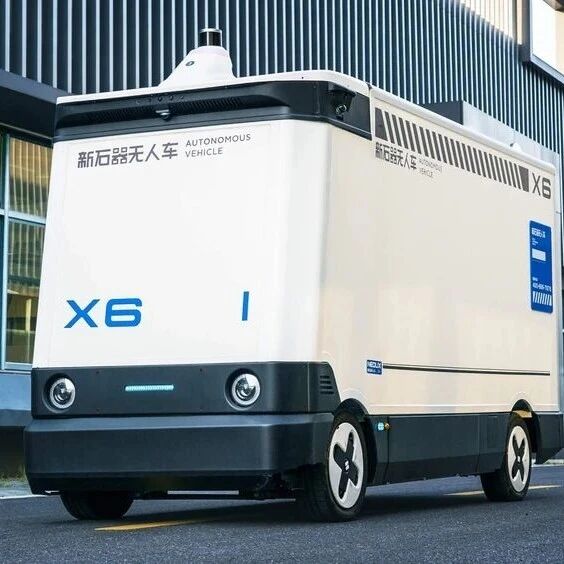
Core Insights - The logistics industry is witnessing a significant shift towards the adoption of unmanned delivery vehicles, with major companies making large-scale purchases to enhance efficiency and reduce costs [1][4][5]. Group 1: Unmanned Vehicle Procurement - China Post has initiated a procurement project for 7,000 unmanned vehicles, including various sizes and services, with a framework agreement lasting four years [1][2]. - JD Logistics plans to purchase 3 million robots, 1 million unmanned vehicles, and 100,000 drones over the next five years to strengthen its position in smart logistics [1][4]. - Companies like Cainiao and Shentong Express are also investing in unmanned vehicles, with Shentong aiming to deploy 2,000 unmanned vehicles by the end of the year [1][5]. Group 2: Market Trends and Growth - The unmanned delivery vehicle market is expected to experience explosive growth by 2025, driven by technological advancements, cost reductions, and increased demand in the instant retail market [4][6]. - As of mid-2025, over 100 cities in China have opened road rights for unmanned delivery vehicles, with the total number of such vehicles exceeding 6,000, marking a 50% increase from 2024 [6][8]. Group 3: Cost Efficiency and Operational Benefits - Unmanned vehicles can significantly reduce delivery costs, with reports indicating a decrease of 30%-50% in last-mile delivery expenses [8][10]. - Companies like Zhongtong Express have noted that using unmanned vehicles can lower costs by 6-7 cents per package, enhancing operational efficiency [5][10]. Group 4: Expansion Beyond Traditional Delivery - The application of unmanned vehicles is expanding beyond the express delivery sector into urban logistics and instant delivery markets, indicating a potential for exponential growth [10][12]. - White Rhino is diversifying its operations to include campus delivery networks and retail replenishment, showcasing the versatility of unmanned vehicles in various logistics scenarios [12].


不装人的它,为何能一把融6亿美金?
虎嗅APP· 2025-10-25 03:14
Core Insights - The article highlights the significant investment in the L4 autonomous driving sector, particularly in urban logistics, with Neolix securing over $600 million in Series D funding, marking the largest private equity financing in China's autonomous driving field to date [2] - The funding will be utilized for algorithm and technology development, new product development, and enhancing service networks to meet the growing demand in domestic and international urban logistics markets [2][5] Investment Landscape - Since early 2025, the L4 autonomous urban logistics sector has attracted over 4 billion RMB in investments, indicating a robust interest from investors [2] - Neolix had previously raised 1 billion RMB in a C+ round earlier this year, while other leading companies in the sector have also secured substantial funding [2] Industry Trends - The surge in capital investment is attributed to the maturity of technology and business models among startups, which have begun to demonstrate commercial value, driven by market demand rather than speculative financing [5] - The integration of autonomous vehicles in logistics is expected to reduce costs significantly, with estimates suggesting a potential cost reduction of 1/3 to 2/3 in logistics delivery [5][10] Operational Efficiency - The introduction of autonomous vehicles is projected to streamline logistics processes by eliminating redundant steps and reducing resource inputs, potentially saving 19% in operational costs [8] - Companies like Zhongtong and SF Express have already deployed over 1,800 autonomous vehicles, indicating a shift towards large-scale adoption [9] Future Outlook - The year 2025 is anticipated to be a pivotal year for the autonomous logistics vehicle sector, with ongoing competition focusing on advancements in L4 technology, expanding usage scenarios, and balancing growth with customer service [12] - Neolix's proprietary L4 autonomous driving technology is set to be commercially deployed, enhancing its operational capabilities in urban logistics [12][14] Market Expansion - Neolix aims to expand its operations internationally, having secured the first official autonomous vehicle license in the UAE, with plans to deploy 5,000 vehicles by the end of next year [16] - The collaboration with Didi Freight to test autonomous delivery services reflects a strategic move towards capturing immediate demand in logistics [18] Competitive Landscape - The autonomous vehicle sector is witnessing an influx of new entrants, intensifying competition across product forms, application scenarios, and customer ecosystems [18] - The ability to maintain operational efficiency while meeting diverse customer needs will be crucial for the survival and success of autonomous vehicle companies in this rapidly evolving market [18]
智通ADR统计 | 10月25日

Xin Lang Cai Jing· 2025-10-24 23:45
Market Overview - US stock indices collectively rose on Friday, with the Hang Seng Index ADR increasing to 26,231.98 points, up by 71.83 points or 0.27% compared to the Hong Kong close [1]. Major Blue-Chip Stocks - Most large-cap stocks saw gains, with HSBC Holdings closing at 104.113 HKD, up 0.98% from the Hong Kong close [3]. - Tencent Holdings closed at 638.354 HKD, reflecting a 0.13% increase from the Hong Kong close [3]. ADR Performance - The ADR for Tencent Holdings (TCEHY) was 82.160 USD, up by 0.41% with a trading volume of 1.36084 million [4]. - The ADR for Alibaba (BABA) was 174.700 USD, increasing by 1.63% with a trading volume of 11.8271 million [4]. - The ADR for HSBC (HSBC) was 67.000 USD, up by 1.12% with a trading volume of 1.22496 million [4].

美股再创新高!纳指、道指涨超1%,美光科技涨近6%
Ge Long Hui A P P· 2025-10-24 22:19
Group 1 - The three major US stock indices closed higher, reaching new historical highs, with the Nasdaq up 1.15%, the Dow Jones up 1.01%, and the S&P 500 up 0.79% [1] - Large-cap tech stocks mostly rose, with Nvidia and Google increasing over 2%, while Amazon and Apple rose over 1% [1] - Tesla fell over 3% and Netflix dropped over 1%, while Ford Motor Company surged over 12%, marking its best single-day performance since March 2020 [1] Group 2 - The Nasdaq China Golden Dragon Index rose 0.27%, with notable gains in Chinese concept stocks such as Arctech Solar up 6.01% and WeRide up 5.14% [1] - Other Chinese stocks like Century Internet, Trip.com, and JinkoSolar saw increases of up to 2.45%, while companies like Li Auto and Yum China experienced declines of 1.39% and 1.58% respectively [1] - Micron Technology rose nearly 6%, reaching a historical high, while Unusual Machines increased over 8% [1]
中通快递-W(02057.HK):将于11月20日发布季度业绩
Ge Long Hui· 2025-10-24 09:09
格隆汇10月24日丨中通快递-W(02057.HK)宣布,董事会将于2025年11月19日(星期三)(北京时间) 举行董事会会议,以(其中包括)批准本公司截至2025年9月30日止第三季度的未经审计财务业绩及其 发布。本公司将于2025年11月20日(星期四)(北京时间)于联交所开市前发布本公司截至2025年9月 30日止第三季度的未经审计财务业绩。 ...