阿里云

Search documents
DeepSeek陈德里:AI变革短期机遇多,但长期可能风险更大
Xin Lang Ke Ji· 2025-11-07 08:51
Core Viewpoint - The discussion at the 2025 World Internet Conference highlights the dual nature of AI development, presenting both short-term opportunities and long-term risks [1][2]. Group 1: Short-term Perspective (3-5 years) - In the short term, AI is expected to enhance human capabilities, allowing for the resolution of more complex problems and the creation of greater value [1]. - This period is characterized as a "honeymoon phase" where AI cannot independently realize its value [1]. Group 2: Mid-term Perspective (5-10 years) - In the mid-term, AI is anticipated to start replacing certain human jobs, leading to increased risks of unemployment [1]. - Technology companies are urged to act as whistleblowers, informing the public about which jobs are irreplaceable and the skills needed for the future [1]. Group 3: Long-term Perspective (10-20 years) - Over the long term, AI may pose significant dangers by potentially replacing a large number of jobs, challenging the existing social order [2]. - Technology companies are expected to play a role in safeguarding human safety and participating in the restructuring of social order [2]. - The current AI revolution is noted to differ significantly from past industrial revolutions, as it may have a more profound impact on human institutions and roles [2].

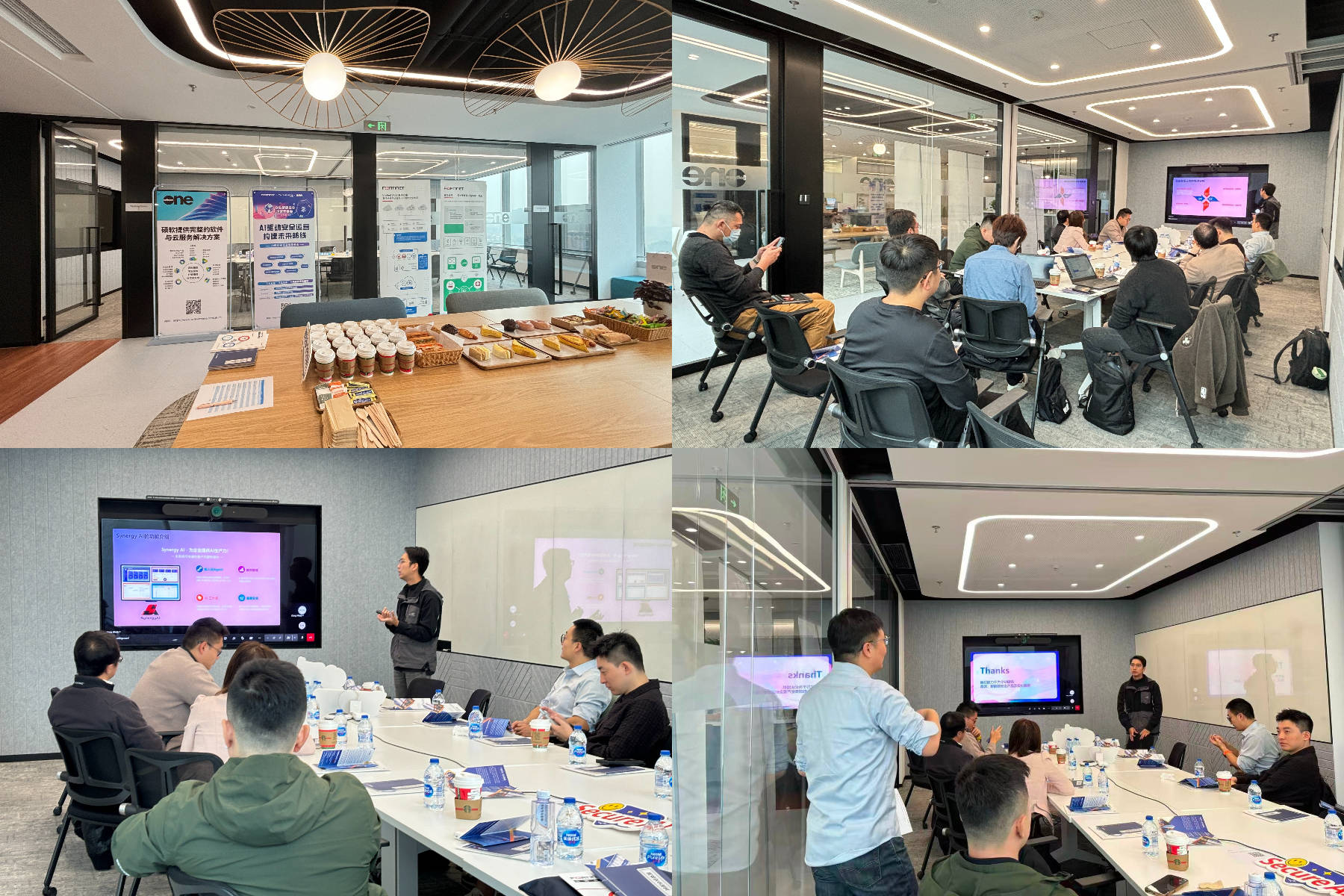
飞络AI SecOps亮相硕软智能安全运营早餐会,智启安全运营新未来
Sou Hu Cai Jing· 2025-11-07 06:06
Core Insights - Shanghai Feiluo Information Technology Co., Ltd. showcased its AI SecOps solution at the Beijing Enterprise Intelligent Security Operations Breakfast Meeting, emphasizing the importance of digital security for enterprises [1][18] Group 1: Challenges in Enterprise Security Operations - Talent shortage is a significant issue, as traditional security analysis relies heavily on human resources, leading to analysts being overwhelmed by a high volume of alerts, which hampers high-value decision-making [3] - Response times are delayed, with manual handling of incidents resulting in Mean Time to Recovery (MTTR) lasting several hours, allowing the impact of attacks to escalate [3] - Alert overload is prevalent, with daily alerts reaching tens of thousands, of which only 5% are genuine threats, making it easy for real risks to be overlooked [3] - Language barriers hinder cross-border operations, resulting in low collaboration efficiency due to translation gaps in documents and alerts [4] Group 2: Feiluo's Core Product Matrix - The ALL-SOC platform is a full-stack intelligent security operations platform that seamlessly integrates logs from over 30 types of devices, including firewalls and cloud platforms like Azure and AWS [4] - AI capabilities are enhanced through the proprietary FNL 2.0 analysis language and UEBA behavioral analysis, increasing use case generation efficiency by four times [4] - A case study showed that a Japanese trading company experienced a 300% increase in P1 incident detection rates and an 80% reduction in response times after deploying the solution [4] Group 3: Key Features of AI SecOps - The AI model effectively filters out ineffective alerts, focusing on real threats, thereby reducing noise [6] - Automated response processes enhance incident response speed by eight times [6] - The platform supports real-time translation and collaboration in Chinese, Japanese, and English, breaking down communication barriers [6] - Cost optimization is achieved by reducing L1 team labor costs by 50%, providing 24/7 coverage [6] Group 4: Competitive Comparison - The ALL-SOC platform supports a wide range of product logs, unlike Microsoft Sentinel, which is limited to the Azure/M365 ecosystem [7] - ALL-SOC offers built-in use cases that cover a broader range of products compared to Microsoft Sentinel [7] - Deployment of ALL-SOC can occur in local environments of SOC providers, offering a cost-effective multi-tenant model [7] Group 5: Global Practices and Local Operations - Feiluo has established dual-center SOC operations in Chengdu, China, and Tokyo, Japan, serving multiple Fortune 500 companies [11] - Case studies include a large Chinese bank's German branch achieving localized security monitoring under GDPR constraints through ALL-SOC [15] - A Japanese automotive parts manufacturer improved incident response times by 60% by using the cloud-based ALL-SOC platform to manage logs from three factories [15]

一场关于人工智能当下与未来的对话
3 6 Ke· 2025-11-07 02:27
Core Insights - The dialogue at the 2025 Dachen Entrepreneur Summit highlighted the emergence of AI "Six Little Dragons" in Hangzhou, emphasizing both the accidental and inevitable factors contributing to this phenomenon [1][2] - The discussion underscored the importance of a supportive ecosystem, characterized by a clear boundary between government and market roles, fostering innovation and investment [2][3] Group 1: AI Ecosystem in Hangzhou - Hangzhou's unique talent structure, government support, and a balanced lifestyle conducive to long-term innovation are key factors in the success of the AI "Six Little Dragons" [2][3] - The local government adopts a non-intrusive approach, focusing on optimizing the ecosystem and providing public services, which has been crucial for nurturing innovation [2][3] Group 2: Competition in the AI Landscape - The relationship between startups like Zhipu AI and tech giants such as Alibaba is complex, with startups needing to leverage their agility against the deep resources of larger companies [4][6] - Zhipu AI emphasizes the importance of conversion efficiency and ecosystem building as core competitive advantages, allowing for rapid adaptation to market feedback [6] Group 3: Philosophical Perspectives on Embodied Intelligence - The discussion on embodied intelligence raised philosophical questions about the ultimate goals of humanoid robots, debating whether they should be seen merely as tools or as companions [7][8] - Different innovation strategies were presented, with one focusing on revolutionary breakthroughs and the other on incremental improvements to address current challenges [8] Group 4: Risks and Challenges in AI Development - The dialogue acknowledged the inherent risks in AI investments, with strategies for risk management including diversified investment portfolios [10][12] - Concerns were raised about both internal risks related to technological disruption and external risks concerning safety and ethical implications of AI [11][12]
92亿美元创纪录营收背后,AMD从英伟达手中“抢”走了什么?
3 6 Ke· 2025-11-06 08:24
Core Insights - AMD reported record-breaking financial results for Q3 2025, with total revenue reaching $9.246 billion, a 36% year-over-year increase, and gross profit of approximately $4.78 billion, up 40% year-over-year [2][4][5] - The company achieved significant growth in its data center and gaming segments, with data center revenue at $4.341 billion (22% growth) and gaming revenue soaring to $1.298 billion (181% growth) [5] - AMD's CEO, Lisa Su, highlighted the strong demand for their high-performance EPYC and Ryzen processors, as well as Instinct AI accelerators, reflecting a robust market position [5] Financial Performance - Total revenue for Q3 2025: $9,246 million, up 36% from $6,819 million in Q3 2024 [4] - Gross profit: $4,780 million, a 40% increase from $3,419 million in the same quarter last year [4] - Free cash flow increased more than twofold, indicating strong cash generation capabilities [2] - C-end business revenue reached $2.75 billion, marking a 46% year-over-year growth [2] AI Market Position - AMD is rapidly gaining ground in the AI market, with strategic partnerships with Oracle and OpenAI leading to substantial orders [8][9] - The company is focusing on creating a comprehensive computing ecosystem to compete with market leaders [9] - AMD's Instinct MI350 series GPUs are driving growth in the data center segment, with significant market share gains [11] Strategic Initiatives - AMD's strategy includes enhancing its AI software ecosystem through acquisitions and partnerships, aiming to improve the performance and deployment of AI models on its hardware [15][26] - The company is also focusing on total cost of ownership (TCO) advantages, emphasizing the efficiency of its solutions in AI training and inference scenarios [12][17] - AMD's recent developments in CPU technology, particularly the EPYC processors, are positioned to complement its GPU offerings and enhance overall system performance [16][25] Market Dynamics - AMD's approach contrasts with that of its competitors, focusing on providing cost-effective solutions rather than solely competing on peak performance [17][27] - The company is navigating complex geopolitical landscapes, particularly in China, by developing compliant products while maintaining market presence [19][22] - AMD's participation in the AI market is characterized by a dual strategy of engaging with both North American and Chinese markets, adapting to local demands and regulatory environments [18][20] Lessons from AMD's Transformation - AMD's successful turnaround is attributed to strategic restructuring and a focus on high-performance computing markets, diversifying revenue sources [23][24] - The company emphasizes the importance of understanding market needs and adapting its offerings accordingly, particularly in the evolving AI landscape [27][28] - AMD's commitment to open-source initiatives and collaboration with major clients is seen as crucial for accelerating its ecosystem development and market penetration [28][29]



小鹏汽车科技日
数说新能源· 2025-11-06 07:05
Group 1: Second Generation VLA Progress - The second generation VLA physical world model eliminates the need for language as an intermediary, enhancing reasoning efficiency and translation speed through human-like cognition, allowing for larger model parameters and higher frame rates [1][11] - Development of the first generation VLA has ceased as of Q2, with increased focus on the second generation [1][13] - The second generation VLA boasts a parameter count 10 times that of competitors, with testing results surpassing FSD V13.2.9 [1][14] - A small road/park NGP is set to launch, with pioneer user experiences planned for December 2025 and full deployment in ultra models by Q1 2026 [1][16] - The second generation VLA will be open-sourced to global commercial partners, with a new mass-produced vehicle from Volkswagen China set to feature the second generation VLA [1][17] Group 2: Robotaxi Development - Three Robotaxi models are scheduled for launch in 2026, featuring fully self-developed hardware and software, capable of operating in unrestricted areas [1][22] - Hardware configuration includes four Turing chips (three at 2250 TOPS and one at 750 TOPS for redundancy) [1][22] - An SDK will be made available, with Gaode as the first global ecosystem partner, aiming for a large-scale operation of tens of thousands [1][23] Group 3: Humanoid Robots - The humanoid robot project involves over 1,000 personnel across 10 R&D teams and 20 collaborating departments, with direct involvement from the founder [1][27] - The humanoid robot will feature three Turing AI chips (2250 TOPS), a solid-state battery, and 22 degrees of freedom in each hand, with a total of 82 joints [2][28] - Initial applications will focus on exhibition and sales environments, with a partnership established with Baosteel for inspection scenarios [1][39] Group 4: Flying Cars - The A868 model has entered the test flight phase, featuring an aviation-grade hybrid system with a range exceeding 500 kilometers and a speed of 360 kilometers per hour [1][3] - The land carrier model has received over 7,000 orders [1][4] - Plans are in place to establish low-altitude flight camps and a flagship store for flying cars, with training for exclusive flying licenses [1][42]


AI时代CRM的重生之路:阿里云上的Salesforce如何改写SaaS规则?
AI前线· 2025-11-06 05:07
Core Viewpoint - The article discusses the impact of AI on Customer Relationship Management (CRM) systems, questioning their necessity in the AI era and suggesting that CRM can regain value through AI integration [4][25]. Group 1: AI's Impact on CRM - AI is expected to replace repetitive tasks in human-intensive service sectors, particularly in CRM, which has traditionally been a tool for recording customer information and managing business processes [2][6]. - The challenge for traditional CRM is not just functionality but the reliance on processes that lead to inefficiencies and a lack of personalized customer experiences [7][9]. Group 2: CRM's Value Proposition - CRM's value lies in its ability to facilitate personalized interactions and insights rather than merely recording data [6][25]. - The integration of AI into CRM systems is seen as a way to bridge the gap between operational efficiency and customer experience [7][9]. Group 3: Compliance and Localization Challenges - Companies face a dilemma between using international CRM systems, which may conflict with local regulations, and local tools that may lack global visibility [8][14]. - The collaboration between Salesforce and Alibaba Cloud aims to address these compliance challenges by ensuring data storage within China while maintaining a unified global architecture [14][15]. Group 4: AI Integration in CRM - The article outlines a three-phase approach to integrating AI into CRM: starting with AI actions as process assistants, followed by enhancing unstructured data handling, and ultimately creating autonomous business agents [15][17][18]. - The successful integration of AI requires a deep coupling of AI capabilities with enterprise data, business processes, and compliance requirements [9][15]. Group 5: Case Studies and Practical Applications - Examples from various industries, such as agriculture and dairy, illustrate how AI CRM can enhance operational efficiency and drive business growth by transforming data management and customer interactions [20][22]. - The shift from experience-based decision-making to data-driven, AI-enabled capabilities is highlighted as a key growth strategy for businesses [22][25]. Group 6: Implications for the SaaS Industry - The collaboration between Salesforce and Alibaba Cloud serves as a model for the SaaS industry, emphasizing the importance of compliance, ecosystem integration, and AI as a growth driver [23][24]. - The article concludes that CRM is evolving from a data repository to an intelligent hub, essential for balancing efficiency and customer experience in the AI era [25].


全国高质量数据集和数据标注产业供需对接大会在宁举行
Nan Jing Ri Bao· 2025-11-06 03:33
Core Insights - The conference held on November 5 focused on high-quality data sets and data annotation, showcasing the vibrant market potential with over 500 participating companies and more than 90 cooperation agreements, resulting in a total transaction amount exceeding 900 million yuan [1][2] Group 1: Conference Overview - The event was guided by the National Bureau of Statistics and aimed to promote high-quality data set construction as a fuel for artificial intelligence [1] - The conference featured five industry-specific sessions, including healthcare, smart energy, industrial manufacturing, transportation, and cultural tourism, addressing data needs in large model training and industry digital transformation [1] Group 2: Industry Participation and Contributions - Nine representative companies, including JD Technology, Alibaba Cloud, and Huawei Cloud, shared practical applications of high-quality data sets across various sectors such as e-commerce, cloud computing, and finance [2] - Key figures from national research institutions discussed the construction paths, standards, and evaluation criteria for high-quality data sets [2] Group 3: Local Development and Innovation - Nanjing has positioned high-quality data set construction as a core strategy to activate data value and support AI development, achieving full coverage in the 16 industry areas identified by the National Bureau of Statistics [3] - The city has developed a unique path for high-quality data set construction, characterized by policy guidance, innovation-driven approaches, industry clustering, rich applications, and open cooperation [3]
张纪中回应被指控职务侵占:100%属于前妻诬告;于东来回应胖东来上市;又有阿里高管入职山姆;小鹏发布全新一代人形机器人丨邦早报
创业邦· 2025-11-06 00:08
Group 1 - Zhang Jizhong is accused of embezzlement by Hunan Meihouwang Film and Television Co., Ltd., with claims of a significant amount involved [2] - Zhang claims the accusations are false and part of a long-standing harassment by his ex-wife, asserting that previous allegations were also unfounded [2] Group 2 - Yu Donglai stated that Pang Donglai has no plans for large-scale development or an IPO, aiming instead to become a school-like enterprise focused on cultural and business exchanges [3] Group 3 - Former Tmall International beauty head, Yang Xiaomei, has joined Sam's Club as Vice President of Procurement and Operations, indicating a trend of Alibaba employees moving to Sam's [4] Group 4 - Apple is reportedly set to launch a low-cost MacBook and a foldable iPhone by 2026, with the MacBook priced below 7100 yuan [7] - Apple is tightening control over its offline channels, prohibiting authorized dealers from collaborating with e-commerce platforms to maintain pricing and channel order [7] Group 5 - Weima Automobile has relaunched its Xiao Wei app, restoring key functionalities for vehicle control and information synchronization [8] Group 6 - Xiaopeng Motors showcased its new humanoid robot, IRON, which features advanced mobility and is set for mass production by the end of 2026 [16] Group 7 - JD.com has launched its first "National Good Car," the Aion UT super, with production ramping up to meet demand ahead of its official sale [18] - Mercedes-Benz has officially launched its pure electric CLA model, offering two variants with advanced features and technology [20] Group 8 - The Chinese passenger car market saw retail sales of 2.387 million units in October, a year-on-year increase of 6%, with new energy vehicles accounting for 58.7% of the market [24] - TrendForce predicts that global solid-state battery demand will reach 740 GWh by 2035, driven by various applications including electric vehicles and consumer electronics [25]




2025年中国基础云服务行业数据报告
艾瑞咨询· 2025-11-06 00:02
Core Insights - The overall cloud service market in China is projected to reach 544.54 billion yuan in 2024, with a growth rate of 15%. The rapid development of artificial intelligence is driving upgrades in cloud infrastructure and capability platforms, which are key factors for market growth [1][8]. Market Overview - The IaaS market in China is expected to grow to 371.86 billion yuan in 2024, with a growth rate of 19.1%. The PaaS market is projected to reach 101.86 billion yuan, growing at 35.8% [11]. - The public cloud service market is anticipated to reach 387.87 billion yuan in 2024, with an 18% growth rate. The non-public cloud service market is expected to be 163.58 billion yuan, growing at 11.2% [13][16]. Market Characteristics - AI has become a focal point for cloud service industry construction and business layout. Participants are expanding investments in intelligent computing infrastructure and improving AI development tools [8]. - The public cloud service market is experiencing new opportunities due to the rapid development of AI, with various cloud vendors focusing on building intelligent computing infrastructure and platforms [13]. Competitive Landscape - In the public cloud IaaS market, Alibaba Cloud, Huawei Cloud, and Tianyi Cloud rank as the top three providers, with Tencent Cloud and Mobile Cloud tied for fourth place [19]. - Operator-backed cloud vendors are enhancing their competitiveness by improving infrastructure and investing in AI, while internet-based cloud vendors are focusing on business streamlining and capability concentration to alleviate competitive pressure [19]. Development Trends - The cloud computing sector is expected to continue supporting the development of the AI industry by providing foundational resources and platform tools. The integration of intelligence into cloud services will further enhance the capabilities of intelligent computing [8]. - In the short term, the competition in the public cloud market is primarily driven by price wars, but long-term growth will be fueled by the rapid iteration of AI technology and the expansion of cloud service applications across various industries [13][19].

中国AI云“领头羊”:市场份额超过三分之一,加码投资3800亿元
Sou Hu Cai Jing· 2025-11-05 14:12
云计算服务商是这场人工智能浪潮的重要推手,如果没有他们提供的算力支撑,再聪明的AI也只能待在实验室里。根据知名调研机构Omdia发布的报告显 示,得益于生成式人工智能(GenAI)的蓬勃发展,2025年上半年中国AI云市场规模达到223亿元,预计全年将达到518亿元,较去年的208.3亿元增长约1.5 倍。预计到2030年将达1930亿元,复合年增长率(CAGR)高达26.8%。 阿里云排在首位,市场份额达到35.8%,超过第2-4名总和。【注:统计口径覆盖AI IaaS(基础设施即服务,以GPU、AI专用芯片等为算力支撑的基础设 施)、AI PaaS(平台即服务)、AI MaaS(模型即服务)这三个主要市场】 人工智能无疑是近几年最火的科技话题之一,诞生出ChatGPT、DeepSeek、Kimi、智谱清言、通义千问、豆包等AI工具,正深刻地改变着人们的工作和生活 方式,不仅重塑信息获取与知识生产的路径,也让"人机协作"从概念走向日常。 阿里云自主研发的大语言模型通义千问(Qwen),已成为全球第一开源模型。截至目前,已开源300余个模型,覆盖不同大小的"全尺寸"及LLM、编程、图 像、语音、视频等"全模态 ...