
Waymo

Search documents
英伟达开源最新VLA,能否破局L4自动驾驶?
Tai Mei Ti A P P· 2025-12-02 13:01
Core Insights - NVIDIA has officially open-sourced its latest autonomous driving Vision-Language-Action (VLA) model, Alpamayo-R1, which can process vehicle camera images and text instructions to output driving decisions [2][3] - The Alpamayo-R1 model emphasizes "explainability," providing reasons for its decisions, which aids in safety validation and regulatory review [3][4] - The VLA model is seen as the next core technology in intelligent driving, with various companies, including Li Auto, Xpeng Motors, and Great Wall Motors, already implementing it in production [3][4] Group 1: Model Features and Benefits - Traditional end-to-end models are often "black boxes," making them difficult to interpret, especially in complex scenarios [4] - VLA introduces a language modality as an intermediary layer, enhancing the model's ability to handle complex situations and providing a more human-like decision-making process [4][5] - The Alpamayo-R1 model has shown significant performance improvements, including a 12% enhancement in trajectory planning performance and a 25% reduction in near-collision rates [5][6] Group 2: Industry Impact and Ecosystem Development - NVIDIA aims to position itself as the "Android" of the autonomous driving sector, moving beyond being just a hardware supplier [6][8] - The company has announced plans to deploy 100,000 Robotaxis starting in 2027, collaborating with firms like Uber and Mercedes to create the world's largest L4 autonomous driving fleet [7][8] - The open ecosystem proposed by NVIDIA could facilitate data sharing among companies, potentially accelerating technological advancements in the industry [8][9] Group 3: Challenges and Future Considerations - Despite the advancements, the Alpamayo-R1 model requires high-performance hardware to meet automotive-grade latency, indicating a dependency on NVIDIA's hardware solutions [10][11] - The effectiveness of VLA technology is still under evaluation, and there are concerns about the limitations imposed by NVIDIA's platform on developers [11][12] - The successful commercialization of L4 autonomous driving will also depend on regulatory frameworks and the ability to balance data privacy with operational safety [11][12]


X @Tesla Owners Silicon Valley
Tesla Owners Silicon Valley· 2025-12-02 11:33
RT Tesla Owners Silicon Valley (@teslaownersSV)WayMO needs more Lidar.Waymo drove into what looks to be almost a shootout. https://t.co/lD0Sr2kj2a ...

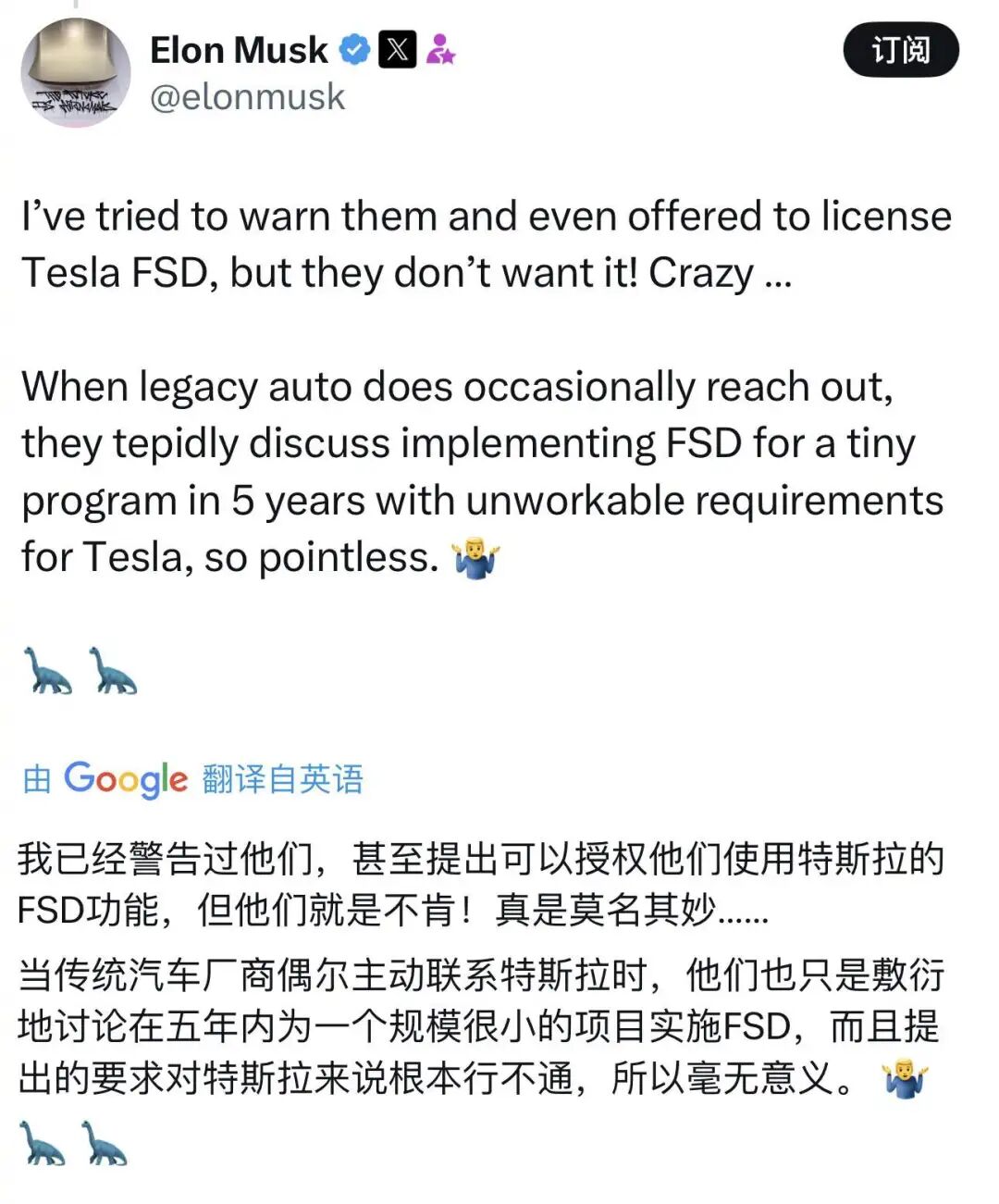
轮到马斯克破防,没有车企愿用FSD,“他们不想要!”
3 6 Ke· 2025-12-02 09:28
Group 1 - The core issue is that despite Elon Musk's enthusiasm for Tesla's Full Self-Driving (FSD) technology, no traditional automaker is willing to adopt it, leading to Musk's frustration expressed on social media [1][2][6] - Musk has indicated that discussions with traditional automakers about using FSD have been superficial, with requests that are unrealistic for Tesla to fulfill, which he finds meaningless [2][6] - The FSD authorization strategy involves a "hardware binding + software fee" model, where partner automakers must use Tesla's chips and hardware, allowing Tesla to profit from both hardware sales and high-margin software licensing [6][10] Group 2 - Concerns over data security are a significant barrier for automakers considering FSD, as they fear that using Tesla's system would allow Tesla to access sensitive data from their vehicles [10][11] - The lack of a clear legal framework regarding liability in the event of accidents involving FSD further deters automakers from adopting the technology, as there is uncertainty about who would be responsible [11][12] - Compared to Tesla, established autonomous driving suppliers like Waymo offer not only technology but also mature service solutions, making them more attractive to automakers [13]
X @Tesla Owners Silicon Valley
Tesla Owners Silicon Valley· 2025-12-02 04:29
WayMO needs more Lidar.Waymo drove into what looks to be almost a shootout. https://t.co/lD0Sr2kj2a ...
马斯克点名两大AI股,他看到的关键信号究竟是什么?
Jin Shi Shu Ju· 2025-12-02 04:00
AI播客:换个方式听新闻 下载mp3 此外还有Waymo,这家由谷歌支持的初创企业是特斯拉在无人出租车竞赛中的主要对手。Waymo在五 座城市运营全自动叫车服务,并选定了另外12座城市进行短期扩张。上个月,它成为美国首家能够在高 速公路上提供无安全监控员的自动驾驶服务的企业。 在马斯克看来,英伟达是一只"显而易见"的选择。它仍然是AI赛道上的主导者,几乎与行业内所有主要 玩家都有合作。 英伟达最近一个季度营收同比增长62%,主要受益于其在数据中心业务方面的布局。这是AI产业的基础 设施,也是投资者关注的重点。 尽管谷歌与马斯克旗下的企业存在竞争关系,但英伟达始终是特斯拉的稳固合作伙伴。马斯克经常称赞 英伟达CEO黄仁勋(Jensen Huang)。上个月,两人共同宣布与一家沙特阿拉伯AI公司合作,在沙特建 设一个大型数据中心。 音频由扣子空间生成 埃隆·马斯克(Elon Musk)不认为自己是投资者。但如果必须在AI相关股票中押注,他最近点名称赞了 两只标的。 他在周日播出的一期"People by WTF"播客节目中说:"AI和机器人技术将变得非常重要。AI和机器人带 来的商品和服务产出会高得压倒其他一切。 ...
13岁靠「氛围编程」创业,见奥特曼、拜访a16z,他的暑假把成年人卷哭
机器之心· 2025-12-01 09:30
Core Viewpoint - The article highlights the emergence of young entrepreneurs in the tech industry, exemplified by 13-year-old Michael Goldstein, who is leveraging AI tools like ChatGPT to innovate and create startups, reflecting a shift in how the younger generation engages with technology and entrepreneurship [2][6][34]. Group 1: Young Entrepreneurs and AI - Michael Goldstein represents a new wave of tech-savvy youth who are actively participating in the startup ecosystem, showcasing a blend of creativity and technical skills [4][6]. - The influence of AI, particularly tools like ChatGPT, is noted as a significant factor in empowering today's youth to pursue entrepreneurial ventures, contrasting with previous trends dominated by social media platforms [6][34]. - Goldstein's approach to coding, termed "vibe coding," emphasizes a conceptual understanding over traditional coding skills, allowing him to create an AI startup despite limited coding experience [8][10]. Group 2: Startup Journey and Challenges - Goldstein's entrepreneurial journey includes seeking advice from industry leaders like Sam Altman, indicating the importance of mentorship and networking in the startup landscape [10][32]. - After facing challenges with his initial project, Goldstein pivoted to a new venture focused on AI design, demonstrating adaptability in the face of entrepreneurial hurdles [10][11]. - The article discusses the development of Goldstein's AI design tool, Kodo, which aims to assist users in creating visual content, although it currently faces limitations in execution and understanding user prompts [16][18][24]. Group 3: Societal Perspectives and Concerns - The rise of young entrepreneurs has sparked debate about the implications of children engaging in tech entrepreneurship, with some expressing concern over the potential loss of childhood experiences [32]. - There is a growing concern regarding the risks associated with children using AI technologies, highlighted by legislative discussions around restricting AI access for minors [32][34]. - The article notes that while Silicon Valley is enthusiastic about young innovators, there is a counter-narrative emphasizing the need for a balanced approach to youth engagement with technology [32][34].

Ross Gerber Says Uber Is 'Cooked' Amid Waymo's San Francisco Expansion: 'Uber Drivers Better Start…' - Uber Technologies (NYSE:UBER)
Benzinga· 2025-12-01 05:54
Core Viewpoint - Ross Gerber, co-founder of investment firm Gerber Kawasaki, believes that Waymo's expansion in San Francisco poses a significant challenge to Uber, indicating that Uber's market position is deteriorating [1][2]. Group 1: Waymo's Market Position - Waymo has achieved a 10% market share in San Francisco, solely from its app, highlighting its growing presence in the autonomous driving sector [2]. - Gerber emphasizes that Waymo is a leader in the robotaxi business and continues to advance rapidly [3]. Group 2: Uber's Response and Initiatives - Uber's CEO, Dara Khosrowshahi, announced plans to offer high-paying AI jobs to drivers, launching a pilot for Digital Tasks that allows users to complete short AI-related gigs through the Uber Driver app, currently operational in India [5]. - Uber has initiated autonomous driving operations with WeRide in the UAE, marking Abu Dhabi as the first city in the Middle East to offer level 4 autonomous driving cabs on the Uber platform [6]. Group 3: Market Performance - Uber's stock price increased by 2.19% to $87.54 at market close on Friday, indicating a favorable price trend in the long term [6].


CES2026超前瞻:AI是核心议题,中国企业或将再度霸展
3 6 Ke· 2025-12-01 04:09
Core Insights - CES 2026 is set to showcase significant advancements in AI technology, with major companies like Siemens, Caterpillar, AMD, and Lenovo focusing on AI in their presentations [5][8][19] - The event will highlight a variety of AI hardware products, including AI glasses, AI PCs, AI smartphones, and humanoid robots, indicating a strong trend towards AI integration in consumer electronics [18][19] - Chinese brands are expected to dominate CES, showcasing their technological innovations across various categories, reflecting their growing influence in the global market [40][41] AI as the Central Theme - AI will be the overarching theme of CES 2026, with confirmed keynote speeches from industry leaders emphasizing its importance [5][19] - Companies like Siemens will demonstrate how AI and digital twin technology can transform manufacturing and infrastructure [8] - Lenovo plans to unveil innovations related to AI-driven experiences, including applications in sports and personalized user interactions [11] PC and Gaming Innovations - Intel, AMD, and NVIDIA are anticipated to launch new products, including Intel's Panther Lake mobile processors and AMD's R9 9950X3D processor with enhanced cache capabilities [19][21] - The introduction of new gaming processors and graphics cards is expected to attract significant attention from the gaming community [21][22] Display Technology Competition - Major TV manufacturers, including TCL and Hisense, are expected to showcase advancements in RGB display technology, competing with international brands like LG and Samsung [25][26] - The CES 2026 will feature a variety of display technologies, including Micro RGB LCD and Mini LED, highlighting the competitive landscape in the display sector [25][26] Smart Cleaning Devices - Chinese smart cleaning brands are set to unveil new products, including robotic vacuums and lawn mowers, reinforcing their leadership in the global smart cleaning market [27][30] - The focus will be on comprehensive cleaning solutions that leverage AI and advanced navigation technologies [30] Accessory and Audio Innovations - Accessory brands like Baseus and Ugreen are expected to expand their product lines beyond traditional charging devices, venturing into audio and smart home solutions [31][34] - The introduction of high-end audio products and smart home security devices will be a key focus for these brands at CES 2026 [36] AI Glasses and New Hardware - AI glasses are anticipated to be a major highlight, with various brands competing in this emerging category [38] - The presence of established players and new entrants in the AI hardware space will create a dynamic showcase of innovative products [39] Chinese Brands' Dominance - Chinese companies are projected to play a pivotal role at CES, with a significant share of exhibitors and a focus on technological innovation rather than just cost competitiveness [40][41] - The event serves as a platform for Chinese brands to demonstrate their rapid product development and engineering capabilities across multiple tech sectors [40][41]


万亿资管巨头的未来布局
3 6 Ke· 2025-12-01 04:08
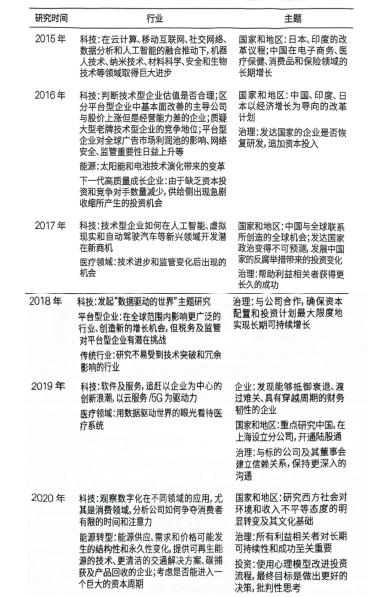
Core Insights - Baillie Gifford, a century-old asset management company, emphasizes a long-term investment philosophy that focuses on tracking technological transformations to identify investment opportunities for the next decade [1][2] Investment Philosophy - The company believes that while new technologies may appear suddenly, they actually have long gestation periods, and continuous observation can reveal future trends today [2] - Baillie Gifford's research agenda, released annually, covers industry themes, technological frontiers, and important economic and governance topics, showcasing a forward-looking and sustainable investment approach [2] Research Agenda Evolution - The evolution of Baillie Gifford's research agenda from 2015 to 2024 highlights its proactive positioning to capture extraordinary returns from technological changes [2] - Key themes from 2015 to 2024 include advancements in technology, energy transition, digital economy, artificial intelligence, and opportunities in China [3][4][5][14] Energy Transition - Baillie Gifford identifies the transition to renewable energy as a necessary trend to mitigate climate change, leading to significant capital cycles and infrastructure upgrades [5] - The company anticipates that capital scarcity and resource competition will favor companies with excellent capital allocation capabilities [5] Digital Economy - The digital economy has been a focal point for investors, with Baillie Gifford investing in major players like Amazon since 2004 [7] - The firm observes a "winner-takes-all" dynamic in technology platform companies, where a few innovative firms dominate and create new growth opportunities [7][8] Artificial Intelligence - Artificial intelligence has rapidly evolved into a standalone research theme for Baillie Gifford, with a focus on its transformative potential for society and the economy [9] - The company invests in key players in the AI supply chain, including Nvidia, ASML, and TSMC, which hold monopolistic positions in their respective fields [9] Transportation Revolution - The transportation sector is a significant area of focus, with Baillie Gifford investing in electric vehicle companies like Tesla and BYD, as well as battery manufacturers [11] - The firm highlights four disruptive forces in the future transportation ecosystem: shared mobility, urban air travel, electrification, and autonomous driving [11] Opportunities in China - China is a critical market for Baillie Gifford, with over 100 holdings in various sectors, including internet, new energy, and advanced manufacturing [14] - The company emphasizes the importance of long-term investment principles in China, recognizing its unique economic development model and innovation capabilities [15][16][17] Conclusion - Baillie Gifford believes that technological change and disruption are key drivers of significant investment opportunities, particularly in renewable energy and artificial intelligence [18] - The firm asserts that the next decade will see growth frontiers based on data and AI, with a shift from a two-dimensional to a three-dimensional internet landscape [18]

中国自动驾驶出租车板块:第三季度后思考-运营成果加速落地_ China Robotaxi Sector _Post-Q3 thought – accelerating operational achievements
2025-12-01 01:29
Summary of the Conference Call on China Robotaxi Sector Industry Overview - The report focuses on the **China Robotaxi Sector**, highlighting recent developments and operational achievements in the industry [2][3]. Key Companies - **WeRide**: Recently commenced full driverless commercial operations in Abu Dhabi with approximately 150 vehicles and received a passenger service permit in Switzerland [3]. - **Pony**: Announced unit economics breakeven in Guangzhou with fewer than 100 vehicles, achieving a daily average revenue of RMB 299 and 23 orders [3]. Core Insights - The sentiment towards robotaxi companies has turned more positive due to operational achievements despite a **30% share price pullback** amid cooling AI sentiment [2][3]. - Both WeRide and Pony are rated as **Buy**, with price targets suggesting nearly **50% upside potential** for both companies [2][5]. - The operational metrics of Chinese robotaxi players are reportedly mirroring or even surpassing those of Waymo, with Baidu Apollo Go achieving **250,000 weekly orders** and over **17 million cumulative rides** [3]. Technology and Market Dynamics - The application of AI in mobility is accelerating, with robotaxis expected to scale faster than humanoid robotics due to better technology readiness and commercial feasibility [4]. - The market may experience fragmentation due to the entry of new players, but established companies like Baidu, Pony, and WeRide are likely to expand operations more rapidly due to their track records [4]. Valuation and Investment Outlook - Valuation for robotaxi companies is based on **Price-to-Sales (P/S) multiple** methodology [7][8]. - WeRide has a smaller market cap, approximately **half of Pony's**, which may present a more attractive long-term risk/reward profile [5]. - Risks include regulatory approval timelines, economic growth fluctuations, and changes in policies affecting robotaxi operations [7][8][9]. Risks and Opportunities - **Downside Risks**: Slower regulatory easing, execution delays in overseas markets, and lower-than-expected demand for robotaxi services [8][9]. - **Upside Risks**: Faster regulatory approvals, quicker market share acquisition, and higher-than-expected demand for robotaxi services [8][9]. Conclusion - The China robotaxi sector is showing promising signs of growth and operational success, with both WeRide and Pony positioned favorably for future expansion and investment opportunities [2][3][5].