华润啤酒

Search documents
赵崇甫:品类失焦、品牌悬空,金种子酒的战略困局与人事流沙
Sou Hu Cai Jing· 2025-09-27 03:27
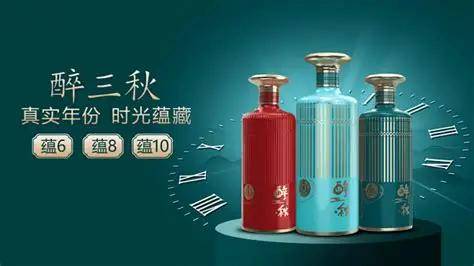
Core Viewpoint - Jinzhongzi Liquor is facing a financial crisis characterized by continuous losses, which stems from a lack of clarity in category strategy and brand positioning [1] Category Strategy - The company's attempt to penetrate the "mid-high-end" market has failed due to a misreading of market dynamics and speculative positioning [2] - The introduction of the "Fuhuo Xiang" series has not resonated with consumers, generating only 37.28 million yuan in revenue in the first half of the year, accounting for less than 10% of total revenue [2] - The rapid contraction of low-end products has led to a significant revenue decline, with low-end liquor income dropping by 33% year-on-year [2] Brand Positioning - Jinzhongzi's brand positioning oscillates between being a "historical famous liquor" and a "new noble of China Resources," failing to establish a strong market presence [5] - The company has multiple brand directions, such as "Soft Seed Liquor," "Fuhuo Xiang," and "Drunken Autumn," leading to resource dilution and ineffective brand communication [5] - The "China Resources" label, while providing capital and channel resources, risks creating a narrative of dependency rather than building intrinsic brand value [6] Personnel Changes - The departure of He Xiuxia symbolizes a disconnect in strategic execution, reflecting a lack of patience from China Resources regarding the liquor business [7] - Frequent leadership changes hinder the continuity of strategic initiatives, leaving stakeholders confused about the company's direction [7] - The lack of a consistent long-term strategy may prevent Jinzhongzi from establishing a solid market position, as seen in competitors like Gujing Gongjiu [7] Recommendations - Jinzhongzi should refocus on its core category strategy, identifying a stable market position and aligning its brand with that position [8] - The company needs to avoid chasing fleeting concepts like "mid-high-end" and instead concentrate on building a strong cultural identity around its existing products [8] - China Resources must recognize the differences between beer and liquor industries, allowing for a longer strategic timeline to cultivate brand value in the liquor market [8]


付鹏最新演讲:现在对黄金的共识,是对极端情况的一种表达
Feng Huang Wang Cai Jing· 2025-09-26 13:31
Group 1: Economic Trends and Insights - The current consensus on gold reflects a collective expression of concern over potential extreme risks, indicating a shift in the traditional credit system and the beginning of a new order [3][4] - The evolution of value consensus is not eternal and changes with generational shifts, as younger generations redefine consumption and investment preferences [5][6] - The global economy is at a critical juncture, requiring a breakthrough technology to drive productivity and escape current challenges, with AI emerging as a clear technological path [7][8] Group 2: AI and Its Impact - The AI industry has transitioned from concept exploration to application explosion, marking a significant shift in market focus from upstream computing power to downstream vertical applications [8][9] - The development of AI is an irreversible trend, and individuals must learn to utilize AI to remain competitive in both personal and investment markets [9][10] - The potential for AI to achieve self-production could lead to significant employment impacts, particularly in industries where AI can automate processes [10] Group 3: Demographic Changes and Consumption Patterns - Individual consumption willingness and capital expenditure capabilities are closely linked to the demographic lifecycle stage, with younger generations driving growth in certain consumer sectors [11][12] - The aging population and wealth distribution will influence various economic phenomena, including real estate and investment preferences [11][12] - Understanding the cyclical nature of population dynamics is crucial for grasping broader economic trends and their implications for investment and consumption [13]


国泰海通:即时零售或为白酒变革期新尝试 预计将持续扩容
智通财经网· 2025-09-26 05:52
Core Viewpoint - The rapid expansion of instant retail in China's liquor market is expected to maintain double-digit growth in the coming years, driven by the competitive landscape of food delivery services by 2025 [1][3] Group 1: Instant Retail Growth - China's retail industry has evolved through traditional retail, e-commerce, and new retail, with instant retail significantly shortening delivery times and enhancing consumer choices [1][2] - The liquor instant retail market has seen a surge since its inception on platforms like 1919 and Jiuxiaoer, with four main channel models emerging: vertical, platform-based, warehouse-store integrated, and front warehouse models [1][2] Group 2: Drivers of Instant Retail - The rise of instant retail in liquor is attributed to changing consumer habits, with a growing demand for convenience and quick fulfillment of spontaneous needs [2] - Cost efficiency is achieved by reducing distribution layers and operational costs, coupled with subsidies from some platforms, leading to significant price advantages [2] - Supply-side drivers include channel partners seeking to capture new growth and brand owners willing to collaborate with channels for new product launches and promotions [2] Group 3: Impact on the Liquor Industry - Instant retail presents both opportunities and challenges for the liquor industry, offering efficient fulfillment and better reach to younger consumers, while potentially impacting brand image and pricing structures [3] - Historical trends indicate that changes in the liquor cycle often coincide with channel transformations, and the current deep adjustment in the industry necessitates adaptation to instant retail [3] - The instant retail market for liquor in China is projected to reach 100 billion yuan by 2027, with a compound annual growth rate approaching the mid-double digits, benefiting core categories like baijiu and beer [3] Group 4: Investment Recommendations - The liquor retail channel is undergoing structural growth, with instant retail emerging as a highlight; recommended stocks include leading national brands and regional players with strong channel development capabilities [4] - Specific recommendations for baijiu include Guizhou Moutai, Shanxi Fenjiu, Wuliangye, Luzhou Laojiao, Yingjia Gongjiu, Jiansiyuan, and Guqingongjiu, while short-term elastic stocks include Zhenjiu Lidu and Shede Liquor [4] - For beer, which is the second-largest category in liquor, recommended stocks include Qingdao Beer, Zhujiang Beer, and China Resources Beer, reflecting high participation in instant retail [4]





华润啤酒首席财务官赵伟辞任
Mei Ri Jing Ji Xin Wen· 2025-09-26 02:37
Core Points - Zhao Wei, the Chief Financial Officer (CFO) of China Resources Beer, has resigned from his position due to other work arrangements and will take on a new role as CFO at China Resources Land starting September 23 [1][2] - Zhao Wei has over 20 years of experience in financial management and has been with the China Resources Group for 20 years, holding various key positions within China Resources Beer [1] - The company expressed gratitude for Zhao Wei's contributions during his tenure and will announce a replacement for the CFO position in due course [2] Company Changes - Zhao Wei's resignation marks the second high-level personnel change at China Resources Beer within a span of twenty days [1] - The current chairman of the board is Zhao Chunwu, who was appointed earlier this month [2] Background Information - Zhao Wei holds a PhD in engineering from Tianjin University and has served in multiple significant roles within the China Resources Group, including CFO of China Resources Pharmaceutical Commercial Group [1] - Since February 2024, Zhao Wei has also held key positions in the white liquor sector of China Resources, including directorships at several subsidiaries [2]


智通港股沽空统计|9月26日
Zhi Tong Cai Jing· 2025-09-26 00:47
Core Insights - The highest short-selling ratios were recorded for China Resources Beer (80291), Lenovo Group (80992), and Anta Sports (82020), all at 100.00% [1][2] - The top three companies by short-selling amount were Alibaba (09988) at 6.371 billion, Tencent Holdings (00700) at 2.521 billion, and Xiaomi Group (01810) at 2.334 billion [1][2] - The highest deviation values were observed for Lenovo Group (80992) at 46.15%, China Resources Beer (80291) at 38.77%, and New Creation Group (00659) at 33.25% [1][3] Short-Selling Ratios - The top short-selling ratios included: - China Resources Beer (80291): 100.00% - Lenovo Group (80992): 100.00% - Anta Sports (82020): 100.00% - Li Ning (82331): 100.00% - AIA Group (81299): 94.83% [2] Short-Selling Amounts - The leading companies by short-selling amounts were: - Alibaba (09988): 6.371 billion - Tencent Holdings (00700): 2.521 billion - Xiaomi Group (01810): 2.334 billion - Baidu (09888): 1.629 billion - SMIC (00981): 1.407 billion [2] Deviation Values - The companies with the highest deviation values were: - Lenovo Group (80992): 46.15% - China Resources Beer (80291): 38.77% - New Creation Group (00659): 33.25% - Li Ning (82331): 32.78% - Hang Seng Bank (80011): 30.69% [3]



又一酒企加码即时零售 国台与酒小二携手合作
Nan Fang Du Shi Bao· 2025-09-25 23:12
Core Insights - A leading liquor company, Guotai, has partnered with the instant retail platform Jiu Xiaoyi to enhance its new retail strategy, aiming to explore new e-commerce models and drive innovation in the liquor industry [1] - Guotai has launched a customized product, "Guotai Qingyun," as part of this strategic collaboration [1] - The partnership allows Guotai to leverage Jiu Xiaoyi's extensive sales network, which covers over 500 cities and counties across 18 provinces, potentially expanding its consumer reach [1] Industry Trends - The collaboration reflects a broader trend in the liquor industry, where companies are increasingly adopting new channels to boost sales and better understand consumer preferences [1] - Guotai's sales manager emphasized the need for liquor companies to shift from a "channel-driven" approach to a "consumer-driven" strategy due to the current transformative period in the liquor industry [1] - Other liquor companies, including Kweichow Moutai and Xijiu, have also embraced instant retail this year, indicating a growing trend among liquor brands to utilize instant retail platforms for enhanced consumer access [1] Instant Retail Dynamics - Instant retail is becoming a significant force in liquor distribution, providing consumers with the convenience of "buying and drinking immediately," which aligns with changing consumption habits [2] - These platforms are stimulating consumer demand by offering substantial discounts, thereby increasing product turnover at the retail level [2] - The rise of instant retail is seen as a critical development in the liquor market, highlighting its potential impact on consumer behavior and sales dynamics [2]
新时代招商的“明水答卷”
Qi Lu Wan Bao· 2025-09-25 22:25
Group 1 - The success of the Snowflake project provides a replicable "Mingshui experience" for national-level economic development zones, emphasizing ecological thinking as the core [1] - The Mingshui Economic Development Zone focuses on a "symbiotic" concept, creating a first-class hardware and industrial environment centered around the core needs of leading enterprises, forming a positive cycle of "gathering chains through production and revitalizing cities through chains" [1] - Innovative mechanisms such as "five unifications" management, parallel approval processes, land pre-reservation, and "project managers" effectively address landing bottlenecks, transforming "impossible" into "Mingshui speed" [1] Group 2 - The establishment of the China Resources Snow Beer million-ton factory in the Mingshui Economic Development Zone symbolizes the government's commitment, the dedicated service of the team, and the collaborative future between government and enterprises [2] - The Mingshui Economic Development Zone is setting a new benchmark for optimizing the business environment with the belief of "building a golden nest to attract the phoenix and sincere service to win the future" [2] - The Snowflake project drives cluster development, attracts headquarters relocation, contributes to tax revenue and employment, achieving a win-win situation for localities and enterprises, illustrating the ultimate value of investment attraction [1]
山西汾酒遭第二大股东减持,华润系:仅部分清算退出,长期仍看好
Sou Hu Cai Jing· 2025-09-25 16:04
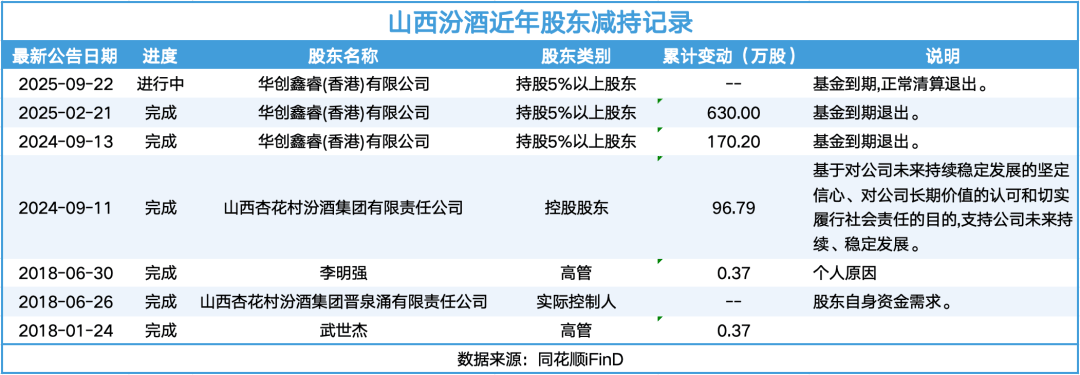
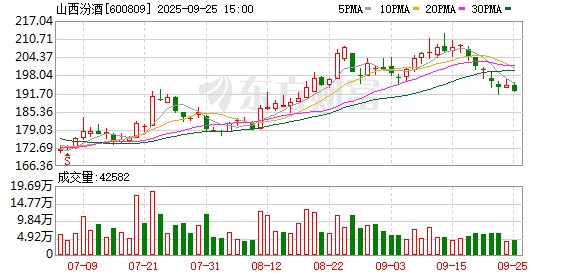
Core Viewpoint - Shanxi Fenjiu (600809.SH) announced a share reduction by its major shareholder, Huachuang Xinrui (Hong Kong) Co., Ltd., which plans to reduce up to 16.20 million shares through block trading due to fund expiration and normal liquidation [1][3]. Group 1: Shareholder Reduction Details - Huachuang Xinrui currently holds 128 million shares, accounting for 10.50% of the total share capital, after acquiring shares in 2018 for 5.16 billion yuan [1]. - This is not the first reduction by Huachuang Xinrui; previous reductions occurred in September 2022 and February 2023, totaling 8.02 million shares, with profits of 1.492 billion yuan from these transactions [1][2]. Group 2: Company Performance - Shanxi Fenjiu has shown significant growth, with revenue increasing from 9.444 billion yuan in 2018 to 36.01 billion yuan in 2024, moving from the fifth to the third position in the industry [3]. - In a challenging year for the liquor industry, Shanxi Fenjiu was one of the six out of twenty A-share liquor companies to achieve growth in both revenue and net profit, reporting a revenue of 23.964 billion yuan (up 5.35%) and a net profit of 8.505 billion yuan (up 1.13%) in the first half of the year [5].
山西汾酒遭第二大股东减持 华润系:仅部分清算退出 长期仍看好
Guo Ji Jin Rong Bao· 2025-09-25 15:44
Core Viewpoint - Shanxi Fenjiu (600809.SH) announced a share reduction plan by its major shareholder, Huachuang Xinrui (Hong Kong) Co., Ltd., intending to reduce up to 16.20 million shares through block trading due to fund expiration and normal liquidation [2][4]. Shareholder Reduction Details - Huachuang Xinrui currently holds 128 million shares, accounting for 10.50% of the total share capital, after acquiring shares in 2018 for 5.16 billion yuan [2]. - Previous reductions by Huachuang Xinrui occurred in September 2022 and February 2023, totaling 8.02 million shares, with profits of 1.492 billion yuan from these transactions [2][3]. Company Performance - Shanxi Fenjiu has shown significant growth, with revenue increasing from 9.444 billion yuan in 2018 to 36.01 billion yuan in 2024, ranking third in the industry [4]. - In a challenging market, the company reported a revenue of 23.964 billion yuan in the first half of the year, a year-on-year increase of 5.35%, and a net profit of 8.505 billion yuan, up 1.13% [4]. - Despite the overall industry downturn, Shanxi Fenjiu increased its marketing expenses by 19.1% to 2.382 billion yuan, contrasting with many competitors who reduced marketing efforts [4].
香港国际中医药大会启幕!
Zhong Guo Ji Jin Bao· 2025-09-25 14:44
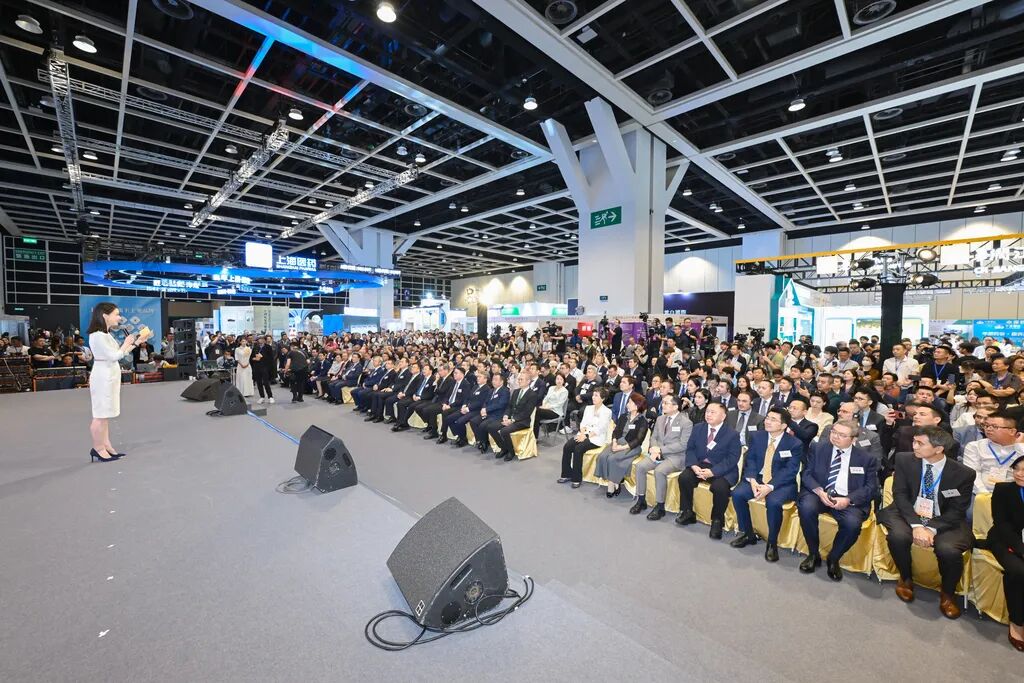
Core Insights - The 2025 Hong Kong International Traditional Chinese Medicine Conference has commenced, focusing on promoting the high-quality global development of traditional Chinese medicine (TCM) [1] - The event gathered nearly 500 experts, scholars, and industry leaders from various regions, showcasing the practical value and development prospects of TCM through diverse activities [1][4] - The conference aims to explore new paths and opportunities for the internationalization of TCM, emphasizing collaboration among government, industry, academia, and research sectors [1] Group 1: Event Overview - The conference features a variety of activities, including rare herbal exhibitions, cultural experiences, product showcases, and lectures by renowned doctors, providing a platform for extensive communication [1][4] - The opening ceremony included a performance of "Ba Duan Jin" and Tai Chi, demonstrating the practicality of TCM in daily health management [4][6] Group 2: Key Speakers and Their Messages - Xu Zhengzhong, Chairman of the Zijing Cultural Group, highlighted TCM as a treasure of the Chinese nation, emphasizing its integration into Hong Kong's healthcare system and its role in the Greater Bay Area [8] - Liang Zhenying, Vice Chairman of the National Committee of the Chinese People's Political Consultative Conference, noted that Hong Kong's TCM sector has developed a complete and advanced system, integrating into the overall healthcare and wellness system [10] - Jia Zhongwu, Director of the Comprehensive Department of the National Administration of Traditional Chinese Medicine, stated that the Chinese government places high importance on the development of TCM, promoting its unique advantages in health initiatives [12] Group 3: Government Support and Future Directions - Chen Guoki, Secretary for Administration of the Hong Kong SAR Government, expressed the government's commitment to promoting high-quality TCM development, leveraging Hong Kong's unique advantages [15] - Wang Cuijun, General Manager of China Resources Group, emphasized the global collaboration needed for TCM's innovation and its role in building a healthy community [17] - The conference also launched the "High-Quality Development of the Traditional Chinese Medicine Industry Chain" initiative, aiming to foster collaborative development and cultural dissemination of TCM [21] Group 4: Conference Activities and Impact - The conference will last four days, featuring exhibitions, international summits, and community health services, showcasing TCM's cultural charm and development achievements [23] - The event aims to contribute to human health and well-being by promoting the innovative and open development of TCM [23]