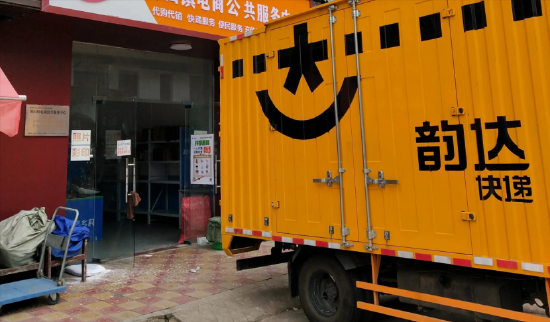
韵达股份

Search documents
联合深度专题:反内卷,细分行业如何选?
2025-09-17 00:50
Summary of Conference Call Records Industry Overview - **Steel Industry**: Profitability improvement relies on supply-demand optimization and capacity exit. Anti-dumping measures aim to suppress raw material positions and promote profit return to the industry chain, aligning with national strategic direction. Expected implementation of graded management starting in 2026, with non-compliant companies facing significant production cuts, thus driving market clearance [1][6][4]. - **Cement Industry**: Facing supply-side overproduction governance. Strict implementation and cooperation among companies could lead to price elasticity. Current actual capacity utilization is around 50%, with regional variations [13][14]. - **Photovoltaic Glass**: Low profitability but high capacity utilization, with long-term demand growth expected. Strong necessity for anti-involution measures due to low profitability [16][12]. - **Express Delivery Industry**: Rapid effects from anti-involution, with significant price increases and high profit elasticity. Each listed express company could add 500 to 1,000 million profits per quarter [20][23]. - **Aviation Industry**: Affected by weak business demand, but typically performs well in Q4. Structural oversupply is a challenge, with North American routes not recovering, leading to increased domestic capacity [22][29]. - **Chemical Industry**: Influenced by inventory cycles and new capacity launches, with most sub-industries in a wait-and-see state. Focus on opportunities for clearing outdated capacities in specific sectors [31][32]. Key Points and Arguments - **Steel Industry Profitability**: Post anti-involution policy, profitability surged from 40-50 RMB per ton to over 200 RMB, but has since declined due to rising raw material prices [2]. The industry needs supply-demand balance and capacity exit for sustained profitability [9]. - **Profit Distribution in Steel**: Iron ore accounts for 70-75% of the profit distribution, while steel and coking coal each account for 15%. The reliance on imported iron ore necessitates adjustments through anti-involution policies for reasonable profit distribution [5]. - **Future Management of Steel Capacity**: Starting in 2025, a limit of 50 million tons will be implemented, with graded management expected in 2026 to drive the exit of outdated capacities [6]. - **Cement Price Elasticity**: Price elasticity in the cement industry will depend on strict implementation of overproduction governance and cooperation among companies [17]. - **Photovoltaic Glass Supply Changes**: The industry has seen price increases due to production limits, with a current capacity utilization of about 70%. Long-term supply changes will depend on policy advancements [19]. - **Express Delivery Price Trends**: The express delivery industry has seen significant price increases, with regulatory measures supporting price hikes through warehouse locking and feedback mechanisms [26]. - **Aviation Industry Challenges**: The aviation sector is facing structural oversupply and weak business demand, with a projected low growth rate in supply over the next few years [28][30]. Additional Important Insights - **Investment Recommendations**: - For the steel sector, focus on leading companies like Hualing Steel and Baosteel, which could see profit elasticity of 40-80% if profitability rebounds [10]. - In the cement sector, Huaxin Cement is recommended due to its domestic and overseas business potential [18]. - In the express delivery sector, stocks of tail-end companies like Shentong, YTO, and Yunda are recommended for investment [27]. - **Chemical Industry Opportunities**: Potential for collaborative production cuts in sectors like organic silicon and polyester filament, which are currently underperforming [34]. - **Coal Industry Outlook**: The coal sector is expected to benefit from macroeconomic factors and supply restrictions, with specific recommendations for Yanzhou Coal and Electric Power [45]. This summary encapsulates the key insights and recommendations from the conference call, providing a comprehensive overview of the discussed industries and their future outlooks.
韵达股份跌2.10%,成交额2.23亿元,主力资金净流出1051.12万元
Xin Lang Cai Jing· 2025-09-16 05:28
Core Viewpoint - Yunda Holdings has experienced fluctuations in its stock price, with a year-to-date increase of 8.46% but a recent decline over the past 20 days of 8.42% [2] Financial Performance - For the first half of 2025, Yunda Holdings reported operating revenue of 24.833 billion yuan, representing a year-on-year growth of 6.80%. However, the net profit attributable to shareholders decreased by 49.19% to 529 million yuan [2] - Cumulative cash dividends since the company's A-share listing amount to 3.385 billion yuan, with 1.221 billion yuan distributed over the past three years [3] Stock Market Activity - As of September 16, Yunda's stock price was 7.94 yuan per share, with a market capitalization of 23.020 billion yuan. The stock saw a trading volume of 2.23 billion yuan and a turnover rate of 0.99% [1] - The net outflow of main funds was 10.5112 million yuan, with large orders showing a buy of 47.0058 million yuan and a sell of 57.5680 million yuan [1] Shareholder Information - As of June 30, 2025, the number of shareholders for Yunda Holdings was 85,900, a slight increase of 0.19% from the previous period. The average circulating shares per person decreased by 0.19% to 32,788 shares [2] - The second-largest circulating shareholder is Hong Kong Central Clearing Limited, holding 83.9345 million shares, a decrease of 84,500 shares from the previous period [3]

物流板块9月15日涨0.89%,福然德领涨,主力资金净流出1.72亿元
Zheng Xing Xing Ye Ri Bao· 2025-09-15 08:42
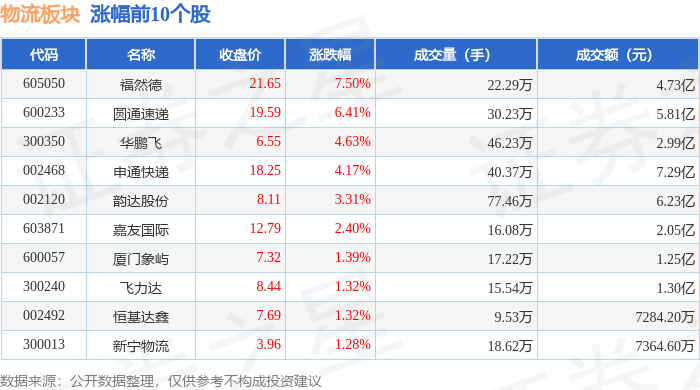
Core Insights - The logistics sector experienced a rise of 0.89% on September 15, with Furan De leading the gains [1] - The Shanghai Composite Index closed at 3860.5, down 0.26%, while the Shenzhen Component Index closed at 13005.77, up 0.63% [1] Logistics Sector Performance - Furan De (605050) closed at 21.65, up 7.50% with a trading volume of 222,900 shares and a transaction value of 473 million [1] - YTO Express (600233) closed at 6561, up 6.41% with a trading volume of 302,300 shares and a transaction value of 581 million [1] - Huapengfei (300350) closed at 6.55, up 4.63% with a trading volume of 462,300 shares and a transaction value of 299 million [1] - Shentong Express (002468) closed at 18.25, up 4.17% with a trading volume of 403,700 shares and a transaction value of 729 million [1] - Yunda Holdings (002120) closed at 8.11, up 3.31% with a trading volume of 774,600 shares and a transaction value of 623 million [1] Capital Flow Analysis - The logistics sector saw a net outflow of 172 million from institutional investors, while retail investors experienced a net inflow of 176 million [2] - The overall retail investor net outflow was 4.57 million [2] Individual Stock Capital Flow - Furan De had a net inflow of 82.68 million from institutional investors, while retail investors saw a net outflow of 15.10 million [3] - China Foreign Trade (601598) had a net inflow of 30.80 million from institutional investors, with a net outflow of 38.62 million from retail investors [3] - Yunda Holdings (002120) had a net inflow of 28.39 million from institutional investors, while retail investors experienced a net outflow of 29.17 million [3]


继续推荐快递板块!——行业反内卷与旺季连接,全面扩散趋势已形成,持续性或超预期!
2025-09-15 01:49
Summary of Conference Call on the Express Delivery Industry Industry Overview - The express delivery industry is experiencing a significant regulatory push against price wars, particularly in 2025, with the State Post Bureau collaborating with companies to enforce stricter regulations [1][3] - The industry is expected to see a business volume growth rate of approximately 15% for the year 2025, although future growth may revert to single-digit figures [1][4] Key Points and Arguments - **Regulatory Environment**: The regulatory environment has intensified, with the State Post Bureau's initiatives leading to price increases in various regions, particularly in Guangdong, where a price increase of 0.4 yuan per 0.1 kg was implemented [1][3] - **Price Increase Effects**: The impact of price increases varies by region; Guangdong shows significant results, while places like Yiwu have seen less effective outcomes due to local government hesitance [1][5] - **Market Sentiment**: The market has responded positively to the anti-involution policies, with expectations that these will enhance the profitability of listed companies [1][7] - **Comparison with Previous Year**: The price increase trend in 2025 is more widespread and sustained compared to 2024, where only Guangdong initiated price hikes without broader participation [1][8][9] Company Recommendations - Recommended companies in the express delivery sector include Shentong, YTO, Zhongtong, and Yunda, with Shentong highlighted for its strong elasticity and close integration with Alibaba's retail operations [2][11] - Jitu's profit growth in China is noted as significant, although its primary operations are in Southeast Asia [2][11] Additional Insights - **Labor and Social Security**: The Supreme Court's recent ruling allows workers to sue for unpaid social security contributions, which may lead to increased costs for companies, although these costs have not yet been factored into profit estimates [1][10][12] - **Future Outlook**: The express delivery sector is viewed as having substantial potential for growth, especially given its current low valuation and the thorough implementation of anti-involution measures [1][14]
严制裁的油轮和全面涨价的快递弹性测算
Changjiang Securities· 2025-09-14 14:13
Investment Rating - The report maintains a "Positive" investment rating for the transportation industry [11]. Core Insights - VLCC freight rates have reached a new high since March 2023, driven by limited supply and OPEC's production increase, indicating a tight oil tanker supply-demand situation [6][20]. - The express delivery sector is experiencing a nationwide price increase trend, with a significant recovery in profitability expected in Q4 2025 [7][39]. Summary by Sections Oil Tankers - VLCC freight rates have surged, with a notable increase of 39.3% to 78k USD/day, reflecting a tight supply situation due to limited new ship deliveries and stringent sanctions [9][20]. - The correlation between VLCC freight rates and annual profits of Zhongyuan Shipping indicates potential for price recovery in the sector [6][36]. - OPEC's production policy shift has led to increased exports, further supporting oil transportation demand [28][32]. Express Delivery - The regulatory stance against "involution" in the express delivery sector has strengthened, leading to a nationwide price increase that began as regional trials [51][52]. - The average price across the country has risen by 0.23 RMB since July, with potential net profit increases for major companies like Zhongtong and Yunda expected in Q4 2025 [7][53]. - The report highlights a significant recovery in profitability for major express delivery companies, with projected net profit increases of 7.8 billion RMB for Zhongtong and 5.3 billion RMB for Yunda by Q4 2025 [7][56]. Passenger Transport - Domestic passenger transport volume has shown improvement, with a 8% year-on-year increase in domestic passenger volume and a 14% increase in international passenger volume [61]. - The average domestic passenger load factor has improved by 3.2 percentage points, while international load factors have increased by 4.0 percentage points [67]. - Despite a slight decline in ticket prices, the overall market is expected to see marginal improvements in revenue as demand continues to recover [67][75].


韵达股份上半年净利润下降49% 阿里减持套现约1.7亿元
Xi Niu Cai Jing· 2025-09-13 14:09
Core Insights - Yunda Holdings Group Co., Ltd. reported a revenue of 24.83 billion yuan for the first half of 2025, representing a year-on-year growth of 6.8% [2][3] - The net profit attributable to shareholders decreased by 49.19% to 528.78 million yuan, while the net profit excluding non-recurring items fell by 45.60% to 452.64 million yuan [2][3] - The company experienced a decline in single-package revenue, which dropped by 0.16 yuan to 1.92 yuan per package, attributed to changes in product structure and market factors [3] Financial Performance - Revenue: 24,832,923,076.39 yuan, up 6.8% from 23,251,979,402.66 yuan [3] - Net Profit: 528,777,492.06 yuan, down 49.19% from 1,040,655,555 yuan [2][3] - Net Profit (Excluding Non-Recurring Items): 452,638,441.69 yuan, down 45.60% from 832,083,633 yuan [2][3] - Operating Cash Flow: 1,012,551,193.23 yuan, down from 2,020,710,287 yuan [2] - Basic Earnings Per Share: 0.1829 yuan, down from 0.35 yuan [2] Cost Management - Sales Expenses: 111,929,736.74 yuan, decreased by 13.68% [3] - Management Expenses: 606,541,696.04 yuan, decreased by 3.67% [3] - Financial Expenses: 107,262,628.61 yuan, decreased by 22.23% [3] Business Operations - Total Express Volume: 12.726 billion packages [3] - Express Business Revenue: 24.486 billion yuan [3] Shareholding Changes - As of the first half of 2025, Alibaba's shareholding decreased to 0.71%, with a reduction of 21,291,100 shares, resulting in an estimated cash-out of approximately 170 million yuan [4]

快递价格战现8角发全国 快递员派12000票才拿9000元 多省启动“反内卷”涨价
Xin Lang Cai Jing· 2025-09-13 03:12
Core Insights - The express delivery industry in China has seen a significant increase in volume, with a total of 956.4 billion packages delivered in the first half of the year, representing a year-on-year growth of 19.3%. However, the average price per package has dropped to 7.5 yuan, leading to extreme low pricing in some regions, such as "0.8 yuan for nationwide delivery" [1][1][1] Industry Overview - Many express delivery companies, including Yunda and YTO, are facing a dilemma of "increased revenue without increased profit," as daily losses in some Shenzhen outlets reach thousands of yuan. This has resulted in a decline in income for delivery personnel despite increased package delivery volume [1][1][1] Price Adjustment Initiatives - Starting in August, over ten provinces, including Guangdong, have initiated price adjustments to combat the "involution" in the industry, leading to a slight increase in delivery fees. This has placed significant pressure on low-cost e-commerce merchants, with some businesses experiencing an increase in operational costs by 1,500 yuan [1][1][1] Shift in Competitive Strategy - The industry is transitioning from a price war to a focus on differentiated services, introducing new offerings such as scheduled deliveries and smart devices. Analysts suggest that the "anti-involution" measures are not about eliminating competition but rather about promoting reasonable price recovery, ensuring the legal rights of delivery personnel, and enhancing delivery quality [1][1][1]
【组图】集结!多款物流无人机、无人车集体亮相服贸会
Zhong Guo Jing Ji Wang· 2025-09-12 03:43
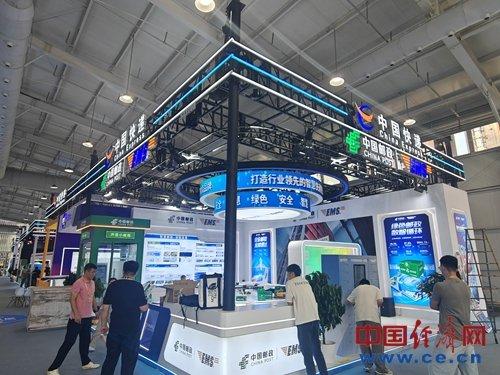
Core Insights - The "China Express" booth at the 2025 Service Trade Fair showcased advanced logistics technologies, including drones and unmanned vehicles, highlighting the industry's shift towards automation and smart logistics solutions [1][3][5]. Group 1: Technology Showcase - Various logistics companies presented their innovations, such as unmanned delivery vehicles, intelligent sorting robots, and blockchain traceability platforms [1]. - The exhibition demonstrated a fully automated "warehouse-distribution" process through the collaboration of drones and Automated Guided Vehicles (AGVs) [1]. Group 2: Industry Future Exploration - The event not only showcased the latest technological breakthroughs in smart transportation and logistics but also explored the limitless possibilities for the future of the industry [1].
宝城期货资讯早班车-20250912
Bao Cheng Qi Huo· 2025-09-12 01:57
1. Report Industry Investment Rating No relevant content provided. 2. Core Viewpoints of the Report - The report comprehensively presents macro - economic data, commodity investment information, financial news, and stock market trends, offering insights into the economic and market conditions across various sectors [1][2][14][32]. - Different institutions have diverse outlooks on the bond market. Some believe that after continuous adjustments, bond risks are released, and there may be a more optimistic outlook, while others focus on factors such as fiscal policy and inflation in relation to the bond market [28][29]. 3. Summary by Directory 3.1 Macro Data Quick View - GDP growth in Q2 2025 was 5.2% year - on - year, slightly lower than the previous quarter's 5.4% but higher than the same period last year [1]. - Manufacturing PMI in August 2025 was 49.4%, a slight increase from the previous month, while non - manufacturing PMI was 50.3%, also up from the previous month [1]. - In July 2025, the year - on - year growth rates of M0, M1, and M2 were 11.8%, 5.6%, and 8.8% respectively, with M1 showing a significant year - on - year improvement [1]. - In August 2025, CPI was - 0.4% year - on - year, and PPI was - 2.9% year - on - year [1]. 3.2 Commodity Investment Reference 3.2.1 Comprehensive - The Shanghai American Chamber of Commerce's report shows that the Chinese government's market - opening efforts have improved the business environment, with 71% of surveyed enterprises profitable in 2024, up from 66% in 2023 [2]. - The proportion of US companies choosing the US as an investment transfer destination decreased by 4 percentage points to 18% last year, indicating that the "manufacturing回流" policy had limited effect [2]. - China will take necessary measures to safeguard its legitimate rights and interests in response to Mexico's potential tariff hikes [2]. - The US canceled tariffs on most Brazilian pulp exports on September 5 [2]. - US economic data shows that the 8 - month CPI was in line with expectations, and the number of initial jobless claims reached a new high since October 2021, leading traders to expect three Fed rate cuts by the end of the year [3]. 3.2.2 Metals - International precious metal futures closed mixed. Market expectations of a Fed rate cut and a decline in confidence in US dollar assets are driving factors [4]. - Gold has become the top reserve asset for global central banks, with its proportion in reserves exceeding US Treasuries for the first time since 1996 [5]. - In September, precious metal prices reached new highs both internationally and domestically, attracting over 100 billion yuan in funds to the domestic gold futures market [5]. - Some online gold repurchase businesses have been suspended, possibly due to regulatory and risk - control reasons [5]. - Barrick Gold plans to sell a Canadian gold mine for up to $1.1 billion [5]. - In July, Chile's state - owned copper company's copper production increased by 6.4% year - on - year, while the production of the Collahuasi mine decreased by 27.2% [6]. 3.2.3 Coal, Coke, Steel, and Minerals - Heavy rain in Indonesia has affected coal production and transportation, potentially narrowing the price gap between domestic and imported coal. September's coal imports are expected to remain above 40 million tons [8]. - Vale received an operating license for a 20 - million - ton iron ore project in Brazil [8]. 3.2.4 Energy and Chemicals - Ningde Times plans to resume production at the Jiaxiaowo lithium mine, aiming for full - load production and cost - reduction measures [9]. - International oil prices fell due to increased supply and weak demand. OPEC + production increased in August, and US inventories reached a new high [9]. - The IEA expects global oil supply to grow faster than expected this year and a potential surplus in 2026 [9]. - Russia's ESPO crude oil exports from the Kozmino port will decrease from 4.2 million tons in August to 4 million tons in September [11]. - The European Central Bank predicts that the oil price in 2025 will be $69.7 per barrel [12]. 3.2.5 Agricultural Products - India's sugar production in 2025 - 26 is estimated to be 34.9 million tons [13]. - In August, US coffee imports from Brazil decreased significantly, while Germany became the largest overseas market for Brazilian coffee [13]. - Brazil's soybean production in the 2025/26 season is expected to reach 180 million tons, with 19% of the soybeans pre - sold [13]. 3.3 Financial News Compilation 3.3.1 Open Market - On September 11, the central bank conducted 292 billion yuan of 7 - day reverse repurchase operations, resulting in a net injection of 79.4 billion yuan [14]. 3.3.2 Key News - The market expects the central bank to restart treasury bond trading operations, with a more favorable view of the fourth - quarter restart [15]. - The US economic data has led traders to expect three Fed rate cuts by the end of the year [15]. - Gold has become the top reserve asset for global central banks [16]. - China will conduct a two - year factor market reform pilot in 10 regions [16]. - China will take measures to safeguard its rights and interests in response to Mexico's potential tariff hikes [16]. - The government will implement policies to stabilize foreign trade [17]. - 27 provinces plan to issue about 777.1 billion yuan of local bonds in September, with some expanding the use of special bonds to government investment funds [17]. - The North - Exchange convertible bond market opened this week, with light trading volume [17]. - Most bank wealth management companies achieved net inflows in August, with a total increase of about 285.7 billion yuan in management scale [18]. - The average 7 - day annualized yield of money market funds is approaching 1%, with 80 products having yields below 1% [18]. - The reform and restructuring of rural banks are accelerating [18]. - Bank wealth management products are attracting deposits, with 12 of the top 14 wealth management companies achieving net growth in August [19]. - The bond market has experienced a decline, mainly due to institutional behavior and low bond yields [19]. - The European Central Bank kept interest rates unchanged, indicating that the inflation - reduction process is over [20]. - The US fiscal deficit in 2025 is higher than the same period in 2024 [20]. - There are various bond - related events, including debt restructuring, cancellation of bond issuance, and changes in corporate management [20]. - Some companies' credit ratings have been adjusted [21]. 3.3.3 Bond Market Summary - The inter - bank bond market showed a mixed trend, with short - and medium - term bonds strengthening and 30 - year bonds weakening [22]. - The exchange - traded bond market had some bonds rising and others falling [22]. - The convertible bond index rose, with some bonds having significant gains and losses [22]. - Money market interest rates showed different trends, with some rising and others falling [23]. - Bond issuance and bidding results showed different yields and multiples [24]. - European and US bond yields had different changes [25]. 3.3.4 Foreign Exchange Market Express - The on - shore RMB against the US dollar closed lower, while the RMB central parity rate against the US dollar rose [27]. - The US dollar index fell, and most non - US currencies rose [27]. 3.3.5 Research Report Highlights - CITIC Securities believes that bond risks have been released, and the 10 - year treasury bond yield may return to 1.6% [28]. - CICC Fixed Income expects the low - inflation pattern to continue in the short term and suggests seizing bond trading opportunities [28]. - Huatai Fixed Income believes that the bond market adjustment is due to institutional behavior and suggests looking for opportunities after October [29]. - Changjiang Fixed Income expects the social financing growth rate to peak and the bond market to remain weakly volatile [30]. 3.4 Stock Market Key News - A - shares rose significantly, with over 4200 stocks rising, and the ChiNext Index returned to 3000 points [32]. - The Hong Kong Hang Seng Index fell, with pharmaceutical stocks weak and chip and non - ferrous sectors performing well [33]. - The continuous rise of the ChiNext Index is related to its heavy - weight stocks, especially in the AI + direction [33].
韵达快递多网点瘫痪,欠薪风波引爆快件“囤积潮”? | BUG
Xin Lang Ke Ji· 2025-09-12 00:11
Core Viewpoint - Recent discussions on social media regarding "Is Yunda in Guilin bankrupt?" highlight operational issues in Yunda Express's business in Guilin, Guangxi, leading to significant cargo backlog and financial losses for local franchise owners [2][3][5]. Financial Performance - Yunda Express reported a significant decline in profitability despite an increase in revenue and business volume. For the first half of 2025, the company achieved a revenue of 24.83 billion yuan, a year-on-year increase of 6.8%, and a business volume of 12.73 billion parcels, up 16.5% [11][12]. - The net profit attributable to shareholders was only 5.29 billion yuan, down 49.19% year-on-year, while the net profit after deducting non-recurring gains and losses was 4.53 billion yuan, a decrease of 45.60% [11][12]. - The second quarter alone saw a net profit of 2.08 billion yuan, plummeting 66.94% year-on-year, indicating a severe drop in profitability [11][12]. Operational Challenges - Yunda's operational issues are reflected in the complaints from users, with over 80,000 complaints reported, primarily concerning damaged, lost, or missing parcels [5][6]. - The company has faced criticism from major media outlets for issues such as "express blind boxes" and "fraudulent packages," leading to investigations by the State Post Bureau [6][7]. Franchise Model Issues - The franchise model adopted by Yunda has led to management challenges, with local franchisees struggling to maintain profitability. One franchise owner reported a loss of 350,000 yuan over two years, highlighting the difficulties in the industry [9][16]. - The operational model has resulted in poor service quality, with complaints about service attitudes and operational standards being common, further damaging the company's reputation [16]. Market Position and Competition - Yunda's gross profit margin for the first half of 2025 was only 6.55%, significantly lower than competitors like SF Express and ZTO Express, indicating a challenging competitive landscape [13]. - The average revenue per parcel has decreased, with Yunda's single parcel revenue dropping to 1.92 yuan, a decline of 7.69% year-on-year, reflecting the impact of price wars in the industry [10][13].