
南钢股份

Search documents
“AI+钢铁”锻造新质生产力
Jing Ji Ri Bao· 2025-08-27 22:04
Core Viewpoint - The steel industry in China is undergoing a significant digital transformation driven by artificial intelligence, which is essential for high-quality development and efficiency improvements [1][4][6]. Digital Transformation Initiatives - The China Iron and Steel Association has prioritized digital transformation as one of the three major projects for the industry, launching a three-year action plan [1]. - 95.1% of steel companies have integrated digital transformation strategies into their overall development plans, with significant investments in smart upgrades [2][6]. Technological Advancements - Shougang's cold-rolled company has been recognized as a "lighthouse factory" due to its implementation of advanced technologies such as 5G, AI, and big data, resulting in a 21.2% increase in production efficiency and a 35% reduction in product defect rates [2]. - Baowu Steel has initiated a new digital transformation strategy marked by "AI+", aiming to create over 1,000 AI-enabled application scenarios within three years [3]. Industry Challenges and Solutions - The steel industry faces challenges related to the "black box" nature of production processes, which can hinder efficiency and quality [4][5]. - The introduction of "human-machine hybrid intelligence" models aims to address these challenges by enabling high-fidelity predictions and optimizing production processes [5]. Future Prospects - The application of AI in the steel industry is expected to expand, enhancing production efficiency, quality control, and supply chain management [6]. - The development of an AI ecosystem that promotes collaboration among steel companies, research institutions, and technology service providers is anticipated to drive the industry's transition towards high-end, intelligent, and green development [6][7]. Policy and Strategic Focus - The China Iron and Steel Association will continue to focus on AI and intelligent technology applications to reshape productivity, emphasizing low-carbon integration and cost-effective technology promotion [7]. - The core value of AI in the steel industry is to create a new paradigm of "human-machine collaboration," enhancing operational stability and continuous system optimization [7].
中国四大巨头,加起来比不过日本制铁,凭什么?
虎嗅APP· 2025-08-27 13:37
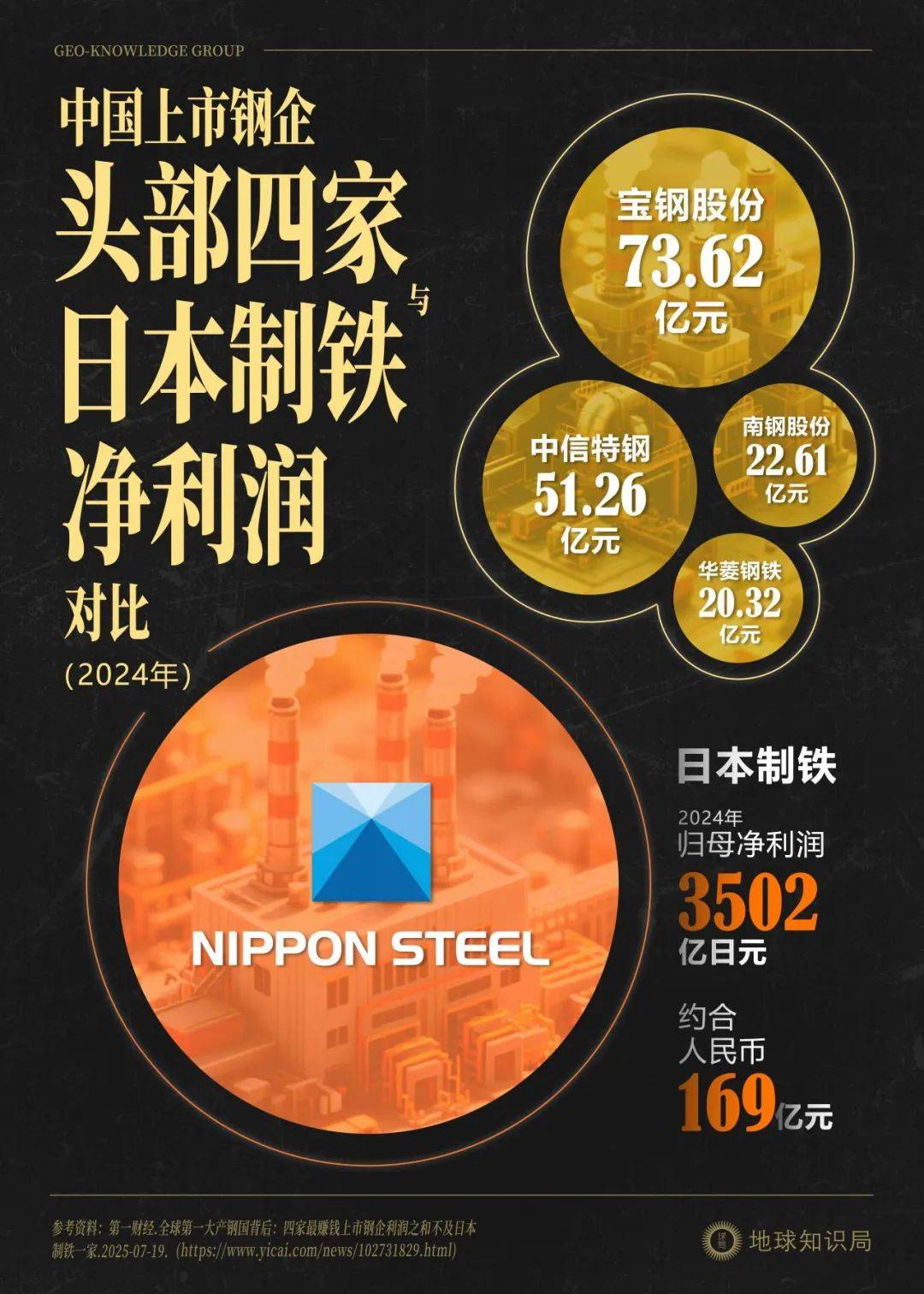
Core Viewpoint - In 2024, China's crude steel production reached 1.005 billion tons, accounting for 53.38% of global output, marking five consecutive years as a billion-ton steel powerhouse. However, Chinese steel companies face challenges of being large but not strong, with high production but low profitability compared to Japan's Nippon Steel [4][29]. Group 1: China's Steel Industry - China's steel industry produced 1.005 billion tons of crude steel in 2024, a year-on-year decrease of 1.7% [29]. - Among the top 10 steel producers globally, six are Chinese companies, highlighting China's dominance in production [4]. - The four most profitable listed steel companies in China (Baowu, CITIC Special Steel, Nanjing Steel, and Huazhong Steel) combined profits still fall short of Japan's Nippon Steel [4][6]. Group 2: Comparison with Japan's Steel Industry - Nippon Steel's net profit for 2024 was approximately 164 billion yuan, surpassing the combined profits of China's top four steel companies [6][7]. - Japan's steel industry has successfully transformed from past overcapacity and losses to profitability through strategic measures, including cost reduction and focusing on high-value products [16][19]. - In 2020, Japan's crude steel production was 83.19 million tons, with special steel accounting for about 20.96% of its output, compared to China's 12.31% [25]. Group 3: Challenges and Opportunities for China - China's steel exports in 2024 reached 110.71 million tons, a year-on-year increase of 22.7%, but the average price per ton decreased, indicating a "volume increase but price drop" trend [31]. - China heavily relies on imported iron ore, with 1.237 billion tons imported in 2024 at an average price of 106.9 USD per ton, making the industry vulnerable to international price fluctuations [31][33]. - The West Simandou iron ore project in Guinea, in which Baowu Steel Group has invested, is expected to improve China's high-grade ore self-sufficiency by 3% to 5% upon production [33].

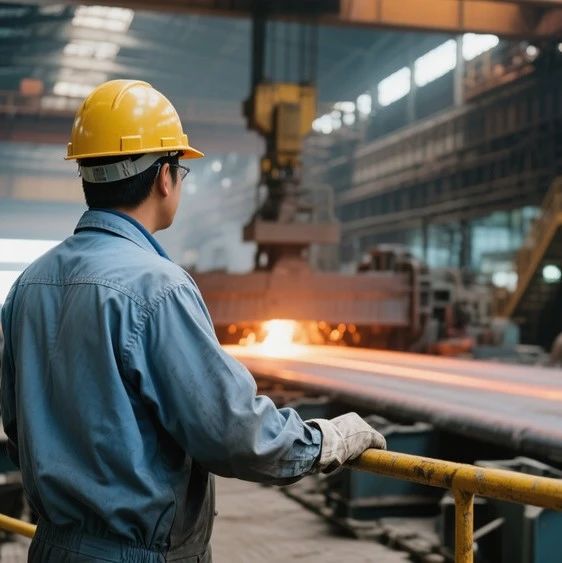
中国四大巨头,加起来比不过日本制铁,凭什么?
商业洞察· 2025-08-27 09:31
Core Viewpoint - China has maintained its position as the world's largest steel producer, with a crude steel output of 1.005 billion tons in 2024, accounting for 53.38% of global production, despite efforts to reduce excess capacity [3][20]. Group 1: China's Steel Industry - China's steel industry is characterized by high production but low profitability, with the net profits of its top four listed steel companies in 2024 not surpassing that of Japan's Nippon Steel [3][5]. - In 2024, China exported 11.07 million tons of steel, with an average price of $755.4 per ton, indicating a trend of increasing volume but decreasing total revenue [20][22]. - China's reliance on imported iron ore is significant, with imports reaching 1.237 billion tons in 2024 at an average price of $106.9 per ton, making the industry vulnerable to international price fluctuations [23][25]. Group 2: Japan's Steel Industry Recovery - Japan's Nippon Steel faced severe losses in 2019 but implemented a comprehensive reform strategy that included shutting down high-cost production facilities and focusing on high-value products, leading to a turnaround in profitability within a year [14][18]. - The company shifted its focus to producing high-margin products, such as special steel, which accounted for approximately 20.96% of its total crude steel output in 2020, compared to only 12.31% for China [17][20]. - Japan's steel industry has benefited from government policies aimed at eliminating outdated capacity and promoting industry upgrades, which could serve as a model for China's steel sector [12][26]. Group 3: Future Directions for China's Steel Companies - Chinese steel companies are encouraged to learn from Japan's past experiences and focus on producing high-value-added steel products to enhance profitability and competitiveness [26]. - The development of high-quality steel products, such as LNG ship steel and aircraft carrier deck steel, indicates progress in technology and product diversification within China's steel industry [26].

普钢板块8月27日跌2.09%,中南股份领跌,主力资金净流出9.24亿元
Zheng Xing Xing Ye Ri Bao· 2025-08-27 08:39
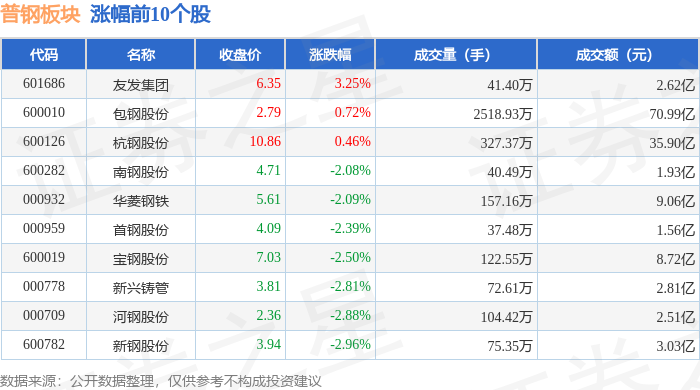
Market Overview - On August 27, the steel sector declined by 2.09%, with Zhongnan Co. leading the drop [1] - The Shanghai Composite Index closed at 3800.35, down 1.76%, while the Shenzhen Component Index closed at 12295.07, down 1.43% [1] Individual Stock Performance - Notable performers included Youfa Group, which rose by 3.25% to a closing price of 6.35, and Baotou Steel, which increased by 0.72% to 2.79 [1] - Conversely, Zhongnan Co. fell by 4.79% to 2.78, while Liugang Co. dropped by 4.31% to 5.77 [2] Trading Volume and Value - The trading volume and value for key stocks were significant, with Baotou Steel recording a transaction value of 70.99 billion yuan and Youfa Group at 2.62 billion yuan [1] - Zhongnan Co. had a trading volume of 619,600 shares, resulting in a transaction value of 177 million yuan [2] Capital Flow Analysis - The steel sector experienced a net outflow of 924 million yuan from institutional investors, while retail investors saw a net inflow of 486 million yuan [2] - The capital flow for individual stocks showed mixed results, with Hangang Co. experiencing a net inflow of 15.22 million yuan from institutional investors [3] Summary of Key Stocks - Hangang Co. had a closing price of 10.86, down 0.46%, with a trading volume of 3.27 million shares [1] - Anshan Iron and Steel Co. closed at 2.62, down 3.68%, with a trading volume of 720,300 shares [2]



中国钢铁:产量全世界第一,但挣钱能力与日企比,那就差远了
Sou Hu Cai Jing· 2025-08-27 00:07
Group 1 - In 2024, China's crude steel production is projected to reach 1.005 billion tons, accounting for over 50% of global output, solidifying its position as the world's largest producer [1] - Despite high production levels, Chinese steel companies lag significantly in profitability compared to Japanese firms, with the top four Chinese steel companies' net profits combined being less than that of Nippon Steel [3] - Nippon Steel, despite producing only 39.64 million tons of crude steel in 2024, has managed to achieve higher profits than Chinese counterparts, highlighting a stark contrast in profitability [3] Group 2 - Cost control is a critical factor, with iron ore accounting for 40% to 50% of steelmaking costs; Nippon Steel has secured long-term low-price contracts with major miners, while Chinese companies rely heavily on imported iron ore, leading to higher costs [5] - Japanese steel companies focus on high-value specialty steel, with over 20% of Nippon Steel's production being specialty steel, while Chinese companies have only 12.31% of their production in this category, primarily producing lower-margin ordinary steel [5] - Chinese steel companies are making efforts to innovate, with advancements in producing specialized steel products, supported by government initiatives aimed at improving the industry [7] Group 3 - The current situation of "large but weak" and low profits in the Chinese steel industry indicates a need for transformation, emphasizing the importance of profitability over sheer production volume [8] - To compete effectively in the global steel market, Chinese steel companies must learn from Nippon Steel and transition from being "large producers" to "profit-making experts" [8]
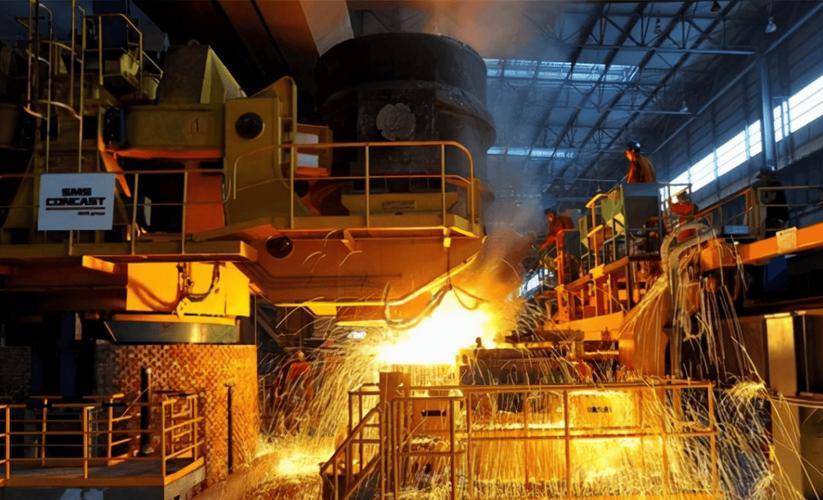
中国四大巨头,加起来比不过日本制铁,凭什么?|地球知识局
Sou Hu Cai Jing· 2025-08-26 13:49
Group 1 - In 2024, China's crude steel production reached 1.005 billion tons, accounting for 53.38% of global output, marking five consecutive years as a billion-ton steel powerhouse [2] - Among the top 10 steel producers, six are Chinese companies, highlighting China's dominance in steel production despite efforts to curb excess capacity [2] - The most profitable four listed steel companies in China (Baowu, CITIC Special Steel, Nanjing Steel, and Huazhong Steel) combined net profits in 2024 were still lower than Japan's Nippon Steel, which indicates a disparity in profitability despite higher production [2][5] Group 2 - Japan's Nippon Steel faced overcapacity issues in the late 1990s and significant losses in 2018, but successfully turned around its fortunes by 2020, demonstrating effective management strategies [5][20] - Key strategies employed by Japanese steel companies included securing low-cost iron ore supplies, focusing on high-value steel products, and government support for industry upgrades [14][18] - In 2020, Japan's crude steel production was 83.19 million tons, with special steel accounting for approximately 20.96% of total production, compared to China's 12.31% for special steel in the same year [30] Group 3 - China's steel industry is heavily reliant on imported iron ore, with 1.237 billion tons imported in 2024 at an average price of $106.9 per ton, making it vulnerable to international price fluctuations [37] - The Chinese steel sector is undergoing supply-side reforms aimed at transitioning to higher-value production, with notable advancements in technology and product quality [38] - The establishment of projects like the Simandou iron ore project in Guinea aims to enhance China's self-sufficiency in high-grade iron ore, potentially increasing domestic supply by 3-5% [37][38]
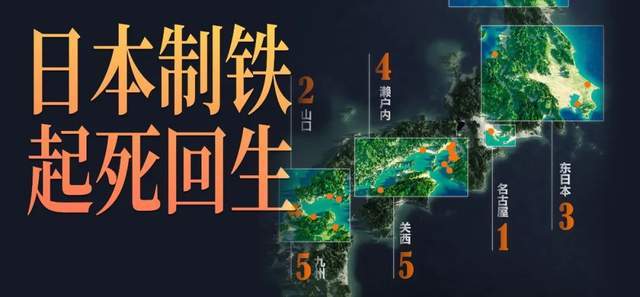
中国四大巨头,加起来比不过日本制铁,凭什么?
Hu Xiu· 2025-08-26 13:16
Core Viewpoint - In 2024, China's crude steel production reached 1.005 billion tons, accounting for 53.38% of global output, maintaining its position as the world's largest steel producer for five consecutive years [1] Group 1: Production and Market Position - China dominates the global steel production landscape, with six out of the top ten steel companies being Chinese [1] - Despite the high production volume, Chinese steel companies face challenges such as overcapacity and low profitability [2] Group 2: Profitability Comparison - The combined net profit of China's four most profitable listed steel companies (Baosteel, CITIC Special Steel, Nanjing Steel, and Huazhong Steel) in 2024 is still lower than that of Japan's Nippon Steel [3][8] - Nippon Steel's net profit for 2024 is approximately 110.4 billion yen (around 5.61 billion RMB), significantly higher than the combined profits of the top Chinese steel firms [3][7] Group 3: Historical Context and Lessons - Japan's steel industry faced overcapacity issues in the late 20th century but successfully turned around by focusing on high-value products and strategic resource management [9][22] - Japan's Nippon Steel implemented significant reforms, including shutting down inefficient production lines and focusing on high-margin products, leading to a rapid recovery from losses [30][44] Group 4: Future Directions for Chinese Steel Companies - Chinese steel companies are encouraged to learn from Japan's experience, particularly in enhancing product quality and profitability [58] - The Chinese steel industry is making strides in producing high-value steel products, indicating potential for future growth and competitiveness [59]
23.19亿元资金今日流出钢铁股
Zheng Quan Shi Bao Wang· 2025-08-26 09:45
Market Overview - The Shanghai Composite Index fell by 0.39% on August 26, with 17 industries rising, led by agriculture and beauty care, which increased by 2.62% and 2.04% respectively. Conversely, the pharmaceutical and non-bank financial sectors saw declines of 1.09% and 1.06% [1] Fund Flow Analysis - The main funds in the two markets experienced a net outflow of 68.855 billion yuan, with only two industries seeing net inflows: beauty care (net inflow of 276 million yuan) and agriculture (net inflow of 257 million yuan) [1] - The non-ferrous metals industry had the largest net outflow, totaling 10.712 billion yuan, followed by the pharmaceutical sector with an outflow of 8.254 billion yuan. Other industries with significant outflows included defense, non-bank financials, and electric equipment [1] Steel Industry Performance - The steel industry declined by 0.98% with a net outflow of 2.319 billion yuan. Among the 44 stocks in this sector, 18 rose while 23 fell. A total of 20 stocks had net inflows, with nine exceeding 10 million yuan in net inflow [2] - The top net inflow stock in the steel sector was Hangang Co., with an inflow of 297 million yuan, followed by Shagang Co. and Dazhong Mining with inflows of 49.539 million yuan and 44.108 million yuan respectively [2] - The stocks with the largest net outflows included Baogang Co. (-2.413 billion yuan), Hualing Steel (-123.842 million yuan), and Nanjing Steel (-38.269 million yuan) [2] Individual Stock Performance - The top performers in the steel sector included Hangang Co. (5.77% increase), Shagang Co. (2.49% increase), and Dazhong Mining (2.31% increase) [3] - Conversely, Baogang Co. had the largest decline at -7.36%, followed by Shougang Co. at -2.56% [3]


机构:高股息率资产仍具吸引力,国企红利ETF(159515)整固蓄势
Sou Hu Cai Jing· 2025-08-26 05:53
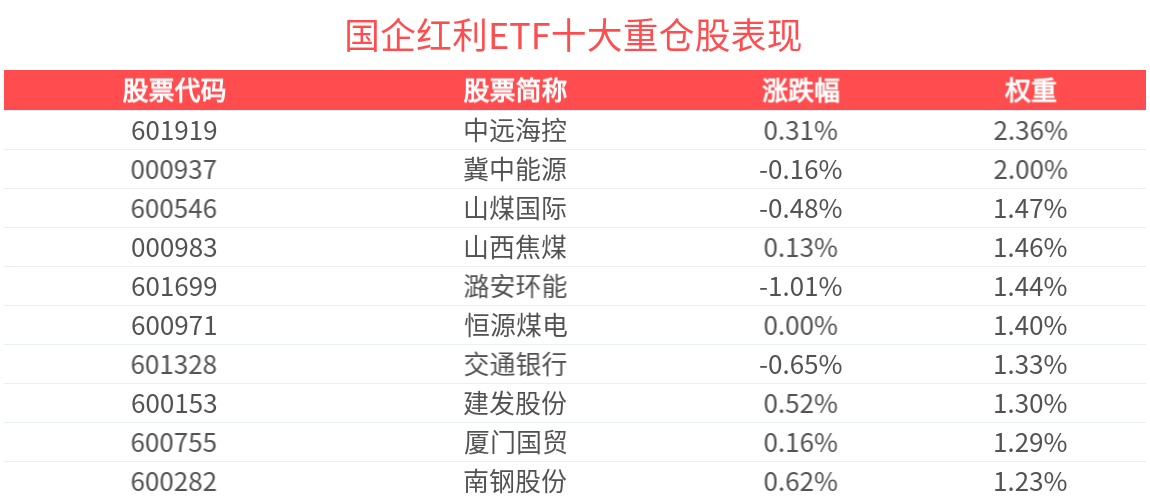
Group 1 - The China Securities State-Owned Enterprises Dividend Index (000824) decreased by 0.09% as of August 26, 2025, with mixed performance among constituent stocks [1] - China National Cereals, Oils and Foodstuffs Corporation (600737) led the gains with an increase of 5.90%, while Shaanxi Natural Gas (002267) experienced the largest decline [1] - The National State-Owned Enterprises Dividend ETF (159515) is consolidating, with the latest price at 1.17 yuan [1] Group 2 - The China Securities State-Owned Enterprises Dividend Index tracks 100 listed companies with high cash dividend yields, reflecting the overall performance of high-dividend securities among state-owned enterprises [2] - As of July 31, 2025, the top ten weighted stocks in the index accounted for 16.77% of the total index weight, including China COSCO Shipping (601919) and Jizhong Energy (000937) [2] Group 3 - Analysts from Minsheng Securities noted that insurance capital prefers undervalued, high-dividend stocks with strong performance certainty, especially in a declining long-term interest rate environment [1] - The report from Caixin Securities suggests that high dividend yield assets remain attractive, with long-term funds like insurance capital likely to continue flowing into these assets [1]



降息+基本面反转,重视铜、铝买入机会!
2025-08-25 09:13
Summary of Conference Call Records Industry Overview - The conference call discusses the non-ferrous metals industry, particularly focusing on copper and aluminum markets, as well as the rare earth sector. [1][2][3] Key Points and Arguments Monetary Policy Impact - The Federal Reserve's dovish signals have increased expectations for interest rate cuts, which are anticipated to benefit industrial metals like copper and aluminum due to a potential weakening of the dollar and increased economic growth. [2][9] - The expected interest rate cut in September is projected to significantly impact the prices of copper and aluminum, enhancing demand for these metals. [2][11] Rare Earth Market Developments - A new regulatory framework for rare earth management has been introduced, shifting from two major smelting groups to designated enterprises, which is expected to tighten supply and drive up prices for rare earth elements like neodymium and praseodymium. [3][4] - The price of neodymium and praseodymium has surged past 600,000 yuan per ton, supported by seasonal demand and recovering export orders. [4] Aluminum Market Dynamics - The aluminum market has shown signs of a fundamental reversal, with LME and COMEX inventories at historical lows, indicating a tightening supply situation. [6][8] - Domestic electrolytic aluminum inventories have also decreased, and downstream operating rates are recovering, suggesting an improving supply-demand structure. [6] - Long-term projections indicate a decline in global aluminum supply growth due to project delays in Indonesia and production cuts in Africa, while demand from power and infrastructure sectors is expected to rise. [6][8] Investment Recommendations - Recommended stocks include: 1. **China Nonferrous Mining**: Expected to double its self-owned mineral output in five years, with a projected profit of 4 billion yuan this year. Current market cap is 29.9 billion yuan, with a potential 50% upside if valuations align with peers. [5] 2. **Jiangxi Copper H Shares**: Valued at 8 times earnings, with a potential 50% upside. Benefits from a 19% stake in First Quantum, which is expected to enhance copper production. [5] 3. **Nangang Steel**: Projected annual profit exceeding 2.9 billion yuan, with a stable dividend yield of 5%. [5] Seasonal Trends in Construction and Aluminum Demand - The construction industry is expected to experience a seasonal rebound from summer lows to stable autumn activity, which will positively impact aluminum demand. [8] - The upcoming months (September to October) are anticipated to see increased operating rates and significant price volatility in aluminum due to low inventory levels. [8] Risks to Consider - Potential risks include the possibility of rising commodity prices leading to inflation exceeding expectations, which could alter future interest rate cut projections. [13] Additional Important Insights - The overall market valuation is currently low at around 8 times earnings, suggesting potential for growth in dividend-paying stocks with defensive characteristics. [7] - The copper market is expected to benefit from macroeconomic improvements, with supply tightening and demand shifting towards a seasonal peak. [12]