奔驰

Search documents
日产45亿元出售总部大楼!吉利收购雷诺巴西公司股份!小鹏X9增程版、零跑Lafa5、新款享界S9等新车开启预售!丨一周大事件
电动车公社· 2025-11-10 01:30
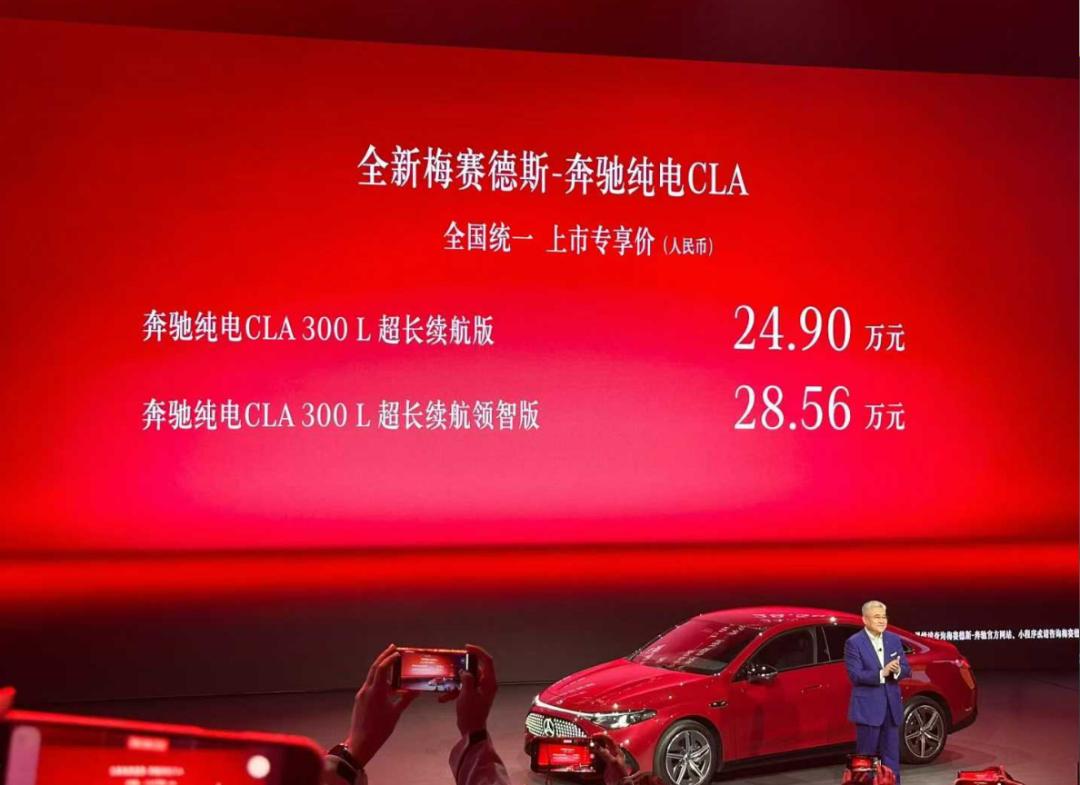
New Car Launches - BYD's new model "Summer" launched with a price range of 206,800 to 269,800 yuan, featuring advanced technology and improved electric range [2][3][12] - Mazda's new EZ-6 launched at a price of 119,800 to 162,800 yuan, emphasizing safety and driving performance [13][20] - Zeekr X launched with a price range of 155,800 to 175,800 yuan, focusing on performance and design [21][28] - Mercedes-Benz's pure electric CLA launched at a price of 249,000 to 285,600 yuan, showcasing advanced technology and design [34] - Tank 400 plug-in hybrid launched with a price range of 249,800 to 319,800 yuan, featuring off-road capabilities and advanced technology [35][44] - Tesla's Model Y long-range rear-wheel drive version launched at a price of 285,800 yuan, achieving over 800 km of electric range [45][51] - IM LS9 opened for pre-sale with a price range of 346,900 to 376,900 yuan, featuring luxury and advanced technology [52][61] - Aion i60 opened for pre-sale with a price range of 119,800 to 126,800 yuan, offering both extended range and pure electric versions [62][70] - New Xiangjie S9 opened for pre-sale with a price range of 318,000 to 378,000 yuan, focusing on luxury and technology [79] - Xpeng X9 extended range version opened for pre-sale with a price range of 350,000 to 370,000 yuan, emphasizing design and technology [80][89] - Leap Lafa5 opened for pre-sale with a price range of 105,800 to 131,800 yuan, targeting young consumers [90][96] Company Developments - Geely acquired a 26.4% stake in Renault's Brazilian operations, enhancing its market presence in Latin America [98][101] - Xpeng unveiled its second-generation VLA model and self-developed Robotaxi, showcasing advancements in AI and autonomous driving [102][113] - Volkswagen announced a partnership with Horizon to develop system-level chips, aiming for mass production in 3-5 years [114][119] - Nissan sold its global headquarters for approximately 44.94 billion yuan to improve its financial situation [124][126] Domestic News - China's combination driving assistance technology has significantly improved, with a market penetration rate of 62.58% for passenger cars equipped with such systems [128][132]







德国对美出口五连崩?车企亏哭药企续命?协议妥协难掩深层危机
Sou Hu Cai Jing· 2025-11-08 16:58
Group 1 - Germany's exports to the US fell by 20.1% year-on-year in August, marking the fifth consecutive month of decline, which is the lowest since November 2021 [3][6] - The new tariff agreement signed on July 27 has led to significant challenges for German companies, particularly in the automotive sector, where profits have plummeted [5][8] - The automotive industry is facing increased cost pressures due to additional tariffs on steel and aluminum products set to take effect on November 1, further complicating the situation for German car manufacturers [8][10] Group 2 - The pharmaceutical industry in Germany has managed to achieve growth, with a projected 3% increase in sales, production, and investment by 2025, primarily due to preemptive stockpiling [13][15] - Despite the temporary growth, the pharmaceutical sector is warned that this strategy is unsustainable, with potential declines in performance expected in 2026 as market demand may not keep pace with the pre-shipped goods [15][16] - The ongoing tariff situation has led to internal conflicts within the EU, with differing opinions on how to handle the agreement, complicating its implementation [18][20] Group 3 - The trade dynamics between the US and EU highlight the complexities of global trade, where protective measures can inadvertently raise costs for domestic companies reliant on imported components [20][21] - The current predicament may serve as a catalyst for German companies to diversify their markets and upgrade their industries, moving away from over-reliance on the US market [21]

拖欠10亿货款,荷兰反咬一口,拒绝向中国拱货,欧洲发现情况不妙
Sou Hu Cai Jing· 2025-11-08 09:06
Group 1 - The Netherlands has defaulted on a payment of 1 billion yuan and has refused to supply raw materials to Chinese factories, leading to operational shutdowns [1] - The Dutch government forcibly took control of the Chinese-controlled ASML semiconductor company under the guise of "economic security" and replaced its Chinese CEO [1][2] - The underlying issue is not a corporate dispute but rather political maneuvering, as the Netherlands aligns with the U.S. strategy to contain China's semiconductor industry [2] Group 2 - ASML's operations are heavily reliant on its Chinese facilities, with 70% of its packaging and testing capacity located in China, making it difficult for the Dutch headquarters to fulfill orders without these facilities [4] - The impact of the Netherlands' actions extends beyond the automotive industry, affecting the entire European manufacturing supply chain, including sectors like home appliances and military equipment [6] - European automotive companies are seeking exemptions from the Chinese government to resume chip imports, highlighting their dependency on Chinese supply chains [8] Group 3 - China has maintained a calm and rational response, avoiding retaliatory measures and allowing qualified companies to continue exporting chips, demonstrating its role as a stabilizer in the global supply chain [9]

聚焦进博|以进博为平台,全球汽车大秀中国“朋友圈”
Guo Ji Jin Rong Bao· 2025-11-07 11:00
Core Insights - The 8th China International Import Expo (CIIE) has opened in Shanghai, showcasing the integration of the Chinese automotive industry with global players [1][3] - The event features over 4,108 foreign enterprises and spans more than 430,000 square meters, highlighting China's commitment to an open and win-win automotive ecosystem [1][3] Group 1: Industry Collaboration and Innovation - The automotive exhibition theme "Mobility, Infinite Possibilities" emphasizes a three-dimensional ecosystem combining automotive industry, future technologies, and automotive culture [3] - Major global automotive companies like Tesla, Mercedes-Benz, BMW, and Volkswagen are showcasing a wide range of products from mass production vehicles to cutting-edge technologies [3] - Volkswagen and local tech firm Horizon are deepening collaboration to develop system-level chips, aiming for a closed-loop model of "defined, developed, and produced in China" [5][8] Group 2: Technological Advancements - Hyundai introduced the world's first mass-produced hydrogen-powered tractor, the XCIENT, combining L4 autonomous driving with zero-emission technology [3] - Tesla's Cybercab made its Asia-Pacific debut, featuring a design without a steering wheel or pedals, set for mass production in 2026 [10] - BMW is integrating AI capabilities with local partners to create a smart personal assistant tailored for Chinese users [5][10] Group 3: Market Expansion and Globalization - The CIIE serves as a platform for tangible cooperation, with companies like FAW-Volkswagen and Nissan establishing joint ventures to enhance product diversity and export capabilities [7][11] - The automotive industry is transitioning from a simple product trade model to a more complex framework of technology co-creation and market sharing [13][14] - The establishment of Nissan's joint venture for vehicle import and export marks a new model for foreign automotive companies in China [11][14] Group 4: Future Directions - The ongoing collaboration between foreign and Chinese companies is transforming the automotive landscape, with a focus on innovation and shared growth [12][14] - The shift from traditional fuel vehicles to new energy vehicles is evident, as is the evolution from mere market participation to becoming a global innovation engine [14]
以进博为平台,全球汽车大秀中国“朋友圈”
Guo Ji Jin Rong Bao· 2025-11-07 10:56
Core Insights - The 8th China International Import Expo (CIIE) has opened in Shanghai, showcasing the integration of the Chinese automotive industry with global players, featuring 12 major foreign car manufacturers and over 4,108 overseas enterprises [1][2] Group 1: Event Overview - The automotive exhibition area covers over 430,000 square meters and serves as a platform for global automotive technology and collaboration [1] - The theme of this year's automotive section is "Mobility, Infinite Possibilities," highlighting a comprehensive ecosystem of automotive industry, future technologies, and automotive culture [2] Group 2: Long-term Commitment from Foreign Automakers - Long-standing participation from foreign car manufacturers demonstrates their confidence in the Chinese market, with companies like Hyundai showcasing innovative hydrogen-powered vehicles and Toyota presenting L4-level autonomous driving solutions [3] - Volkswagen has deepened its collaboration with local tech firms, focusing on local R&D and production, while BMW is integrating AI capabilities tailored to Chinese consumers [3] Group 3: Collaborative Upgrades - The expo has facilitated significant partnerships, such as FAW-Volkswagen's memorandum for diversified product imports and Nissan's establishment of a joint venture for vehicle exports [4] - The event has evolved from merely showcasing global technologies to becoming a platform for joint R&D and technological co-creation between Chinese and foreign enterprises [4] Group 4: Focus on Smart Driving Technologies - Smart driving technologies are a central theme, with Tesla unveiling its Cybercab and BMW collaborating with Alibaba to develop AI-driven solutions tailored for Chinese users [5] - The integration of foreign parts suppliers into the Chinese automotive supply chain is deepening, with companies like Michelin showcasing innovative products [5][6] Group 5: Globalization and Market Dynamics - The CIIE reflects the dual flow of "bringing in" and "going out," enhancing the vitality and resilience of China's automotive global network [7][8] - The shift from traditional fuel vehicles to new energy vehicles and from product trade to technology cooperation is evident, with Chinese companies increasingly becoming innovation engines rather than mere market recipients [8]


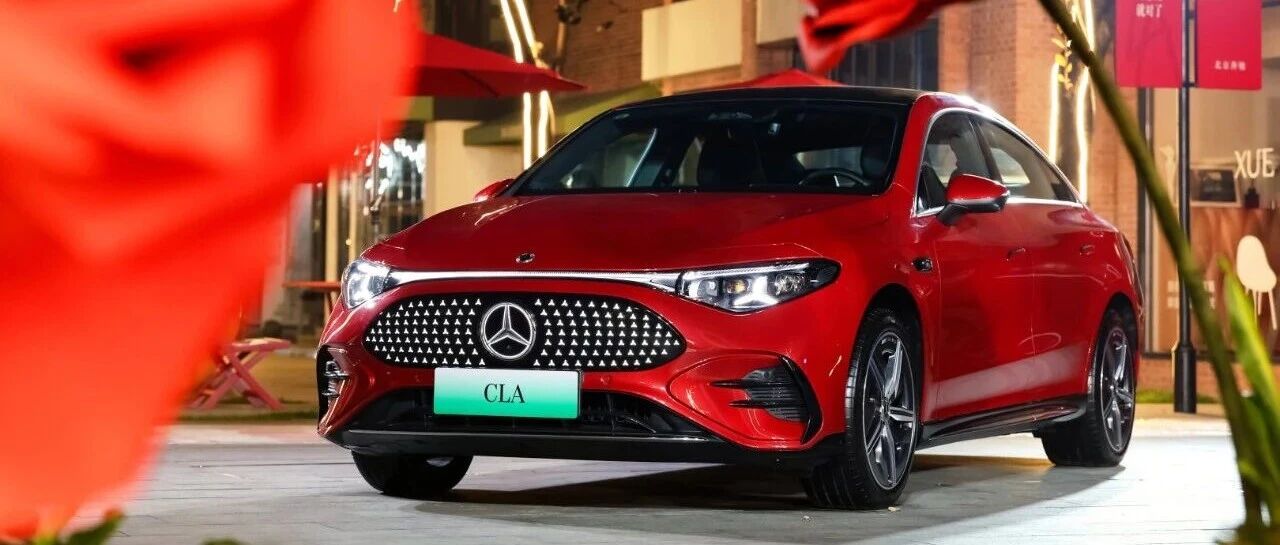
CEO现场玩梗,奔驰纯电CLA有没有戳中你的“心巴”?
Zhong Guo Jing Ji Wang· 2025-11-07 09:04
Core Insights - The article discusses the launch of the new all-electric Mercedes-Benz CLA, highlighting its innovative features and design aimed at attracting a younger audience [1] Group 1: Product Features - The all-electric CLA is designed with a focus on modern aesthetics and advanced technology, appealing to environmentally conscious consumers [1] - The vehicle includes cutting-edge infotainment systems and connectivity options, enhancing the overall driving experience [1] Group 2: Market Positioning - Mercedes-Benz aims to strengthen its position in the electric vehicle market with the introduction of the CLA, targeting a demographic that values sustainability and innovation [1] - The company is leveraging its brand reputation to compete with other electric vehicle manufacturers, emphasizing luxury and performance [1]
【新能源】2025年9月新能源汽车行业月报
乘联分会· 2025-11-07 08:35
Sales Performance - In September, the total passenger car sales reached 2.25 million units, a year-on-year increase of 4.0% and a month-on-month increase of 13.4% [5] - The new energy vehicle (NEV) market sales were approximately 1.287 million units, with a year-on-year increase of 16.4% and a month-on-month increase of 17.4% [5] - NEVs accounted for 57.2% of total passenger car sales in September, an increase of 2.0% from the previous month and up 6.1% from the same period last year [5] Market Dynamics - In September, pure electric vehicle sales were about 838,000 units, showing a year-on-year increase of 32.3% and a month-on-month increase of 19.1% [6] - Plug-in hybrid sales were approximately 449,000 units, reflecting a year-on-year decrease of 4.9% but a month-on-month increase of 14.3% [6] - By 2025, cumulative sales of NEVs are projected to reach 8.634 million units, with a cumulative year-on-year increase of 22.8% [8] Top Cities for NEV Sales - The top 10 cities for NEV sales in September accounted for 25.4% of total sales, a decrease of 0.6% from the previous month [11] - The top three cities were Chengdu, Guangzhou, and Beijing, with Ningbo replacing Tianjin in the top ten [11] - NEV penetration rates in the top 10 cities exceeded 50%, with Shenzhen leading at 67.7% [11] Pure Electric Market Analysis - In September, the personal user share in the pure electric market was 87.3%, a year-on-year increase of 36.3% [18] - Cumulative data shows that personal users account for 85.9% of the pure electric market [18] - The top three segments in the pure electric market were B-SUV (16.5%), A0 class (16.2%), and A00 class (14.2%) [12] Industry Events - On September 7, CATL launched the NP3.0 battery safety technology platform in Munich, Germany, aimed at enhancing safety standards in the electric vehicle market [20] - Chery Automobile officially listed on the Hong Kong Stock Exchange on September 25, raising 9.14 billion HKD, marking the largest IPO for a car company in the Hong Kong market this year [22] - On the same day, Mercedes-Benz announced a strategic investment of approximately 1.34 billion CNY in a local intelligent driving company to enhance its technology collaboration in China [24] Industry Policies - The Ministry of Industry and Information Technology is seeking public input on mandatory national standards for intelligent connected vehicles and safety requirements for vehicle door handles, aiming to improve road safety [27]
美国消费出现K型分化,4200万人断粮背后,贫富消费鸿沟再拉大
3 6 Ke· 2025-11-07 02:32
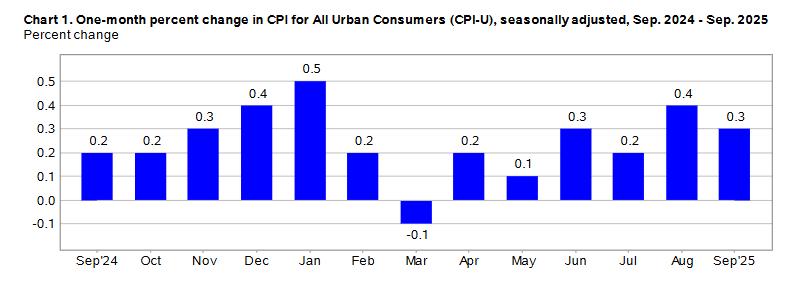
Core Insights - The recent CPI data for September shows a year-on-year inflation increase of 3.0%, slightly below the market expectation of 3.1%, indicating a structural split in consumer spending patterns in the U.S. [1][2] - Consumer confidence has significantly declined, particularly among low- and middle-income groups, with a 12-point drop in the confidence index reported by the University of Michigan, marking the largest single-month decline since 2020 [2][3] - The ongoing federal government shutdown has exacerbated economic losses, estimated at $18 billion, and is projected to reduce fourth-quarter GDP growth by at least 1 percentage point [2][19] Inflation Trends - The CPI data reveals a structural division between high inflation in essential goods and low inflation in discretionary spending, highlighting a "K-shaped" recovery where wealthier consumers thrive while lower-income households struggle [3][11] - Essential goods such as energy and food have seen significant price increases, with energy prices rising by 2.8% year-on-year and food prices increasing by 2.7% [4][15] - In contrast, discretionary items like used cars and clothing have experienced price declines, indicating a weakening demand in non-essential sectors [5][15] Consumer Behavior - The disparity in consumer spending is evident, with high-income households experiencing a "wealth effect" from rising asset prices, while low-income households face increasing costs for essentials [10][12] - The "inflation pain index" for households earning below $30,000 reached 4.2%, compared to just 0.8% for those earning above $150,000, illustrating the uneven impact of inflation [10][12] - The government shutdown has led to the suspension of food assistance programs, affecting millions of low-income individuals and further straining their purchasing power [19][20] Retail and Market Response - Retailers are adapting to the changing consumer landscape by focusing on high-end and low-cost products, while mid-tier brands struggle to maintain market share [20][27] - Sales of high-end organic foods have surged by 18%, while basic food items have seen minimal growth, reflecting a shift in consumer preferences towards premium products [20][27] - The automotive market shows a similar trend, with luxury vehicle sales increasing by 18%, while the volume of lower-priced vehicles has declined [21][27] Economic Outlook - The concentration of wealth among the top 20% of households, who hold 70% of financial assets, continues to widen the gap between income groups, leading to a potential "false prosperity" scenario [12][31] - If the wealth distribution remains imbalanced, there is a risk of a "differentiated recession" occurring by 2027, characterized by a decline in high-end consumption alongside a collapse in lower-income spending [31][32] - The ongoing economic trends highlight the need for policy interventions to address the growing disparities and ensure a more equitable distribution of economic growth [31][32]


全新奔驰纯电CLA:全系标配800V,高颜值打动年轻人
车fans· 2025-11-07 02:19
Core Viewpoint - The launch of the all-new Mercedes-Benz pure electric CLA demonstrates the company's strategic focus on the young consumer demographic, addressing their specific needs and preferences in the electric vehicle market [1][2][25]. Pricing and Sales Strategy - The starting price for the new model is set below 250,000 yuan, with two standard configurations priced at 249,000 yuan and 285,600 yuan, and a limited edition priced at 299,900 yuan [1]. - The sales model features a "national unified launch exclusive price," eliminating the need for price comparisons [1][2]. Target Audience - The new electric CLA is aimed at younger consumers, diverging from traditional Mercedes-Benz buyers, with a notable increase in interest from customers who typically compare it with competitors like Tesla and domestic brands [2][6]. - Customer profiles indicate a younger, more individualistic demographic, including professionals from emerging fields [9][10]. Customer Preferences - In the electric vehicle market, consumers prioritize practical concerns such as range, intelligence, and safety, moving away from brand loyalty seen in traditional fuel vehicles [4][5]. - The all-new CLA has received positive feedback for its design and emotional appeal, particularly among younger buyers who value aesthetics and innovative features [11][16]. Competitive Landscape - Customers are increasingly comparing the new CLA with leading electric models, focusing on battery capacity, energy consumption, charging speed, and smart features [15][16]. - The vehicle's specifications, including an 800V architecture and a CLTC range of 866 km, position it competitively against Tesla and other top brands [18][20]. Safety and Technology - The all-new CLA has undergone rigorous safety testing, achieving a five-star rating in the China Electric Vehicle Safety Index assessment, reinforcing consumer confidence in its safety features [22]. - The vehicle incorporates advanced driver assistance systems developed in collaboration with Momenta, enhancing its appeal to urban drivers [20][22]. Conclusion - The launch of the all-new Mercedes-Benz pure electric CLA reflects the company's accurate assessment of the electric vehicle market, effectively addressing core consumer pain points and positioning itself for success in a competitive landscape [25].
奔驰向下,国产车企向上
3 6 Ke· 2025-11-06 23:58
Core Insights - The 2025 electric vehicle market is witnessing a shift, with traditional luxury brands like Mercedes-Benz redefining their pricing strategies to remain competitive [1][3] - Domestic brands are moving upmarket, with models like the Zhiji LS9 and Zeekr 9X priced above 400,000 yuan, indicating growing confidence in the domestic electric vehicle sector [3][5] - The introduction of advanced technologies, particularly the ultra 500-line lidar, is becoming a key differentiator in defining flagship models in the electric vehicle market [4][12] Group 1: Market Dynamics - Mercedes-Benz is launching its most intelligent product yet, the pure electric CLA, at a starting price of 259,000 yuan, marking a significant price reduction for the brand [1][3] - Domestic brands are increasingly confident, with models like the Zhiji LS9 and Zeekr 9X appealing to consumers who previously favored luxury brands [3][7] - The shift in consumer preferences is evident, as over 80% of Zeekr 9X buyers previously owned high-end luxury vehicles [7] Group 2: Technological Advancements - The ultra 500-line lidar is becoming a standard feature for flagship models, with brands like Zeekr, Zhiji, and Lantu leading the charge [5][12] - The performance of lidar technology is critical, with higher line counts translating to better detection capabilities and safety features [20][25] - The evolution of lidar technology is reshaping the competitive landscape, with a clear distinction between different performance tiers based on line counts [22][27] Group 3: Future Outlook - The demand for L3 autonomous driving capabilities is increasing, with brands like Lantu and Mercedes-Benz claiming to have L3 architecture in their flagship models [28][34] - The necessity for ultra 500-line lidar in achieving L3 safety standards is becoming apparent, as it provides the required detection range and reliability in complex driving conditions [35][36] - The market is expected to evolve significantly by 2026, with ultra 500-line lidar setting new benchmarks for safety and luxury in the electric vehicle sector [38][39]