康方生物

Search documents
医药行业2025Q3公募基金持仓分析
Haitong Securities International· 2025-11-05 07:03
Investment Rating - The report maintains a positive outlook on the pharmaceutical industry, driven by continuous technological innovation and demand, with an investment rating of "Outperform" [34][48]. Core Insights - From Q2 2025 to Q3 2025, the total market capitalization of pharmaceutical stocks in public fund long positions increased from RMB 300.90 billion to RMB 409.00 billion, representing a growth of 35.9% [34]. - As of Q3 2025, pharmaceutical stocks accounted for 10.53% of all public offering funds' long positions, an increase of 0.76 percentage points from Q2 2025 [34]. - The highest sectors in public fund pharmaceutical stock holdings in Q3 2025 were: 1) Chemical preparations: RMB 346.80 billion (44.3%); 2) Other biological products: RMB 184.20 billion (23.5%); 3) Medical devices: RMB 83.80 billion (10.7%) [34][12]. - The top five pharmaceutical stocks by market capitalization in Q3 2025 were: Jiangsu Heng Rui Medicine (RMB 50.20 billion), Innovent Biologics (RMB 25.70 billion), Mindray Medical (RMB 21.50 billion), Akeso (RMB 16.40 billion), and Sichuan Kelun-Biotech Biopharmaceutical (RMB 16.40 billion) [34][23]. Summary by Sections 1. Pharmaceutical Stock Holdings - The total market cap of pharmaceutical stocks in public fund long positions rose from RMB 3009 billion to RMB 3978 billion (+32.2%) from Q2 2025 to Q3 2025 [6]. - The proportion of pharmaceutical stocks in public funds increased, with pharmaceutical public offering funds holding 94.64% of their positions in pharmaceutical stocks [6]. 2. Sector Performance - The sectors with the highest public fund holdings in Q3 2025 were: 1) Chemical preparations: RMB 1734 billion (44.3%); 2) Other biological products: RMB 921 billion (23.5%); 3) Medical devices: RMB 419 billion (10.7%) [12]. - The segments that saw an increase in public fund holdings from Q2 2025 to Q3 2025 included chemical preparations (+RMB 809 billion) and other biological products (+RMB 639 billion) [13]. 3. Individual Stock Performance - The top five stocks by market cap growth in Q3 2025 were: Jiangsu Heng Rui Medicine (+RMB 18.10 billion), Akeso (+RMB 10.30 billion), Innovent Biologics (+RMB 10.10 billion), Akeso (+RMB 9.50 billion), and Sichuan Kelun-Biotech Biopharmaceutical (+RMB 8.60 billion) [27].



世界级生产线集结:广东制造抢占全球新生态位
21世纪经济报道· 2025-11-05 05:58
记者丨郑康喜 编辑丨蒋韵 1913年,当亨利·福特在美国密歇根州启动世界上第一条汽车流水线时,他一定无法想象, 100多年后在中国广东,飞行汽车将以每30分钟一台的速度走下生产线。 11月3日,全球首条飞行汽车量产线在位于广州市黄埔区的小鹏汇天飞行汽车量产工厂贯通, 首台分体式飞行汽车"陆地航母"试产并顺利下线。这也是全球首个利用现代化流水线进行飞 行汽车批量生产的工厂、全球首个具备"万辆级"年产能的量产工厂,满产后年产能1万台,初 期年产能5000台。 作为中国经济第一大省,今年以来,广东以显示面板、创新药、机器人和人工智能等为代 表的众多新"广货",凭借着硬核的创新力和产品力,驰骋于全球市场。 这背后,一条条新生产线的诞生,成为强劲的新引擎。 从全球首个飞行汽车量产线,到全球第一条G8.6代印刷OLED产线,再到全球第一条三折叠智 能手机产线、全球第一条基于PD-1的双抗新药产线,这些世界级先进生产线,立足广东完善 的产业链体系和高效的供应链网络,推动着广东科技创新成果不断从实验室迈向终端市场, 加快构建产业科技互促双强闭环。 显而易见,当新"广货"源源不断走下新产线,广东制造也加快走向价值链更高端位置。 ...





全球股市重挫!资金趁势抄底港股通科技ETF基金,四连“吸金”港股央企红利ETF微跌0.6%
Ge Long Hui A P P· 2025-11-05 03:05
Core Viewpoint - The recent decline in Asian markets, particularly in South Korea and Japan, is attributed to the spillover effects of the "Black Tuesday" in the US stock market, with significant drops in technology stocks due to high valuations and tightening liquidity conditions from the US government shutdown [1][2]. Group 1: Market Performance - Asian markets, including South Korea and Japan, experienced declines of up to 4%, while the Hong Kong stock market followed suit with a 2% drop in the Hang Seng Tech Index [1]. - The Hong Kong Stock Connect Technology ETF fell by 2.2%, despite a net subscription of 46 million units, indicating continued investor interest [1]. - The Hong Kong Central State-Owned Enterprises Dividend ETF saw a slight decrease of 0.67%, marking its fourth consecutive week of net inflows [1]. Group 2: Economic Indicators - The US dollar index has been on the rise since September 17, recently returning to the 100 mark, which exerts pressure on Hong Kong assets [1]. - The US government has entered its 35th day of shutdown, leading to a "cash in, cash out" situation in the Treasury General Account (TGA), resulting in tightened market liquidity [1]. Group 3: Investment Strategy - The current market adjustment is primarily driven by high valuations in technology stocks and tight US dollar liquidity, suggesting that short-term volatility may present better entry points for investors [1]. - Zheshang International's latest report maintains a cautiously optimistic outlook for the Hong Kong market, favoring sectors that are relatively prosperous and benefit from policy support, such as innovative pharmaceuticals and AI technology [1]. - The report also highlights low-valuation state-owned enterprises that are stable in performance and stock price, suggesting a "barbell strategy" for investment products [1][2]. Group 4: Investment Products - On the left side of the barbell strategy, the Hong Kong Central State-Owned Enterprises Dividend ETF (513910) includes major stocks like COSCO Shipping Holdings, Orient Overseas International, and China National Offshore Oil Corporation, with a decline of 0.67% [1]. - On the right side, the Hong Kong Stock Connect Technology ETF (159101) has over 60% exposure to major tech giants like Alibaba and Tencent, with a decline of 2.27%, and includes innovative pharmaceutical stocks such as BeiGene and Innovent Biologics [2].
国家医保局发布消息,首版商保创新药目录即将发布,港股通创新药ETF嘉实(520970)近1周新增规模位居可比基金第一!
Sou Hu Cai Jing· 2025-11-05 03:05
Group 1: Liquidity and Fund Performance - The Hong Kong Stock Connect Innovative Drug ETF managed by Harvest saw an intra-day turnover of 7.76%, with a transaction volume of 76.0143 million yuan [2] - Over the past year, the average daily transaction volume of the ETF reached 116 million yuan [2] - In the past week, the ETF's scale increased by 39.7287 million yuan, ranking first among comparable funds [2] - The latest share count for the ETF reached 1.046 billion shares [2] - The ETF experienced a net inflow of 14.1619 million yuan, with a total of 46.8442 million yuan net inflow over three of the last five trading days [2] Group 2: Valuation and Index Composition - The latest price-to-earnings ratio (PE-TTM) for the index tracked by the ETF is 31.84, which is in the 19.17th percentile over the past three years, indicating a valuation lower than 80.83% of the time in the last three years [2] - As of October 31, 2025, the top ten weighted stocks in the index include WuXi Biologics, Innovent Biologics, BeiGene, and others, collectively accounting for 71.11% of the index [2] Group 3: Policy and Market Outlook - The first version of the commercial insurance innovative drug directory is set to be released, with negotiations for the 2025 National Basic Medical Insurance Drug Directory concluding successfully [3] - A total of 120 domestic and foreign enterprises participated in the negotiations, with 127 drugs outside the directory involved in the bidding process [3] - The innovative drug industry is expected to remain in a golden development period, benefiting from advancements in clinical development and a rich pipeline of innovative drugs [3] - AI drug development and gene therapy technologies are anticipated to bring new breakthroughs in the coming years [3]

半年线支撑显现?A股最大医疗ETF盘中翻红,最新单日狂揽3.2亿元!创新药局部活跃,520880延续高溢价
Xin Lang Ji Jin· 2025-11-05 02:11
Group 1 - The core viewpoint of the articles highlights a rebound in the pharmaceutical sector, particularly in innovative drugs and medical devices, amidst a broader market adjustment [1][4][5] - A-shares saw a notable recovery in innovative drug concepts, with stocks like Baile Tianheng and Shenzhou Cell rising over 3%, and the only drug ETF in the market (562050) showing significant gains [1][4] - The medical sector experienced a quick recovery after a low opening, with Lepu Medical leading with a rise of over 5% and WuXi AppTec increasing by over 1% [1][4] Group 2 - The Hong Kong market showed localized activity in innovative drugs, with stocks like Connoa-B and Kangfang Bio performing well, while the Hong Kong Stock Connect innovative drug ETF (520880) experienced high premiums and significant capital inflow [3][4] - Open-source Securities noted that most innovative drugs included in medical insurance are in the early stages of volume growth, with policies supporting these drugs expected to enhance revenue rapidly [4][5] - Dongwu Securities reported that China's innovative drugs are gaining international competitiveness, with a surge in business development (BD) overseas, particularly in new generation ADCs and small nucleic acids [4][5] Group 3 - The innovative drug market is projected to grow significantly, with global innovative drug market size expected to reach $1.1 trillion in 2024 and potentially $1.5 trillion by 2030 [4][5] - The recent negotiations for medical insurance and commercial insurance drug pricing concluded with participation from 120 companies, indicating a robust engagement in the sector [4][5] - The second-tier market performance suggests that the recent adjustments in innovative drugs are relatively healthy, with the industry fundamentals remaining positive and a strong potential for upward movement in the pharmaceutical sector [5][6]
美元基金重新“杀”回中国创新药
3 6 Ke· 2025-11-05 02:10
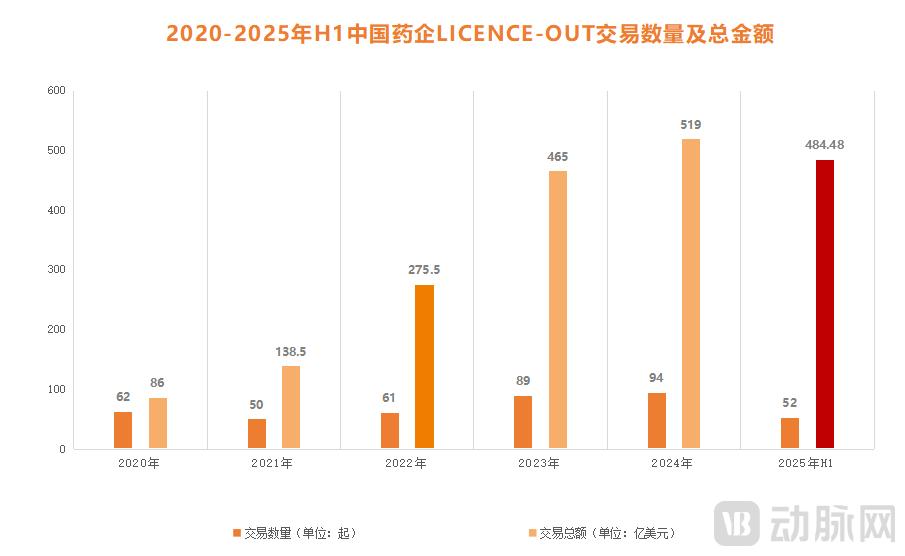
Core Insights - The article highlights the resurgence of US dollar funds in the Chinese innovative drug market, with significant investments and licensing deals indicating a renewed interest in this sector [1][4][5]. Group 1: Investment Trends - In 2025, Heng Rui Medicine completed a licensing agreement with Braveheart Bio for the HRS-1893 project, with an upfront payment of $65 million and a total deal value of up to $1.013 billion, marking the fourth business development (BD) deal for Heng Rui this year, totaling over $15 billion [1]. - In the first half of 2025, the total value of outbound licensing deals for Chinese innovative drugs reached $48.448 billion, nearing the total for the entire year of 2024, with over 80% of these deals involving US dollar funds [4]. - The return of US dollar funds to the Chinese innovative drug market is characterized by a shift from direct investments to more strategic BD transactions, focusing on specific drug pipelines and products rather than entire companies [13][14]. Group 2: Market Dynamics - The article notes that from 2024 to 2030, major pharmaceutical companies in the US and Europe will face a revenue gap of approximately $360 billion due to patent expirations, prompting them to seek acquisitions in the Chinese innovative drug sector to fill this void [9]. - The quality of Chinese innovative drugs has significantly improved, with over 1,250 new drugs entering the research phase in 2024, closely approaching the number in the US [11]. - The competitive landscape has intensified, with not only US dollar funds but also European, Middle Eastern, and East Asian capital increasingly targeting Chinese innovative drug assets, leading to heightened competition for quality investments [12]. Group 3: Strategic Shifts - US dollar funds are transitioning from a broad investment strategy to a more focused approach, emphasizing "certainty first" in their investment decisions, which includes a preference for assets with clear international market potential [13][14]. - The NewCo model is gaining traction, allowing for deeper collaboration between US dollar funds and Chinese innovative drug companies, sharing risks and benefits more equitably [15][16]. - The article suggests that the current environment presents a strategic opportunity for Chinese innovative drug companies to leverage US dollar fund investments while maintaining a focus on original innovation and enhancing the value of their drug pipelines [23][24].
大药的诞生,才是医药的未来:医药行业2026年年度策略
Haitong Securities· 2025-11-05 02:03
Core Insights - The pharmaceutical industry is positioned as a perennial growth sector due to aging populations, urbanization, and changing disease profiles, with a strong recovery expected in 2025 after a downturn from 2022 to 2024, driven by both innovative drugs and medical devices [2][3] - Demand and supply dynamics will remain central to the pharmaceutical industry's research, with innovation cycles and policy adjustments influencing demand growth [2][3] - The supply side is characterized by limited supply and high entry barriers, with increasing participation of Chinese companies in international competition, leading to the emergence of world-class enterprises in the pharmaceutical sector [3][4] Industry Overview - The pharmaceutical industry is expected to see significant growth in 2025, driven by a resurgence in demand for innovative drugs and a recovery in domestic medical device needs, alongside strong external demand [2] - The demand for pharmaceuticals typically fluctuates with innovation and policy cycles, with a notable increase in overseas business development (BD) opportunities anticipated in 2025 [2][5] - The Chinese pharmaceutical sector is increasingly recognized globally, with local companies making strides in various niche markets [3][4] Investment Opportunities - Opportunities in innovative drugs are highlighted, particularly in oncology, metabolic diseases, and autoimmune diseases, with a focus on next-generation therapies and precision medicine [5][29] - The report emphasizes the importance of understanding the supply-demand structure and industry upgrades when conducting detailed research on specific segments within the pharmaceutical industry [4][5] - The report identifies key players and segments for investment, including CXO services, medical devices, and consumer healthcare, with specific companies recommended for increased holdings [6][5] Market Dynamics - The report outlines the competitive landscape among top global pharmaceutical companies, noting significant changes in rankings due to the performance of key products [11][19] - Chinese companies are becoming a major source of projects for multinational corporations (MNCs), with increasing transaction volumes and values in recent years [19][21] - The report discusses the strategic focus of MNCs on acquiring innovative assets and technologies to strengthen their market positions, particularly in oncology and metabolic disease sectors [12][18] Future Trends - The report anticipates breakthroughs in various therapeutic areas, including oncology, metabolic diseases, and autoimmune diseases, with a focus on innovative treatment modalities such as TCE and in vivo CAR-T [29][30] - The small nucleic acid field is expected to accelerate, with significant advancements anticipated in 2026 across multiple indications [29][30] - The report highlights the importance of collaboration and co-development models as a means for Chinese companies to enhance their global competitiveness [25][28]



持续盘整,银行股涨幅居前,医疗、消费、科技等紧随其后,互联网相对弱势
Ge Long Hui· 2025-11-04 20:23
Group 1 - The Hang Seng Index closed up 0.97% after fluctuating throughout the day, with bank stocks leading the gains, followed by healthcare, consumer, and technology sectors, while the internet sector showed relative weakness [1] - Bank stocks experienced a strong performance, closing up 1.67%, with notable increases from China Construction Bank (up 3.12%), Bank of China (up 2.5%), Industrial and Commercial Bank of China (up 2.49%), Agricultural Bank of China (up 2.03%), and Minsheng Bank (up 2.01%) [3] - The healthcare sector maintained a position above the midline, closing up 0.71%, with significant gains from Kangfang Biotech (up 4.32%), Innovent Biologics (up 3.68%), and 3SBio (up 3.18%) [3] Group 2 - The technology sector initially dropped sharply but rebounded to close up 0.25%, with Xiaomi Group rising 3.52% and Kuaishou and NetEase also seeing gains above 1%, while SMIC fell 2.87% [3]

弱势分化,但整体还是处于一个休整的状态
Ge Long Hui· 2025-11-04 20:23
Market Performance - The Hang Seng Index closed down 0.79% after opening lower and maintaining a weak trend throughout the day [1] - The healthcare sector experienced significant declines, with the index dropping 2.19% [3] - The banking sector, in contrast, saw a rise of 0.67%, with several banks showing gains above 2% [3] Sector Analysis - The healthcare sector faced a notable downturn, with stocks like Kangfang Biotech falling by 6%, and 3SBio down by 5.85% [3] - The consumer sector also struggled, with a decline of 2.04%, highlighted by Smoore International's drop of 6% and Pop Mart's decrease of 4.06% [3] - The banking sector showed resilience, with Everbright Bank increasing by 3.09% and Minsheng Bank by 2.96% [3]
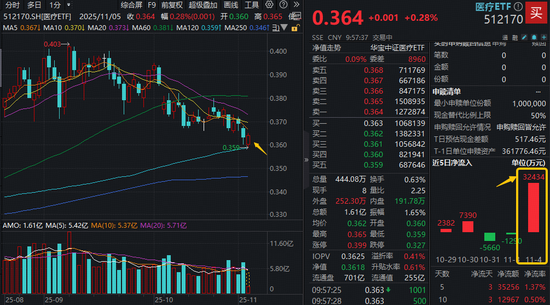
创新药修复行情现波折,520880收跌2.61%止步两连阳!A股最大医疗ETF(512170)靠近半年线,低吸资金狂涌
Xin Lang Ji Jin· 2025-11-04 11:36
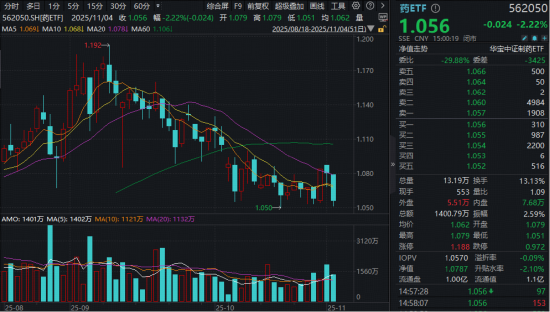
Core Viewpoint - The A-share and Hong Kong stock markets experienced a pullback, particularly in the pharmaceutical sector, with innovative drugs, medical devices, and CXO concepts facing significant declines. However, several representative ETFs showed premium, indicating some capital may be moving against the trend [1][3][5]. Group 1: Market Performance - The A-share innovative drug sector saw a notable decline, with Kanghong Pharmaceutical dropping 6.79%, and other companies like ShenZhou Cell and BaiLi TianHeng falling over 5%. The only drug ETF (562050) closed down 2.22%, marking a new low in this adjustment phase [1]. - The medical sector also declined, with CXO concepts collectively falling. Notable drops included Zhaoyan New Drug at 4.81% and WuXi AppTec at 2.7%. The largest medical ETF (512170) fell 1.63% [3]. - The Hong Kong innovative drug ETF (520880) experienced a 2.61% drop after two consecutive days of gains, with a total transaction volume of 347 million yuan. Only one of the 37 covered innovative drug companies, Hengrui Medicine, saw a gain, while major stocks like Kangfang Biotech and 3SBio fell by 6% and 5.85%, respectively [5]. Group 2: Policy and Future Outlook - The recent conclusion of the five-day medical insurance negotiations and the pricing discussions for innovative drug catalogs has drawn attention, with a focus on high-value innovative drugs and CAR-T therapies. The final results of the 2025 medical insurance catalog adjustments are expected in early December [7]. - According to Open Source Securities, the current innovative drugs included in the medical insurance and commercial insurance are mostly in the early stages of volume expansion. The ongoing policy support for innovative drugs is expected to lead to rapid revenue growth for these drugs, benefiting patients and driving growth for related companies [7]. - Zhongtai Securities views the recent adjustments in the innovative drug sector as relatively benign, with no negative changes in the industry fundamentals. The pharmaceutical sector is believed to be at a relatively low point, with strong safety margins and potential for upward movement as market dynamics shift [7]. Group 3: Investment Strategies - The current market conditions are seen as a favorable time for medium to long-term investments in the biopharmaceutical sector, with recommendations for balanced allocations within the sector. This includes a rotation towards large-cap blue-chip companies and balancing investments in underperforming segments like medical devices and services [7]. - The investment strategies suggest focusing on specific ETFs: the Hong Kong innovative drug ETF (520880) for pure innovative drug exposure, the drug ETF (562050) as the only one tracking the pharmaceutical index, and the medical ETF (512170) as the largest in the market [8][9].