
华润啤酒

Search documents
基金正常到期减持,华润仍是汾酒除山西国资外的第一大股东
Jing Ji Guan Cha Wang· 2025-09-21 08:29
Core Viewpoint - Shanxi Fenjiu's shareholder Huachuang Xinxin (Hong Kong) Co., Ltd. plans to reduce its holdings by up to 16.20 million shares due to fund liquidation, but this will not affect Huachuang's confidence in the company's long-term value [1][4] Group 1: Shareholder Actions - Huachuang Xinxin's reduction of shares is a routine operation following the expiration of its fund, which is a common practice in the private equity industry [1][4] - After the reduction, Huachuang will remain the largest shareholder outside of Shanxi state-owned assets, indicating continued support for Fenjiu's long-term investment value [1][4] Group 2: Historical Context and Performance - In 2018, Huachuang acquired an 11.45% stake in Fenjiu for 5.16 billion yuan, marking a significant investment that has proven successful over seven years [2] - Fenjiu's revenue increased from 9.38 billion yuan to an expected 36.01 billion yuan by 2024, demonstrating strong growth and resilience in a challenging industry environment [2][5] Group 3: Strategic Cooperation - The partnership between Fenjiu and Huachuang has deepened, with agreements signed in 2024 to enhance collaboration in marketing, research, and investment [3] - The cooperation is evolving towards digitalization and innovation, supported by Huachuang's research institute, which is expected to drive Fenjiu's high-quality development [3] Group 4: Financial Performance - In the first half of 2025, Fenjiu reported revenue of 23.96 billion yuan, a year-on-year increase of 5.35%, and a net profit of 8.51 billion yuan, up 1.13%, showcasing its ability to maintain growth amid industry challenges [4][5] - Fenjiu's strategy focuses on optimizing product structure and expanding its national market presence, with significant growth in sales outside Shanxi province [4][5]


2025 InnoMatch技术转移大会上海开幕
Guo Ji Jin Rong Bao· 2025-09-21 08:16
Core Insights - The 2025 InnoMatch Technology Transfer Conference opened in Shanghai, focusing on demand-driven innovation, talent discovery, and capital empowerment [1] - The conference introduced a "1+3+365" model for continuous engagement, showcasing over 10,000 technology demands and attracting investments exceeding 20 billion yuan [1][2] - The event highlighted significant innovations in various fields, including artificial intelligence, quantum technology, and biomedicine, with over 2,000 job postings and 1,728 technology transfer results presented [1][2] Group 1: Demand and Innovation - The conference featured over 120 industry-leading companies showcasing open innovation platforms and demand scenarios, including a major project for electric vehicle charging stations in Kazakhstan [2] - Notable innovations included brain-computer interface chips and advanced medical technologies from Shanghai Jiao Tong University and Huashan Hospital, demonstrating international leadership in their respective fields [2][4] - The event emphasized the integration of innovation chains, industry chains, capital chains, and talent chains in the Yangtze River Delta region [2] Group 2: Concept Validation and Standards - Six high-quality concept validation platforms were launched, providing comprehensive services to reduce risks and costs associated with future industry innovations [3] - The conference announced the release of the "2025 Annual Report on the Transformation of Scientific and Technological Achievements" and the "2025 Shanghai White Paper on the Transformation of Scientific and Technological Achievements" [5] - New standards for evaluating scientific achievements in medical institutions and guidelines for concept validation institutions were introduced to promote a sustainable ecosystem for technology transfer [5] Group 3: Market Engagement and Collaboration - The conference featured a "Technology Trading Market" where innovative products were promoted, attracting significant audience engagement [6] - The "Transformation Clinic" provided one-on-one consultations for over 374 projects, with 19 projects entering the pre-concept validation stage and contracts exceeding 300 million yuan [6] - The event is part of Shanghai's strategy to enhance its global influence in technology innovation and create a modern industrial system [6][7]
产品首发首秀 面向全球发布万项需求 概念验证中心集中亮相
Jie Fang Ri Bao· 2025-09-21 02:33
Core Insights - The 2025 InnoMatch Technology Transfer Conference opened in Shanghai, focusing on demand-driven innovation, talent discovery, and capital empowerment, with over 10,000 technology demands and total investment exceeding 20 billion yuan [1] - The conference showcased 2,000 talent demand positions, 1,728 technology achievements ready for transfer, 847 innovative products from SMEs, and over 80 cutting-edge technology products and experience scenarios [1] Group 1: Technology Demands and Investment - The conference highlighted technology demands across more than 20 frontier fields, including artificial intelligence, quantum technology, and biomedicine [1] - Notable demands included projects from Kazakhstan, such as the construction of an ecological resort seeking partners for green technologies and a national network for electric vehicle charging stations [1] Group 2: Innovation Achievements and Case Studies - Shanghai Jiao Tong University presented internationally leading technologies, including brain-machine interface chips and high-precision measurement technologies [2] - Huashan Hospital showcased an innovative DC vaccine for brain glioma treatment, demonstrating the hospital's innovation capabilities [2] - East China Normal University displayed a new high-end enzyme preparation that reduced production costs of related chemical products by over 90% through technology transfer empowerment [2] Group 3: Concept Verification and Support Platforms - Shanghai is advancing the integration of concept verification platforms with future industry clusters and high-quality incubators to enhance the initial stage of technology transfer [2] - Six concept verification centers focusing on future industries, such as brain-machine interfaces and gene editing, made their debut at the conference, providing comprehensive services to reduce innovation risks and R&D costs [2]
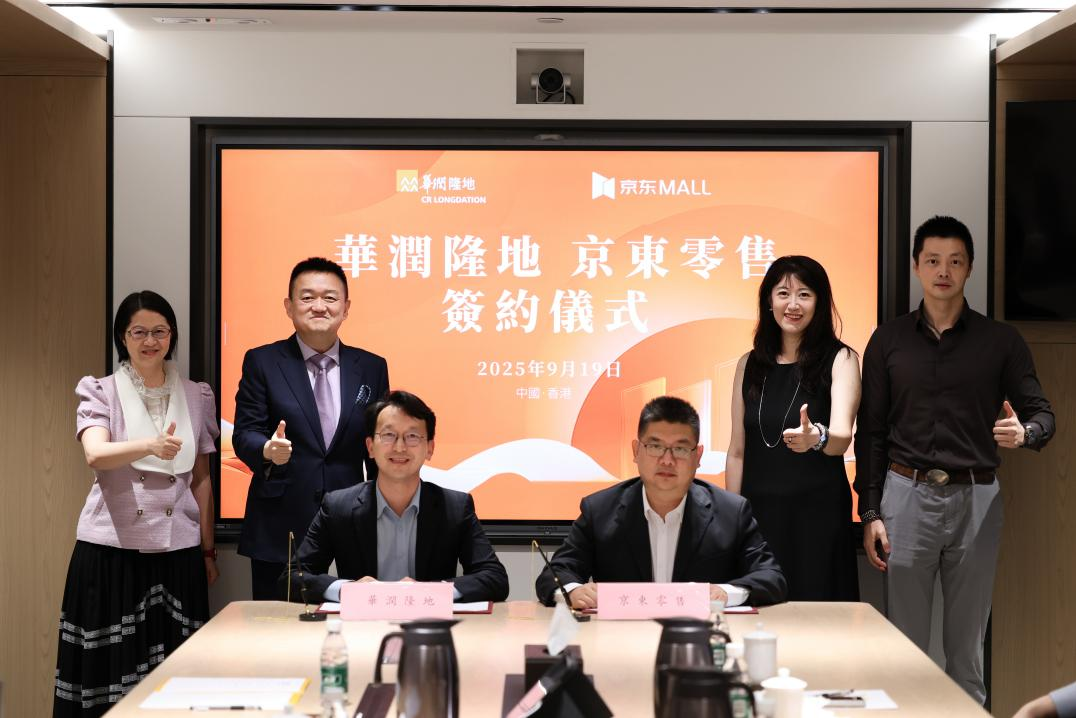
京东MALL香港首店签约落地,预计2026年正式开业
Xin Lang Ke Ji· 2025-09-20 13:29
Core Insights - JD.com has officially reached a strategic cooperation with China Resources Longde, announcing the opening of its first JD MALL in Hong Kong, set to launch in 2026 [1] - The JD MALL in Hong Kong will be located at 28 Wan Chai, 2nd floor of China Resources Bayview Center, featuring a mix of international and Chinese tech brands [1] - JD MALL has established a mature operational model and rich brand resources, aiming to create a new commercial landmark that integrates trends, technology, and experience [1] Company Expansion - JD MALL has opened a total of 24 stores across China, focusing on first-tier cities and key provincial capitals [1] - The platform offers over 200,000 trendy products across various categories, including home appliances, mobile communications, and digital toys [1] - JD MALL has introduced free experience zones for e-sports, baking coffee, and smart home products, enhancing the immersive and digital shopping experience [1] Strategic Partnerships - In June, JD.com signed a strategic cooperation agreement with China Resources Group to expand in Hong Kong and overseas markets, covering various sectors such as consumer goods, energy management, and logistics services [2] - China Resources provided critical support for the property selection of the JD MALL Hong Kong store, facilitating the project's implementation [2] - The opening of the Hong Kong store will complement the JD MALL in Nanshan, Shenzhen, creating a "dual MALL linkage" strategy in the Greater Bay Area [2]

牵手华润隆地 京东MALL香港首店将落地湾仔 打造香港家场景消费新风尚
Zhong Jin Zai Xian· 2025-09-20 08:53
Group 1 - JD.com has officially reached a strategic cooperation with China Resources Longde, announcing the opening of JD MALL's first store in Hong Kong in the core area of Wanchai, scheduled for 2026 [1][8] - The new JD MALL store aims to provide Hong Kong residents with a one-stop shopping experience for home appliances and digital products, potentially establishing a new landmark for technology consumption in Hong Kong [1][3] - The store will feature a variety of international and Chinese tech brands, enhancing the shopping options available to consumers in Hong Kong [3][5] Group 2 - JD MALL has opened a total of 24 stores across China, focusing on first-tier cities and key provincial capitals, with over 200,000 trendy products available across various categories [5] - The store will include free experience zones for e-sports, baking coffee, and smart home products, offering an immersive and digital shopping experience [5] - In June, JD.com signed a strategic cooperation agreement with China Resources Group to expand in Hong Kong and overseas markets, covering various sectors including consumer goods and logistics [8]

2025“全国理性饮酒宣传周”新闻发布会在京召开
Zheng Quan Ri Bao· 2025-09-19 12:45
Core Viewpoint - The event highlighted the importance of social responsibility in the Chinese liquor industry, emphasizing the need for rational drinking and the promotion of a healthy drinking culture [1][3]. Group 1: Industry Initiatives - The "National Rational Drinking Promotion Week" focuses on three main missions: promoting rational and civilized drinking, caring for youth and discouraging underage drinking, and encouraging moderate drinking for a happy life [1]. - The Chinese liquor industry aims to enhance its social responsibility through innovative methods such as public welfare-themed microfilms and collaborations with research institutions like the Chinese Center for Disease Control and Prevention [1]. Group 2: Company Commitment - China Resources Beer has been committed to leading industry development and promoting responsible drinking, emphasizing quality and sustainability as core values [2]. - The company aims to build a new development pattern in the liquor industry characterized by shared responsibility and value, focusing on product quality, green development, and advocacy for rational drinking [2]. Group 3: ESG and Sustainability - The rise of ESG (Environmental, Social, and Governance) principles presents both opportunities and challenges for the Chinese liquor industry, necessitating improvements in ESG practices and compliance with international disclosure standards [2]. - The industry is encouraged to integrate green production, responsible management, and corporate governance to transition towards a modern, low-carbon, and inclusive industry [2]. Group 4: Youth Advocacy - A joint initiative was launched to oppose underage drinking and promote a healthy drinking culture, reflecting the industry's commitment to social responsibility and the well-being of youth [3]. - The initiative aims to create a supportive environment for the healthy growth of young people and to foster a civilized drinking culture in society [3].
民生证券:大众品板块分化依旧 把握结构性景气
Zhi Tong Cai Jing· 2025-09-19 03:21
Group 1: Beer Sector - The beer sector shows ongoing industry differentiation, with a recommendation for Yanjing Beer and Zhujiang Beer due to their relatively strong fundamentals and performance potential [1][2] - Yanjing Beer benefits from steady reforms and improved operational efficiency, leading to a more pronounced profit alpha [2] - China Resources Beer is highlighted as a national leader with a favorable operating cycle, expected to continue outperforming the industry despite external pressures [2] Group 2: Seasoning and Food Supply - The seasoning and food supply sector is under pressure due to weakened downstream restaurant demand, with some companies performing better due to new products and channel expansions [4] - Cost reductions in key raw materials like soybeans and sugar have positively impacted profit margins for companies like Haitian and Angel Yeast [4] - The industry is expected to see growth if restaurant demand recovers, allowing leading companies to capture more market share [4] Group 3: Snack Foods - The snack food sector is experiencing increased internal differentiation, with companies that create hit products and leverage quality channels showing strong revenue performance [1][5] - Companies like Yanjing and Youyi Foods are capitalizing on structural category benefits and new channel opportunities, particularly in membership-based and bulk sales channels [5] - The sector is advised to focus on new product development and market share growth, with recommendations for companies like Angel Yeast and Baba Foods [4][5]
智通港股沽空统计|9月19日
智通财经网· 2025-09-19 00:24
Core Insights - The article highlights the top short-selling stocks in the market, with specific focus on their short-selling ratios and amounts [1][2][3] Short-Selling Ratios - The top three stocks by short-selling ratio are: - China Resources Beer (80291) at 100.00% - AIA Group (81299) at 89.92% - Sun Hung Kai Properties (80016) at 85.69% [1][2] Short-Selling Amounts - The leading stocks by short-selling amounts are: - Alibaba (09988) with a short-selling amount of 4.794 billion - Baidu (09888) with 2.560 billion - Tencent Holdings (00700) with 2.306 billion [1][3] Deviation Values - The stocks with the highest deviation values are: - China Resources Beer (80291) at 40.95% - Uni-President China (00220) at 39.40% - Dongfang Electric (01072) at 38.26% [1][2][3]






大众品板块2025年中报业绩综述:分化依旧,把握结构性景气
Minsheng Securities· 2025-09-18 13:45
Investment Rating - The report provides a positive investment rating for the low-alcohol and beverage sectors, recommending specific companies based on their performance and market positioning [2]. Core Insights - The report emphasizes the structural recovery in the consumer goods sector, highlighting the importance of channel dynamics and product innovation in driving growth [2][25]. - It identifies key players in the beer segment, such as Yanjing Beer and Zhujiang Beer, which are expected to outperform due to their strong regional presence and operational efficiency [2][11]. - The report also notes the challenges faced by the seasoning and food supply sectors, particularly due to weak downstream demand, but suggests potential for recovery as the restaurant industry stabilizes [2][26]. Summary by Sections Beer Sector - The beer sector experienced a revenue of 41.73 billion yuan in the first half of 2025, with a year-on-year growth of 2.8% [7]. - Major companies like Qingdao Beer and China Resources Beer showed mixed performance, with Qingdao Beer achieving a revenue increase of 1.9% [11][12]. - The report highlights the impact of channel structure on revenue performance, with companies like Yanjing and Zhujiang benefiting from a higher proportion of non-immediate sales channels [11][12]. Yellow Wine Sector - The yellow wine sector reported a revenue of 1.93 billion yuan in the first half of 2025, reflecting a year-on-year growth of 3.4% [26]. - Kuaijishan, a leading player, achieved a double-digit growth rate of 11% in the same period, driven by its high-end and youth-oriented strategies [26][27]. - The report indicates a trend of market share concentration among leading companies, with Kuaijishan and Guyue Longshan capturing a larger portion of the market [31]. Seasoning and Food Supply Sector - The seasoning and food supply sector faced revenue pressure due to weak restaurant demand, but companies that successfully launched new products or expanded channels showed resilience [2][26]. - The report suggests that a recovery in restaurant demand could lead to increased supply chain needs, benefiting leading companies in the sector [2][26]. Beverage Sector - The beverage sector is highlighted for its high growth potential, particularly for companies like Dongpeng Beverage, which is expanding its national presence [2]. - The report recommends focusing on companies that are effectively navigating the competitive landscape and capitalizing on emerging consumer trends [2][26].




量减价增失灵?看啤酒站在“冰与火”的十字路口
Sou Hu Cai Jing· 2025-09-18 10:27
Core Insights - The beer industry in China is facing significant challenges due to a decline in on-the-go consumption, decreasing contributions from traditional channels, and a reduction in alcohol consumption willingness [1] - The overall production of beer has decreased, with major companies experiencing performance pressures, leading to a noticeable market segmentation [1] Industry Performance - Budweiser APAC reported a total beer sales volume of 4.363 billion liters in the first half of 2025, a year-on-year decline of 6.1%, with revenue at $3.136 billion, down 5.6% [2] - In China, the sales volume decreased by 8.2%, with revenue and revenue per hectoliter dropping by 9.5% and 1.4%, respectively, leading to a market share decline to around 40% [2] - The cumulative production of large-scale beer enterprises in China reached 35.213 million kiloliters in 2024, a decrease of 0.6% from the previous year, only about 70% of the peak level ten years ago [2] Regional Market Dynamics - Local brands like Yanjing Beer and Chongqing Beer have shown strong competitiveness through product innovation and marketing strategies, solidifying their market share [2] - Some brands exhibit significant regional dependency, with one brand generating nearly 70% of its revenue from Shandong, while another brand has over 60% of its revenue from Chongqing, Chengdu, and Sichuan [2][3] Growth Strategies - To achieve further growth, brands need to deepen their regional market strategies, focusing on both consolidating their positions in existing strongholds and exploring new growth points [3] - A brand successfully avoided direct competition with eastern giants by acquiring local brands in Yunnan, focusing on the western market [3] High-End and Differentiation Strategies - High-end product strategies have shown mixed results, with some brands experiencing a decline in revenue despite a high proportion of mid-to-high-end products [4] - Conversely, certain brands have achieved significant growth in high-end product revenue, with one brand's mid-to-high-end product revenue share exceeding 70% and a year-on-year increase of 9.32% [4] Consumer Trends - The demand for cost-effective beer has resurged, with low-priced products gaining traction among consumers, particularly in the context of slowing income growth among migrant workers [6] - Brands are encouraged to adjust their product strategies to focus on value for money, optimizing production processes to lower costs while maintaining quality [6][7] Diversification and Innovation - Some brands are exploring diversification by entering new beverage categories, such as acquiring stakes in yellow wine and launching soft drinks [9] - The Z generation, aged 18-24, is becoming a significant consumer group, with their preferences shifting towards emotional value and experiences rather than traditional drinking culture [9] Channel Transformation - The beer sales channel is undergoing structural changes, with the share of on-the-go channels declining from over 50% to about 40%, while non-on-the-go channels like convenience stores are growing [13] - Brands are encouraged to collaborate with convenience stores and leverage e-commerce to enhance sales, with instant retail platforms showing significant growth potential [14] Operational Efficiency and Sustainability - Improving operational efficiency is crucial for long-term success, focusing on production, supply chain, and decision-making processes [15] - Brands are increasingly adopting sustainable practices, with some reducing their carbon footprint significantly, which is becoming a key factor for consumer preference [15][16] Market Outlook - The beer industry has experienced a downturn over the past two years but shows signs of potential recovery, although uncertainties remain due to high-end market segmentation and channel transformations [16]
