
法国巴黎银行

Search documents
关税阴影下的美股财报季:期权市场押注个股波动飙升 医疗股恐成“风暴眼”
智通财经网· 2025-07-15 05:58
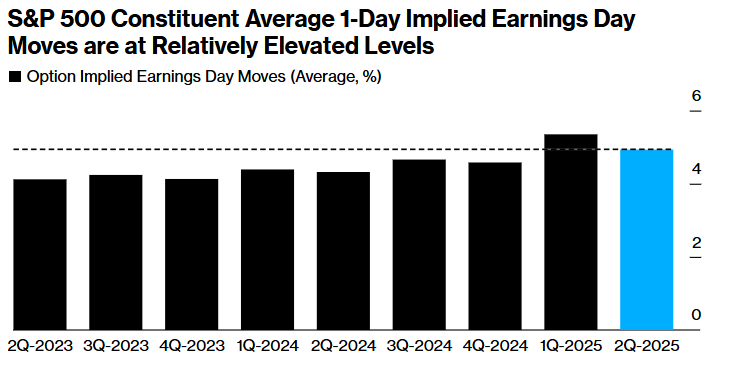
Core Viewpoint - The upcoming earnings season is expected to be significantly influenced by tariff-related uncertainties, leading to increased volatility in stock prices, particularly in the healthcare sector [1][4]. Group 1: Earnings Season and Market Reactions - The options market indicates that the volatility of S&P 500 companies on earnings announcement days will be greater compared to recent quarters, with healthcare showing the highest potential for significant fluctuations [1]. - 73% of S&P 500 companies are expected to report earnings before the new deadline for a trade agreement with the U.S., contributing to ongoing uncertainty [4]. - Analysts have noted that the volatility in stock prices on earnings announcement days has been increasing in both the U.S. and Europe, particularly for consumer and healthcare companies [4]. Group 2: Sector-Specific Insights - The healthcare sector is anticipated to experience notably higher volatility due to threats from high tariffs and recent cuts to Medicaid funding [4]. - In the second quarter of 2025, the expected earnings growth rates for various sectors are as follows: Information Technology (6.3%), Consumer Discretionary (5.9%), Communication Services (5.5%), Financials (3.8%), Health Care (5.6%), and others [5]. Group 3: Market Trends and Strategies - The current market conditions are slightly below neutral, which may favor a potential market rally during the earnings season, with stocks typically rising in about 75% of the time during this period [5]. - The volatility of individual stocks remains stable despite a general upward trend in the market, with traders anticipating larger individual stock movements during the earnings season [8]. - Goldman Sachs predicts that the volatility on earnings days could be 3.5 times higher than on non-earnings days, compared to a previous ratio of 2.5 times [10].

金融危机新火种:98万亿美元隐性债务
3 6 Ke· 2025-07-14 11:08
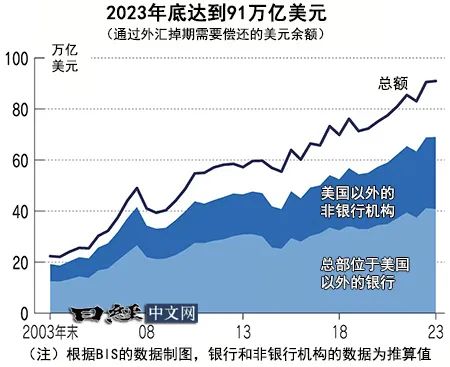
Core Viewpoint - The International Bank for Settlements (BIS) has raised alarms regarding the excessive growth of "hidden debt" in the form of dollar financing through foreign exchange swaps, which is not reflected on balance sheets and lacks sufficient disclosure. The global balance of this hidden debt is projected to reach $98 trillion by the end of 2024, up from $41 trillion at the end of 2008, indicating a significant liquidity risk in the event of a financial shock [1][2][4]. Group 1: Hidden Debt Overview - Hidden debt primarily refers to dollars raised through financial derivatives known as "foreign exchange swaps," which involve exchanging domestic currency for dollars and require repayment in dollars after a specified period, typically less than one year [1][2]. - As of the end of 2023, nearly half of the total hidden debt, amounting to $41 trillion, is held by banks located outside the United States [2]. Group 2: Regulatory Concerns - The scale of hidden debt presents a significant regulatory gap, as non-bank institutions, such as investment funds, are major users of foreign exchange swaps and are less regulated than banks, leading to insufficient information disclosure [2][4]. - In the event of a financial shock, financial institutions may face higher costs to secure dollars or may be forced to sell dollar assets, potentially worsening their financial conditions [4]. Group 3: Japanese Banks' Situation - As of March 2025, Japan's three major banks—Mitsubishi UFJ Financial Group, Sumitomo Mitsui Financial Group, and Mizuho Financial Group—have foreign currency deposits that do not fully cover their foreign currency loans, indicating a state of over-lending with loan-to-deposit ratios of 109%, 131%, and 127% respectively [4][5]. - These banks have raised significant amounts through corporate bonds and longer-term swaps, with Mitsubishi UFJ at $82 billion, Sumitomo Mitsui at $146 billion, and Mizuho at $93.7 billion, but still face risks of dollar shortages due to potential loan surges or deposit outflows [5]. Group 4: Market Dynamics and Future Uncertainties - The COVID-19 pandemic highlighted the vulnerability of financial institutions and corporations in securing dollars, leading to a temporary dollar shortage that was alleviated by the Federal Reserve's actions through central banks [5]. - There is growing uncertainty regarding whether the Federal Reserve will continue to supply dollars in emergencies, especially in light of geopolitical tensions and potential economic downturns that could lead to liquidity tightening [5].
金融危机新火种:98万亿美元隐性债务
日经中文网· 2025-07-14 06:28
Core Viewpoint - The article highlights the significant growth of "hidden debt" through foreign exchange swaps, which is not reflected on balance sheets and poses potential liquidity risks in the financial system, particularly as the global amount is projected to reach $98 trillion by the end of 2024 [1][2][3]. Group 1: Hidden Debt Overview - Hidden debt primarily refers to the dollars raised through financial derivatives known as "foreign exchange swaps," which involve exchanging domestic currency for dollars and require repayment in dollars after a set period, typically less than one year [1][2]. - The International Bank for Settlements (BIS) has raised alarms about the excessive expansion of hidden dollar debt, which has grown from $41 trillion at the end of 2008 to $91 trillion by the end of 2023, and is expected to reach $98 trillion by the end of 2024 [1][2]. Group 2: Risks and Regulatory Concerns - The lack of transparency and insufficient regulation surrounding non-bank institutions, which are the largest users of foreign exchange swaps, presents a significant vulnerability for financial regulators [2][3]. - In the event of a financial shock, institutions may face increased costs to secure dollars or may need to liquidate dollar assets, potentially worsening their financial conditions [3]. Group 3: Specific Institutional Challenges - Japan's three major banks—Mitsubishi UFJ Financial Group, Sumitomo Mitsui Financial Group, and Mizuho Financial Group—are facing challenges in stabilizing dollar funding, with their foreign currency deposits not fully covering foreign currency loans as of March 2025 [3]. - The funding gaps for these banks are significant, with Mitsubishi UFJ raising $82 billion, Sumitomo Mitsui $146 billion, and Mizuho $93.7 billion, indicating a risk of dollar shortages during financial stress [3]. Group 4: Global Economic Factors - The uncertainty surrounding the Federal Reserve's willingness to supply dollars during a global financial crisis raises concerns, especially given the geopolitical tensions in the Middle East that could exacerbate economic conditions [4][5].

中国银行业应加快走出“数字化焦虑”
Jin Rong Shi Bao· 2025-07-14 03:10
Core Viewpoint - The financial industry is undergoing a significant digital transformation, driven by rapid developments in the digital economy, changing user demands, regulatory support, and intense competition, leading to a phenomenon termed "digital anxiety" among banks [1][2][3]. Group 1: Digital Economy and User Demand - China's digital economy ranks second globally, with expectations to exceed half of the total economic output by 2025, necessitating a swift digital transformation in the financial sector [1]. - User behavior is shifting towards a preference for digital services, increasing the demand for banks to provide seamless, anytime, anywhere access to services [1][2]. Group 2: Regulatory Push and Competition - Regulatory bodies have issued guidelines to promote financial technology applications and digital transformation, with digital finance highlighted as a key focus area in recent central financial meetings [1][2]. - Domestic and international competition is intensifying, with banks like Citibank adopting "mobile-first" strategies and local banks like China Merchants Bank positioning themselves as "fintech banks" [2]. Group 3: Challenges in Digital Transformation - Many banks, particularly smaller ones with weaker technological foundations, have embarked on digital transformation without clear strategies, leading to ineffective outcomes despite significant resource investments [2][3]. - The gap between domestic banks and their international counterparts is widening, indicating a "latecomer disadvantage" in digital transformation efforts [2]. Group 4: Strategies for Overcoming Digital Anxiety - Banks should break down organizational barriers to facilitate digital transformation, fostering a culture of collaboration and agility among employees [3]. - A tailored digital transformation path should be developed based on each bank's unique characteristics, focusing on strategic goals and resource optimization [3]. - There is a need to attract and cultivate talent with a blend of technology and finance expertise to enhance decision-making in digital transformation [3]. Group 5: Learning from Industry Leaders - Banks should study successful digital transformation cases from both domestic and international leaders, adapting these insights to their specific contexts [5]. - The book "The Path to Ecological Innovation for Commercial Banks" provides valuable references for banks navigating digital anxiety, featuring insights from various banking innovation teams [5]. Group 6: Importance of Learning from Failures - Research should not only focus on successful cases but also analyze failures in digital transformation, as understanding the reasons behind failures can provide significant learning opportunities [6].

每日投行/机构观点梳理(2025-07-11)
Jin Shi Shu Ju· 2025-07-11 08:21
4. 法巴银行:欧元区需依靠更多国防和基建支出来缓解老龄化压力 1. 高盛策略师:上调亚洲股票目标,调高港股评级 高盛集团策略师上调了对亚洲股市的预期,理由是宏观经济环境更加有利,关税的确定性增加。以 Timothy Moe为首的策略师在周五的一份报告中表示,MSCI亚太(除日本外)指数的12个月目标指数上 调了3%,至700点,这意味着在此期间以美元计算的回报率为9%。该团队还将港股评级上调至"持 股"(market weight),并称其将在美联储开启宽松周期、美元走弱的背景下成为主要受益者之一。他 们补充称,菲律宾等也是对这一趋势最为敏感、受益最大的市场之一。策略师们表示:"关税征收和宽 松的货币政策可能是第三季度对亚洲股市的重要宏观影响。"他们指出,即便最终实施的关税税率略高 于当前的基线预期,"其对基本面增长的冲击可能不会像市场在第二季度初所担忧的那样严重。" 2. 美银:全球经济不确定性中,布油价格保持坚挺 美国银行大宗商品策略师Francisco Blanch表示,尽管今年全球经济增长和地缘政治方面存在不确定性, 但布伦特原油价格仍表现出较强韧性,今年1月以来平均价格维持在每桶70.75美元。这 ...
交易落地!法国巴黎银行收购进行时
券商中国· 2025-07-11 06:59
Core Viewpoint - The acquisition of AXA IM by BNP Paribas Insurance marks a significant expansion in the asset management sector, positioning BNP Paribas as a leading European asset management platform with over €1.5 trillion in assets under management [1][3]. Group 1: Acquisition Details - The acquisition of AXA IM was officially completed on July 1, 2025, and will integrate with BNP Paribas Asset Management and BNP Paribas Real Estate Investment Management to create a global platform focused on long-term savings and investment [2][3]. - Sandro Pierri, CEO of BNP Paribas Asset Management, will also take on the role of CEO at AXA IM, while Marco Morelli will serve as the chairman for both entities [2]. Group 2: Market Position and Strategy - Post-acquisition, BNP Paribas will manage approximately €850 billion in assets related to insurance and pension fund long-term savings, enhancing its leadership in these sectors [3]. - The bank aims to leverage complementary expertise in traditional and alternative asset classes, focusing on innovation, particularly in digitalization and data analytics, while reinforcing its commitment to sustainability [2][3]. Group 3: Industry Trends - The asset management industry is expected to experience a prolonged wave of acquisitions due to ongoing pressure from declining fees, prompting firms to pursue scale as a strategic choice [4]. - BNP Paribas has been actively acquiring businesses in Europe, including a recent agreement to acquire HSBC's custody and depository bank business in Germany, further solidifying its position as a leading local custodian bank [4]. Group 4: Expansion in China - BNP Paribas has been increasing its presence in the Chinese market, recently establishing several financial institutions, including BNP Paribas Securities, which is the fourth foreign-owned securities company in China [6][7]. - The approval of BNP Paribas (China) for securities investment fund custody qualifications marks a significant milestone, positioning it among the few foreign banks with such capabilities in the country [6].

法巴银行:欧元区需依靠更多国防和基建支出来缓解老龄化压力
news flash· 2025-07-10 10:05
Core Viewpoint - The report by BNP Paribas economists emphasizes that increased spending on defense and infrastructure is essential for the Eurozone to mitigate the negative impacts of demographic changes, particularly aging population [1] Group 1: Economic Implications - The largest economy in the Eurozone, Germany, is planning a significant fiscal shift to increase spending on weapons and infrastructure [1] - The entire EU is also preparing to push for higher defense spending, which will help combat the destructive effects of population aging starting this year [1] - Historically, labor force growth has been the main driver of potential output increase in the Eurozone, but this trend is changing due to demographic shifts [1] Group 2: Strategic Recommendations - It is increasingly important to promote economic growth through enhanced defense and infrastructure spending in light of changing population structures [1]
蚂蚁国际计划引入Circle稳定币,并考虑在多个地区申请牌照
Hua Er Jie Jian Wen· 2025-07-10 09:02
Group 1 - Ant Group's international business unit is collaborating with Circle Internet to integrate Circle's USDC stablecoin into its blockchain platform to enhance cross-border payment and fund management services [1] - This initiative is part of Ant Group's strategy to introduce more regulated cryptocurrencies, with plans to incorporate USDC once it is compliant in the U.S. [1] - Ant Group processed over $1 trillion in global transactions last year, with one-third of these transactions handled through its blockchain platform, indicating significant growth potential in the stablecoin business [1] Group 2 - The stablecoin market is substantial, with approximately $250 billion in circulation as of June, and regulatory bodies are increasing oversight in this area [2] - Ant Group's blockchain platform currently supports various tokenized assets from global banks and institutions, having signed agreements with over 10 banks, including HSBC, BNP Paribas, JPMorgan, and Standard Chartered [2] - Major companies, including Meta, PayPal, Walmart, and Amazon, are exploring or have launched their own stablecoins, reflecting the growing interest from traditional financial and tech giants [2]
韩国将严厉打击非法股票交易
Bei Jing Shang Bao· 2025-07-09 16:37
Group 1 - South Korea's three major financial institutions have decided to establish a "Joint Task Force for Combating Stock Price Manipulation" by the end of this month [1][2] - The task force will conduct joint investigations into significant manipulation cases and enforce a "one violation, lifetime delisting" principle for unfair trading practices [2] - The KOSPI index reached its highest closing level in nearly four years, closing at 3133.74 points, with a trading volume of 6.373 billion shares and a total transaction value of 12.5 trillion KRW [2] Group 2 - President Lee Jae-myung's administration aims to boost the stock market, which has faced significant challenges, including a power vacuum and substantial foreign capital outflows [2][3] - Key initiatives include corporate governance reforms, a supplementary budget of at least 30 trillion KRW to stimulate consumption, and significant investments in AI and semiconductor industries [3] - The government plans to invest 100 trillion KRW in AI development and infrastructure, aiming to create a large language model and open-source it [3] Group 3 - The current administration is seen as making historic commitments to shareholder rights, addressing the root causes of the "Korean discount" in the market [4] - Previous attempts by past presidents to resolve shareholder issues have been largely ineffective, with only 14% of companies participating in voluntary value enhancement plans [4] - The proposed amendments to the Commercial Act will clarify the fiduciary duties of directors to shareholders, contrasting with the current law that prioritizes the interests of major shareholders [4] Group 4 - South Korea lifted its ban on "naked short selling" on March 31, 2023, which had been illegal and was previously enforced to stabilize the market during the pandemic [5] - The Financial Services Commission has imposed significant penalties on BNP Paribas and HSBC for repeated violations of short-selling regulations, totaling 2.03 million USD [5] - Following the discovery of large-scale illegal short-selling operations, the Financial Services Commission decided to ban short selling in the stock market until June 2024, with severe penalties for illegal profits [6]
一度“不被看好”的美股反弹 如今吸引大型买家回流市场
news flash· 2025-07-09 14:01
Core Viewpoint - Short-term investors are gradually returning to the U.S. stock market after missing a significant rally, which enhances expectations for continued market growth and potential new highs [1] Group 1: Market Sentiment - A measure by BNP Paribas assessing stock positions of various investors, including Commodity Trading Advisors (CTAs), volatility-targeting funds, and hedge funds, shows a steady increase, currently slightly above neutral levels [1] - The S&P 500 index has experienced a rebound over several months, recovering from the brink of a bear market to reach new highs [1] Group 2: Historical Context - According to BNP Paribas, the last time institutions held such low stock positions during a significant market rebound was in 2023 [1]