阿里云

Search documents
今年上半年阿里云市场份额位居中国AI云市场第一|数智早参
Mei Ri Jing Ji Xin Wen· 2025-10-27 23:16
Group 1: AI Cloud Market - In the first half of 2025, Alibaba Cloud holds the largest market share in China's AI cloud market at 30.2%, while Baidu Smart Cloud follows with 22.5%, together exceeding 50% market share [1] - The report indicates a "dual-hero" competition in the Chinese AI cloud service market, highlighting the strong technological innovation and market expansion capabilities of both Alibaba Cloud and Baidu Smart Cloud [1] - The significant market potential and development space for AI cloud services in China are reflected in the competitive landscape [1] Group 2: Investment in Technology - Huawei's Hubble and other investors have acquired stakes in Wuhan Heart Electric Technology Co., increasing its registered capital from 2 million RMB to approximately 2.4 million RMB [2] - The investment is expected to help Wuhan Heart Electric Technology expand its market and enhance its technological capabilities, aligning with Huawei's needs for high-performance materials in next-generation communication technologies [2] Group 3: Semiconductor Technology - A research team from Peking University has published a paper introducing cryo-electron tomography (Cryo-ET) technology to the semiconductor field, significantly improving the understanding of photoresist molecular structures [3] - The proposed solution from the research can achieve over 99% improvement in reducing pattern defects in lithography technology [3] - This advancement is seen as a motivation for domestic researchers and companies to increase investment in semiconductor technology development and innovation [3]

人机共驾不是权宜之计!业内专家热议智驾安全 中科院王宏安:机器不可能完全取代人
Mei Ri Jing Ji Xin Wen· 2025-10-27 12:17
Core Viewpoint - The discussion on intelligent driving safety is ongoing, emphasizing that human-machine collaboration will be crucial for future developments in autonomous driving technology [1][3]. Group 1: Human-Machine Collaboration - Current intelligent driving capabilities do not meet user expectations, highlighting the need to build trust between humans and machines to optimize collaboration [3][4]. - If humans disengage from driving control, their driving skills may deteriorate, leading to risky behavior due to overconfidence in autonomous systems [3][4]. Group 2: Industry Challenges - The urban navigation assistance feature (NOA) in intelligent driving vehicles faces challenges due to the complexity and diversity of China's traffic infrastructure, affecting user trust in these systems [3][4]. - Companies are focusing on enhancing the capabilities of intelligent driving products to handle complex scenarios, including increasing computational power and automating data processes for rapid system iteration [4]. Group 3: Technological Advancements - The integration of large models in AI is expected to improve human-machine interaction by better understanding commands and emotional nuances [4]. - In five years, AI-driven vehicles may evolve from mere tools to intelligent companions, with systems potentially available in vehicles priced around 100,000 yuan [5]. - The automotive industry anticipates the mass production of intelligent cabins with long-term memory capabilities, leading to personalized driving experiences [5].

伟仕佳杰(856.HK)首次覆盖报告:深耕亚洲ICT分销市场,云/AI业务快速发展
Ge Long Hui· 2025-10-27 09:05
Core Viewpoint - The report highlights the strong growth potential of 伟仕佳杰 (856.HK) in the Asian ICT distribution market, driven by its cloud and AI business expansion, and assigns a target price of HKD 14.8 with a buy rating [1][3]. Group 1: Company Overview - 伟仕佳杰 is a leading ICT solutions platform in the Asia-Pacific region, with operations in enterprise system distribution, consumer electronics distribution, and cloud computing/AI services, covering 9 countries in China and Southeast Asia [1]. - The company has a robust client base with over 50,000 channel partners and deep collaborations with more than 300 leading global and Chinese technology manufacturers, including Huawei, Alibaba Cloud, AWS, Dell, HP, and Lenovo [1]. Group 2: Financial Performance - Since its listing, the company has achieved an average revenue growth rate of 24% up to the end of 2024, with a continuous ROE above 10% for 23 years and a total of HKD 3.3 billion in share buybacks and dividends [2]. - In the first half of 2025, the enterprise systems business generated HKD 25.7 billion, accounting for 57% of total revenue, benefiting from the domestic innovation wave, with over 70% of revenue from domestic brands [2]. - The consumer electronics business reported HKD 17.2 billion in revenue for the first half of 2025, representing 38% of total revenue, supported by a recovery in the smartphone and PC markets [2]. - The cloud computing business is projected to be a significant growth driver, with expected revenue of HKD 3.9 billion in 2024 (+28%) and AI-related revenue of HKD 3.78 billion (+42%), with a 67.9% year-on-year growth in the first half of 2025 [2]. Group 3: Market Position and Growth Prospects - The domestic IT distribution market is valued at approximately RMB 1.43 trillion, with a diverse and fragmented structure, positioning 伟仕佳杰 among the top tier alongside companies like 神州数码 and 长虹佳华 [3]. - In the cloud management services sector, the company ranks among the top five in IDC's third-party cloud management market in China [3]. - Revenue projections for 2024 indicate HKD 58.4 billion for North Asia (including mainland China, Hong Kong, Macau, Taiwan, and Japan) with a 4% growth, and HKD 30.7 billion for Southeast Asia with a remarkable 74% growth [3]. - The target price of HKD 14.8 represents a 43% upside from the current price, with projected net profits of HKD 1.19 billion, HKD 1.41 billion, and HKD 1.63 billion for 2025-2027 [3].
通信行业周报:光模块需求上修,Anthropic与谷歌云达成百亿美元合作协议-20251027
Haitong Securities International· 2025-10-27 09:04
Investment Rating - The report maintains a positive outlook on AI growth and highlights key companies to focus on: ZhongJi InnoLight, Eoptolink Technology, Yuanjie Technology, ZTE, Hui Lyu Ecological Technology Groups Co., Ltd., Shenzhen JPT Opto-Electronics, Ruijie Networks, Aojie Technology, and Unisplendour [1][31]. Core Insights - The demand for optical modules is expected to increase significantly, with a forecast of 20 million units for 1.6T optical modules by 2026 [15][39]. - The communication industry is seen as the foundation of the digital economy, encompassing various sectors such as AI ecosystems, satellite internet, data elements, AIoT, internet of vehicles, and industrial internet [31][39]. - OpenAI's release of the AI browser ChatGPT Atlas is viewed as a significant development in redefining internet usage [6][38]. - Anthropic's agreement with Google Cloud for up to one million TPUs, valued at several billion dollars, indicates strong growth potential in AI infrastructure [10][39]. - The acquisition of a 94% stake in Wuhan Ruijing by Dugen Core is expected to enhance technical synergy in the optoelectronics field [12][39]. Summary by Sections Optical Module Demand - The report revises the demand forecast for 1.6T optical modules upwards, predicting a demand of over 20 million units by 2026, with a significant supply gap anticipated for high-speed optical modules [15][39]. AI and Communication - The report emphasizes the acceleration of AI-related investments and innovations, particularly in GPU capabilities and communication networks, which are crucial for enhancing AI efficiency [31][32]. Company Performance - The report includes a simulated investment portfolio for the communication sector, showing a strong performance with an average increase of 14.95% for selected stocks during the specified period [22][23].




美股异动丨百度盘前涨5%,H股涨超6%,百度智能云市场份额位居中国AI云市场第二
Ge Long Hui· 2025-10-27 08:32
Core Viewpoint - Baidu's stock saw a significant increase, with a rise of over 6% in Hong Kong and a pre-market gain of 5% in the US, driven by the release of a report on China's full-stack AI cloud service market [1] Market Overview - According to the report by Sullivan, the market size for China's full-stack AI cloud services is projected to reach 25.9 billion yuan in the first half of 2025 [1] - Alibaba Cloud holds the largest market share at 30.2%, while Baidu Smart Cloud ranks second with a 22.5% market share, together accounting for over 50% of the market [1] Competitive Landscape - The dominance of Baidu Smart Cloud and Alibaba Cloud as the leading players in the AI cloud sector has been consistently highlighted in various third-party research reports [1] - An IDC report on China's intelligent computing professional services market indicates that Baidu Smart Cloud leads the implementation services market with a 19.9% share [1]
港股异动丨百度(9888.HK)尾盘涨幅进一步扩大至6.5%
Ge Long Hui· 2025-10-27 07:57
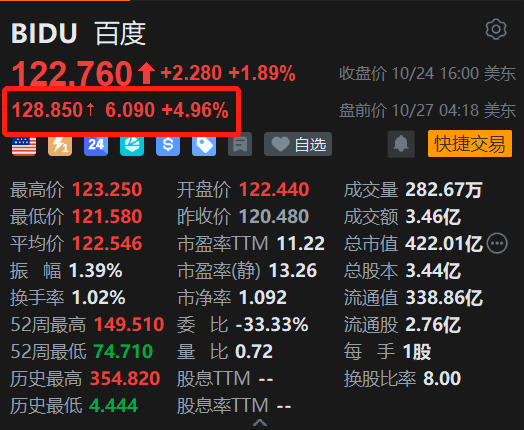
Core Viewpoint - Baidu Group's stock price increased by 6.5% to HKD 125.5, following the release of a report on China's full-stack AI cloud service market [1] Group 1: Market Overview - The report titled "China Full-Stack AI Cloud Service (Public Cloud) Market Report 2025H1" indicates that the market size for full-stack AI cloud services in China will reach RMB 25.9 billion in the first half of 2025 [1] - Alibaba Cloud holds the largest market share at 30.2%, while Baidu Smart Cloud ranks second with a 22.5% market share [1] - Together, Alibaba Cloud and Baidu Smart Cloud account for over 50% of the total market share in this sector [1]
经营性CDN许可证办理全指南:网络加速业务从政策到实操的合规经营
Sou Hu Cai Jing· 2025-10-27 07:51
对于传媒、电商企业而言,经营性CDN许可证是开展内容加速业务的"合法通行证"。无论是视频网站优化用户播放体验,还是广告公司快 速分发营销内容,亦或是电商平台提升商品图片加载速度,均需依法取得该资质。壹点壹线企服小编将从基础认知、政策依据到办理流 程,系统拆解申请逻辑。 一、经营性CDN许可证的基础认知 三、CDN许可证申请条件拆解:4大维度12个细节 (一)主体资质要求 CDN(Content Delivery Network)即内容分发网络,通过部署多区域节点服务器缓存内容,实现用户就近访问。例如:用户访问电商平台 商品图片时,CDN系统会直接从最近节点调取缓存内容,而非从源站下载,从而降低源站压力、提升访问效率。 经营性CDN许可证是工业和信息化主管部门颁发的电信业务经营许可,明确企业可合法开展以盈利为目的的内容加速、缓存、分发等服 务。未取得该资质擅自经营,将面临监管处罚。 二、哪些企业需要办理CDN许可证 1. 专业CDN服务提供商:这类企业专注于网站内容分发、加速与缓存等核心CDN业务,通过构建广泛的节点网络,为各类客户提供高 效的内容传输加速服务。它们是最直接需要CDN许可证的主体,如网宿、蓝讯、 ...
长线看好量子计算,稀缺铲子股为何值得重视?
2025-10-27 00:31
Summary of Quantum Computing Industry Conference Call Industry Overview - The conference call focuses on the **quantum computing industry**, highlighting the transition from research to commercialization, particularly with **Guangdong Quantum** becoming controlled by **China Telecom** [1][3]. - The **15th Five-Year Plan** includes quantum technology as a key economic growth point, ensuring ample funding support for the industry's long-term development [1][3]. Key Points and Arguments - **Strong Growth Indicators**: Domestic quantum computing companies like **Liangxi** and **Guangdong Quantum** have shown significant increases in contract liabilities and revenue, indicating robust growth momentum [1][3]. - **Investment Recommendations**: The call recommends focusing on leading companies such as **Guangdong Quantum** (system integration) and **Core Instruments** (equipment), which are expected to drive sector growth and achieve substantial revenue increases [1][4][5]. - **Market Catalysts**: Key factors driving the market include: - **Policy Support**: Both domestic and U.S. government initiatives are backing quantum computing [2][6]. - **Investment from Major Players**: Companies like **NVIDIA** have invested heavily in quantum computing, indicating confidence in the sector's future [6]. - **Technological Breakthroughs**: Advances in chip technology and the ability to simulate complex problems position quantum computing favorably in sectors like finance, pharmaceuticals, and chemicals [2][7]. Financial Performance - **Contract Liabilities and Revenue Growth**: Companies in the sector are experiencing contract liabilities and revenue growth exceeding 100%, making them attractive investment targets [5][20]. - **Projected Market Growth**: By 2028, the global quantum computing market is expected to reach **$37 billion**, with China potentially capturing one-third of this market [19][21]. Investment Landscape - **Emerging Companies**: Companies like **Benyuan Quantum** and **Guangdong Quantum** are preparing for IPOs, which could significantly increase their market valuations [9]. - **Key Players**: The leading domestic quantum computing companies include **Guangdong Quantum**, **Benyuan**, and **Guoyi**, all of which are expected to expand their market share significantly [18][21]. Technical Insights - **Importance of Cooling Systems**: The cooling systems are critical for maintaining superconductivity in quantum computers, with companies like **Core Instruments** leading in this area [23][24]. - **Role of Measurement and Control Systems**: These systems are essential for the operation of quantum bits, with high precision required for effective functioning [25]. Market Dynamics - **Investment Trends**: The U.S. plans to invest **$5 billion** in quantum computing from 2025 to 2029, while China is expected to invest significantly more annually [19]. - **Supply Chain Insights**: The demand for components like cables and cooling systems is expected to grow exponentially as the number of qubits in quantum computers increases [26]. Conclusion - The quantum computing industry is poised for significant growth driven by technological advancements, strong policy support, and increasing investments from major players. Companies like **Guangdong Quantum** and **Core Instruments** are highlighted as key investment opportunities due to their strong performance and market positioning [27][28].

京西崛起人工智能产业高地
Jing Ji Ri Bao· 2025-10-26 21:48
规划面积80万平方米,一期核心区域开放17万平方米,融合数智、低碳、工业上楼等要素,构建"孵化 —加速—研发—转化—制造—办公"全产业链布局……日前,坐落于中关村门头沟园的中关村(京西) 人工智能科技园正式启动,打造集技术研发、成果转化、产业集聚于一体的综合性平台,为京西地区科 技创新与产业升级按下"加速键"。 园区要发展,离不开企业的支撑。启动大会上,该园区迎来了中科天河、富景天策、航科精机、中安锐 达等首批入驻企业,这些高科技企业涵盖AI+制造、AI+能源、AI+医药等核心赛道。园区还接入北京首 个全栈自主可控人工智能算力中心,提供700P规模"即申即用"的普惠算力支持,助力企业实现从模型训 练、场景验证到产品中试的全流程闭环,为区域人工智能产业集聚与发展提供重要载体支撑。 为助力企业安心入驻、快速发展,北京市门头沟区还为园区构建了涵盖交通、住房、教育、科技金融的 全方位配套体系,为打造AI PARK"生态雨林"奠定基础。阿里云、商汤、智谱清言等AI代表企业及中关 村资本、中关村金服、中关村科服等中关村发展集团体系服务单位也宣告正式加入"AI PARK人工智能 生态雨林伙伴计划",形成覆盖"投资—算力—模 ...
电商行业的现状与前景:当增长逻辑从流量争夺转向效能深耕
Sou Hu Cai Jing· 2025-10-26 16:14
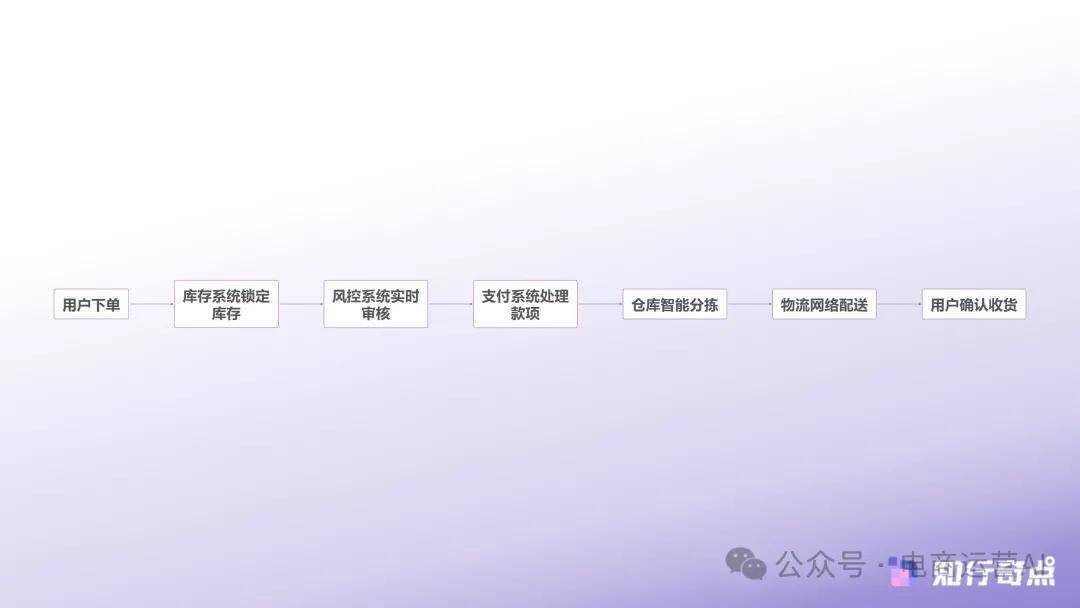
Core Insights - The e-commerce industry is undergoing a fundamental transformation where operational efficiency, supply chain agility, and user experience are becoming the primary competitive factors rather than mere traffic scale [1][8] - Major platforms like Tmall, JD, and Douyin are extending promotional periods to smooth out traffic peaks, reflecting a deep understanding of the industry's current state and future prospects [1][6] - The focus has shifted from acquiring new customers to enhancing the entire order fulfillment process, where even a 0.1-second reduction in response time can significantly increase conversion rates [3][6] Traffic Structure Evolution - The evolution of traffic structure is critical, with a shift from simple user acquisition to a more nuanced understanding of user needs and behavior [1][4] - The recommendation algorithms are evolving, with platforms extending user behavior tracking periods and increasing sample sizes, leading to a 25% improvement in purchase efficiency [3][4] Technological Empowerment - Companies are leveraging data platforms and intelligent applications to convert fragmented data into actionable decision-making assets, making data a core production factor in operational decisions [4][6] - AI-driven content production is revolutionizing the industry, allowing small businesses to compete with larger brands by generating high-quality visual content at low costs [7][8] Customer Journey Redesign - The traditional linear shopping path has been disrupted, necessitating a redesign of every key touchpoint in the customer journey to accommodate modern consumers' complex decision-making processes [5][6] - The strategic importance of customer lifetime value (LTV) is surpassing that of customer acquisition cost (CAC), emphasizing the need for refined operations to convert first-time buyers into loyal customers [6][8] Instant Retail Growth - Instant retail is experiencing explosive growth, with significant increases in order volumes for convenience items, driven by consumer demand for immediate satisfaction [6][8] - Predictive inventory management is reshaping the supply chain, moving from a "stock first, sell later" model to a "dynamic inventory and agile replenishment" approach, significantly reducing inventory turnover days and costs [6][8] Future Trends - Three key trends are emerging: holistic operations becoming standard, efficiency competition surpassing price competition, and refined user experience management determining long-term growth [8] - Companies that quickly recognize the value of efficiency and adjust their operational strategies will gain a competitive edge in the evolving landscape of e-commerce [8]