天士力

Search documents
跨国药企“必备”肿瘤药,中国药企还有机会卖
Jing Ji Guan Cha Wang· 2026-01-15 03:32
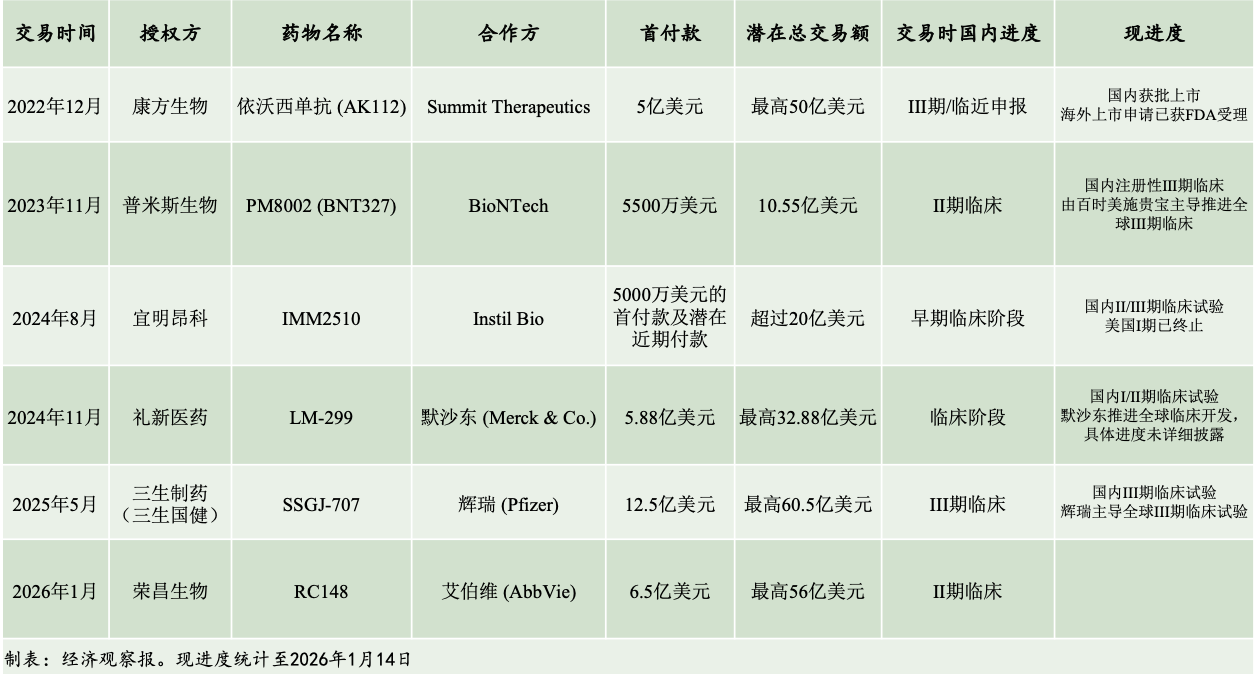
Core Viewpoint - The recent licensing agreement between Rongchang Biologics and AbbVie for the dual-specific antibody drug RC148 highlights the competitive landscape of PD-1/VEGF targeted therapies, with significant financial implications for both companies involved [1][6]. Group 1: Licensing Agreement Details - Rongchang Biologics has entered into an exclusive licensing agreement with AbbVie for RC148, a dual-specific antibody currently in Phase II clinical trials, granting AbbVie rights outside Greater China [1][6]. - The deal includes an upfront payment of $650 million and potential milestone payments up to $4.95 billion, along with tiered royalties on net sales, bringing the total potential value of the agreement to $5.5 billion [1][6]. - This transaction's total amount is considered high, especially for a product not ranked among the top three in its category, raising questions about market share potential [6]. Group 2: Market Context and Comparisons - The PD-(L)1/VEGF target has gained significant attention in recent years, combining immunotherapy and targeted therapy, with expectations of enhanced efficacy [3]. - Several Chinese biotech companies have previously licensed their PD-(L)1/VEGF drugs to international firms, with notable deals including a $500 million upfront payment from Summit Therapeutics to Kanyin Biologics, and a $1.25 billion upfront payment from Pfizer to Sanofi [4][5]. - Despite the presence of multiple PD-1/VEGF drugs in the market, there remains potential for further licensing agreements, as efficacy and specific indications will play a crucial role in market segmentation [10]. Group 3: Future Trends and Industry Insights - The combination of PD-(L)1/VEGF drugs with ADCs (antibody-drug conjugates) is anticipated to be a major development trend among pharmaceutical companies [9]. - Companies that have not yet licensed their PD-1/VEGF drugs are actively seeking opportunities, with the success of future deals dependent on finding suitable partners and demonstrating strong clinical data [10]. - Major multinational pharmaceutical companies, including Eli Lilly, Novartis, and Sanofi, have yet to announce new licensing agreements, indicating a cautious approach while awaiting more mature data [12].


重组入列:最新443家全国重点实验室名单
仪器信息网· 2026-01-13 03:56
Core Viewpoint - By December 2025, over 500 national key laboratories have completed restructuring into a new sequence, with nearly 110 "Double First-Class" universities participating in about 80% (nearly 400) of the national key laboratories [1][2]. Group 1: National Key Laboratories Overview - National key laboratories are scientific research and development institutions planned by the state to support the national laboratory system, focusing on major technological innovation areas related to national security and socio-economic development [2]. - The restructuring of the national key laboratory system was first proposed at the Central Economic Work Conference in 2018 and established as a component of national strategic scientific and technological forces in the revised "Science and Technology Progress Law" in 2021 [2]. Group 2: Participation of Universities - The leading or co-building universities for the laboratories are primarily "Double First-Class" universities, indicating a strong involvement of top-tier educational institutions in the research initiatives [1][2]. - Nearly 110 "Double First-Class" universities are involved in the establishment and support of approximately 400 national key laboratories [1][2]. Group 3: List of Key Laboratories - A variety of national key laboratories have been established across different fields, including: - Dark Matter Physics National Key Laboratory led by Shanghai Jiao Tong University [3] - Explosive Science and Safety Protection National Key Laboratory led by Beijing Institute of Technology [3] - Materials Chemistry Engineering National Key Laboratory led by Nanjing University of Technology [3] - The list includes laboratories focusing on diverse areas such as intelligent transportation, infectious disease research, and advanced manufacturing technologies [3][4][5].

上任未满一年就换人,昆药集团董事长和副董事长双双离任
Jing Ji Guan Cha Wang· 2026-01-12 12:09
Core Viewpoint - The recent resignation of the chairman and vice chairman of Kunming Pharmaceutical Group has raised market speculation regarding the connection to the company's poor performance in 2025, with significant declines in revenue and net profit reported [1][2]. Group 1: Management Changes - The chairman, Wu Wendo, resigned on January 6, 2026, and was succeeded by Yu Xiang, while the vice chairman, Li Hongshen, submitted his resignation on January 8, 2026, both citing work adjustments [1]. - Wu Wendo's tenure as chairman was less than a year, having been appointed on January 22, 2025, with his term originally set to end on January 22, 2028 [3]. - Li Hongshen also had a similar tenure, with his term ending on the same date as Wu Wendo's [3]. Group 2: Financial Performance - In the first three quarters of 2025, Kunming Pharmaceutical Group reported a revenue of 4.751 billion yuan, a year-on-year decrease of 18%, and a net profit attributable to shareholders of 269 million yuan, down nearly 40% [1]. - The third quarter of 2025 saw a significant drop in performance, with revenue of 1.4 billion yuan, a 30% decline year-on-year, and a net profit of 71 million yuan, down 59% [1]. - The decline in performance was attributed to changes in drug distribution channels and price reductions from centralized drug procurement [1]. Group 3: New Leadership - Yu Xiang, the new chairman, has a background in management with a master's degree in business administration and has held various positions within the China Resources pharmaceutical sector [3]. - His previous roles include vice president of China Resources Sanjiu and general manager of several subsidiaries, indicating a strong alignment with the company's strategic direction [3]. Group 4: Market Reaction - Following the announcement of the management changes, Kunming Pharmaceutical Group's stock price experienced a slight increase, closing at 12.92 yuan per share, with a total market capitalization of 9.8 billion yuan [5].


医药生物行业跨市场周报(20260111):脑机接口板块表现活跃,建议持续关注主题机会-20260112
EBSCN· 2026-01-12 10:50
Investment Rating - The report maintains a rating of "Overweight" for the pharmaceutical and biotechnology sector [4]. Core Insights - The brain-computer interface (BCI) sector is showing active performance, with recommendations to continue monitoring thematic opportunities. The global BCI market is projected to reach USD 7.63 billion by 2029, indicating a rapidly opening blue ocean market [20][21]. - The investment strategy emphasizes the importance of clinical value in the pharmaceutical sector, focusing on innovative drug chains and medical devices. Key recommendations include companies involved in BD overseas acceleration and high-end medical devices [23][25]. Summary by Sections Market Review - The A-share pharmaceutical and biotechnology index rose by 7.81%, outperforming the CSI 300 index by 5.03 percentage points and the ChiNext index by 2.10 percentage points, ranking 6th among 31 sub-industries. The Hong Kong Hang Seng Healthcare Index increased by 10.26%, surpassing the Hang Seng Index by 11.57 percentage points [15][9]. R&D Progress - Recent clinical applications include IMM2510 and Tida-Paclitaxel from Yiming Anke, with ongoing Phase III trials for Tiengoteini from Yaokang and Phase II trials for SYS6017 from Shiyao Group [28]. Key Recommendations - Focus on three categories of companies: 1. Medical scene integrators (e.g., Xiangyu Medical, Weisi Medical) benefiting from insurance payment integration and existing rehabilitation needs [21]. 2. Leaders in invasive/semi-invasive technologies (e.g., Xinwei Medical, Jieti Medical) with significant technological advantages [21]. 3. Full-process support providers (e.g., Meihua Medical, Sanbo Neuroscience) focusing on high-certainty segments like supply chain production and clinical development [21]. Financial Forecasts and Valuations - Key companies and their projected earnings per share (EPS) and price-to-earnings (PE) ratios for 2024-2026 include: - Tianzhili: EPS of 0.64, PE of 24 [3]. - Innovent Biologics: EPS of -0.06, PE of NA [3]. - WuXi AppTec: EPS of 3.27, PE of 30 [3]. - Mindray Medical: EPS of 9.62, PE of 21 [3]. - Weisi Medical: EPS of 1.06, PE of 62 [3]. Policy and Industry Resonance - The report highlights a structural shift in domestic policies favoring innovative drugs, with a focus on clinical value and the potential for valuation recovery in the pharmaceutical sector. The report suggests that the investment attractiveness of the pharmaceutical sector will continue to grow [23][24].



硬核广东,不止于“第一”:资本市场新实力爆表,95%IPO都是科技狠活
2 1 Shi Ji Jing Ji Bao Dao· 2026-01-07 00:54
Core Insights - Guangdong's capital market has achieved significant milestones in 2025, with a total of 45 new listed companies and a total financing amount of 53.5 billion yuan, maintaining its leading position in China [1][4][14] - The province's focus has shifted from merely increasing the number of listed companies to enhancing the quality and sustainability of its capital market [1][3][15] Group 1: Market Growth and Structure - By the end of 2025, Guangdong had 890 domestic listed companies and 334 overseas listed companies, both ranking first in the country [1][4] - The province's listed companies are characterized by strong performance across key metrics, including total market value, total assets, and R&D investment intensity, indicating a robust competitive advantage [4][14] - The number of new listing applications surged by 480% year-on-year, with 58 new companies applying, representing 19% of the national total [6][14] Group 2: Innovation and Industry Upgrades - Over 95% of the 21 new domestic listed companies belong to strategic emerging industries or high-tech sectors, highlighting the capital market's role in driving industrial transformation [7][10] - The capital market has become a core hub for guiding industries towards innovation, with a significant focus on technology and high-end manufacturing [10][11] Group 3: Mergers and Acquisitions - More than 250 listed companies in Guangdong have engaged in mergers and acquisitions aimed at industrial integration, with a total transaction volume exceeding 150 billion yuan [13][14] - The province has implemented innovative policies to facilitate mergers and acquisitions, creating a collaborative mechanism that enhances the overall competitiveness of the industry [11][13] Group 4: Value Creation and Shareholder Returns - The total market value of A-share companies in Guangdong reached 19.32 trillion yuan, with a year-on-year growth of 29%, leading the entire market [14] - Over 240 listed companies have conducted share buybacks or increases, amounting to nearly 20 billion yuan, reflecting a strong commitment to shareholder returns [14]
平均每周一家IPO、每两天一场并购、全国1/5研发投入……广东上市公司何以领跑?
2 1 Shi Ji Jing Ji Bao Dao· 2026-01-06 15:40
平均每周就有一家新企业登陆资本市场,每两天就有一宗上市公司并购重组发生,全年分红规模超3000 亿元,全国每5元研发投入就有1元出自广东——这四个数据折射出这个经济第一大省2025年的资本市场 建设活力。 2025年,广东上市公司军团以1224家的总量稳坐全国头把交椅,更令人瞩目的是,其在总市值、研发投 入、并购重组等涵盖规模、质量、动能、生态的十大核心指标上位列全国前列。 多项反映经营质量、创新效能与社会贡献的关键指标上位居全国前列。 将时间周期拉长,翻开"十四五"以来,A股市场各项指标排名,广东多项指标创下了第一的纪录。比如 A股公司总数量、新增上市公司数量、回购增持、上市公司研发强度、知识产权总量、并购重组、外资 持有上市公司家数等,均位居全国首位。 从"数量领先"到"质量领跑",广东资本与产业正以深度绑定重塑竞争优势,正从"高原"之上,奋力攀登 高质量发展的"创新高峰",为"再造一个新广东"写下坚实的资本市场注脚。 01 硬核数据,多项全国第一 年末盘点,广东资本市场交出了一份令全国瞩目的答卷。 2025年,广东A股总市值增长29.0%——这一增速跑赢全年大盘整体的涨幅,展现出了扎实的增长韧 性。 要 ...
中药行业全景图:短期承压分化,长期求变提质
Lian He Zi Xin· 2026-01-06 11:07
Investment Rating - The report indicates a cautious investment outlook for the Chinese traditional Chinese medicine (TCM) industry, highlighting short-term pressures and long-term quality improvement opportunities [2]. Core Insights - The TCM industry is experiencing stable demand due to an aging population, with the market size expected to exceed 700 billion yuan by 2024, reflecting a year-on-year growth of approximately 6.6% [4][11]. - The financial performance of TCM listed companies is under pressure, with high sales expenses eroding profits and increasing internal differentiation among companies [11][25]. - The competitive landscape is characterized by a high concentration of revenue and profits among the top tier of companies, which hold over half of the industry's income and profits due to proprietary formulas and brand advantages [20][22]. Industry Overview - The TCM industry has a well-established supply chain, with stable demand driven by an increasing elderly population, projected to reach 220 million by the end of 2024, a 1.36% increase from 2023 [4]. - The industry is facing significant price fluctuations due to inventory destocking, upstream capacity changes, and downstream procurement policies [4][5]. - The TCM manufacturing sector consists of approximately 5,000 companies, primarily located in regions such as Jilin, Guangdong, Anhui, and Henan [4]. Financial Performance of TCM Companies - As of 2024, there are 70 listed TCM manufacturing companies, with an average annual revenue of about 340 billion yuan and an average profit of around 34 billion yuan [11][13]. - The overall profit margin for TCM companies is below 20%, indicating a challenging financial environment [11]. - The sales gross margin for sample companies remains stable at around 55%, while the sales expense ratio is approximately 24% [14][18]. Competitive Landscape - The first tier of TCM companies, including Yunnan Baiyao and Tongrentang, dominate the market, accounting for over 52% of total revenue and profits [22][25]. - The second tier includes regional leaders with a more diverse product range, while the third tier consists of smaller companies with concentrated product lines [23][24]. - The financial data shows that the first tier companies have significantly higher equity scales, providing a solid foundation for market expansion and R&D [26]. Industry Policies - Recent policies emphasize innovation and quality improvement in the TCM sector, with initiatives aimed at enhancing regulatory frameworks and promoting high-quality development [27][28]. - The government has outlined plans to establish national laboratories and improve the quality of TCM products through stricter regulations [28][29]. TCM Procurement Situation - The gradual implementation of TCM procurement policies has led to significant price reductions, with the average price drop reaching 68% in recent rounds of procurement [31][34]. - The procurement process is designed to promote standardization and quality control, which may lead to increased market concentration among leading companies [31][40]. - The report notes that the procurement policies have created challenges for TCM companies, particularly regarding profitability due to cost pressures [40]. TCM Innovation Drug Development - The TCM sector has seen a surge in innovation, with a notable increase in clinical trial applications and new drug approvals, particularly in areas such as digestion and respiratory health [41][42]. - The number of IND applications for TCM has grown significantly, indicating a robust pipeline for future product development [42][43].


昆药集团高管大换血,“80后”喻翔接任董事长
Jing Ji Guan Cha Wang· 2026-01-06 08:58
Core Viewpoint - Yunnan Kun Pharmaceutical Group has undergone significant management changes, with a new chairman and president appointed as the company aims to deepen its integration with China Resources Sanjiu and focus on the "healthy aging" sector [1][2]. Management Changes - The company announced the resignation of Chairman Wu Wendo, President Yan Wei, and Vice President Li Lichun, with Yu Xiang appointed as the new chairman and Zhong Jiang as the new president [1][2]. - Yu Xiang, aged 45, has extensive experience in various leadership roles within China Resources Sanjiu, while Zhong Jiang, aged 50, has held significant positions in financial management within the company [2]. Business Performance - Kun Pharmaceutical Group's overall performance has shown a downward trend, with a revenue decline in 2024 and a net profit increase. In 2025, the first three quarters also saw revenue and net profit declines, with a significant loss in the third quarter [3]. - In 2024, the company reported a revenue of 8.4 billion yuan, a decrease of 0.34% year-on-year, while net profit reached 648 million yuan, an increase of 19.86% [3]. - For the first three quarters of 2025, revenue was 4.751 billion yuan, down 18.08%, and net profit was 269 million yuan, down 39.42% [3]. Strategic Focus - The company aims to leverage its 70 years of drug research tradition and global marketing network to become a leader in the "silver health industry" and chronic disease management [1][4]. - Future development will focus on three core areas: cardiovascular products centered around Xuesaitong, emotional health products based on Shugan Granules, and products for mental health and pain management [4].
昆药集团董事长、总裁同步换新,华润系新团队接棒
Xin Jing Bao· 2026-01-06 08:08
Core Viewpoint - Kunming Pharmaceutical Group has undergone a significant leadership change, with a complete overhaul of its core decision-making and operational teams, aiming to address recent performance challenges and adapt to external market pressures [1][2][3][4] Leadership Changes - Yu Xiang has been appointed as the new chairman, with a term lasting until January 22, 2028, succeeding Wu Wendo, who will remain on the board [1] - The new president, Zhong Jiang, has been appointed alongside Yu Xiang, with both leaders coming from the China Resources system, indicating a strategic shift in management [2][3] - Former president Yan Wei will transition to the role of vice chairman and board member, while former vice president Li Lichun will no longer hold any positions within the company [2] Financial Performance - Kunming Pharmaceutical Group has faced significant financial pressure, with a reported revenue of 4.751 billion yuan for the first three quarters of 2025, marking an 18.08% year-on-year decline [3] - The net profit attributable to shareholders decreased by 39.42% to 269 million yuan, while the net profit after deducting non-recurring items fell by 59.52% [3] - The company's accounts receivable have increased dramatically, rising from 1.358 billion yuan in mid-2020 to 3.25 billion yuan in mid-2025, a cumulative increase of 139.32% [3] Business Challenges - The primary revenue source, the Xuesaitong series, which accounts for approximately 40% of total revenue, is under pressure from price suppression due to centralized procurement policies, despite showing signs of recovery [4] - The premium traditional Chinese medicine segment, making up about 30% of revenue, is currently undergoing brand upgrades and channel restructuring, lacking stable growth momentum [4] - The new leadership team is expected to integrate resources and implement strategies to gradually restore the company's performance amidst these challenges [4]
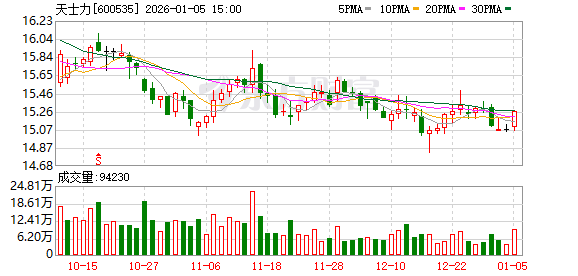
天士力:公司目前经营正常
Zheng Quan Ri Bao· 2026-01-05 14:24
Core Viewpoint - Tianjin Tasly Pharmaceutical Group Co., Ltd. is currently operating normally and is committed to enhancing its research and development as well as sales efforts to increase company value [2] Company Summary - The company has reassured investors about its stable operational status as of January 5 [2] - Future strategies will focus on strengthening R&D and sales initiatives to drive value creation [2]