泡泡玛特

Search documents
上证早知道|电子布价格继续上涨;AI眼镜成春节“科技年货”爆款;上海发布楼市“沪七条”
Shang Hai Zheng Quan Bao· 2026-02-25 23:18
Company News - Windy Technology collaborates with Yushu Technology to participate in the construction and operation of the Hangzhou Embodied Intelligence Application Pilot Base [5] - Haiguang Information achieved a revenue of 14.376 billion yuan in 2025, a year-on-year increase of 56.91%, with a net profit of 2.542 billion yuan, up 31.66% [6] - Chip Microelectronics reported a revenue of 1.408 billion yuan in 2025, a year-on-year increase of 47.61%, with a net profit of 290 million yuan, up 80.42% [6] - Huafeng Measurement and Control achieved a revenue of 1.346 billion yuan in 2025, a year-on-year increase of 48.72%, with a net profit of 538 million yuan, up 61.22% [6] - Hengxuan Technology reported a revenue of 3.525 billion yuan in 2025, an increase of 8.02%, with a net profit of approximately 588 million yuan, up 27.75% [6] - Sino Medical achieved a revenue of 525 million yuan in 2025, a year-on-year increase of 14.53%, with a net profit of 4.7 million yuan, up 3057.05% [6] - Beijete Holdings' subsidiary Daho Mining received approval from the Yunnan Provincial Development and Reform Commission for the Xiaodong Antimony Mine project [6] Industry Insights - AI glasses sales surged during the 2026 Spring Festival, with sales in Shenzhen's Huaqiangbei increasing by 70% to 80%, and overall tech product revenue growing by 35% year-on-year [3] - The demand for special electronic fabrics continues to grow, with expectations for the price of 7628 electronic fabric to rise significantly due to tight supply and strong demand driven by AI [4] - The special fabric demand is projected to increase by 100% in 2026, driven by AI needs, with a supply-demand imbalance expected to persist [4]
台北灯节,上海“骏马”抢眼引岛内热议
Xin Lang Cai Jing· 2026-02-25 23:03
台湾《旺报》提及,今年上海市政府依惯例组赏灯团来台参观,分为两团来访,25日抵台,在岛内停留 3天,除了参观包括上海灯区在内的灯节展区,还安排了与去年年底"双城论坛"水治理、职能培训备忘 录等主题相关的市政参访行程。 值得关注的是,今年台北灯节与源于大陆的国际品牌"泡泡玛特"合作,风靡全球的"拉布布"灯饰现身西 门町。此举竟被"独派"政党"台湾基进党"台北市党部主委吴欣岱质疑为"缺乏文化自信",民进党市议员 则声称"台北市政府独厚大陆厂商"。24日,亲绿的台湾《自由时报》酸溜溜地报道称,实际走到展区, 最显眼的是灯节展览入口右侧的"SHANGHAI 2026"上海灯区,"SHANGHAI 2026"标识后方就是东方明 珠广播电视塔、上海中心大厦等建筑,直接抢走民众目光。报道称,此次灯展有13个"友好灯区",不 过,除了上海灯区,其余12个灯区全在展区帐篷内,"唯独上海的直接设在入口处,风头甚至超过主 灯"。 台湾中时新闻网此前的社论称,"独派"反对台北灯节引入泡泡玛特的逻辑,可谓20年如一日,"反中论 述永远是老一套"。泡泡玛特、《黑神话:悟空》等,都可以视为当代华流的典型,它们都源于大陆, 同时具有多元性、 ...
潮玩“流水线造星”的AB面
Bei Jing Shang Bao· 2026-02-25 16:13
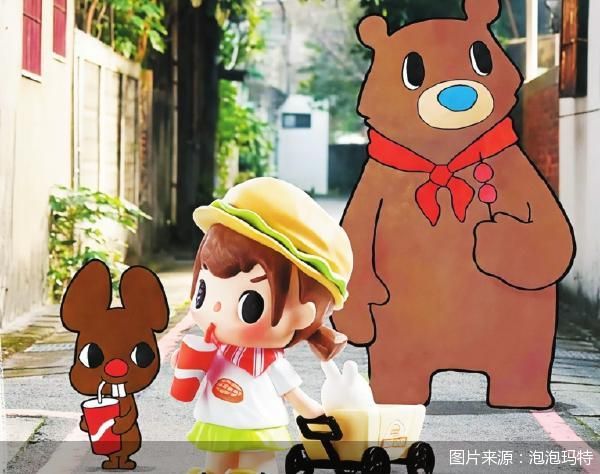
Core Viewpoint - The rapid introduction of new IPs has become a norm in the trendy toy industry, with companies like Pop Mart accelerating their IP launches to capitalize on the average popularity cycle of 3-5 years for trendy toy IPs [1][3]. Group 1: New IP Launches - Pop Mart announced the launch of a new IP, "After School Merodi," just over two months after the previous IP, indicating a significant acceleration in their IP release strategy [1][3]. - The "After School Merodi" series includes 12 regular figures and 1 hidden figure, with a regular figure probability of 1:12 and a hidden figure probability of 1:144, priced at 69 yuan per blind box and 828 yuan per full box [3]. - The number of new IPs released by Pop Mart has surged from 29 in 2024 to 57 in the previous year, nearly doubling [3]. Group 2: Competitive Landscape - Other companies like Qimengdao and TOP TOY are also increasing their IP reserves, with Qimengdao acquiring Letsvan and establishing a matrix of 17 IPs, including 11 self-owned and 6 licensed [3][4]. - TOP TOY, a sub-brand of Miniso, is pursuing a differentiated strategy by integrating self-owned, licensed, and third-party IPs, with its self-owned IP count reaching 17 [4]. Group 3: Revenue Generation - Pop Mart has successfully diversified its revenue sources, with 13 IPs generating over 100 million yuan each, including THEMONSTERS, which achieved 4.81 billion yuan in revenue [5]. - Qimengdao's WAKUKU IP has rapidly gained traction, generating 42.96 million yuan in revenue within three months of its launch [5]. - TOP TOY's Nommi series is projected to increase its revenue from 250 million yuan last year to 600 million yuan this year [5]. Group 4: Market Dynamics - The trendy toy market in China is expanding, with over 21,000 related companies and approximately 7,100 new companies established last year [9]. - The blind box market is expected to reach 52 billion yuan by 2024, with trendy toy blind boxes accounting for 58% of this market, reflecting an 18% year-on-year growth [9]. Group 5: Consumer Sentiment and Challenges - Despite the rapid launch of new IPs, some have not performed well, with the Supertutu series selling only about 900 units on Tmall, raising concerns about market saturation and consumer fatigue [7][8]. - Industry experts suggest that to retain consumers, trendy toys must evolve from mere products to cultural companions, emphasizing the importance of storytelling and emotional connection [7][10].


香港交易所(00388):现货和股票期权交易持续活跃,25Q3业绩环比再加速
Hua Yuan Zheng Quan· 2026-02-25 15:10
Investment Rating - The report assigns a "Buy" rating for Hong Kong Exchanges and Clearing Limited (00388.HK) as a first coverage [4]. Core Insights - The report highlights that Hong Kong Exchanges and Clearing Limited experienced a significant increase in revenue and net profit for the first three quarters of 2025, with revenue and net profit growing by 37% and 45% year-on-year, reaching HKD 21.9 billion and HKD 13.4 billion respectively [4]. - The EBITDA margin improved by 5 percentage points to 79% due to scale effects, with Q3 alone showing an 8% and 10% quarter-on-quarter growth in revenue and net profit [4]. - The report emphasizes the strong performance in spot trading and stock options, with average daily trading amounts (ADT) for stock securities products increasing by 150% year-on-year to HKD 267.9 billion in Q3 [5]. Summary by Sections Financial Performance - For the first three quarters of 2025, the revenue from spot trading increased by 75% year-on-year to HKD 111 billion, accounting for 51% of total revenue [5]. - The average daily trading amount for southbound and northbound trading increased by 285% and 144% respectively, contributing to the overall growth in trading volume [5]. - The financial derivatives segment saw a decline in average daily contract volume by 7% year-on-year, while stock options trading increased by 30% [5]. Strategic Initiatives - Hong Kong Exchanges and Clearing Limited has implemented several strategic measures, including the launch of LME-approved warehousing facilities and adjustments to minimum price fluctuations in the securities market [6][7]. - The company is also focusing on enhancing market vitality and technological empowerment, with plans to shorten the settlement cycle for the cash market [6][7]. IPO Contributions - In the first three quarters of 2025, there were 69 successful IPOs on the Hong Kong Exchange, raising a total of HKD 188.3 billion, marking the highest level since 2022 [8]. - The report notes that internet and technology stocks were the main contributors to trading volume, with the top ten stocks accounting for 30% of the total market ADT [8]. Profit Forecast and Valuation - The report projects that the net profit for Hong Kong Exchanges and Clearing Limited will reach HKD 17.9 billion, HKD 20.3 billion, and HKD 22.1 billion for 2025, 2026, and 2027 respectively, with year-on-year growth rates of 37.5%, 13.1%, and 9.0% [9]. - The current price-to-earnings (P/E) ratios are forecasted to be 29.1, 25.7, and 23.6 for the years 2025, 2026, and 2027 [9].

耐用消费产业行业研究:AI时代个性化物理实现核心入口,2026年有望迎来iPhone时刻
SINOLINK SECURITIES· 2026-02-25 15:08
Investment Rating - The report indicates a strong investment outlook for the consumer-grade 3D printing industry, with a projected CAGR of 28.6% from 2020 to 2024, reaching a market size of $4.1 billion by 2024 [1]. Core Insights - The integration of AI into consumer-grade 3D printing is seen as a key driver for market expansion, bridging the gap between virtual design and physical manufacturing [1][13]. - The industry is expected to experience a significant acceleration in growth, akin to the smartphone evolution, particularly with the introduction of products like the拓竹 X1, which has set new standards for performance and affordability [2][23]. - The report emphasizes the importance of creating an ecosystem around 3D printing, where hardware, software, and community engagement work together to enhance user experience and drive adoption [5][34]. Summary by Sections 1. Industry Overview - Consumer-grade 3D printing is becoming a crucial infrastructure for creative monetization, with a focus on ease of use, low cost, and high personalization [1][13]. - The market is currently led by the device segment, which accounts for 51% of the total market, followed by consumables at 24% [13]. 2. Device Segment - The report predicts that the industry will enter a second acceleration phase by 2026, driven by advancements in multi-color printing technologies and improved user experience [2][29]. - Key challenges include adapting industrial-grade products for consumer use, with a focus on brands that possess strong technical capabilities and ecosystem-building abilities [2][5]. 3. Consumables Segment - The demand for consumables is expected to grow significantly as the device segment accelerates, with PLA remaining the dominant material due to its ease of use and environmental properties [3][21]. - The report highlights the importance of companies that can innovate in material modification technologies to enhance product performance and user experience [3][22]. 4. Technological Advancements - The report outlines that technological breakthroughs are essential for transitioning from industrial to consumer-grade applications, with AI modeling and smart slicing software significantly improving user experience [5][40]. - The competitive landscape is shifting from hardware specifications to ecosystem experiences, with a focus on creating a seamless user journey from purchase to long-term engagement [34][35]. 5. Market Dynamics - The report notes that the consumer-grade 3D printing market is poised for a golden development period, driven by significant capital inflows and a shift in consumer behavior towards personalized products [39]. - The industry is expected to replicate the growth trajectory of household appliances, with a potential shift from niche markets to mainstream adoption [29][30].
盲盒不能七天无理由退换,合法吗?
Zhong Guo Xin Wen Wang· 2026-02-25 14:05
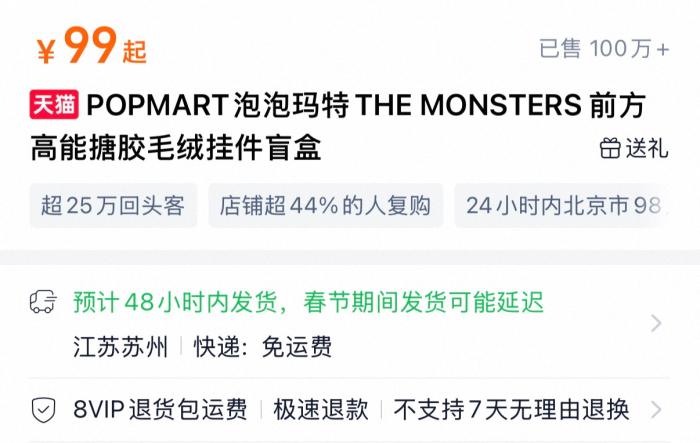
Core Viewpoint - The article discusses the legality and consumer rights regarding the return policy of blind boxes, particularly the common practice of not allowing returns within seven days without reason, which raises questions about potential unfair terms in consumer contracts [1][8]. Group 1: Consumer Complaints and Industry Practices - Many consumers have reported issues with returning blind boxes purchased online, with merchants frequently denying refund requests [1][8]. - A significant number of online stores, including popular brands like Pop Mart and Disney, have adopted a standard policy of stating "no seven-day unconditional returns" for blind box products [5][8]. - The lack of clarity in return policies across major e-commerce platforms like Taobao and JD.com regarding blind boxes has been noted, with no specific mention of blind boxes in their return categories [6][8]. Group 2: Legal Interpretations and Consumer Rights - Legal experts suggest that the unique nature of blind boxes, which relies on the element of surprise, complicates the application of the seven-day return policy. If a blind box is opened, its core value is considered consumed, thus typically not eligible for return [9][10]. - For unopened blind boxes, there is a theoretical basis for applying the seven-day return policy, but practical enforcement is challenging due to potential methods consumers might use to identify contents before opening [9][10]. - Legal advice emphasizes that merchants must clearly inform consumers about the return policy and ensure that consumers acknowledge this policy during the purchase process [11]. Group 3: Recommendations for Consumers - Consumers are advised to avoid opening blind boxes online to maintain their rights for potential returns, and to document the condition of the packaging upon receipt [11]. - In cases where a blind box has not been opened and the product has not been shipped, consumers retain the right to request a refund unless it is a customized item [11].
盲盒不能七天无理由退换 合法吗?
Zhong Guo Xin Wen Wang· 2026-02-25 13:59
Core Viewpoint - The rise in blind box consumption is accompanied by an increase in consumer disputes, particularly regarding the refusal of merchants to accept returns and refunds for blind box purchases, raising questions about the legality of "no return" policies [1][10]. Group 1: Consumer Complaints - Many consumers report being denied refunds for blind boxes purchased online, even when the boxes remain unopened [1][10]. - Complaints are primarily focused on three scenarios: opened blind boxes being denied returns, unopened blind boxes being refused refunds, and refund requests for orders that have not yet shipped [10]. - Consumers express concerns that the blanket "no return" policy infringes on their rights, labeling it as an unfair practice [10][12]. Group 2: Industry Practices - Major brands and platforms, including Pop Mart, Miniso, and Disney, commonly state "no returns" for blind box products, making this a standard practice in the industry [4]. - The lack of clear categorization for blind boxes in return policies on platforms like Taobao and JD indicates a gap in consumer protection [6][8]. - The unique nature of blind boxes, which relies on the element of surprise, complicates the application of standard return policies [11]. Group 3: Legal Perspectives - Legal experts suggest that the core value of blind boxes is tied to their unopened state, and once opened, they typically do not qualify for returns under consumer protection laws [11]. - For unopened blind boxes, there is a theoretical basis for applying the seven-day return policy, but practical enforcement is challenging due to potential pre-purchase knowledge of contents [11][12]. - Lawyers recommend that merchants must clearly inform consumers about return policies and ensure that consumers acknowledge these terms during purchase [13]. Group 4: Consumer Recommendations - Consumers are advised to avoid opening blind boxes online to maintain their rights to refunds and to document the condition of the packaging upon receipt [13]. - In cases where refunds are denied, consumers should escalate complaints to e-commerce platforms or regulatory authorities for resolution [13].
潮玩“流水线造星”的速度与隐忧
Bei Jing Shang Bao· 2026-02-25 13:41
Core Insights - The rapid pace of new IP launches has become a norm in the trendy toy industry, with companies like Pop Mart announcing new IPs such as "After School Merodi" just two months after the last release, indicating a strategic acceleration in IP development [1][3] - The average popularity cycle of trendy toy IPs is only 3-5 years, which justifies the need for frequent releases, although not every IP will achieve significant success [1] Group 1: New IP Launches - Pop Mart's "After School Merodi" features a school and youth theme, with 12 regular and 1 hidden figure, priced at 69 yuan per blind box and 828 yuan per full box, set for online release on February 26, 2026 [3] - The number of new IPs launched by Pop Mart has surged from 29 in 2024 to 57 in 2025, nearly doubling [3] - Other companies like Qimengdao and TOP TOY are also increasing their IP portfolios, with Qimengdao acquiring Letsvan and establishing a matrix of 17 IPs, while TOP TOY is diversifying its approach with self-owned, licensed, and third-party IPs [3][4] Group 2: Revenue Generation - Pop Mart has successfully diversified its revenue sources, with 13 IPs generating over 100 million yuan each, including THEMONSTERS, which achieved 4.81 billion yuan in revenue [4][5] - Qimengdao's WAKUKU IP generated 42.96 million yuan in revenue in just three months, while TOP TOY's Nommi series is projected to earn 250 million yuan in 2025 and 600 million yuan in 2026 [5] - The trend of IP-driven revenue generation has led to a surge in IPO activities among trendy toy companies, with several firms like 52TOYS and TOP TOY filing for listings [5] Group 3: Market Dynamics - The trendy toy market is expanding, with over 21,000 related companies in China and an expected market size of 52 billion yuan for blind boxes in 2024, with trendy toys accounting for 58% of that market [8] - The shift from product consumption to emotional consumption is driving demand for original toys, supported by China's design capabilities and cultural depth [8] - The competitive landscape is intensifying, requiring companies to focus on the narrative and content surrounding their IPs to ensure longevity and consumer engagement [8][9] Group 4: Consumer Reception - New IPs like Supertutu have received mixed reviews, with sales figures falling short of expectations, indicating that not all new releases resonate with consumers [6][7] - The success of IPs is increasingly tied to their uniqueness and emotional value, with industry experts suggesting that the narrative behind the IP is crucial for consumer connection [6][9]

年味拉满!中国品牌刷屏泰国街头
Guo Ji Jin Rong Bao· 2026-02-25 11:43
Core Viewpoint - Thailand has become a top destination for Chinese tourists during the Spring Festival, showcasing not only its welcoming atmosphere but also the integration of Chinese brands into local culture and commerce [1][2]. Group 1: Tourism and Cultural Integration - The Spring Festival celebrations in Chiang Mai included traditional decorations and activities, making it a festive experience for both locals and tourists [1]. - Chinese brands such as Ora, BYD, and Nezha have established a presence in Thailand, indicating a successful integration into the local market beyond just catering to Chinese consumers [2]. Group 2: Beverage and Food Industry Expansion - The hot climate and favorable economic conditions in Thailand have facilitated the expansion of new tea beverage brands, with several stores like Mixue and Nayuki opening in key locations [3][4]. - Nayuki has adapted its product offerings to local tastes, with a focus on combining beverages with baked goods, which has been well-received by local consumers [5]. - Haidilao has successfully attracted both Chinese and Korean tourists, offering a unique dining experience that incorporates local flavors while maintaining its core offerings [6][8]. Group 3: Retail and Brand Localization - Retail brands like Miniso and Pop Mart are rapidly expanding in Thailand, becoming recognizable symbols for both local youth and Chinese tourists [8][9]. - Pop Mart has tailored its products to include local cultural elements, enhancing its appeal in the Southeast Asian market [8].
北水动向|北水成交净卖出40.57亿 北水再度抢筹科网股 抛售盈富基金(02800)等港股ETF
智通财经网· 2026-02-25 10:00
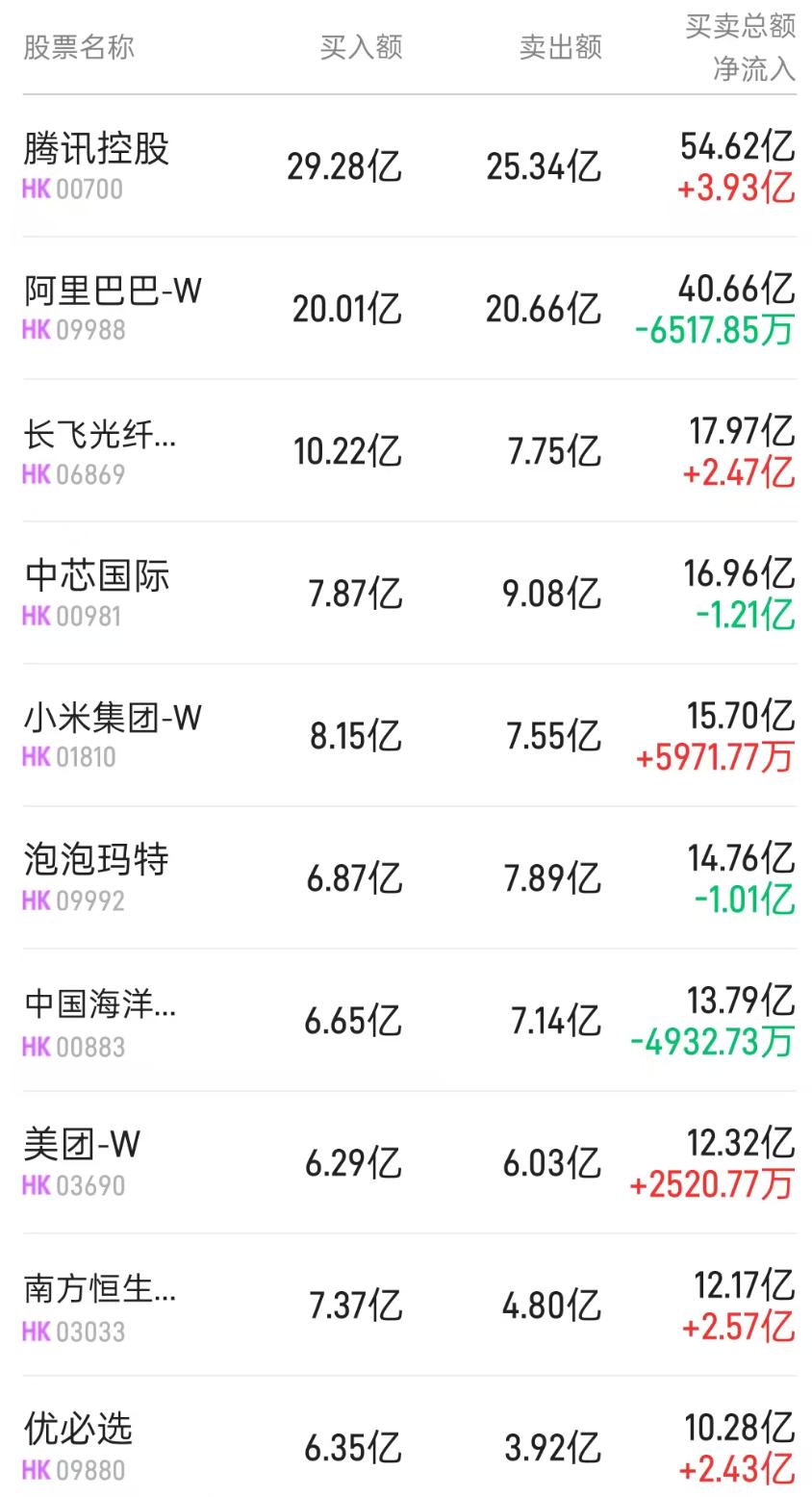
Core Viewpoint - The Hong Kong stock market experienced significant net selling from northbound capital, totaling HKD 40.57 billion, with a net sell of HKD 54.95 billion from the Shanghai-Hong Kong Stock Connect and a net buy of HKD 14.38 billion from the Shenzhen-Hong Kong Stock Connect [1] Group 1: Northbound Capital Activity - Tencent (00700) saw the highest net buy of HKD 8.18 billion, driven by its strong performance in the AI sector during the Spring Festival, with MAU reaching 114 million and DAU peaking over 50 million [4][5] - Alibaba (09988) recorded a net buy of HKD 6.06 billion, following the release of new AI models, which are expected to enhance its cloud services [5] - Meituan (03690) and Xiaomi Group (01810) received net buys of HKD 6.77 billion and HKD 5.38 billion, respectively, indicating positive investor sentiment towards these companies [8] Group 2: Net Selling Activity - The largest net sell was observed in the Yingfu Fund (02800) and the Hang Seng China Enterprises Index (02828), with net sells of HKD 44.1 billion and HKD 11.36 billion, respectively [6] - China Merchants Energy (01138) faced a net sell of HKD 3.57 billion, despite a temporary increase in VLCC freight rates during the Spring Festival [7] - The Southbound capital's activity reflects a cautious but optimistic outlook for the Hong Kong stock market, with structural opportunities remaining despite external constraints [7]