
博时基金

Search documents
两市ETF两融余额减少7676.87万元丨ETF融资融券日报
2 1 Shi Ji Jing Ji Bao Dao· 2025-12-03 02:41
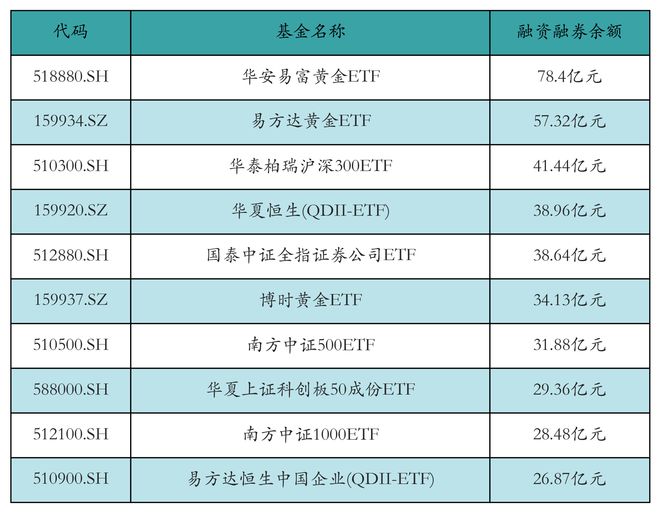
Market Overview - As of December 2, the total ETF margin balance in the two markets is 118.26 billion yuan, a decrease of 76.77 million yuan from the previous trading day [1] - The financing balance is 110.18 billion yuan, down by 40.66 million yuan, while the securities lending balance is 8.08 billion yuan, a decrease of 36.11 million yuan [1] - In the Shanghai market, the ETF margin balance is 82.76 billion yuan, a decrease of 13 million yuan, with a financing balance of 75.66 billion yuan, down by 102 million yuan [1] - In the Shenzhen market, the ETF margin balance is 35.50 billion yuan, an increase of 53.54 million yuan, with a financing balance of 34.51 billion yuan, up by 61.76 million yuan [1] ETF Margin Balances - The top three ETFs by margin balance on December 2 are: - Huaan Yifu Gold ETF (7.84 billion yuan) - E Fund Gold ETF (5.73 billion yuan) - Huatai-PB CSI 300 ETF (4.14 billion yuan) [2] ETF Financing Buy Amounts - The top three ETFs by financing buy amounts on December 2 are: - Haifutong CSI Short Bond ETF (857 million yuan) - Huatai-PB Southern Dongying Hang Seng Technology Index (646 million yuan) - Bosera CSI Convertible Bonds and Exchangeable Bonds ETF (610 million yuan) [3][4] ETF Financing Net Buy Amounts - The top three ETFs by financing net buy amounts on December 2 are: - Huaxia Shanghai Stock Exchange Sci-Tech Innovation Board 50 ETF (32.47 million yuan) - Penghua CSI Wine ETF (27.71 million yuan) - Bosera Shanghai Stock Exchange 30-Year Treasury Bond ETF (27.06 million yuan) [5][6] ETF Securities Lending Sell Amounts - The top three ETFs by securities lending sell amounts on December 2 are: - Southern CSI 500 ETF (44.09 million yuan) - Southern CSI 1000 ETF (27.26 million yuan) - Bosera CSI Convertible Bonds and Exchangeable Bonds ETF (14.80 million yuan) [7][8]

A股赚钱效应显著公募百亿定增扫货
2 1 Shi Ji Jing Ji Bao Dao· 2025-12-03 00:57
Core Insights - The A-share private placement market is experiencing significant participation from public funds in 2025, with 33 fund companies involved and a total allocation amounting to 17.3 billion yuan, representing a 140% increase compared to the entire year of 2024 [1][5][8] Group 1: Market Participation - Public funds have shown a marked increase in enthusiasm for private placements, with a total allocation of 17.3 billion yuan in 2025, up from 7.2 billion yuan in 2024, indicating a growth of over 100 billion yuan [5][6] - Leading public fund companies include E Fund with 3.687 billion yuan, followed by GF Fund, Fortune Fund, and China Universal Fund with allocations of 2.288 billion yuan, 1.529 billion yuan, and 1.463 billion yuan respectively [5][6] Group 2: Investment Focus - The investment focus of public funds is heavily concentrated in hard technology sectors, particularly in semiconductors, artificial intelligence, and innovative pharmaceuticals, reflecting a strong alignment with the ongoing "technology bull" market [6][8] - Notable allocations in the electronics sector reached 7.45 billion yuan, while the biopharmaceutical sector saw allocations of 5.6 billion yuan, targeting companies like Cambricon, Chipone, and innovative drug firms [6][8] Group 3: Market Drivers - The resurgence of private placements is driven by three main factors: policy incentives, a safety margin due to discount pricing, and significant profit potential observed by participating public funds [8] - The current trend shows increased participation, improved returns, and a strong focus on technology and high-end manufacturing sectors, with expectations for continued growth in public fund involvement in private placements [8]




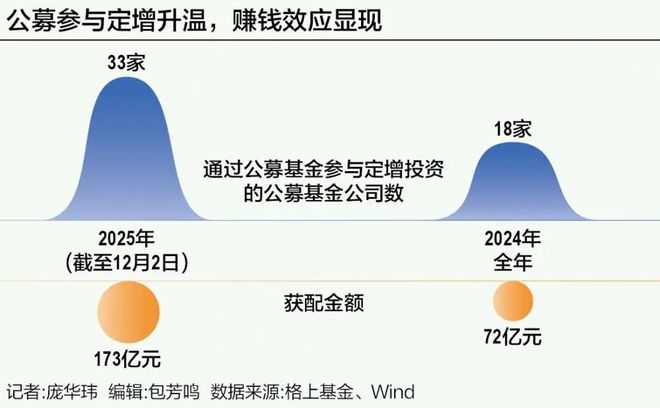
豪掷173亿 年内33家公募参与定增,硬科技成“最强磁场”
2 1 Shi Ji Jing Ji Bao Dao· 2025-12-03 00:01
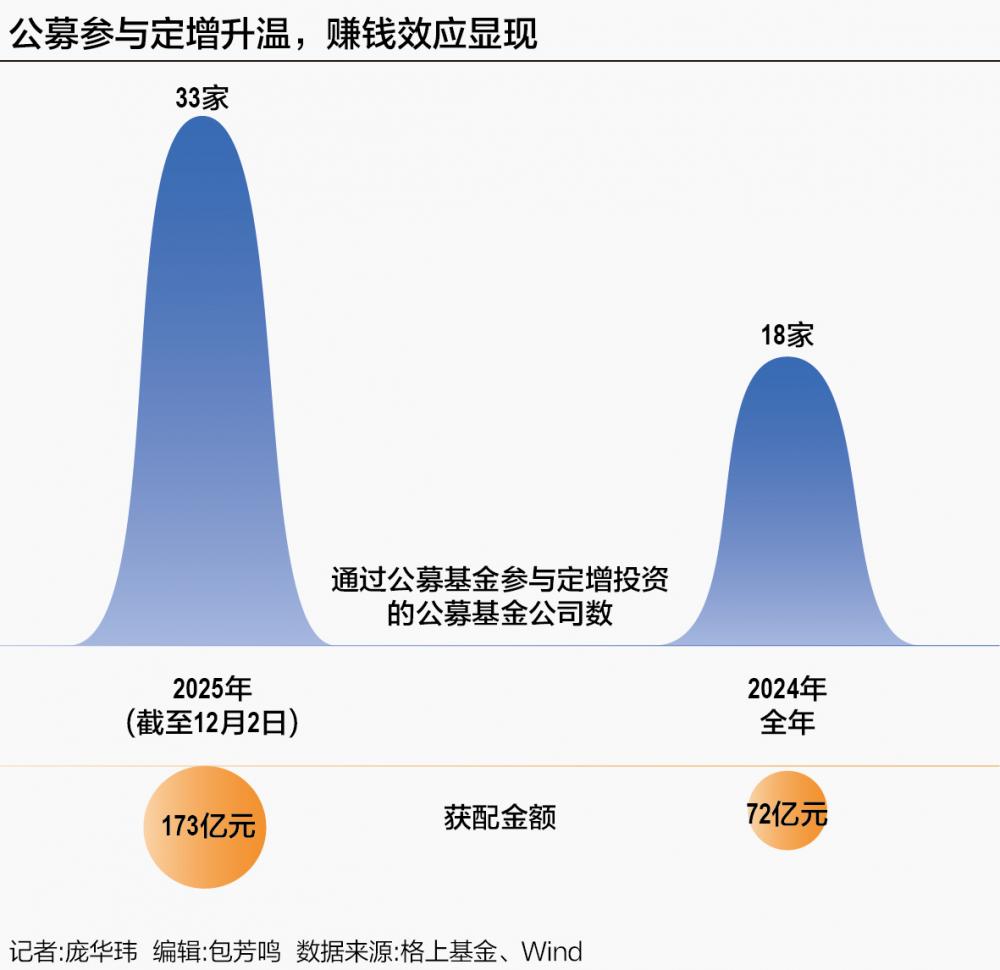
Core Insights - The A-share private placement market is experiencing significant participation from public funds in 2025, with a total allocation amount reaching 17.3 billion yuan, marking a 140% increase compared to the entire year of 2024 [1][7]. Group 1: Market Participation - A total of 33 public fund companies have participated in private placements in 2025, with the leading company, E Fund, securing 3.687 billion yuan [3][10]. - Other notable participants include GF Fund, Fortune Fund, and China Universal Fund, with allocations of 2.288 billion yuan, 1.529 billion yuan, and 1.463 billion yuan respectively [3][10]. - The trend shows a competitive landscape where larger firms dominate, but smaller firms are also actively participating [3][10]. Group 2: Investment Focus - Public fund investments are heavily concentrated in hard technology sectors, particularly semiconductors, artificial intelligence, and innovative pharmaceuticals [5][12]. - In the electronics sector, public funds have allocated 7.45 billion yuan, while in the biopharmaceutical sector, the allocation reached 5.6 billion yuan [5][13]. - Key companies receiving significant allocations include Baile Tianheng, Cambricon, Chipone, and Dizhe Pharmaceutical, each exceeding 1 billion yuan in public fund allocations [5][14]. Group 3: Drivers of Growth - The resurgence in private placements is driven by three main factors: policy incentives, a safety margin from discounts, and significant profit potential [6][14]. - The favorable policy environment encourages capital market support for the real economy, particularly in technology sectors [6][14]. - The overall performance of public funds in private placements has been strong, further motivating institutional participation [6][14].

港股医药:回调之后,机会浮现?
Quan Jing Wang· 2025-12-02 14:02
Core Insights - The article discusses the recent developments in the Hong Kong pharmaceutical sector, particularly focusing on the innovative drug industry, which is experiencing a shift from traditional financing to becoming a showcase for new economy enterprises [3][4][5] - The article emphasizes the importance of external factors such as U.S. Federal Reserve monetary policy, international trade environment, and competition dynamics in influencing the performance of the Hong Kong pharmaceutical sector [6][7][8] Industry Overview - The Hong Kong stock market is transitioning to showcase high-quality companies in sectors like technology, innovative drugs, and new consumption, attracting global capital [3] - Recent adjustments in the Hong Kong pharmaceutical sector are attributed to short-term market sentiment fluctuations and profit-taking, rather than fundamental changes in the industry [4][5] Market Dynamics - The Hang Seng Healthcare Index and the Hong Kong Stock Connect Innovative Drug Select Index are highlighted for their differing coverage and focus, with the former being broader and the latter concentrating on high R&D investment and liquidity companies [2][20] - The innovative drug sector is seeing a significant increase in attention from investors, driven by strong performance in CXO and life sciences services, with profits in these areas growing over 50% year-on-year [19] Policy Environment - Domestic policies are shifting towards supporting genuine innovation, with measures like the establishment of a new drug pricing mechanism and the integration of commercial insurance with the medical insurance directory [7][8] - The article notes that the regulatory environment is improving, which is expected to stabilize profit expectations for pharmaceutical companies [7][8] Investment Strategies - The article advocates for ETF investments in the innovative drug sector due to their diversification, low entry barriers, cost advantages, and high liquidity [21][22] - Suggested investment strategies include dollar-cost averaging and phased investments to manage volatility in the high-risk pharmaceutical sector [24][25] Future Outlook - The long-term growth of the innovative drug sector is supported by a combination of favorable policies, improving industry fundamentals, and the ongoing internationalization of Chinese pharmaceutical companies [15][16] - The article concludes that the current market adjustments provide an opportunity for investors to reassess the long-term value of companies in the innovative drug sector [15][16]

从巴西到泰国……公募拓展全球朋友圈!国际化迈向第4阶段
券商中国· 2025-12-02 11:01
Core Viewpoint - The Chinese fund industry is actively expanding its global presence, entering a new phase of internationalization characterized by policy-driven growth, diverse products, and two-way capital flow [1][4][6]. Group 1: Internationalization Stages - The internationalization of public funds has progressed through three stages since 2006: the initial stage (2006-2014) focused on breaking into overseas markets with QDII funds and establishing overseas subsidiaries [5]. - The expansion stage (2015-2019) saw the launch of mutual recognition mechanisms between mainland and Hong Kong funds, allowing for two-way capital flow [6]. - The acceleration stage (2020-2024) has led to a more diverse product offering and the establishment of subsidiaries in various countries, moving beyond just Hong Kong [6][7]. Group 2: Recent Developments - In November, significant developments included the listing of the first Thai ETF linked to the ChiNext 50 Index and the launch of two Brazilian ETFs in China, enhancing cross-border investment opportunities [2][3]. - The signing of a cooperation memorandum between the China Securities Investment Fund Industry Association and the German Federal Association of Investment and Asset Management indicates growing international collaboration [2][3]. Group 3: Future Outlook - The future of public fund internationalization is expected to feature global network expansion, differentiated product strategies, and deeper interconnectivity [7]. - The cross-border ETF market is projected to grow significantly, with a notable increase in scale and penetration rates observed in recent years [7]. - Investment firms are encouraged to adopt a global perspective in asset allocation, emphasizing the importance of professional research support for cross-border ETF strategies [7].

基金界最激烈的一场战役还未打完
虎嗅APP· 2025-12-02 10:44
以下文章来源于妙投APP ,作者段明珠 妙投APP . 虎嗅旗下二级市场投研服务品牌,为您提供精选上市公司价值拆解,热门赛道产业链梳理 先搞清楚为何A500ETF成了兵家必争之地? 出品 | 妙投APP 作者 | 段明珠 编辑 | 关雪菁 头图 | AI生成 一年前,近70家公募的中证A500ETF首发大混战,堪称基金史上节奏最快、投入最大、同质化竞争最惨烈的一场指数发行战役。 如今,A500ETF的发展进入持久战阶段( 持营 ),已有近80家基金公司发行百余只产品,牵引的资金总规模近2300亿元;其中已有不少掉队者。 但A500ETF可能仍是市场上 唯一一个头部阵营尚未稳固的宽基赛道 。近期传闻"A500ETF可能会纳入期权标的,上交所和深交所各一只",如果消息为 真,最终入选的基金就有可能杀出重围,坐稳中证A500ETF的头部交椅。 一时间,这场战役将迎来新一轮升维战。 如果说过去中国ETF市场还是1.0时代,以产品创新驱动规模发展;A500ETF上市一年来掀起的"腥风血雨"意味着市场已经进入2.0时代, 比拼的核心 是资源与执行力 。 作为市场最佳切面,通过复盘近一年来各基金公司在A500ETF的种种举 ...

港股医药:回调之后,机会浮现?|2025招商证券“招财杯”ETF实盘大赛
Sou Hu Cai Jing· 2025-12-02 08:38
Core Insights - The article discusses the recent developments in the Hong Kong pharmaceutical sector, particularly focusing on the innovative drug industry, which is experiencing a shift from short-term volatility to long-term growth potential driven by policy support and market dynamics [1][4][19]. Group 1: Market Trends and Dynamics - The recent pullback in the Hong Kong pharmaceutical sector is attributed to short-term market sentiment fluctuations and profit-taking, rather than fundamental changes in the industry [4][5]. - The innovative drug sector in China is transitioning from a follower to a leader in the global market, supported by favorable policies and capital influx [5][17]. - The performance of CXO (Contract Research Organization) services has significantly improved, with profits increasing over 50% year-on-year, indicating a strong recovery in the pharmaceutical sector [19][20]. Group 2: Investment Opportunities - Investors are encouraged to consider index-based investments in the innovative drug sector, leveraging the advantages of ETFs such as diversification, low entry barriers, and cost efficiency [1][22]. - The Hang Seng Healthcare Index offers broad coverage of the pharmaceutical sector, while the Hang Seng Hong Kong Stock Connect Innovative Drug Select Index focuses on high R&D investment companies [2][21]. - The innovative drug sector is expected to benefit from ongoing liquidity improvements due to anticipated interest rate cuts by the Federal Reserve, making it an attractive investment opportunity [5][24]. Group 3: Policy and Regulatory Environment - Domestic policies are increasingly supportive of genuine innovation, which is expected to stabilize profit expectations for pharmaceutical companies [7][8]. - The introduction of a new pricing mechanism for innovative drugs and the establishment of a commercial insurance directory for high-priced drugs are key developments that enhance market conditions for innovative drug companies [7][8]. - The regulatory environment is shifting towards a more rational approach to drug procurement, which is expected to provide a stable pricing framework for pharmaceutical companies [20]. Group 4: Long-term Growth Drivers - The long-term growth of the innovative drug sector is underpinned by a combination of supportive policies, improving industry fundamentals, and diverse internationalization strategies [15][17]. - The shift from theme-based investment to performance-driven investment in the innovative drug sector reflects a growing focus on actual product commercialization and profitability [11][12]. - The valuation logic for innovative drugs is evolving, with significant overseas licensing deals providing benchmarks for global market potential, thus enhancing company valuations [13][14].

两市ETF两融余额增加2105.46万元丨ETF融资融券日报
2 1 Shi Ji Jing Ji Bao Dao· 2025-12-02 07:57
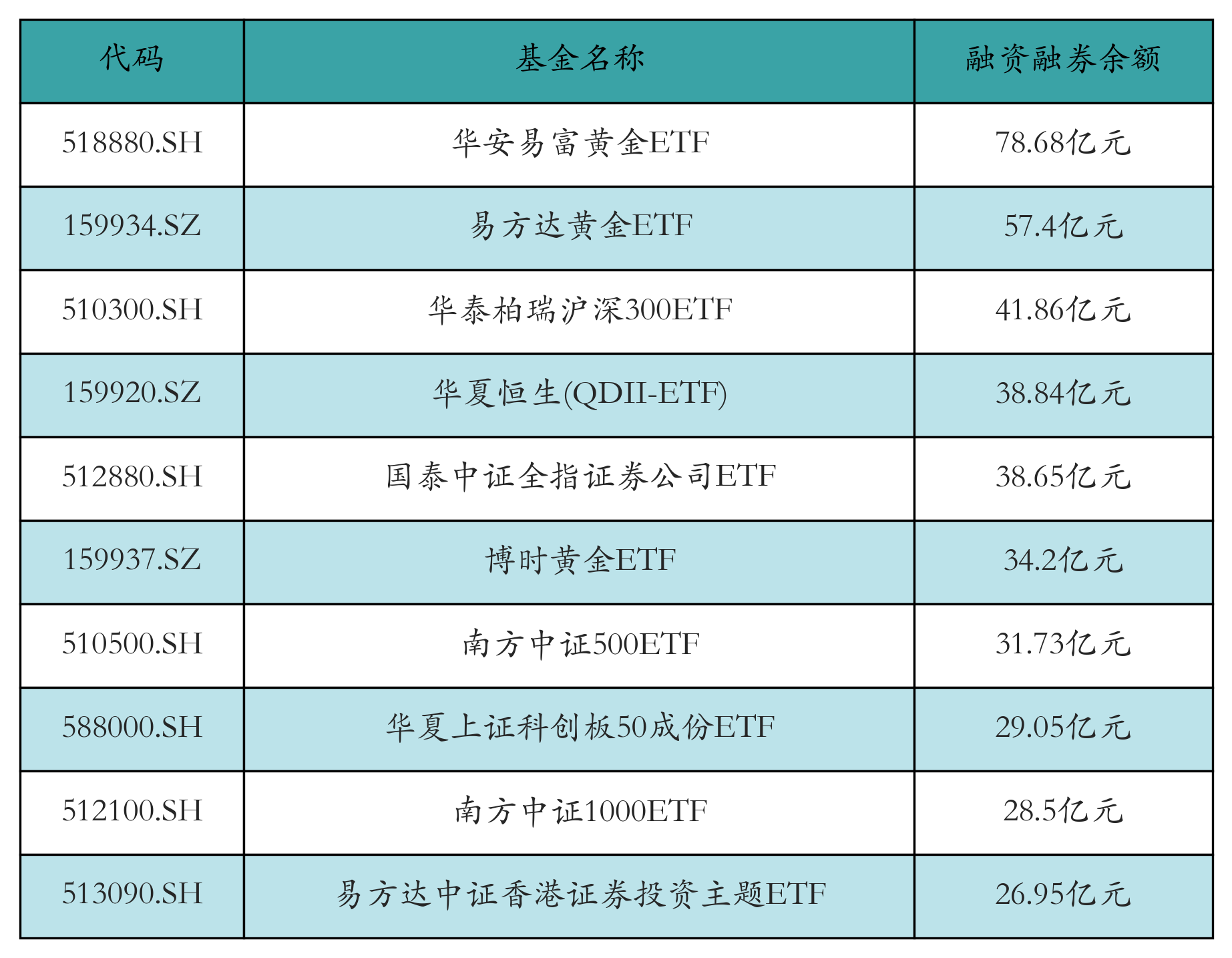
Market Overview - As of December 1, the total ETF margin balance in the two markets reached 118.34 billion yuan, an increase of 21.05 million yuan compared to the previous trading day [1] - The financing balance was 110.22 billion yuan, a decrease of 434 million yuan from the previous trading day, while the securities lending balance was 8.12 billion yuan, an increase of 455 million yuan [1] - In the Shanghai market, the ETF margin balance was 82.89 billion yuan, increasing by 56.48 million yuan, with a financing balance of 75.77 billion yuan, down by 346 million yuan, and a securities lending balance of 7.12 billion yuan, up by 402 million yuan [1] - In the Shenzhen market, the ETF margin balance was 35.45 billion yuan, decreasing by 35.43 million yuan, with a financing balance of 34.45 billion yuan, down by 87.66 million yuan, and a securities lending balance of 994 million yuan, up by 52.23 million yuan [1] ETF Margin Balances - The top three ETFs by margin balance on December 1 were: - Huaan Yifu Gold ETF (7.87 billion yuan) - E Fund Gold ETF (5.74 billion yuan) - Huatai-PB CSI 300 ETF (4.19 billion yuan) [2][3] ETF Financing Buy Amounts - The top three ETFs by financing buy amounts on December 1 were: - Hai Fudong CSI Short Bond ETF (1.17 billion yuan) - Huatai-PB Southern Dongying Hang Seng Technology Index (QDII-ETF) (1.02 billion yuan) - Huaxia Hang Seng Technology (QDII-ETF) (654 million yuan) [4] ETF Financing Net Buy Amounts - The top three ETFs by financing net buy amounts on December 1 were: - Pengyang 30-Year Treasury Bond ETF (711.96 million yuan) - GF Nasdaq 100 (QDII-ETF) (625.17 million yuan) - Yongying CSI Hong Kong Gold Industry Stock ETF (406.81 million yuan) [5] ETF Securities Lending Sell Amounts - The top three ETFs by securities lending sell amounts on December 1 were: - Southern CSI 500 ETF (156 million yuan) - Southern CSI 1000 ETF (155 million yuan) - Huatai-PB CSI 300 ETF (59.81 million yuan) [6]
11月权益类FOF普遍亏损,后市关注政策走向 存在提前启动春季行情的可能性
Mei Ri Jing Ji Xin Wen· 2025-12-02 07:03
Group 1 - The performance of FOF funds has been poor in November, with both equity and bond FOFs showing negative monthly returns [1][2] - All equity FOF products recorded negative monthly performance, while bond FOFs had a few top-performing products with minimal positive returns [2] - The overall market sentiment in November was weak, with the Shanghai Composite Index ending a six-month streak of gains, reflecting reduced trading activity and a decline in market profitability [2] Group 2 - A balanced investment strategy between stocks and bonds is being promoted by some institutions, as this approach can mitigate risks and enhance investment experiences [3] - In November, defensive sectors like consumption and finance outperformed, while growth sectors faced short-term pressure due to macroeconomic concerns and external factors [4] - Looking ahead to December, there is potential for a spring market rally if growth-stimulating policies are implemented, with expectations of a dovish stance from the Federal Reserve [4] Group 3 - Key areas of focus include new production forces driving economic growth, the cultivation of service consumption, and sectors benefiting from structural improvements under "anti-involution" policies [5] - The willingness of investors to engage with the market is relatively low towards the year-end, necessitating a balanced approach in portfolio allocation [5]
ETF兵器谱、金融产品每周见:债券ETF:折溢价探讨与产品投资策略分析-20251202
Shenwan Hongyuan Securities· 2025-12-02 05:45
Group 1 - The report discusses the premium and discount rates of bond ETFs, noting that most bond ETFs only exhibit a premium/discount rate due to the lack of IOPV disclosure [2][9] - The premium/discount rate is influenced by the liquidity of the underlying bonds and the product design, with a tendency for most products to trade at a discount [14][10] - The report emphasizes the importance of premium/discount rates in guiding secondary market trading decisions, suggesting that investors should focus on medium to long-term trading strategies rather than day trading [29][27] Group 2 - The report outlines the arbitrage mechanisms between primary and secondary markets for bond ETFs, highlighting that effective arbitrage requires significant price discrepancies and consideration of various practical factors [35][36] - It discusses the challenges of executing arbitrage due to minimum investment thresholds and the liquidity of the bond market, which can hinder the realization of arbitrage opportunities [35][41] - The report also mentions the impact of redemption methods on the premium/discount rates, with physical redemption products facing greater uncertainty and costs [25][23] Group 3 - The report provides a detailed analysis of the premium/discount rates across different categories of bond ETFs, indicating that municipal bonds and corporate bonds tend to have higher discount rates compared to government bonds [13][12] - It highlights the significance of selecting bond ETFs with stable premium/discount rates and lower deviations from net asset value to minimize investment risks [33][32] - The report includes a comparative analysis of various bond ETFs, focusing on their trading volumes, average premium/discount rates, and redemption methods [31][30]