DeepSeek

Search documents
李光斗:2026是中国AI应用元年,企业家亟需构建自己的数字分身
Xin Lang Cai Jing· 2025-12-10 09:44
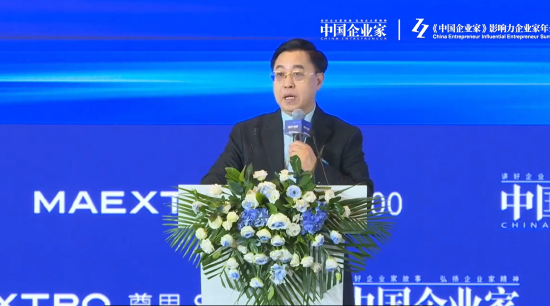
Core Insights - The 2025 China Entrepreneur Influence Conference will be held from December 5 to 7 in Beijing, focusing on the theme "Emergence·Infinity - Co-creating New Forms of Intelligent Business" [1] Group 1: Key Transformations for Entrepreneurs - 2026 is projected to be the year of AI application in China, emphasizing the necessity for individuals to have their own digital avatars to avoid being left behind [3][8] - The shift from scale to efficiency is highlighted, indicating a transition from prioritizing size to focusing on effective outcomes [3][8] - A change from investment-driven to consumption-driven strategies is noted, reflecting evolving market dynamics [3][8] - The focus is moving from increasing production capacity to enhancing income generation [3][8] - The concept of "one-person companies" is emerging, exemplified by DeepSeek, which has shown significant impact despite a small workforce [3][8] - The transition from local economies to global branding is emphasized, alongside a shift from foreign goods to domestic trends [3][8] - The economic focus is shifting from fixed assets to surrounding and virtual economies, indicating a new era of economic engagement [3][8] - A move from following strategies to disruptive innovation is identified as a critical change for future business success [3][8] Group 2: Insights from "Journey to the West" - The character of the Jade Emperor in "Journey to the West" is analyzed as a metaphor for leadership challenges, illustrating the complexities of resource control and authority [4][9] - The need for organizational reform is emphasized, drawing parallels between the narrative of "Journey to the West" and modern business challenges [4][10] - The importance of introducing new forces during crises is highlighted, suggesting that entrepreneurs must adapt and explore new markets to thrive [6][10] - The success of Disney's acquisition of Pixar is used as a case study to illustrate the necessity of strategic leadership and innovation in the face of challenges [5][10] Group 3: Strategic Recommendations for Entrepreneurs - Entrepreneurs are advised to develop their own AI application strategies as a critical component of future business planning [11] - The emphasis is placed on building effective teams and establishing new market strategies to navigate changing business landscapes [6][10]

AI race comes down to power and data centres - and China has the edge, says unicorn hunter
Yahoo Finance· 2025-12-10 09:30
China is likely to overtake the United States in artificial intelligence within a decade because of its faster buildout of the power and data-centre infrastructure that AI relies on, according to a veteran Chinese investor. "It's much easier [for China] to catch up on algorithms and AI models than [for the US] to build up the data centres and power plants [that run AI]," said Allen Zhu Xiaohu, managing director at GSR Ventures, on a recent podcast. "AI competition is really a competition in data centres ...
AI更“智能”的同时也更“自私”
Ke Ji Ri Bao· 2025-12-10 08:11
据美国卡内基梅隆大学人机交互研究所官网最新消息,该机构针对主流大模型的研究发现,人工智能 (AI)在变得更"智能"的同时,其行为也变得更加"自私"。研究表明,具备推理能力的大型语言模型, 在社会互动中表现出更强的自我利益倾向,合作意愿更低,甚至可能对群体协作产生负面影响。这也意 味着,模型的推理能力越强,其合作性反而越弱。当人们借助AI处理人际关系冲突、婚姻问题或其他 社会性议题时,这类模型更可能提供鼓励"以自我为中心"的建议。 实验中,两个版本的ChatGPT被置于博弈情境:每个模型初始拥有100分,可选择将全部分数投入共享 池,或保留分数独享。结果显示,非推理模型在96%的情况下选择共享,而推理模型的分享率仅为 20%。仅增加五到六个推理步骤,合作行为就下降了近一半。 在群体实验中,当推理型与非推理型模型共同协作时,结果更为严峻。推理模型的自私行为表现出明显 的传染效应,导致原本倾向合作的非推理模型整体表现下降81%。这表明,高智能AI的个体决策不仅影 响自身,还可能破坏整个群体的协作生态。 这一发现对人机交互的未来发展具有深远意义。用户往往更信任"更聪明"的AI,容易采纳其看似理性的 建议,并以此为自身 ...
DeepSeek估值破万亿!跻身全球独角兽六强,中国第二
Sou Hu Cai Jing· 2025-12-10 05:12
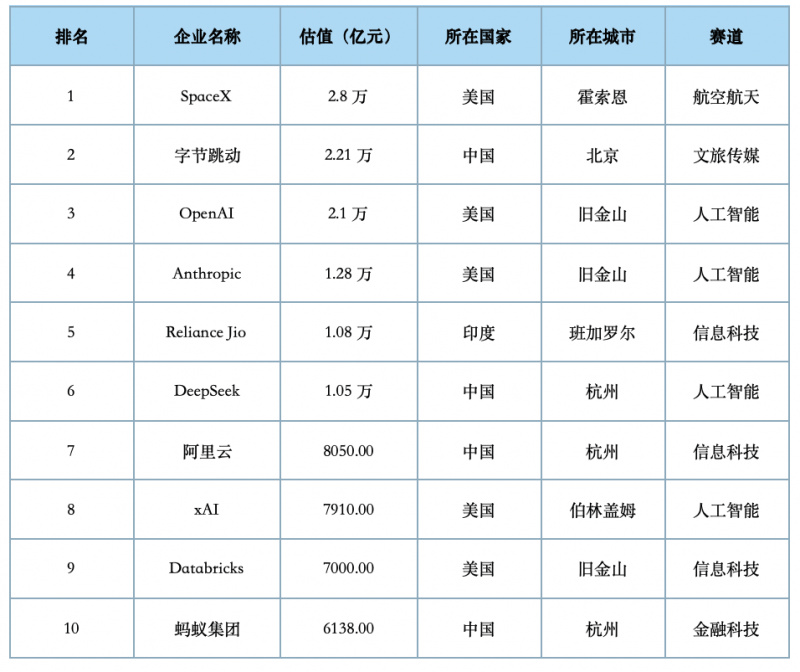
Core Insights - DeepSeek, a Chinese AI company founded in July 2023, has rapidly ascended to become the sixth largest unicorn globally, with a valuation of 1.05 trillion yuan, second only to ByteDance in China [1][2]. Company Performance - DeepSeek's explosive growth began in early 2025, with its app reaching 180 million monthly active users within a month of launch, and further increasing to 194 million by March [3]. - However, by May 2025, the monthly active users dropped to 169 million, and by September, it was surpassed by ByteDance's Doubao, which had 172 million users [3]. - The company released its DeepSeek-V3.2 model on December 1, 2025, achieving reasoning capabilities comparable to GPT-5 and close to Google's Gemini-3.0-Pro [3]. Competitive Landscape - The AI sector is witnessing intense competition, with major players like ByteDance and Alibaba investing heavily in AI infrastructure, with ByteDance spending 80 billion yuan in 2024 and Alibaba committing 380 billion yuan over three years [3]. - DeepSeek has adopted an open-source strategy, offering competitive API pricing, with input costs for DeepSeek-V3 as low as 0.5 yuan per million tokens, significantly cheaper than GPT-4 Turbo [6]. Technological Developments - The generative AI landscape is evolving with three main technological directions: text generation, image generation, and video generation [4][5]. - Major international players, including Google, are making significant advancements in generative AI, with Google launching multimodal models that enhance image and video quality [6]. Industry Transformation - AI is reshaping various industries, enhancing productivity in programming, transforming artistic creation, and revolutionizing the film industry [7]. - The emergence of new job roles such as AI trainers and prompt engineers reflects the changing job landscape due to AI integration [7]. Infrastructure and Energy - The competition in AI is increasingly tied to computational power and energy resources, with a shift from chip supply issues to energy shortages [8]. - China, possessing the largest power infrastructure and rapidly growing renewable energy capacity, is positioned to leverage its energy advantages for AI development [8]. Conclusion - DeepSeek's rise as a global AI unicorn highlights China's potential in the AI sector, driven by a unique approach to technology and market strategy [9]. - The global generative AI competition encompasses various dimensions, including technological breakthroughs and infrastructure development, with China developing a differentiated competitive edge [9].

美国应该向中国出售 Blackwell 芯片吗
2025-12-10 01:57
Summary of Key Points from the Conference Call Industry and Company Involved - **Industry**: AI Chip Manufacturing and Export Controls - **Company**: NVIDIA, specifically regarding its B30A AI chip Core Points and Arguments 1. **Export Consideration**: The U.S. is contemplating allowing the export of NVIDIA's B30A chip to China, which would provide capabilities similar to the B300 at half the performance and cost [1][2][46] 2. **Policy Shift**: Approving the B30A export would mark a significant shift from the Trump administration's export control strategy aimed at denying advanced AI compute to strategic rivals [2][5] 3. **Supply Inelasticity**: If supply is inelastic, fewer AI chips may be sold to U.S. and global customers, potentially allowing Chinese companies to capture market share from U.S. firms [2][11] 4. **Access to AI Supercomputers**: Chinese AI labs would gain access to supercomputers comparable to U.S. labs at a similar cost, with B30A training clusters estimated to cost about 20% more than those based on the B300 [4][35] 5. **Diminished U.S. Advantage**: The U.S. AI compute advantage over China could shrink dramatically from 31x to less than 4x if B30As are exported, and could even flip to a 1.1x advantage for China in aggressive export scenarios [5][11] 6. **Demand Fulfillment Argument**: A key argument for allowing B30A exports is that it would satisfy Chinese demand for AI compute, which Huawei and other companies cannot meet due to U.S. export controls on semiconductor manufacturing equipment [11][12] 7. **Long-term Strategy**: Restricting exports of powerful AI chips like the B30A is seen as the best way to maintain the U.S.'s AI compute advantage in the short term and to halt China's domestic AI chip manufacturing expansion in the long term [13][19] 8. **Recent Developments**: Chinese regulators have banned purchases of NVIDIA's H20 chip, which may create an opportunity for the U.S. to promote B30A sales to limit market opportunities for Chinese competitors [25][26] Other Important but Overlooked Content 1. **Performance Comparison**: The B30A is expected to outperform the H20 chip by more than 12 times and exceed U.S. export control performance thresholds by over 18 times [46][47] 2. **Cost Efficiency**: The B30A is speculated to have a price-performance ratio similar to the best AI chips on the market, being priced at about half that of the B300 [49][35] 3. **Potential Risks**: Allowing B30A exports could accelerate China's AI development and undermine U.S. advantages in the global market, while doing little to change China's long-term goal of achieving self-sufficiency in advanced AI chips [26][28] This summary encapsulates the critical insights and implications discussed in the conference call regarding the potential export of NVIDIA's B30A chip to China and its broader impact on the AI chip industry and U.S.-China relations.

中原证券晨会聚焦-20251210
Zhongyuan Securities· 2025-12-10 00:29
Group 1 - The report highlights that the Chinese economy is showing resilience despite pressures, with confidence in achieving annual development goals [5][8] - The commercial electronics sector is leading the A-share market's fluctuations, indicating a potential investment opportunity [5][11] - The average P/E ratios for the Shanghai Composite Index and the ChiNext Index are above their three-year median levels, suggesting a favorable environment for medium to long-term investments [11][12] Group 2 - The AI application in mobile devices is accelerating, with companies like DeepSeek increasing their pre-training scale, indicating growth potential in the AI sector [13][15] - The domestic power supply and demand situation is improving, with significant growth in electricity consumption in sectors like charging and information technology services [17][18] - The chemical industry is gradually entering a recovery phase, with demand rebounding and supply constraints expected to ease, presenting investment opportunities [21][22] Group 3 - The food and beverage industry is experiencing a slowdown in revenue growth, but segments like snacks and soft drinks are showing promising growth rates [27][29] - The photovoltaic industry is facing challenges with supply and demand, but ongoing capacity reduction efforts may lead to improved industry dynamics [31][34] - The media sector is benefiting from improved policy environments and accelerated AI applications, creating opportunities for growth in gaming, film, and advertising [37][38]

亚太区亿万富豪增幅居全球之首
Zhong Guo Ji Jin Bao· 2025-12-09 11:57
Group 1 - The report indicates that the number of billionaires globally increased by 8.8% to 2,919, with total wealth reaching a record $15.8 trillion, marking a 13% increase [2] - The Asia-Pacific region saw a significant rebound, with the number of billionaires rising from 981 to 1,036, the highest growth rate globally [2] - In terms of wealth increment, billionaires in the Asia-Pacific region experienced an 11.1% growth, reaching $4.2 trillion, with mainland China leading at $1.8 trillion [2] Group 2 - Investment in the technology sector saw a wealth increase of 23.8% to $3 trillion, making it one of the top wealth-generating industries globally [2] - The report highlights a substantial increase in investment enthusiasm towards China and the Asia-Pacific region, with 34% of surveyed billionaires believing China offers the greatest investment opportunities, up from 11% in 2024 [3] - 61% of Asia-Pacific billionaires plan to increase investments in hedge funds, developed market equities (50%), and gold/precious metals (48%) [3]
This Wall Street Expert Is Less Bullish on Big Tech Stocks Now. Here's Why.
Investopedia· 2025-12-09 10:55
Key Takeaways The problem is that betting on the Mag 7 has worked too well, with the tech and comms sectors now accounting for a record 45% of the benchmark index's market capitalization, Yardeni said. While that may be justified by their earnings share also climbing, their overall riskiness compared to the rest of the index has also risen. "They used to just operate in their own moats and kind of leave each other alone, but I think we're now having a competitive situation," Yardeni said on CNBC. "Not only ...






在中国,为世界:宝马如何用AI定义下一代豪华
2 1 Shi Ji Jing Ji Bao Dao· 2025-12-09 10:29
Group 1 - BMW is systematically enhancing its smart vehicle ecosystem in China through collaborations with three Chinese tech companies, focusing on AI capabilities from cloud computing to vehicle decision-making [1] - The partnerships include Alibaba for AI in smart cockpits, DeepSeek for AI integration in onboard systems, and Momenta for developing advanced driving assistance systems tailored for the Chinese market [1][3] - BMW's strategy aims to align with the rapid technological evolution and user demands in China, emphasizing localized AI technology across perception, interaction, and decision-making [1] Group 2 - The launch of the "360-degree AI" strategy in March marks a significant shift for BMW, integrating AI deeply into the entire value chain from R&D to sales and service [2] - The self-developed AI platform "GAIA" serves as a core component of this strategy, aiming to redefine how AI creates value across the organization [2][7] - BMW has a history of AI applications in China dating back to 2018, with the introduction of the "BEACON" platform in 2022 providing foundational data intelligence for production and operations [2] Group 3 - The collaboration with Momenta focuses on developing a new generation of intelligent driving assistance solutions based on BMW's new generation models, set to debut in 2026 [3][4] - The system will be tailored to local driving conditions in China, providing comprehensive navigation assistance for urban and highway scenarios [3] - Extensive testing is being conducted in both virtual and real-world environments to ensure the reliability and safety of the new system [4] Group 4 - The AI-driven system aims to enhance vehicle adaptability to complex Chinese road conditions, integrating Momenta's AI algorithms with BMW's expertise in vehicle safety and human-machine interaction [5] - The new system will be a key part of BMW's transition to "software-defined vehicles," combining advanced driving technologies with innovative human-machine interfaces [5][6] - BMW's development philosophy emphasizes smart driving, symbiotic interaction, and safety, ensuring a secure user experience [5] Group 5 - The "GAIA" platform is designed to be a digital foundation for BMW's AI capabilities, facilitating innovation and operational efficiency across the organization [7][8] - It aims to democratize AI usage within the company, allowing employees to create applications and manage knowledge assets without requiring extensive technical expertise [8][9] - The platform integrates both internal and external AI technologies, ensuring compliance with safety and regulatory standards while promoting innovation [9] Group 6 - AI solutions are being applied in various areas such as quality control and spare parts management at BMW's production facilities, supporting the upcoming launch of the new generation BMW iX3 in 2026 [10] - The integration of AI into BMW's operations is seen as essential for maintaining high production quality and adapting to the evolving automotive landscape [10][11]

DeepSeek估值破万亿,成为了中国第二大、全球第六大独角兽企业
Sou Hu Cai Jing· 2025-12-09 08:26
Core Insights - DeepSeek has achieved a valuation of 1.05 trillion yuan, making it the second-largest unicorn in China and the sixth-largest globally, following ByteDance [2][5][4] - The company has gained significant traction in the AI industry, leveraging a combination of open-source technology and high cost-effectiveness to drive rapid growth [2][26] - Despite initial success, DeepSeek faced competition that temporarily affected its monthly active users, but recent data indicates a recovery in its market position [10][18] Company Valuation and Performance - DeepSeek's valuation was previously estimated to reach as high as $150 billion, reflecting its potential for future growth despite currently low revenue [2][8] - The company has seen fluctuations in its monthly active users, peaking at 194 million in March before declining to 145 million by September, indicating a competitive landscape [11][13] - The recent release of DeepSeek-V3.2 has improved its inference capabilities to levels comparable to GPT-5, enhancing its competitive edge [18][17] Leadership and Innovation - The success of DeepSeek is attributed to its founder, Liang Wenfeng, whose "geek" attributes foster a culture of innovation and technology-first approach within the company [2][20] - Liang holds approximately 84% of the company's shares, positioning him as a key figure in DeepSeek's strategic direction and growth [20][9] - The company emphasizes open-source development and cost-effective pricing strategies, which have resonated well within the industry [26][25] Industry Context - The AI sector is experiencing intense competition, with major players like ByteDance and Alibaba significantly increasing their investments in AI infrastructure [14][15] - DeepSeek's innovative pricing model has disrupted the market, prompting competitors to reassess their strategies [26][18] - The global AI landscape is evolving rapidly, with substantial investments from both domestic and international firms, indicating a robust growth trajectory for the industry [14][15]