一汽

Search documents
汽车早餐 | 斯堪尼亚在华生产基地开业;众泰汽车暂变为无控股股东;日产因燃油泵问题在美国召回超17.33万辆汽车
Zhong Guo Qi Che Bao Wang· 2025-10-16 02:04
Domestic News - China has implemented new export restrictions on rare earths, prompting EU officials to call for stronger measures against China. The Chinese Foreign Ministry stated that the export control policy aims to maintain world peace and regional stability, fulfilling international obligations [2] - In response to India's electric vehicle and battery subsidy measures, China has requested consultations at the WTO, claiming these measures violate multiple obligations and provide unfair competitive advantages to Indian industries, harming Chinese interests [2] - In September, China's industrial producer prices decreased by 2.3% year-on-year, with the decline narrowing by 0.6 percentage points from the previous month. The average industrial producer prices from January to September fell by 2.8% compared to the same period last year [3] - In the first eight months of the year, China's manufacturing sector benefited from tax reductions and refunds totaling approximately 1.3 trillion yuan, with manufacturing sales revenue increasing by 4.7% year-on-year [4] International News - Nissan is recalling over 173,000 vehicles in the U.S. due to a fuel pump issue that could lead to engine stalling [5] - General Motors announced a $1.6 billion charge due to adjustments in electric vehicle production, anticipating a slowdown in EV adoption following recent U.S. policy changes [6] - Waymo plans to launch a driverless ride-hailing service in London next year, collaborating with Moove and engaging with local regulators for necessary approvals [7] - Stellantis Group announced a $13 billion investment in the U.S. over the next four years, marking the largest single investment in the U.S. market since the company began operations there [9] Corporate News - Scania has opened a new production base in China with a planned annual capacity of 50,000 vehicles and a total investment of 20 billion euros (approximately 166 billion yuan), expected to create over 3,000 jobs [10] - NIO's brand, Ladao, has officially rolled out its 100,000th production vehicle, marking a significant milestone in its delivery journey [11] - SenseTime and Cambricon have signed a strategic cooperation agreement to enhance software and hardware product compatibility, focusing on the computing power market [12] - FAW has established a new energy technology company in Changchun with a registered capital of 200 million yuan, focusing on emerging energy technology research and development [13] - Zotye Auto announced a change in its controlling shareholder status, with its previous major shareholder's stock being auctioned, resulting in no single shareholder holding more than 30% of the company [14] - Dong'an Power has secured five new market agreements with an expected lifecycle of 5-10 years and total sales projected at 1 million units, positively impacting future revenue [15] - CATL has established a new energy technology company in Jinzhou with a registered capital of 5 million yuan, focusing on emerging energy technology and battery swap facilities [16]





智能驾驶&座舱行业展望
2025-10-14 14:44
Industry and Company Analysis Summary Industry Overview - The smart driving and cockpit industry is experiencing significant collaboration among domestic OEMs, including BYD, Geely, Chery, FAW, Dongfeng, Changan, BAIC, SAIC, and GAC, with China Automotive Intelligent Technology (Tianjin) Co., Ltd. for research and user experience evaluation of intelligent connected vehicles [1][3] - The evaluation system for smart driving performance is based on N-CAP and CICAP standards, combined with consumer subjective evaluations, providing objective and scientific improvement suggestions for automakers [1] Key Companies and Their Performance - **Huawei**: Leading in L3 level autonomous driving with an aggressive strategy. Their ADS system has version differences, with high-end models like the Aito M8/M9 using ADS 4.0, while the M7 uses a downgraded version. Full features require additional payment, but the downgraded version is sufficient for low traffic cities and highways [1][8] - **Xpeng Motors**: Shows slightly lower stability compared to Huawei but performs well in certain scenarios [6] - **Li Auto**: Has a conservative but stable strategy, closely matching Huawei and Xpeng in overall performance [7] - **NIO and Xiaomi**: Positioned in the third tier, with NIO showing limited progress and Xiaomi needing algorithm optimization for better urban performance [7] Technological Developments - **Qualcomm 8,397 Chip**: Expected to be adopted by Li Auto and Xiaomi in 2026, with some traditional manufacturers potentially following suit due to issues with NVIDIA's Sora development [4][15] - **L2 Mandatory Standards**: Implementation is expected to increase compliance costs for automakers by 15%-20%, particularly affecting Xiaomi due to recent accident scenarios [4][17] User Experience Evaluation - The user experience evaluation for smart driving includes fixed-route tests in urban and highway environments, assessing various scenarios such as tunnels and complex intersections. The results are based on both professional evaluations and actual user feedback, ensuring a comprehensive analysis [5][10] Smart Cockpit Interaction - The evaluation of smart cockpit human-machine interaction focuses on usability, safety, creativity, and emotional engagement. New force car companies like NIO, Xpeng, and Li Auto excel in this area, while traditional manufacturers like BYD and Geely are catching up [12][13] - Huawei's HarmonyOS cockpit system is competitive but lacks customization features, leading to product homogenization [13] Future Trends - The future of smart cockpits will focus on five dimensions: visual, auditory, tactile, physiological monitoring, and optoelectronic applications. Key developments include DMS and OMS becoming mandatory standards, enhanced auditory quality, and more natural human-machine dialogue [19] - Touch interaction technology will rely on advancements in holographic technology, which could enable more complex gesture controls [20] Emerging Technologies Impacting Supply Chain - Technologies such as HUD and AR HUD, electronic rearview mirror systems, and smart seating are expected to significantly impact the automotive supply chain. These innovations will drive demand for related components and systems [22][25] Conclusion - The smart driving and cockpit industry is rapidly evolving, with significant advancements in technology and user experience evaluation. Key players like Huawei, Xpeng, and Li Auto are leading the charge, while regulatory changes are reshaping compliance costs and testing requirements. The future will see a focus on enhanced interaction and emerging technologies that will further transform the automotive landscape [1][4][19]


产业运行 | 2025年9月汽车工业产销情况
中汽协会数据· 2025-10-14 06:17
Core Viewpoint - The automotive industry in China is experiencing a positive trend with significant growth in production and sales, driven by policies such as the vehicle trade-in program and the introduction of new models by companies [1][12][62]. Group 1: Overall Automotive Production and Sales - In September, automotive production and sales reached 3.276 million and 3.226 million units respectively, marking a month-on-month increase of 16.4% and 12.9%, and a year-on-year increase of 17.1% and 14.9% [12]. - From January to September, total automotive production and sales were 24.433 million and 24.436 million units, reflecting year-on-year growth of 13.3% and 12.9% [12][13]. Group 2: Domestic Sales Performance - In September, domestic automotive sales were 2.574 million units, with a month-on-month increase of 14.6% and a year-on-year increase of 13.4% [13]. - For the first nine months, domestic sales totaled 19.414 million units, showing a year-on-year increase of 12.5% [13][38]. Group 3: Export Performance - In September, automotive exports reached 652,000 units, with a month-on-month increase of 6.7% and a year-on-year increase of 21% [18]. - From January to September, total automotive exports were 4.95 million units, reflecting a year-on-year growth of 14.8% [18][19]. Group 4: New Energy Vehicles (NEVs) - In September, NEV production and sales reached 1.617 million and 1.604 million units respectively, with year-on-year growth of 23.7% and 24.6% [62]. - For the first nine months, NEV production and sales were 11.243 million and 11.228 million units, showing year-on-year growth of 35.2% and 34.9% [62][69]. Group 5: Key Enterprises and Market Concentration - The top fifteen automotive groups sold a total of 22.476 million units from January to September, with a year-on-year increase of 12.9%, accounting for 92.3% of total automotive sales [78]. - The top fifteen NEV groups sold a total of 10.666 million units, reflecting a year-on-year growth of 36.8%, representing 95% of total NEV sales [80].
比亚迪上汽吉利领跑最新销量完成率,四季度车市进入关键冲刺期
Chang Sha Wan Bao· 2025-10-13 07:44
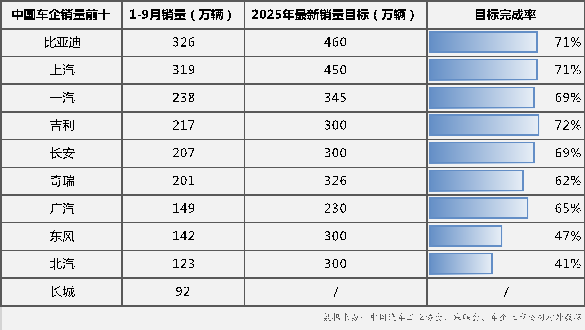
Core Insights - The Chinese automotive market is experiencing a significant differentiation in sales and annual target completion rates among leading companies as the "golden September and silver October" sales season begins [1] Group 1: Industry Overview - The overall automotive industry in China has maintained a stable and positive trend in the first three quarters of 2025, with high penetration rates of new energy vehicles [1] - The leading companies in the industry are showing clear differentiation in sales performance and completion rates of their annual targets [1] Group 2: Sales Data of Leading Companies - BYD and SAIC are at the forefront of the industry, with both exceeding 3 million units in cumulative sales from January to September 2025, achieving a target completion rate of 71% for their respective annual goals [2] - BYD's cumulative sales reached 3.26 million units, while SAIC's sales were 3.19 million units, both maintaining a robust performance in both fuel and new energy segments [2] Group 3: Second Tier Companies - Geely achieved a cumulative sales figure of 2.17 million units, leading the top ten companies with a target completion rate of 72% [3] - First Automotive Works (FAW) and Changan reported cumulative sales of 2.38 million and 2.07 million units, respectively, with completion rates of 69% [3] - Chery Group's cumulative sales reached 2.01 million units, with a target completion rate of 62%, while GAC achieved 1.49 million units with a 65% completion rate, significantly driven by new energy models [3] Group 4: Market Dynamics and Future Outlook - As the fourth quarter approaches, the ability to adapt and the effectiveness of new energy transitions will be crucial in shaping the competitive landscape of the automotive market [3] - Companies that continue to innovate in technology, production capacity, and market responsiveness are expected to meet their annual sales targets and contribute to the high-quality development of the Chinese automotive industry [3]



经纬恒润(688326):Q2扭亏为盈 智驾业务成长驱动业绩持续向好
Xin Lang Cai Jing· 2025-10-13 06:27
Core Viewpoint - The company reported a significant increase in revenue for H1 2025, achieving 2.908 billion yuan, a year-on-year growth of 43.48%, while narrowing its net loss to 87 million yuan, a reduction of 73.91% compared to the previous year [1] Group 1: Financial Performance - In Q2 2025, the company achieved revenue of 1.580 billion yuan, a year-on-year increase of 38.90% and a quarter-on-quarter increase of 18.98% [1] - The company turned a profit in Q2 2025 with a net profit of 33 million yuan and a non-recurring net profit of 19 million yuan, marking a significant recovery [1] - The gross margin for Q2 2025 was 24.6%, an increase of 3.7 percentage points year-on-year and 3.3 percentage points quarter-on-quarter [1] Group 2: Business Expansion and Product Development - The company is focusing on automotive electronics, with a wide range of products covering over 80% of the components in the automotive electronics industry [1] - The company has established strategic partnerships with major clients such as Geely, Xiaomi, and XPeng, which are expected to drive continued growth in sales [1] - New products, including intelligent driving domain controllers and integrated control systems, are set to be mass-produced in the second half of the year, enhancing the company's value per vehicle [2] Group 3: Industry Trends and Regulatory Environment - The release of the L2 strong standard is expected to promote the standardization of the intelligent driving industry and expand the market scale, benefiting the company as an industry leader [3][4] - The company is well-positioned to take advantage of the market opportunities arising from the L2 strong standard, with a comprehensive product lineup in DMS, domain control, cameras, and millimeter-wave radar [4] Group 4: Future Growth Projections - The company is projected to achieve revenues of 7.077 billion yuan, 8.624 billion yuan, and 10.177 billion yuan from 2025 to 2027, with net profits of 58 million yuan, 234 million yuan, and 448 million yuan respectively [4] - The expected growth catalysts include the mass production of urban NOA in Q4 2025 and the ramp-up of production capacity at the Malaysia factory [4]

车企新能源目标完成率:传统车企向好 新势力仅小鹏、零跑达标
Sou Hu Cai Jing· 2025-10-11 06:13
Core Insights - In September, 10 out of 12 new energy vehicle (NEV) companies reported sales growth, indicating a positive trend for the first three quarters of the year [2] - However, only two new energy vehicle companies achieved over 75% of their annual sales targets, with nine companies falling below 50%, highlighting significant pressure to meet targets in the fourth quarter [2][5] - Traditional automakers showed a more optimistic performance, with three companies achieving over 70% of their sales targets, suggesting a better chance of meeting annual goals [2][8] New Energy Vehicle Companies - Among new energy vehicle companies, only Xiaopeng Motors and Leap Motor reached or exceeded a 75% target completion rate, with Xiaopeng selling 313,000 units (up 218%) and Leap Motor selling 396,000 units (up 129%) in the first nine months [4][6] - Xiaomi Motors also exceeded a 70% completion rate, selling 250,000 units (up 279%) [4] - Other companies, including Hongmeng Zhixing and Li Auto, faced challenges, with Hongmeng achieving only 34% of its target despite selling 344,000 units (up 10%) [6][10] - NIO sold 201,000 units (up 35%) but only reached 45% of its annual target [6][7] Traditional Automakers - BYD led traditional automakers with 3.219 million units sold (up 18%), achieving a 70% completion rate of its annual target of 4.6 million units [10] - Geely followed with 1.168 million units sold (up 114%) and a completion rate of 78% [10][11] - Changan and SAIC-GM-Wuling also exceeded 70% completion rates, with Changan selling 724,000 units (up 60%) [10][11] - Other traditional automakers like Chery and Great Wall Motors reported significant growth, with Chery selling 588,000 units (up 77%) [10][12]


博泰香港上市!黄山开投集团为基石投资者
Xin Lang Cai Jing· 2025-09-30 14:45
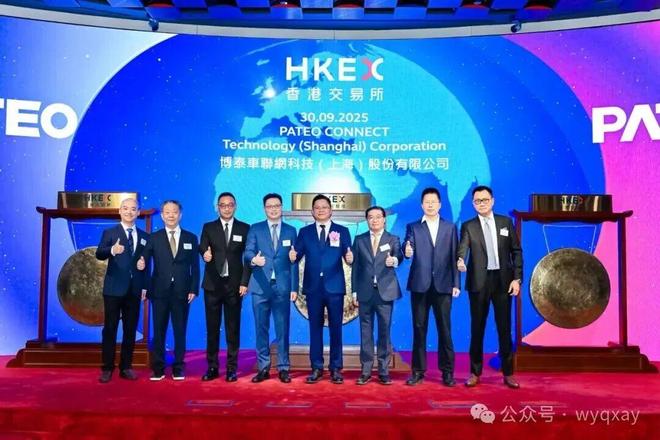
Group 1 - The core viewpoint of the article is that Botai Car Networking Technology (Shanghai) Co., Ltd. has successfully listed on the Hong Kong Stock Exchange, becoming the first stock in the "smart cockpit" sector in the Hong Kong market [1][3] - The company issued 10.43 million shares, raising approximately 1.067 billion HKD, and attracted three cornerstone investors including Huangshan Development Investment Group, Horizon Robotics, and Smart Ventures [3] - Botai Car Networking is recognized as a leading supplier of smart cockpit solutions in China and one of the earliest developers in this field, providing services to over 50 automotive brands and more than 200 vehicle models as of May 31, 2025 [3] Group 2 - The company has been recognized as a "National Enterprise Technology Center" by the National Development and Reform Commission and other departments in 2023, with two core technologies acknowledged as reaching international advanced levels by the National New Energy Vehicle Technology Innovation Center [3] - During the Hong Kong visit, the president of Huangshan Development Investment Group engaged in discussions with the chairman and co-president of Botai Car Networking, and conducted an on-site inspection of the company's Hong Kong operations [3]
解码慕尼黑对话:奔驰、宝马、巴斯夫与宁德时代看准的新机遇是什么?
市值风云· 2025-09-30 11:54
Core Viewpoint - The automotive industry is at a critical juncture, transitioning from a linear economy to a circular economy, emphasizing resource reduction, reuse, and recycling as key drivers for innovation and high-quality development [3][4]. Group 1: European Market Challenges - The European electric vehicle market is facing significant challenges, with a projected 5.9% decline in electric vehicle sales in 2024, indicating a slowdown in the electrification process [6]. - Europe heavily relies on imports for battery raw materials, with 98% of lithium and 80% of natural graphite sourced externally, leading to increased supply chain risks and costs [7]. - The EU's stringent new battery regulations require comprehensive lifecycle management, including carbon footprint reporting and recycling targets, which pose significant pressure on local automotive manufacturers [8][12]. Group 2: Potential in European Electrification - Despite challenges, the European electric vehicle market holds substantial potential, with 1.45 million new pure electric vehicles expected to be registered in 2024, and a total of 5.87 million pure electric vehicles by year-end [12]. - The EU's new carbon emission targets necessitate that manufacturers achieve at least 20% of their sales from pure electric vehicles to avoid hefty fines, driving the urgency for electrification [12]. - The first five months of 2024 saw a 25% increase in electric vehicle registrations in the EU compared to the previous year, indicating a growing acceptance of electric vehicles [12]. Group 3: Opportunities for Industry Collaboration - The global energy circular plan is seen as a potential platform for collaboration between Chinese and European companies, leveraging China's established battery recycling capabilities and Europe's regulatory expertise [15]. - Chinese companies, such as CATL, have developed a comprehensive closed-loop system for battery production, usage, recycling, and material regeneration, positioning them favorably in the global market [16][17]. - European automotive giants like Mercedes and BMW are increasingly recognizing the benefits of collaborating with established Chinese supply chains to accelerate their electrification efforts and meet regulatory requirements [19][21]. Group 4: Strategic Shifts in the Battery Materials Industry - The battery materials industry is undergoing a transformation, with companies shifting from being mere consumers of raw materials to providers of integrated solutions that include recycling and material regeneration [23][24]. - The collaboration between Chinese battery companies and European automakers is not just about procurement but serves as a strategic lever to navigate regulatory, cost, and technological challenges [22][24]. - Early involvement in global initiatives like the energy circular plan allows companies to transition from compliance followers to co-shapers of industry standards and technologies, enhancing their competitive positioning [25].



博泰车联登陆港股!核心业务三年营收复合增速超70%,驱动AI与具身智能产业升维
Mei Ri Jing Ji Xin Wen· 2025-09-30 07:49
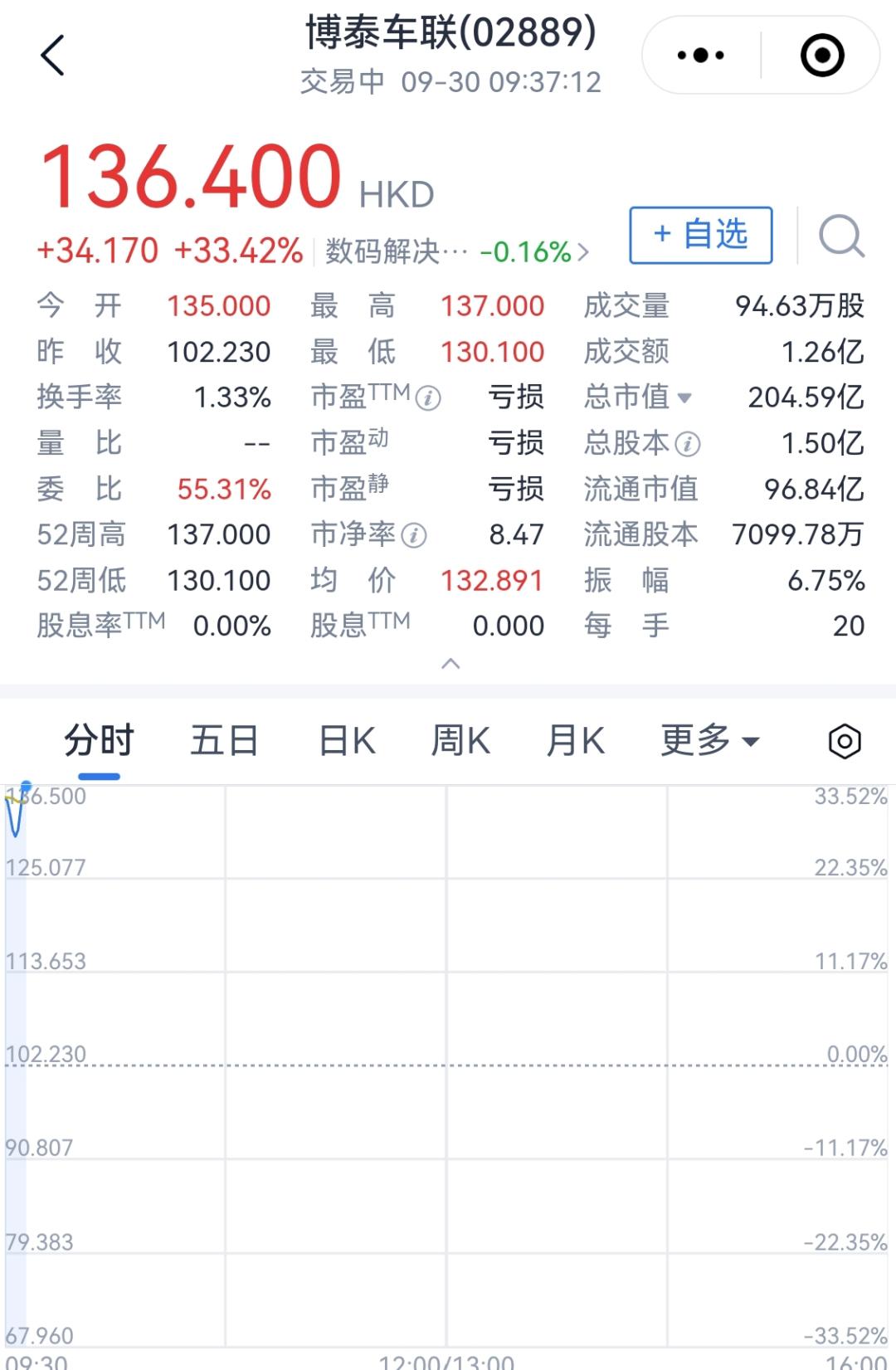
Core Viewpoint - 博泰车联网科技在香港成功上市,标志着其在中国汽车智能化领域的领导地位,吸引了机构投资者的关注和信任 [1][2] Company Overview - 博泰车联自2009年成立以来专注于汽车智能化,成为智能座舱解决方案的早期开发者之一 [1] - 公司在智能汽车领域的竞争优势体现在其"软件+硬件+云端服务"的一体化模式 [3][4] Financial Highlights - 博泰车联此次港股IPO全球发售1043.69万股H股,发售价为每股102.23港元,上市首日开盘价为135港元,市值达到210.59亿港元 [1] - 公司在过去十年累计融资超过45亿元,股东阵容包括小米、东风汽车等产业巨头 [5] Market Position and Growth - 博泰车联在智能座舱市场中排名第一,特别是在高端市场,预计到2024年底将继续保持领先地位 [3] - 公司营收从2022年的12.18亿元增至2024年的25.57亿元,复合年增长率达44.9% [7] Technological Advancements - 博泰车联在AI和具身智能领域的布局使其具备向更广泛机器人领域延伸的基础,推动智能座舱向更高价值的转型 [6][7] - 公司自主研发的擎感大模型将成为下一代智能汽车的AI内核,展现出与特斯拉理念的相似性 [6] Strategic Initiatives - 上市募资将用于扩大产品组合、增强技术能力和提高生产能力,体现了公司在技术创新和市场开拓上的协同推进 [8] - 博泰车联正从智能座舱供应商向"汽车机器人"生态定义者转型,抓住智能化和网联化的发展脉搏 [8]
市值超200亿,雷军又收获一个IPO
3 6 Ke· 2025-09-30 03:37
Core Viewpoint - The listing of Botai Vehicle Networking Technology (Shanghai) Co., Ltd. on the Hong Kong Stock Exchange marks a significant milestone in the booming electric vehicle industry, reflecting the vitality of the domestic smart automotive supply chain [1][9]. Company Overview - Botai Vehicle Networking was founded in 2009, initially focusing on the development of vehicle networking systems, and launched China's first 3G vehicle networking system in 2010 [4]. - The company shifted its focus in 2018 to integrated software, hardware, and cloud services for smart cockpit solutions [4]. - As of 2024, Botai is the third-largest supplier of smart cockpit domain controller solutions in China, with a market share of 7.3% [4]. Financial Performance - Botai's revenue for 2022, 2023, and 2024 is projected to be 1.218 billion, 1.496 billion, and 2.557 billion RMB respectively, with corresponding gross profits of 171 million, 231 million, and 300 million RMB [4][7]. - The gross margins for these years are 14.1%, 15.4%, and 11.8%, while the company reported losses of 452 million, 284 million, and 541 million RMB [4]. - In the first five months of 2025, Botai achieved revenue of 753.6 million RMB, a 34.2% increase from the previous year, with a gross profit of 98.66 million RMB [4]. Business Segments - The main business segments of Botai are smart cockpit solutions and connected services, with smart cockpit solutions being the core revenue source [7]. - The smart cockpit domain controller developed by Botai interacts with other domain controllers and displays relevant information on the cockpit screen [7]. Shareholder Structure - Botai has a strong shareholder base, including major industry players such as FAW Group, Dongfeng Motor, and Xiaomi, which provides substantial financial support and unique industry resources [7]. - Prior to the IPO, the founder held 23.14% of the shares, with employee incentive platforms holding 11%, and Xiaomi and Dongfeng holding 5.56% and 2.6% respectively [7]. Industry Trends - The global and Chinese markets are accelerating the smartization of passenger vehicles, driven by expanding market demand, technological innovations, and government policy support [8]. - The market size for smart solutions in China's passenger vehicle sector is expected to reach 252.4 billion RMB in 2024, growing at a compound annual growth rate of 18.4% to 587.6 billion RMB by 2029 [8]. Future Outlook - Despite current losses, Botai is expected to strengthen its position in the smart cockpit and connected vehicle sectors, contributing to the domestic automotive smart upgrade and providing long-term value returns for investors like Xiaomi [9].