欧莱雅

Search documents
2025:全球美妆十强,半数换了“一把手”
3 6 Ke· 2026-02-02 00:06
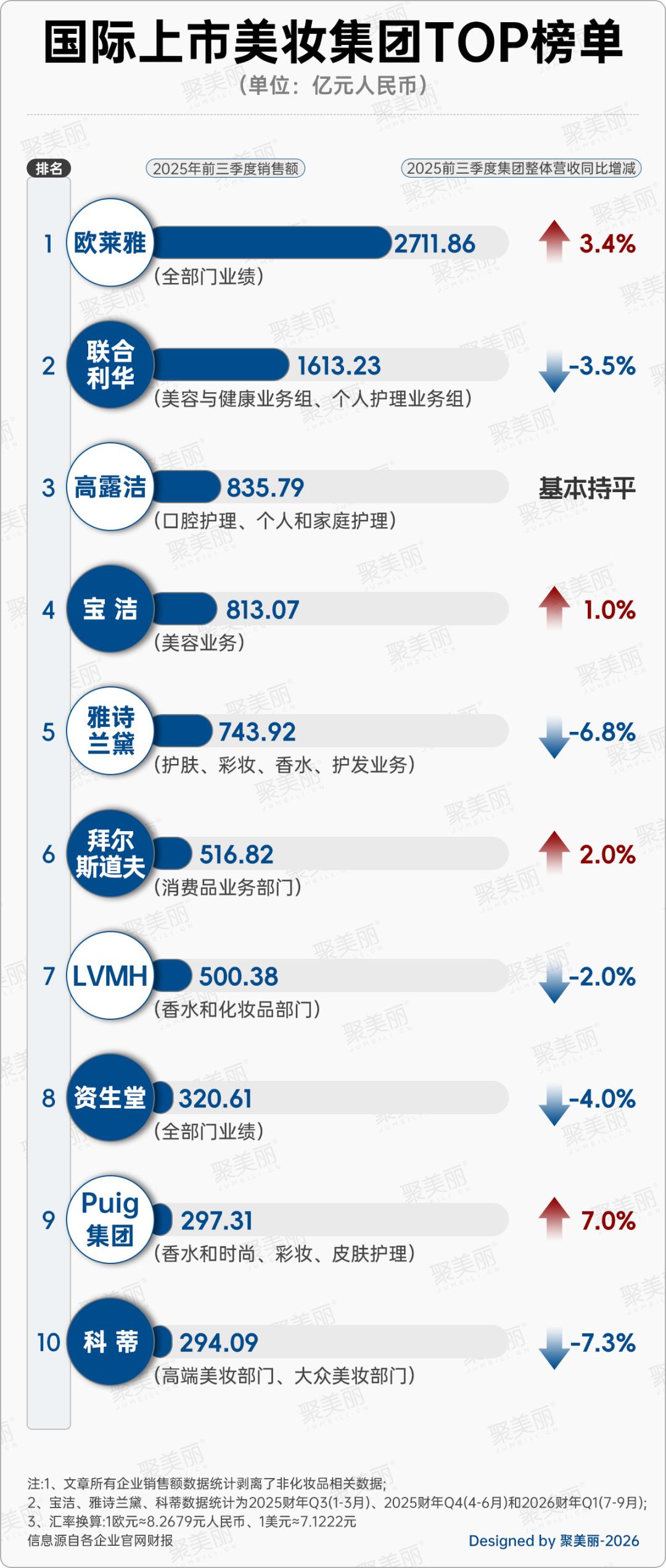
在过去的2025年,美妆行业的整体格局经历了深刻的变革和调整,这一洗牌很可能延续至2026年。 行业整体业绩增速明显放缓,市场表现疲软,不少企业甚至出现营收下滑,头部企业之间的位次争夺战愈发激烈。在国际TOP10美妆企业中,半数集团整 体营收回落,即使保持增长者也只是幅度有限。 与此同时,欧莱雅、联合利华在内的多个国际美妆集团纷纷优化产品组合,剥离低效业务,"卖子"的消息时常传出,过去一年中超50个美妆品牌被舍弃。 更值得关注的是,为降本增效,全球美妆十强中更有六家相继裁员。 在此背景下,寻找发展最优解的这一重担,直接落在了各集团管理层的肩上。2025年,从各业务部门到区域市场,美妆集团们的人事变动异常频繁。而关 乎企业命运的战略制定决策权,则更多地集中各集团CEO的手中。 据聚美丽不完全统计,2025年,仅全球头部美妆集团的高管变动就发生了超30起,其中八大美妆巨头均经历了集团"一把手"的更迭。 2025,换帅潮席卷美妆巨头! 在面对行业变局与区域挑战,国际美妆集团不约而同地选择通过换帅进行应对,由此掀起了一波密集的"换帅潮"。据聚美丽观察发现,这些企业的CEO变 动存在以下共性: 1.各集团内部提升的CE ...




两大重点实验室主办!第五届生物基和可降解包装论坛官宣 | Bio-based 2026
DT新材料· 2026-02-01 16:05
关键词| 生物基大会 |包装论坛 Bio-based 202 6 #第11届生物基大会暨展览 将于5月20-22日 在中国·上海举办 # 第11届生物基大会暨展览 (Bio-based 2026)以" 10大上下游主题论坛 + 9大同期活动 + 1000 个新品展示 + 1 场创新评选颁奖 "为核心载体,邀请行 业领袖与终端品牌分享 产业趋势、前沿科技创新、生物基材料与应用、下游需求与趋势、项目路演、成果展示等 关键话题,以助推产业绿色低碳转 型。 作为Bio-based 2026的重磅应用论坛 - 第五届生物基和可降解包装论坛 将由 浙江省全省生物基高分子重点实验室 、 先进造纸与纸基材料全国重点实验 室 、 DT新材料 联合主办。 论坛将邀请生物基和可降解包材创新企业、制品和供应链企业、消费品牌商、产业化专家等行业领袖, 围绕 全球包装和环境趋向 ; 日化/食品/3C品牌 如何以"消费者为中心"构建可持续包装闭环 ; 生物基和可降解包材企业如何围绕需求创新 ; 行业上下游如何"联手"构建价值链 等关键性话题,共同 推动可持续发展、促进上下游合作。 5月 21 日, 14:00-18:00 / 5月 22 ...

未来10年,最挣钱的凭什么一定是这群人?
创业家· 2026-02-01 10:42
Core Insights - Amazon's report on global e-commerce trends serves as a guide for merchants to identify product opportunities and market dynamics [1][2] Group 1: AI-Driven Consumer Trends - Trend 1: AI Quality Space emphasizes the transformation of homes into emotionally interactive environments, with over 65% of consumers in Europe and the US willing to spend more on smart home products [3][4] - Trend 2: The Sleep Economy is emerging as 37% of American adults report declining sleep quality, leading to increased consumer spending on sleep-related products and services [8][10][12] - Trend 3: Happiness in the Workplace highlights the growing demand for ergonomic office furniture and environments that enhance employee well-being [13][14] Group 2: Technology and Lifestyle Integration - Trend 4: Technology's Subtle Influence reflects a consumer preference for seamless tech integration that enhances quality of life without being intrusive [15] - Trend 5: The Pet Economy is projected to grow by 45% over the next six years, with 55% of pet owners in developed markets willing to invest more in pet health and wellness [16][17][19] - Trend 6: Outdoor Cooking is gaining popularity, driven by a desire for social experiences and quality time in nature, leading to demand for specialized outdoor cooking equipment [20][22] Group 3: Emerging Consumer Demographics - Trend 7: The Mobile Treasure Chest concept illustrates how vehicles are evolving into multifunctional spaces, enhancing comfort and utility for consumers [23][27] - Trend 8: Generation Z is becoming a significant consumer force, characterized by values-driven purchasing, a focus on sustainability, and a preference for personalized experiences [28][29][30] - Trend 9: The Fitness Vanguard emphasizes the importance of health, with a shift towards personalized and technology-enhanced fitness solutions [31][34] Group 4: Gaming and Entertainment - Trend 10: The Gaming Enthusiast market is rapidly expanding, particularly in emerging markets, with a focus on high-performance equipment and immersive experiences [35][36][37] - The report identifies three key drivers of these trends: accelerated technology, emotional shifts, and evolving lifestyles, reflecting the complex needs of modern consumers [39][40]


2026年,钱从哪挣?
创业家· 2026-01-31 10:42
Group 1 - The core question for many is where the money will come from in 2026 [2] - The article highlights five key concepts related to business strategies in the face of insufficient domestic demand [3] - Companies are facing a significant challenge of insufficient domestic demand, leading to limited market capacity [5][6] Group 2 - To survive in a competitive environment, companies must increase their competitive efforts, which can lead to a cycle of overwork and reduced profits [7][8] - One potential solution to this issue is to expand overseas, which has evolved significantly compared to traditional export methods [9][10] Group 3 - An example of successful overseas expansion is Miniso, which not only sells products abroad but also relocates its entire value chain, including branding and R&D, to international markets [11][12] - Engaging with private domain users to understand their preferences allows for rapid product development and brand establishment in foreign markets [12][13] Group 4 - Leading companies are beginning to explore overseas markets, but successful expansion requires integrating complex supply chain systems [14][15] - Tesla's operations in Shanghai exemplify the importance of a robust supply chain network, which supports rapid production and delivery [20][21] Group 5 - Companies can leverage their unique advantages to succeed in overseas markets, such as cost advantages or product innovations [23][24] - For instance, a factory owner in Yiwu has found success by selling products on cross-border platforms at prices double those in the domestic market [25][26] Group 6 - Building long-term trust in familiar social networks is crucial for business success, as demonstrated by the story of a local entrepreneur who prioritizes employee welfare and customer feedback [31][34] - This approach fosters a cycle of trust and loyalty among customers, leading to sustained business growth [36] Group 7 - The article discusses the shift in consumer behavior towards a desire for better experiences, highlighting opportunities for businesses to meet these evolving demands [38][39] - Innovative services, such as travel photography for retirees, can create new consumer needs and drive demand [40][41] Group 8 - As traditional large-scale business opportunities diminish, a more refined and heartfelt commercial ecosystem is emerging, focusing on fulfilling ordinary people's aspirations for a better life [43][46] - Companies that can create meaningful experiences and meet these needs may find significant opportunities for growth in the future [46]



未来10年,这18个赛道将带来48万亿美元收入
创业家· 2026-01-30 10:18
Core Insights - McKinsey's report identifies 18 industry sectors likely to reshape the global business landscape, predicting revenues of $29 trillion to $48 trillion by 2040, contributing 18-34% to global GDP growth [2] E-commerce - By 2040, e-commerce's share of global retail revenue is expected to rise to 27%-38% from approximately 20% currently [3] - Growth drivers include market expansion in developing countries and new product categories in developed nations, such as healthcare and emotionally valuable products [4] - Significant investments are anticipated in customer acquisition and last-mile delivery across e-commerce platforms [5] Electric Vehicles - Electric vehicles (EVs) are projected to exceed 50% of global passenger car sales by 2040 [6] - Breakthroughs in battery technology and smart algorithms will significantly influence this sector, prompting increased R&D investments from both EV manufacturers and traditional automakers [7] Cloud Services - The demand for higher storage and computing capabilities is driven by a more interconnected world and the need for AI products requiring substantial computing power [9] - The cloud services industry experienced a 17% compound annual growth rate from 2005 to 2020, with similar growth expected in the coming decades [10] Semiconductors - The semiconductor industry is forecasted to grow at a compound annual growth rate of 6%-8% over the next decade, driven by demand in computing, data storage, automotive, communication, and industrial electronics [11] AI Software Services - The rapid development of AI has led to its classification as a distinct sector, with increasing usage of AI assistants [12] - Companies in the AI space are engaged in a competitive race to develop advanced foundational models and applications [13] Digital Advertising - Digital advertising is expanding in value globally, fueled by an increasing number of internet users and more time spent online [14] - Continuous algorithm improvements enhance platforms' abilities to target customers and track advertising costs, although competition for user attention necessitates higher investments in engaging content [15] Streaming Video - Investment in customer acquisition and content production is rising, prompting streaming platforms to seek new revenue models [17] - Developing countries are expected to contribute to growth in subscription and advertising revenues, with projections indicating over 1 billion households subscribing to long-form video services by 2040 [18] Shared Autonomous Vehicles - The advent of autonomous driving technology may reduce the necessity for personal vehicle ownership, with shared autonomous vehicles projected to account for 25%-51% of shared mobility revenue by 2040 [19][20] Space Economy - The world is on the brink of entering a space economy era, with advancements in reusable rocket technology changing the aerospace industry [21][22] Cybersecurity - Cybercrime caused approximately $950 billion in direct economic losses in 2020, with indirect losses potentially reaching $4-6 trillion [24] - Increasing awareness of cybersecurity has led companies to invest more in enhancing their security measures [25] Batteries - Significant advancements in battery technology have tripled energy density over the past few decades, driven by the global energy transition [26] - By 2040, electric vehicles are expected to account for over 80% of the battery market [28] Video Games - By 2030, an estimated 40% of the global population may become video game players, with mobile and cloud gaming driving market growth [30] - Free-to-play games are generating substantial revenue, and budgets for AAA games are increasing, with 2025 budgets reaching $200 million [32] Robotics - The integration of AI with robotics is creating significant expectations for humanoid robots, which are anticipated to become "ultimate intelligent agents" [33][34] Industrial and Consumer Biotechnology - Breakthroughs in gene editing and other technologies are accelerating the application of biotechnology in agriculture, alternative proteins, consumer products, and bio-materials [37] Modular Construction - Modular construction methods, which involve prefabricating building modules for on-site assembly, can significantly enhance construction efficiency [38] Nuclear Fission Power - The development of safer, smaller modular reactors presents opportunities to supplement renewable energy sources [39] Air Traffic - Electric vertical takeoff and landing vehicles and delivery drones are expected to drive significant technological changes in air traffic [41] Obesity Treatment Drugs - The prevalence of obesity is projected to rise from 15% in 2020 to 24% by 2035, indicating a potential market for effective weight loss products [43]

专访欧莱雅 | AI时代,美妆科技的竞争壁垒是什么?
FBeauty未来迹· 2026-01-29 11:04
Core Viewpoint - L'Oréal is advancing its beauty technology with innovative products like the AirLight Pro hair dryer and the multi-functional light energy hair straightener, showcasing a commitment to integrating advanced technology into everyday beauty tools [3][4][5]. Group 1: Product Innovations - The AirLight Pro hair dryer and the multi-functional light energy hair straightener utilize near-infrared light technology to reshape hair styling, significantly reducing damage compared to traditional high-temperature methods [5][7][9]. - The multi-functional light energy hair straightener operates at approximately 160°C, enhancing hair smoothness by two times while maintaining hair structure integrity [9]. - The LED face mask, developed in collaboration with iSmart, addresses consumer demands for portability and comfort, offering a lightweight design that enhances efficacy [11][12]. Group 2: Strategic Direction - L'Oréal's beauty technology strategy has shifted towards products that cater to mainstream consumer needs, focusing on everyday beauty tools like hair dryers and straighteners rather than niche products [15][16]. - The company emphasizes a clear strategic focus on high-certainty categories, prioritizing home-use professional devices and skin integration longevity science as key development areas [16][18]. - L'Oréal's commitment to research and innovation is evident in its development of products that not only improve performance but also redefine existing beauty categories [12][14]. Group 3: Research and Development - L'Oréal maintains a strong research foundation, ensuring that every product is backed by rigorous scientific principles, focusing on quality, safety, and performance [17][26]. - The company has developed a comprehensive beauty database that supports its research efforts, enabling rapid testing and validation of new products [26][27]. - AI plays a crucial role in L'Oréal's innovation strategy, enhancing the efficiency and depth of research while ensuring that products meet consumer needs effectively [25][29]. Group 4: Future Vision - L'Oréal envisions a future where beauty and health converge, leveraging biological mechanisms to shift consumers from passive to proactive skincare [18][19]. - The company aims to redefine beauty technology by focusing on performance, inclusivity, and precision, aligning with the evolving demands of consumers [29][30]. - Through open innovation and strategic partnerships, L'Oréal is positioned to lead in beauty technology, continuously adapting to market trends and consumer preferences [21][23].


网红护肤品HBN“闯关”港股,揭开“真功效”的另一面
Zhong Guo Ji Jin Bao· 2026-01-29 04:03
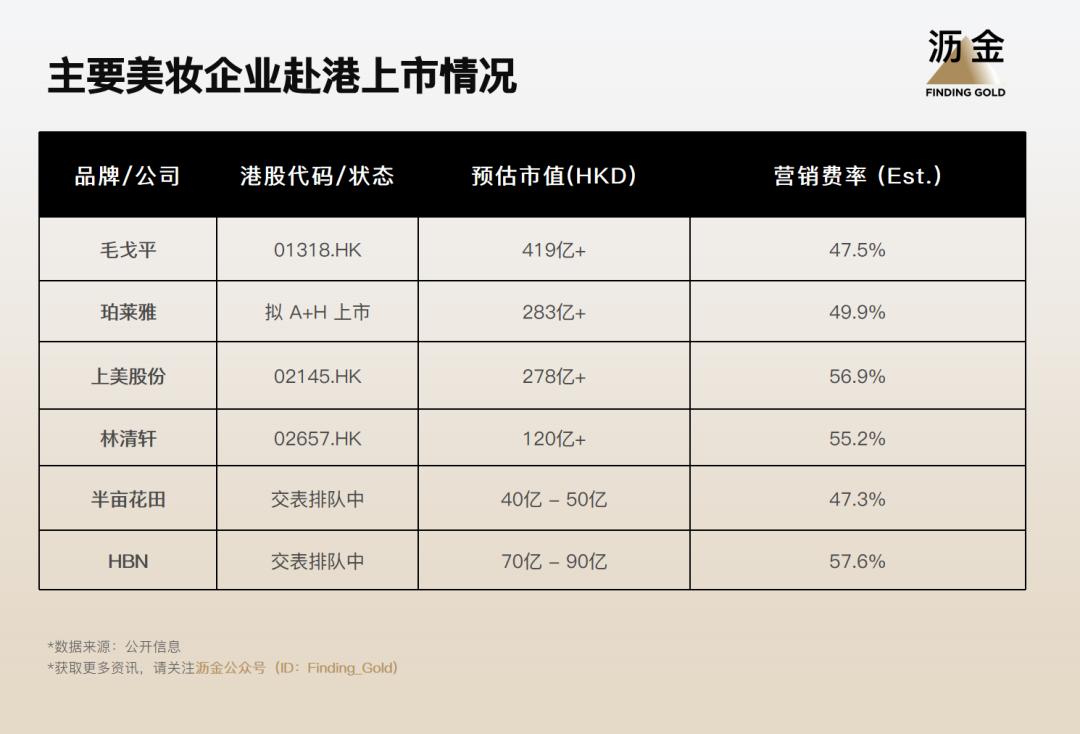
Core Viewpoint - HBN's parent company, Shenzhen Hujia Technology Co., Ltd., has officially submitted an application for a mainboard listing on the Hong Kong Stock Exchange, indicating a continued interest in the Chinese skincare market and the potential for growth in domestic brands [1]. Group 1: Company Overview - HBN is recognized as the youngest player among the top ten domestic skincare brands in China, rapidly rising due to its "early C, late A" product strategy and precise online marketing [5]. - The company was founded in 2019 and has quickly established itself with a focus on "true efficacy," achieving significant market presence in the skincare sector [7]. Group 2: Financial Performance - Hujia Technology's total revenue is projected to increase from 1.948 billion RMB in 2023 to 2.083 billion RMB in 2024, reflecting a growth rate of 6.9%. For the first three quarters of 2025, revenue reached 1.514 billion RMB, a year-on-year increase of 10.2% [9]. - The net profit for 2023, 2024, and the first three quarters of 2025 is reported as 39 million RMB, 129 million RMB, and 145 million RMB, respectively, with a remarkable increase of 232.5% in 2024 compared to 2023 [9]. Group 3: Product and Market Strategy - HBN's primary revenue source is from "improvement-type skincare products," contributing approximately 80% of total revenue in recent years, with a steady increase in the share of "maintenance-type skincare products" [10]. - The company has a high repurchase rate and has seen its net profit double over three years, indicating strong customer loyalty and product effectiveness [7]. Group 4: Sales Channels and Marketing - Hujia Technology's sales are heavily concentrated online, with online channel revenue accounting for 98.6%, 97.7%, and 95.1% of total revenue in 2023, 2024, and the first three quarters of 2025, respectively [12]. - The reliance on online sales has led to high sales expense ratios, with sales and distribution expenses reaching 1.268 billion RMB, 1.238 billion RMB, and 871 million RMB, representing 65.1%, 59.4%, and 57.6% of total revenue [14]. Group 5: Research and Development - Despite HBN's emphasis on "true efficacy," the company's R&D investment is relatively low, with expenditures of 66 million RMB, 58 million RMB, and 40 million RMB for 2023, 2024, and the first three quarters of 2025, respectively, resulting in a decreasing R&D expense ratio [18]. - The majority of Hujia Technology's products are produced through contract manufacturing, raising questions about the extent of its proprietary technology and innovation capabilities [18][24].

知行数据观察:洗发护发品类
知行战略咨询· 2026-01-28 13:55
Investment Rating - The report rates the shampoo and hair care industry as having significant long-term growth potential, with a projected market size exceeding 80 billion yuan by 2029, indicating a robust investment opportunity [8]. Core Insights - The industry is transitioning from "incremental expansion" to "stock deepening," reflecting a shift in focus towards consumer needs for scalp care and functional products, driven by consumption upgrades and the rise of domestic brands [8][20]. - The market is characterized by a strong demand for specialized products, particularly in the anti-hair loss and oil control segments, which are experiencing high growth rates [10][16]. Summary by Sections Industry Definition and Classification - Shampoo and hair care products are personal care items designed to clean hair, regulate scalp ecology, and improve hair condition, with a focus on gentle formulations for daily and professional use [6]. Market Trends - From 2019 to 2023, the market size has shown steady growth, with a forecasted increase to over 80 billion yuan by 2029, driven by consumer demand for effective scalp care and the rise of domestic brands [8][9]. - The market is shifting from basic cleaning products to scalp health management, with high growth in anti-hair loss and oil control products [10]. Product Performance - The main functions in the market include cleaning (18% market share, 0% growth), oil control (12%, 11% growth), and anti-dandruff (10%, -2% growth), while anti-hair loss products are leading with over 70% growth [10][11]. - In the hair care segment, deep care functions like repair (30% growth) and nourishment (24% growth) are outperforming traditional functions, indicating a shift in consumer preferences towards more specialized products [13][14]. Supply and Demand Analysis - High-demand, low-supply opportunities exist in areas like "anti-breakage" and "strengthening hair," which show significant growth potential [16]. - The competitive landscape is marked by a clear distinction between high-demand, high-supply segments and emerging opportunities, suggesting a need for strategic positioning in product offerings [16]. Online Market Dynamics - The online market for shampoo and hair care products is expanding rapidly, with sales projected to grow from 34.42 billion yuan in 2023 to 48.2 billion yuan by 2025, indicating a shift towards digital channels [20][21]. - The rise of platforms like Douyin is reshaping the competitive landscape, with significant sales growth and a shift in pricing strategies between platforms [22][39]. Brand Performance - International brands dominate the Taobao platform, while domestic brands are gaining traction on Douyin, highlighting a divergence in market strategies and consumer preferences [33][39]. - Notable growth is observed in domestic brands on Douyin, with some achieving over 1000% growth, reflecting a strong demand for affordable and effective products [33].
国货美妆2026,在港股抢滩登陆
3 6 Ke· 2026-01-28 12:52
Core Viewpoint - The Chinese beauty industry is experiencing a significant shift as domestic brands rush to list on the Hong Kong Stock Exchange, driven by a near closure of IPO opportunities in the A-share market. This trend is not merely a celebration but signals a harsh beginning of industry differentiation and value reassessment [1][5]. Group 1: Market Dynamics - The successful listings of brands like Lin Qingxuan and the planned secondary listing of Proya highlight Hong Kong as a new haven for domestic beauty brands [1]. - The high price-to-earnings (PE) ratio of over 30 for Mao Geping is misleading, as it reflects a unique business model rather than a general trend in the domestic beauty sector [4]. - The market is expected to shift focus from the narrative of domestic brand growth to a stringent evaluation of business fundamentals [5]. Group 2: Brand Performance and Strategy - HBN and Banmu Huatian rely on traditional consumer goods models, heavily investing in marketing to drive growth, contrasting with Mao Geping's unique model that minimizes external marketing dependency [6][8]. - HBN's financials show a significant profit growth rate of 232.5% and 190.3% for 2024 and the first nine months of 2025, respectively, despite a marketing expense ratio of 57.6% [8]. - The key for HBN post-listing is to demonstrate that it can achieve higher brand premiums and customer lifetime value with the same marketing investment compared to competitors [10]. Group 3: Liquidity and Market Pressure - The liquidity risk in the Hong Kong market is severe, with top-tier companies absorbing most capital, leaving mid-tier brands vulnerable to becoming illiquid [12]. - The pressure of performance guarantees for many domestic brands in 2024-2025 may lead to unsustainable practices, risking significant stock price drops if growth slows post-2026 [13]. Group 4: Competitive Landscape - The competition in the beauty industry is evolving from ingredient concentration to structural competition, with brands needing to lower marketing costs while maintaining revenue [15]. - Unique raw materials are becoming essential for brand differentiation and valuation in the market, as seen with successful brands like Juzhibio and Lin Qingxuan [18]. - The necessity for international expansion is increasing, as domestic market growth is plateauing, making overseas markets critical for future success [20]. Group 5: Future Outlook - The Hong Kong market is becoming increasingly discerning, seeking brands that can demonstrate efficiency and long-term viability rather than just rapid growth [22][23]. - Brands that can effectively manage their desires, respect market realities, and commit to long-term strategies will be better positioned for success in the evolving landscape [23].


免税行业深度报告:高端零售率先复苏,免税景气向好
Dongguan Securities· 2026-01-28 07:35
超配(维持) 消费者服务行业 高端零售率先复苏,免税景气向好 免税行业深度报告 2026 年 1 月 28 日 分析师:邓升亮 SAC 执业证书编号: S0340523050001 电话:0769-22119410 邮箱: dengshengliang@dgzq.com.cn 中信消费者服务指数走势 资料来源:iFind,东莞证券研究所 相关报告 投资要点: 证 券 研 究 本报告的风险等级为中风险。 本报告的信息均来自已公开信息,关于信息的准确性与完整性,建议投资者谨慎判断,据此入市,风险自担。 请务必阅读末页声明。 深 度 研 究 行 业 研 究 报 告 ◼ 压制中国免税行业崛起的主要因素均被扭转,布局中国免税拐 点。复盘2020年后免税行业的走势,实际上免税走弱是受到了 多重因素的影响。一是疫情期间日韩等国采取了高额返佣的模 式导致竞争压力增加,而国内免税商同样加大了折扣力度导致 利润下降。二是国内居民家庭收入预期出现了阶段性的波动, 暂时影响了消费意愿,导致居民家庭"有钱不敢花"。三是供 给的稀缺,过去中国免税店以海南离岛免税和口岸免税为主, 离岛免税场景过去存在"离岛不离境"的限制,服务的游客数 量 ...