陶氏公司

Search documents
“工业黄金”重大突破!全球聚烯烃行业格局或重塑
Qi Huo Ri Bao· 2026-01-28 00:39
Core Viewpoint - The successful large-scale production of polyolefin elastomer (POE) in China marks a significant breakthrough, ending foreign monopolies and reducing reliance on imports for strategic industries like photovoltaics and new energy vehicles [1][2]. Industry Impact - The breakthrough in POE technology fills a critical gap in China's high-end chemical materials sector, transitioning from dependence on imports to self-sufficiency, which is a landmark achievement in the development of high-end chemical materials in China [2][4]. - The production of POE is expected to lower the procurement costs of downstream products like photovoltaic encapsulant films by 15% to 25%, potentially saving over 20 billion yuan annually for the photovoltaic industry [3][4]. - By 2026, the import dependency for POE is projected to drop below 60%, which will mitigate supply chain risks and stimulate demand in the photovoltaic and automotive sectors [3][4]. Market Dynamics - The price of POE has decreased from a peak of 25,000 yuan per ton in 2022 to around 12,000 yuan per ton currently, indicating a shift towards a more reasonable pricing structure following the end of the import monopoly [4]. - The total production capacity of POE in China is expected to exceed 300,000 tons by the end of 2026, significantly reducing import reliance and enhancing the overall value and risk resilience of the petrochemical industry [3][4]. Strategic Significance - The advancement in POE technology not only represents a technical innovation but also strengthens the foundation for supply chain security in strategic industries, reshaping the competitive landscape of the high-end manufacturing sector [2][4]. - The successful scale-up of POE production is seen as a pathway for the petrochemical industry to transition from basic refining to high-value fine chemicals, promoting high-quality development and collaborative growth across the industry chain [3][4].
行业聚焦:全球纺织业螯合剂行业头部生产商市场份额及排名调查(附龙头企业介绍)
QYResearch· 2026-01-27 02:43
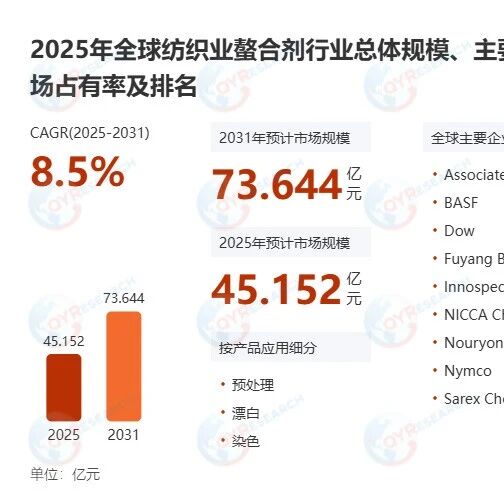
Core Viewpoint - The textile industry chelating agents are essential for improving product quality and sustainability by preventing metal ion reactions that can damage fibers and equipment, thus enhancing the efficiency and environmental compliance of textile production processes [2][3]. Product Range - The product range of textile chelating agents has evolved from traditional inorganic salts to a diverse family of fine chemicals, including: - Traditional inorganic chelating agents (e.g., polyphosphates) are widely used for general water treatment due to their low cost and high stability. - Organic carboxylic acid chelating agents (e.g., EDTA, NTA) dominate high-end dyeing processes but face environmental concerns. - Bio-based and green chelating agents (e.g., gluconates, chitosan derivatives) are rapidly emerging in response to sustainable textile policies. - Multifunctional composite chelating agents integrate dispersion, buffering, and anti-redeposition capabilities to meet integrated dyeing and finishing process needs [2]. Application Scope - Textile chelating agents serve as an "invisible engine" throughout the textile production process: - In the pre-treatment stage, they integrate calcium and magnesium ions to prevent hard water precipitation, enhancing desizing and refining efficiency. - During bleaching and dyeing, they stabilize oxidants and dye activity, ensuring color uniformity and reproducibility. - In post-treatment and water treatment, they inhibit metal ion catalysis that leads to fiber damage and reduce heavy metal loads in wastewater [3]. Market Overview - According to QYResearch, the global textile chelating agents market is projected to reach USD 1.16 billion by 2032, with a compound annual growth rate (CAGR) of 8.4% over the coming years [4]. Market Structure - Major manufacturers in the global textile chelating agents market include BASF, Dow, Nouryon, Innospec, and NICCA Chemical, with the top five companies holding approximately 59.0% market share by 2025 [6]. - The top three chemical giants (BASF, Dow, Nouryon) collectively account for over 40% of the market share, leveraging their global supply chains, R&D capabilities, and brand influence to dominate the high-end market [8]. Competitive Landscape - The competitive landscape shows that specialized manufacturers like Innospec and NICCA Chemical maintain stable shares in niche markets through application technology services and regional channels. - Asian companies (e.g., Fuyang Biotech, Taihe Chem, Yuanlian Chemical) leverage cost advantages and localized services to compete effectively in the mid-to-low-end market [8]. Industry Trends - The textile chelating agents market is transitioning from traditional functional additives to green, high-performance, and systematic solutions. The focus is shifting towards developing new molecular structures that are biodegradable, low-toxicity, and multifunctional to meet stringent environmental regulations [18]. - The application scenarios are deepening, with products extending beyond core processes to include textile recycling, wastewater treatment, and functional finishing, thus elevating their value from mere process aids to strategic materials that ensure supply chain compliance and resource efficiency [18]. Development Opportunities - The market faces structural constraints, primarily the challenge of balancing the technology and economics of green alternatives. The development and production costs of biodegradable or low-toxicity chelating agents are significantly higher than traditional products, which poses a challenge for cost-sensitive textile manufacturers [19]. - Additionally, the lack of unified industry standards and certification systems complicates product development and market entry, as different regions have varying definitions and compliance requirements for "environmentally friendly" and "biodegradable" [19]. Development Barriers - The market's growth is hindered by the cost-performance balance challenge in the green transition. The raw material costs and synthesis complexity of eco-friendly chelating agents are significantly higher than traditional products, leading to slow penetration of green products in cost-sensitive markets [20]. - Furthermore, traditional chelating agents (e.g., EDTA, phosphates) have established market inertia due to their stable performance and mature technology, making it difficult for new products to gain traction [20].


资金周报|化工ETF(159870)连续16天净流入,细分板块利好频出(1/19-1/23)
Sou Hu Cai Jing· 2026-01-27 02:02
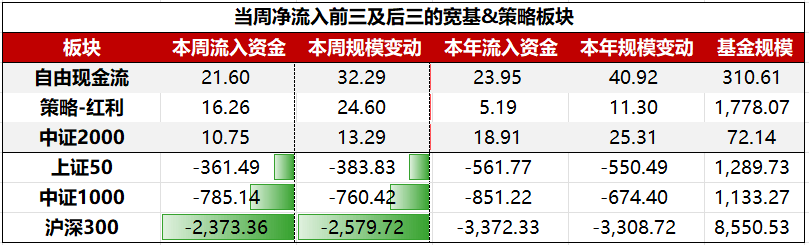
Market Overview - As of last weekend, the total scale of equity ETFs in the market reached 48,892.36 billion yuan, with a decrease of 2,906.25 billion yuan in total scale over the past week, and a reduction of 479.65 billion units, resulting in a net outflow of 3,137.53 billion yuan [1] Fund Inflow and Outflow Direction - In the broad-based and strategy ETF category, the top three inflow sectors were Free Cash Flow, Strategy-Dividend, and CSI 2000, while the top three outflow sectors were CSI 300, CSI 1000, and SSE 50 [3][4] - In the industry and thematic ETF category, the top five inflow sectors were Semiconductor Chips, Chemicals, Power Grid and Power Operations, Non-ferrous Metals, and Innovative Drugs, while the top five outflow sectors were Military Industry, State-owned Enterprises, Agriculture, Rare Earths, and Consumer Electronics [4][5] Key Focus Areas - The Chemical ETF (159870) has seen continuous net inflows for 16 days, with various sub-sectors receiving positive news. The prices of chemical futures have risen significantly, indicating a positive market outlook for chemical products [6] - Specific price increases include: - Butadiene rubber up by 4.69% - Ethylene glycol up by 4.51% - Styrene up by 4.07% [6] - The price of a key intermediate for disperse dyes has increased from 25,000 yuan per ton to 38,000 yuan, a rise of over 50% [6] - The domestic potassium chloride market is showing strength due to reduced domestic supply and increased import costs [6] - The Chemical ETF has attracted a total of 94.27 billion yuan in net inflows over the past 16 days, with an average daily net inflow of 5.89 billion yuan [6][9] New Energy Sector - The Innovative New Energy ETF (588830) has experienced three consecutive days of gains, driven by the announcement of plans to build 200 GW of solar capacity in the U.S. for data center power supply [10] - The expected demand for solar equipment is projected to be significant, with potential annual procurement needs of 60-70 GW, translating to substantial revenue and profit opportunities in the solar supply chain [10]
非金属建材行业周报:继续推荐中国巨石、防水、utg玻璃、cte布-20260125
SINOLINK SECURITIES· 2026-01-25 12:52
Investment Rating - The report maintains a positive outlook on the price increase chain, particularly for traditional electronic fabrics, indicating a bullish sentiment for the sector [1][13]. Core Insights - The report highlights a significant price increase in 7628 electronic fabrics, rising from 4.15 CNY/m to 4.75 CNY/m since late September 2025, driven by supply constraints due to AI demand and copper price fluctuations [1][13]. - The waterproof coating sector is also experiencing price hikes, with a 5-10% increase announced by Keshun for certain products starting February 2026, reflecting a trend of consolidation and structural demand in non-real estate sectors [2][14]. - The report emphasizes the potential of UTG and TCO glass in the space photovoltaic sector, with SpaceX and Tesla aiming for an annual solar manufacturing capacity of 100GW within three years [3][15]. - In the AI-PCB upstream materials segment, there is a positive outlook for substrate materials driven by CPU shortages and price increases, with a notable 30% price hike planned by a leading Japanese company [4][16]. Summary by Sections Weekly Discussion - The report anticipates the continuation of the price increase chain through Q1 2026, particularly for traditional electronic fabrics, with a notable price increase observed since Q4 2025 [1][13]. - The electronic fabric market is transitioning to a supply-demand gap pricing model, with low inventory levels and bullish expectations for future prices [1][13]. Price Changes in Construction Materials - The report notes that the national average price for cement remains stable at 348 CNY/ton, with a significant drop in average shipment rates to 29.5% [5][17]. - The average price for float glass is reported at 1138.82 CNY/ton, with a slight increase observed, while the inventory levels are decreasing [5][17]. Market Performance - The construction materials index showed a strong performance with an 8.82% increase, outperforming the Shanghai Composite Index [20][23]. - Specific sectors such as glass manufacturing and fiberglass also reported significant gains, indicating robust market conditions [20][23]. Important Developments - The waterproof coating sector is seeing price increases, with Keshun announcing a price hike for certain products [6][14]. - The report highlights the ongoing expansion in solar energy production capabilities by major companies, indicating a shift towards renewable energy solutions [6][15].

The Week Ahead: Fed Decision, Dow Earnings Deluge
Schaeffers Investment Research· 2026-01-22 18:00
Group 1 - The Federal Reserve is expected to keep interest rates steady, with a 95% chance indicated by the CME Fedwatch tool [1] - A number of major companies are set to report earnings next week, including American Airlines, Boeing, Chevron, and Tesla [2] - Key economic indicators will be released next week, including durable goods orders, consumer confidence data, and the Federal Open Market Committee's interest rate decision [3][4] Group 2 - The schedule for key market events includes delayed durable goods orders on January 26, consumer confidence data on January 27, and the FOMC interest rate decision on January 28 [3] - Additional economic data to be released includes jobs data, U.S. trade deficit data, wholesale inventories, factory orders, and revised productivity data [3] - The delayed producer price index (PPI) and core PPI will be released on January 30 [4]

未知机构:①近1个月来化工行业迎来一场全球性涨价潮巴斯夫陶氏亨斯迈等-20260121
未知机构· 2026-01-21 02:00
Summary of Key Points from Conference Call Records Industry Overview - The chemical industry has experienced a "global price surge" in the past month, with major companies like BASF, Dow, and Huntsman implementing price increases across Europe, Asia, and the Middle East [1][1][1] - Significant price increases have been noted for certain chemical products, with propylene oxide prices rising by 7.9% week-over-week [2][2][2] Companies Mentioned - Companies involved in the chemical sector include: - Xinxiang Chemical Fiber - Cangzhou Dahua - Weiyuan Co. - Shandong Heda - Hongbaoli - Hongbai New Materials - Red Wall Co. - Zhongyida - Zanyu Technology - China National Chemical - Jiangtian Chemical - Meibang Technology [2][2][2] Core Insights and Arguments - The recent price increases in the chemical market are attributed to a combination of supply chain pressures and increased demand for chemical products globally [1][1][1] - The government has introduced new policies to support urban renewal and stimulate the economy, which may further impact the demand for chemical products [2][2][2] Additional Important Information - The National Energy Administration reported that national electricity load has reached a historical winter high, exceeding 1.4 billion kilowatts for the first time, indicating strong energy demand [2][2][2] - The investment in new power systems is expected to grow significantly, with a projected 40% increase in investment during the 14th Five-Year Plan period [2][2][2] - The chemical industry is likely to benefit from these macroeconomic trends, as increased urban development and energy demands will drive further consumption of chemical products [1][1][1]



未知机构:1月21日股市早报AI医疗存储贵金属化工供暖电网设备消费等-20260121
未知机构· 2026-01-21 02:00
Summary of Key Points from Conference Call Industry Overview - The conference call discusses various sectors including AI healthcare, storage, precious metals, chemicals, heating, power grid equipment, and consumer services [1][3]. Core Insights and Arguments - **Government Policies**: Six departments have extended tax and fee incentives for community family service industries such as elderly care, childcare, and housekeeping [1][3]. - **Financial Support for Innovation**: The Ministry of Finance is providing interest subsidies for technology innovation loans, with the central bank also offering refinancing support [2][4]. - **Market Reactions**: The S&P 500 index fell by 2.06%, marking the largest single-day drop since October of the previous year, influenced by increased tariff threats from Trump against Europe [5]. - **Stock Performance**: Notable declines in stocks such as Nvidia and Tesla, both dropping over 4%, and a 1.44% decrease in the Nasdaq Golden Dragon China Index [5]. - **Acquisitions and Investments**: - A company plans to acquire an 87.07% stake in Beijing Heli for a significant asset restructuring [5]. - Investment in the Alacran copper mine in Colombia shows reserves of approximately 402,900 tons of copper, 23.5 tons of gold, and 260 tons of silver, with a total estimated value of around 50 billion yuan [5]. - A proposed acquisition of 51% stake in Yubang Semiconductor for 392 million yuan aims to facilitate a strategic shift towards the semiconductor industry [5]. - **Healthcare Innovations**: Ant Financial upgraded its PC platform and launched the DeepSearch feature to provide professional services to medical professionals [5]. - **Healthcare Pricing Guidelines**: The National Medical Insurance Bureau issued guidelines for pricing innovative medical technologies, including robotic and remote surgeries [5]. Additional Important Information - **Chip Shortages**: Micron Technology reported worsening memory chip shortages, attributing it to surging demand for high-end semiconductors driven by AI infrastructure [6]. - **Commodity Prices**: Gold and silver prices reached new highs, with spot gold rising over 2% to approximately $4,766 per ounce and silver increasing over 1% to about $95.9 per ounce [6]. - **Chemical Industry Price Increases**: Major chemical companies like BASF and Dow are raising prices across Europe, Asia, and the Middle East, with notable weekly price increases in epoxy propylene (7.9%) and silicone intermediates [7]. - **Energy Sector Investments**: The State Grid plans to invest 4 trillion yuan during the 14th Five-Year Plan, a 40% increase from the previous plan, with an average annual investment growth rate of 6% [8]. - **Natural Gas Prices**: U.S. natural gas futures surged over 25% due to forecasts of colder weather [8]. - **Urban Development Policies**: The National Development and Reform Commission is developing a strategy for expanding domestic demand from 2026 to 2030, alongside tax incentives for housing purchases extended to the end of 2027 [9][10].


政策支持,化工板块全线拉升!券商:反内卷有望重估中国化工行业
Zheng Quan Shi Bao Wang· 2026-01-20 05:36
Group 1 - The A-share market experienced fluctuations on January 20, with the Shanghai Composite Index briefly falling below 4100 points, the Shenzhen Component testing the 14000-point support, and the ChiNext Index dropping below 3300 points [1] - The chemical industry chain saw a significant rise, with the polyurethane sector leading the gains, and the sector index increasing over 2%, reaching a historical high [1] - The Ministry of Industry and Information Technology, along with other departments, issued guidelines to expand zero-carbon factory construction to the petrochemical and chemical industries, providing policy support for green transformation and high-quality development [1] Group 2 - Recent monitoring data from the Lianyungang Development and Reform Commission indicated that chemical product prices have shown an overall trend of "more increases than decreases," with 11 out of 16 monitored products rising in price [2] - Significant price increases were reported for sulfur, sulfuric acid, and bromine, with respective increases of 116.5%, 111.86%, and 64.84% expected by 2025 [3] - Guohai Securities suggested that the re-evaluation of the Chinese chemical industry could lead to a substantial slowdown in global capacity expansion, potentially transforming the industry from a cash-consuming entity to a cash-generating one, with a focus on sectors like petrochemicals, coal chemicals, organic silicon, phosphate chemicals, and glyphosate [3]

巴斯夫、陶氏化学已布局,又一新材料企业赴美上市!
Sou Hu Cai Jing· 2026-01-20 00:58
Group 1 - Boca International Limited, a company specializing in phase change materials (PCM) for thermal energy storage, successfully completed its IPO on the AMEX at an issue price of $4 per share, selling 2.5 million shares and registering the resale of 1.8 million existing shares [1] - Founded in 1992 and headquartered in Hong Kong, Boca International is one of the few companies globally focused on the production and application of PCM technology, developing practical and efficient thermal energy storage solutions [3] - The company has developed over 20 types of PCM, each with unique phase change temperatures and thermal storage capacities, suitable for a wide temperature range from -86°C to +600°C, providing customized thermal storage panel products for HVAC and refrigeration sectors [3] Group 2 - Financial data indicates that Boca International's revenue for the fiscal year ending March 31, 2025, reached approximately HKD 16.6 million, a significant increase of HKD 11.3 million or 216.53% compared to HKD 5.2 million in the previous fiscal year, driven by a notable rise in consulting and construction-related business revenues [4] - The company's losses narrowed from HKD 7.9 million to HKD 6 million, a decrease of 24.49%, reflecting a positive correlation with the increase in gross profit [4] - The PCM industry has seen significant achievements from various companies globally, with major international players including Henkel, BASF, Cryopak, Dow Chemical, Honeywell, and others, while domestic players include Guangzhou Meiya Technology, Jiangxi Zero Carbon Future, and several others [4][5]

巴斯夫、陶氏化学已布局,又一新材料企业赴美上市!
DT新材料· 2026-01-19 22:33
Core Viewpoint - Boca International Limited, a company specializing in phase change materials (PCM) for thermal energy storage, successfully completed its IPO on the AMEX at a price of $4 per share, raising funds through the sale of 2.5 million shares and the resale of 1.8 million shares [1][3]. Company Overview - Founded in 1992 and headquartered in Hong Kong, Boca International is one of the few companies globally focused on the production and application of PCM technology for thermal energy storage [3]. - The company has developed the BocaPCM-TES system, which is patented, and specializes in HVAC applications, along with AI control technology to optimize chiller operations [3][4]. Product Development - Boca International has developed over 20 types of PCM, each with unique phase change temperatures and thermal storage capacities, suitable for a wide temperature range from -86°C to +600°C [4]. - The company offers customized thermal storage panel products for various sectors, including heating, ventilation, air conditioning (HVAC), and refrigeration [4]. Financial Performance - For the fiscal year ending March 31, 2025, Boca International reported revenues of approximately HKD 16.6 million, a significant increase of HKD 11.3 million or 216.53% compared to the previous year's revenue of HKD 5.2 million [4]. - The company's losses narrowed from HKD 7.9 million to HKD 6 million, a decrease of 24.49%, attributed to an increase in gross profit [4]. Industry Landscape - The PCM industry features significant players, including international companies like Henkel, BASF, Cryopak, Dow Chemical, Honeywell, and others, as well as domestic firms such as Guangzhou Meiya Technology, Jiangxi Zero Carbon Future, and others [5]. - The third Phase Change Materials Innovation and Application Forum is scheduled for April 16-18, 2026, in Guangzhou, aimed at fostering collaboration between academia and industry [6].