Shein

Search documents
中东电商变局:穿透那层过时的“出海滤镜”
Sou Hu Cai Jing· 2025-12-21 03:13
扬帆出海 作者丨以南 12月16日,据中东媒体Saudi Gazette(《沙特公报》)报道,沙特本土头部电商平台Noon已成功筹集5亿美元新资金,并计划推进首次公开募股(IPO)。而 早在今年9月,Noon创始人兼董事长穆罕默德·阿拉巴尔曾公开表示,公司目前已非常接近实现盈利,预计在未来两年内将完成沙特阿拉伯与阿联酋的双重上 市。 成立于2016年,由沙特公共投资基金(PIF)持股50%的重要子公司Noon,即将在明年迎来它的10岁诞辰。与此同时,中国跨境卖家在中东的布局,也正从 早期的试水探索,逐步走向更深入的阶段。 Lexie是一位00后创业者,运营着一家海外公关公司,同时也是自媒体人。今年4月,在中美关税环境持续变化的背景下,许多中国跨境品牌开始拓展中东业 务,嗅到市场变化的气息后,Lexie也前往沙特进行了一场商务考察。 在她的记录中,当地的"朝觐经济"在消费类市场中占据了最大的份额,但相关的纪念品及文化周边伴随着同质化严重的问题。在机场,每走几步就会遇到消 费电子卖家,但品类基本为手机相关的基础配件,耳机也是五年前的上新款。这些切身的观察,也促使她重新思考着中东跨境电商的可能性。 中美关税风波让更 ...


X @The Wall Street Journal
The Wall Street Journal· 2025-12-20 01:36
The French government has been at loggerheads with Shein for weeks after authorities said they had found illicit products being sold on the platform.https://t.co/1YBcvrgfBh ...
X @BBC News (World)
BBC News (World)· 2025-12-19 17:24
French court rejects Shein website suspension over childlike sex dolls https://t.co/qLTh2jnudK ...
X @Bloomberg
Bloomberg· 2025-12-19 13:54
Shein escaped efforts by French President Emmanuel Macron’s government to suspend its online platform in the country following outrage over sales of childlike sex dolls and weapons. https://t.co/yYa0YtylEY ...
“铁锈”重燃,窗口关闭:一场长达十年的全球财富大迁徙
Sou Hu Cai Jing· 2025-12-19 09:11
Group 1: Market Trends and Investment Strategies - The recent rebound in US stocks masks deeper defensive signals, with smart money reallocating towards high-certainty assets like short-term Treasury ETFs (BIL), which have a stable yield above 5% and high liquidity [1] - Professional investors are prioritizing certainty over high returns, indicating a strategic shift in response to the anticipated restructuring of the global economy over the next five years [1] Group 2: Trade Dynamics and Compliance Challenges - The era of "loophole trading" is ending, with the EU set to eliminate the tax exemption for imports under €150 starting in 2026, significantly increasing costs for small sellers [4] - The US is also tightening regulations, imposing additional tariffs on goods transshipped through Mexico, which will further squeeze profit margins for small and medium-sized enterprises [4][5] - Major players like Shein and Anker are responding by establishing manufacturing facilities in the US to navigate these new compliance barriers [6] Group 3: Manufacturing Resurgence in the US - The manufacturing sector in the US is experiencing a revival, particularly in the Rust Belt, driven by lower energy costs and favorable tax policies [7][8] - The cost structure has shifted, making US manufacturing competitive with Asia, especially in high-energy industries like semiconductors and chemicals [9] - A potential drop in interest rates could further accelerate the establishment of new factories, indicating a long-term trend towards nearshore manufacturing [9] Group 4: Business Adaptation and Market Realities - Companies must adapt to the reality that there are no permanent barriers in business; the focus should shift to proximity to markets and compliance with regulations [10] - Examples include major brands like Apple and Tesla relocating production to countries like India and Mexico, reflecting a broader trend of diversifying supply chains [10] Group 5: Strategies for Individuals - Individuals without factories or significant capital can leverage geographic arbitrage by earning in USD and spending in RMB, maximizing their financial leverage [11][12] - The strategy involves investing heavily in USD-denominated assets while enjoying lower living costs in China, effectively doubling their quality of life [12][13]

又一巨头藏不住了!靠捡漏狂揽5.2万亿,抄美团后路收割下沉用户
Sou Hu Cai Jing· 2025-12-18 11:13
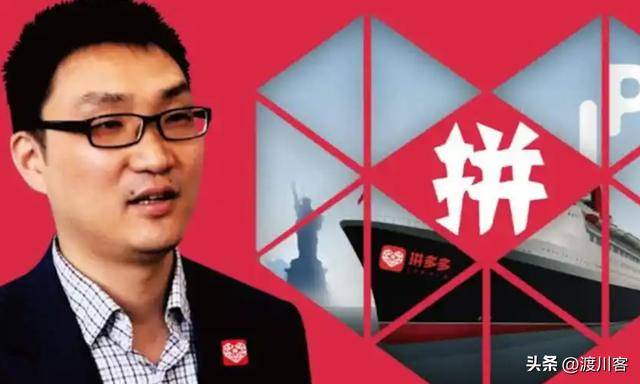
Core Viewpoint - Pinduoduo, after ten years in the market, adopts a low-profile strategy amidst fierce competition in the internet sector, focusing on supply chain, logistics, and technology rather than engaging in direct confrontations with competitors [2][57]. Group 1: Company Milestones and Strategy - Pinduoduo celebrates its tenth anniversary with minimal fanfare, contrasting with other companies that typically hold grand celebrations [4]. - The company acknowledges a slowdown in growth and lack of sustainable profits during its earnings call, which raises questions about its future strategy [6]. - Pinduoduo employs a "flanking strategy" in the competitive landscape, particularly in the national subsidy war, adapting its approach to secure subsidies and maintain competitive pricing [8][10]. Group 2: Market Adaptation and Innovations - Pinduoduo shifts from a "light operation" model to establish subsidiaries aimed at securing subsidy qualifications and lowering prices on key products [11]. - The company capitalizes on the shift in subsidy focus from large appliances to fast-moving consumer goods, reinforcing its reputation for low prices [13]. - A new smart coupon system is being tested to retain potential buyers by offering targeted discounts based on user behavior [15][16]. Group 3: Expansion and Growth - Pinduoduo's "Westward Plan" aims to penetrate previously underserved regions, enhancing its logistics capabilities and expanding its market reach [18]. - The unexpected rise of "Duoduo Grocery" fills the market gap left by competitors, leading to significant growth in community group buying [20][22]. - By September 2024, "Duoduo Grocery" achieves a GMV close to 300 billion yuan, with growth rates exceeding 60% [26]. Group 4: International Strategy - Pinduoduo's international platform, Temu, expands rapidly, covering nearly 90 countries and achieving a revenue target of $90 billion for 2024 [30][32]. - Temu's strategy includes aggressive subsidies in European markets to attract price-sensitive consumers, while also focusing on compliance and local operations [35][37]. Group 5: Financial Performance and Industry Impact - Pinduoduo's financial outlook shows a profit exceeding 100 billion yuan in 2024, with a strong cash reserve of over 400 billion yuan, positioning it well against industry risks [43]. - The company's strategies have disrupted the e-commerce landscape, forcing competitors like Alibaba and JD to adopt low-price strategies [45]. - The community group buying sector is transformed, with "Duoduo Grocery" emerging as a dominant player following the exit of Meituan [47].


消费出海先锋,迈入跨境生态出海时代(下)
Sou Hu Cai Jing· 2025-12-18 10:26
Demand - The global e-commerce penetration rate is increasing, accelerated by the pandemic, with global e-commerce retail sales reaching $5.4 trillion in 2022 and expected to reach approximately $6 trillion in 2023. The penetration rate rose from 7% in 2015 to 19% in 2022, projected to reach 23% by 2026 [3][4] - The e-commerce market is concentrated in the Asia-Pacific and North America/Europe regions, which account for about 88% of the global market. Emerging markets like Southeast Asia, the Middle East, and Africa show strong growth potential [3][4] - The U.S. and Western Europe are key markets for consumer goods due to high GDP per capita and strong consumer willingness, while the Middle East offers a favorable trade environment and Southeast Asia has a large population with significant consumption potential [3][4] Supply - Amazon holds a dominant position in the e-commerce industry across North America, Western Europe, and other regions, with a global market share of approximately 15% in 2022. Over 50% of cross-border sellers prefer Amazon as their platform [5][7] - Temu has pioneered a fully managed operation model since September 2022, attracting domestic sellers and global buyers, leading to a trend among platforms to adopt similar models [7] - China has a strong supply chain advantage, providing a rich and high-quality product base for cross-border e-commerce, which also drives the digital transformation of its manufacturing sector [8] - The cross-border direct shipping and overseas warehouse model is currently mainstream, with over 2,000 overseas warehouses in China and a significant increase in the number of warehouses in emerging markets [9]


21特写|科技新贵为何扎堆去中东?
2 1 Shi Ji Jing Ji Bao Dao· 2025-12-17 09:31
Group 1 - Dubai is experiencing a tourism and exhibition peak during China's winter, showcasing a booming real estate sector and investment opportunities [1] - Chinese companies are increasingly looking to participate in the economic transformation of the Middle East rather than merely seeking quick profits [1][2] - The UAE, particularly Abu Dhabi, is focusing on cultural tourism, digitalization, and artificial intelligence, enhancing its visibility in China through marketing strategies [1] Group 2 - The Middle East is becoming a hotspot for Chinese enterprises, driven by long-term strategic plans like Saudi Arabia's "Vision 2030" and the UAE's "National Investment Strategy 2031" [2] - Chinese tech companies are exploring new sectors such as digital economy and artificial intelligence as they expand into the Middle East [2] Group 3 - Chinese entrepreneurs in Dubai are forming partnerships, such as the joint venture AutoLogiX with 7X Group to expand logistics services [5] - Several Chinese autonomous vehicle companies are announcing collaborations in Abu Dhabi, including plans for Robotaxi services and commercial operations [5] Group 4 - The UAE's logistics market is projected to grow steadily, driven by e-commerce and cross-border trade, with a market size exceeding $20 billion [8] - The presence of Chinese internet and e-commerce companies is increasing in the Middle East, with local consumers adopting platforms like Temu and Shein [7] Group 5 - The UAE's artificial intelligence market is expected to reach $46 billion by 2030, with a significant portion of local companies maintaining or increasing their AI investments [10] - Chinese tech firms are leveraging partnerships with local stakeholders to minimize costs and enhance market entry strategies in the Middle East [12]

特朗普心心念念的东西,中方转头给了别国,美国专家直呼拿中国没辙了
Sou Hu Cai Jing· 2025-12-16 23:35
Group 1 - The article discusses the renewed trade policies under Trump's second term, focusing on aggressive tariffs and sanctions aimed at China, particularly in sectors like semiconductors and high-end manufacturing [1][11] - Trump's administration aims to leverage tariffs as a negotiation tool to gain an upper hand in trade discussions, believing that economic pressure will force China to concede on issues like intellectual property and market access [1][11] - The response from China has been measured, with a focus on diversifying its export markets and strengthening regional partnerships, indicating a shift in its economic strategy away from reliance on the U.S. [1][11] Group 2 - The article highlights the impact of tariffs on U.S. consumers, noting that prices for various goods have increased by 10% to 20%, contributing to inflation concerns [1][11] - Despite the imposition of tariffs, China's export performance remains strong, with significant growth in exports to ASEAN, the EU, and the Middle East, suggesting a reduced dependency on the U.S. market [1][11] - The article points out that the U.S. trade deficit with China has decreased, but the overall trade deficit has widened, indicating structural issues within the U.S. economy [1][11] Group 3 - The article emphasizes the long-term strategic differences between the U.S. and China, with the U.S. focusing on short-term gains through tariffs while China invests in technology and infrastructure for future growth [1][11] - It notes that the U.S. is losing its position as the sole rule-maker in global trade, as other countries are increasingly seeking multilateral cooperation over unilateral actions [1][11] - The narrative suggests that the ongoing trade tensions are not just about tariffs but reflect deeper ideological differences regarding economic governance and global trade practices [1][11]
Dlaczego wciąż mówimy: „nie mam się w co ubrać”? | Zofia Kulewicz | TEDxUMED
TEDx Talks· 2025-12-16 17:15
Szacuję się, że rocznie na świecie generujemy 100 miliardów sztuk nowych ubrań. Jednocześnie co sekundę na wysypisko śmieci trafia śmieciarka pełna używanych tekstyliów co sekundę. Przeciętnie jedno ubranie nosimy od siedmiu do 10 razy, zanim przestaje być zupełnie nienoszona.Ja nazywam się Zofia Kulewicz i w 2015 roku, kiedy zaczęłam pracę jako stylistka, zaczynałam pracę nad stylem moich klientów zazwyczaj od przeglądu szafy, dlatego że najpierw chciałam poznać nie tylko zawartość szafy, ale też historię ...