国电南瑞

Search documents
月度用电量连续两个月破万亿!限电到电力自由,中国做对了什么?
Sou Hu Cai Jing· 2025-10-06 14:29
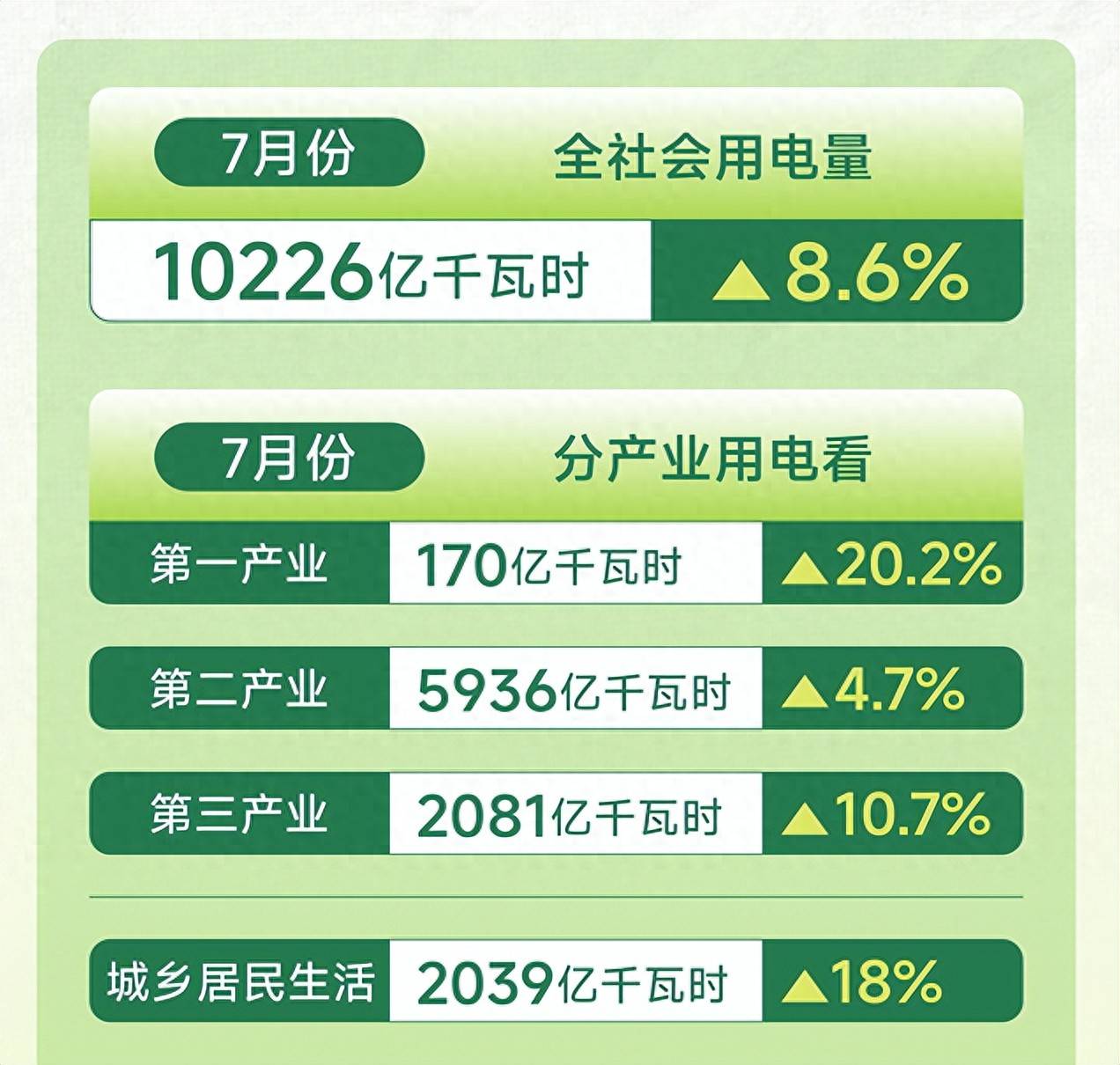
Core Insights - China's electricity consumption reached an unprecedented 1 trillion kilowatt-hours in July and August, marking a significant milestone in global energy consumption [1][3] - This consumption level is equivalent to the annual electricity usage of Japan or the combined annual usage of Germany and France, highlighting China's rapid energy growth [3] - The increase in electricity consumption is driven by advanced manufacturing sectors, particularly in new energy vehicles, lithium batteries, and photovoltaic products, as well as data centers supporting AI and digital economies [4][7] Group 1: Electricity Consumption and Structure - The record electricity consumption reflects a shift from previous years when power shortages were common, showcasing improvements in energy supply and infrastructure [3][4] - The growth in electricity usage is attributed to two main sectors: advanced manufacturing and AI-driven data centers, both of which require substantial energy [4][7] Group 2: Technological Innovations - China's unique technological solutions, such as the ultra-high voltage (UHV) power grid, enable efficient long-distance electricity transmission, overcoming geographical resource distribution challenges [8][10] - The UHV technology allows for minimal energy loss during transmission, with over 50,000 kilometers of UHV lines constructed, accounting for 90% of the global total [10] Group 3: Energy Transition and Market Reforms - A significant shift in energy production has occurred, with renewable energy sources like wind and solar surpassing coal in installed capacity, reflecting a strategic transition to a diversified energy mix [11][12] - China's energy market reforms have kept electricity prices stable for consumers, contrasting sharply with rising energy costs in Europe, thus maintaining a competitive edge in industrial electricity pricing [15][16] Group 4: Future Implications - The increasing demand for electricity from AI and digital sectors positions electricity as the "new oil" in the digital economy, with China poised to leverage its energy advantages in future global competitions [18] - The ongoing development of large-scale hydropower projects, such as those planned along the Yarlung Tsangpo River, further solidifies China's energy strategy and capacity for sustainable growth [18][19]

人工智能发展挑战电力供应 中国加快能源算力统筹布局
Zhong Guo Xin Wen Wang· 2025-10-06 03:31
Core Insights - The competition in AI development is increasingly becoming a battle for energy resources, as major tech companies invest heavily in data centers and AI infrastructure [2][6] - By 2035, global data centers are projected to consume over 4% of the world's electricity, ranking as the fourth largest electricity consumer globally, behind China, the US, and India [4] - China's energy infrastructure and strategic planning position it advantageously in the global AI race, with significant electricity generation capabilities and advanced transmission systems [7][8] Energy Consumption and Infrastructure - A 1,000 MW data center consumes electricity equivalent to that of a medium-sized city for a year [1] - In 2024, China's electricity generation is expected to exceed 10 trillion kWh, accounting for one-third of global production [8] - The "East Data West Computing" initiative is crucial for optimizing resource allocation, directing data demands from the east to the energy-rich west [9][10] Sustainability and Future Goals - AI's energy consumption poses challenges for carbon emissions, necessitating a shift towards renewable energy sources like wind and solar [11] - China is setting phased goals for integrating AI with energy systems, aiming to enhance energy production safety, optimize grid management, and improve renewable energy planning [12] - The synergy between energy and computing resources is essential for driving a sustainable and efficient future in AI development [12]
假期首日,全国高速公路充电量狂飙近42%
2 1 Shi Ji Jing Ji Bao Dao· 2025-10-04 16:09
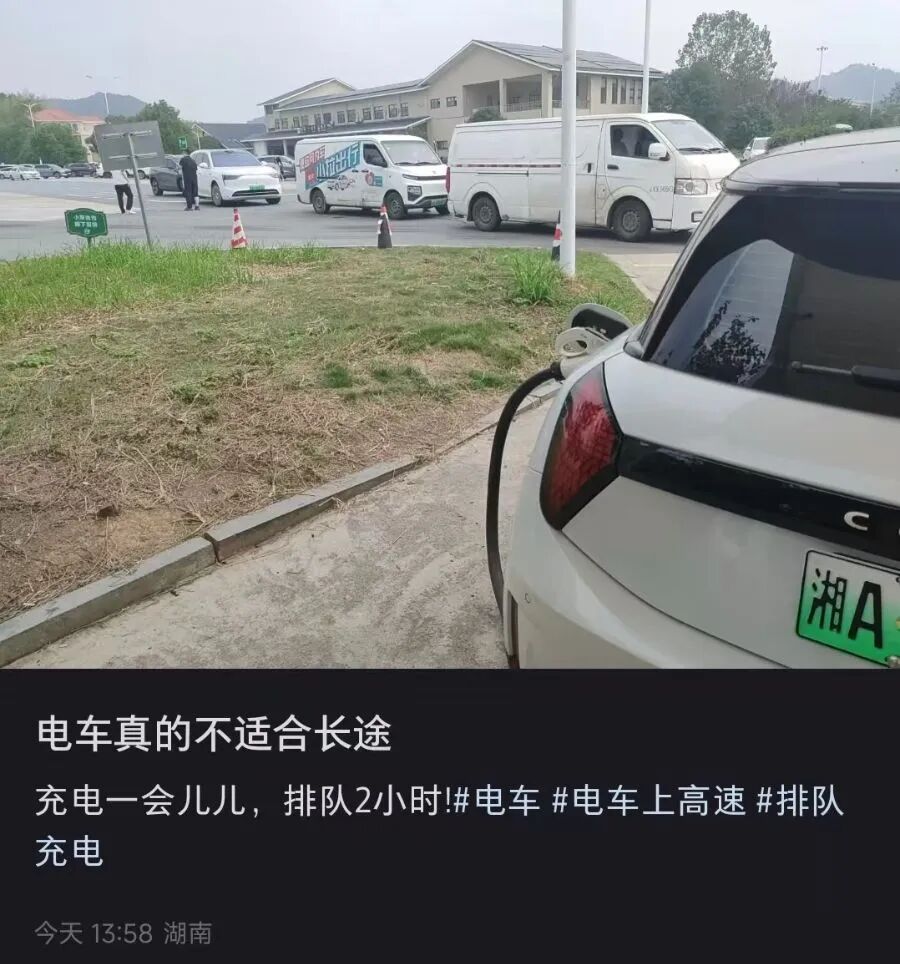
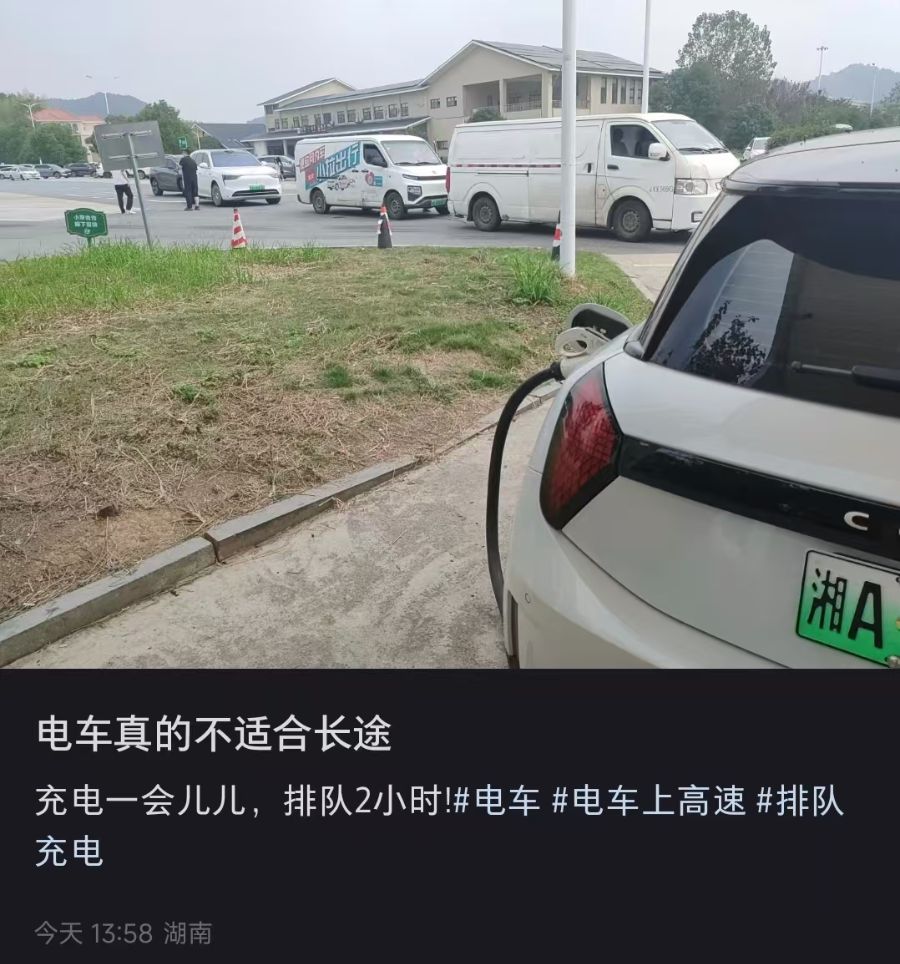
Core Insights - The article highlights the significant surge in electric vehicle (EV) charging demand during the recent holiday period, revealing a mismatch between the rapid adoption of EVs and the insufficient charging infrastructure [1][2][7]. Group 1: Charging Demand and Infrastructure - On the first day of the holiday, nationwide highway charging reached 17.49 million kilowatt-hours, a year-on-year increase of 41.95%, marking a historical high [1]. - By the end of 2024, the total number of charging facilities in the country is expected to reach 12.818 million, with a charging station to vehicle ratio improved to 1:1.8 in the first half of this year [2]. - Despite the increase in charging infrastructure, over one-third of highway charging stations operated at full capacity during the holiday, indicating a critical supply-demand imbalance [2]. Group 2: Charging Anxiety and Solutions - The phenomenon of "charging anxiety" among EV owners stems from both short-term surges in demand and long-term supply imbalances [8]. - Emergency measures have been implemented in various regions, such as deploying mobile charging robots in busy service areas to alleviate immediate pressure [8]. - Adjustments in operational mechanisms, like reducing the default charging limit from 100% to 80%, have been made to enhance overall charging station utilization and reduce wait times [8]. Group 3: Long-term Planning and Structural Changes - To address the long-term challenges of charging infrastructure, a comprehensive approach is necessary, including the development of high-capacity charging facilities and improved power supply at service areas [9]. - The government has issued guidelines to enhance the planning and construction of high-power charging facilities, emphasizing the need for a balanced layout of charging options [9][11]. - The article stresses the importance of integrating urban and rural charging networks to prevent future charging difficulties from extending beyond holiday travel to everyday scenarios in less developed areas [11].
21评论|假期高速电动车“人等桩”:既要救近火、也要引远水
2 1 Shi Ji Jing Ji Bao Dao· 2025-10-04 13:47
Core Insights - The rapid increase in electric vehicle (EV) adoption in China has led to a significant surge in charging demand, particularly during peak travel periods like the recent national holidays [1][2] - The current charging infrastructure is insufficient to meet this demand, with over one-third of highway charging stations operating at full capacity during peak times [2][8] - The government and industry stakeholders are implementing both short-term and long-term strategies to address the charging challenges faced by EV owners [8][9] Group 1: Charging Demand and Infrastructure - During the recent holiday, nationwide highway charging reached a record high of 17.49 million kilowatt-hours, a year-on-year increase of 41.95% [1] - By the end of 2024, the total number of charging facilities in China is expected to reach 12.818 million, with a charging station to vehicle ratio improved to 1:1.8 [2] - The charging volume during the 2024 holiday was 72.15 million kilowatt-hours, with a daily average of 10.31 million kilowatt-hours, reflecting a 34% increase from the previous holiday [7] Group 2: Challenges and Solutions - The "charging anxiety" experienced by EV owners is a result of both short-term surges in demand and long-term supply-demand imbalances [8] - Emergency measures, such as deploying mobile charging robots in busy service areas, have been introduced to alleviate immediate pressure on charging stations [8] - Adjustments in operational mechanisms, like reducing the default charging limit from 100% to 80%, have been implemented to enhance charging station utilization and reduce wait times [8] Group 3: Long-term Planning and Infrastructure Development - The government has emphasized the need for long-term planning to address the structural challenges in charging infrastructure, including enhancing power supply capacity at highway service areas [9] - Recommendations include creating a balanced layout of charging facilities and integrating value-added services at charging stations to improve investment returns [11] - Addressing the charging infrastructure needs in underdeveloped areas is crucial to prevent future charging difficulties from extending beyond holiday travel to everyday use [11]
从贵州茅台到宁德时代,一文速览A股“含科量”五年巨变
Zhong Guo Zheng Quan Bao· 2025-10-04 09:20
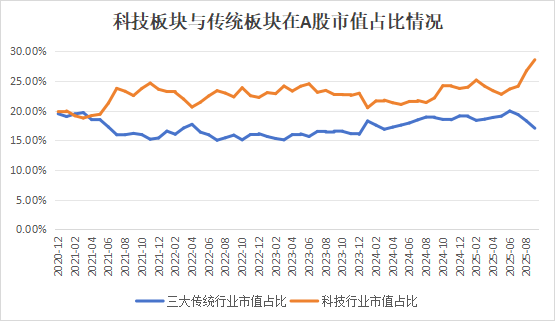
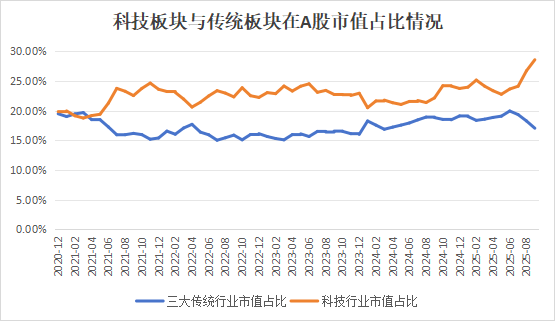
Group 1 - The core viewpoint of the article highlights the shift in market capitalization from traditional sectors to the technology sector, reflecting China's economic transition from factor-driven to innovation-driven growth [1][6] - During the "14th Five-Year Plan" period, the market capitalization of the technology sector increased significantly, with its share rising from 19.86% at the end of the "13th Five-Year Plan" to 28.60% [1][4] - The total number of listed companies in the A-share market reached 5,436, with a total market capitalization of 105.85 trillion yuan as of September 30, marking an increase of 1,443 companies and 27.26 trillion yuan compared to the end of the "13th Five-Year Plan" [1][6] Group 2 - Within the technology sector, the electronic industry leads with a total market capitalization of 13.47 trillion yuan, followed by the power equipment industry at 8.23 trillion yuan, and the computer and communication industries at 5.10 trillion yuan and 3.47 trillion yuan, respectively [2][4] - The traditional sectors, including banking, non-bank financials, and real estate, have a combined market capitalization of 18.06 trillion yuan, which is significantly lower than the technology sector's 30.27 trillion yuan [2][4] - The number of technology companies with a market capitalization exceeding 100 billion yuan increased from 28 at the end of the "13th Five-Year Plan" to 44, indicating a growing dominance of technology firms in the market [8][7] Group 3 - The revenue of many technology companies has seen substantial growth, with CATL reporting a total revenue of 178.9 billion yuan in the first half of 2025, a year-on-year increase of 7.3%, and a net profit of 30.5 billion yuan, up 33.3% [9] - The number of technology companies among the top 50 listed companies increased from 5 at the end of the "13th Five-Year Plan" to 13, showcasing the rising prominence of technology firms in the market [8] - The capital market has accelerated its support for technology innovation, with over 90% of newly listed companies being technology-related or having high technological content [6]


从贵州茅台到宁德时代 一文速览A股“含科量”五年巨变
Zhong Guo Zheng Quan Bao· 2025-10-04 09:18
Group 1 - The core viewpoint is that the market capitalization of CATL has surpassed that of Kweichow Moutai, reflecting a shift in the capital market and the transition of the Chinese economy from factor-driven to innovation-driven [1] - During the "14th Five-Year Plan" period, the market capitalization structure of A-shares has undergone significant changes, with the technology sector's market capitalization share rising from 19.86% at the end of the "13th Five-Year Plan" to 28.60% [1][6] - The number of technology companies in the top 50 by market capitalization has increased significantly, with the number of technology companies with a market capitalization of over 100 billion rising from 28 to 44 [1][8] Group 2 - As of September 30, the total number of A-share listed companies reached 5,436, with a total market capitalization of 105.85 trillion yuan, an increase of 1,443 companies and 27.26 trillion yuan compared to the end of the "13th Five-Year Plan" [2][4] - The technology sector's total market capitalization is 30.27 trillion yuan, significantly exceeding the combined market capitalization of traditional sectors such as banking, non-bank financials, and real estate, which totals 18.06 trillion yuan [2][4] - The electronic industry leads the technology sector with a market capitalization of 13.47 trillion yuan, followed by the power equipment industry at 8.23 trillion yuan [2][4] Group 3 - The number of companies in the technology sector with a market capitalization exceeding 100 billion has increased from 28 at the end of the "13th Five-Year Plan" to 44, indicating robust growth in the sector [7][8] - The revenue of many technology companies has seen significant increases, with CATL reporting a total revenue of 178.9 billion yuan in the first half of 2025, a year-on-year increase of 7.3% [9]
中国输配电设备(电力设备)行业运营模式与投资规模分析报告2025~2031年
Sou Hu Cai Jing· 2025-10-04 01:34
Overview - The report provides a comprehensive analysis of the global and Chinese power transmission and distribution equipment industry, including market trends, technological advancements, and competitive landscape [2][3][4]. Industry Definition and Classification - Power transmission and distribution equipment is defined and differentiated from similar concepts, with a clear classification of the industry [3][4]. - The report outlines the regulatory framework and standard systems governing the industry in China [3][4]. Global Industry Development - The global power transmission and distribution equipment industry has a rich development history, with current technological and supply-demand conditions analyzed [4][5]. - The competitive landscape includes insights into mergers and acquisitions within the industry [4][5]. Market Size and Trends - The report estimates the market size of the global power transmission and distribution equipment industry and provides forecasts for the next five years [4][5]. - Key trends include technological advancements and shifts in market demand [4][5]. Chinese Industry Analysis - The development history and technological progress of the Chinese power transmission and distribution equipment industry are detailed, including research and innovation efforts [5][6]. - The report discusses the import and export statistics of power transmission and distribution equipment, highlighting trade dynamics [5][6]. Market Participants - An analysis of market participants includes types of companies, their entry strategies, and the distribution of registered enterprises across regions [5][6]. - The report also examines the bidding market for power transmission and distribution equipment in China, including key players and their bidding behaviors [5][6]. Competitive Landscape - The competitive dynamics of the Chinese power transmission and distribution equipment industry are analyzed, including market concentration and competitive clusters [6][7]. - The report employs Porter's Five Forces model to assess the competitive environment [6][7]. Investment and Financing - The report outlines the investment landscape, including sources of funding, investment trends, and notable financing events in the industry [6][7]. - Mergers and acquisitions are discussed, highlighting motivations and significant case studies [6][7]. Supply Chain and Cost Structure - The structure of the power transmission and distribution equipment industry supply chain is mapped out, along with an analysis of cost components [7][8]. - The report examines the market for raw materials essential to the industry, such as silicon steel and copper [7][8]. Product Market Analysis - The report provides insights into various segments of the power transmission and distribution equipment market, including transformers, switchgear, capacitors, and more [8][9]. - Trends in product development, such as miniaturization and increased reliability, are highlighted [8][9]. Application Market Analysis - The report analyzes application scenarios and market distribution for power transmission and distribution equipment, including power grid construction and renewable energy integration [9][10]. - Specific sectors such as rail transportation and automotive manufacturing are examined for their demand for power transmission and distribution equipment [9][10]. SWOT Analysis - A SWOT analysis of the Chinese power transmission and distribution equipment industry identifies strengths, weaknesses, opportunities, and threats [17][18]. - The report discusses the macroeconomic environment, social factors, and policy impacts on the industry [17][18]. Future Outlook - The report forecasts the future development potential of the Chinese power transmission and distribution equipment industry, identifying key growth areas and trends [18][19]. - It emphasizes the importance of technological innovation and market adaptation in shaping the industry's future [18][19].



超1000万千瓦时,创新高!多样灵活举措满足新能源汽车假日充电补能需求
Yang Shi Wang· 2025-10-02 08:57
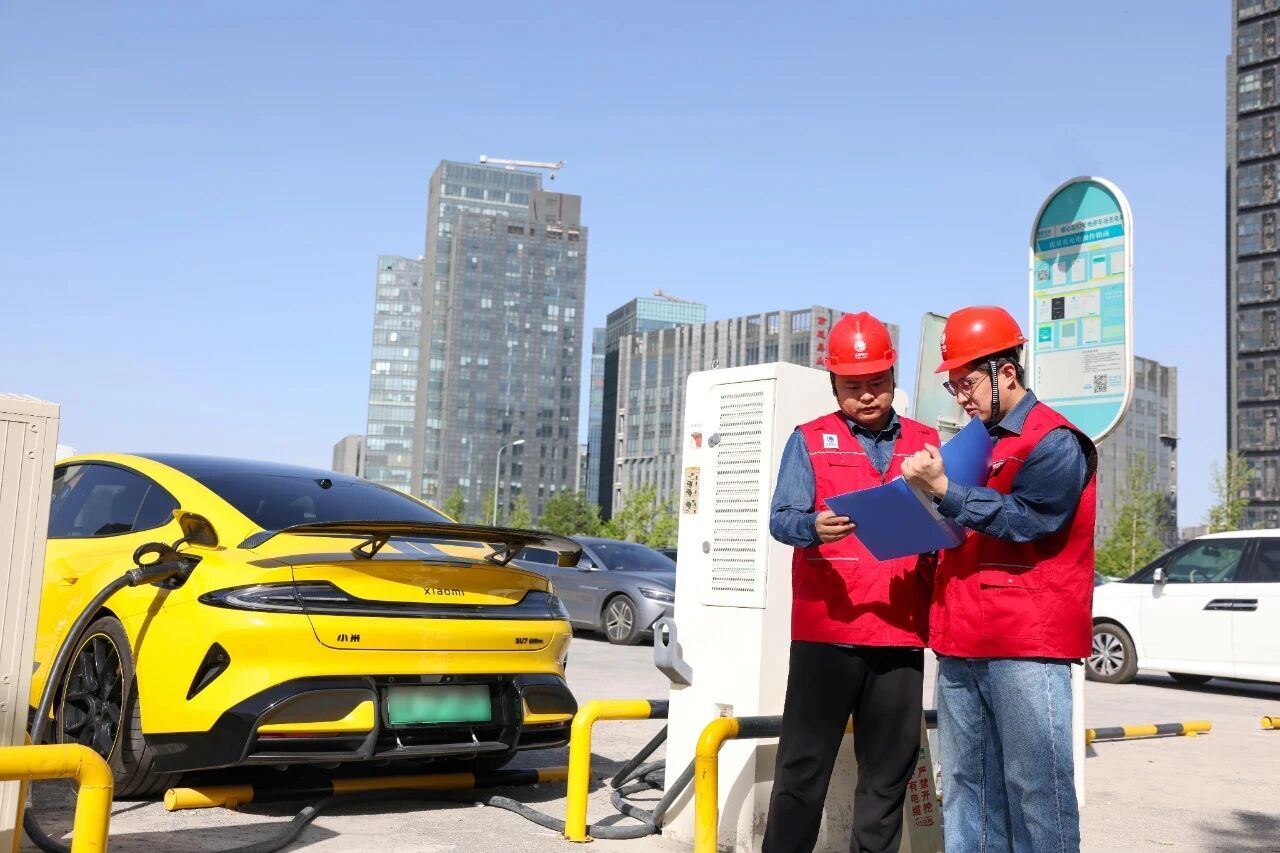
Core Insights - The demand for electric vehicle charging surged during the holiday period, with the State Grid's smart vehicle networking platform reporting a record charging volume exceeding 10 million kilowatt-hours on the first day of the holiday, marking an 18% year-on-year increase [7]. Group 1: Charging Infrastructure Enhancements - Various localities implemented flexible measures to ensure smooth charging for electric vehicle owners, including the installation of temporary mobile charging stations and additional fast-charging points at service areas [1]. - In Zhejiang, the local power department doubled the number of operational staff to monitor and assist with the 20 charging stations, ensuring a better charging experience for vehicle owners [3]. - The power departments across regions increased the application of digital platforms to optimize charging station usage, such as a capacity assessment platform in Anhui that analyzes charging demand every 15 minutes [5]. Group 2: Strategic Resource Allocation - In Jiangsu, the power department relocated 40 underutilized charging stations to high-traffic areas and tourist attractions to facilitate quicker charging for vehicle owners during the holiday [8]. - The smart vehicle networking platform is capable of real-time monitoring of over 700 charging stations, allowing for immediate notifications to maintenance staff in case of charging failures [8]. Group 3: Notable Charging Stations - The highest number of charging sessions occurred at specific stations, including the liquid-cooled supercharging station at the Jian De service area on the Hangqian Expressway and the second phase of the charging station at Ouyang Hai service area in Chenzhou [10].
“十一”假期自驾出行人次近19亿,多地多措保障加油充电需求
Di Yi Cai Jing· 2025-09-30 15:01
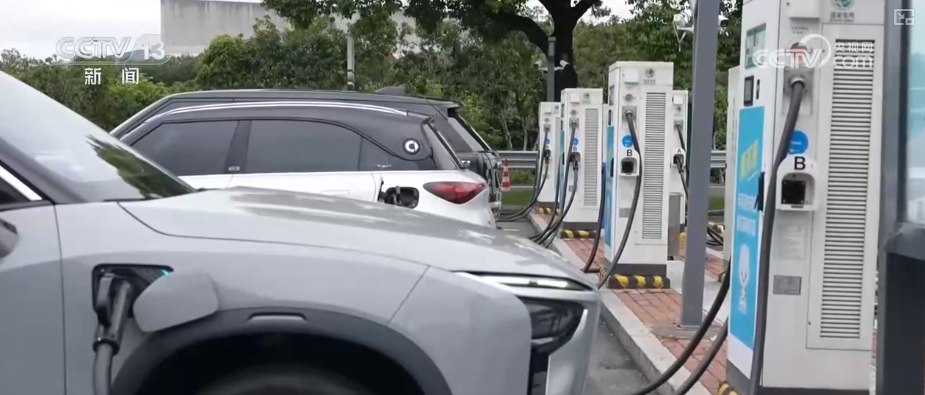
Core Insights - The upcoming National Day holiday coinciding with the Mid-Autumn Festival is expected to drive significant travel and family visit demand, with an estimated 2.36 billion trips anticipated during the 8-day holiday period, averaging about 295 million trips per day, representing a 3.2% increase compared to last year [1] Group 1: Travel Trends - Self-driving remains the primary mode of travel, with predictions indicating 1.87 billion self-driving trips, accounting for approximately 80% of total travel volume [1] - Peak travel times are expected at the beginning and end of the holiday, with October 1st projected to see over 340 million trips, marking a historical peak [3] - The demand for car rentals is high, with over 58% of rental bookings for 3 days or more, particularly concentrated from September 30 to October 2 [1] Group 2: Electric Vehicle (EV) Usage - Electric vehicles are anticipated to play a significant role during the holiday, with an average of 12.5 million EVs on the road daily, making up nearly 20% of total traffic, a 30% increase from the same period in 2024 [3] - Charging demand is expected to peak on September 30 and October 1, with significant charging activity anticipated during these times [3] Group 3: Infrastructure and Services - The government is implementing measures to enhance charging services at busy service areas, with a focus on tailored strategies for each area to improve capacity [4] - Innovative pricing strategies, such as offering discounts for charging to 80%-90% capacity, are being introduced to manage charging times and alleviate congestion at service areas [4] - The National Energy Administration is accelerating the construction of high-power charging facilities, aiming to exceed 100,000 units by the end of 2027 to improve the travel experience for EV owners [4]
年耗1660亿度电!中国狂建电站,只为不被卡脖子,比芯片更致命
Sou Hu Cai Jing· 2025-09-30 08:45
Group 1 - The core of the competition between China and the US in the AI era is not just about chips but the availability of cheap and stable electricity [2][31] - Data centers in the US are relocating to Texas and Iowa for cheaper electricity, highlighting the importance of power supply in the AI industry [2] - China's ambition extends beyond catching up in chips and data centers to addressing a complex "power paradox" that will determine the future of its AI industry [4] Group 2 - In 2024, China's newly installed photovoltaic capacity is expected to exceed the cumulative total of any other country in history, showcasing rapid growth in renewable energy [5] - By the end of March 2024, the combined installed capacity of wind and solar power reached 1.482 billion kilowatts, surpassing traditional coal power for the first time [7] - China is also leading in nuclear power construction, with 58 operational nuclear units and 27 under construction, indicating a shift towards cleaner energy sources [9] Group 3 - Despite the growth in renewable energy capacity, coal still contributes over half of China's electricity generation, with a staggering 5.5 trillion kilowatt-hours in 2024 [11] - The disparity between installed capacity and actual generation highlights the challenges of intermittent renewable energy sources like wind and solar [11][13] - The current energy system in China faces a dual challenge of spatial and temporal mismatches, with renewable resources concentrated in the west while demand is in the east [21][24] Group 4 - The rapid increase in electricity demand from data centers is projected to reach 1.0054 trillion kilowatt-hours by 2030, equivalent to the annual electricity consumption of major cities like Shanghai, Shenzhen, and Guangzhou [15][17] - The energy transition is not just a domestic issue but a strategic response to external pressures, such as the EU's carbon tax plans and green trade agreements [29] - The future of AI competition may hinge on the ability to provide affordable, stable, and clean energy rather than just advancements in chip technology [31][32]