宝钢股份

Search documents
美国变压器排到2026年赔违约金,中国专列3个月送达,欧洲客户抢着下单
Sou Hu Cai Jing· 2025-11-12 05:52
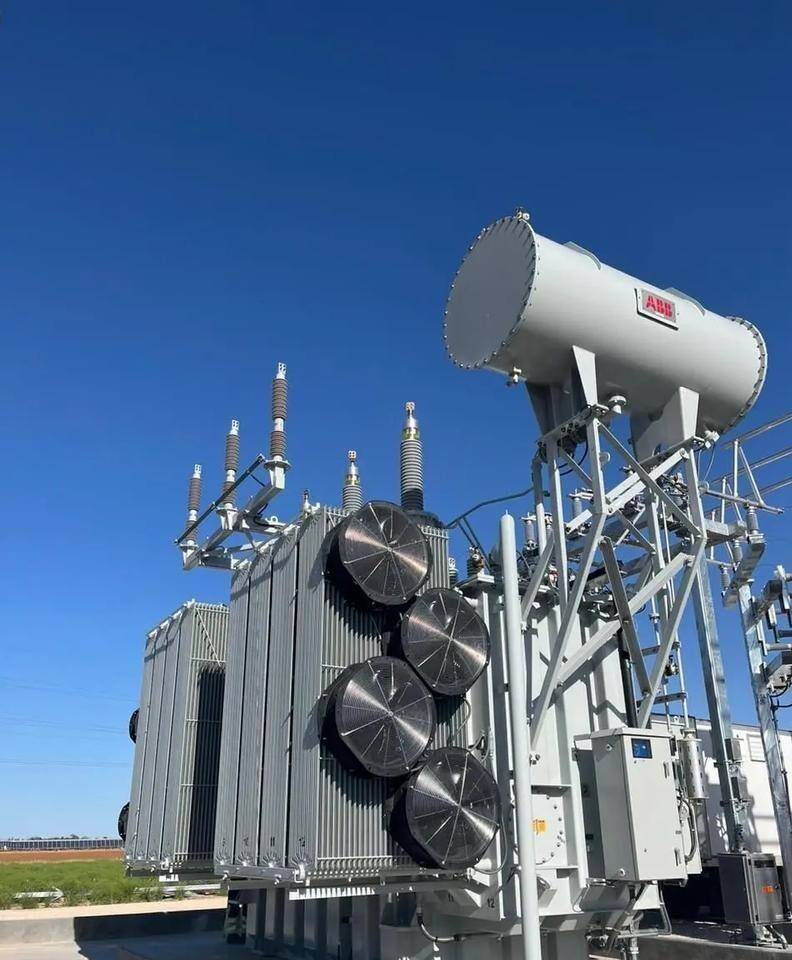
Core Insights - China's transformer exports reached 29.711 billion yuan in the first eight months of 2025, marking a year-on-year increase of 51.42%, positioning China as a crucial player in the global power system amidst a transformer crisis in Europe and the U.S. [1] Group 1: Industry Challenges - The transformer shortage is significantly hindering energy transition projects across the U.S. and Europe, with many projects stalled due to supply chain disruptions [3] - In California, Meta's data center has transformer delivery schedules extending to 2026, leading to substantial penalty costs; over 20 states in the U.S. are forced to reuse outdated transformers, causing reliability issues [3] - The demand for transformers is surging, particularly from AI data centers and renewable energy projects, which require significantly more transformers compared to traditional power plants [3] Group 2: U.S. Tariff Impact - The U.S. imposed a 104% tariff on Chinese transformers, resulting in a price increase from $3,330 to $6,800 per unit, despite a domestic supply that meets only 20% of demand [5] - The tariff has led to a self-imposed blockade, prompting the U.S. to quietly approve exemptions while European countries are opting for pragmatic cooperation with China [5] Group 3: China's Competitive Advantage - China's dominance in the transformer market is attributed to its comprehensive control over the entire supply chain, producing all core components domestically [7] - The efficiency of Chinese manufacturers allows for a delivery time of 10 months for large transformers, with urgent orders fulfilled in just 3 months, compared to 2-4 years for similar products in Europe and the U.S. [7] - Innovations in transformer technology, such as the world's first 500 kV plant oil transformer and advanced supercapacitors, showcase China's ability to surpass mere price competition [9]

多国总统见证世界级矿山投产,中资深度参与
Di Yi Cai Jing· 2025-11-12 05:21
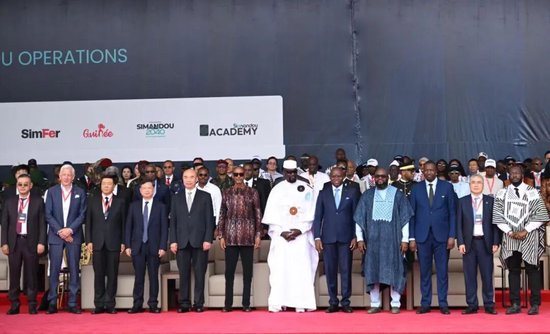
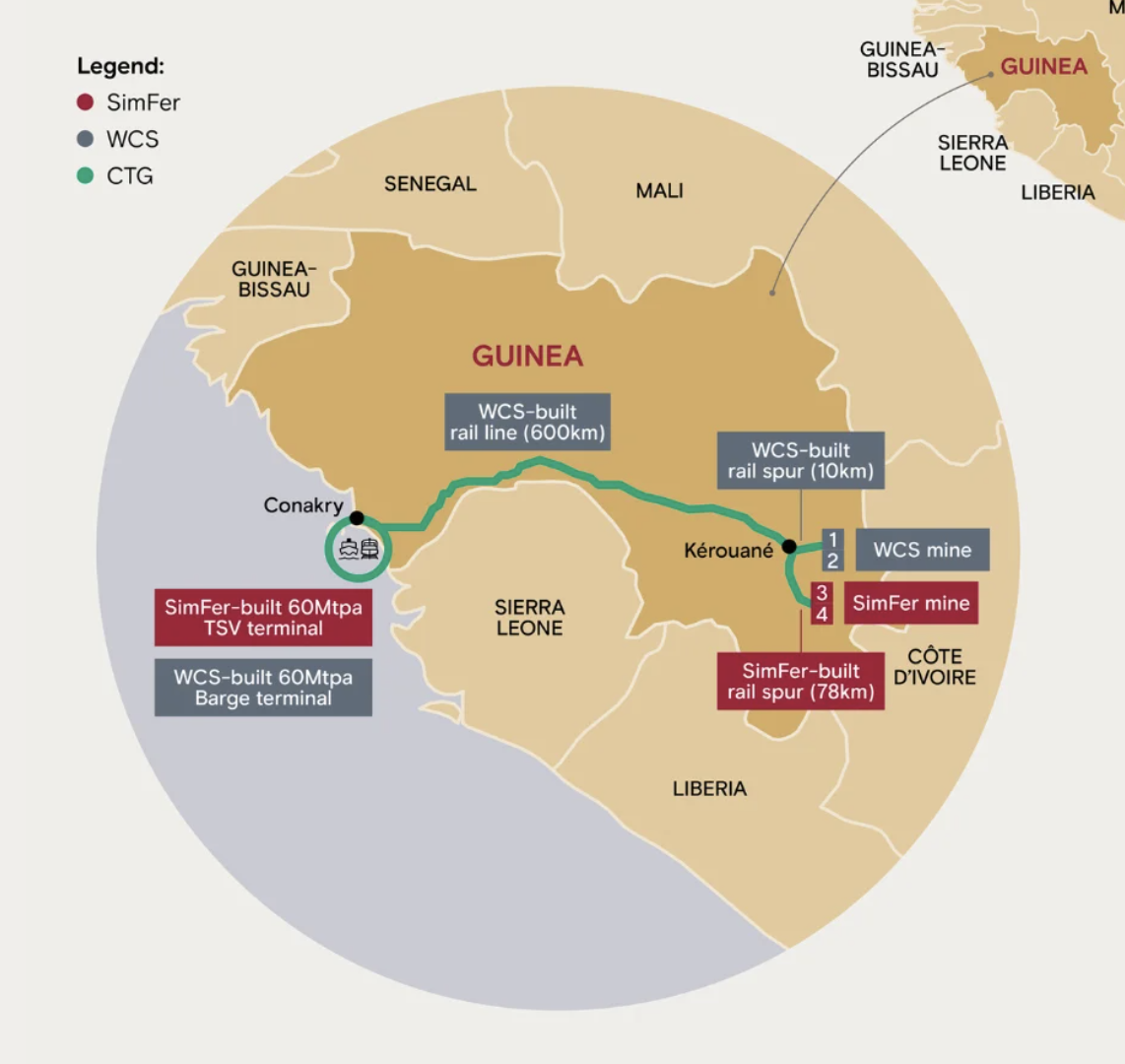
Core Viewpoint - The launch of the Simandou iron ore project in Guinea marks a significant milestone in the global mining industry, with deep involvement from Chinese enterprises, which is expected to influence the iron ore market and pricing dynamics in the future [3][4][7]. Group 1: Project Overview - The Simandou iron ore project is one of the largest and highest quality mining projects globally, with a total investment exceeding $20 billion and proven reserves of 4.4 billion tons, with an average iron content of over 65% [4]. - The project includes mining, railway, and port systems, with a total production capacity of 120 million tons per year once fully operational [4]. - The project is developed by the Guinean government, SimFer, and the Winning Consortium, with the infrastructure and equipment to be operated by the Cross Guinea Company, which is jointly owned by SimFer and Winning Consortium [4]. Group 2: Stakeholders and Ownership - The Winning Consortium consists of Weili International Group, Weiqiao Aluminum, and other companies, holding a collective 51% stake, while Baowu Resources holds 49% [4]. - Simfer Jersey, which holds the rights to the Simandou blocks 3 and 4, is a joint venture between Rio Tinto (53%) and Chalco Iron Ore (47%), with Chalco Iron Ore being led by Chalco Group and including several Chinese state-owned enterprises [5]. Group 3: Market Impact - The involvement of Chinese companies in the Simandou project is expected to significantly impact the iron ore market and pricing, potentially altering the global mining landscape [7]. - The successful operation of the Simandou project will provide a solid green raw material foundation for the steel industry in China and globally [7]. - China's iron ore imports from January to October 2023 reached 1,028.886 million tons, a year-on-year increase of 0.7%, with an average import price of $96.6 per ton [8]. - It is projected that the total iron ore import volume for the year will reach 1.2 billion tons, but domestic crude steel production is expected to continue its slow decline [8].



多国总统见证世界级矿山投产,中资深度参与
第一财经· 2025-11-12 03:41
2025.11. 12 本文字数:1406,阅读时长大约2分钟 作者 | 第一财经 陈姗姗 当地时间11月11日,西芒杜项目投产启动仪式在几内亚马瑞巴亚港举行,几内亚总统马马迪·敦布 亚,习近平主席特别代表、国务院副总理刘国中,卢旺达总统卡加梅,加蓬总统恩圭马出席投产仪 式。 多国总统参加一个矿石新项目的投产,在此前极为罕见,也侧面反映出这一世界级矿山项目的重要意 义。 中方深度参与的世界级矿山 位于非洲西部几内亚共和国的西芒杜铁矿项目,是全球质量最优、规模最大的矿山项目之一,工程涵 盖矿山、铁路、港口等系统,总投资逾200亿美元。其中,矿山分为北部、南部两个区块,已探明储 量44亿吨,平均全铁品位65%以上,建成后总产能可达1.2亿吨/年。 目前,矿山、铁路及驳船港口系统基础设施的测试和调试工作正在进行中,部分矿石已开始通过跨几 内亚铁路线从矿区运输至港口。 记者注意到,中国宝武董事长胡望明,中铝集团总经理王石磊以及力拓集团首席执行官乔德(Simon Trott)也参加了投产启动仪式,两家企业也是西芒杜项目的重要股东。 西芒杜项目由几内亚共和国政府、 SimFer和赢联盟 共同开发。项目正式投产后,所有共建 ...
多国总统见证世界级矿山投产,中资深度参与,如何改变全球矿山格局
Di Yi Cai Jing· 2025-11-12 03:32
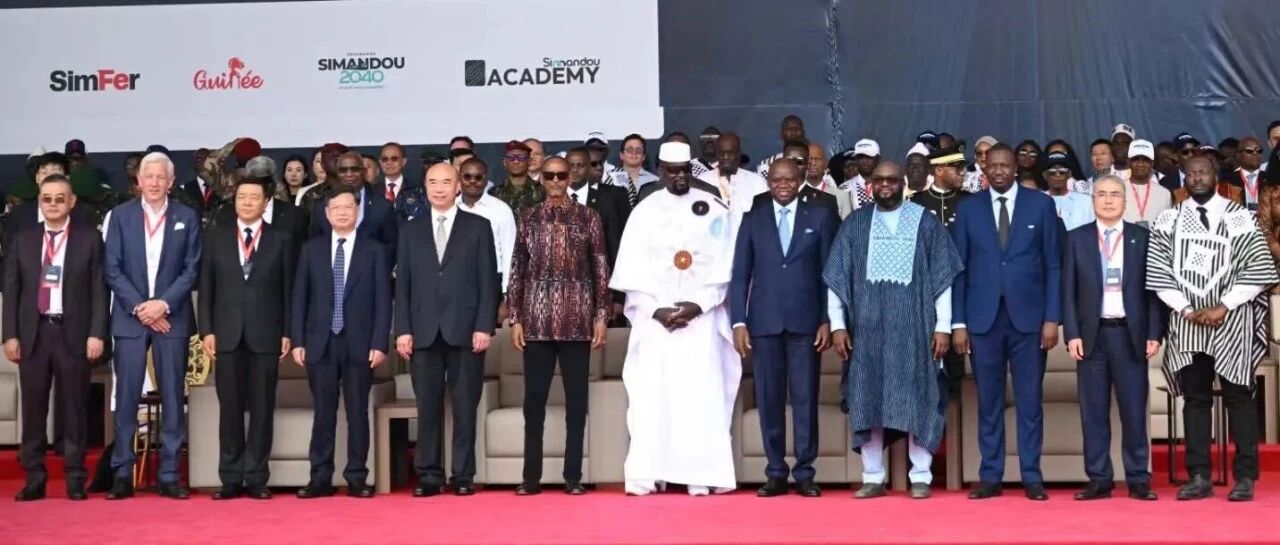
Core Insights - The launch of the Simandou iron ore project in Guinea, attended by multiple heads of state, signifies its global importance and the strategic collaboration involved [1][3]. Group 1: Project Overview - The Simandou iron ore project is one of the largest and highest quality mining projects globally, with a total investment exceeding $20 billion [3]. - The project has proven reserves of 4.4 billion tons with an average iron content of over 65%, and it is expected to reach a total production capacity of 120 million tons per year [3]. - The infrastructure for mining, railways, and ports is currently undergoing testing, with some ore already being transported to the port [3]. Group 2: Stakeholders and Ownership - The project is developed by the Guinean government, SimFer, and the Winning Consortium, with the infrastructure and equipment to be operated by the Cross Guinea Company, which is jointly owned by SimFer and Winning Consortium [3]. - The Winning Consortium consists of several companies, including Waili International Group and Weiqiao Aluminum, holding a collective 51% stake, while Baowu Resources holds 49% [3]. - Simfer Jersey, which holds rights to blocks 3 and 4, is a joint venture between Rio Tinto (53%) and Chalco Iron Ore (47%), with Chalco being led by Chalco Group and including several Chinese state-owned enterprises [4]. Group 3: Market Impact - The deep involvement of Chinese companies in the Simandou project is expected to significantly influence the iron ore market and pricing dynamics, potentially altering the global mining landscape [6]. - The successful operation of the Simandou project will provide a solid green raw material foundation for the steel industry in China and globally [6]. - Although the initial impact on iron ore imports may be limited, it poses a potential constraint for other mining companies and enhances China's negotiating power with major mining firms [6]. - China's iron ore imports from January to October 2023 reached 1,028.886 million tons, a year-on-year increase of 0.7%, with an average import price of $96.6 per ton [6]. - Forecasts suggest that iron ore imports will reach 1.2 billion tons for the year, but domestic crude steel production is expected to decline slowly, leading to downward pressure on iron ore prices [7].
银河期货每日早盘观察-20251112
Yin He Qi Huo· 2025-11-12 03:14
Report Industry Investment Rating No relevant content provided. Report's Core View The report provides a daily morning observation of various futures markets, including financial derivatives, agricultural products, black metals, and non - ferrous metals. It analyzes the market conditions, important news, trading logic, and offers corresponding trading strategies for each sector. Summary by Related Catalogs Financial Derivatives Stock Index Futures - Market situation: The stock market showed high - low switching and index fluctuations. The main stock index futures contracts fell, with different changes in trading volume and positions. The market is expected to remain volatile until a consensus is formed [17][19][20]. - Trading strategy: For unilateral trading, high - low trading in a high - level range; for arbitrage, IM\IC long 2512 + short ETF cash - and - carry arbitrage; for options, bull spread at low prices [21]. Treasury Futures - Market situation: Treasury futures closed mostly flat. The spot bond yields fluctuated slightly, and the market lacked clear incremental positive drivers, limiting the upward space of futures bonds [22][23]. - Trading strategy: For unilateral trading, wait and see; for arbitrage, hold short 30Y - 7Y term spread positions and consider long T - contract inter - delivery spread at an appropriate time [23]. Agricultural Products Protein Meal - Market situation: The domestic supply pressure has improved, and the inventory has decreased slightly. The CBOT soybean index rose slightly, while the CBOT index fell [25]. - Trading strategy: For unilateral trading, wait and see; for arbitrage, wait and see; for options, sell a wide - straddle strategy [26]. Sugar - Market situation: International sugar prices fluctuated, and domestic sugar prices were slightly stronger. Global sugar production in major producing areas is increasing, while domestic sugar production is expected to increase, but import policies and high costs support the price [27][28][29]. - Trading strategy: For unilateral trading, conduct range trading; for arbitrage, short foreign sugar and long Zhengzhou sugar; for options, wait and see [30]. Oilseeds and Oils - Market situation: In October, Malaysian palm oil inventories increased as expected, and the oil market is in a bottom - grinding phase. Different oils have different supply and demand situations [31][32]. - Trading strategy: For unilateral trading, wait and see; for arbitrage, wait and see; for options, wait and see [33]. Corn/Corn Starch - Market situation: The spot price rebounded, and the futures market was strongly volatile. The US corn market is expected to be in a narrow - range shock, while the domestic corn spot price is short - term strong [34][35]. - Trading strategy: For unilateral trading, short - long on dips for the December US corn; wait and see for the January domestic corn, and consider short - selling at high prices with a stop - loss; wait for dips for the May and July contracts; for arbitrage, wait and see; for options, wait and see [36]. Live Hogs - Market situation: The pressure of hog slaughter increased, and the price declined slightly. The overall supply pressure remains due to high inventory [37][38]. - Trading strategy: For unilateral trading, lightly short; for arbitrage, wait and see; for options, sell a wide - straddle strategy [38]. Peanuts - Market situation: Peanut spot prices are strong, and the short - term market is strongly volatile. The price of imported peanuts is stable, and the oil mill has not made large - scale purchases [39][40]. - Trading strategy: For unilateral trading, the January contract is expected to be in a bottom - range shock, and lightly short - long the May contract with a stop - loss; for arbitrage, wait and see; for options, sell the pk601 - P - 7600 option [40]. Eggs - Market situation: Egg demand has improved, and the price has slightly rebounded. The inventory of laying hens is still high, and the short - term price increase space is limited [42][43][44]. - Trading strategy: For unilateral trading, close previous short positions and wait and see; for arbitrage, wait and see; for options, wait and see [44]. Apples - Market situation: New apples are being stored, and the price is mainly stable. The apple production has decreased this year, and the cold - storage inventory is expected to be low [45][46][47]. - Trading strategy: For unilateral trading, consider going long on dips; for arbitrage, wait and see; for options, wait and see [47]. Cotton - Cotton Yarn - Market situation: Cotton picking is nearing completion, and the price is mainly volatile. The new cotton supply is increasing, but the production increase may be lower than expected, and the demand is in the off - season [49][50][51]. - Trading strategy: For unilateral trading, the US cotton is expected to be volatile, and Zhengzhou cotton is slightly stronger in the short - term; for arbitrage, wait and see; for options, wait and see [51]. Black Metals Steel - Market situation: Raw material costs are under pressure, and steel prices are in a range - bound shock. The supply and demand structure suppresses steel prices, but cost support exists [54]. - Trading strategy: For unilateral trading, maintain range - bound trading; for arbitrage, hold long roll - screw spread positions; for options, wait and see [55]. Coking Coal and Coke - Market situation: Market sentiment has cooled, and the market is in an adjustment phase. After a sharp decline, the market is expected to oscillate and sort out in the near term [59]. - Trading strategy: For unilateral trading, wait and see in the short - term and consider going long on dips in the medium - term; for arbitrage, short the 1/5 coking - coal spread; for options, wait and see [60]. Iron Ore - Market situation: Adopt a bearish mindset. The supply is high in the fourth quarter, while the domestic demand is weak [63]. - Trading strategy: For unilateral trading, mainly short; for arbitrage, wait and see; for options, wait and see [63]. Ferroalloys - Market situation: Costs provide some support, and previous short positions can be reduced. The supply and demand of silicon - iron and manganese - silicon have weakened marginally, but costs are supportive [65]. - Trading strategy: For unilateral trading, reduce previous short positions on dips; for arbitrage, wait and see; for options, sell an out - of - the - money straddle option combination [67]. Non - Ferrous Metals Precious Metals - Market situation: Market liquidity expectations boost precious metals, which are strongly volatile. The US government's situation and economic data affect market sentiment [69][70]. - Trading strategy: For unilateral trading, hold long positions based on the 5 - day moving average; for arbitrage, wait and see; for options, use a collar - call option strategy [70][71]. Copper - Market situation: Short - term volatility. The supply and demand situation and macro - economic data affect the copper market [72]. - Trading strategy: For unilateral trading, wait and see, and consider long - term long positions; for arbitrage, the ratio may rebound; for options, wait and see [74]. Alumina - Market situation: The supply and demand are still significantly surplus. Spot prices have rebounded, but the pressure of basis - driven selling exists [78]. - Trading strategy: For unilateral trading, short - term narrow - range rebound, but beware of basis - driven selling pressure; for arbitrage, wait and see; for options, wait and see [80][81]. Electrolytic Aluminum - Market situation: Overseas supply concerns persist, and aluminum prices are strongly volatile. Macro - economic factors and supply - demand fundamentals affect the market [82][83]. - Trading strategy: For unilateral trading, maintain a bullish view after dips; for arbitrage, wait and see; for options, wait and see [85]. Cast Aluminum Alloy - Market situation: Overseas interest - rate cut expectations increase, and the alloy price is strongly volatile with aluminum prices. Cost support and demand - side factors co - exist [86]. - Trading strategy: For unilateral trading, the alloy price is strongly volatile with aluminum prices; for arbitrage, wait and see; for options, wait and see [86]. Zinc - Market situation: Pay attention to the export volume. The supply may improve due to potential smelter production cuts and export opportunities, but the upward space is limited [89]. - Trading strategy: For unilateral trading, wait and see; for arbitrage, hold long SHFE and short LME arbitrage positions; for options, wait and see [89]. Lead - Market situation: Range - bound trading. The supply may improve, while the demand may weaken [91]. - Trading strategy: For unilateral trading, short - term range - bound trading, and the price may decline with inventory accumulation; for arbitrage, wait and see; for options, sell an out - of - the - money call option [91]. Nickel - Market situation: The cost is loosening, and nickel prices are weakly volatile. The supply is relatively abundant, and the price is under pressure [93]. - Trading strategy: For unilateral trading, short on rebounds; for arbitrage, wait and see; for options, sell an out - of - the - money call option [94][95]. Stainless Steel - Market situation: Both supply and demand are weak, and raw materials are under pressure. The market is in a low - season, and prices are expected to continue to decline [96]. - Trading strategy: For unilateral trading, short on rebounds; for arbitrage, wait and see [96]. Industrial Silicon - Market situation: No detailed market situation description provided. - Trading strategy: Close long positions and realize profits in time [97].
延宕28年后西芒杜项目投产,将重塑全球铁矿格局
Xin Lang Cai Jing· 2025-11-12 03:04
Core Viewpoint - The official production launch of the Simandou iron ore project in Guinea marks a historic moment for the global iron ore market, expected to reshape supply dynamics and enhance the bargaining power of consuming countries like China [3][8]. Group 1: Project Overview - The Simandou iron ore project, known as the "pearl on Guinea's crown," has a mineral reserve of approximately 4 billion tons, making it the largest undeveloped iron ore reserve globally [3][4]. - The project consists of two main blocks, with the northern section acquired by a consortium led by Winning Consortium for $14 billion in November 2019 [4][5]. - The infrastructure development for the Simandou project is set to begin in 2024, with an investment of $6.2 billion allocated for port and railway infrastructure [5]. Group 2: Market Impact - The production of Simandou is expected to alleviate supply constraints in China, which imports about 70% of the world's iron ore, and could meet nearly 10% of China's iron ore import needs with an annual output of 12 million tons [6][9]. - The project will significantly impact global iron ore prices, with expectations of downward pressure due to increased supply amid already high port inventories [10][11]. - The average iron content of Simandou ore is 65%, which is higher than most other iron ores, potentially leading to lower environmental impact during processing [14][15]. Group 3: Economic Implications - The International Monetary Fund predicts that the Simandou project will contribute to a 26% increase in Guinea's GDP by 2030 [16]. - The project is also anticipated to force some high-cost suppliers out of the market due to increased competition and supply [13].
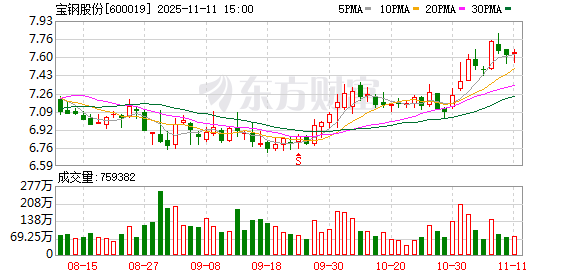
宝钢股份:公司持续深化低碳发展战略
Zheng Quan Ri Bao· 2025-11-11 14:13
Core Viewpoint - Baosteel Co., Ltd. is committed to achieving carbon reduction targets set by China Baowu, aiming for an 8% reduction by 2025, 30% by 2035, and carbon neutrality by 2050, based on 2020 levels [2] Group 1: Carbon Reduction Goals - The company has established medium to long-term carbon reduction targets, with a baseline year of 2020 [2] - Specific targets include a reduction of 8% by 2025 and a 30% reduction by 2035, with a goal of achieving carbon neutrality by 2050 [2] Group 2: Current Performance - In 2023 and 2024, the carbon emission intensity for Baosteel's four bases is projected to be 2.04 tons and 2.00 tons of CO2 per ton of crude steel, respectively [2] - This represents a decrease of 4.23% and 6.1% compared to the 2020 level of 2.13 tons of CO2 per ton of crude steel, meeting annual reduction targets [2] Group 3: Strategic Framework - The company is focusing on low-carbon development strategies and aims to ensure that carbon reduction targets are assessable, traceable, and achievable [2] - Baosteel is breaking down the strategic contributions of each carbon reduction target phase to address climate change risks effectively [2]
【招银研究|行业深度】电力设备行业之配电网——配电网投资提速,设备更新和市场化改革带来业务机遇
招商银行研究· 2025-11-11 09:55
Core Viewpoint - The article emphasizes the critical role of the distribution network in the power system, highlighting its function as the "capillary" that connects the transmission network to end users, and the expected significant investment growth in the distribution network driven by the rise of distributed photovoltaics and charging stations during the 14th Five-Year Plan period [2][3][4]. Distribution Network Overview - The distribution network is described as the key component responsible for the distribution and supply of electrical energy, connecting the transmission network to various users [6][9]. - It operates at lower voltage levels compared to the transmission network, which is characterized by high voltage and long-distance energy transport [10][9]. Investment Growth Drivers - The rapid development of distributed photovoltaics and charging stations is identified as the main driver for the growth of distribution network investments, with the current penetration rate of distributed photovoltaics at approximately 31.3%, indicating over twofold growth potential [3][28]. - The investment in the distribution network is projected to reach around 1.75 trillion yuan during the 14th Five-Year Plan, with an annual average investment of about 350 billion yuan, reflecting a growth rate of over 15% compared to the previous plan [3][48]. Equipment Update and Market Reform Opportunities - The article discusses the need for equipment updates in the distribution network to support the integration of high-capacity transformers and energy storage systems, driven by the requirements of distributed photovoltaics and high-speed charging stations [4][55]. - The market reform in the distribution network is expected to create financial service opportunities as more social capital enters the investment landscape, with banks potentially finding new clients among provincial grid companies [4][54]. Challenges in Integration - The article highlights the challenges faced by the traditional distribution network in accommodating the rapid growth of distributed photovoltaics, including mismatches in construction pace and existing equipment limitations [19][20]. - The integration of charging stations presents additional challenges, such as spatial imbalances and technological gaps, necessitating upgrades to the distribution network to handle increased load demands [33][35]. Policy and Regulatory Framework - The article outlines the recent policy initiatives aimed at enhancing the quality and capacity of the distribution network, including guidelines for integrating distributed energy sources and improving infrastructure [49][48]. - It notes that the government has set ambitious targets for the distribution network, including the ability to accommodate 500 million kilowatts of distributed renewable energy and 12 million charging stations by 2025 [48][47]. Financial Services and Investment Landscape - The article suggests that the financial services sector should adapt to the evolving landscape of distribution network investments, with opportunities arising from equipment updates and market reforms [54][69]. - It emphasizes the importance of developing comprehensive energy services to ensure the economic viability of new investments in the distribution network [79][69].
宝钢股份:2025年减碳8%,2035年力争减碳30%,2050年力争实现碳中和
Di Yi Cai Jing· 2025-11-11 08:23
Core Viewpoint - Baosteel Co., Ltd. is committed to achieving carbon reduction targets set by China Baowu, aiming for an 8% reduction by 2025, 30% by 2035, and carbon neutrality by 2050 based on 2020 levels [1] Group 1: Carbon Reduction Goals - The company has established mid- to long-term carbon reduction targets, with a baseline year of 2020 [1] - Specific targets include a reduction of 8% by 2025 and 30% by 2035, with a goal of carbon neutrality by 2050 [1] Group 2: Current Emission Performance - In 2023 and 2024, the carbon emission intensity for Baosteel's four bases is projected to be 2.04 tons and 2.00 tons of CO2 per ton of crude steel, respectively [1] - This represents a decrease of 4.23% and 6.1% compared to the 2020 level of 2.13 tons of CO2 per ton of crude steel, successfully meeting annual reduction targets [1] Group 3: Strategic Development - The company plans to use its current achievements as a foundation to deepen its low-carbon development strategy [1] - A breakdown of strategic contributions to each phase of the carbon reduction targets will be conducted to ensure that the goals are assessable, traceable, and achievable [1]
金属&新材料行业周报20251103-20251107:央行购金强化金价企稳预期,储能超预期支撑锂板块向上弹性-20251111
Shenwan Hongyuan Securities· 2025-11-11 05:38
Investment Rating - The report suggests a positive outlook for the precious metals sector, indicating a potential upward trend in gold prices due to central bank purchases and a favorable macroeconomic environment [3][19]. Core Insights - The report highlights that the central bank's continuous gold purchases over the past 12 months are expected to support gold prices in the long term, with a projected upward adjustment in the price center [3][19]. - The industrial metals sector is anticipated to experience price increases driven by stable supply-demand dynamics, particularly in copper and aluminum, with recommendations for specific companies in these sectors [3][4]. Summary by Sections Market Overview - The Shanghai Composite Index rose by 1.08%, while the non-ferrous metals index fell by 0.04%, underperforming the broader market [4][6]. - Year-to-date, the non-ferrous metals index has increased by 75.83%, outperforming the Shanghai Composite Index by 56.92 percentage points [4][8]. Precious Metals - The report notes a 2.53% decline in precious metals prices over the past week, with a year-to-date increase of 65.43% [9]. - The central bank's gold purchases are expected to continue, with a focus on long-term price stability and potential increases in gold ETF inflows [3][19]. Industrial Metals - Copper production is expected to be impacted by supply disruptions, with a projected 35% decrease in output from Freeport's Grasberg mine due to a recent landslide [3][24]. - The report indicates that aluminum prices are likely to trend upward due to tightening supply-demand conditions, with specific companies recommended for investment [3][40]. Key Companies and Valuations - The report provides valuations for key companies in the non-ferrous metals sector, highlighting their earnings per share (EPS) and price-to-earnings (PE) ratios, indicating potential investment opportunities [17][18].