罗氏

Search documents
国内创新药龙头企业基本面持续改善,恒生医疗ETF(513060)回调蓄势,盘中交投活跃,近1周日均成交额同类居首
Xin Lang Cai Jing· 2025-08-04 07:36
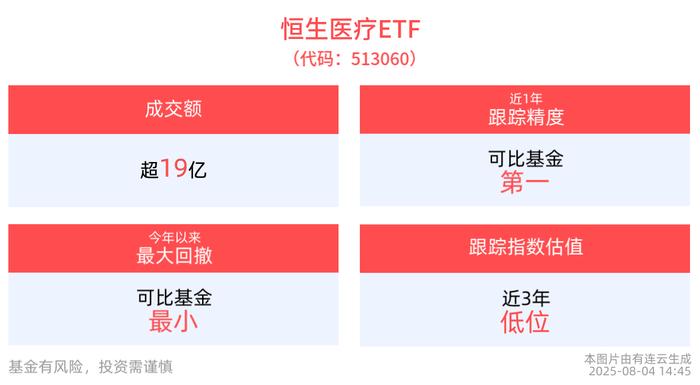
Group 1 - The Hang Seng Healthcare Index (HSHCI) increased by 0.37% as of August 4, 2025, with notable gains from companies such as Cloudmed (01952) up 8.70% and Crystal Technology (02228) up 7.19% [3] - The Hang Seng Healthcare ETF (513060) experienced a decline of 0.59%, with a latest price of 0.67 yuan, but showed a 3.36% increase over the past week as of August 1, 2025 [3] - The liquidity of the Hang Seng Healthcare ETF was active, with a turnover rate of 25.84% and a trading volume of 1.911 billion yuan [3] Group 2 - Global advancements in the weight loss sector are gaining attention, with multinational pharmaceutical companies like AbbVie, Roche, and Eli Lilly accelerating their amylin-related pipelines [4] - Eli Lilly's Eloralintide showed promising weight loss results in Phase 1 clinical trials, achieving a maximum weight loss of 11.3% over 12 weeks with a low incidence of gastrointestinal adverse effects [4] - The amylin molecules in development have half-lives ranging from 10 to 18 days, potentially allowing for monthly dosing and improving patient compliance [4] Group 3 - The latest financing buy-in amount for the Hang Seng Healthcare ETF reached 164 million yuan, with a financing balance of 209 million yuan [5] - Over the past two years, the net value of the Hang Seng Healthcare ETF has increased by 28.35%, with a maximum single-month return of 28.34% since inception [5] - The ETF has a Sharpe ratio of 2.39 for the past year, indicating strong risk-adjusted returns [5] Group 4 - The management fee for the Hang Seng Healthcare ETF is 0.50%, and the custody fee is 0.15% [6] - The ETF's tracking error over the past year is 0.060%, the highest tracking precision among comparable funds [6] - The latest P/E ratio for the Hang Seng Healthcare Index is 31.37, indicating it is at a historical low compared to the past three years [6] Group 5 - The top ten weighted stocks in the Hang Seng Healthcare Index account for 62.03% of the index, including companies like BeiGene (06160) and WuXi Biologics (02269) [6]


减重赛道全球前沿进展跟踪(一):Amylin布局正当时
KAIYUAN SECURITIES· 2025-08-04 01:10
Investment Rating - The industry investment rating is "Positive" (maintained) [2] Core Insights - The report highlights the significant potential of the amylin market, with major pharmaceutical companies making substantial investments in amylin molecules, indicating a strong growth trajectory [6][9] - Amylin products are showing promising early clinical data in terms of safety and weight loss efficacy, with specific examples demonstrating competitive advantages over existing treatments [7][22] - A dense pipeline of catalysts is expected in the next 6-12 months, with multiple companies set to release critical clinical trial data that could validate the product profiles of amylin candidates [8][29] Summary by Sections Recent Major BD Transactions - AbbVie and Roche have made significant investments in amylin molecules, with AbbVie paying an upfront fee of $350 million and potential milestone payments of up to $1.875 billion for Gubra's amylin molecule [6][17] - Roche has partnered with Zealand to develop petrelintide, with an upfront payment of $1.65 billion and milestone payments reaching $3.6 billion [6][17] Amylin Product Profile - Early data for amylin monotherapy shows excellent safety and weight loss results, with examples like Eli Lilly's Eloralintide demonstrating a maximum weight loss of 11.3% at 12 weeks [7][22] - The report notes that the majority of weight loss from Eloralintide is fat, with preclinical data showing up to 91% of weight loss being fat [23][28] Future Catalysts - A significant number of amylin pipeline data readouts are expected in the next 6-12 months, with major companies like Roche, Eli Lilly, and AstraZeneca anticipated to release phase 2 trial data [8][29] - Companies such as Viking, Structure, and others are also highlighted for their clinical trial progress in the amylin space [8][29] Investment Recommendations - The report recommends focusing on companies like Borui Pharmaceutical and Zhongsheng Pharmaceutical, which are expected to accelerate their presence in the amylin market [9][31] - Beneficiary companies include Viking, Structure, Metsera, and Jiuyuan Gene, which are positioned to gain from advancements in the amylin sector [9][31]


AAV基因治疗:脑科+眼科进展迅速,关注康弘、特宝、海特
Huafu Securities· 2025-08-03 11:49
Group 1 - The report maintains a strong market rating for the biopharmaceutical industry, particularly focusing on AAV gene therapy advancements in neurology and ophthalmology, highlighting companies such as Kanghong, TEBIO, and Hite [2][3][20] - AAV gene therapy has shown rapid development due to its unique properties, including small size, non-pathogenicity, and the ability to be engineered for various tissue targeting, making it a promising treatment for genetic diseases [10][11][14] - The report emphasizes the commercial success of AAV gene therapies, with notable products like Novartis' Zolgensma exceeding $1 billion in sales, indicating a growing market potential for common diseases [24][27] Group 2 - The report identifies key players in the AAV gene therapy space, including multinational corporations (MNCs) like Sanofi, Bayer, and Roche, which are actively developing pipelines targeting CNS, ophthalmology, and metabolic diseases [20][33] - It highlights the ongoing clinical trials and advancements in AAV gene therapies for common diseases, particularly in the CNS and ophthalmology sectors, with a focus on the potential of new AAV vectors to cross the blood-brain barrier [35][37] - The report suggests that domestic companies such as Kanghong, TEBIO, and Hite are well-positioned in the AAV gene therapy landscape, with diverse and rapidly progressing pipelines [42]


园区上半年进出口总额占全市近30%
Su Zhou Ri Bao· 2025-08-02 23:11
Economic Performance - The Suzhou Industrial Park achieved a GDP of 1930.4 billion yuan in the first half of the year, with actual foreign investment reaching 1.59 billion USD, accounting for over one-third of the city's total [1] - The total import and export volume was 378.1 billion yuan, representing nearly 30% of the city's total, with a growth rate of 15.2% [1] Investment and Projects - A total of 117 social investment projects worth over 100 million yuan were signed, with a total investment of 49.4 billion yuan, including high-quality projects like the Bruckner Asia-Pacific headquarters and Roche Diagnostics Asia-Pacific base [1] - All 8 provincial major projects and 60 city key projects have commenced construction [1] Innovation and Technology - The park introduced 605 new technology projects and ranked first in the city for the number of innovative small and medium-sized enterprises, with 1100 companies registered [2] - Seven unicorn companies were listed, accounting for over 30% of the city's total, and four new listed companies were added, making up 50% of the city's new listings [2] Policy and Future Focus - The park is implementing three policy documents to promote innovation and has achieved a top ten ranking in national evaluation for the Suzhou Free Trade Zone [2] - In the second half of the year, the park will focus on investment, foreign trade, consumption, and innovation, aiming for a doubling of cross-border e-commerce imports and exports [2][3]
ALNY Q2 Earnings Top Estimates on Higher Amvuttra Revenues, Stock Up
ZACKS· 2025-08-01 16:51
Core Insights - Alnylam Pharmaceuticals reported second-quarter 2025 earnings of $0.32 per share, significantly surpassing the Zacks Consensus Estimate of a loss of $0.03, primarily due to increased revenues from its lead drug, Amvuttra [1][11] - Total revenues for the quarter reached $773.7 million, exceeding the Zacks Consensus Estimate of $673 million, and reflecting a 17% year-over-year increase [2] - The company's net product revenues were $672.2 million, a 64% increase year-over-year, driven by strong demand for Amvuttra, Givlaari, and Oxlumo [3] Revenue Breakdown - Alnylam's net product revenues from Amvuttra amounted to $492 million, representing a 114% increase year-over-year, aided by expanded label use and patient switches from Onpattro [8][11] - Givlaari generated sales of $80.8 million, a 30% year-over-year increase, while Oxlumo recorded revenues of $46.9 million, up 15% year-over-year [9] - Net revenues from collaborators were $61.5 million, down 73% from the previous year, primarily due to a significant milestone payment received in the prior quarter [4] Financial Guidance - Alnylam raised its 2025 product revenue guidance to a range of $2.65 billion to $2.8 billion, up from the previous range of $2.05 billion to $2.25 billion [11][16] - The guidance for net revenues from collaborations and royalties remains unchanged at $650 million to $750 million [16] Research and Development - Adjusted R&D expenses increased by 11% year-over-year to $274.1 million, reflecting costs associated with new studies in partnership with Roche [13] - Adjusted SG&A expenses rose by 26% year-over-year to $261.2 million, driven by higher employee compensation and marketing investments related to Amvuttra [14] Cash Position - As of June 30, 2025, Alnylam's cash, cash equivalents, and marketable securities totaled $2.86 billion, an increase from $2.63 billion as of March 31, 2025, primarily due to net cash inflows from operating activities [15]


特朗普对瑞士开征税率高达39%?瑞士手表在美售价或将上涨
第一财经· 2025-08-01 16:18
Core Viewpoint - The article discusses the implications of the new "reciprocal tariffs" imposed by the U.S. on Switzerland, highlighting the significant impact on Swiss exports, particularly in the watch and pharmaceutical industries, and the potential for price increases in Swiss goods in the U.S. market [3][6][12]. Group 1: Tariff Impact on Swiss Exports - The U.S. has raised the "reciprocal tariff" on Switzerland from 31% to 39%, making it one of the highest rates imposed by the U.S. on any country [3][12]. - The Swiss watch industry, which accounts for 16.8% of Swiss global exports, could see prices rise by over 20% due to the new tariffs [6][10]. - Other Swiss exports, including chocolate, cheese, and coffee, are also expected to be affected, with coffee products alone representing 1 billion Swiss francs in exports to the U.S. [6][12]. Group 2: Pharmaceutical Industry Response - The pharmaceutical sector, which constitutes 40% of Swiss exports, is particularly concerned about the tariffs, as 60% of its exports go to the U.S. [9][10]. - Major Swiss pharmaceutical companies like Novartis and Roche have announced significant investments in U.S. production to mitigate tariff impacts, with Roche planning to invest 50 billion USD over five years [10]. - Analysts suggest that while tariffs may affect cash flow, the pharmaceutical companies have the capacity to absorb higher tariffs compared to reducing drug prices, which could be politically challenging [9][10]. Group 3: Trade Relations and Negotiations - The Swiss government expressed regret over the tariff increase and indicated a willingness to negotiate with the U.S. to find a solution that aligns with Swiss laws and international obligations [12][13]. - The U.S. trade deficit with Switzerland has increased significantly, with a 56.9% year-over-year rise, highlighting the complexities in the trade relationship [12].
Regeneron Stock Rises on Q2 Earnings and Sales Beat, Eylea HD Sales Up
ZACKS· 2025-08-01 16:11
Core Insights - Regeneron Pharmaceuticals reported second-quarter 2025 adjusted earnings per share (EPS) of $12.89, significantly surpassing the Zacks Consensus Estimate of $8.03, marking a 12% increase from $11.56 in the same quarter last year [1][7] - Total revenues grew by 4% year over year to $3.7 billion, driven by higher sales of Eylea HD and increased profits from Dupixent, exceeding the Zacks Consensus Estimate of $3.3 billion [2][7] Revenue Breakdown - Eylea's sales in the U.S. decreased by 39% year over year to $754 million, primarily due to increased competition and market share loss, although it still beat the Zacks Consensus Estimate of $686 million [3][5] - Eylea HD generated revenues of $393 million in the U.S., up 29% year over year, driven by higher sales volumes, surpassing the Zacks Consensus Estimate of $320 million [5][7] - Dupixent sales rose by 22% year over year to $4.3 billion globally, contributing significantly to collaboration revenues of $1.9 billion, which increased by 22.1% from the previous year [8][9] Collaboration Revenues - Sanofi's collaboration revenues increased by 26% to $1.44 billion, driven by higher Dupixent sales, exceeding the Zacks Consensus Estimate of $1.36 billion [9] - Bayer's collaboration revenues totaled $415 million, reflecting an 11% year-over-year increase [9] Product Performance - Total Libtayo sales reached $376.5 million, up 27% year over year, beating the Zacks Consensus Estimate of $322 million [10] - Praluent's net sales in the U.S. were $65.8 million, while Kevzara recorded global sales of $152.2 million, up 39% from the previous year [11] Expense Management - Adjusted R&D expenses increased by 20% year over year to $1.3 billion, reflecting advancements in the company's pipeline, while adjusted SG&A expenses decreased by 19% to $542 million [12] Regulatory Updates - The FDA approved a label expansion of Dupixent for treating adults with bullous pemphigoid, with additional applications under review in the EU and Japan [13] - The FDA granted accelerated approval to Lynozyfic for treating adults with relapsed or refractory multiple myeloma [15] - A complete response letter was issued for the BLA for odronextamab due to site inspection issues [16] Strategic Developments - Regeneron entered into an in-licensing agreement with Hansoh Pharmaceuticals for an obesity drug, HS-20094, expanding its clinical-stage obesity portfolio [17] - The company has initiated a share repurchase program, repurchasing shares worth $1.07 billion in Q2 2025 [12]


千亿巨头患上“原创焦虑症” 解码中生制药的收购逻辑
Xi Niu Cai Jing· 2025-08-01 11:29
Group 1 - The core viewpoint of the article revolves around China Biologic Products' acquisition of Lixin Pharmaceutical for approximately $680 million, raising questions about whether this high-priced acquisition will fill the innovation gap or lead to new challenges for the traditional pharmaceutical giant [2][21]. - The strategic intent behind the acquisition is highlighted, focusing on Lixin's significant licensing agreements with AstraZeneca and Merck, which are expected to generate substantial revenue [3][4]. - The financial pressure from the acquisition is evident, as the payment of around $350 million represents 69% of China Biologic's annual R&D expenditure, raising concerns about cash flow and operational sustainability [4][22]. Group 2 - Lixin Pharmaceutical's financial performance is scrutinized, revealing a sharp increase in revenue from $21,000 in 2024 to $4.218 billion in the first half of 2025, primarily due to licensing deals, while the company still reported losses in previous years [6][7]. - The uncertainty surrounding Lixin's R&D pipeline is discussed, with potential competition from other companies and the risk of not achieving commercial success for its innovative products [8][12]. - The challenges of integrating Lixin into China Biologic's operations are emphasized, particularly the need for effective management and the risk of losing key talent from Lixin's R&D team [10][11]. Group 3 - The article outlines the impact of policy changes on the commercialization of innovative drugs, including price negotiations and procurement policies that could threaten profit margins [13][14]. - The internationalization challenges faced by China Biologic are noted, as reliance on licensing agreements may lead to a loss of technological leverage in global markets [15][16]. - Valuation pressures and market skepticism are highlighted, with concerns that the high valuation of Lixin may not reflect its actual product value, leading to potential reevaluation of China Biologic's overall valuation [18][20].


迈威生物接待127家机构调研,包括安信基金、岙夏投资、保银投资等
Jin Rong Jie· 2025-08-01 11:27
Core Viewpoint - Maiwei Biotech is actively advancing multiple innovative drug candidates, with significant clinical developments and partnerships expected in the coming years, particularly in the fields of oncology and fibrosis treatment [1][2][3]. Group 1: Clinical Development Progress - The IL-11 monoclonal antibody 9MW3811 has completed Phase I clinical trials in China and Australia, and has received approval to initiate Phase I trials in the U.S. It is expected to start Phase II trials for hypertrophic scars and keloids by the end of this year [1][3]. - The anti-ST2 monoclonal antibody 9MW1911 is currently in Phase II clinical trials, with 80 patients enrolled, aiming to complete follow-ups by the second half of 2025 [6]. - The CDH17 ADC innovative drug 7MW4911 has had its clinical trial application accepted by both NMPA and FDA, with preclinical studies showing significant advantages in terms of efficacy and safety [6][7]. Group 2: Market Opportunities and Strategic Focus - The company is focusing on the TNBC indication for its 9MW2821 ADC, targeting a large patient population with limited treatment options, and plans to initiate small-sample clinical trials in the U.S. by 2025 [2][9]. - The TCE platform aims to develop multiple innovative pipelines by 2026, leveraging differentiated features of modified CD3 antibodies to enhance T-cell activation and specificity against tumor antigens [10]. - The company has identified significant unmet clinical needs in the treatment of hypertrophic scars and keloids, positioning MW38 as a potential first-in-class therapy in this area [3][4]. Group 3: Business Development and Collaborations - 2025 is deemed a critical year for the company's business development (BD) efforts, with ongoing collaborations for several pipelines including Nectin-4 ADC, B7-H3 ADC, and ST2 monoclonal antibody [10][11]. - The company has successfully established a partnership for IL-11 monoclonal antibody, with plans to advance other pipelines in the near future [2][10]. - The BD strategy will increasingly focus on pipelines developed from the new generation TCE platform starting in 2026, reflecting the company's commitment to innovation and market differentiation [10].

创新药系列研究:自免疗法迈向双抗、多抗时代
Huachuang Securities· 2025-08-01 07:40
Investment Rating - The report indicates a positive outlook for the autoimmune therapy market, suggesting significant growth potential and investment opportunities in the sector [8]. Core Insights - The autoimmune market is the second largest after oncology, with a global market size of $132.3 billion in 2022, projected to reach $176.7 billion by 2030, reflecting a compound annual growth rate (CAGR) of 3.68% from 2022 to 2030 [8]. - The report highlights the potential for multi-target interventions to enhance treatment efficacy in autoimmune diseases, transitioning from monoclonal antibodies to bispecific and multispecific antibodies [19]. - The report emphasizes the significant market space for autoimmune therapies in China, where the autoimmune market size was only $2.9 billion in 2022, representing just 8% of the oncology market size of $34.7 billion, indicating substantial room for growth [8]. Market Overview - The global autoimmune drug market is expected to grow significantly, with the market size projected to increase from $1,323 million in 2022 to $1,767 million by 2030 [8]. - The report provides a detailed analysis of various autoimmune diseases, their prevalence, and the corresponding patient populations globally, including conditions like atopic dermatitis, chronic obstructive pulmonary disease, and rheumatoid arthritis [6][11]. Clinical Research Progress - The report outlines advancements in clinical research for dual-target and multi-target therapies, indicating a shift towards more effective treatment options for complex autoimmune diseases [19][22]. - It discusses the development of several blockbuster monoclonal antibody drugs in the autoimmune sector, with projected sales for top drugs in 2024, including Dupilumab at $14.15 billion and Risankizumab at $11.72 billion [9]. Key Companies to Watch - The report identifies key companies involved in the development of autoimmune therapies, including Sanofi, AbbVie, and Johnson & Johnson, highlighting their leading products and market positions [9][25].