
中国太平

Search documents
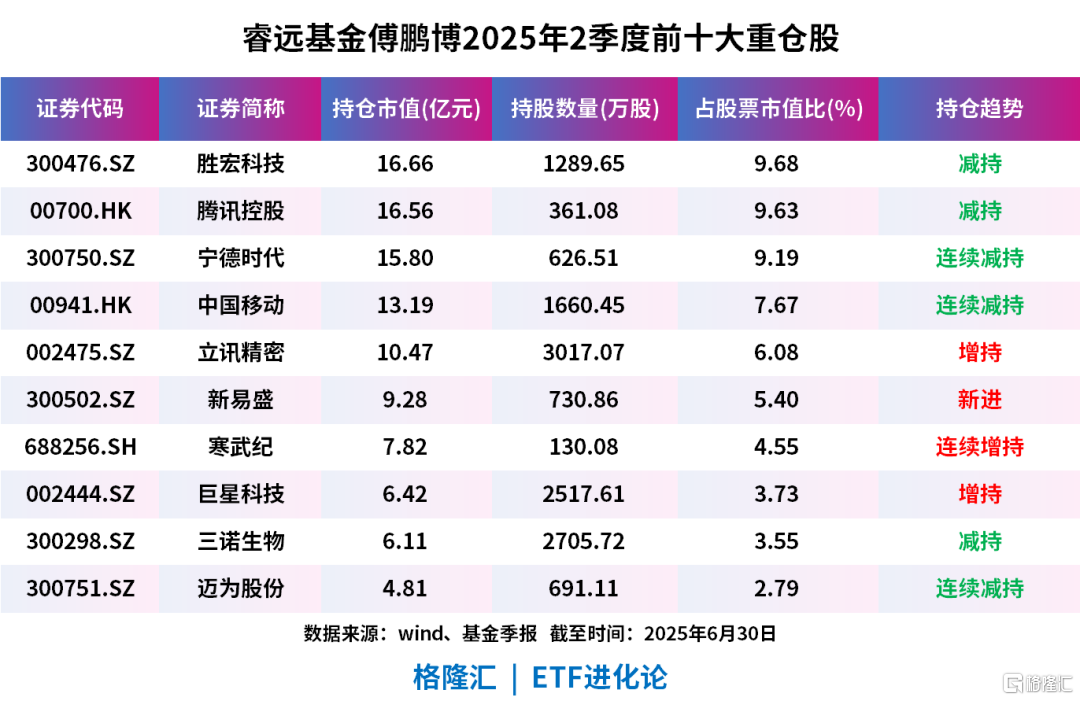
傅鹏博二季度新进新易盛,赵枫新进立讯精密、杭州银行、中国太平、神马电力
Ge Long Hui A P P· 2025-07-18 07:44
Group 1 - The core viewpoint of the news is the significant changes in the holdings of public funds, particularly focusing on the investment strategies of prominent fund managers like Fu Pengbo and Zhao Feng [1][7]. - Fu Pengbo's fund has increased its position in Xinyi Technology, which has seen a stock price increase of 1502.9% since the beginning of 2023, making it the second-highest in the market [2][3]. - The earnings forecast for Xinyi Technology for the first half of 2025 is projected to be between 3.7 billion to 4.2 billion yuan, representing a year-on-year growth of 327.7% to 385.5% [3]. Group 2 - Fu Pengbo's top ten holdings include Shenghong Technology, Tencent Holdings, CATL, China Mobile, Luxshare Precision, Xinyi Technology, Cambricon, Giant Star Technology, Sanofi, and Maiwei [3][5]. - In the second quarter, Fu Pengbo reduced his holdings in Shenghong Technology, Tencent Holdings, CATL, China Mobile, Sanofi, and Maiwei, while increasing his positions in Luxshare Precision, Cambricon, and Giant Star Technology [3][5]. - Zhao Feng's top ten holdings include Tencent Holdings, CATL, Xiaomi Group, Focus Media, Luxshare Precision, China Pacific Insurance, Weiming Environmental Protection, Hangzhou Bank, China Taiping, and Shenma Power [7][9]. Group 3 - The report indicates a shift in investment strategy, with a reduction in traditional energy companies and an increase in the healthcare sector, particularly in innovative drugs and traditional medicine benefiting from AI [7]. - The market outlook remains positive, driven by economic recovery and structural adjustments, with expectations for corporate profitability to gradually improve [10]. - High-dividend companies continue to attract investment due to their static dividend yields exceeding risk-free rates, indicating a strong demand for equity assets [10].






年内超50家险企高管变更,人事更迭折射战略转向
Bei Jing Shang Bao· 2025-07-17 13:01
Core Insights - The insurance industry is experiencing a significant wave of personnel changes, with over 50 companies adjusting their top leadership positions in 2023, including major players like China Life and China Pacific Insurance [1][3] - A notable trend in these changes is the increasing youthfulness of management, with many "post-80s" and "pre-80s" executives taking on key roles [1][5] Group 1: Personnel Changes - More than 50 insurance companies have seen adjustments in core positions such as chairman and general manager this year, reflecting a high frequency of personnel changes in the industry [3] - Key personnel shifts include the appointment of Li Zhuyong as deputy secretary of the China Life Group and the promotion of Tian Geng to vice president of China Re [3] - The reasons for these changes vary, with larger firms often seeing changes due to retirement or internal rotations, while smaller firms are more frequently adjusting to address performance anxieties amid market uncertainties [3][4] Group 2: Management Trends - The current trend in the insurance industry is towards younger and more specialized management teams, with a growing number of executives from actuarial, financial, and fintech backgrounds [5][6] - Young executives are believed to enhance innovation and adaptability within companies, making them more appealing to younger customers and improving market competitiveness [6][7] - The industry is expected to see continued high personnel turnover as competition intensifies and companies strive to adapt to changing market demands and technological advancements [7]





睿远基金二季报最新出炉:傅鹏博增持新易盛,张佳璐重仓泡泡玛特,多只产品调仓路径曝光
Mei Ri Jing Ji Xin Wen· 2025-07-17 04:41
Group 1 - The core viewpoint of the news is the significant changes in the top holdings of various funds managed by Ruiyuan Fund, particularly the entry of Xinyi Technology into the top holdings of Ruiyuan Growth Value and the exit of Guanghui Energy [1][2] - Ruiyuan Growth Value experienced some net redemptions in Q2, but still maintained over 14.4 billion shares by the end of the quarter [2] - The fund reduced its holdings in China Mobile, Ningde Times, Tencent Holdings, and Maiwei Shares, with notable reductions in China Mobile and Maiwei Shares [2] Group 2 - Ruiyuan Balanced Value Three-Year Holding Fund saw significant changes in its top holdings, with new entries including Luxshare Precision, Hangzhou Bank, China Taiping, and Shenneng Power, while China Mobile and Shanxi Fenjiu exited the top ten [3] - The fund increased its allocation in banking, insurance, and electric power sectors while reducing exposure to consumer services, liquor, and pharmaceutical sectors [3] Group 3 - The Ruiyuan Hong Kong Stock Connect Core Value Mixed Fund experienced a significant increase in shares, with a growth of approximately 100% compared to the end of Q1 [6] - The top holdings included Pop Mart, Xiaomi Group, Zijin Mining, and others, while Alibaba, Shenzhou International, Shanxi Fenjiu, and others exited the top ten [6] - The fund manager emphasized the need for a nuanced understanding of the new consumption sector, highlighting the varying development stages and internal ROE models of sub-industries [6] Group 4 - The innovation drug sector emerged as a hotspot, with successful clinical progress in PD1/VGFR targets in China, raising concerns for multinational corporations (MNCs) about potential revenue declines due to patent expirations [7] - Uncertainties regarding tariffs have eased slightly, but concerns about the financial decoupling between China and the U.S. continue to suppress valuations in the technology sector [7] - The technology sector is currently at a relatively low valuation, and if advancements in AI research can close the gap with the U.S. industry, significant investment opportunities may arise in the second half of the year [7]




上半年险企高管大洗牌
Huan Qiu Wang· 2025-07-17 03:11
Group 1 - The insurance industry is experiencing a wave of executive changes, with over 50 companies undergoing personnel adjustments in key positions such as chairman and general manager, affecting both major groups like China Taiping and China Life, as well as numerous small and medium-sized insurers [1][3] - The executive changes are seen as a proactive strategy for industry transformation, reflecting both strategic upgrades and deeper governance challenges within some institutions [1][3] - Notably, some executives have backgrounds in technology, which is viewed as a critical factor for enhancing operational efficiency and quality in insurance companies, indicating that tech-enabled leadership may hold strategic value in future industry competition [1] Group 2 - Frequent executive turnover highlights governance issues within companies, as seen with Qianhai Insurance, which has experienced three changes in the general manager position over four years, alongside declining business performance and continuous net losses [3] - The governance and talent mechanisms of companies like Qianhai Insurance require urgent improvement, especially as over half of its shares are frozen, indicating significant shareholder challenges [3] - In the context of industry transformation, executive adjustments are intended to inject new momentum for strategic upgrades, but companies must also be cautious of governance-related risks to maintain stability in a competitive market [3]
筑牢民生保障防线 绘就服务发展新篇——2024年山东保险业:守护人民美好生活
Qi Lu Wan Bao· 2025-07-17 02:09
Core Insights - The report highlights the commitment of Shandong's insurance industry to enhance people's well-being through risk protection, financial intermediation, and social management, aligning with national and provincial government directives [1] Group 1: Medical Insurance - In 2024, Shandong's insurance sector emphasizes "insurance for the people," contributing to the medical insurance system with over 89 million insured individuals, effectively preventing poverty due to illness [2] - The "Hui Min Bao" program, a customized commercial medical insurance, covered approximately 9.03 million people in 2024, with total claims amounting to 747 million yuan [2] - Major insurance companies are actively involved in long-term care insurance to support families affected by disabilities [2] Group 2: Pension Insurance - The insurance industry plays a crucial role in enhancing the pension system, with China Life's commercial pension stock reaching 1.326 billion yuan in 2024 [3] - Tai Ping Pension Insurance added 1.102 billion yuan in assets for commercial pensions, serving over 3,000 clients [3] - Personal pension premiums for People's Life increased by 139% year-on-year, amounting to 366,000 yuan [3] Group 3: Property Insurance - People's Insurance Company of China (PICC) paid out 382 million yuan for disaster-related claims, handling over 8,000 cases [4] - Tai Ping Property Insurance provided risk coverage of 13.085 billion yuan for 1.362 million acres of farmland [4] - The "Hui Nong Xiang Ju Bao" product offered comprehensive risk protection worth 482.8 billion yuan to 295,000 rural residents [4] Group 4: Service Enhancement - The insurance industry focuses on improving service quality by integrating technology and human care, providing tailored services for special groups [5] - China Life's "Silver Age Health Project" insured 8.15 million elderly individuals, with a risk coverage exceeding 590 billion yuan [5] - Companies like Tai Kang Life are creating a "insurance + healthcare" ecosystem to meet diverse elderly care needs [5] Group 5: Technological Innovation - The adoption of AI and big data significantly enhances service efficiency, with Ping An Life implementing a "smart customer service" project for 24/7 operations [6] - Tai Ping Life's integration of intelligent review processes has improved claims efficiency [7] - The "Tian Kang Health Pass" project allows for immediate claims processing upon hospital discharge, with 43,000 claims processed in 2024, totaling 56.61 million yuan [7]

上半年超50家险企核心岗位“迎新”
Zhong Guo Jing Ji Wang· 2025-07-17 01:15
Core Insights - The insurance industry is experiencing a significant wave of executive changes, with over 50 companies undergoing personnel adjustments in key positions such as chairpersons and general managers in the first half of 2025 [1][2][4] - This trend reflects both proactive strategic upgrades and underlying governance challenges within some institutions during a critical period of industry transformation [1][2] Executive Changes - Notable companies like China Taiping and China Life are among those undergoing dual adjustments in leadership, indicating a broader trend across both large and small insurance firms [3][4] - In the first half of 2025, 15 companies changed their chairpersons or vice-chairpersons, while 31 companies saw changes in general managers or vice-general managers [2] Performance and Strategic Focus - AIA Life, for instance, reported a significant increase in insurance business revenue, reaching 71.84 billion yuan in 2024, up 18.23% from 60.76 billion yuan in 2023, highlighting the competitive landscape among foreign insurance firms [3] - China Pacific Insurance's first-quarter revenue fell by 1.79% year-on-year to 93.72 billion yuan, with a net profit decline of 18.13% to 9.63 billion yuan, indicating performance pressures amid leadership changes [5] Governance Challenges - The frequent changes in leadership at Qianhai Property Insurance have raised concerns about governance, with the company experiencing a series of executive departures and a lack of stability in management roles [7][8] - Financial struggles are evident, with Qianhai's insurance business revenue declining from 2.13 billion yuan in 2020 to 1.52 billion yuan in 2024, alongside net losses in multiple years [8]
96%就业率+23万元平均年薪!这届毕业生去向太香了……
Jin Rong Shi Bao· 2025-07-16 04:31
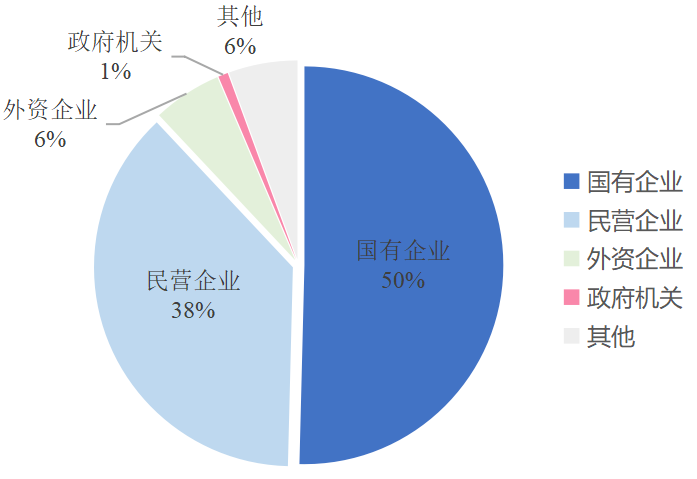
Group 1 - The employment rate for the 2025 cohort of insurance master's graduates from Fudan University is 96.30%, with an average of 2.86 job offers per graduate and an average salary of 231,800 yuan [2] - State-owned enterprises remain the dominant employers, accounting for 50.40% of job offers, while private enterprises have increased to 37.6%, marking the first time they exceed one-third in the past three years [3] - There is a significant increase in demand for insurance talent from insurance companies, internet, and technology firms, indicating a diversification in employment destinations [5] Group 2 - Among graduates with a background in insurance, 55% chose to work in the insurance industry, while those with a non-insurance management background are more inclined towards internet and technology companies [7] - Core positions in the insurance industry remain the most popular, with nearly 30% of graduates opting for management trainee roles, and over 20% for actuarial and product positions [11] - Key factors influencing employment choices include career development opportunities, starting salary levels, and salary growth expectations [11] Group 3 - Major insurance companies are expanding their recruitment efforts, with China Ping An offering over 2,000 positions and China Life recruiting 259, while China Pacific and China Insurance are collectively hiring over 4,000 for technology and general roles [12] - There is a notable increase in the proportion of technology positions being offered, with roles in AI, big data, and front-end development being highly sought after [13] - The insurance industry is transitioning towards a model that integrates insurance with technology and ecology, creating a demand for hybrid talents with both insurance expertise and digital skills [14]

非车险将推“报行合一”,保险业“反内卷”进行时
Di Yi Cai Jing· 2025-07-15 11:31
Core Viewpoint - The insurance industry is undergoing a shift towards "reporting and execution consistency" (报行合一) to combat excessive competition and improve operational efficiency, particularly in the non-auto insurance sector [1][2][3]. Regulatory Measures - The Financial Regulatory Bureau has issued guidelines requiring insurance companies to set reasonable and fair rates, aligning actual insurance terms and rates with those submitted for approval [2][3]. - The implementation of "reporting and execution consistency" has already shown a significant reduction in commission rates, with estimates indicating a 30% decrease in commission rates for bank insurance channels [4]. Industry Challenges - The insurance industry has faced long-standing issues of "involution," characterized by homogeneous product offerings and aggressive competition based on fees and returns [1][9]. - The high commission rates, sometimes exceeding 30% in bank insurance products, have destabilized the operational health of insurance companies [2][4]. Financial Impact - Following the implementation of "reporting and execution consistency," major insurance companies have reported a decline in commission expenses, with estimates showing a 20% reduction for Taiping Life and approximately 4.5% for Ping An Life and China Life [4][5]. - The comprehensive cost of new policies for listed insurance companies is expected to decrease due to the adjustments in commission rates and the implementation of "reporting and execution consistency" [7]. Product Innovation - The industry is also addressing product "involution" by reducing the maximum guaranteed interest rates for various insurance products, with traditional insurance rates lowered from 3.5% to 2.5% [6][7]. - The establishment of a dynamic adjustment mechanism for the maximum guaranteed interest rates is aimed at aligning them with market interest rates, thereby mitigating risks associated with high return promises [7][8]. Strategic Transformation - To effectively combat "involution," insurance companies are encouraged to shift from a scale-oriented approach to a value-oriented strategy, focusing on product innovation and differentiated services [9][10]. - Companies like Ping An and China Life are already restructuring their business models to emphasize health and retirement services, moving towards a "insurance + service" model to enhance customer engagement [10][11].
长周期考核机制进一步完善,险资入市再迎重磅利好
Sou Hu Cai Jing· 2025-07-14 10:23
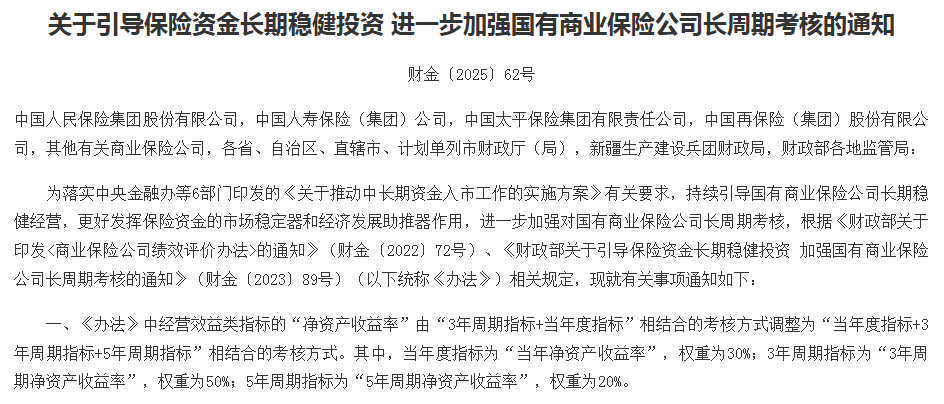
Core Viewpoint - The Ministry of Finance issued a notification to guide state-owned commercial insurance companies to establish a long-term assessment mechanism, emphasizing a shift towards long-term investment strategies to stabilize the market and support economic development [1][3]. Group 1: Policy Changes - The new assessment mechanism combines annual indicators with 3-year and 5-year indicators, with weights of 30%, 50%, and 20% respectively, breaking away from the traditional annual assessment model [3]. - The policy aims to align with the long-term nature of insurance funds, which have stable sources and long repayment cycles, but have been constrained by short-term assessment pressures [3]. Group 2: Impact on Capital Markets - The notification is expected to introduce significant capital into the market, with estimates suggesting that a 1% increase in stock asset allocation by insurance funds could bring approximately 350 billion yuan into the market [4]. - The policy is anticipated to enhance the tolerance of insurance companies towards short-term market fluctuations, thereby increasing their allocation to A-shares [4]. Group 3: Long-term Investment Strategy - The new regulations will encourage insurance companies to focus on value investing and increase their equity investment ratios, aligning asset investments with insurance liabilities [5]. - The long-term investment reforms have already seen significant progress, with a total of 222 billion yuan approved for long-term investment pilot programs [6]. Group 4: Challenges and Recommendations - Despite the positive developments, challenges remain, particularly regarding solvency constraints that limit the ability of insurance companies to increase equity investments [6]. - Recommendations include optimizing solvency measures and accounting standards to facilitate better capital allocation for long-term investments [7].
引导长期稳健投资 险资长周期考核指标权重达70%
Zheng Quan Ri Bao· 2025-07-13 15:53
Core Viewpoint - The Ministry of Finance issued a notification to guide insurance funds towards long-term and stable investments, enhancing the long-cycle assessment of state-owned commercial insurance companies, effective immediately and applicable for the 2025 performance evaluation [1] Group 1: Long-term Investment Strategy - The notification encourages insurance funds to act as a stabilizing force in the market, promoting long-term capital and patient capital strategies [1][3] - It aims to increase the tolerance of insurance companies towards short-term market fluctuations, thereby enhancing their equity and long-term investment capabilities [1][2] Group 2: Performance Evaluation Adjustments - The performance evaluation metrics for state-owned insurance companies have been revised to include a combination of annual, 3-year, and 5-year indicators, with respective weights of 30%, 50%, and 20% [2] - This adjustment is expected to significantly reduce the impact of short-term market volatility on the performance evaluations of state-owned insurance companies [2][4] Group 3: Asset-Liability Management - The notification emphasizes the need for improved asset-liability management among insurance companies, advocating for stable, long-term, and value-based investment approaches [5] - Companies are encouraged to align their investment strategies with their liabilities, thereby increasing the supply of medium- and long-term funds in the capital market [4][5] Group 4: Regulatory Context - The notification is part of a broader regulatory trend aimed at promoting medium- and long-term capital market participation, following several initiatives earlier in the year [6] - Recent regulatory changes have included raising the investment cap for equity assets and reducing risk factors for stock investments, indicating a supportive environment for long-term investments [6]