饿了么

Search documents
新疆乌苏市市场监管局强化党建赋能“小个专”助推发展“新动力”
Zhong Guo Shi Pin Wang· 2025-05-30 02:24
Group 1 - The core viewpoint emphasizes the integration of market regulation and grassroots governance to support the high-quality development of emerging industries in Urumqi City, Xinjiang [1][2] Group 2 - The establishment of a comprehensive party committee for "small, individual, and specialized" businesses aims to enhance leadership and clarify responsibilities, with the implementation of the "three meetings and one lesson" system [1] - A total of over 400 individual annual reports have been serviced, and more than 500 policy promotions have been distributed to support "small, individual, and specialized" businesses [2] - The "small, individual, and specialized" party committee has organized activities to support new employment groups, such as delivery riders, by addressing their needs and enhancing their sense of belonging [2]

美团一边捍卫外卖市场份额,一边参战“618”
Jing Ji Guan Cha Wang· 2025-05-29 13:22
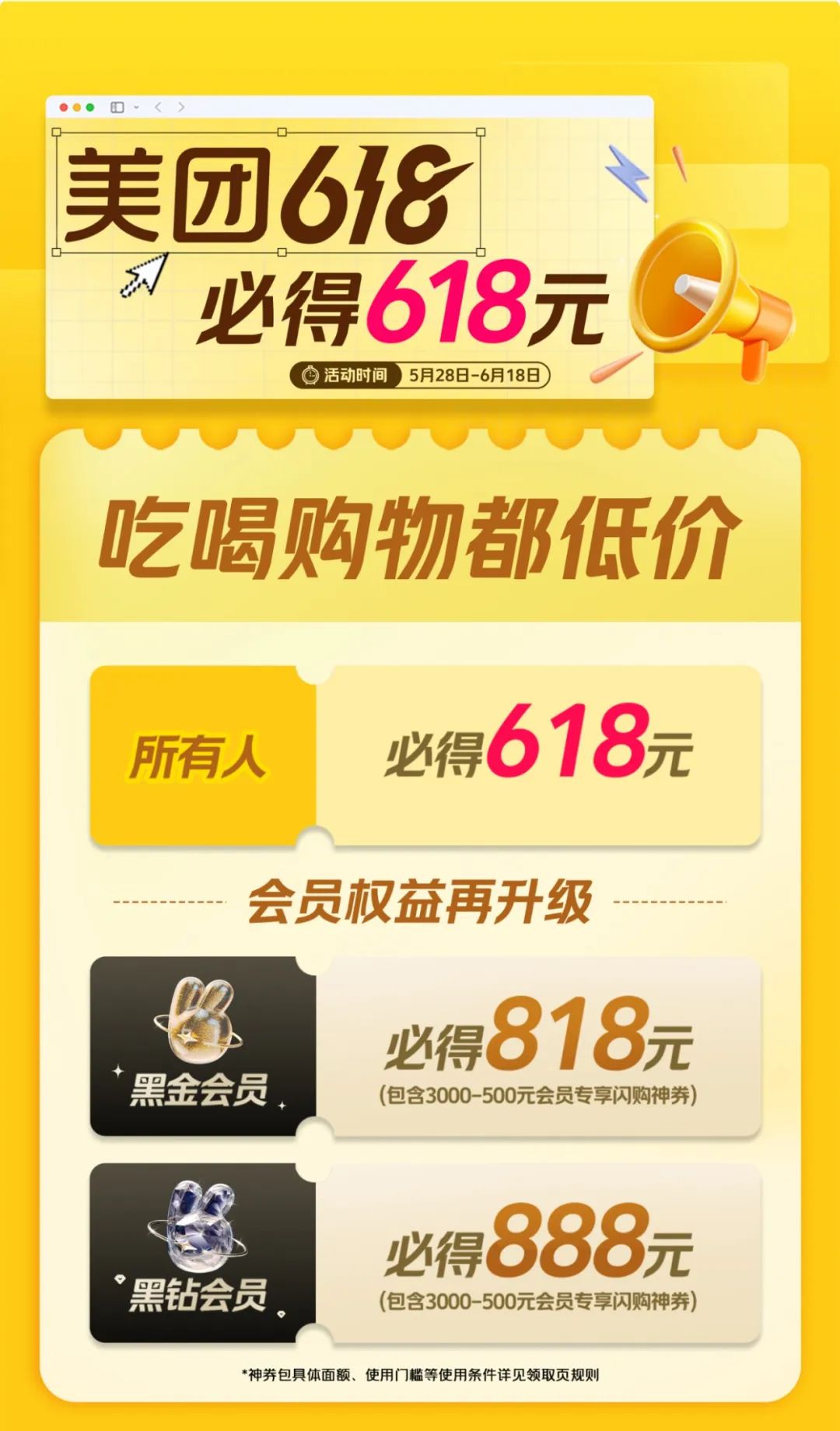
和往年不同,今年的电商"618"战局,迎来了新的参与者。美团联合百大餐饮、零售品牌,于5月28日启 动"618"大促。活动期间,美团会向消费者发放618元神券包,用于外卖和闪购用户在酒水饮料、休闲食 品、数码家电、美妆护肤、运动用品、母婴用品等方面的购物。 在王兴看来,中国外卖行业发展到了一个新阶段,平台和商户都不应该回到多年前依靠激进补贴驱动的 竞争模式中,此外,要正视行业面临的"营销内卷"、食品安全基建不足等系列问题和挑战。 5月26日晚的电话会后,王兴所言的"不惜一切代价"被广为传播,而他提及的"赢得竞争"的路径并非卷 补贴、打价格战。 美团内部理解王兴提及的"不惜一切代价",指的是避免"内卷式"竞争,通过一切必要的措施去完善生态 里的各方,将外卖的基本盘继续做大做好。 此前,即时零售领域中的各个玩家动辄要投入百亿元人民币展开市场争夺。在京东外卖上线百亿补贴一 个月后,淘宝闪购与饿了么也以超百亿元的补贴规模加入战局。真金白银砸向市场,各家都见到了"水 花"。 京东外卖的日订单量已经在5月中旬突破2000万单。在美团公布财报当天,记者从淘宝方面获悉,淘宝 闪购的日订单量超过了4000万单。 在这场补贴大战 ...

王兴想赢下每个战场
36氪· 2025-05-29 09:37
Core Viewpoint - Meituan has experienced a tumultuous quarter with significant competition in the food delivery and instant retail sectors, leading to a focus on both immediate market share and long-term international expansion and AI integration [4][5][6]. Financial Performance - In Q1, Meituan's revenue grew by 18.1% year-on-year to 86.6 billion yuan, with adjusted net profit reaching 1 billion yuan. Core local business revenue increased by 17.8% to 64.3 billion yuan, while new businesses also saw double-digit revenue growth and a steady reduction in losses [5][6]. - However, the company faces uncertainty in Q2, with management unable to provide accurate guidance due to ongoing irrational competition, leading to anticipated profit declines [6][7]. Competition Landscape - The food delivery market is witnessing intense competition, particularly from JD and Ele.me, with Meituan positioned as a defender in this battle. The competition has led to a significant increase in order volumes across platforms, with Meituan's order volume growing by approximately 9% to 10% year-on-year in Q1 [10][11]. - Meituan's strategy includes aggressive subsidies to maintain market share, particularly in the beverage category, where order volumes have surged [11][12]. Instant Retail Growth - Meituan's instant retail business, represented by Meituan Flash Purchase, has shown remarkable growth, with order volume increasing approximately three times faster than food delivery. Non-food category orders grew over 60%, and total transaction users exceeded 500 million [13][14]. - The shift in consumer behavior towards instant retail is significant, with Meituan aiming to replace traditional e-commerce delivery systems with a 30-minute delivery model [13][14]. International Expansion - Meituan's internationalization efforts are gaining traction, with Keeta making strides in markets like Hong Kong and Saudi Arabia. In Q1, new business revenue grew by 19.2% to 22.2 billion yuan, driven by grocery retail and overseas business, although losses increased due to higher investments [16][17]. - The company plans to invest $1 billion in Brazil over the next five years, indicating a commitment to expanding its footprint in attractive markets [17][18]. AI Integration - Meituan is focusing on AI as a key future strategy, with plans to launch an AI-driven business decision assistant, Kangaroo Advice, aimed at enhancing operational efficiency for merchants [19]. - The company has reported that approximately 52% of its new code is generated by AI, with a goal of achieving 100% adoption among engineers [19].


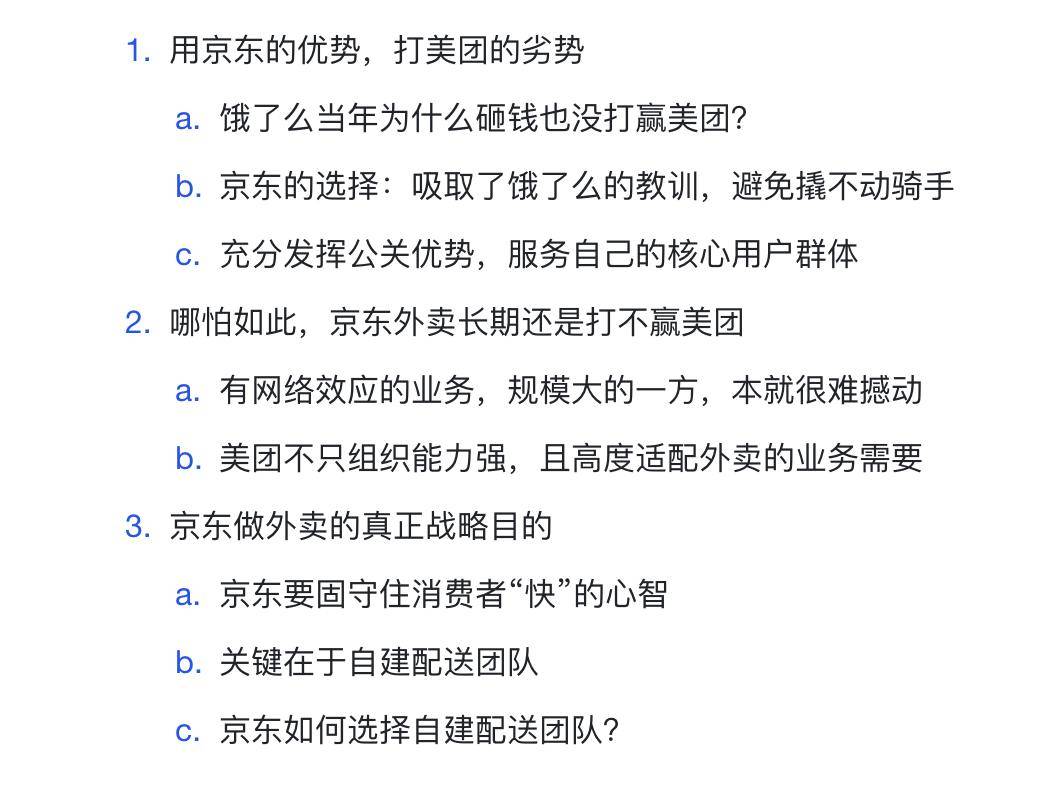
深度解读:京东打不赢美团外卖,为什么还要打?
Sou Hu Cai Jing· 2025-05-29 00:51
Core Viewpoint - The public relations battle between JD and Meituan has significantly benefited JD, with its daily orders for food delivery skyrocketing from zero to over 10 million in less than three months [2][8]. Group 1: Competitive Strategies - JD has effectively utilized its strengths to exploit Meituan's weaknesses, particularly by focusing on public relations and social responsibility, such as providing social insurance for delivery riders [13][30]. - The strategy of JD contrasts with the failed approach of Ele.me, which attempted to compete with Meituan through heavy subsidies without addressing the simultaneous growth of users, merchants, and riders [13][14]. - JD's public relations efforts have included high-profile actions by its founder, such as delivering food and engaging with riders, which have resonated positively with consumers [36][38]. Group 2: Long-term Outlook - Despite the short-term success in public relations, JD is unlikely to surpass Meituan in the long run due to the latter's established competitive advantages, including a deeper market penetration and organizational capabilities [8][56]. - The network effects inherent in the food delivery business favor Meituan, as its larger order volume leads to lower delivery costs, making it difficult for JD to compete effectively [58][65]. - JD's organizational structure lacks the adaptability and decision-making capabilities that Meituan has developed, which are crucial for managing the complexities of the food delivery market [70][85]. Group 3: Strategic Intent - JD's primary goal in entering the food delivery market is not necessarily to dominate but to maintain consumer perceptions of speed and quality, which are critical to its brand identity [91][92]. - By establishing a food delivery service, JD aims to create a stable order volume that can support its logistics team, thereby reinforcing its commitment to fast delivery [112][114]. - The investment in food delivery is seen as a strategic move to reclaim the "fast" mindset among consumers, especially as competition from Meituan intensifies [99][102].

监管重拳下的外卖三国杀2.0时代
Huan Qiu Wang· 2025-05-29 00:17
Core Viewpoint - The ongoing competition among food delivery platforms, particularly between Meituan and JD.com, has intensified, leading to aggressive price wars and significant market share shifts, raising concerns about the sustainability of such practices and their impact on service quality and market order [1][4][5]. Group 1: Competition Dynamics - Meituan appointed Fan Zhendong as its lifestyle ambassador, signaling a strategic move amidst fierce competition with JD.com, which has launched substantial subsidies to attract users [1]. - The competition has escalated into a price war, with JD.com and Meituan engaging in a public spat, while Ele.me has also joined the fray by increasing its subsidies [2][4]. - JD.com has quickly gained a 9.1% market share in just three months, while Meituan's market share has dropped to 58.6%, indicating a significant shift in consumer preferences [2][6]. Group 2: Consumer Behavior - Consumers, referred to as "sheep party," are actively seeking ways to benefit from the ongoing subsidies, with social media platforms filled with tips on how to maximize discounts [2][3]. - The low prices, such as 4.9 yuan for coffee, have attracted many consumers, leading to a surge in orders and creating a culture of exploiting promotional offers [2][3]. Group 3: Regulatory Concerns - The Chinese government has expressed concerns over "involutionary competition," prompting regulatory bodies to hold discussions with major platforms to address issues arising from aggressive pricing strategies [4][5]. - Recent regulatory actions have included multiple consultations with platforms like JD.com, Meituan, and Ele.me to ensure fair competition and market order [4][5]. Group 4: Financial Performance and Future Outlook - The financial impact of the ongoing competition has yet to be fully reflected in the quarterly earnings reports, but the aggressive strategies are expected to influence future performance [6]. - Meituan's CEO has indicated a commitment to countering low-quality competition while investing in the ecosystem, including rider welfare and merchant support, to promote sustainable growth [6][7]. - The rise of instant retail is seen as the next battleground for these platforms, with significant growth reported in various product categories ahead of the upcoming shopping festival [7].

美团参战618:首次覆盖生活消费全品类,联动线下百万门店
Nan Fang Du Shi Bao· 2025-05-28 06:56
据了解,今年4月,美团正式发布即时零售品牌"美团闪购"。当时美团闪购宣布,品牌定位为"24小时陪 伴消费者的新一代购物平台",联合全国近3000个县市区旗的零售商、品牌商与本地中小商家,服务全 国10亿消费者的日常购物需求。美团闪购对美团大盘业绩增长的贡献也愈发明显。最新的一季度财报显 示,美团核心本地商业业务板块的营收增长18%至643亿元。截至今年3月底,美团闪购累计交易用户数 超5亿,90后的年轻消费者占比达到三分之二。当前,美团非餐饮品类即时零售日单量已突破1800万 单。 即时零售赛道在今年以来呈现愈发火热的竞争态势。同在今年4月,淘宝天猫旗下即时零售业务"小时 达"正式升级为"淘宝闪购",并在淘宝App首页以"闪购"一级流量入口展示,同时还与饿了么"超百亿补 贴"同日上线,前者能快速使用饿了么既有社会化仓配、骑手运力等本地基础设施。去年10月,饿了么 发布战略级项目"近场品牌官方旗舰店",计划未来3年内开出10万家官方旗舰店,剑指万亿市场规模的 即时电商。 南都记者进入"美团618"活动页面看到,首先映入眼帘的就是"一键领取618元神券",页面显示的精选品 类包括"美团外卖""美团闪购""闪购酒饮 ...
美团的反击,从也有 “618” 开始
3 6 Ke· 2025-05-28 03:50
Core Viewpoint - Meituan officially announced its participation in the 618 shopping festival, launching a comprehensive promotional campaign covering "food delivery + shopping," aiming to leverage its strengths in instant retail, including immediacy, full-scenario offerings, and high subsidies [1][11]. Policy Benefits - Meituan is distributing a 618 yuan coupon package to all users, applicable across various categories such as beverages, electronics, and beauty products, significantly lowering the consumption threshold and stimulating consumer enthusiasm [2]. - The company is enhancing its tiered subsidy strategy for members, offering higher value coupons to premium members, which strengthens user loyalty and encourages frequent usage of the platform [2]. Promotional Strategies - Flash sales feature attractive promotions like "additional 200 yuan off on national subsidies" and "limited-time 1499 yuan Flying Moutai," emphasizing a low-price, instant consumption experience [5]. - Meituan combines traditional e-commerce promotions with instant delivery, promoting a "no waiting" experience with a commitment to deliver within 30 minutes, thus enhancing consumer convenience [6]. Competitive Landscape - Meituan faces intense competition from rivals like JD and Taobao, which have made significant inroads into the market with aggressive strategies, including zero commission rates and substantial subsidies [7][9]. - The company aims to counter this competition by leveraging the 618 shopping festival as a turning point to assert its dominance in the instant retail sector [7][11]. Market Position and Challenges - Meituan's competitive edge lies in its extensive network of 6.8 million delivery riders and over 500 million users, which facilitates rapid delivery and fosters consumer habits [10]. - However, challenges include potential rider attrition to competitors offering better incentives, which could impact delivery capabilities and service quality [10]. Strategic Intentions - Meituan's late entry into the 618 festival is a tactical decision to avoid direct competition with major players during the pre-sale period, focusing instead on capturing consumer demand during peak shopping days [11]. - The company is redefining "high-frequency necessities" by expanding its product offerings beyond food delivery to include a wide range of consumer goods, thereby enhancing its competitive position [14]. Future Outlook - The competition in instant retail is evolving from simple subsidies to a multi-faceted battle involving logistics, data, and ecosystem integration [14]. - Long-term success may depend on Meituan's ability to leverage AI for precise delivery predictions and strengthen its merchant ecosystem to attract high-quality vendors [16][18].
电商博弈进入深水区:从跑马圈地到精耕细作,即时零售成必争之地
2 1 Shi Ji Jing Ji Bao Dao· 2025-05-27 13:56
Core Insights - The annual "618" shopping festival is approaching, and major e-commerce platforms have reported varying performance results, reflecting the changing dynamics in the industry [1][2]. Group 1: Company Performance - Pinduoduo reported Q1 2025 revenue of 95.67 billion yuan, a 10% year-on-year increase, but with a significant 45% decline in adjusted net profit to 16.92 billion yuan [1]. - JD.com achieved Q1 2025 revenue of 301.1 billion yuan, a 15.8% increase, with net profit rising to 10.9 billion yuan from 7.1 billion yuan in the same period last year [1]. - Alibaba's Q1 2025 total revenue reached 236.45 billion yuan, a 7% year-on-year growth, with a net profit of 29.85 billion yuan, up 22% [2]. Group 2: Strategic Shifts - All three major platforms are focusing on "long-termism" as a core strategy, with JD.com emphasizing supply chain strength, Alibaba enhancing operational efficiency, and Pinduoduo prioritizing short-term sacrifices for long-term stability [2][3]. - Pinduoduo's CEO stated that the company is implementing a "100 billion support" strategy to assist merchants, indicating a shift towards prioritizing merchant stability over short-term profits [3][4]. Group 3: Market Competition - The e-commerce sector is transitioning from growth-driven strategies to focusing on user retention and average revenue per user (ARPU) [4]. - Instant retail is emerging as a key competitive area, with platforms like Meituan, JD.com, and Alibaba placing significant strategic importance on it [5]. - Meituan reported Q1 revenue of 88.6 billion yuan, an 18.1% increase, with a net profit of 10.95 billion yuan, reflecting strong performance in the instant retail segment [6]. Group 4: Regulatory Environment - The competitive landscape for food delivery services is intensifying, with regulatory scrutiny increasing, leading to a shift from aggressive subsidies to more refined operational strategies [7].

美团澄清称“不惜一切代价”系指向反内卷
Xin Lang Cai Jing· 2025-05-27 11:22
"低质低价'内卷式'竞争不可持续。"5月26日,美团在财报电话会上称,将"采取一切必要措施来赢得比 赛(take whatever measure it takes to win the game)",此举被解读为美团将不惜一切代价参与外卖价格 竞争。对此,美团相关负责人在接受新浪财经采访时澄清表示,美团提及的"采取一切必要措施"明确指 向的是反对"低价低质'内卷式'竞争",美团将持续加大对行业生态系统的投入,包括骑手福利保障以及 商家助力金等,通过一系列举措推动行业健康发展。 新浪财经注意到,财报电话会上,美团CEO王兴4次提及"反对'内卷式'竞争"。他表示,目前其他平台 的补贴水平仍保持高位,但美团"会在遵循公平有序竞争的原则下,加大投入应对竞争",整体投资理念 是推动行业的健康发展。 值得注意的是,在财报电话会上,王兴并未提及任何补贴计划,但同时强调了另外两方面内容: 公开资料显示,自2024年以来,"反内卷"一直是外卖行业的主要话题。包括美团、饿了么等,均于去年 上线了多项"减负"措施,包括推出骑手防疲劳机制、取消超时扣款、向商户发放助力金等。美团也持续 对外公布"反内卷"的各项举措,包括改善流量倾斜 ...
「低质低价」竞争频被约谈 靠低价内卷能否卷赢市场?
3 6 Ke· 2025-05-27 08:23
Core Insights - JD.com has entered the food delivery market, leading to a nationwide competition that has raised concerns among regulators and industry observers [2][4] - Regulatory bodies have initiated discussions with major platforms like JD.com, Meituan, and Ele.me to address issues of low-quality and low-price competition, emphasizing the need for fair and orderly competition [4][5] - The media has called for a robust regulatory framework to prevent "involution" in the food delivery sector, advocating for adherence to commercial ethics and sustainable practices [2][4] Group 1: Regulatory Actions - Recent regulatory meetings have highlighted issues such as discrepancies between online and offline business representations, unauthorized operations, and disruptive low-price competition on JD's platform [2] - The market supervision authorities in various regions have mandated stricter merchant qualification checks for new platforms to ensure compliance and prevent chaotic competition [2][4] Group 2: Industry Challenges - New entrants in the food delivery market face operational challenges due to rapid expansion without a mature operational framework, leading to service quality issues [6][7] - The reliance on aggressive subsidy strategies has resulted in increased burdens on merchants, causing dissatisfaction and operational strain [6][8] - Technical limitations in IT systems have led to significant issues such as delivery delays and inefficient resource allocation among riders [7][8] Group 3: Historical Context - The current situation mirrors past experiences in the Chinese internet sector, where new platforms often repeat the mistakes of predecessors, leading to unsustainable business practices [11][12] - Historical cases like Yidao Yongche and Ofo illustrate the pitfalls of subsidy wars, where companies lost sight of core service quality and operational sustainability [12][13] Group 4: Recommendations for Future Practices - The industry must shift from low-quality, low-price competition to a focus on sustainable business models and core operational capabilities [16][18] - New entrants should learn from historical failures and avoid replicating ineffective strategies, instead fostering a competitive environment based on quality and service [16][18]