三花智控

Search documents
电池龙头ETF(159767)近一年收益率达60%!新能源动力电池将迎来万亿级市场空间
Jin Rong Jie· 2025-12-26 02:54
Group 1 - The core viewpoint of the articles highlights the strong performance of the photovoltaic equipment and new energy battery sectors, with significant gains in related stocks such as BYD and Tianhua New Energy, reflecting a robust market for new energy vehicles and batteries [1] - The Xinyin Guozheng New Energy Vehicle Battery ETF (159767) has achieved a one-year return of 59.33%, indicating strong investor interest and market confidence in the sector [1] - The fund manager emphasizes the substantial market potential for power batteries, projected to reach trillions, driven by increasing penetration of new energy vehicles, clear policy support, accelerated technological iterations, and enhanced global competitiveness of Chinese companies [1] Group 2 - The battery leader ETF (159767) closely tracks the Guozheng New Energy Vehicle Battery Index, which reflects the market performance of listed companies in the new energy vehicle battery industry in the A-share market [2] - The ETF consists of 30 constituent stocks, with the top ten holdings including CATL, BYD, and Ganfeng Lithium, showcasing a diversified investment in leading companies within the sector [2] - The current management and custody fees for the battery leader ETF are 0.60% per year, which is lower than the industry average, making it suitable for both retail and professional investors [2]



磷酸铁锂厂商下月起集体涨价,新能车ETF(515700)冲击6连涨
Xin Lang Cai Jing· 2025-12-26 02:16
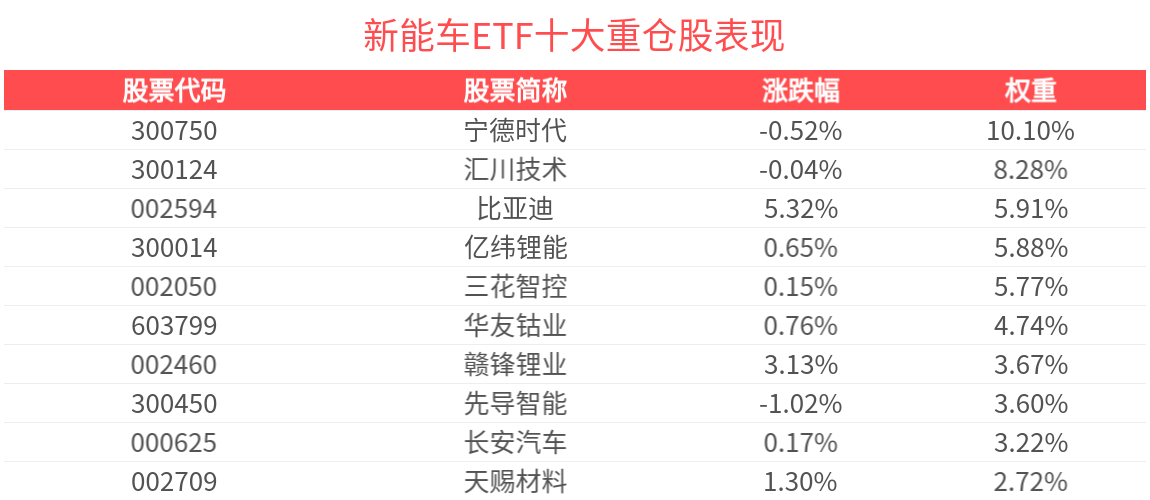
Core Viewpoint - The new energy vehicle (NEV) sector is experiencing significant growth, driven by rising lithium carbonate prices and increased demand for electric vehicles, with key companies in the industry showing strong stock performance [1][2]. Group 1: Market Performance - The China Securities New Energy Vehicle Industry Index (930997) rose by 1.50%, with notable gains from companies such as Tianhua New Energy (7.58%), Defang Nano (7.40%), and BYD (5.32%) [1]. - The New Energy Vehicle ETF (515700) increased by 1.59%, marking its sixth consecutive rise, with the latest price at 2.5 yuan [1]. - The latest scale of the New Energy Vehicle ETF reached 2.149 billion yuan, a one-month high [2]. Group 2: Lithium Prices and Industry Trends - According to Infolink Consulting, lithium carbonate prices continue to rise, with spodumene concentrate (SC6) CIF prices at $1,250 to $1,330 per ton, averaging $1,290, a nearly 20% increase over two weeks [1]. - The spot price for battery-grade lithium carbonate is between 95,000 to 102,000 yuan per ton, averaging approximately 98,000 yuan, reflecting an 8% increase from two weeks prior [1]. - Major domestic lithium iron phosphate manufacturers have initiated price hikes, with Hunan Yuno increasing processing fees by 3,000 yuan per ton starting January 2026 [1]. Group 3: Key Companies in the Index - The top ten weighted stocks in the China Securities New Energy Vehicle Industry Index account for 51.96% of the index, including CATL, Huichuan Technology, and BYD [3]. - The performance of these companies varies, with CATL showing a slight decline of 0.52%, while BYD increased by 5.32% [4].

方正证券:26年汽车板块依然具备结构性投资机遇 重点看好新兴科技板块
Zhi Tong Cai Jing· 2025-12-26 01:45
Core Viewpoint - The automotive sector is expected to present structural investment opportunities in 2026 despite a reduction in subsidies, with traditional vehicle and parts exports likely to support sales and profits, alongside emerging technologies like autonomous driving and AI computing [1] Passenger Vehicles - Passenger vehicle wholesale sales are projected to reach 29.38 million units in 2026, a slight decline of 0.7% year-on-year. Export sales are expected to be 6.34 million units, up 13% from 2025, while retail sales are forecasted at 23.05 million units, down 4% [1] - The export market is anticipated to be a key driver for core growth in the automotive sector, with leading companies expected to transition to profit generation from exports in 2026 [1] - The first quarter of 2026 is expected to see a bottoming out of domestic demand, creating a golden window for export strategies, with a focus on identifying "dark horses" domestically and "white horses" in exports [1] Commercial Vehicles - The commercial vehicle market is expected to recover significantly in 2025, with heavy truck sales projected to exceed 1.1 million units, driven mainly by domestic policy support [2] - In 2026, heavy truck sales are expected to remain stable at over 1.12 million units, with domestic sales projected at 750,000 units (down 4%) and exports expected to reach 375,000 units (up 9%) [2] - Bus sales are forecasted to be 580,000 units in 2026, with a growth of 8%, driven by the acceleration of new energy vehicle exports [2] Auto Parts - The focus for auto parts is on export opportunities, intelligent driving, and transformation trends, with three main lines of attention: traditional parts export leaders, core emerging industry trends, and transformation parts [3] - Domestic auto parts companies are expected to face pressure on profitability due to slowing domestic demand, but local production capacity for overseas markets is anticipated to strengthen [3] - The emergence of L3 autonomous driving and the commercialization of L4 are expected to create structural opportunities in the market [3] Robotics - The robotics sector is transitioning from thematic speculation to performance realization, with key policies being implemented to support development [4] - 2026 is seen as a critical year for humanoid robots, with the Optimus Gen3 expected to launch in Q1 and mass production anticipated in H2, potentially leading to significant growth in the automotive segment [4] - China's supply chain advantages in responsiveness, cost, and completeness are expected to position it as a core support for both domestic and global supply chains [4] Related Companies - Key companies to watch include BYD, SAIC Motor, Seres, Yutong Bus, China National Heavy Duty Truck, Weichai Power, Leap Motor, Xpeng Motors, Geely, Great Wall Motors, Fuyao Glass, Songyuan Safety, Sanhua Intelligent Control, Top Group, Yinlun Machinery, and Jieneng Electronics [5]

市场延续结构性分化,商业航天强者恒强,机器人反弹后留意补涨机会
Xin Lang Cai Jing· 2025-12-26 01:36
机器人概念股同样于昨日集体反弹,昊志机电、锋龙股份、浙江荣泰、万向钱潮等10余股涨停,三花智 控、长盈精密等容量核心同样放量拉升。消息面上,锋龙股份晚上公告,控股股东拟变更为全球人形机 器人上市第一股优必选。控股股东拟变更为七腾机器人的胜通能源和追觅机器人拟入主的嘉美包装分别 晋级10连板和7连板。 人形机器人产业正迎持续催化,特斯拉、Figure AI、优必选等海内外头部企业产业化不断加速,国内政 策持续出台支持人形机器人发展,看好人形机器人创新突破下的机器人产业链发展机遇。机器人概念股 此前大多经历较大幅度的调整,在各大科技成长赛道中仍属相对后排方向,当商业航天、AI产业链等 在高位震荡修正时,机器人板块或仍存一定轮动补涨的空间,但或以个股机会为主,关注作为核心前排 标的为宜。 从市场角度来看,商业航天延续强势,连续两个交易日近20股涨停。其中神剑股份6连板,中国卫星、 超捷股份等人气股成功连板。目前市场的估值逻辑正在发生深刻变革。资本不再高度聚焦于火箭制造这 一单一高光环节,而是试图沿着产业链条进行系统性、下沉式布局。卫星平台、关键零部件、地面设备 及运营服务等每一个核心细分都受到了热捧。目前商业航天这 ...

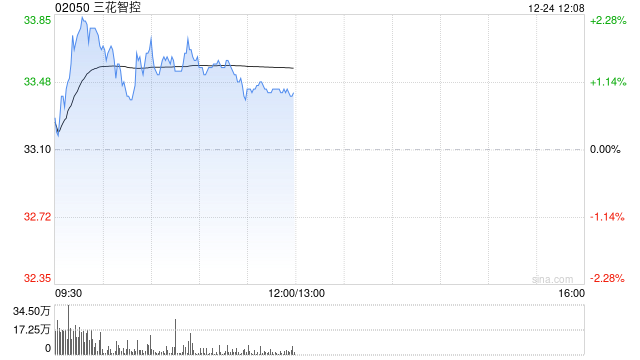
三花智控于12月24日斥资5005.39万元回购110.94万股A股
Xin Lang Cai Jing· 2025-12-26 01:33
Group 1 - Company Sanhua Intelligent Control (02050) announced a share buyback plan, intending to repurchase 1,109,400 A-shares at a total cost of 50.0539 million RMB [2][4] - The buyback will occur on December 24, 2025, with a price range of 44.96 to 45.27 RMB per share [2][4]

“情绪向左产业向右”,这一板块吸金盖过商业航天丨每日研选
Shang Hai Zheng Quan Bao· 2025-12-26 01:16
Core Viewpoint - The humanoid robot sector is experiencing renewed interest from investors, with significant capital inflow observed recently, indicating a potential recovery in market sentiment after a period of decline [1] Group 1: Market Dynamics - As of late November, the humanoid robot index, comprising 110 companies, saw its trading volume drop to 23.7% of the total A-share trading volume, reflecting a significant decrease in market attention [1] - The sector has undergone a price correction, with some stocks returning to relatively reasonable or undervalued levels, suggesting a high safety margin and investment value [1] - The current market sentiment is characterized by a divergence between emotional responses and industrial advancements, presenting opportunities for contrarian investments [1] Group 2: Technological Advancements - The humanoid robot industry is witnessing a qualitative transformation, with significant improvements in motion control capabilities, as demonstrated by robots like Yuzhu G1 and Tesla's Optimus [1] - The timeline for mass production is becoming clearer, with Tesla planning to prepare prototype production by February-March 2026, and other domestic companies like Xpeng aiming for mass production by the end of 2026 [2] Group 3: Financial Support - Substantial financing is fueling the industry, with Galaxy General securing over $300 million in new funding, setting a record for the humanoid robot sector, and bringing its total financing to approximately $800 million [2] - The establishment of the world's first humanoid robot power battery PACK production line by CATL signifies a major investment in intelligent manufacturing, enhancing the credibility of the sector [2] Group 4: Policy Support - Local government policies are increasingly supportive of the humanoid robot industry, with initiatives in places like Luoyang and Shandong promoting the development of related technologies and products [3] - Large-scale equipment renewal policies are providing a safety net for the manufacturing sector's transformation, indirectly benefiting the robot industry [3] Group 5: Investment Focus - Future investment strategies in humanoid robots will center around "mass production realization" and "capability evolution," with value transmission expected along the supply chain from complete machines to core components [4] - Companies with established positions in high-value segments such as joints, sensors, and dexterous hands are likely to see more pronounced earnings certainty [4] - The hand, as a critical execution unit for humanoid robots, presents significant engineering challenges, and firms with deep expertise in materials and processes are expected to benefit from the upcoming growth in humanoid robot production [4]
赴港IPO,成了“全村的希望”
3 6 Ke· 2025-12-26 00:57
Core Viewpoint - The surge in market capitalization of domestic GPU manufacturers like Moore Threads and Muxi Co., exceeding 600 billion yuan, reflects a capital frenzy in the industry, similar to previous trends observed in the market [1]. Group 1: IPO Trends and Market Dynamics - Several companies, including the first domestic GPU stock in Hong Kong, Birun Technology, are preparing for IPOs, driven by the optimized listing regulations in Hong Kong, particularly the new Chapter 18C, which allows unprofitable "specialized and innovative" tech companies to go public [3][10]. - The Hong Kong market has seen a significant increase in IPO activity, with 102 companies listed by 2025, raising a total of 272.476 billion HKD, a year-on-year increase of 226.62%, marking a four-year high [3]. - As of December 17, there are 298 companies in the IPO hearing process in Hong Kong, with 28 new applications in just half a month of December, surpassing the 18 from the same period in November [3]. Group 2: Financial Pressures and Market Entry - Many suppliers are pursuing IPOs primarily to address "blood-making" needs, often driven by contractual obligations rather than purely for growth capital [6][14]. - Companies like Yushi Technology, which filed for an IPO on November 28, reported significant financial losses, with pre-tax losses of 250 million yuan, 213 million yuan, and 212 million yuan projected for 2022 to 2024, indicating a pressing need for capital [8]. - The flexible and inclusive nature of Hong Kong's listing requirements, especially for unprofitable companies, has attracted many firms seeking funding support [10]. Group 3: Industry Challenges and Competitive Landscape - The automotive intelligence suppliers face common challenges, including ongoing losses, funding pressures, and insufficient self-sustaining capabilities, which are critical for their survival [14][16]. - The rapid technological iteration in the automotive sector necessitates continuous high R&D investment, impacting short-term profitability and creating a competitive environment where even successful IPOs do not guarantee long-term success [16]. - The shift in Hong Kong's capital market towards a more rational and stringent review process poses additional challenges for companies seeking to enter the market, as the focus has moved from merely having a good "tech story" to demonstrating solid technological capabilities and future growth potential [10][16].
万亿赛道从零起,人形机器人才是AI全村的希望?
3 6 Ke· 2025-12-25 23:31
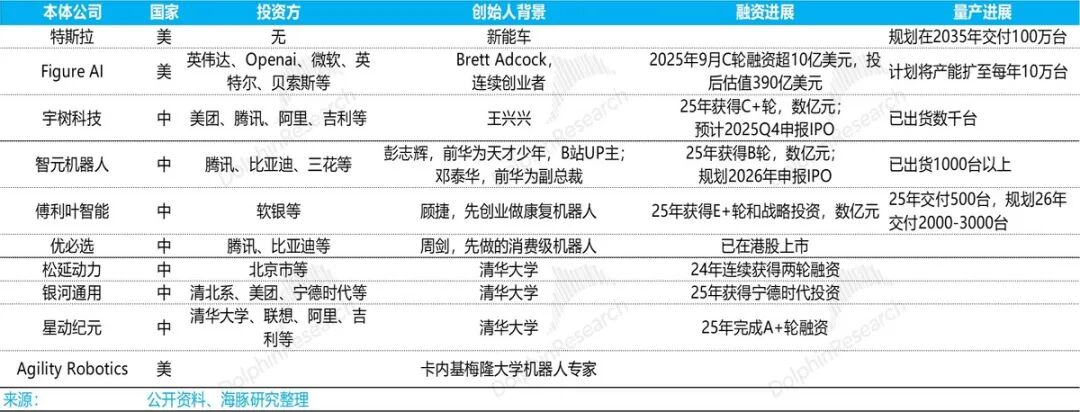
Core Insights - The key focus for AI in 2026 will be on reducing computing costs and the implementation of AI investments in both software and hardware, with new hardware deployment representing true incremental opportunities [1] Industry Overview - The humanoid robot industry is expected to be significantly impacted by the upcoming mass production of Tesla's Optimus robot, which is anticipated to change human interaction and productivity [2] - The analysis of the humanoid robot supply chain will cover the composition of the industry, challenges in hardware industrialization, and opportunities in humanoid robot hardware [2] Humanoid Robot Characteristics - Humanoid robots are defined by two core features: the "form" resembling a human and the "brain" that enables multi-modal perception, continuous learning, and decision-making [2][3] - Achieving the general capabilities required for humanoid robots necessitates advancements in computing power, algorithms, data, and the integration of hardware and software [3] Hardware Challenges - The hardware requirements for humanoid robots differ significantly from other industries, with some components needing to be developed from scratch, such as highly sensitive tactile sensors [4] - The cost of hardware must be sufficiently low to enable widespread adoption, as the estimated future demand for humanoid robots is substantial [4] Supply Chain Breakdown - The humanoid robot industry can be divided into upstream, midstream, and downstream segments, with a complex supply chain similar to that of the electric vehicle industry [5][6] - Upstream focuses on collaboration between manufacturers and suppliers of actuators, sensors, and control systems, with a diverse range of cooperation models [7] - Midstream consists of manufacturers of humanoid robots, primarily concentrated in the US and China, with a mix of established companies and startups [8][9] Upstream Hardware Analysis - Tesla's Optimus robot is projected to have a production capacity of 100,000 units annually by the end of 2026, with significant potential for growth in the humanoid robot market [12] - The hardware components of the Optimus robot include perception, decision-making, and execution layers, with specific focus on sensors and actuators [14][36] Sensor Technologies - Visual sensors are critical for environmental perception, with Tesla opting for a 2D camera approach, while other manufacturers may use 3D cameras and LIDAR [15] - Tactile sensors, essential for human-like interaction, face significant technological challenges and are a key area for development [16][20] - Six-dimensional force sensors are crucial for motion control, with a focus on domestic alternatives to reduce reliance on foreign suppliers [22][27] Actuator Technologies - Electric motors are the primary drive mechanism for humanoid robots, with a focus on developing high-performance, cost-effective solutions [37] - Linear and rotary actuators are essential for joint movement, with a significant emphasis on the development of planetary roller screws and gear reducers [46][58] Market Dynamics - The humanoid robot market is characterized by high entry barriers and significant opportunities in the development of tactile sensors and actuators, particularly in the context of domestic production capabilities [69]

【金猿案例展】三花智控——“智能问数”数据智能体创新项目
Xin Lang Cai Jing· 2025-12-25 12:40
Group 1 - The core objective of the project is to enhance data application efficiency and decision-making speed by implementing the Data Agent system, transitioning from retrospective reporting to proactive insights and predictions [3][34] - The project aims to address systemic challenges such as data silos, inconsistent metric definitions, and reliance on individual expertise for data analysis [2][32] - The implementation timeline includes starting in early November 2025, with key milestones for data cleaning and indicator setup [33] Group 2 - The Data Agent will monitor and analyze internal reimbursement processes, focusing on reducing the return rate through automated insights and interventions [34][35] - The project is structured into three capability layers: data governance, intelligent analysis, and smart service integration [4][35] - The strategic goal is to establish a data-driven decision-making framework that enhances operational transparency and efficiency [40] Group 3 - The implementation strategy involves a three-pronged approach: platform support, scenario deepening, and capability reuse [41] - The project will be executed in four phases: environment preparation, intelligent agent construction, embedded deployment, and full-scale promotion [42][52] - The first phase focuses on creating a high-quality data foundation for the Data Agent, ensuring clean and consistent data inputs [43] Group 4 - The project aims to achieve significant improvements in reimbursement efficiency, with targets to reduce the return rate from 23.6% to 9.2% and processing time from 5.8 days to 3.1 days [58] - Enhanced budget control is expected, with the proportion of returns due to budget issues decreasing from 34% to 8% [58] - The initiative will also improve organizational behavior, with a 74% reduction in return rates among the top 10 returners due to proactive training and reminders [58] Group 5 - The project is a collaboration between NetEase Shufan and Sanhua Intelligent Control, aiming to create a comprehensive data-driven governance framework [25][28] - The Data Agent system is designed to be scenario-based, autonomous, embeddable, and evolvable, driving a shift from data availability to intelligent autonomy [35] - The project will culminate in a showcase at the 2025 China Big Data Industry Annual Data Agent Innovation Application Awards [30][63]
数据复盘丨93股获主力资金净流入超1亿元 龙虎榜机构抢筹12股
Zheng Quan Shi Bao Wang· 2025-12-25 10:45
Market Performance - The Shanghai Composite Index closed at 3959.62 points, up 0.47%, with a trading volume of 785 billion yuan [1] - The Shenzhen Component Index closed at 13531.41 points, up 0.33%, with a trading volume of 1139.5 billion yuan [1] - The ChiNext Index closed at 3239.34 points, up 0.3%, with a trading volume of 532.66 billion yuan [1] - The STAR 50 Index closed at 1349.06 points, down 0.23%, with a trading volume of 44.8 billion yuan [1] - Total trading volume for both markets reached 1924.5 billion yuan, an increase of 44.26 billion yuan from the previous trading day [1] Sector Performance - Strong sectors included defense and military, light industry manufacturing, machinery equipment, insurance, automotive, textiles and apparel, computing, and food and beverage [3] - Active concepts included satellite internet, space stations, commercial aerospace, synchronous reluctance motors, humanoid robots, antibacterial fabrics, industrial mother machines, and PEEK materials [3] - Weak sectors included non-ferrous metals, precious metals, commercial retail, coal, and telecommunications [3] Fund Flow - The net outflow of main funds from the Shanghai and Shenzhen markets was 20.439 billion yuan [4] - The automotive sector saw the highest net inflow of main funds, amounting to 1.158 billion yuan [5] - Other sectors with significant net inflows included machinery equipment and food and beverage, with net inflows of 504 million yuan and 228 million yuan, respectively [5] - The electronics sector experienced the largest net outflow, totaling 5.068 billion yuan [5] Individual Stock Performance - A total of 1969 stocks saw net inflows, with 93 stocks receiving over 100 million yuan in net inflows [6] - Jin Feng Technology had the highest net inflow at 829 million yuan, followed by Yangguang Electric, Sanhua Intelligent Control, and others [7] - Conversely, 3196 stocks experienced net outflows, with 105 stocks seeing over 100 million yuan in net outflows [8] - Shenghong Technology had the largest net outflow at 1.651 billion yuan [9] Institutional Activity - Institutions had a net sell of approximately 108 million yuan, with 12 stocks seeing net purchases and 17 stocks net sold [10] - The stock with the highest net purchase by institutions was Hainan Development, with a net purchase amount of approximately 289 million yuan [10]