
格力电器

Search documents
YiwealthSMI|东方财富登顶榜首,趣味、专业兼顾的投教内容获青睐
Di Yi Cai Jing· 2025-12-31 12:13
Group 1 - The Securities Social Media Index (SMI) for November 2025 shows a stable top tier, with significant ranking changes among brokerages [1] - The top three positions are held by Dongfang Caifu, CITIC Securities, and Guojin Securities, with Dongfang Caifu rising from second to first place and Guojin Securities jumping from eighth to third [1] - New entrants to the list include Guotai Haitong, Hu'an Securities, Kaiyuan Securities, and Huafu Securities, while firms like Debang Securities and Shanxi Securities dropped out [1] Group 2 - The Douyin high-praise list for November highlights emotional, trending, and practical content, with Dongfang Caifu's post on investment behavior resonating emotionally, achieving 15,000 likes [2] - Guojin Securities used a humorous approach to engage users by discussing characteristics of stock investors, which also garnered significant attention [2] - Other notable content includes analyses on Nvidia's market value and nuclear technology breakthroughs, indicating a growing interest in educational and global perspectives among users [2] Group 3 - Video content from brokerages focuses on brand promotion and in-depth research, with CITIC Securities discussing A-share market strategies for 2026, receiving nearly 1,000 likes [6] - Hongta Securities analyzed new opportunities in the consumer industry related to the "Double Eleven" shopping festival, providing a comprehensive investment overview [6] Group 4 - The public account rankings emphasize important market information and investment foresight, with CITIC Securities' extensive report on 2026 trends achieving over 100,000 reads, showcasing the demand for in-depth research [12] - The content reflects a shift in investor needs, focusing on emotional resonance and understanding rather than just investment advice, highlighting the importance of engaging and relatable communication [15]




深市公司“愿分红、常分红”蔚然成风 2025年度派利超5000亿元
Zheng Quan Ri Bao Wang· 2025-12-31 11:54
Core Insights - The Shenzhen Stock Exchange (SZSE) companies demonstrated strong dividend performance in 2025, driven by policy guidance, improved corporate profitability, and enhanced governance, establishing a solid foundation for investor returns [1][4][5] Dividend Performance - In 2025, SZSE companies distributed a total cash dividend of 5475.59 billion, maintaining a stable level above 5000 billion; during the 14th Five-Year Plan period, total dividends exceeded 20,000 billion, indicating a sustainable investment return mechanism [2][3] - The number of companies implementing interim dividends increased, with 533 companies distributing a total of 1329.28 billion, marking a year-on-year growth of 25.98%; nearly 60% of these companies had a payout ratio exceeding 20% [2][3] - High dividend yield companies attracted long-term capital, with 166 companies having a yield over 1% and 108 companies exceeding 1.34%, enhancing market appeal for long-term investments [2] Sector Analysis - The main board accounted for 4101.07 billion of the total cash dividends, representing 74.90% of the SZSE total, while the ChiNext board showed strong growth with 1374.52 billion in dividends, a year-on-year increase of 8.41% [3] - Leading companies in consumer and financial sectors, such as Wuliangye and Gree Electric, actively fulfilled their dividend responsibilities, while advanced manufacturing, digital economy, and green low-carbon sectors also showcased dividend benchmarks [3] Driving Factors - Policy guidance has played a crucial role in enhancing the dividend mechanism, with recent regulations encouraging companies to increase dividend frequency and stability [4][5] - Improved profitability provided a solid financial basis for cash dividends, with total operating income reaching 15.72 trillion, a year-on-year increase of 4.31%, and net profit of 9030.18 billion, up 9.69% [5] - Enhanced corporate governance has led to more predictable and standardized dividend practices, with 533 companies disclosing interim dividend plans, a year-on-year increase of 7.24% [5] Future Outlook - As the regulatory framework continues to improve and market vitality is further released, SZSE companies are expected to solidify the foundation for investment returns, providing more stable income expectations for investors [6]
破防了?罗永浩与豆包吵架上热搜:能吵出心流来
Guan Cha Zhe Wang· 2025-12-31 11:47
Core Viewpoint - The debate between Luo Yonghao and the AI model "Doubao" highlights the ongoing discussion about the strengths and weaknesses of Smartisan Technology's products, particularly the Smartisan phone, despite its market failure and brand exit [1][2]. Group 1: Product Innovation and Market Performance - Luo Yonghao emphasized that Smartisan Technology's innovations in human-computer interaction were industry-leading at the time, with several features later adopted by other manufacturers, asserting that the product's intrinsic value should not be dismissed due to commercial setbacks [2]. - Doubao countered by pointing out significant hardware quality control issues with Smartisan phones, including poor battery life and overheating, which were frequently mentioned in user feedback [2]. Group 2: Historical Context and Public Perception - The debate referenced the early reviews from Zealer, a tech review platform, which highlighted both the design and various shortcomings of the Smartisan T1, leading to a significant drop in its ratings compared to competitors like Xiaomi [4][6]. - The historical conflict between Luo Yonghao and Wang Ziru, the founder of Zealer, is noted as a pivotal moment that amplified the perception of Smartisan's quality control issues, which continue to affect its reputation [8][9]. Group 3: Impact on Industry and Future Implications - The mention of Zealer in the current debate illustrates the lasting impact of past controversies in the tech industry, suggesting that the narrative surrounding Smartisan's product quality remains a significant part of its identity [9]. - The evolution of Zealer's business model and Wang Ziru's shift away from independent reviews reflect broader changes in the tech review landscape, influenced by past events and public perception [8].

深市年度分红超5400亿
Di Yi Cai Jing Zi Xun· 2025-12-31 11:27
Core Viewpoint - The implementation of stable cash dividends by listed companies enhances shareholder recognition and market acceptance, with regulatory support from the China Securities Regulatory Commission (CSRC) encouraging reasonable and stable dividend policies [2][3]. Group 1: Dividend Implementation - Over 10 companies listed on the Shenzhen Stock Exchange announced mid-term and third-quarter dividend implementation announcements, with over 18 companies expected to distribute more than 10 billion yuan in total dividends at the beginning of 2026 [2]. - In 2025, Shenzhen-listed companies cumulatively distributed cash dividends amounting to 547.56 billion yuan, with a total of over 2 trillion yuan in dividends expected during the "14th Five-Year Plan" period [2]. - A total of 533 companies in Shenzhen implemented mid-term dividends of 132.93 billion yuan in 2025, representing a year-on-year increase of 25.98% [2]. Group 2: Regulatory Environment - The new "National Nine Articles" strengthens the regulation of cash dividends for listed companies and increases incentives for high-dividend companies [3]. - The CSRC issued guidelines to encourage cash dividends, aiming to enhance dividend levels and promote more frequent dividend distributions [3]. Group 3: Dividend Distribution by Sector - In 2025, the main board of Shenzhen listed 965 companies that cumulatively distributed cash dividends of 410.11 billion yuan, accounting for 74.90% of the total cash dividends in Shenzhen [3]. - The growth rate of dividends in the ChiNext board is notable, with 945 companies distributing a total of 137.45 billion yuan, reflecting a year-on-year growth of 8.41% [3]. Group 4: Notable Companies and Dividend Amounts - In the consumer sector, Wuliangye (000858.SZ) distributed 10 shares for 25.78 yuan, totaling 10.01 billion yuan in December 2025 [4]. - Gree Electric (000651.SZ) approved a mid-term profit distribution plan, distributing 10 yuan per 10 shares, totaling 5.59 billion yuan [4]. - In the financial sector, GF Securities (000776.SZ) distributed 1 yuan per 10 shares, totaling 0.76 billion yuan [4]. Group 5: Financial Performance - In the first three quarters of 2025, Shenzhen-listed companies achieved a total operating income of 15.72 trillion yuan, a year-on-year increase of 4.31%, and a net profit attributable to shareholders of 903.02 billion yuan, up 9.69% [5]. - 2,169 companies reported profits, representing 75.34% of the total, with 207 companies (9.54% of profitable companies) experiencing profit growth exceeding 100% [5].
深市年度分红超5400亿
第一财经· 2025-12-31 10:23
2025.12. 31 本文字数:1446,阅读时长大约3分钟 作者 | 第一财经 安卓 2025年的最后一天,10余家深市上市公司披露了中期分红、三季度分红实施公告。第一财经根据 Wind数据统计,预计2026年初还有超18家公司分红金额合计超百亿元。 上市公司实施稳定分红,不仅能增强股东对公司的认同,还能提升公司在市场中的认可度。近期,证 监会发布《上市公司监督管理条例(公开征求意见稿)》,对上市公司现金分红作出明确要求,支持 上市公司制定合理稳定的分红政策。 从全年的数据来看,年内,深市上市公司累计发放现金股利5475.59亿元。"十四五"期间实施分红 总额超2万亿元,上市公司"愿分红、常分红"的生态逐步形成。 近年来,越来越多的上市公司加入了中期分红大军。年内深市已有533家公司实施中期分红1329.28 亿元,同比增加25.98%。近六成中期分红的深市公司股利支付率超20%,其中105家公司股利支付 率超50%。 上市公司实施中期分红,可以让投资者更早分享企业成长红利。新"国九条"明确强化上市公司现金 分红监管,加大对分红优质公司的激励力度。证监会发布《上市公司监管指引第3号——上市公司现 金分红》 ...
美的集团:这里的新高静悄悄!
市值风云· 2025-12-31 10:08
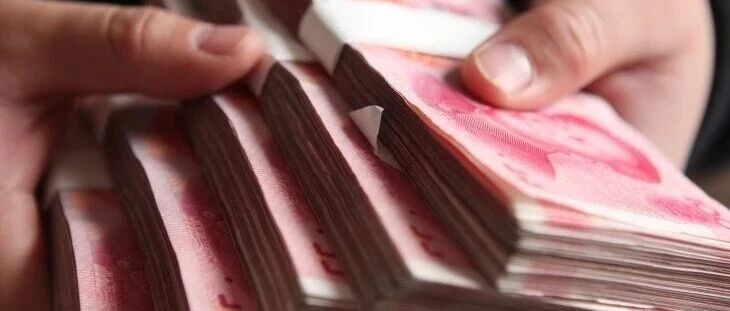
Core Viewpoint - The article discusses the impact of the 2026 "National Subsidy" policy for replacing old home appliances on leading home appliance companies' performance in the coming year, particularly focusing on Midea Group's stock buyback and financial performance [3][31]. Group 1: Stock Buyback and Market Performance - Midea Group has spent 10 billion on stock buybacks from June 17, 2025, to December 8, 2025, with 70.36% of the repurchased shares set for cancellation, signaling strong cash flow and valuation discount [3][4]. - Since the buyback began, Midea Group's stock has seen a maximum increase of over 15%, closing at a price that attempted to reach its historical high of 88.74 yuan per share [4]. - The stock's price-to-earnings ratio (PE) reached 13.32 times, with a dividend yield of 5.16%, indicating an attractive valuation [30]. Group 2: Financial Performance - Midea Group's revenue for 2024 is projected to be 409.1 billion, a year-on-year increase of 9.5%, with the first three quarters of 2024 showing a revenue of 364.7 billion, up 13.8% [5][10]. - The net profit for 2024 is expected to be 38.54 billion, reflecting a 14.3% increase year-on-year, with the first three quarters showing a net profit of 37.88 billion, up 19.5% [10]. - Midea Group has consistently outperformed competitors like Gree Electric and Haier Smart Home in terms of revenue and net profit since 2020 [10][12]. Group 3: B2B Business Contribution - Midea Group's B2B business contributed significantly to its revenue, with 2024 B2B revenue at 104.5 billion, accounting for 26% of total revenue [15]. - The B2B segment includes various solutions such as new energy and industrial technology, smart building technology, and robotics, with the new energy and industrial technology segment showing a 20.58% year-on-year growth [16][20]. - The company has strategically elevated its B2B business to be on par with its consumer-oriented smart home business since 2020, marking a significant shift in its operational focus [19]. Group 4: Acquisition Strategy - Midea Group has a history of strategic acquisitions that have bolstered its growth, including the purchase of Toshiba's air conditioning business and KUKA Robotics, enhancing its capabilities in various sectors [22][24]. - The acquisitions have allowed Midea to fill gaps in its product offerings and expand its global influence, with a notable increase in goodwill, reaching 34.37 billion by the end of Q3 2025 [25]. - The company has not experienced significant goodwill impairment in any fiscal year, indicating successful integration of acquired entities [25]. Group 5: Future Outlook with National Subsidy - The new "National Subsidy" policy for 2026 will continue to support the home appliance sector but will be more focused and optimized, which is seen as a positive for leading companies like Midea [31].

深市年度分红超5400亿,“十四五”累计分红突破2万亿
Di Yi Cai Jing· 2025-12-31 09:51
Group 1 - Over 18 companies are expected to distribute dividends exceeding 100 billion yuan at the beginning of 2026 [1] - In 2025, listed companies in the Shenzhen market distributed a total of 5,475.59 billion yuan in cash dividends, with a total dividend amount exceeding 20 trillion yuan during the "14th Five-Year Plan" period [1] - 533 companies in the Shenzhen market implemented interim dividends totaling 1,329.28 billion yuan in 2025, a year-on-year increase of 25.98% [1] Group 2 - The new "National Nine Articles" strengthens the regulation of cash dividends for listed companies and increases incentives for companies with quality dividends [2] - In 2025, 166 companies in the Shenzhen market had a dividend yield exceeding 1%, with 108 companies exceeding 1.34%, attracting more medium- and long-term investments [2] - Main board companies in the Shenzhen market accounted for 74.90% of the total cash dividends, distributing 4,101.07 billion yuan, while the growth rate of dividends in the ChiNext board was 8.41% [2] Group 3 - In the consumer sector, Wuliangye distributed 100.07 billion yuan in dividends, while Gree Electric distributed 55.85 billion yuan [3] - In the financial sector, GF Securities distributed 7.61 billion yuan, and Ningbo Bank distributed 19.81 billion yuan in dividends [3] - In advanced manufacturing, CITIC Special Steel distributed 10.09 billion yuan, and Weichai Power distributed 31.01 billion yuan [3] Group 4 - In the digital economy sector, Yilian Network distributed 6.33 billion yuan, and GoerTek distributed 5.21 billion yuan in dividends [4] - In the green low-carbon sector, CATL distributed 45.68 billion yuan, and Longyuan Power distributed 8.36 billion yuan in dividends [4] - In the first three quarters of 2025, Shenzhen companies achieved a total operating income of 15.72 trillion yuan, a year-on-year increase of 4.31%, and a net profit of 9,030.18 billion yuan, a year-on-year increase of 9.69% [4]
中国电泳漆市场现状研究分析与发展前景预测报告
QYResearch· 2025-12-31 09:24
Core Viewpoint - The electrophoretic paint market in China is characterized by moderate scale, technical intensity, and stable growth, driven by both domestic demand and global industry trends. The market is expected to grow from $1,504.1 million in 2024 to $1,855.5 million by 2031, with a CAGR of 2.80% from 2025 to 2031 [3][9]. Market Size and Growth Trends - The Chinese electrophoretic paint market is projected to reach $1,504.1 million in sales revenue by 2024 and $1,855.5 million by 2031, indicating a stable growth trend with a CAGR of 2.80% from 2025 to 2031 [3]. Demand Analysis - The automotive and home appliance sectors are the primary consumers of electrophoretic paint, with automotive applications requiring high corrosion resistance and compatibility with subsequent coatings. The demand from the home appliance sector is characterized by large-scale, standardized needs [9]. Competitive Landscape - The market features a mix of international giants and local specialized manufacturers. Multinational companies dominate the high-end market due to their advanced formulation technologies and relationships with major automotive manufacturers, while local firms excel in the mid-to-low-end market segments [10][13]. Key Players - Major players in the Chinese market include PPG Industries, BASF, Haolisen, Xiangjiang Kansai, Axalta, Nippon Paint, and Jinlitai, with the top three companies holding approximately 38.63% of the market share in 2024 [13]. Industry Chain Analysis - Upstream - Key raw materials for electrophoretic paint include resins, solvents, additives, and pigments, with the chemical industry being the primary upstream sector. The market is competitive, and product costs are closely linked to fluctuations in crude oil prices [16]. Industry Chain Analysis - Midstream - Foreign brands hold a strong position in the automotive OEM paint sector, with six major companies controlling about 90% of the market share in automotive coatings. Domestic companies are gradually gaining market share in non-passenger vehicle segments [17]. Industry Chain Analysis - Downstream - The downstream industries include automotive manufacturing and other sectors such as engineering machinery, motorcycles, hardware, and home appliances, which are closely tied to macroeconomic conditions and exhibit cyclical characteristics [18]. Development Drivers - Key drivers for the industry include government support for environmentally friendly coatings, advancements in technology leading to diverse and functional products, and stable growth in downstream industries such as automotive and home appliances [21]. Development Constraints - The industry faces challenges such as risks from macroeconomic fluctuations, volatility in raw material prices, and intense competition, particularly from foreign brands in the high-end market [21].
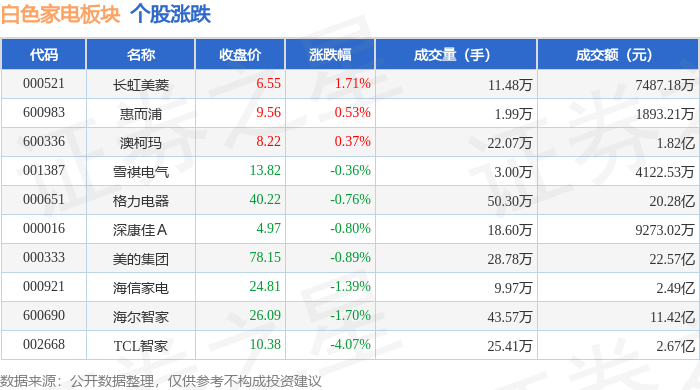
白色家电板块12月31日跌1.01%,TCL智家领跌,主力资金净流出4.24亿元
Zheng Xing Xing Ye Ri Bao· 2025-12-31 08:59
Market Overview - The white goods sector experienced a decline of 1.01% on December 31, with TCL leading the drop [1] - The Shanghai Composite Index closed at 3968.84, up 0.09%, while the Shenzhen Component Index closed at 13525.02, down 0.58% [1] Individual Stock Performance - Changhong Meiling (000521) closed at 6.55, up 1.71% with a trading volume of 114,800 shares and a turnover of 74.87 million yuan [1] - Whirlpool (600983) closed at 9.56, up 0.53% with a trading volume of 19,900 shares and a turnover of 18.93 million yuan [1] - Aucma (600336) closed at 8.22, up 0.37% with a trading volume of 220,700 shares and a turnover of 182 million yuan [1] - Gree Electric (000651) closed at 40.22, down 0.76% with a trading volume of 503,000 shares and a turnover of 2.028 billion yuan [1] - Midea Group (000333) closed at 78.15, down 0.89% with a trading volume of 287,800 shares and a turnover of 2.257 billion yuan [1] - Hisense Home Appliances (000921) closed at 24.81, down 1.39% with a trading volume of 99,700 shares and a turnover of 249 million yuan [1] - Haier Smart Home (600690) closed at 26.09, down 1.70% with a trading volume of 435,700 shares and a turnover of 1.142 billion yuan [1] - TCL Smart Home (002668) closed at 10.38, down 4.07% with a trading volume of 254,100 shares and a turnover of 267 million yuan [1] Capital Flow Analysis - The white goods sector saw a net outflow of 424 million yuan from institutional investors, while retail investors contributed a net inflow of 235 million yuan [1] - TCL Smart Home experienced a net outflow of 45.27 million yuan from retail investors, despite a net inflow of 35.83 million yuan from institutional investors [2] - Midea Group had a net outflow of 44.91 million yuan from retail investors, with a net inflow of 29.11 million yuan from institutional investors [2] - Haier Smart Home had a significant net inflow of 68.95 million yuan from retail investors, despite a net outflow of 21.1 million yuan from institutional investors [2]



国投证券:2026年家电以旧换新政策出台 有望提振家电消费景气
智通财经网· 2025-12-31 06:58
智通财经APP获悉,国投证券发布研报称,2026年家电以旧换新政策落地,相较于2025年,明年补贴政 策支持范围有所缩小、补贴比例有所下调、更聚焦高能效产品,整体内容基本符合市场预期,有望刺激 家电内销边际改善,推动行业产品结构优化。预计国内家电消费将保持稳健表现,具有研发、渠道和品 牌优势的白电、黑电企业将更受益于新政策;外销方面,中美贸易冲突趋于缓和,关税压力有望降低, 且家电企业全球产能逐步释放,新兴市场持续贡献增量。 3)实施机制方面,2026年政策明确在全国范围内执行统一的补贴标准;建立补贴资金预拨制度,缓解企 业垫资压力;充分发挥不同销售渠道优势,支持线下实体零售;增加农村地区线下经营主体、引导线上 渠道向农村地区倾斜等方式,提高农村地区消费便利度。 2025年以旧换新政策有效刺激家电消费 据国家统计局数据显示,2025年1-11月份,全国限额以上单位家用电器和音像器材类商品零售额 YoY+14.8%。据央视新闻援引商务部消息,1-11月,全国家电以旧换新超12844万台,测算累计补贴金 额约827亿元,带动家电消费约4395亿元。家电以旧换新补贴政策带动更新需求释放,有效提振家电消 费景气。 2 ...