腾讯

Search documents
【年终盘点】港股IPO热下的退市潮:退市量大增,一半被“净化”!
Sou Hu Cai Jing· 2025-12-30 08:33
Group 1 - The core viewpoint of the article highlights the contrasting dynamics in the Hong Kong stock market in 2025, characterized by a significant rise in the Hang Seng Index by nearly 30% and a record IPO fundraising amount of approximately 278.7 billion HKD, while simultaneously experiencing a notable wave of delistings [2][3]. - A total of 62 companies were delisted from the Hong Kong Stock Exchange in 2025, marking a 26.5% increase from the previous year, where 49 companies were delisted [3]. - The delisting process in Hong Kong primarily follows two paths: voluntary privatization and forced delisting, with the latter often resulting from severe issues such as financial misconduct or prolonged trading suspensions [5]. Group 2 - The Hong Kong Stock Exchange has intensified its regulatory measures to enhance market quality, leading to 31 companies being forcibly delisted in 2025, which constitutes half of the total delistings [5]. - Notable companies among those forcibly delisted include China Evergrande, which faced severe financial difficulties and regulatory penalties, and Hong Jiu Fruit, which encountered multiple operational issues [7]. - The market is witnessing a liquidity divide, with approximately 80% of funds concentrated in 20% of high-quality stocks, resulting in low liquidity for many small-cap companies, prompting them to consider privatization [8]. Group 3 - The increase in delistings in 2025 reflects a self-purification process in the Hong Kong capital market, driven by liquidity disparities and a focus on high-growth sectors like AI and advanced manufacturing [9]. - Southbound capital inflows into Hong Kong stocks exceeded 1.4 trillion HKD in 2025, indicating a strong preference for large enterprises, which exacerbates challenges for smaller companies [9]. - As of November 28, 2025, there were 84 companies on the Hong Kong Stock Exchange that had been suspended for over three months, with 10 already approved for delisting [11]. Group 4 - Many companies on the "danger list" are struggling to meet financial reporting requirements, leading to potential delistings, particularly in the real estate sector, which has been significantly affected [13]. - The Hong Kong Stock Exchange's strict enforcement of delisting rules aims to maintain market health and long-term credibility, facilitating a "market cleansing" process that could attract more long-term value investors [13].


AI制药第一股上市首日飙涨48%,获腾讯、瑞银等押注
2 1 Shi Ji Jing Ji Bao Dao· 2025-12-30 06:48
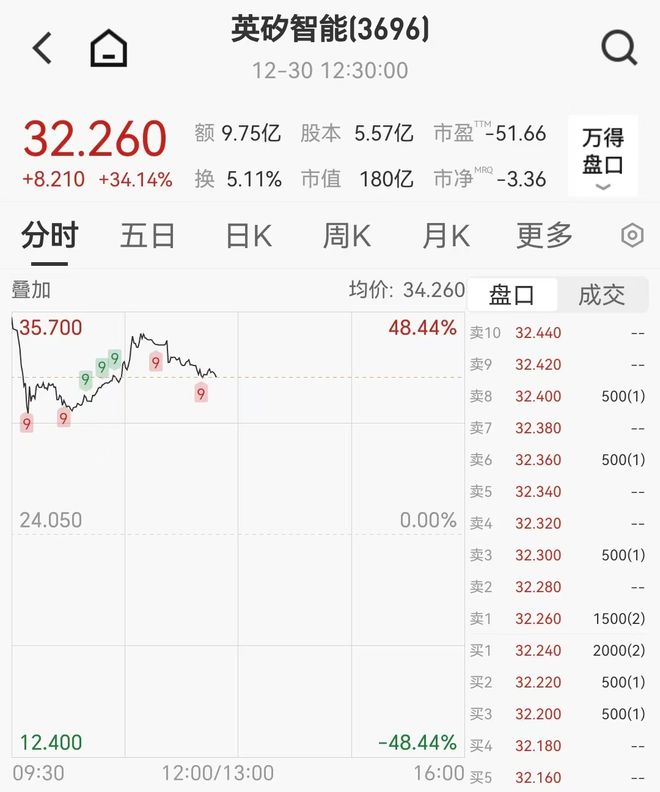
记者丨季媛媛 编辑丨张伟贤 12月30日,由生成式人工智能驱动的临床阶段生物医药科技公司英矽智能在港交所成功挂牌上市,股份 代码:3696.HK,成为首家通过联交所主板上市规则8.05条上市的人工智能生物医药科技公司。 本次首次公开募股(IPO)募集资金总额22.77亿港元,是年内募集资金最高的港股生物医药IPO。今日 港股早盘,英矽智能涨幅一度高达48%。截至发稿,仍涨超30%。 根据招股书,英矽智能成立于2014年,2019年落地上海浦东,凭借生成式AI技术快速崛起。其核心业 务涵盖自研管线开发、AI平台授权以及跨领域合作三大核心领域,并成功构建了从靶点发现直至临床 验证的完整产业链条。 2018年至今,英矽智能进行了8轮融资,2025年2月完成超1亿美元E轮融资,投后估值约13.31亿美元 (折合人民币约93.11元)。财务方面,于2022年度、2023年度、2024年度,英矽智能的收入持续增 长,分别为约3010万美元、5120万美元、8580万,2022年至2024年收入增长率为185%。毛利率分别为 63.4%、75.4%、90.4%。经过调整,亏损额持续减少,分别为7080万元、6740万元、2 ...
数据中心供配电设备行业跟踪:海外云厂商资本开支高增长,电力设备需求高企
Shanghai Aijian Securities· 2025-12-30 06:43
Investment Rating - The report assigns an "Outperform" rating for the power equipment industry, indicating a positive outlook for investment opportunities in this sector [3]. Core Insights - The data center industry has become a core incremental application scenario for the power equipment sector, directly driving demand growth and technological iteration in power equipment [6]. - The report emphasizes the need to incorporate multi-dimensional indicators from the AI industry to accurately assess the demand for power distribution equipment, given the capital expenditure characteristics of the data center industry [3][6]. - Key indicators are constructed from three aspects: demand side (capital expenditure trends of leading cloud vendors), supply chain (GPU supply capabilities), and AI application development [3][6]. Summary by Sections Demand Side - Capital expenditure from overseas cloud vendors reached $99.617 billion in Q3 2025, a year-on-year increase of 80.39% and a quarter-on-quarter increase of 9.54% [8]. - Alibaba's capital expenditure was 31.5 billion yuan in Q3 2025, up 80.10% year-on-year but down 18.55% quarter-on-quarter [13]. - Tencent's capital expenditure was 13 billion yuan, down 24.05% year-on-year and 32.05% quarter-on-quarter [13]. Supply Chain - Nvidia's revenue in Q3 2025 reached 362.571 billion yuan, a historical peak with a quarter-on-quarter growth of 24.63% and a year-on-year growth of 62.49% [18]. - TSMC's revenue in November 2025 was 343.614 billion New Taiwan dollars, a year-on-year increase of 24.5% [24]. - The CPU price index in October 2025 was 98.20, showing a slight recovery from 96.15 in September [27]. Application Side - The number of AI models is steadily increasing, with a notable growth in application deployments [29]. - The token usage on OpenRouter from December 16 to December 22 was 5.70T, reflecting a 2.56% decrease [35]. - The price of tokens for models scoring over 40 on the Artificial Analysis Intelligence Index dropped by over 50% in Q3 2025 [46].
“AI制药”标杆企业英矽智能登陆港交所 创年内最大港股生物医药IPO
Xin Hua Cai Jing· 2025-12-30 06:41
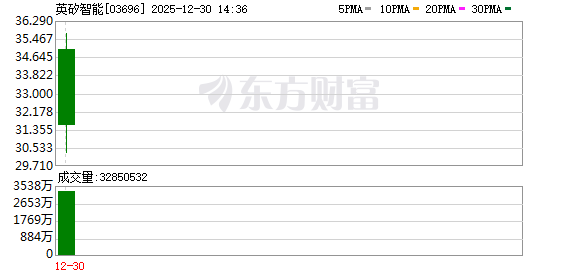
新华财经上海12月30日电(记者杜康)由人工智能驱动的临床阶段生物医药科技公司英矽智能(Insilico Medicine,股票代码:3696.HK)12月30日正式在香港联合交易所主板挂牌上市,此次IPO募集资金总 额达22.77亿港元,是2025年以来募集资金规模最高的港股生物医药IPO。 记者获悉,在技术底层,英矽智能依托自主研发的Pharma.AI一体化端到端平台,显著提升了新药研发 的确定性与效率。与传统研发模式平均4.5年的立项至临床前候选化合物(PCC)周期相比,英矽智能 在过去几年的20多个自研项目中,将这一平均耗时压缩至12至18个月。自2020年起,Pharma.AI 平台以 模块化软件形式上线并实现商业化,截至最后实际可行日期,已与全球前 20 大制药公司中的 13 家达成 软件授权合作。 据介绍,英矽智能最具代表性的AI制药案例是抗特发性肺纤维化候选药物Rentosertib(ISM001-055), 该药物由AI驱动覆盖靶点发现、分子设计到临床I 期研究,首次系统性展示了AI赋能药物从0到1的发现 过程。该项目已经完成中国IIa期临床研究,被视为人工智能制药领域首个具有里程碑意义的临 ...
AI制药第一股上市首日飙涨48%,获腾讯、瑞银等押注
21世纪经济报道· 2025-12-30 06:37
Core Viewpoint - The successful IPO of Insilico Medicine, driven by generative AI, marks a significant milestone in the AI-driven biopharmaceutical sector, showcasing the transition from concept to reality in "technology empowering medicine" [1][4]. Group 1: Company Overview - Insilico Medicine was established in 2014 and has rapidly grown since its establishment in Shanghai in 2019, leveraging generative AI technology [3]. - The company focuses on three core areas: self-developed pipeline development, AI platform licensing, and cross-domain collaborations, creating a complete industrial chain from target discovery to clinical validation [4]. - Insilico Medicine has raised a total of $1 billion across eight funding rounds since 2018, with a post-money valuation of approximately $1.331 billion after its Series E round in February 2025 [4]. Group 2: Financial Performance - The company reported continuous revenue growth from 2022 to 2024, with revenues of approximately $30.1 million, $51.2 million, and $85.8 million, respectively, reflecting a revenue growth rate of 185% [4]. - Gross margins improved significantly, reaching 63.4%, 75.4%, and 90.4% for the years 2022, 2023, and 2024, respectively [4]. - Adjusted losses decreased from 70.8 million to 22.7 million over the same period, indicating improved financial health [4]. Group 3: IPO Details - Insilico Medicine's IPO raised a total of HKD 2.277 billion, making it the highest fundraising biopharmaceutical IPO in Hong Kong for the year [1][6]. - The IPO saw significant oversubscription, with the Hong Kong public offering being oversubscribed by approximately 1,427.37 times, locking in over HKD 328.349 billion in subscription funds [6]. - The company attracted 15 cornerstone investors, including major players like Tencent and Temasek, highlighting strong market confidence [6]. Group 4: Industry Context - The AI-driven drug development sector is experiencing rapid growth, with global AI drug development financing events reaching 144 in 2022, totaling $6.202 billion, although 2023 saw a decline [9]. - The global AI pharmaceutical market is projected to grow from $792 million in 2021 to $2.994 billion by 2026, with a CAGR of approximately 30.45% [14]. - The current landscape is characterized by a "dual-engine" model in the US and China, with Insilico Medicine and other companies focusing on different segments of the AI drug development process [10]. Group 5: Challenges and Opportunities - Despite the enthusiasm in the capital market, the AI pharmaceutical industry faces challenges such as data shortages, clinical translation uncertainties, and unproven profit models [12][13]. - The reliance on high-quality biomedical data is critical for AI model development, yet many AI pharmaceutical companies struggle with data accessibility and standardization [13]. - The industry's future growth will depend on overcoming these challenges and successfully transitioning from technology-driven narratives to tangible commercial success [14].

港股AI制药第一股诞生,英矽智能上市募资近23亿港元
Jin Rong Jie· 2025-12-30 05:37
英矽智能成立于2014年,是一家由生成式人工智能驱动的生物科技公司。其核心商业模式基于自研的 Pharma.AI平台,该平台提供从新靶点识别到小分子生成及临床结果预测的端到端服务。公司业务主要 分为两大板块:药物研发及合作授权、Pharma.AI商业化软件授权。 财务数据显示,公司收入主要来源于药物发现及管线开发业务。2022年至2024年,该部分收入分别为 2864.8万美元、4781.8万美元和7973.3万美元,占总收入比重均超过92%,且连续两年增长率达到约 66%。公司2022年至2024年的亏损净额分别为2.218亿美元、2.116亿美元及0.171亿美元。 在研发管线方面,英矽智能已搭建超过30个创新药项目组合。其进展最快的候选药物Rentosertib (ISM001-055)是一款用于治疗特发性肺纤维化的潜在全球首创药物,目前已完成IIa期临床试验。根 据弗若斯特沙利文报告,利用Pharma.AI平台,公司可将从靶点确定到临床前候选药物提名的流程时间 从传统方法的平均4.5年大幅压缩至12至18个月。 12月30日,英矽智能(3696.HK)在香港联合交易所主板挂牌上市,成为港股"AI制药第 ...

马来西亚中华总商会人工智能组主任:中企出海促东南亚产业升级
2 1 Shi Ji Jing Ji Bao Dao· 2025-12-30 04:59
Group 1: AI's Impact on ASEAN and Malaysia - The AI industry is projected to contribute 10% to 18% growth in ASEAN's GDP by 2030, creating over $1 trillion in potential value [1] - Malaysia views AI as a core path to national modernization, enhancing quality of life and improving efficiency for businesses [4][5] - Traditional industries are expected to be reshaped and upgraded through AI integration rather than being simply eliminated [4][5] Group 2: Malaysia's AI Development Strategy - Malaysia plans to establish a National AI Office in December 2024 to promote the AI ecosystem and develop relevant policies [3] - The AI Office will collaborate with the Ministry of Investment, Trade and Industry to implement AI technologies across various sectors [3] - The government has allocated funds in the 2023 budget to support technology education, aiming to prepare the workforce for AI applications [5] Group 3: Collaboration with China - Malaysia and China have a strong trade relationship, with China being Malaysia's largest trading partner for 16 consecutive years [6] - The two countries are expected to deepen cooperation in emerging technologies, including AI, with Malaysia aiming to be among the top 20 AI economies by 2030 [5][6] - Chinese tech companies have successfully entered the Malaysian market, providing various services and products that enhance local development [9] Group 4: AI in Traditional Industries - AI is seen as essential for enhancing sectors like services, agriculture, and logistics, which will not be replaced but rather empowered by technology [5] - The integration of AI can lead to new business models and structural changes in traditional industries, especially in labor-intensive sectors [5] - A proposed "AI scoring system" could help evaluate foreign labor, showcasing AI's potential to create self-regulating mechanisms in the workforce [5] Group 5: China's AI Industry - China is recognized for having a complete AI industry chain, driving the sector towards high-end development [7] - The rapid advancements in AI in China are characterized by speed, strong implementation, and high cost-effectiveness [7] - China's AI ecosystem is extensive, covering data, chips, models, and applications, contributing to its robust growth [7]
黄仁勋点赞的AI制药公司,英矽智能今日港股IPO
硬AI· 2025-12-30 03:05
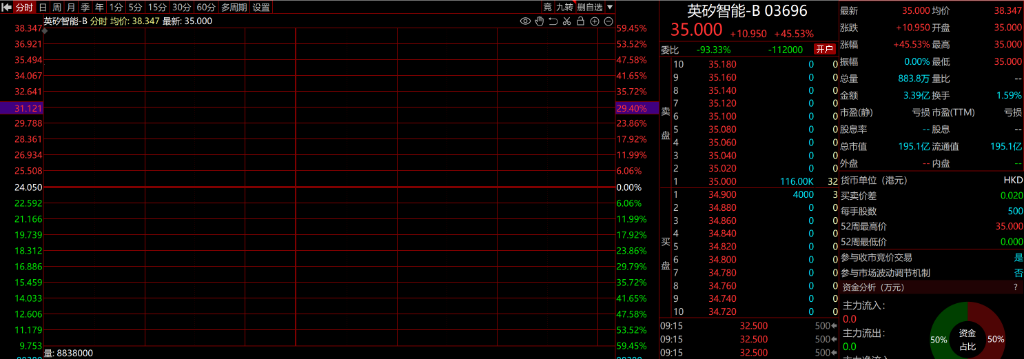
AI正将一门依赖试错的实验科学,转变为一门可预测、可编程的数据科学。 作者 | 申思琦 编辑 | 硬 AI "未来,所有的生物学都将以'计算机模拟'(in silico)为起点,并以'计算机模拟'为很大程度的终点。"(Almost everything will largely start in silico, largely end in silico) 当英伟达(NVIDIA)创始人兼CEO黄仁勋在J.P. Morgan医疗健康大会和GTC大会的聚光灯下反复提及这一论断时,生物学正在从一门依赖试错的实验科学,转变 为一门可预测、可编程的数据科学。 而英矽智能(Insilico),正是这个被黄仁勋多次 点名 的"第一性原理"践行者。 2025年12月30日,英矽智能(3696.HK)在香港联合交易所主板正式挂牌, 开盘价报35港元,较发行价升45%,市值达到195亿港元 。 | 10 901 日 周 月 8 年 1分 5分 15分 30分 60分 8 80期 10图 | 角 九期 酮自选 ▼ 0007200 | | 英矽智能-B 03696 | | 60 95 | 35.000 9567 | 38.347 ...

黄仁勋点赞的AI制药公司,英矽智能今日港股IPO
Hua Er Jie Jian Wen· 2025-12-30 02:24
当英伟达(NVIDIA)创始人兼CEO黄仁勋在J.P. Morgan医疗健康大会和GTC大会的聚光灯下反复提及这一论断时,生物学正在从一门依赖试错的 实验科学,转变为一门可预测、可编程的数据科学。 而英矽智能(Insilico),正是这个被黄仁勋多次点名的"第一性原理"践行者。 "未来,所有的生物学都将以'计算机模拟'(in silico)为起点,并以'计算机模拟'为很大程度的终点。"(Almost everything will largely start in silico, largely end in silico) 2025年12月30日,英矽智能(3696.HK)在香港联合交易所主板正式挂牌,开盘价报35港元,较发行价升45%,市值达到195亿港元。 | ■ 分时 日 周 月 季 年 1分 5分 15分 30分 60分 多 周 周 安 安 | 竟 九转 则自选 ▼ | | 英矽智能-B 03696 | | 最新 | 35.000 均价 | 38.347 | | --- | --- | --- | --- | --- | --- | --- | --- | | 年67回服-B 分析 15H1: 38 ...
重磅!Meta数十亿美元收购Manus,肖弘将出任Meta副总裁;比亚迪辟谣将推出飞行汽车;微信回应安装包10多年膨胀数百倍丨邦早报
创业邦· 2025-12-30 00:09
Group 1 - Meta acquired Manus, a company developing AI applications, for several billion dollars, marking its third-largest acquisition since its inception, following WhatsApp and Scale AI [1] - Before the acquisition, Manus was valued at $2 billion during a new financing round [1] - After the acquisition, Manus will operate independently, with its founder, Xiao Hong, appointed as Vice President of Meta [1] Group 2 - WeChat's installation package has grown several hundred times over the past decade due to the increasing complexity and richness of features, but the company assures that it is optimizing the package size [3] - Users with over 40GB of space occupied by WeChat have an average of 70% of that space taken up by chat history [3] Group 3 - Leap Motor announced a partnership with China FAW Group, raising approximately 3.744 billion yuan (about 4.138 billion HKD) through a share issuance to enhance R&D and expand its sales network [11] - The company emphasized that the founding team will maintain control despite the investment from FAW [11] Group 4 - Coupang, a South Korean e-commerce platform, announced a compensation plan worth approximately $1.18 billion for users affected by a data breach involving 33.7 million accounts [19] - Each affected account will receive shopping vouchers totaling 50,000 won [19] Group 5 - Counterpoint predicts consumer spending on generative AI will grow from $225 billion in 2023 to $699 billion by 2030, with a compound annual growth rate (CAGR) of 21% [27] - The growth will be driven by both hardware and software segments, with generative AI smartphones expected to see a 26% CAGR in shipments [27]