OPPO

Search documents
上线就售罄,努比亚押宝“豆包AI”真能改命吗?
3 6 Ke· 2025-12-05 11:09
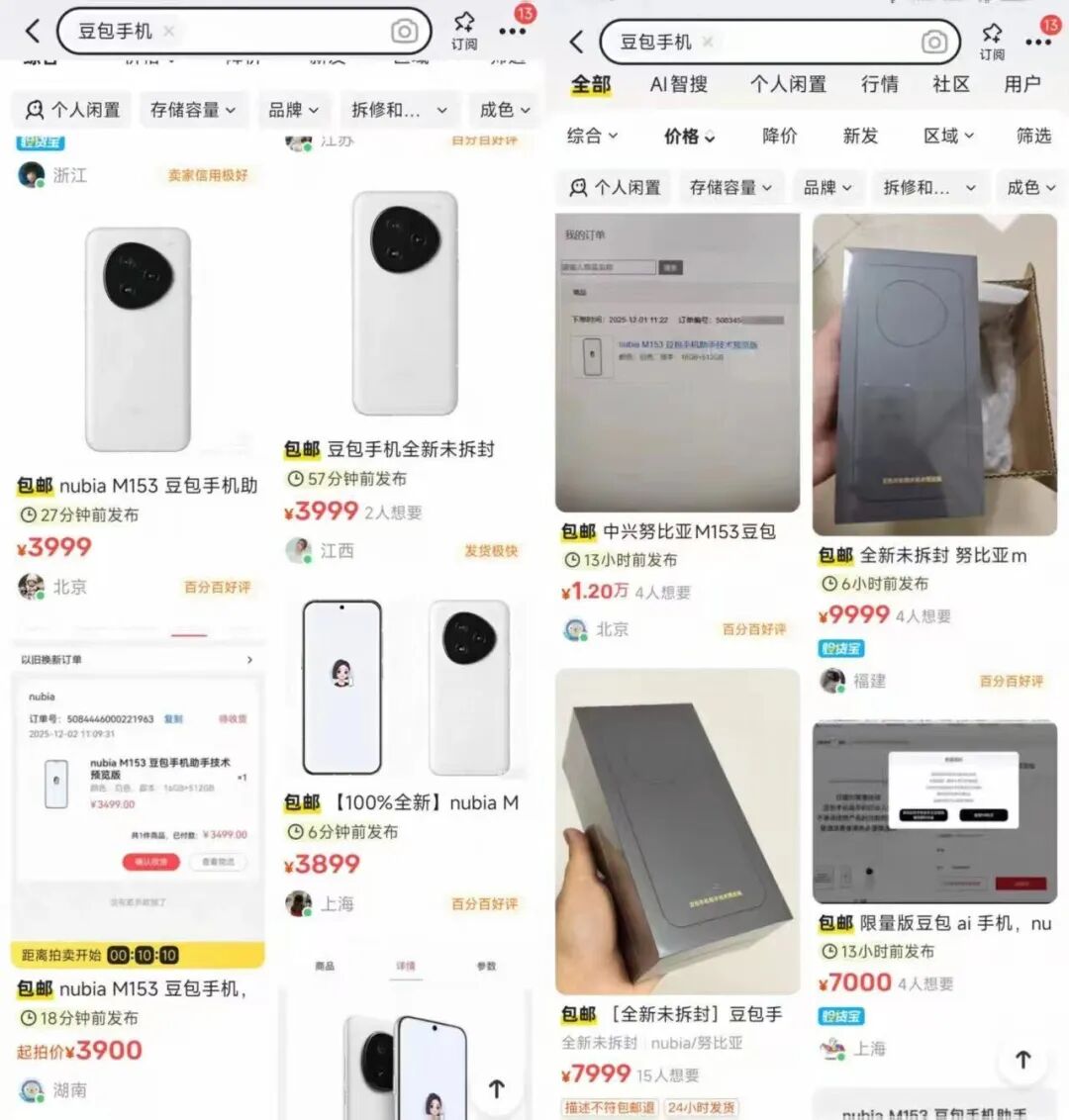
Core Viewpoint - The collaboration between ByteDance and ZTE to launch the AI phone, featuring the Doubao assistant, has generated significant market excitement, pushing ZTE's stock to a halt on the A-share market and causing a nearly 14% surge in Hong Kong shares. However, the long-term impact on ZTE's market position remains uncertain as the smartphone industry is highly competitive and dynamic [1][3][10]. Group 1: Market Reaction and Initial Success - ZTE's stock surged due to the announcement of the AI phone, with trading volume exceeding 13.1 billion [1]. - The Doubao assistant represents ByteDance's first deep integration into smartphone capabilities, marking a potential shift in the Android ecosystem's power dynamics [1][10]. - The initial release of the Nubia M153, equipped with the Doubao assistant, sold out quickly, indicating strong consumer interest [1]. Group 2: Competitive Landscape - ZTE has struggled to maintain a competitive presence in the smartphone market over the past decade, with its Nubia brand not ranking among the top five smartphone manufacturers in China [16]. - The current top five smartphone manufacturers in China, according to IDC data, are Vivo, Apple, Huawei, Xiaomi, and Oppo/Glory, with ZTE's market share being less than 1% [16][17]. - ZTE lacks advantages in both offline and online sales channels, with major competitors dominating these markets [18]. Group 3: Product and Ecosystem Challenges - ZTE's product offerings have been criticized for lacking innovation and competitiveness, particularly in areas like imaging and system performance [19]. - The Doubao assistant may enhance ZTE's appeal, but it does not address the company's fundamental weaknesses in product capabilities and market positioning [25]. - The AI phone's success is contingent on ZTE's ability to leverage the Doubao assistant effectively, but the assistant is not exclusive to ZTE, as other manufacturers are also pursuing similar AI integrations [11][26]. Group 4: Long-term Viability and Strategic Positioning - The introduction of the Doubao assistant may create a temporary boost for ZTE, but the long-term sustainability of this advantage is questionable as the smartphone market evolves towards ecosystem-based competition [30][31]. - ZTE's lack of a clear brand position and ecosystem capabilities limits its ability to capitalize on the AI trend effectively [29][32]. - The competition for control over AI integration in smartphones is just beginning, with ZTE positioned as a minor player in this evolving landscape [31][33].


保守的谷歌,激进的豆包
3 6 Ke· 2025-12-05 10:23
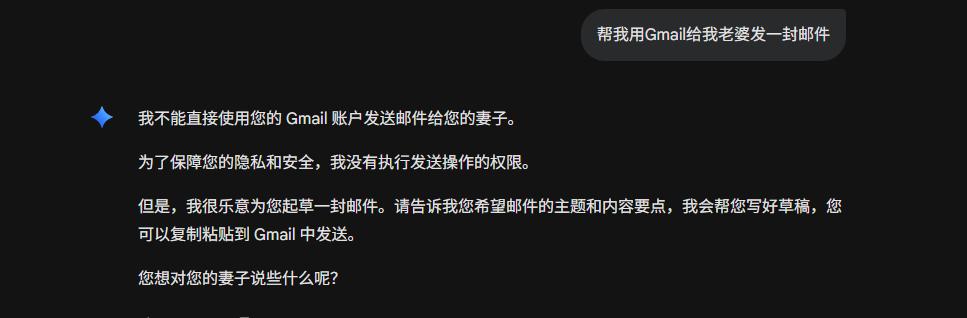
Core Viewpoint - The development of AI technology must prioritize user rights and regulatory compliance, as exemplified by the contrasting approaches of Google and Doubao in their AI assistant functionalities [11][12]. Group 1: Doubao's AI Assistant - Doubao's AI assistant has faced criticism for its aggressive approach, which bypasses established security protocols of major applications like WeChat and Alipay, raising concerns about user safety and compliance [7][9]. - The company has announced plans to adjust its AI capabilities, particularly in financial applications, to ensure a balance between technological advancement and user safety [4][5]. - Doubao's strategy of directly operating applications without adhering to existing security frameworks has led to backlash from both users and developers, highlighting the risks associated with such innovations [8][10]. Group 2: Industry Context and Comparisons - The global AI Agent landscape is rapidly evolving, with major players like Microsoft, Google, and Amazon investing heavily in AI platforms, each leveraging their unique strengths [6]. - In contrast to Doubao's approach, established AI assistants like Siri and Google Assistant operate within strict API guidelines, ensuring user privacy and data security while avoiding conflicts with application developers [7][9]. - The AHA (Agent Hub Access) solution introduced by Alipay and OPPO exemplifies a more cautious and collaborative approach, focusing on secure and transparent interactions between AI assistants and applications [14][15]. Group 3: Regulatory and Security Considerations - The financial sector imposes stringent regulations on data security and user privacy, making Doubao's bypassing of these protocols particularly contentious [9][10]. - The potential for legal liability and user trust issues arises if Doubao's AI operations lead to security breaches or unauthorized access to sensitive information [8][10]. - The industry's future will depend on establishing standards that respect user privacy and regulatory requirements, as seen in ongoing efforts by Chinese authorities to promote multi-agent interoperability standards [15].


豆包AI手机劲敌是小米?高盛:AI“系统级集成”面临挑战,这更验证了小米的长期竞争力
华尔街见闻· 2025-12-05 09:39
Core Viewpoint - The launch of ByteDance's "Doubao AI Assistant" signifies a shift in AI competition towards the operating system level, highlighting the enduring competitive strength of existing smartphone giants like Xiaomi [3][4]. Group 1: Doubao AI Assistant Overview - ByteDance's "Doubao AI Assistant" is a system-level graphical user interface (GUI) agent integrated with a large language model (LLM), aimed at enhancing mobile interaction through visual interpretation and complex task operations across applications [4]. - The Doubao model has become popular among several smartphone original equipment manufacturers (OEMs), with daily token generation reaching 1.3 trillion in May, accounting for 8% of total token consumption [4]. Group 2: Challenges for Third-Party AI Agents - High barriers exist for third-party AI agents to gain system-level operational permissions, as major smartphone OEMs retain strategic advantages and may not easily grant access to their system cores and permission frameworks [5]. - The ability of AI agents to operate across applications is contingent on the openness of third-party internet application interfaces, with some companies potentially restricting external agent usage to maintain closed ecosystems [6]. Group 3: Market Structure and Competition - The Chinese smartphone market is highly consolidated, with the top six manufacturers (vivo, OPPO, Honor, Apple, Xiaomi, Huawei) accounting for over 90% of shipment volume, creating significant barriers for new entrants [7][8]. - In contrast, the new energy vehicle (NEV) market is more fragmented, allowing for greater opportunities for differentiation through software [7]. Group 4: Xiaomi's Competitive Advantages - Xiaomi's long-term advantages are underscored by the challenges faced by Doubao AI, as the company actively pursues a comprehensive "people x car x home" ecosystem strategy, with AI as a core component [9]. - Xiaomi's investment in AI is substantial, with projected R&D spending exceeding 7 billion RMB by 2025, representing 22% of its total R&D expenses [10]. - The "Super XiaoAI" assistant has achieved significant penetration, with a 71% user adoption rate among Xiaomi smartphone users as of September 2025 [11]. Group 5: Integration and Functionality of Super XiaoAI - "Super XiaoAI" has integrated deep functionalities across various core scenarios, including social media interactions, e-commerce assistance, productivity services, and memory capabilities for user habits and sensitive data [12][13][14][15]. - This comprehensive integration positions Xiaomi favorably against third-party AI agents, reinforcing its competitive moat and validating the long-term value of its ecosystem strategy [16].


OPPO刘作虎亲征手持影像市场,跨界能否破解手机增长之困?
Xi Niu Cai Jing· 2025-12-05 09:13
Group 1 - OPPO's Chief Product Officer, Liu Zuohua, will lead the Pocket handheld smart imaging device project, marking a strategic move into the mobile imaging market, which has seen annual sales exceed 10 million units [2] - The decision to enter the handheld smart imaging device sector is influenced by the stagnation in the smartphone market, where OPPO's market share has dropped to fifth in China and failed to make the global top five in Q2 [2] - The global handheld smart imaging device market is projected to reach 42.8 billion yuan in 2024, with an expected CAGR of 15.9% from 2020 to 2030, indicating a period of rapid growth compared to the low profit margins in the smartphone industry [2] Group 2 - OPPO faces significant challenges in entering a market dominated by DJI, Innosilicon, and GoPro, which collectively hold nearly 80% market share, with DJI's "Pocket" series being a well-established brand [3] - Industry analysts highlight that DJI's strong supply chain integration and cost control capabilities could lead to aggressive pricing strategies, making it difficult for new entrants to compete without significant differentiation [3] - OPPO's previous attempts to diversify into XR, IoT, and chip sectors have not achieved scalable market success, indicating potential risks in this new venture [3]

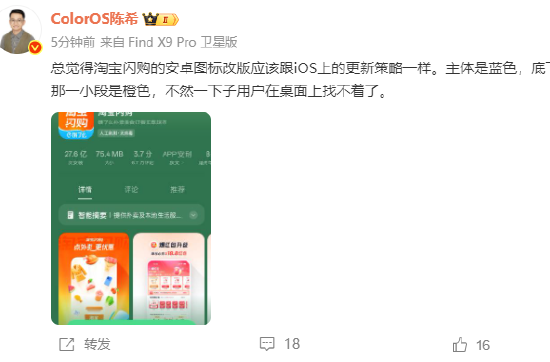
OPPO高管陈希评饿了么更名淘宝闪购:安卓图标在桌面上找不着了
Xin Lang Cai Jing· 2025-12-05 08:18
Core Viewpoint - The "Ele.me" app has been rebranded to "Taobao Flash Sale," with updates to its icon and name, reflecting a strategic shift in Alibaba's approach to its food delivery and instant retail business [2][5]. Group 1: App Rebranding - The "Ele.me" app has undergone a complete rebranding to "Taobao Flash Sale" as of December 5, following an update to the latest version [2][5]. - Users have reported that the app's icon and name have automatically changed to "Taobao Flash Sale," with visual elements now featuring an orange color scheme [2][5]. Group 2: Business Strategy - Alibaba's management emphasized during a recent earnings call that the first phase of Taobao Flash Sale has achieved rapid scale expansion, while the second phase focuses on optimizing economic benefits, laying a foundation for sustainable long-term growth in the food delivery sector [2][5]. - The company has expressed increased commitment to long-term investments in instant retail, indicating confidence in the business model's viability [2][5].
豆包AI手机劲敌是小米?高盛:AI“系统级集成”面临挑战,这更验证了小米的长期竞争力
硬AI· 2025-12-05 06:45
Core Viewpoint - Goldman Sachs believes that while the Doubao AI phone is "popular," it faces significant challenges in system permissions, data acquisition, and application connectivity, which highlights the structural advantages of smartphone giants like Xiaomi [2][3]. Group 1: Doubao AI Phone Challenges - The Doubao AI phone assistant, launched by ByteDance, signifies that AI competition has reached the operating system level, but third-party AI agents face major challenges in obtaining system-level permissions, user data, and cross-application connectivity [3][5]. - Goldman Sachs identifies three core challenges for third-party AI agents: 1. System-level operational permissions are required to read screen content, simulate user behavior, and access system services, which major smartphone OEMs are unlikely to fully open to third parties [7]. 2. System-level memory capabilities are crucial for training and optimizing AI agents, which OEMs possess but third-party AI lacks [7]. 3. Cross-application interface connectivity depends on the openness of third-party internet applications, which may be restricted by companies aiming to build closed ecosystems [7]. Group 2: Market Structure and Competition - The Chinese smartphone market is highly consolidated, with the top six manufacturers (vivo, OPPO, Honor, Apple, Xiaomi, Huawei) accounting for over 90% of shipment volume, making it difficult for new entrants to disrupt the market [6][8]. - This high level of market concentration indicates that competition barriers in the smartphone industry are significant, solidifying the market positions of major players [9]. Group 3: Xiaomi's Competitive Advantage - Xiaomi is actively advancing its "people x vehicle x home" ecosystem strategy, with AI as a core component, and is expected to invest over 7 billion RMB in AI R&D by 2025, representing 22% of its total R&D expenses [11]. - As of Q3 2025, Xiaomi's globally connected AIoT devices are nearing 1 billion, and its AI assistant "Super XiaoAI" has a penetration rate of 71% among Xiaomi smartphone users [11][12]. - "Super XiaoAI" has achieved deep functional integration across various core scenarios, including social media, e-commerce, and productivity services, showcasing its capabilities in user interaction and task automation [12][13]. - Xiaomi's comprehensive strengths in operating systems, hardware, extensive AIoT ecosystem, and deeply integrated AI agents create a strong competitive barrier, making it difficult for third-party AI agents to pose a substantial threat in the short term [13].

豆包抢入口,捅了马蜂窝
硬AI· 2025-12-05 06:45
Core Insights - The article highlights the competition for the "super entry point" in the AI era, emphasizing that the ability to control data and traffic is shifting from traditional apps to system-level AI agents [2][17] - The recent developments surrounding the Doubao AI assistant reveal the challenges faced by AI companies in navigating existing app ecosystems and data security regulations [5][19] Group 1: Doubao AI Assistant Launch and Challenges - Doubao AI assistant was launched on December 1, enabling cross-application operations, which generated significant market excitement [7][4] - Shortly after its launch, Doubao announced a temporary suspension of its ability to operate financial apps due to security concerns, highlighting the need for clear AI operation guidelines [3][4] - Major apps like WeChat, Taobao, and banks implemented measures to prevent Doubao AI from functioning properly, indicating a defensive response to the new technology [8][10] Group 2: Industry Dynamics and Competitive Landscape - The conflict between AI companies, hardware manufacturers, and app developers illustrates a complex interplay of interests and poses challenges to existing data security frameworks [5][12] - Goldman Sachs identified three core obstacles for third-party AI agents: system-level operation permissions, memory capabilities, and cross-application interface connections [12][14] - The dominance of major smartphone manufacturers in the Chinese market, which hold over 90% market share, makes it difficult for new players to disrupt the ecosystem [14][15] Group 3: Future of AI and App Ecosystem - The article suggests that as voice interaction becomes the primary entry point, traditional app operations may collapse, making it crucial to establish a default system entry point [17][20] - The ongoing battle for AI agents signifies a broader struggle involving major tech companies and highlights the potential for significant shifts in the internet landscape over the next decade [19][20]



Pocket 大绞杀
雷峰网· 2025-12-05 06:43
Core Viewpoint - The article discusses the competitive landscape in the pocket camera market, highlighting the aggressive strategies of DJI and the emerging threats from competitors like OPPO, Vivo, and Insta360, as well as the potential for innovation in video editing and sharing capabilities. Group 1: Market Dynamics - The Pocket camera market is expected to see significant competition in the coming year, with various companies targeting DJI's dominance [4][6]. - DJI's Pocket 3 has achieved a remarkable market share, reportedly reaching a 100% market share and high gross margins within two years [5]. - Competitors are forming teams to challenge DJI's Pocket project, indicating a collective effort to disrupt DJI's market position [6]. Group 2: Technological Advantages - The success of Pocket 3 is attributed to its unique physical stabilization technology, which is difficult for competitors to replicate [8][9]. - DJI's supply chain management is highlighted as a key strength, allowing for cost reduction and quality assurance through the reuse of core components [10]. - The article emphasizes that the true challenge for competitors lies not just in technology but in achieving stable mass production [13]. Group 3: Competitive Strategies - DJI has initiated a significant price reduction for Pocket 3 to capture potential customers and counteract competition [41]. - The upcoming Pocket 4 is expected to introduce features like zoom capabilities and improved low-light performance, positioning it as a flagship product [47][49]. - DJI is also restructuring its sales channels to better reach a broader consumer base, moving from a quota-based system to a more market-driven approach [51][53]. Group 4: Future Trends - The article suggests that the future of the imaging market will involve a shift towards integrating video editing and sharing capabilities, which are currently seen as gaps in the market [32]. - The competition is not just about hardware but also about creating a seamless ecosystem for users, with companies like Insta360 aiming to develop platforms for easy video editing and sharing [33][36]. - The emergence of AI-driven features in video editing is seen as a potential game-changer, with companies looking to enhance user experience through automated processes [38][39].

豆包抢入口,捅了马蜂窝
Hua Er Jie Jian Wen· 2025-12-05 04:02
Core Insights - The "Doubao Phone" has decided to temporarily withdraw its capability to operate financial apps, citing the need for "prudent adjustments" to align technology development with industry ecology [1][2] - The launch of the Doubao AI Assistant, which allows cross-application operations, has faced significant backlash from major apps like WeChat and Taobao, indicating a conflict between AI developers and existing app ecosystems [3][4] Group 1: Doubao Phone and AI Assistant - Doubao's announcement on December 5 highlights a shift in strategy to ensure safe AI operations, particularly in financial applications [1][2] - The Doubao AI Assistant, launched on December 1, was initially well-received, leading to a surge in demand and price inflation for the associated smartphone [2][3] - Users reported issues with the AI Assistant causing abnormal logouts from WeChat and other apps, raising concerns about security and operational integrity [3][4] Group 2: Industry Response and Implications - Major apps like WeChat and Taobao have implemented measures to block the Doubao AI Assistant, reflecting a defensive stance against third-party AI operations [4][5] - The situation underscores the challenges faced by third-party AI agents in gaining system-level permissions and accessing user data, which are tightly controlled by smartphone manufacturers [5][6] - High-profile firms like Xiaomi are highlighted as having a competitive advantage due to their integrated AI systems and established ecosystems, which are difficult for new entrants to disrupt [6][7] Group 3: Future of AI and App Ecosystems - The conflict initiated by Doubao reveals a broader struggle for control over AI as a new entry point in the digital landscape, potentially reshaping user interactions with applications [7][8] - The need for third-party app authorization poses significant barriers for AI agents, as existing apps are likely to maintain strict security measures to protect user data [9][10] - The ongoing evolution of AI agents is seen as a pivotal moment in the tech industry, with major players vying for dominance in a rapidly changing environment [10]
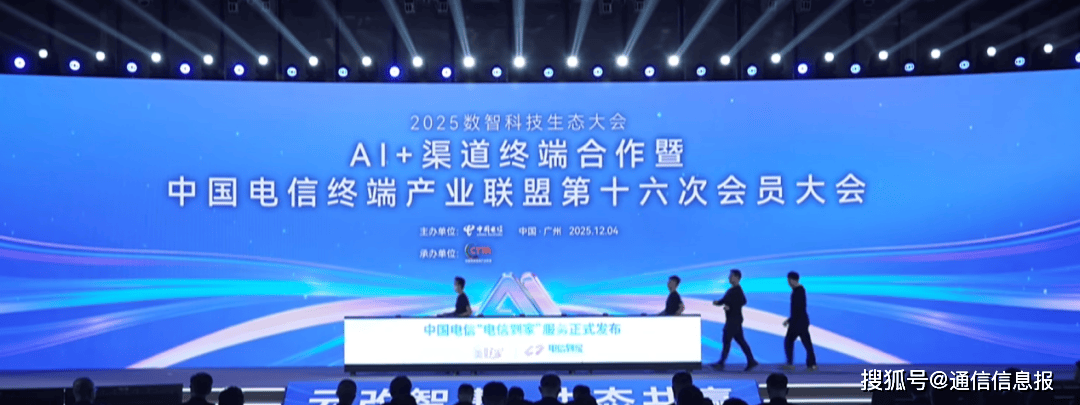
2025数智科技生态大会|中国电信携手AI终端生态合作伙伴 智惠千家万户
Sou Hu Cai Jing· 2025-12-05 02:08
Core Insights - The 2025 Digital Technology Ecological Conference in Guangzhou highlights China's Telecom's commitment to embracing artificial intelligence (AI) and upgrading its strategy from "cloud transformation" to "intelligent benefits" [1][2] - AI terminals are significantly changing lifestyles, with various innovative products showcased at the conference [1] Group 1: AI Capability Enhancement - China Telecom is systematically building its AI capabilities, with its "Star Sea" data intelligence platform gathering over 10 trillion tokens of general model corpus and 14 industry datasets, totaling over 350TB [2] - The company employs a dual-track strategy of "independent + ecosystem" for model development, launching over 80 industry models and 30 intelligent applications, serving more than 20,000 industry clients [2] Group 2: Innovative Consumer Products and Experiences - The launch of the new generation Tianyi AI Central Screen integrates communication, entertainment, security, and smart home control, enhancing digital life with a focus on user interaction [4] - The "Star Little Chen Terminal Intelligent Agent" redefines call experiences with features like real-time fraud alerts and smart meeting assistance, enhancing both personal and professional communication [5] Group 3: Collaboration and AI Terminal Popularization - China Telecom initiated the AI + Terminal Cooperation Star Plan, signing key partnerships with major companies like Huawei and Xiaomi to expand its terminal ecosystem [7] - The "Jingyi Huanneng Plan" with JD.com allows consumers to enjoy operator subsidies and a seamless purchasing experience for AI devices, enhancing service efficiency [7][8] Group 4: Consumer Incentives and Outreach - In Shaanxi, over 1,000 mobile sales stores are integrated into the "National Subsidy" program, offering substantial discounts on AI devices, with some models seeing up to 2,000 yuan in total savings [8] - The "AI Terminal Going to the Countryside" initiative in Shandong promotes AI technology in rural areas, resulting in a 45% increase in AI terminal sales in covered counties [8] Group 5: Service Innovations - The "Telecom to Home" service allows users to book professionals for various business operations and terminal deliveries, enhancing customer service and convenience [10]