
保隆科技

Search documents
广发证券:“定比例”补贴对乘用车行业利润拉动几何?
Zhi Tong Cai Jing· 2026-01-09 03:29
Core Viewpoint - The adjustment of the vehicle trade-in policy to a "proportional subsidy" will significantly benefit mid-to-high-end vehicles, with an expected profit increase of 15.9 billion yuan for the passenger car industry in 2026 [1][2][3]. Group 1: Policy Changes and Impacts - The new policy, effective from December 30, 2025, includes a scrapping subsidy of 12% for new energy vehicles and 10% for fuel vehicles, with maximum subsidies of 20,000 yuan and 15,000 yuan respectively [1]. - The trade-in subsidy will provide 8% for new energy vehicles and 6% for fuel vehicles, with maximum subsidies of 15,000 yuan and 13,000 yuan respectively [1]. Group 2: Profit Projections - Based on data from Chongqing, the proportional subsidy is expected to increase the profit of the passenger car industry by 15.9 billion yuan in 2026, with profit growth in different price segments projected as follows: 0 yuan for under 100,000 yuan, 300 million yuan for 100,000-150,000 yuan, 2.9 billion yuan for 150,000-200,000 yuan, and 12.8 billion yuan for above 200,000 yuan [2][3]. - The total amount of trade-in subsidies is projected to decline by approximately 30 billion yuan in 2026, but the subsidy amount for vehicles priced above 150,000 yuan is expected to increase by about 14 billion yuan [3]. Group 3: Investment Recommendations - The report suggests focusing on various companies within the passenger vehicle supply chain, including Geely, BYD, Chery, and others as potential investment opportunities [4]. - Companies positioned for growth include SAIC Motor, while others like Great Wall Motors and Changan Automobile are identified as left-side targets [4].

让汽车更好地跑起来(上)
Ren Min Ri Bao Hai Wai Ban· 2026-01-08 22:55
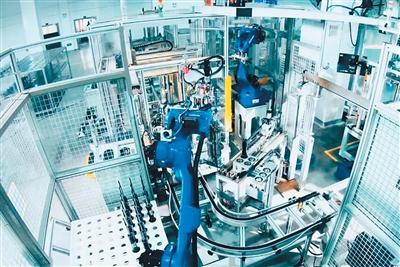
Core Viewpoint - The article highlights the advancements and innovations in the automotive parts industry in China, focusing on companies like Sanhuan Axle and Baolong Technology, which have become leaders in their respective fields through continuous innovation and adaptation to market demands [4][8]. Group 1: Sanhuan Axle - Sanhuan Axle has achieved over 52% market share in the domestic automotive front axle market and 22% in the international market, becoming the largest producer of automotive front axles globally [5]. - The company has developed a hollow front axle, which reduces weight and improves fuel efficiency, and has received positive feedback from major clients like Daimler and Hino [6][7]. - Sanhuan Axle has invested over 20 million yuan in research and development for heat treatment equipment and processes, resulting in patented innovations that enhance product strength and fatigue life [7]. Group 2: Baolong Technology - Baolong Technology has transitioned from producing tire valves to becoming a leader in air suspension systems, which enhance vehicle comfort and stability [8][9]. - The company has collaborated with domestic automakers like NIO and Ideal to develop air suspension systems, achieving a fatigue life 3-4 times longer than competitors [9][10]. - Baolong Technology's air suspension technology is expected to be available in vehicles priced around 150,000 yuan within 3-5 years, promoting wider access to advanced automotive technology [11]. Group 3: Changjiang Bearing - Changjiang Bearing has focused on reducing noise levels in bearings, achieving a noise level lower than 45 decibels, which is crucial for electric vehicles [12][13]. - The company has developed bearings that significantly reduce friction torque, potentially increasing the range of electric vehicles by approximately 30 kilometers per vehicle [13]. - Changjiang Bearing has seen a 40% year-on-year increase in orders for its electric vehicle bearings, reflecting its successful innovation strategy [14].


汽车与零部件行业周报(2025.12.29-2026.1.4):2026 汽车以旧换新政策落地,中国一汽入股零跑汽车成为重要战略股东-20260108
Shanghai Securities· 2026-01-08 11:41
Investment Rating - The industry investment rating is "Hold" [2] Core Views - The automotive sector has shown a weekly increase of 1.49%, with the auto parts sub-sector performing the best at +3.55% [3] - The report highlights the implementation of a large-scale vehicle replacement policy in 2026, providing subsidies for scrapping and replacing vehicles, which is expected to stimulate demand [5] - In November, China's automotive market share reached 40% of global sales, indicating a strong position in the international market [6] Summary by Sections Market Summary - The automotive sector's weekly performance was +1.49%, ranking 5th among 31 primary industries [3] - The average daily wholesale volume of domestic passenger cars was 118,900 units, down 13% year-on-year, while the average daily retail volume was 89,800 units, down 12% year-on-year [4] Policy and Regulation - The National Development and Reform Commission and the Ministry of Finance announced a policy to support vehicle scrapping and replacement, offering subsidies of up to 20,000 yuan for new energy vehicles and 15,000 yuan for fuel vehicles [5] - The policy aims to boost the automotive market and encourage consumers to upgrade their vehicles [5] Strategic Investments - China FAW Group invested approximately 3.744 billion yuan in Leap Motor, becoming a significant strategic shareholder, which is expected to enhance both companies' competitive edge in the global market [7] - The collaboration aims to leverage Leap Motor's technology and FAW's international network for better market penetration [7] Investment Recommendations - The report suggests focusing on companies involved in intelligent vehicle technology, those with potential overseas sales, and parts manufacturers benefiting from domestic substitution effects [9] - Specific companies recommended include BAIC Blue Valley for complete vehicles and several firms for auto parts [11]

保隆科技1月6日获融资买入5882.24万元,融资余额4.42亿元
Xin Lang Cai Jing· 2026-01-07 01:31
Core Viewpoint - Baolong Technology's stock has shown a positive trend with a 1.97% increase on January 6, 2025, and significant trading activity, indicating investor interest and potential growth opportunities in the automotive technology sector [1]. Financing Summary - On January 6, 2025, Baolong Technology recorded a financing buy amount of 58.82 million yuan, with a net financing purchase of 28.18 million yuan after repayments [1]. - The total financing and margin trading balance reached 444 million yuan, accounting for 5.34% of the circulating market value, which is above the 80th percentile of the past year, indicating a high level of investor engagement [1]. - The short selling activity included 11,400 shares sold, with a total value of approximately 441,700 yuan, and a short selling balance of 1.8794 million yuan, also above the 90th percentile of the past year [1]. Company Performance - As of September 30, 2025, Baolong Technology reported a revenue of 6.048 billion yuan, reflecting a year-on-year growth of 20.32%, while the net profit attributable to shareholders decreased by 20.35% to 198 million yuan [2]. - The company has distributed a total of 771 million yuan in dividends since its A-share listing, with 422 million yuan distributed over the past three years [3]. Shareholder Information - The number of shareholders decreased to 22,300, while the average number of circulating shares per person increased to 9,579 [2]. - Notable institutional holdings include Hong Kong Central Clearing Limited as the fourth largest shareholder with 5.1694 million shares, and new entrants such as 华夏核心制造混合A and 南方中证1000ETF among the top ten shareholders [3].
到欧洲北非去系列之二|匈牙利:三种诱惑与多重挑战
汽车商业评论· 2026-01-05 23:04
Core Viewpoint - The article discusses the opportunities and challenges faced by Chinese automotive companies in Hungary, emphasizing the importance of localization and compliance with local regulations in the context of the European automotive market [5][53]. Group 1: Opportunities in Hungary - Hungary has become a key destination for Chinese investment in the automotive sector, with 64 Chinese investment projects totaling approximately €14.3 billion from 2014 to 2024, creating nearly 26,000 jobs [14]. - The favorable policy environment, including a corporate tax rate of 9% and significant tax incentives, has attracted Chinese companies to establish operations in Hungary [19][21]. - The strategic location of Hungary in Central Europe facilitates efficient supply chain management, with major automotive manufacturers like Mercedes, Audi, and BMW located within a short distance [26][28]. Group 2: Challenges Faced - Chinese automotive companies are experiencing "localization pains" as they transition from construction to operational phases amid a volatile political environment [15]. - Compliance with EU regulations and local laws presents significant challenges, with lengthy approval processes and unexpected policy changes impacting project timelines [39][45]. - Labor shortages due to Hungary's low unemployment rate and an aging population complicate recruitment efforts, necessitating cross-border labor solutions [35][48]. Group 3: Strategic Responses - Companies like PSS have adopted flexible strategies to navigate compliance challenges, focusing on local production and quality standards for the European market while restructuring supply chains to meet U.S. requirements [54]. - Ningde Times has committed to significant investments in Hungary, with a €7.34 billion factory expected to create 9,000 jobs, reflecting a long-term strategy despite facing multiple challenges [56]. - BaoLong Technology has leveraged acquisitions to establish a foothold in Europe, enhancing its local production capabilities while maintaining cost advantages from China [58]. Group 4: Recommendations for Success - Companies should clearly define their strategic goals before entering the Hungarian market, focusing on compliance with EU and local regulations [60]. - Project planning must account for potential delays due to archaeological and approval processes, allowing for sufficient buffer time [61]. - A multi-faceted approach to human resource management, including local hiring and cross-border recruitment, is essential to mitigate labor shortages [62]. - Building strong community relations through public engagement and transparency is crucial for fostering a positive corporate image and ensuring project success [62].


保隆科技:截至2025年12月31日,公司及其控股子公司对外担保总额约38.69亿元
Mei Ri Jing Ji Xin Wen· 2026-01-05 11:04
(记者 贾运可) 每经头条(nbdtoutiao)——秒光!1499元飞天茅台上线即空,i茅台App冲上苹果购物榜第一,10万用 户已下单!经销商同价做回馈,1000箱很快卖完 每经AI快讯,保隆科技1月5日晚间发布公告称,截至2025年12月31日,公司及其控股子公司对外担保 总额约38.69亿元,占公司最近一期经审计净资产121.03%,公司对控股子公司提供的担保总额约为 38.69亿元,占公司最近一期经审计净资产121.03%,无逾期担保情况。 ...
保隆科技(603197) - 保隆科技关于2025年第四季度可转债转股结果暨股份变动的公告
2026-01-05 10:47
| 证券代码:603197 | 证券简称:保隆科技 | 公告编号:2026-002 | | --- | --- | --- | | 债券代码:113692 | 债券简称:保隆转债 | | 上海保隆汽车科技股份有限公司 关于 2025 年第四季度可转债转股结果暨股份变动的公告 一、可转债发行上市情况 根据中国证券监督管理委员会《关于同意上海保隆汽车科技股份有限公司向 不特定对象发行可转换公司债券注册的批复》(证监许可〔2024〕1184 号), 公司于 2024 年 10 月 31 日向不特定对象发行 1,390 万张可转换公司债券,每张 面值 100 元,发行总额 139,000 万元。 经上海证券交易所自律监管决定书〔2024〕157 号文同意,公司 139,000 万 元可转换公司债券于 2024 年 11 月 27 日起在上海证券交易所挂牌交易,债券简 称"保隆转债",债券代码"113692"。 本公司董事会及全体董事保证本公告内容不存在任何虚假记载、误导性陈 述或者重大遗漏,并对其内容的真实性、准确性和完整性承担法律责任。 根据有关规定和《上海保隆汽车科技股份有限公司向不特定对象发行可转换 公司债券募 ...
保隆科技(603197) - 保隆科技关于为控股子公司提供担保的公告
2026-01-05 10:45
| 证券代码:603197 | 证券简称:保隆科技 | 公告编号:2026-001 | | --- | --- | --- | | 债券代码:113692 | 债券简称:保隆转债 | | 上海保隆汽车科技股份有限公司 关于为控股子公司提供担保的公告 本公司董事会及全体董事保证本公告内容不存在任何虚假记载、误导性陈 述或者重大遗漏,并对其内容的真实性、准确性和完整性承担法律责任。 重要内容提示: 担保对象及基本情况 | 被担保人名称 | 本次担保金额 | | 实际为其提供的担保余 | | 是否在前期 | 本次担保是 | | --- | --- | --- | --- | --- | --- | --- | | | | | 额(不含本次担保金额) | | 预计额度内 | 否有反担保 | | 上海保隆工贸有限 公司 | 5,000.00 | 万元 | 159,665.00 | 万元 | 是 | 否 | | 安徽拓扑思汽车零 部件有限公司 | 1,750.00 | 万元 | 23,000.00 | 万元 | 是 | 否 | | 上海龙感汽车电子 有限公司 | 1,000.00 | 万元 | 8,930.00 | 万元 ...
保隆科技:为全资子公司上海保隆工贸有限公司提供5000.00万元担保
2 1 Shi Ji Jing Ji Bao Dao· 2026-01-05 10:39
南财智讯1月5日电,保隆科技公告,公司为全资子公司上海保隆工贸有限公司与华夏银行股份有限公司 上海分行签署保证合同,提供5000.00万元连带责任保证担保,担保金额为人民币5000.00万元,主债务 履行期限自2025年12月23日始至2026年6月23日止,担保范围包括主债权本金及利息、逾期利息、罚 息、复利、违约金、损害赔偿金以及实现债权的合理费用等。 ...
智能汽车产业深度研究:L3车型产品准入,智能汽车发展加速
Shanghai Aijian Securities· 2025-12-31 09:58
Investment Rating - The report rates the automotive industry as "Outperform" [2] Core Insights - The Ministry of Industry and Information Technology approved two models with L3 conditional autonomous driving capabilities, marking the transition of L3 autonomous driving from testing to commercial application in China [2] - The penetration rate of electric vehicles is expected to exceed 50%, with smart technology becoming a survival necessity for automakers. By 2030, smart vehicle sales in China are projected to exceed 30 million units [2][6] - The evolution of high-level autonomous driving technology is expected to accelerate, with significant breakthroughs anticipated in L4/L5 levels around 2027-2028 [2][13] Summary by Sections 1. Automotive Intelligence Transition - Automotive intelligence is moving from an introduction phase to a growth phase, transforming vehicles from traditional fuel-powered tools to AI-driven mobile terminals [6] - The penetration rate of electric vehicles in China is expected to rise from 50% to 80% between 2025 and 2030, with smart technology becoming essential for leading automakers [6] 2. High-Level Autonomous Driving as a Key Technology - High-level autonomous driving (L3-L5) is the main technological development line, with L2+ functionalities becoming widespread and L3 commercial trials beginning [7] - The report highlights the challenges faced in the development of high-level autonomous driving, including regulatory improvements and user acceptance [7] 3. Automotive Industry Chain Overview - The automotive industry chain consists of upstream suppliers providing core components, midstream solution providers integrating systems, and OEM manufacturers responsible for final vehicle performance [22] 4. Upstream Components: Computing Power as a Foundation - Domain controllers are crucial for the evolution of automotive electronic architectures, transitioning from distributed to centralized systems [30] - The demand for high computing power in autonomous driving and cockpit systems is increasing, with SoC chips becoming essential [51] 5. Midstream Vehicle Manufacturing: New Players Leading the Charge - New entrants in the automotive market are leveraging smart technology to gain competitive advantages, with a focus on high-end models priced above 200,000 yuan [2] 6. Downstream Operations: Emergence of New Business Models - The shift towards smart mobility is driving the development of new business models like Robotaxi, with expectations of over 30% penetration in the smart mobility market by 2030 [2][4] 7. Investment Recommendations - The report suggests focusing on leading automakers with full-stack self-research capabilities and component suppliers with technological advantages in high-growth segments [2]

