台达

Search documents
台达于2025 OCP全球峰会亮相
Cai Fu Zai Xian· 2025-10-21 09:26
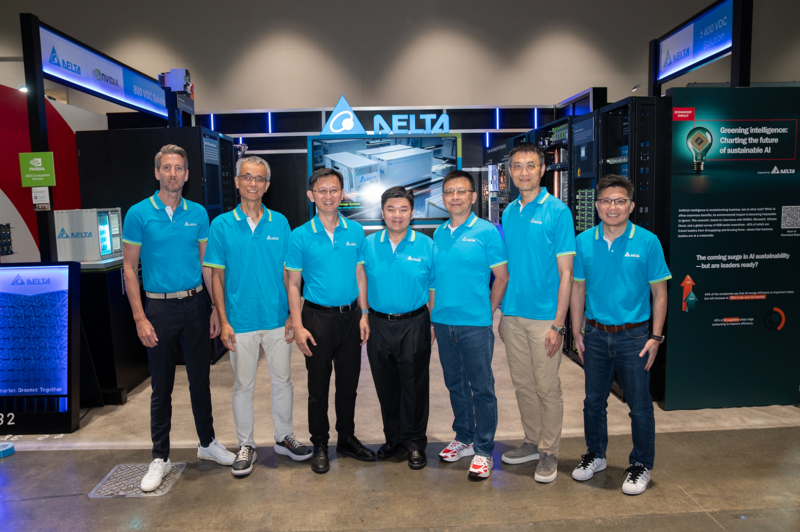
展出先进高压直流电源架构、液冷及网通方案 驱动AI数据中心发展 台达近日宣布参与开放运算计划全球峰会(OCP Global Summit 2025),展示专为AI数据中心设计的先进 电源、散热及网通方案,包括新一代支援800 VDC与 ±400 VDC架构的高压直流完整供电方案,适用于 高密度、兆瓦级AI数据中心;具备2,000 kW散热能力的液对液(L2L)冷却液分配装置(CDU)、新款300 kW液对气(L2A)CDU,分别应对新建及既有数据中心散热需求;网通解决方案上则为GPU系统提供新 一代1.6 T以太网络交换机。面对AI数据中心扩建需求,台达提供高整合及高弹性方案,并兼顾节能永 续。 台达参与2025 OCP全球峰会,台达电源及零组件事业群执行副总裁史文景(左2)、电源及系统事业群副 总裁暨总经理陈盈源(左3)、美洲区总经理曾百全(左4)、资通讯基础设施事业群副总裁暨总经理黄彦文 (右3)和风扇暨热传导事业群总经理蔡明熹(右2)等主管于台达展位合影 台达美洲区总裁曾百全表示:"AI与全球产业发展紧密相连,也正加速新一代AI基础设施的建置,台达 提前布局研发尖端高压电源架构、散热及网通技术,期望通过 ...

横店东磁(002056.SZ):台达是公司软磁重要客户
Ge Long Hui· 2025-10-21 08:10
Core Viewpoint - Hengdian East Magnetic (002056.SZ) has confirmed that Delta is a significant customer for the company's soft magnetic products [1] Company Summary - Hengdian East Magnetic has acknowledged its relationship with Delta, highlighting the importance of this customer in its business operations [1]

SST行业专家电话会
2025-10-20 14:49
Summary of SST Industry Conference Call Industry Overview - The conference call focused on the Solid State Transformer (SST) industry, particularly its applications in data centers and electric vehicle charging [1][2][3]. Key Points and Arguments - **Voltage Upgrade Trend**: There is a clear trend towards upgrading data center distribution voltage from 380/415 volts to higher levels, which can significantly reduce costs. This shift is driven by the need for increased cabinet capacity, which may rise from 10 kW to hundreds of kW or even MW levels [2][3]. - **SST Applications**: SST technology is being pushed by companies like NVIDIA, which has proposed an 800-volt architecture. This architecture defines two approaches: one based on traditional transformers with DC modules and another fully utilizing SST [2][3]. - **Domestic Market Competition**: In China, companies such as Huawei, Sungrow, and Delta are actively developing SST technology, but progress varies. Sungrow achieved breakthroughs in 35 kV applications during the 13th Five-Year Plan [1][4]. - **Testing and Reliability Concerns**: Current testing of SST in data centers faces challenges such as the lack of national standards, reliability validation, and technical difficulties with 10 kV hot-swappable designs. The next two to three years will focus on pilot projects to validate reliability and reduce costs [1][7][8]. - **Power Electronics Advantage**: Companies with expertise in power electronics are better positioned to develop SST technology compared to traditional mechanical manufacturers. Silicon Carbide (SiC) power semiconductors are identified as the primary choice for large-scale SST applications [1][9][10]. Additional Important Insights - **Market Dynamics**: The increasing demand for higher voltage levels in data centers is creating new applications for SST, particularly in the context of rising copper prices [2][3]. - **Integration of Functions**: SST integrates the functions of traditional transformers, Power Conversion Systems (PCS), and Uninterruptible Power Supplies (UPS), which is crucial for data center efficiency [16]. - **Future Projections**: SST is expected to see large-scale application by the end of 2027 or 2028, with current efforts focused on pilot projects to gather operational data [8]. - **Competitive Landscape**: Delta is noted for its strong performance in the data center sector, having initiated SST research as early as 2012. Other companies like Eaton and Schneider are also involved but have varying levels of product development and market presence [13][15]. Conclusion The SST industry is poised for growth, driven by technological advancements and increasing demand for efficient power solutions in data centers and electric vehicle charging. However, challenges such as market competition, cost reduction, and the establishment of standards remain critical for widespread adoption.
800V系列-HVDC专家交流
2025-10-19 15:58
Summary of Key Points from the Conference Call Industry and Company Overview - The discussion revolves around Delta's advancements in High Voltage Direct Current (HVDC) technology, particularly in the context of power supply units (PSUs) and their applications in data centers and IT cabinets [1][2][6]. Core Insights and Arguments - **Efficiency Improvements**: Delta has optimized its power electronics technology to reduce the conversion stages from 800V to lower voltages, enhancing efficiency and minimizing material usage and heat generation [1][2][4]. - **Mature HVDC Solutions**: Delta's HVDC solutions have matured, with confirmed orders from North American Cloud Service Providers (CSPs) and Open Compute Project (OCP) clients, indicating strong market demand [6][15]. - **Client Base**: Key clients include a major overseas metaverse CSP company, which is focused on advanced production architectures and has specific requirements for HVDC solutions [8][10]. - **Product Development Timeline**: The RUVING series will gradually adopt HVDC technology, with the current generation utilizing the SET X scheme and future iterations incorporating more advanced configurations [7]. Pricing and Market Dynamics - **Cost Structure**: The HVDC module costs approximately 0.3 to 0.5 yuan per watt, while the entire HVDC system is priced around 2.5 yuan per watt, which includes various components and Delta's markup [12][18]. - **Future Price Expectations**: As production scales up and competition increases, prices are expected to decrease, potentially falling below 0.5 yuan per watt [13]. - **Market Share Projections**: Delta anticipates capturing 40% of the HVDC market share for a projected demand of 4GW from a major North American client, translating to approximately 1.6GW to 2GW in orders [15]. Competitive Landscape - **Delta's Competitive Edge**: Delta's strong service quality, technological expertise, and innovative solutions position it favorably against competitors, despite lower-priced alternatives in the market [14][21]. - **Challenges for Traditional Companies**: Traditional power distribution companies like ABB and Schneider struggle to compete due to the specialized nature of power conversion for data centers, where Delta's expertise gives it a competitive advantage [19]. Additional Important Insights - **Technological Requirements for GPUs**: The need for clean, low-voltage DC power systems is critical for supporting advanced GPUs, with Delta positioned to meet these requirements [20][24]. - **Meta's Project Developments**: Meta is actively working on a 600MW project aimed at enhancing AI infrastructure, indicating a significant demand for Delta's HVDC solutions [22]. - **Thermal Management Solutions**: Delta's thermal management solutions, including liquid cooling systems, are essential for managing heat generated by power supplies, showcasing their comprehensive approach to data center needs [23].
超节点、液冷、存储、电源:月度跟踪 - 计算机
2025-10-19 15:58
Summary of Key Points from the Conference Call Industry Overview - The conference call primarily discusses the AI computing power industry, highlighting significant developments in demand and supply, particularly related to major players like OpenAI, Oracle, and various semiconductor manufacturers [1][2][4]. Core Insights and Arguments - **OpenAI's Contracts**: OpenAI signed a 5-year contract with Oracle worth $300 billion for 4.5GW of computing power, with plans for an additional 7GW project, indicating a substantial investment in computing power [1][4]. - **Global Sovereign AI Projects**: Major investments in sovereign AI projects are accelerating, with total investments expected to exceed $1 trillion from the US, EU, and Saudi Arabia, most involving OpenAI [1][5]. - **Cloud Providers' Capital Expenditure**: Major cloud providers have raised their capital expenditure guidance for 2025, with a combined forecast of $390 billion from the top four overseas cloud companies, reflecting optimism about future computing power demand [1][6]. - **Supernode Product Launches**: Companies are rapidly launching supernode products, with Huawei deploying over 3,100 Ascend 384 nodes and Alibaba releasing the Panjiu 128 supernode AI server, indicating rapid development in AI computing infrastructure [1][7]. - **Taiwanese Companies' Performance**: Taiwanese companies like Hon Hai, Wistron, and Quanta are expected to see triple-digit growth in AI server revenue by 2025, benefiting from the global AI computing supply chain [1][8][10]. Additional Important Content - **Storage Market Dynamics**: Starting from August 2025, storage supply is expected to tighten, with cloud providers exceeding storage demand forecasts for 2026, leading to compressed supply for PCs and mobile devices [2][14]. - **Power Supply Market**: Delta's market share in AI server power supplies is projected to increase from 50% in 2024 to nearly 70% in 2025, with a revenue growth forecast of 30% for the year [2][13]. - **Liquid Cooling Technology**: The adoption of liquid cooling technology is becoming essential, with companies like Qihong reporting a revenue growth rate of 128% in September, driven by increased demand for AI server cooling solutions [2][9][11]. - **Chip Production by TSMC**: TSMC is maintaining high growth in chip production, with projections for NVIDIA's chip shipments to reach 8.5 million units in 2026, corresponding to significant cabinet demand [2][15]. Investment Recommendations - Recommendations include investing in AI chip manufacturers like Haiguang Information and Cambrian, server manufacturers such as Industrial Fulian and Inspur, and companies involved in cooling solutions and data centers [2][16].
英伟达800VDC白皮书专家解读
2025-10-16 15:11
Summary of Key Points from the Conference Call Company and Industry Involved - **Company**: NVIDIA - **Industry**: High Voltage Direct Current (HVDC) technology and Solid State Transformers (SST) Core Insights and Arguments - NVIDIA plans to release the Ruby architecture product in March-April 2026, with mass production expected in September-October 2026, utilizing 800V HVDC architecture to replace UPS systems, with potential evolution to 1,500V HVDC in the future [1][2] - The introduction of GaN (Gallium Nitride) devices is emphasized as a key component in the 800V system, moving away from various rectifier and inverter devices previously used by different companies [2] - The current value of 800V HVDC is approximately 3,800 RMB per kilowatt, with BBU and supercapacitors accounting for about 45% of the total [3][18] - The cost of rectifier modules is currently around 2 RMB per watt, expected to decrease to 1.4-1.5 RMB per watt by late 2026 or early 2027, indicating significant cost reduction potential [3][19] - Major players in the HVDC supply chain include Eaton, Meri, Schneider, and Delta, with Delta and Weidi showing strong capabilities in the 800V HVDC solutions [1][7][12] - Domestic companies face challenges such as high-pressure laboratory construction costs, estimated between 80 million to 100 million RMB, but companies like Sungrow have potential due to their experience in large-capacity rectifier and inverter production [13] Additional Important Content - Huawei has completed technology reserves for 800V HVDC and SST but has not produced prototypes, adopting a conservative strategy potentially influenced by US-China relations [14][15] - The 800V single-polarity HVDC is expected to see significant uptake by 2027, while the bipolar 400V HVDC architecture is anticipated to begin large-scale application in the second half of 2026 [10] - The market for self-purchased cards and assembled cabinets is currently low, accounting for about 25% of the overall market [9] - Domestic companies like Kehua, Sungrow, and others claim to have 800V product technology but have yet to launch prototypes, focusing on the North American market [23] - The cost of HVDC systems is projected to decrease to 2.1-2.2 RMB per watt, while SST costs are expected to drop to around 4 RMB [30] - The competition in GaN supply is primarily dominated by overseas companies, with domestic firms lacking competitiveness in this area [20] - The potential for domestic companies to enter NVIDIA's supply chain is limited, but opportunities may arise in partnership selections [21] This summary encapsulates the critical points discussed in the conference call, highlighting the advancements and challenges within the HVDC and SST sectors, particularly in relation to NVIDIA's upcoming products and market dynamics.

东北证券:SST固态变压器有望成下一代数据中心供电终极解决方案 未来市场空间广阔
智通财经网· 2025-10-16 02:40
Core Viewpoint - The report from Northeast Securities highlights the rapid advancement of power supply technology, with Solid State Transformers (SST) emerging as a key infrastructure solution for high-density power supply challenges in data centers, boasting over 98.5% efficiency and a potential market size of 500 to 1000 billion yuan [1][4]. Group 1: Market Dynamics - Global investment in AI computing power is increasing, driving the need for upgraded power supply systems due to rising chip power consumption and cabinet density [1]. - Major tech companies are significantly increasing their capital expenditures, with Nvidia's spending reaching $3.122 billion (up 132% year-on-year), Amazon at $57.202 billion (up 76%), and Alibaba at 39 billion yuan (up 32%) [1][2]. Group 2: SST Advantages - SST systems achieve high efficiency of 98.5%, potentially saving over 12 million kWh annually for a 100MW data center compared to traditional power sources [2]. - SST technology reduces footprint by over 50% compared to traditional solutions, significantly lowering space and land costs [2]. - The use of SST minimizes copper usage in power transmission by two-thirds, enhancing sustainability [2]. - SST systems can be deployed quickly, with construction times reduced to under 10 days through modular prefabrication [2]. - SST is compatible with existing transmission networks and renewable energy sources, broadening its application [2]. Group 3: Industry Structure - The SST industry chain consists of upstream material and component manufacturers, midstream system integrators, and downstream application service providers [3]. - Upstream costs are distributed among power electronic devices (40%), high-frequency transformers (15%), structural components and cooling systems (15%), and control systems (15%) [3]. - Major players in the midstream include companies like Delta, Eaton, and Siemens, which dominate the production of complete SST products [3]. Group 4: Future Outlook - Collaborations between midstream companies and tech giants indicate a clear direction for the evolution of data center energy architecture, with significant projects underway [4]. - The SST market is projected to reach 500 to 1000 billion yuan, with high-frequency transformers expected to account for 75 to 150 billion yuan, particularly in the Asia-Pacific region [4].

持续关注AIDC固态变压器产业趋势
2025-10-15 14:57
Summary of Solid-State Transformer Industry Trends Industry Overview - The solid-state transformer (SST) industry is driven by the need for power supply upgrades in data centers due to increasing server power demands. Traditional UPS systems face challenges such as large footprint and low efficiency, leading to a shift towards HVDC and SST solutions aimed at higher voltage levels, reduced footprint, and lower losses [1][2][3]. Key Points and Arguments - **Transition from UPS to HVDC**: The existing power supply technology is evolving from UPS to HVDC, with companies like Delta and Alibaba launching Panama power solutions, and NVIDIA proposing an 800V ACDC solution to optimize efficiency and reduce space [1][5]. - **SST Advantages**: SSTs offer significant advantages including smaller footprint, higher efficiency, and the ability to output direct current, making them compatible with energy storage and renewable energy systems, particularly in green energy data centers [1][7]. - **Market Demand**: North America has a high demand for self-sustaining energy solutions due to large data center scales and weak grid infrastructure, while China benefits from strong grid support and policies favoring green energy integration [1][8]. - **Power Increase Impact**: The rapid increase in server power, from 6 kW to over 1 MW, necessitates a proportional increase in power distribution room size under traditional methods, highlighting the urgent need to reduce equipment footprint [3][4]. Development Trends - **SST Development Acceleration**: The development of SSTs is gaining momentum, with major equipment manufacturers and cloud service providers engaging in technical discussions and collaborations expected to yield results within the next year [2]. - **Limited Current Applications**: Currently, SST applications are limited to demonstration projects, with only a few hundred units operational globally. Companies like China West Electric and Sifang have made deliveries, while others like Delta have mature products [10][11]. Competitive Landscape - **Leading Companies**: China West Electric and Sifang are leading in the SST field due to their technological expertise and market positioning. Other companies like Jinpan Technology and New Special Electric are also making strides, with Jinpan focusing on the North American market [14][12][15]. - **Market Entry and Technology**: New entrants like Newpan are quickly adapting to the SST market, leveraging their existing expertise in transformers and power electronics [15]. Market Potential and Assumptions - **Market Size Estimates**: The SST market is projected to reach several hundred billion in the next three years, with key assumptions including the growth of computing power installations and the unit value of power equipment [16][17]. - **Penetration Rates**: By 2029 or 2030, SST penetration rates are expected to reach around 10% in North America and 5% in China, with potential for accelerated industry progress [18]. Conclusion - The solid-state transformer industry is poised for significant growth driven by technological advancements and increasing demand for efficient power solutions in data centers. The competitive landscape is evolving, with established players and new entrants vying for market share, while the overall market potential remains substantial.
龙虎榜复盘 | 电源变压器受各路资金热捧,机器人反弹
Xuan Gu Bao· 2025-10-15 10:16
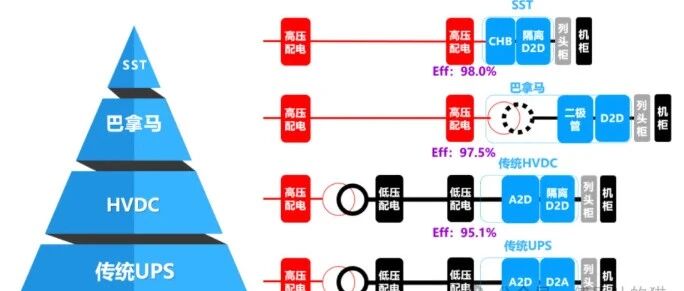
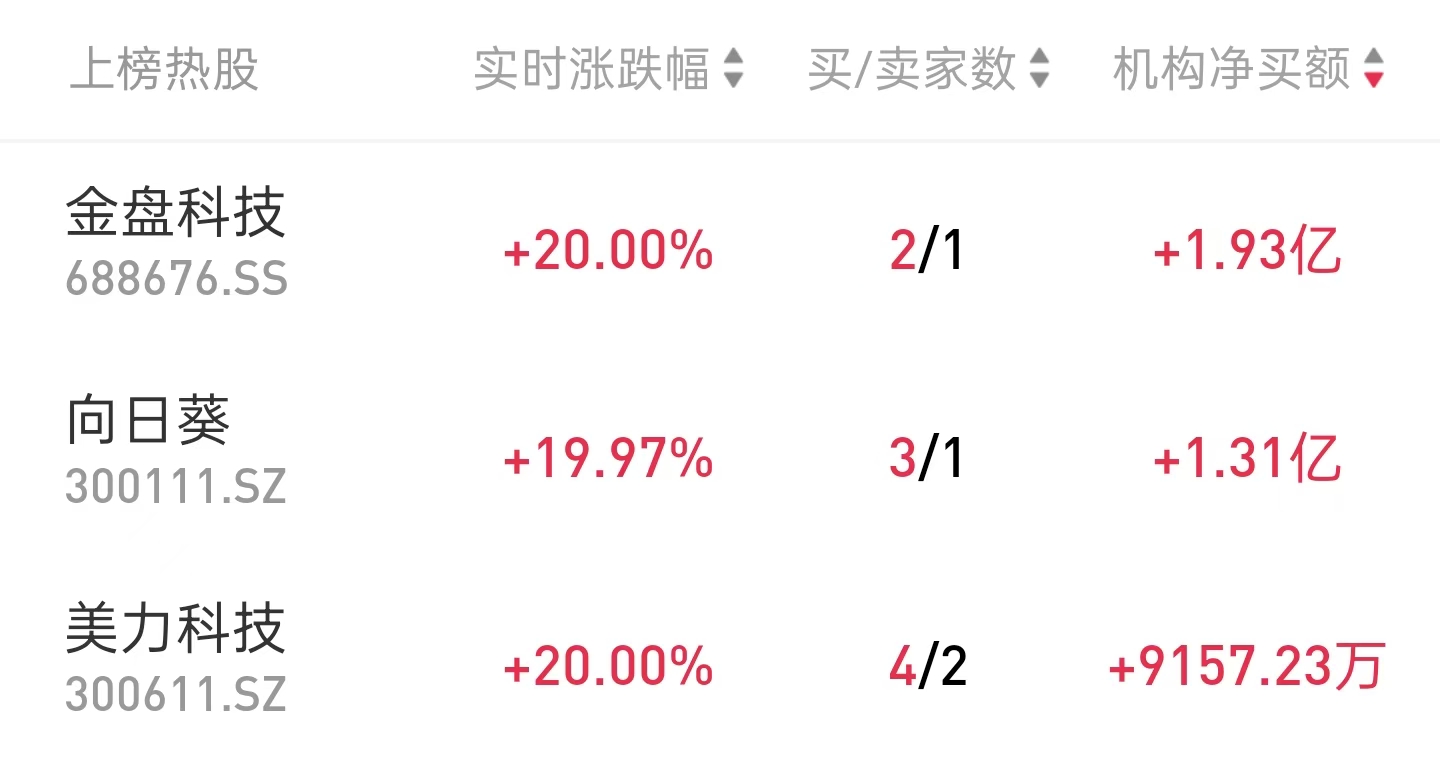
Core Insights - The article highlights the performance of stocks on the institutional leaderboard, with 32 stocks listed, 16 bought, and 16 sold by institutions. The top three stocks with the highest institutional purchases are Jinpan Technology (1.93 billion), Sunflower (1.31 billion), and Meili Technology (915.7 million) [1][2]. Group 1: Stock Performance - Jinpan Technology (688676.SS) saw a price increase of 20.00% with 2 buyers and 1 seller [2]. - Sunflower (300111.SZ) experienced a price increase of 19.97% with 3 buyers and 1 seller [2]. - Meili Technology (300611.SZ) also had a price increase of 20.00% with 4 buyers and 2 sellers [2]. Group 2: Industry Trends - Nvidia's recent release of the "800VDC Architecture White Paper" has drawn attention to the high-voltage direct current (HVDC) sector, emphasizing the importance of medium-voltage rectifiers (MV Rectifiers) for deploying 800VDC systems [2]. - The white paper outlines three evolution directions for the 800VDC technology: transitional solutions using external AC/DC racks, hybrid power solutions for 800VDC output, and ultimate solutions utilizing medium-voltage rectifiers or solid-state transformers (SST) [2]. Group 3: Data Center Power Supply - The development direction for data center power supply is identified as UPS → HVDC → Panama Power → SST direct current architecture, with the Panama Power concept proposed by Delta in collaboration with Alibaba, offering higher efficiency and lower investment [3]. - Solid-State Transformers (SST) utilize power electronics for high-frequency power conversion, providing advantages such as high efficiency and space optimization [3]. Group 4: Company Updates - A company reported a revenue of 407 million for its data center power supply business in the first half of the year, marking a year-on-year growth of 60.6%. Their third-generation HVDC product matrix meets the high power density needs of intelligent computing centers, serving major clients like Alibaba, Tencent, and Kuaishou [5]. - Another company, known for its power supply business, is involved in data center construction and operation [5].



数据中心的固态变压器技术与国内外厂商布局
傅里叶的猫· 2025-10-11 11:16
Core Insights - The article discusses the advancements and market positioning of Solid State Transformers (SST) in the context of data centers and renewable energy, highlighting the growing demand and competitive landscape in both domestic and international markets [2][3]. SST Progress and Fundamentals - SST technology shows significant potential in data centers and renewable energy sectors, with NVIDIA's Rubin architecture expected to adopt SST technology, likely ahead of the anticipated supply timeline of late 2027 or early 2028 [2]. - North American SST orders have high profitability, with gross margins reaching 50-55%. The market currently faces a supply-demand imbalance, with order fulfillment cycles extending from 9-12 months, and some North American manufacturers experiencing delays of up to 18 months [2]. Domestic and International Manufacturer Layouts - Various global manufacturers are actively advancing SST technology. Eaton, a leader in the VIGC sector, has introduced an energy router power supply architecture and is accelerating its entry into emerging markets through acquisitions [3]. - Delta has launched an HBDC power solution based on third-generation silicon carbide devices, which supports flexible adjustments for data center load demands and integrates well with renewable energy and storage systems [3]. - In China, companies like Sifang, Xidian, and Jinpan Technology are expanding into SST technology, leveraging their existing strengths to explore commercial applications in data centers and renewable energy [3]. Jinpan Technology - Jinpan Technology reported robust performance in the first half of 2025, with significant growth in its electromechanical business and notable progress in the ultra-high voltage sector, benefiting from new project launches [4]. - The company achieved a 64% year-on-year increase in overseas revenue, successfully securing contracts for data center substations in Malaysia, and anticipates an annual compound growth rate of approximately 80% in data center revenue from 2022 to 2024 [4][5]. - Jinpan has developed a 2.4 MW solid-state transformer prototype suitable for HVDC800V power supply architecture, laying the groundwork for further expansion into overseas markets and AIDC sectors [5]. Other Manufacturers - Eagle and New Special Electric have accumulated technology in phase-shifting transformers and are actively developing SST technology to meet data center demands [6]. - Sungrow Power Supply has made significant strides in photovoltaic inverter technology, launching the world's first 35 kV medium-voltage direct-connected photovoltaic inverter, which is well-suited for large-scale solar power generation [7]. - Weiguang Energy, supported by Baiyun Electric Group and Xi'an Jiaotong University, focuses on SST energy routers and has delivered 92 units for various applications, including data centers and charging stations [8]. - Teradyne has demonstrated strong technical and supply chain advantages in the charging pile and SST sectors, leveraging its expertise in power electronics technology [9].