雷鸟创新

Search documents
“科技界春晚”隆重开演 参展商惊呼“没有AI展品等于白来”
Zheng Quan Shi Bao· 2026-01-06 22:29
Group 1: Core Themes of CES 2026 - The core theme of CES 2026 is "human-centered" AI applications, attracting over 4,500 companies from more than 150 countries, including around 1,400 startups, with an exhibition area of 2.6 million square feet [3] - AI has transitioned from a showcase tool to a fundamental component in various smart hardware, including humanoid robots, smart glasses, smart appliances, AI smartphones, AI toys, and smart electric vehicles [2][3] - The event highlights a significant shift in AI's role from consumer-level toys to enterprise-level productivity tools, addressing real-world labor shortages in sectors like healthcare, logistics, and manufacturing [2] Group 2: Chinese Companies at CES 2026 - A total of 207 Chinese companies participated in CES 2026, with a net exhibition area exceeding 4,900 square meters, showcasing a strong presence in the global tech landscape [4] - Chinese companies, particularly in the robotics sector, are gaining attention for their global strategies, with firms like Fourier and Yushutech presenting advanced humanoid robots and solutions [4][5] - The participation of Chinese companies reflects a shift from merely showcasing consumer electronics to demonstrating capabilities in AI hardware manufacturing and assembly, indicating a growing confidence in global supply chain management [6][7] Group 3: Supply Chain Trends - An increasing number of electronic supply chain companies are participating in CES, showcasing their full-stack capabilities in AI hardware manufacturing and assembly [6] - Companies like Lianyi Zhizao and OFILM are using CES to communicate their core service offerings and deepen technical exchanges with global partners [6][7] - The active participation of supply chain enterprises at CES signifies a recognition of their manufacturing capabilities on a global scale, as they aim to expand their market presence [7]
“科技界春晚”隆重开演参展商惊呼“没有AI展品等于白来”
Zheng Quan Shi Bao· 2026-01-06 18:24
Group 1 - The core theme of CES 2026 is the practical application of AI with a focus on "human-centered" technology, attracting over 4,500 companies from more than 150 countries, including around 1,400 startups, and covering an exhibition area of 2.6 million square feet [3] - AI has transitioned from being a mere showcase tool to a fundamental component in various smart hardware, including humanoid robots, smart glasses, smart appliances, AI smartphones, AI toys, and smart electric vehicles, indicating a significant shift in industry trends [1][2] - The presence of AI in nearly all hardware products at CES 2026 signifies an irreversible trend, with AI now playing a crucial role in decision-making processes across various sectors [2] Group 2 - Chinese companies have become a focal point at CES 2026, with 207 Chinese enterprises participating, covering a net exhibition area of over 4,900 square meters, showcasing their global industry leadership [4] - A notable trend is the increased participation of electronic supply chain companies at CES, demonstrating their capabilities in AI hardware manufacturing, assembly, and solutions, reflecting a shift in the industry's landscape [6] - Companies like Lingyi iTech and OFILM are using CES to showcase their advanced optical solutions and comprehensive services for humanoid robotics, indicating a strategic move towards global market engagement [6]
中国智能眼镜“扎堆”CES 2026
Guo Ji Jin Rong Bao· 2026-01-06 14:55
Core Insights - The CES 2026 event in Las Vegas is showcasing advancements in technology, particularly in the fields of semiconductors, artificial intelligence, and consumer electronics, with a notable focus on smart glasses as a potential replacement for smartphones [1] Group 1: Smart Glasses Market Developments - The global first eSIM smart glasses are set to be unveiled by Thunderbird Innovation, which has also secured over 1 billion yuan in funding from major Chinese telecom operators, indicating a significant investment in the smart glasses sector [3] - Rokid has launched its AI smart glasses, Rokid Style, at CES, which are marketed as the lightest full-featured AI glasses at 38.5 grams, priced starting at $299, and compatible with multiple AI engines [3] - XREAL has introduced the ROG Xreal R1, the first AR glasses with a 240Hz refresh rate, targeting the gaming market and enhancing the AR experience [4] Group 2: Industry Collaborations and Innovations - Google has announced its return to the smart glasses market with Project Aura, collaborating with XREAL to integrate advanced optical and AI capabilities [6] - Lenovo is set to unveil several AI concept products, including a personal AI smart glasses prototype, during CES, highlighting its collaboration with NVIDIA in the AI space [6] - XGIMI has expanded its strategic focus from home projectors to personal smart glasses with the launch of its MemoMind brand, offering two series of AI glasses [7] Group 3: Market Predictions and Policy Support - The Chinese government has included smart glasses in its new subsidy policy for digital and smart products, marking a significant step for the industry [9] - IDC forecasts that the global smart glasses market will exceed 23.687 million units by 2026, with China's market expected to surpass 4.915 million units, indicating a shift towards large-scale growth [10]



炸,百款新品狂轰,百亿资金疯涌,十位创始人万字综述2025智能眼镜史
3 6 Ke· 2026-01-06 12:19
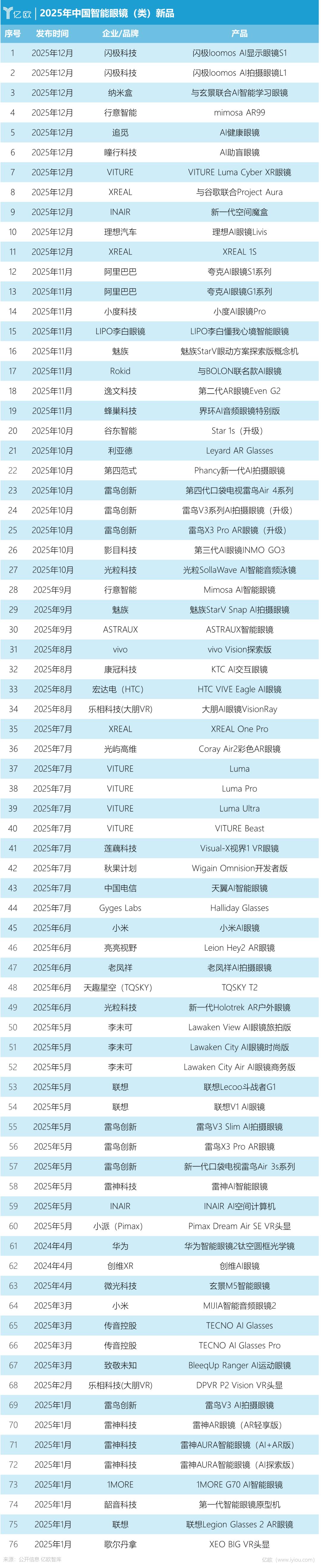
Group 1 - The year 2025 is marked by significant advancements in the AI hardware market, particularly in the smart glasses sector, with a notable increase in new product launches and investments [1][4][5] - A total of 76 new smart glasses products were introduced in China in 2025, representing a 40% increase compared to 2024 [5][6] - The industry is experiencing a shift from product and marketing competition to a focus on technology and innovation [3][5] Group 2 - The number of listed companies entering the smart glasses market has expanded to 176, doubling from the previous year [2][42] - Major players in the industry include both startups and established companies from various sectors, including technology, automotive, and consumer electronics [29][43] - The market is transitioning from a technology-driven approach to a value-driven one, with consumers becoming more experience-sensitive [26][27] Group 3 - Significant funding has flowed into the smart glasses sector, with nearly 10 billion yuan invested [3] - The industry is witnessing a trend towards vertical integration, with products increasingly tailored to specific use cases such as sports, health, and office environments [27][28] - Companies are focusing on creating a complete user experience by integrating perception, decision-making, and interaction capabilities [28] Group 4 - The competitive landscape is intensifying, with major companies like ByteDance, Xiaomi, and Alibaba entering the market, bringing substantial traffic and visibility [22][23] - Innovations in product design and functionality are crucial for gaining consumer acceptance, as evidenced by the success of products like the BleeqUp Ranger smart glasses [15][17] - The industry is facing challenges such as feature homogeneity and the need to balance lightweight design with high performance and battery life [34][36]
【研选行业】AI驱动+海外限制再收紧,国内晶圆厂加速“国产替代”,这些设备厂商核心受益
第一财经· 2026-01-06 11:06
Group 1 - The core viewpoint of the article emphasizes the importance of timely and relevant research reports in identifying investment opportunities, particularly in emerging fields like brain-computer interfaces [1] - Neuralink, led by Elon Musk, is set to begin large-scale production of brain-computer interface devices in 2026, marking a significant milestone in the integration of life sciences and information technology [1] - The brain-computer interface sector is experiencing rapid technological advancements and policy support, with expectations for commercialization to expand into AI applications and robotics by 2026 [1] Group 2 - The article highlights five key focus areas for investment as the humanoid robot sector approaches critical production milestones, with supply chains becoming more consolidated [2] - The AI wave is driving significant increases in storage prices, with DRAM prices soaring by 171.8%, while domestic wafer manufacturers are accelerating "domestic substitution" in response to tightening overseas restrictions [2] - New policies in Guangdong are encouraging insurance capital to enter the market, providing a dual boost to insurance stocks through asset and liability management [2] - A major state-owned enterprise has invested 1 billion in Thunderbird Innovation, signaling an imminent explosion in the AI glasses sector [2]




突传利好,央企巨头10亿重金入局,AI眼镜多股涨停
2 1 Shi Ji Jing Ji Bao Dao· 2026-01-06 10:12
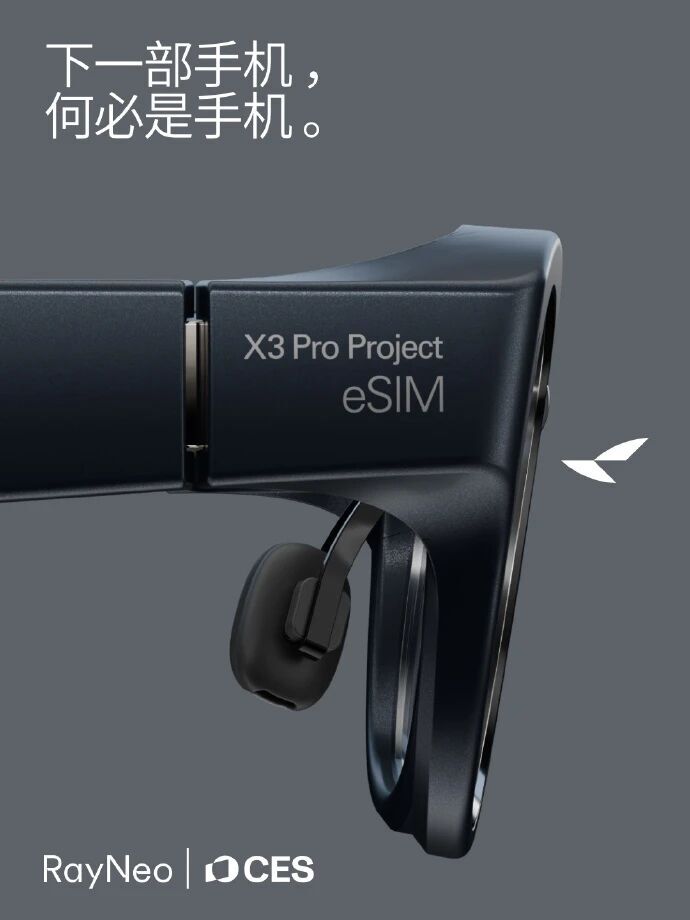
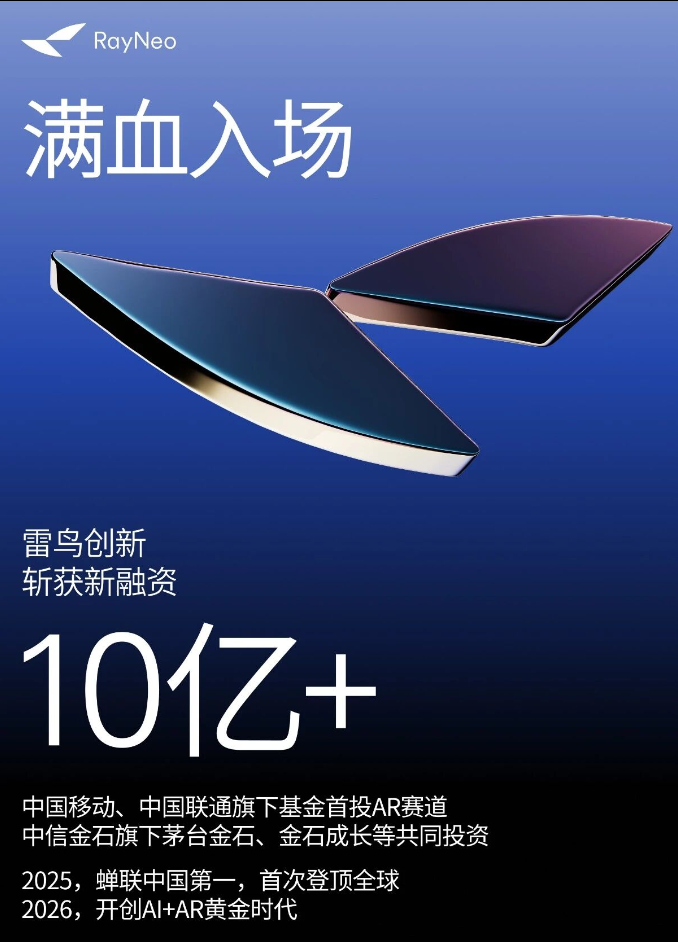
Core Insights - The AI glasses sector is experiencing significant developments, highlighted by Thunderbird Innovation's completion of over 1 billion yuan in C+ round financing, led by China Mobile and CITIC Jinshi, with participation from China Unicom's fund [1][6] - Despite rumors of ByteDance's AI glasses entering the shipping phase being denied, the enthusiasm in the capital market has surged, with the AI glasses index rising over 3.5% on January 5 [3][12] Financing and Market Activity - Thunderbird Innovation's financing sets a record for single financing in the AI+AR glasses sector in 2025, marking a strategic entry by telecom operators that could reshape the industry landscape [6][10] - The capital market's response was robust, with stocks like Lianjian Optoelectronics and Su Da Weige hitting their daily limit up, reflecting high investor interest [3][10] Technological Advancements - The entry of telecom operators is expected to enhance industry confidence and accelerate the adoption of smart glasses, with a focus on eSIM communication modules and edge computing capabilities [8][12] - Thunderbird Innovation plans to showcase its X3Pro Project eSIM at CES 2026, which integrates eSIM and 4G support, allowing the glasses to function independently from smartphones [12] Market Potential and Consumer Trends - The demand for innovative pricing models such as "contract glasses" aligns well with telecom operators' distribution channels, potentially lowering the barrier for consumer adoption [8][12] - The upcoming national subsidy policy for consumer electronics in 2026, which includes smart glasses, is expected to further stimulate market growth [13] Industry Challenges - Despite the potential, the AI glasses industry faces challenges related to weight, battery life, and functionality, which need to be addressed for broader market penetration [13]
突传利好,央企巨头10亿重金入局,AI眼镜多股涨停
21世纪经济报道· 2026-01-06 10:10
Core Viewpoint - The article highlights the significant investment activity in the AI glasses sector, particularly focusing on the recent C+ round financing of Thunderbird Innovation, which raised over 1 billion yuan, indicating strong market interest and confidence in the industry [1][9]. Financing and Market Activity - Thunderbird Innovation completed a C+ round financing of over 1 billion yuan, led by China Mobile Chain Long Fund and CITIC Jinshi, with participation from China Unicom's Lianchuang Innovation Fund [1]. - The financing was initially planned to raise 300-400 million yuan but ended up being 2-3 times oversubscribed, reflecting the capital market's enthusiasm for industry leaders [9]. - Following the financing announcement, the AI glasses index surged over 3.5%, with several stocks, including Lianjian Optoelectronics and Sudavige, hitting their daily limit [3][4]. Industry Trends and Operator Involvement - The entry of telecom operators into the AI glasses market is expected to reshape the industry landscape, focusing on eSIM communication modules and edge computing capabilities [6]. - Operators are likely to offer not just smartphones but also smart glasses and related services, which could lower the barriers for consumer adoption [6]. - The involvement of telecom operators is anticipated to enhance confidence in the supply chain and accelerate the deployment and scaling of smart glasses [6]. Technological Advancements - The competition for the next generation of internet access is intensifying, with smart glasses seen as a potential new computing terminal [11]. - Thunderbird Innovation plans to showcase its X3 Pro Project eSIM at CES 2026, which will allow the device to function independently of smartphones, integrating eSIM and 4G capabilities [11]. - The trend towards resource concentration in the AR sector is evident, with multiple companies securing significant funding to support technological advancements [11]. Market Potential and Consumer Demand - The AI glasses market is expected to benefit from government subsidies, with smart glasses included in the national subsidy program, offering 15% off the price with a cap of 500 yuan per unit [12]. - Consumer interest in innovative purchasing models, such as "buying glasses with phone plans," aligns well with telecom operators' distribution strengths [6]. - The industry is projected to grow as leading companies actively position themselves in the smart glasses market, driven by both technological innovation and favorable policies [12].

2026年或成AI眼镜元年,产业链迎新机遇
Huan Qiu Wang Zi Xun· 2026-01-06 07:46
从业绩层面看,相关上市公司也展现出强劲的增长预期。根据5家及以上机构一致预测,20只AI眼镜概 念股2025年全年净利润将大幅改善。其中,TCL科技、豪鹏科技、思特威等公司净利润有望实现翻倍。 豪鹏科技表示,公司正处于动能转换期,AI眼镜等新兴端侧项目的能源解决方案已陆续量产出货,增 长曲线陡峭;思特威则推出了专为AI眼镜设计的1200万像素CMOS图像传感器产品,具备小尺寸、低功 耗等优势。随着SoC、电池、散热、通信、光学等关键零组件技术的不断升级,AI眼镜产业链正迎来前 所未有的发展机遇。 有行业分析师指出,雷鸟创新获得10亿元巨额融资,不仅是对该公司技术实力的认可,更是整个AI眼 镜产业进入爆发期的信号。2026年,随着大模型在端侧的落地应用以及硬件成本的进一步优化,AI眼 镜有望复刻TWS耳机的崛起路径,成为下一个消费电子爆款。目前产业链上游的光学显示、下游的整 机组装以及相关零部件供应商均处于订单驱动的关键阶段。建议投资者重点关注在核心技术上有护城河 且已经进入头部大厂供应链的标的,特别是那些在AI眼镜轻量化、低功耗及独立通信方面有技术储备 的公司,有望在新一轮的终端置换潮中率先受益。(文馨) 市 ...
芯片巨头齐聚CES发新品;豆包否认AI眼镜出货丨新鲜早科技
2 1 Shi Ji Jing Ji Bao Dao· 2026-01-06 02:42
Group 1: Technology Developments - NVIDIA launched a new generation of AI platform Rubin, featuring six new chips, including Rubin GPU with a reasoning power of 50 PFLOPS, five times that of Blackwell [2] - Qualcomm and Google announced an expansion of their decade-long partnership to create end-to-end automotive technology solutions, integrating Qualcomm's Snapdragon digital chassis with Google's automotive software [4] - NVIDIA introduced the Alpamayo series of open-source AI models and tools aimed at enhancing the development of safe and reliable autonomous driving systems [11] Group 2: Corporate Collaborations - Zhiyuan Robotics partnered with MiniMax to enhance voice interaction experiences through customized AI technology [5] - GAC Group signed a comprehensive cooperation framework agreement with Huawei to deepen collaboration on smart vehicle technologies [5] Group 3: Market Movements - Chinese aerospace company China Aerospace Science and Technology Corporation increased its registered capital from 1 billion to 1.396 billion yuan, a 77.6% increase [10] - Defu Technology announced a cooperation agreement with a leading domestic CCL company to supply high-end copper foil products, expected to positively impact its 2026 performance [9] Group 4: Product Launches and Innovations - Raybird Innovation completed over 1 billion yuan in financing and plans to showcase the world's first AR smart glasses with eSIM technology at CES 2026 [15] - ByteDance's Doubao denied rumors regarding the imminent shipment of AI glasses, clarifying that there are currently no sales plans [8]
豆包AI眼镜被曝将出货,官方否认/黄仁勋宣布最强「核弹」芯片全面生产/雷军回应小米 YU7「丢轮保车」
Sou Hu Cai Jing· 2026-01-06 01:36
Group 1 - Nvidia's next-generation AI chip, named "Rubin," has entered full production and is expected to launch later this year, offering AI computing performance five times that of its predecessor [3] - The Rubin platform consists of six independent Nvidia chips, with the flagship device featuring 72 GPUs and 36 CPUs, capable of connecting over 1,000 Rubin chips in clusters [3] - Key innovations include Context Memory Storage for faster responses in long conversations and Co-packaged Optics for enhanced networking capabilities [3] Group 2 - Nvidia announced a broader release of its "Alpamayo" software for autonomous vehicles, which aids in path decision-making and provides engineers with decision-making data [4] - The company remains a leader in AI model training but faces increasing competition in the inference segment from traditional rivals like AMD and Google [4] Group 3 - AI hardware startup Looki has completed over $20 million in Series A funding, led by Ant Group, with plans to focus on talent development, model iteration, product R&D, and supply chain integration [6] - Looki's first product, the Looki L1 wearable AI hardware, has seen rapid sales, with global sales nearing 10,000 units [6][7] Group 4 - Looki L1 features proactive AI capabilities that provide real-time suggestions based on user behavior, set to be showcased at CES [7] Group 5 - Xiaomi's CEO Lei Jun responded to discussions about the safety design of the YU7 vehicle, emphasizing the maturity of the "wheel detachment" safety concept, which has been used since 1959 [11][12] Group 6 - The CEO of Raybird announced plans to launch the first dual-eye AR glasses with eSIM technology, indicating a shift towards independent AR devices [16] - The company aims to implement a "charge phone bill, get glasses" model, similar to the smartphone adoption phase [16] Group 7 - Boston Dynamics showcased its next-generation Atlas robot, which has transitioned to an all-electric system and is now performing real manufacturing tasks [23] - The new Atlas robot features significant upgrades in structure, materials, and intelligence, allowing it to perform complex tasks in a factory environment [23][24] Group 8 - LG introduced its CLOiD home robot at CES, designed to assist with household chores, demonstrating basic capabilities such as placing items in a washing machine [26] Group 9 - WeChat launched an AI application growth plan, offering developers free access to cloud resources, AI computing power, and monetization support, aiming to make 2026 the "year of AI applications" [41][42] Group 10 - The collaboration between GAC Group and Huawei aims to enhance smart cockpit and AI technology, focusing on the integration of the HarmonyOS ecosystem and AI innovations [49][50]