宝马

Search documents
郭永锋接替李凤刚 一汽奥迪销售公司中方一把手两年内再换人
经济观察报· 2025-09-03 10:48
Core Viewpoint - The leadership change at FAW-Volkswagen Audi is seen as a response to the declining market performance of FAW Audi, with the new executive expected to address these challenges and drive growth [1][4]. Group 1: Leadership Changes - FAW Audi's sales company has appointed Guo Yongfeng as the new executive vice president, replacing Li Fenggang, who served for less than two years [1]. - Guo Yongfeng has extensive experience within FAW-Volkswagen, having held various leadership roles since joining in 2004 [1]. - The early leadership change is perceived as a necessity due to FAW Audi's poor market performance [1][2]. Group 2: Sales Performance - FAW Audi's sales have been declining, with figures of 726,300, 701,300, and 635,600 vehicles sold from 2020 to 2022, respectively, marking three consecutive years of decline [2]. - In 2024, FAW Audi's cumulative sales were 611,000 vehicles, a year-on-year decrease of 12.5% [2]. - As of the first half of 2025, sales continued to decline, indicating ongoing challenges for the brand [2]. Group 3: Impact on Global Performance - The decline in FAW Audi's sales negatively affects Audi's global performance, with a 10.2% year-on-year drop in sales in China during the first half of 2025 [3]. - Audi's net profit for the first half of 2025 was €1.346 billion, down 37.5% year-on-year, leading to a downward revision of revenue expectations for the year [3]. - Compared to competitors, FAW Audi's performance lags behind Mercedes-Benz and BMW, which had higher sales figures despite their own declines [3]. Group 4: Strategic Initiatives - Audi aims to revitalize its performance through management changes and new product introductions, including the launch of the Audi Q6L e-tron model in late 2024 [4]. - FAW Audi is collaborating with Huawei to enhance the intelligence of its fuel vehicles, which may help improve market performance [4]. - The company is expected to introduce more electric vehicle models to accelerate its transition towards electrification [4].


中瑞股份(301587) - 2025年半年度业绩说明会
2025-09-03 09:28
Group 1: Company Performance - The company experienced a slight decline in revenue in the first half of 2025, with net profit significantly decreasing, indicating a situation of increasing revenue but decreasing profit [3] - The company reported that the second quarter showed an upward trend in both revenue and profit compared to the first quarter, suggesting a potential recovery [3] - The company plans to enhance its performance in the second half of 2025 by increasing R&D investment, expanding new markets and product lines, and improving product and service value [3] Group 2: Collaborations and Market Position - The company has established deep collaborations with international clients such as LG and Tesla, as well as domestic and international lithium battery manufacturers and new energy vehicle companies [3] - The company is actively seeking partnerships with well-known domestic and multinational companies in the new energy vehicle sector, including Geely, BYD, Mercedes-Benz, and BMW [2] - The company’s products are positioned as industry-leading in terms of performance, consistency, and stability, meeting high safety and power output demands [3] Group 3: R&D and Future Projects - The company is currently working on several R&D projects related to large cylindrical structural components, including various types of structural parts and nickel-plated steel shells for lithium batteries [4] - The new cylindrical lithium battery precision metal structural component project commenced construction in April 2025 and is currently in the construction phase [5] - Revenue from emerging fields such as aerospace satellites, low-altitude economy, and solid-state batteries is relatively small compared to overall income [5] Group 4: Investor Relations and Market Management - The company emphasizes the importance of market sentiment, macroeconomic conditions, and industry competition as factors influencing its stock price [3] - The company is committed to improving market value management through enhanced information disclosure, investor communication, and shareholder returns [3] - The company assures that any forward-looking statements regarding future plans and strategies do not constitute substantive commitments to investors [5]
全场景电动化加速大圆柱验证,逸飞激光“牵头”技术升级
高工锂电· 2025-09-03 09:19
Core Viewpoint - The active demand in the large cylindrical battery terminal market is driving technological iteration and the maturity of production processes [3][10]. Group 1: Market Trends and Projections - By 2025, the industrialization and commercialization of large cylindrical batteries will accelerate, with increasing penetration in the passenger car market due to advantages in energy density, fast charging, and safety [4]. - The demand for large cylindrical batteries is expected to explode as they expand into various applications, including energy storage, eVTOL, lightweight power, and more [5][6]. - High-tech research predicts that by 2030, the shipment volume of cylindrical batteries in China will exceed 400 GWh, with a compound annual growth rate of over 50.1% from 2023 to 2030 [5]. Group 2: Technological Advancements and Collaborations - The project initiated by Yifei Laser aims to enhance the mass production process and equipment level of large cylindrical batteries through collaborative innovation among government, industry, academia, and research [6][10]. - The focus of the project is on the laser welding of full-tab cylindrical batteries, addressing challenges such as high-reflectivity materials and precise temperature control during welding [6]. - Yifei Laser has made significant breakthroughs in key processes and technologies for full-tab cylindrical batteries, achieving mass production with a yield of thousands of parts per million (ppm) [5][10]. Group 3: Industry Collaborations and Equipment Development - Yifei Laser has launched a series of equipment for assembling full-tab cylindrical battery cells, which are favored by leading battery manufacturers and automotive companies due to their high efficiency and yield [8]. - The company has provided professional and efficient technical verification and engineering services to over 170 universities, research institutes, and industry chain enterprises, effectively addressing key bottlenecks in technology transfer [10].
华宝新能涨4.79%,成交额4.15亿元,近3日主力净流入-2750.99万
Xin Lang Cai Jing· 2025-09-03 08:09
Core Viewpoint - The company, Huabao New Energy, has shown significant growth in revenue and profit, driven by its focus on lithium battery storage products and strategic partnerships in the sodium-ion battery sector. Group 1: Company Overview - Huabao New Energy was established on July 25, 2011, and is located in Longhua District, Shenzhen, Guangdong Province [8] - The company specializes in the research, production, and sales of lithium battery storage products, with portable storage products being its core offering [8] - The revenue composition includes 77.46% from portable storage products, 20.84% from photovoltaic solar panels, and 1.37% from other products [8] Group 2: Financial Performance - For the first half of 2025, the company achieved a revenue of 1.637 billion yuan, representing a year-on-year growth of 43.32% [8][9] - The net profit attributable to the parent company was 123 million yuan, showing a year-on-year increase of 68.31% [9] - The company has distributed a total of 378 million yuan in dividends since its A-share listing [10] Group 3: Strategic Developments - On July 11, 2023, the company announced a strategic partnership with Zhongbi New Energy to jointly develop sodium-ion batteries [2] - The company has established a strong supplier network, including Panasonic, LG Chem, and BYD, and has expanded its client base to include Tesla and BMW [2][3] Group 4: Market Position and Trends - The company has a significant overseas revenue share of 95.09%, benefiting from the depreciation of the Chinese yuan [4] - The stock has seen a recent increase of 4.79% with a trading volume of 415 million yuan and a turnover rate of 12.76% [1]
成都车展 | 少了很多看点
Zhong Guo Zhi Liang Xin Wen Wang· 2025-09-03 07:17
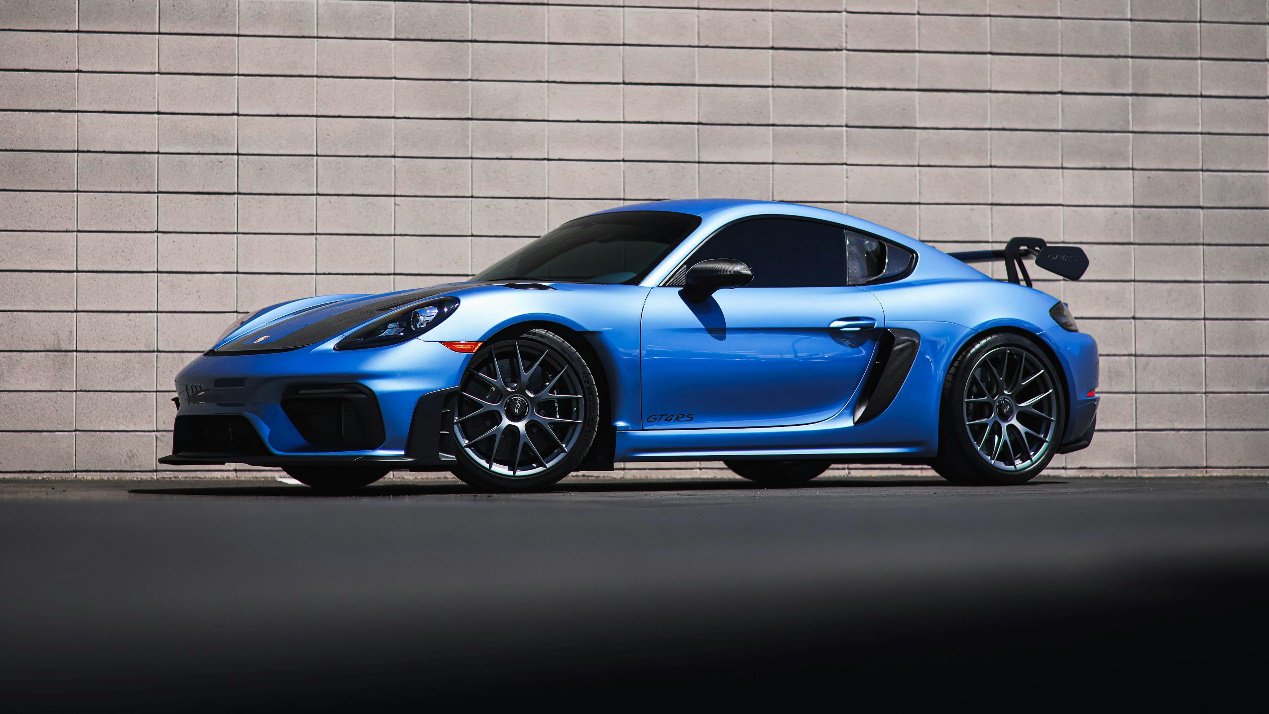
Core Insights - The 28th Chengdu International Auto Show opened amid heavy rain, with a noticeable decline in attendance and participation from luxury brands, indicating challenges in the market [1][4][16] - Traditional luxury brands in China are facing significant challenges, with Porsche's sales in the first half of 2025 dropping by 28% compared to the same period in 2024, and a staggering 42% decline in Q1 deliveries [4][16] - The reduction in the luxury car consumption tax threshold has further impacted high-end brands, particularly affecting brands like Porsche that rely on volume sales [4][16] Luxury Brands' Absence - The absence of luxury brands such as Porsche, Ferrari, and Lamborghini at the auto show highlights the severe challenges they face in the Chinese market [4][16] - Porsche's CEO acknowledged that the decline in sales is due to a slowdown in electrification and supply chain issues, prompting a strategic shift from expansion to focusing on profitability [4][16] Domestic Brands' Resilience - In contrast to the luxury brands, domestic and some joint venture brands are actively seeking breakthroughs through technological innovation and product upgrades [5][16] - Chery showcased 31 significant models, emphasizing its strong product lineup and technological capabilities, with the highlight being the Wind Cloud X3L [7] - BYD occupied an entire exhibition hall, presenting 16 new and upgraded models across various segments, showcasing its ambition in the market [9][16] Joint Ventures and Collaborations - The German automotive giants are adapting through local collaborations, with Audi partnering with Huawei and BMW deepening its AI strategy with Alibaba [5][13] - Buick's introduction of its high-end new energy sub-brand "Zhijing" marks a significant transformation, aiming to regain market share after previous declines [11][16] Market Dynamics and Consumer Sentiment - Despite the technological advancements, the auto show revealed a sense of "involution," with many brands focusing on similar features, leading to consumer fatigue [14][16] - The market share of domestic brands reached 68.6% in the first seven months of the year, reflecting a 24.4% year-on-year growth, but concerns about technological homogenization persist [14][16] Conclusion - The contrasting performances of absent luxury brands and the strong presence of domestic brands at the Chengdu Auto Show reflect the ongoing transformation in the Chinese automotive industry, characterized by market competition, strategic shifts, and evolving consumer preferences [16]

浙江荣泰(603119):Q2盈利维持高位 机器人业务布局持续推进
Xin Lang Cai Jing· 2025-09-03 00:34
Core Viewpoint - The company reported a strong performance in H1 2025, with revenue and net profit showing significant year-on-year growth, driven by increasing overseas customer engagement and a strategic focus on the robotics sector [1][2]. Financial Performance - In H1 2025, the company achieved revenue of 572 million yuan, a year-on-year increase of 15%, and a net profit attributable to shareholders of 120 million yuan, up 22% year-on-year [1]. - For Q2 2025, revenue was 306 million yuan, reflecting an 8.4% year-on-year increase and a 15% quarter-on-quarter increase; net profit for the same period was 60 million yuan, up 18% year-on-year and 7.4% quarter-on-quarter [1]. - The gross margin for H1 2025 was 35.7%, an increase of 2.0 percentage points year-on-year, while the net profit margin was 21.6%, up 1.3 percentage points year-on-year [2]. Growth Drivers - The company's revenue from new energy products reached 460 million yuan in H1 2025, representing a 21% year-on-year growth, although Q2 growth was impacted by a slowdown in Tesla's sales [1]. - The company has established partnerships with leading global automakers such as Tesla, Volkswagen, BMW, and Volvo, as well as with major battery manufacturers like CATL, which is expected to enhance overseas revenue contributions [1]. Strategic Initiatives - The company is actively pursuing strategic acquisitions to strengthen its position in the robotics sector, including the acquisition of a 15% stake in Guangzhou Jinli Intelligent Transmission Technology Co., Ltd., which will facilitate entry into precision transmission and humanoid robotics [2]. - The company maintains a clear strategic layout in the robotics field, with ongoing efforts to expand both domestic and international markets [2]. Profit Forecast - The profit forecast for the company has been adjusted for 2025-2027, with expected net profits of 310 million yuan, 420 million yuan, and 580 million yuan, reflecting year-on-year growth rates of 34%, 35%, and 39% respectively [2].

固态电池最正宗龙头,三大催化引爆行情,市占率连续8年全球第一,有望迎来黄金主升浪!
Sou Hu Cai Jing· 2025-09-02 16:13
Core Viewpoint - The solid-state battery sector is transitioning from a conceptual phase to a practical industrialization stage, driven by technological breakthroughs, industry collaboration, and increasing market demand [1][2]. Group 1: Technological Breakthroughs - Significant advancements in solid-state battery materials (sulfide/oxide electrolytes, lithium metal anodes) and manufacturing processes (dry electrodes, in-situ curing) have been achieved, resulting in energy densities exceeding 400 Wh/kg and cycle lifetimes surpassing 10,000 cycles [1]. - These technological improvements have also led to reduced manufacturing costs, facilitating large-scale production [1]. Group 2: Industry Collaboration - There is a notable integration across the supply chain, with upstream material suppliers (e.g., Dongsheng Technology, Tianci Materials) ramping up production of solid-state electrolytes, midstream battery manufacturers (e.g., CATL, Qingtao Energy) advancing stacking production lines, and downstream automakers (e.g., NIO, BYD) signing agreements for vehicle installations [1]. - The collaboration is enhanced by supportive policies and capital investments, significantly improving the efficiency of the industry chain [1]. Group 3: Market Demand - The urgent demand for high-performance batteries in electric vehicles (with range requirements of over 1000 km and fast charging capabilities) and the rigid requirements for safety and longevity in energy storage are driving rapid penetration of solid-state batteries in high-end markets [2]. - The global market for solid-state batteries is expected to exceed 50 billion yuan by 2025, indicating a comprehensive acceleration in commercialization [2]. Group 4: Investment Opportunities - Several companies are highlighted as potential investment opportunities in the solid-state battery sector: - **Dongsheng Technology**: A leading supplier of high-end lithium battery cathode materials, with solid-state electrolyte materials already achieving ton-level supply [6]. - **Putailai**: A leader in lithium battery anode materials, with silicon-based anode materials certified for solid-state battery applications and projected revenue growth [6]. - **Enjie**: A global leader in lithium battery separators, developing solid-state electrolyte composite separators in collaboration with major firms [6]. - **Tianci Materials**: A leading electrolyte supplier, focusing on solid-state electrolyte additives to enhance ionic conductivity [6]. - The last company mentioned shows significant potential due to its strong market position, backing from state-owned enterprises, and recent trading volume increases, indicating a favorable entry point for investors [7].






捷昌驱动20250902
2025-09-02 14:41
Summary of Key Points from the Conference Call of Jiechang Drive Industry and Company Overview - The conference call pertains to Jiechang Drive, a company operating in the fields of smart office, medical care, smart home, industrial technology, and automotive intelligence. [2][3] Core Insights and Arguments - **Revenue Breakdown**: In the first half of 2025, revenue sources were approximately 75% from smart office, 15% from medical care, 5-6% from smart home, and 6-7% from industrial and automotive sectors. [2][3] - **Growth Rates**: The automotive and industrial sectors experienced rapid growth, exceeding 40%, although they started from a smaller base. [4] - **Global Tariff Strategy**: To address global tariff changes, Jiechang Drive has established local production in Malaysia and the U.S. to cover U.S. market demands, with expected tariff burdens of 8-10% in Malaysia. [6] - **European Factory Impact**: The first phase of the European factory is set to commence production in July 2025, with a designed capacity of 800,000 units, which is expected to enhance performance in the second half of the year. [7] - **Collaboration with Lingqiao Intelligent**: Jiechang Drive has deepened its collaboration with Lingqiao Intelligent, including a 10 million yuan equity investment, leading to the launch of multiple product series with sales of approximately 40 million yuan in the first half of 2025. [8] Additional Important Insights - **Regional Revenue Distribution**: In the first half of 2025, revenue distribution was approximately 35-36% from the U.S., 20-24% from Europe, 30% from domestic markets, and the remainder from Southeast Asia. [9] - **Production Status**: The company has completed its procurement plan for motors and actuators, with motors already in mass production and actuator capacity expected to be ready in the second half of the year. [11] - **Cost Control Strategy**: Jiechang Drive's strategy includes strict cost control to gain market recognition and orders, with a clear plan to reduce costs as sales volume increases. [23] - **Profitability Metrics**: The net profit margin for the first half of 2025 was 13.5%, an increase of 1.6 percentage points year-on-year, with expectations for continued improvement in the coming years. [27] - **Future Revenue Goals**: The company aims to achieve a revenue target of 5 billion yuan by 2027, driven by over 10% growth in its main business and rapid development in new sectors like industrial and automotive. [26] Market Trends and Competitive Landscape - **Robot Industry Development**: The robot industry is still in its early stages but has seen rapid growth, with several leading manufacturers achieving valuations in the hundreds of billions. [17] - **Investment in Humanoid Robots**: Jiechang Drive is prioritizing R&D in humanoid robots, with plans to establish a separate company for this segment and implement equity incentives to drive development. [21][20] Conclusion - Jiechang Drive is strategically positioned to leverage growth in various sectors, with a strong focus on cost control, production efficiency, and strategic partnerships, aiming for significant revenue growth and improved profitability in the coming years. [25][28]
行业深度 | 自主冲击豪华市场 高端定义增量空间【民生汽车 崔琰团队】
汽车琰究· 2025-09-02 14:30
Core Insights - The core viewpoint of the article emphasizes that the competition in the automotive market is shifting from low-cost vehicles to the mid-to-high-end market, where brand building will be crucial for future growth [2][12]. Group 1: Market Dynamics - The main source of market share growth for domestic car manufacturers from 2024 to 2025 will be in the A-class car market priced between 50,000 to 150,000 CNY, where domestic brands currently hold a 70.6% market share as of Q2 2025 [12][16]. - The mid-to-high-end market (150,000 to 250,000 CNY) is expected to see significant competition, with current domestic market share below 50%, indicating substantial room for growth [5][18]. - The luxury market (250,000 CNY and above) is dominated by brands like Li Auto, Xiaomi, and Huawei, which are leveraging electric and intelligent vehicle technologies to establish themselves as leaders in this segment [5][13]. Group 2: Profitability and Brand Loyalty - The profitability in the mid-to-high-end market is strong, with the 150,000 to 250,000 CNY segment projected to generate annual revenues of approximately 1.1 to 1.2 trillion CNY and net profits of around 550 to 600 billion CNY [3][12]. - Brand loyalty is becoming increasingly important in the 150,000 to 250,000 CNY market, where consumers are less price-sensitive and more focused on overall product quality and brand reputation [18][19]. - The luxury market is characterized by high brand barriers, making it difficult for new entrants to compete solely on price, thus emphasizing the need for established brand identities [4][5]. Group 3: Competitive Landscape - The competitive landscape in the 250,000 CNY and above luxury market is becoming clearer, with domestic brands like Li Auto and Huawei gaining significant market shares, while traditional luxury brands are experiencing a decline [21][22]. - The 150,000 to 250,000 CNY market is fragmented, lacking a clear leader, which presents opportunities for traditional automakers and emerging players to capture market share through innovation and design [5][14]. - The article suggests that traditional automakers and second-tier new forces should focus on the mid-range market (150,000 to 250,000 CNY) as it offers a better opportunity for growth compared to the high-end luxury segment [14][18].





8月乘用车:自主海外大比拼、新势力持续狂飙、合资反攻新能源
Zhong Guo Jing Ji Wang· 2025-09-02 13:04
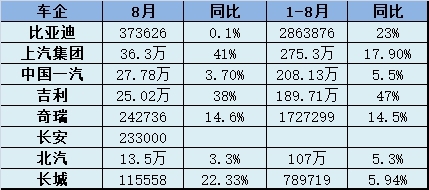
Core Insights - The automotive market in August showed significant growth driven by favorable policies and consumer demand, with domestic brands leading the market while luxury and joint venture brands lagged behind [1] Domestic Brands Performance - BYD achieved sales of 373,626 units in August, a slight increase of 0.1% year-on-year, with cumulative sales of 2,863,876 units for the first eight months, representing a 23% increase [2] - SAIC Group reported sales of 363,700 units in August, up 41% year-on-year, with cumulative sales of 2,753,000 units, a 17.9% increase [2] - Chery exported 129,000 vehicles in August, marking a 32.3% increase year-on-year, and maintained its position as the top exporter of Chinese cars [4] - Geely's new energy vehicle sales reached 147,000 units in August, a remarkable 95% increase year-on-year, making it the second-largest player in the new energy sector after BYD [4] New Energy Vehicle Market - The new energy vehicle segment continues to thrive, with companies like Leap Motor achieving record sales of 57,066 units in August, leading the new force brands [5][6] - Hongmeng Zhixing and Xiaopeng also reported strong sales, with the former selling nearly 50,000 units and the latter launching a new model that boosted sales [6][7] Joint Venture Brands - FAW-Volkswagen sold 135,772 units in August, a 4.2% year-on-year increase, while its Audi brand saw significant sales due to new product launches [8][10] - The joint venture brands are facing challenges from both domestic and new energy brands, with a notable decline in sales for luxury brands like Mercedes-Benz, BMW, and Audi [9][10] Market Outlook - The automotive market is expected to become increasingly competitive as the traditional sales peak season approaches, with ongoing policy support likely to reshape market dynamics [10]