康方生物

Search documents
交银国际每日晨报-20250930
BOCOM International· 2025-09-30 02:14
Group 1: Company Performance - The company reported a 7% year-on-year increase in attributable operating profit to HKD 4.466 billion, exceeding previous forecasts [1] - Adjusted EBITDA rose by 1% year-on-year to HKD 7.316 billion, driven primarily by significant growth in the financial services segment [1] - The company proposed a final dividend of HKD 0.35 per share, bringing the total dividend for the fiscal year 2025 to HKD 0.95 per share, alongside a stock dividend of 1 share for every 10 shares held [1] Group 2: Financial Services Segment - The financial services segment's AOP increased by 29% year-on-year to HKD 1.242 billion, with new business value profit margin improving by 3 percentage points to 30% [2] - The embedded value rose by 19% year-on-year to HKD 25.3 billion, indicating strong growth potential [2] - The logistics segment experienced a 3% increase in AOP, with China Railway International Container Transport Co., Ltd. contributing 23% to this growth [2] Group 3: Market Outlook - The company is currently undervalued, with an attractive dividend yield forecasted to reach 8.4% and 8.8% for the fiscal years 2026 and 2027, respectively [2] - The target price for the company is maintained at HKD 9.42, reflecting a buy rating [2]
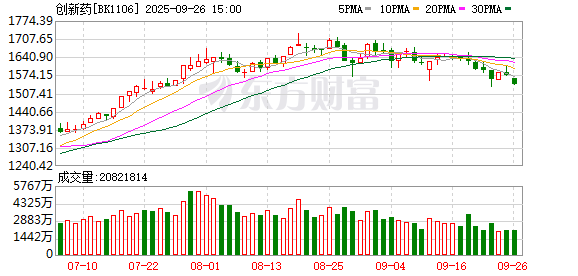
医药生物行业报告(2025.09.22-2025.09.26):关税实际影响小,下跌为创新药加仓良机
China Post Securities· 2025-09-29 09:21
Investment Rating - The industry investment rating is "Outperform" [1] Core Insights - The report highlights that the recent tariff announcement by the U.S. government is expected to have a minimal impact on the pharmaceutical sector, suggesting that the current market downturn presents a good opportunity to increase positions in innovative drugs [4][13] - The report emphasizes the ongoing adjustments in the innovative drug sector, indicating that the recent price corrections are largely complete, and recommends maintaining or increasing exposure to high-quality stocks with growth potential [7][17] - The report discusses the positive outlook for the medical device sector due to new procurement policies aimed at preventing price wars, which could benefit companies previously affected by valuation pressures [8][23] Summary by Sections Industry Overview - The closing index for the pharmaceutical sector is 8770.86, with a weekly high of 9323.49 and a low of 6764.34 [1] Market Performance - For the week of September 22-26, 2025, the A-share pharmaceutical sector fell by 2.2%, underperforming the CSI 300 index by 3.27 percentage points and the ChiNext index by 4.16 percentage points [6][14][32] - The report ranks the pharmaceutical sector 26th among 31 first-level sub-industries in terms of weekly performance [14] Innovative Drugs - The innovative drug sector is experiencing a correction, with a recommendation to focus on high-quality stocks with growth potential, including companies like Innovent Biologics and Hengrui Medicine [7][17] Medical Devices - The National Healthcare Security Administration's new procurement policies are expected to positively impact the medical device sector, particularly benefiting companies like Mindray and Aohua [8][23] CDMO and CRO Sectors - The report expresses optimism about the CDMO sector's recovery, driven by increasing overseas demand and the upcoming interest rate cuts in the U.S. [18] - The CRO sector is also expected to see improved performance as domestic innovative drug demand stabilizes [18][19] Research Services - The report indicates a potential turnaround in the research services sector, with a focus on companies with strong competitive advantages [21] Biologics - The report notes that the blood products sector is currently facing downward pressure, while the vaccine sector is struggling due to declining birth rates and market saturation [22] Medical Services - The report highlights the potential for growth in the medical services sector, particularly for companies expanding their market share through acquisitions [26][27] Traditional Chinese Medicine - The report suggests that companies involved in innovative research and those benefiting from procurement policies are likely to see growth [28] Pharmaceutical Commerce - The report anticipates increased concentration in the retail pharmacy sector, with leading companies expected to gain market share [30][31]
2025Q4投资策略:创新药投资手册
Changjiang Securities· 2025-09-29 09:15
Group 1: Chinese Innovative Pharmaceuticals - The development of innovative pharmaceuticals in China is driven by a significant increase in high-quality graduates in relevant fields, with the number of R&D personnel in the biotech sector rising from 150,000 in 2015 to 450,000 in 2023 [11][16][22] - Chinese biotech companies are experiencing rapid growth in early clinical pipelines, with a notable increase in the number of original innovative drugs (FIC) entering clinical stages, surpassing the United States in the number of original innovative drugs approved for clinical trials from 2015 to 2024 [16][18] - The number of Chinese companies participating in global academic conferences like AACR has increased significantly, with 126 companies presenting nearly 300 new drug research results at the 2025 AACR conference [16][18] Group 2: Market Opportunities and Trends - The global market for immune-oncology (IO) therapies is substantial, with sales projected to reach approximately $56.27 billion by 2024, indicating a strong growth trajectory [33][40] - The second-generation IO therapies are expected to replace first-generation therapies and address unmet clinical needs, with a market size estimated to approach $738 billion [40][43] - The self-immune targeted drug market is projected to reach nearly $200 billion, with several blockbuster products emerging, indicating a lucrative opportunity for pharmaceutical companies [43][48] Group 3: Business Development and Collaborations - There has been a surge in business development (BD) transactions involving Chinese pharmaceutical companies, particularly in high-barrier products like ADCs and bispecific antibodies, with transaction amounts reaching new highs [27][52] - Notable BD transactions include significant upfront payments and milestone payments for innovative drug projects, showcasing the increasing value of Chinese assets in the global market [29][52] - The pricing of products from Chinese companies is generally lower compared to their overseas counterparts, suggesting that Chinese assets are undervalued and present attractive investment opportunities [52][54]
交银国际:特朗普加征药品关税对中国医药影响有限 建议重点关注康方生物(09926)等
智通财经网· 2025-09-29 03:53
Core Viewpoint - The announcement of a 100% tariff on all branded/patented drugs by Trump starting in October is expected to have limited impact on China's innovative drug industry chain, with no excessive concerns warranted [1] Group 1: Impact on Innovative Drugs - Most Chinese innovative drugs that are currently being exported have either established production capacity in the U.S. or have outsourced production to local CMO companies [1] - The majority of domestic innovative drugs are exported using a business development (BD) model, which mitigates the impact of the tariff [1] Group 2: Impact on CXO Sector - The export products in the CXO sector primarily consist of raw materials and biological raw liquids, which are not affected by the new tariff; the proportion of finished dosage forms exported is low [1] - The investment timeline for multinational corporations (MNCs) to build factories in China will take time, leading to limited direct impact on CXO orders in the short term [1] - Long-term policy changes may influence the pace of factory construction by MNCs [1] Group 3: Upcoming Catalysts - The ESMO conference will take place in mid to late October, with a focus on companies like CanSino Biologics (09926), Kelun-Biotech (06990), and Rongchang Biologics (09995) that are expected to release significant data [1] - The results of medical insurance negotiations and the first version of the commercial insurance innovative drug directory are expected to be announced in October-November [1] Group 4: Mid to Long-term Recommendations - Recommended stocks in the innovative drug sector include 3SBio (01530) and Eucure Biopharma-B (06996), which have rich short-term catalysts and their valuations do not yet reflect the core value of major products [2] - Companies like Ascletis Pharma (02096), Hutchison China MediTech (00013), and Legend Biotech are considered undervalued with clear long-term growth logic [2] - In the CXO sector, WuXi AppTec (02268) is highlighted as a leading player benefiting from high downstream demand and improving financing conditions [2]


交银国际:特朗普加征药品关税对中国医药影响有限 建议重点关注康方生物等
Zhi Tong Cai Jing· 2025-09-29 03:51
Group 1 - The core viewpoint is that the new 100% tariff on all branded/patented drugs announced by Trump will have limited impact on China's innovative drug industry chain, and there is no need for excessive concern [1] - For innovative drugs, most products currently being exported are either produced in the U.S. or outsourced to U.S. CMO, and most domestic innovative drugs are exported using the BD model [1] - For CXO, the main export products are raw materials and herbal extracts, which are not affected by the new tariff; the proportion of finished drug exports is low, and the investment timeline for MNC clients to build factories will take time, leading to limited short-term impact on CXO orders [1] Group 2 - Mid to long-term recommendations include innovative drugs such as 3SBio (01530) and Eucure Biopharma-B (06996), which have rich short-term catalysts and their valuations do not yet reflect the core value of major products [2] - Other recommended companies include Ascletis Pharma (02096), Hutchison China MediTech (00013), and Legend Biotech, which are considered significantly undervalued with clear long-term growth logic [2] - For CXO, companies like WuXi AppTec (02268) are expected to benefit from high downstream demand and improving financing conditions [2]
交银国际每日晨报-20250929
BOCOM International· 2025-09-29 02:50
Core Insights - The report highlights that the impact of Trump's 100% tariff on imported innovative drugs may be limited, suggesting a buying opportunity during market dips [1][2] - The Chinese innovative drug industry is expected to be minimally affected, as many companies have established production capabilities in the U.S. or have outsourced to local contract manufacturing organizations (CMOs) [2] - The report recommends focusing on specific companies with significant data releases at the upcoming ESMO conference and monitoring the results of healthcare negotiations [2] Industry Overview - The U.S. tariff policy primarily targets multinational pharmaceutical companies that rely on overseas production, pushing them to establish manufacturing facilities in the U.S. [2] - The impact on the CXO sector is expected to be limited in the short term, as the majority of exports consist of raw materials and biological drug solutions, with a low proportion of finished drug exports [2] - The report indicates that the overall influence of the tariff on the Chinese pharmaceutical supply chain is manageable, contrasting with previous more aggressive statements from the Trump administration [2] Investment Recommendations - The report identifies potential catalysts for the pharmaceutical sector in Q4 2025, including the ESMO conference and the upcoming healthcare negotiation results [2] - Recommended companies for investment include Innovent Biologics, Kelun-Biotech, and Rongchang Biologics, which are expected to have significant data releases [2] - Long-term investment opportunities are suggested in innovative drug companies like 3SBio and Eucure Biopharma, which are undervalued and have clear growth trajectories [2]
智通港股通持股解析|9月29日
智通财经网· 2025-09-29 00:33
Core Insights - The top three companies by Hong Kong Stock Connect holding ratios are COSCO Shipping Energy (70.65%), China Telecom (70.49%), and Yangtze Optical Fibre and Cable (70.24%) [1] - Alibaba (W) saw the largest increase in holding amount over the last five trading days, with an increase of 9.659 billion yuan, followed by Tencent Holdings with 2.552 billion yuan, and SMIC with 1.472 billion yuan [1] - The companies with the largest decrease in holding amounts over the same period include Pop Mart (-0.976 billion yuan), CSPC Pharmaceutical (-0.594 billion yuan), and Hang Seng China Enterprises (-0.560 billion yuan) [1] Group 1: Top Holding Ratios - COSCO Shipping Energy (01138) has a holding ratio of 70.65% with 916 million shares [1] - China Telecom (00728) has a holding ratio of 70.49% with 9.784 billion shares [1] - Yangtze Optical Fibre and Cable (06869) has a holding ratio of 70.24% with 247 million shares [1] Group 2: Recent Increases in Holdings - Alibaba (W) (09988) increased its holding amount by 9.659 billion yuan, with a change of 58.0117 million shares [1] - Tencent Holdings (00700) increased its holding amount by 2.552 billion yuan, with a change of 3.9628 million shares [1] - SMIC (00981) increased its holding amount by 1.472 billion yuan, with a change of 2.0176 million shares [1] Group 3: Recent Decreases in Holdings - Pop Mart (09992) decreased its holding amount by 0.976 billion yuan, with a change of -3.6698 million shares [3] - CSPC Pharmaceutical (01093) decreased its holding amount by 0.594 billion yuan, with a change of -6.5368 million shares [3] - Hang Seng China Enterprises (02828) decreased its holding amount by 0.560 billion yuan, with a change of -589,320 shares [3]




辉瑞73亿美元收购Metsera 当创新药BD预期降温 板块估值逻辑变了吗?
Mei Ri Jing Ji Xin Wen· 2025-09-28 23:20
Core Viewpoint - The surge in A-share and Hong Kong stock prices of innovative drug companies is driven by potential business development (BD) expectations, particularly for those seen as acquisition targets by multinational pharmaceutical companies [2][3] Group 1: Business Development Trends - Pfizer's recent $7.3 billion acquisition of Metsera signals a significant return to the weight-loss drug market, impacting domestic stock prices of related companies [2] - Global pharmaceutical transactions have increased from 358 in 2015 to 743 in 2024, with a compound annual growth rate of 8%, while China's transactions surged from 55 to 213, with total values rising from $3.1 billion to $57.1 billion [3] - Major Chinese companies like 3SBio, CSPC, and Hengrui have secured BD deals exceeding $5 billion this year, with Hengrui's $12.5 billion agreement with GSK setting a record for Chinese innovative drug exports [3] Group 2: Market Sentiment and Investor Behavior - Investors are becoming more discerning, focusing on the specifics of BD deals, such as upfront payment ratios and the long-term capabilities of partners, rather than merely the announcement of negotiations [4] - There is a growing concern that many top buyers have already completed their acquisitions, leading to potential valuation declines and tougher negotiations for remaining assets [4][5] - Past instances show that underwhelming BD deals can lead to significant stock price declines, as seen with Rongchang Bio and Hengrui [5] Group 3: Future Opportunities and Market Dynamics - Despite concerns about a potential slowdown in BD activity, industry leaders assert that opportunities continue to emerge, particularly as multinational companies adjust their R&D strategies every 5 to 10 years [7] - The demand for innovative assets remains strong, with a shift towards ADCs and bispecific antibodies, indicating a recognition of Chinese companies' R&D capabilities [8][9] - The trend of multinational companies seeking earlier-stage projects reflects a strategic shift towards building comprehensive product portfolios, as seen in Pfizer's acquisition of Metsera, which enhances its offerings in the GLP-1 space [9]


从药明康德开发者日看 CDMO 和创新药产业趋势
Huafu Securities· 2025-09-28 11:10
Investment Rating - The industry rating is "Outperform the Market" [8] Core Insights - The report highlights that the pharmaceutical industry is experiencing a significant increase in the complexity of drug molecules, leading to higher R&D and production value [5][19] - The small molecule CDMO sector is expected to maintain a compound annual growth rate (CAGR) of over 16% in the next five years, with peptide CDMO projected to grow at over 25% and oligonucleotide CDMO at over 31% [5][22] - The report indicates that leading CDMO companies are showing strong order acquisition capabilities and operational efficiency despite external uncertainties [5][31] - The overall industry is in a phase of increasing R&D investment and outsourcing rates, with global pharmaceutical R&D spending expected to rise from $154.9 billion in 2015 to $277.6 billion by 2024, reflecting a CAGR of 6.7% [22][26] Summary by Sections 1. Weekly Market Review - The CITIC Pharmaceutical Index fell by 2.1% during the week of September 22-26, 2025, underperforming the CSI 300 Index by 3.2 percentage points [4][44] - Year-to-date, the CITIC Pharmaceutical and Biotech Index has risen by 22.6%, outperforming the CSI 300 Index by 7.0 percentage points [4][44] - The top five performing stocks for the week included Xiangrihui (+57.9%), Aopumai (+23.9%), and Xinlitai (+15.8%) [4][64] 2. Industry Trends from WuXi AppTec - The report discusses the trends observed during WuXi AppTec's investor day, emphasizing the continuous innovation in drug technologies and the increasing complexity of drug molecules [5][19] - The average weight of drug molecules has increased by 14% from 2021 to 2025, with the proportion of molecules weighing over 600 Da rising by 63% [19][21] - The report notes that the CRO outsourcing rate is expected to exceed 50% by 2024, driven by the increasing R&D investments from smaller biotech firms [26][27] 3. CDMO Performance - Leading CDMO companies have shown robust growth in Q2 2025, with some raising their annual performance guidance, indicating an accelerating recovery in the industry [39] - WuXi AppTec provided production services for 20% of the 40 small molecule innovative drugs approved by the FDA from 2024 to the first half of 2025 [31][32] 4. Investment Recommendations - The report suggests focusing on innovative drugs, particularly those with strong revenue and commercialization capabilities, as well as potential high-value targets based on technological and industry trends [6][44] - Recommended stocks include Kangfang Biotech, BaiLi Tianheng, and Yuantong Biotech among others for October [6][44]
【新华财经调查】一二级市场冷热不均 药企期盼国内市场“扩容”
Xin Hua Cai Jing· 2025-09-28 09:26
Core Insights - The domestic BD (business development) transactions in the pharmaceutical industry have exceeded the total amount for the entire year of 2024, indicating an improvement in the quality of China's pharmaceutical sector [1][2] - The second-tier market is showing signs of recovery, driven by improved performance of listed pharmaceutical companies and the introduction of significant policies [3][4] - Despite the positive trends in the second-tier market, the first-tier market remains sluggish, with a notable decline in private financing events and total transaction amounts [4][5] Group 1: BD Transactions and Market Performance - In the first half of the year, domestic BD transactions totaled 72, with upfront payments reaching $2.6 billion and total transaction amounts hitting $60 billion, surpassing the total for 2024 [2] - Leading pharmaceutical companies like Heng Rui and BeiGene reported significant revenue growth, with Heng Rui achieving a revenue of 15.76 billion yuan, a year-on-year increase of 15.88%, and BeiGene reporting 17.52 billion yuan, up 46.03% [2] - Among 499 pharmaceutical and biotechnology companies, 236 reported a year-on-year increase in net profit, accounting for 47.3% of the total, reflecting a slight improvement from the previous year [2] Group 2: Policy Impact and Market Sentiment - The introduction of policies such as "Measures to Support the High-Quality Development of Innovative Drugs" has bolstered market confidence, contributing to a 17% increase in the biopharmaceutical index since the beginning of 2025 [3][4] - The industry has experienced a shift in perception regarding BD transactions, with many now viewing them as a vital pathway for internationalization rather than a concern of "selling seedlings" [3][4] Group 3: Challenges in the First-tier Market - The first-tier market is experiencing a "wait for the wind" situation, with over 300 private financing events reported in the first half of 2025, but transaction numbers and total amounts have been declining [4][5] - The low pricing of innovative drugs in China compared to global markets has led to a "high risk, low return" scenario, deterring new entrants and limiting the growth of new biopharmaceutical funds [4][5] - External uncertainties, such as the recent U.S. government proposal to impose high tariffs on various imported products, including patented drugs, have created additional challenges for the industry [4][5] Group 4: Industry Outlook and Market Expansion - Industry insiders emphasize the need for domestic market expansion, particularly through the development of commercial insurance and optimization of innovative drug pricing mechanisms [1][6][8] - The potential for growth in the domestic pharmaceutical market remains significant, with healthcare spending in China currently at 7.9% of GDP compared to 17.7% in the U.S., indicating room for expansion [7][8] - As living standards rise, there is an increasing focus on health, which could provide long-term support for the pharmaceutical industry [8]