中国平安

Search documents
6500亿光模块龙头,登顶公募基金第一重仓股
2 1 Shi Ji Jing Ji Bao Dao· 2026-01-24 01:21
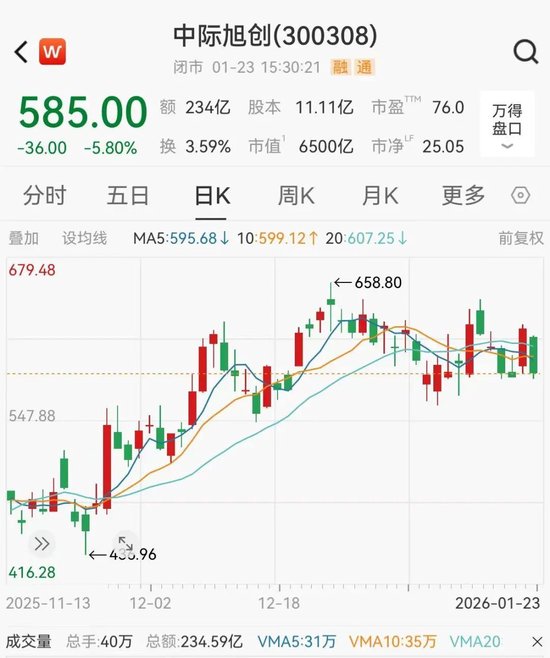
作者丨易妍君 编辑丨张星 机构最新统计数据显示,截至2025年4季度末,中际旭创代替宁德时代成为主动权益基金(包括主动股 票基金、偏股混合基金、灵活配置基金)第一大重仓股。 截至1月23日收盘,中 际旭创 股价报585元,总市值6500亿元。 公募主动权益基金第一大重仓股有了"新面孔"。 同时,主动权益基金第二大至第十大重仓股排序均较上一季度发生变化,如新易盛取代腾讯控股成为基 金第二大重仓股,紫金矿业从第八大重仓股晋级为第五大重仓股,寒武纪-U升为第七大重仓股;而宁 德时代、腾讯控股分别退为第三、第四大重仓股,中芯国际退出了前十大重仓股队列。 另外,主动权益基金在行业配置层面也有调整。据机构统计,2025年4季度,主动权益基金增配较多的 行业包括有色金属、通信、非银、化工、机械;主要减配了电子、医药生物、传媒、计算机、电力设备 等行业。 "从宏观角度看,市场资金在追求短期收益与长期战略配置之间寻求平衡,对行业发展前景与政策环境 的综合考量导致了资金流向的调整。"受访人士向21世纪经济报道记者指出。 重仓股排序更迭 截至2026年1月22日,公募基金2025年第4季度报告基本披露完毕,主动权益基金前十大重仓股 ...

威海监管分局同意平安产险乳山支公司变更营业场所
Jin Tou Wang· 2026-01-23 22:46
一、同意中国平安财产保险股份有限公司乳山支公司将营业场所变更为:"山东省威海市乳山市世纪大 道100号18楼1802、1803、1804、1805房屋"。 二、中国平安财产保险股份有限公司应按照有关规定及时办理变更及许可证换领事宜。 中国平安 中国平安-R 中国平安 分时图 日K线 周K线 月K线 63.90 -0.90 -1.39% 1.71% 1.14% 0.57% 0.00% 0.57% 1.14% 1.71% 63.69 64.06 64.43 64.80 65.17 65.54 65.91 09:30 10:30 11:30/13:00 14:00 15:00 0 99万 197万 296万 2026年1月22日,国家金融监督管理总局威海监管分局发布批复称,《关于中国平安(601318)财产保 险股份有限公司乳山支公司变更营业场所的请示》(平保产鲁分发〔2026〕7号)收悉。经审核,现批复 如下: ...

康养产业供给端创新成果不断涌现
Zheng Quan Ri Bao· 2026-01-23 16:25
Core Viewpoint - The health and wellness industry in China is transitioning towards a "proactive health" model, driven by increasing demand for chronic disease management and preventive care across all age groups, indicating a vast market potential [1][3]. Group 1: Industry Trends - The health and wellness industry is entering a "trillion-level, all-age, and integrated" development phase, with continuous innovation in products and services [1]. - The market size of the health and wellness industry reached 8 trillion yuan in 2023, with conservative estimates predicting it will grow to 9.5 trillion yuan by 2025 and nearly 15 trillion yuan by 2030 [3]. Group 2: Company Innovations - Shenzhen Beiyi Rehabilitation Hospital has introduced a medical-grade fitness gym that offers personalized exercise plans based on comprehensive medical assessments, integrating knowledge from various fields such as rehabilitation medicine and nutrition [1][2]. - Huawei's Qingtian brand has launched a "Smart Health Management Solution" that utilizes smart wearable devices to create a continuous health data flow, enhancing the management of health across all stages [2]. - Xiamen Songlin Technology Co., Ltd. is developing various business lines for health and wellness scenarios, including service robots and smart health monitoring systems [2]. Group 3: Challenges in the Industry - The health and wellness industry faces challenges such as a shortage of skilled professionals, including rehabilitation physicians and nursing staff, and the need for improved service processes and safety standards [4].
公募基金管理规模稳健扩张 10家跻身“万亿元俱乐部”
Zheng Quan Ri Bao· 2026-01-23 16:16
Group 1 - The public fund management industry demonstrated strong resilience, with a total asset management scale reaching a historical high of 37.64 trillion yuan by the end of 2025, an increase of approximately 1.85 trillion yuan from the end of the third quarter of 2025 [1] - Excluding money market funds, the public fund management scale was 22.67 trillion yuan in the fourth quarter of last year, reflecting a quarter-on-quarter growth of 0.62 trillion yuan, with equity funds (including QDII funds) at 10.38 trillion yuan, showing a slight increase of 0.03 trillion yuan [1] Group 2 - By the end of last year, 10 companies entered the "trillion yuan club," with E Fund and Huaxia Fund exceeding 2 trillion yuan in management scale, while several others managed between 1 trillion and 2 trillion yuan [2] - Excluding money market funds, only three companies had management scales exceeding 1 trillion yuan: E Fund, Huaxia Fund, and GF Fund, with only E Fund and Huaxia Fund surpassing 1 trillion yuan in equity fund scale [2] - The top five industries favored by public funds were technology, industrial, financial, transportation, and consumer sectors, with technology, industrial, and financial sectors each holding over 100 billion yuan in market value [2] Group 3 - Several fund companies expressed their market outlook, with a focus on the digital economy and financial technology as key long-term investment themes for 2026 [3] - The overall performance of the equity market was positive, particularly for technology stocks, with expectations that opportunities will outweigh risks in 2026 [3] - The public fund industry showed strong growth in the fourth quarter, contributing to the stability of the capital market and the real economy, while demonstrating professional asset management capabilities [3]
老登的哀嚎
Sou Hu Cai Jing· 2026-01-23 16:01
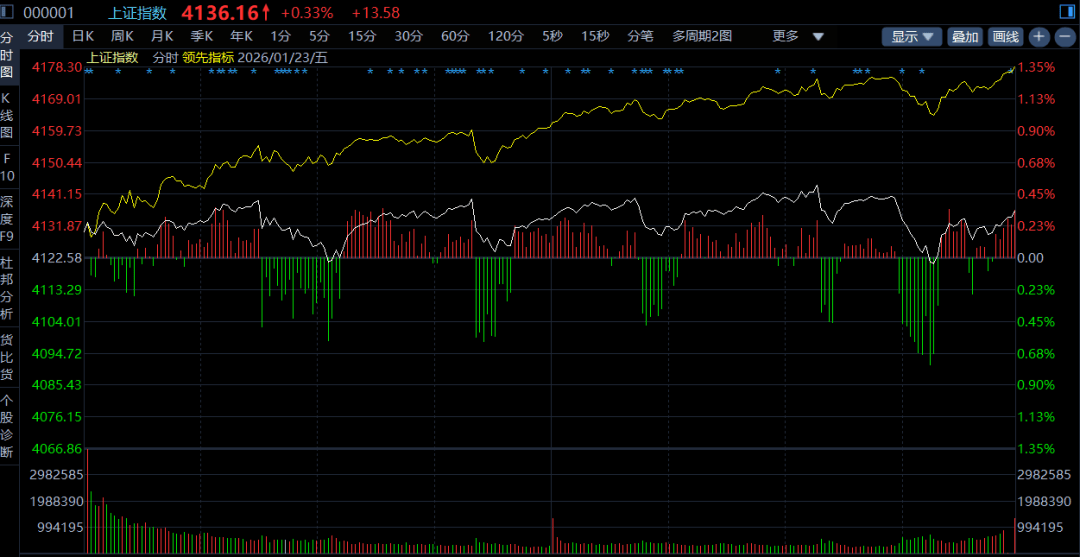
Core Viewpoint - The market is experiencing significant volatility due to the production team's systematic selling of broad-based ETFs, which is closely tied to the movements of the Shanghai Composite Index. This has created a pattern resembling an electrocardiogram, with repeated sell-offs and recoveries as the index fluctuates around a 0.45% threshold [1][3]. Group 1: Market Dynamics - The production team's selling strategy is causing some investors to react with caution, akin to conditioned reflexes, leading to a reluctance to buy when the index rises [3]. - Conversely, some investors are capitalizing on the situation by purchasing at lower prices after the production team's sell-offs, particularly in a strong market environment [3]. - The market has shown strong performance with a trading volume of 4 trillion, and the median index has risen by 0.90%, indicating robust activity despite the production team's interventions [3]. Group 2: Index Performance - Small-cap indices have performed well, while large-cap indices like the Shanghai 50 and CSI 300 have suffered, with the Shanghai 50 experiencing a nine-day decline [4]. - Notable stocks such as Moutai, China Yangtze Power, and China Mobile have been adversely affected, reflecting the broader struggles of the large-cap indices [4]. Group 3: Future Outlook - The production team has reportedly sold off about half of their ETF holdings, raising questions about the sustainability of their selling pressure in the coming weeks [5]. - Potential buyers of the sold ETFs include market makers and insurance companies, who may find value in the higher dividend yields of the depressed large-cap stocks [5]. - Three possible market scenarios are anticipated: continued index growth driven by small-cap stocks, a sideways consolidation leading up to the Lunar New Year, or a downward trend [6][7].
公募基金资金流向哪些行业?:主动权益基金2025 四季度持仓解析
ZHONGTAI SECURITIES· 2026-01-23 15:35
- The report does not contain any quantitative models or factors for analysis, as it primarily focuses on the analysis of active equity funds' holdings, preferences, and structural changes in Q4 2025[3][6][7] - The report provides detailed insights into the number, scale, and allocation preferences of active equity funds, including their industry and sectoral adjustments, but does not include any specific quantitative models or factor construction methodologies[3][6][7] - The analysis highlights the changes in fund holdings and preferences, such as increased allocation to cyclical and financial sectors and reduced allocation to technology and healthcare, but no quantitative models or factors are discussed[44][48][49]




中国保险 2026 年展望:寿险迎来历史性机遇;产险受益于持续监管红利-China Insurance 2026E Outlook Life Embarking on a Historic Opportunity PC Riding on Continued Regulatory Tailwinds
2026-01-23 15:35
Summary of the Conference Call Transcript on China Insurance Industry Overview - The report focuses on the **China Insurance** industry, specifically the **life insurance** and **property & casualty (P&C)** sectors, with an outlook for 2026E highlighting significant opportunities and challenges ahead [1][3]. Key Insights Life Insurance Sector - The life insurance sector is expected to experience **historic opportunities** due to a **wealth reallocation** as retail investors seek higher reinvestment yields from maturing bank deposits [3]. - **Margin stability** is anticipated, as a pricing rate reduction in September 2025 may counterbalance margin erosion from a shift towards participating policies [3]. - Preference is given to industry leaders such as **China Life** and **Ping An**, with expectations of a **K-shaped growth divergence** between larger and smaller insurers amid ongoing regulatory tightening [3]. Property & Casualty (P&C) Sector - The P&C sector is projected to achieve **4% industry premium growth**, with potential for further **cost of risk (CoR) enhancements** due to favorable regulatory conditions [3]. - Key factors contributing to this growth include: - **Expense rationalization** in non-auto lines - Strengthened regulatory oversight on auto insurance expense management - Gradual relaxation of pricing policies for new energy vehicles (NEVs) [3]. - **PICC P&C** is identified as the top player likely to deliver superior results, although the P&C sector is generally less favored in a bullish equity market [3]. Companies Mentioned - **China Life Insurance** (2628.HK; HK$31.72; 601628.SS; Rmb46.9) - **China Pacific Insurance** (2601.HK; HK$37.92; 601601.SS; Rmb43.1) - **China Taiping Insurance** (0966.HK; HK$23.0) - **New China Life** (1336.HK; HK$58.95; 601336.SS; Rmb77.83) - **PICC P&C** (2328.HK; HK$15.74) - **Ping An Insurance** (2318.HK; HK$66.9; 601318.SS; Rmb64.8) [4][5]. Additional Important Points - The report emphasizes the **regulatory environment** as a significant factor influencing both sectors, with ongoing oversight expected to shape market dynamics [3]. - The analysis suggests that investors should consider the **K-shaped growth** trend when making investment decisions, as larger firms may outperform smaller competitors due to their ability to adapt to regulatory changes [3]. - The report also highlights potential **conflicts of interest** due to Citigroup's business relationships with the companies mentioned, advising investors to take this into account when evaluating the report [4][9][10].
深圳三年后将步入老龄化?业内热议超大城市康复服务体系建设
Nan Fang Du Shi Bao· 2026-01-23 15:27
Group 1 - The core focus of the news is on the development of a comprehensive healthcare model by Beijing University Health Group, which is part of China Ping An's strategy to integrate finance, healthcare, and elderly care [1] - Beijing University Health Group aims to address pain points in the healthcare sector by creating a full-cycle service model that connects health management, medical services, and rehabilitation, shifting from passive treatment to proactive health management [1] - By 2025, the group anticipates that outpatient and emergency visits will exceed 3.2 million, with inpatient admissions increasing by 13%, and bed occupancy rates at Beijing International Hospital reaching 98% and at Beijing Rehabilitation Hospital reaching 115% [1] Group 2 - In Shenzhen, there is a significant shortage of rehabilitation beds, with a need for 60,000 beds according to international standards, while currently, there are fewer than 5,000, resulting in a shortfall of 55,000 beds [2] - Shenzhen's demographic is relatively young, with an average age of 32.5 years and a nearly 50% participation rate in sports, leading to a shift in rehabilitation needs towards sports injuries and chronic disease management [2] - The aging population in Shenzhen is projected to increase, with over 1.5 million residents aged 60 and above, expected to rise to 10% by 2029, which will further exacerbate the demand for rehabilitation services [3] Group 3 - The trend of Hong Kong residents seeking medical services in Shenzhen is increasing, with a new agreement allowing 21 hospitals in the Greater Bay Area to accept Hong Kong medical vouchers, presenting both challenges and opportunities for Shenzhen's healthcare system [3] - Shenzhen North Medical Rehabilitation Hospital is pioneering a comprehensive rehabilitation model that integrates multidisciplinary teams for physical recovery, psychological support, and advanced rehabilitation technologies, aiming to fill the regional bed shortage [3] - The "medical-insurance collaboration" model is gaining traction, with successful examples such as remote rehabilitation guidance for injury claims, which improves patient outcomes and reduces insurance payouts [4]
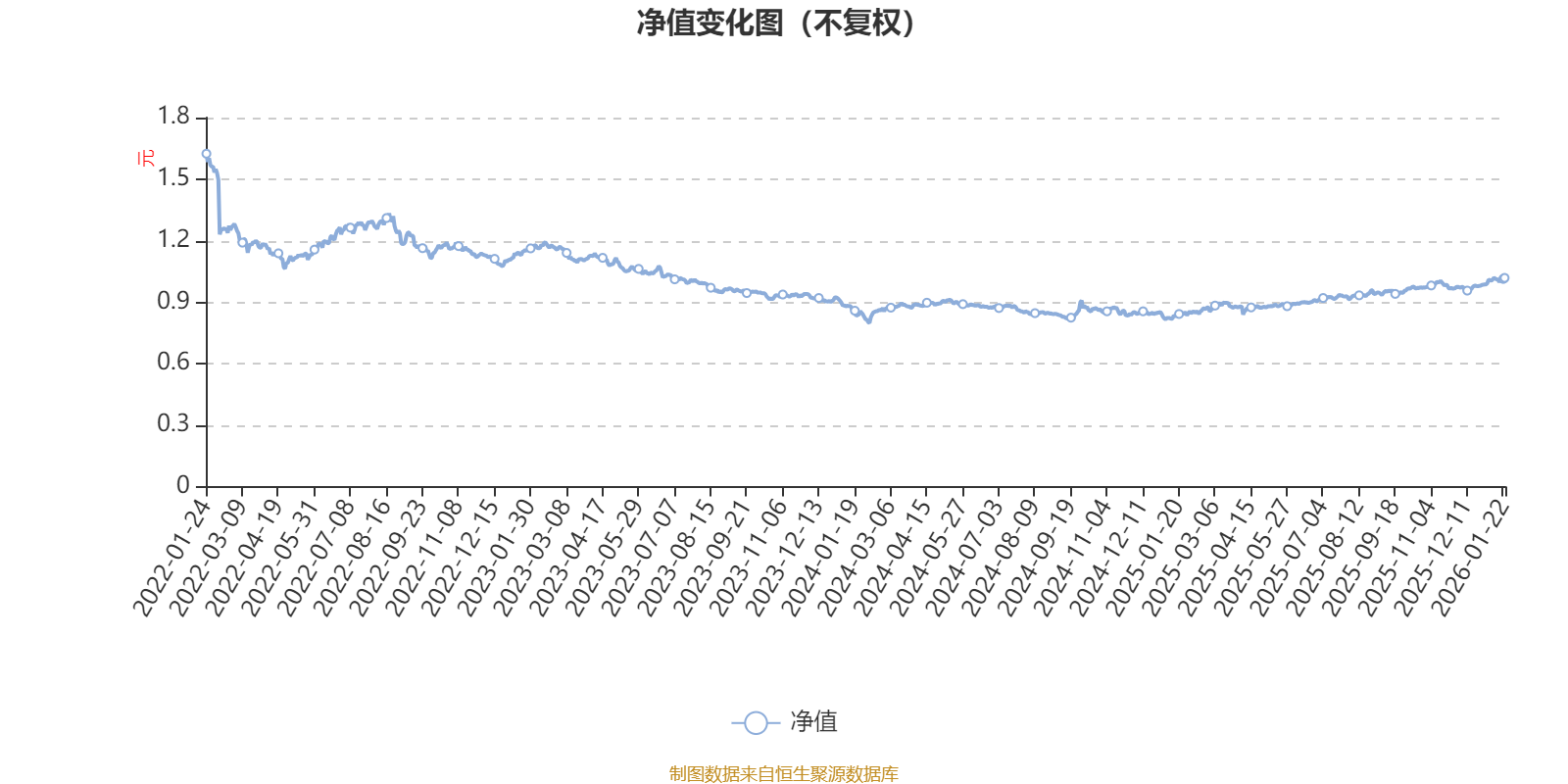
富国天成红利灵活配置混合:2025年第四季度利润1569.78万元 净值增长率2.96%
Sou Hu Cai Jing· 2026-01-23 15:26
Core Viewpoint - The report highlights the performance and strategy of the FuGuo TianCheng Dividend Flexible Allocation Mixed Fund (100029) for Q4 2025, indicating a profit of 15.6978 million yuan and a net asset value growth rate of 2.96% during the quarter [2]. Fund Performance - As of January 22, the fund's unit net value was 1.018 yuan, with a three-month return of 5.18%, a six-month return of 8.87%, a one-year return of 20.48%, and a three-year return of -9.89% [3]. - The fund's Sharpe ratio over the past three years was -0.0978, ranking 1212 out of 1275 comparable funds [9]. - The maximum drawdown over the past three years was 31.26%, with the largest single-quarter drawdown occurring in Q1 2022 at 21.54% [11]. Fund Strategy and Holdings - The fund manager noted a balanced allocation strategy in Q4 2025, with a focus on stable dividend stocks and gradual increases in low-valued sectors such as travel, chemicals, and consumer goods [2]. - The average stock position over the past three years was 70.1%, compared to the industry average of 72.57% [14]. - As of Q4 2025, the fund's top ten holdings included Ningbo Bank, China Ping An, China Shenhua, China Pacific Insurance, Wens Foodstuff Group, Shaanxi Coal and Chemical Industry, Ping An Bank, Baosteel, China Southern Airlines, and Guokai Tiancheng [18]. Fund Size - The fund's total size as of the end of Q4 2025 was 535 million yuan [15].
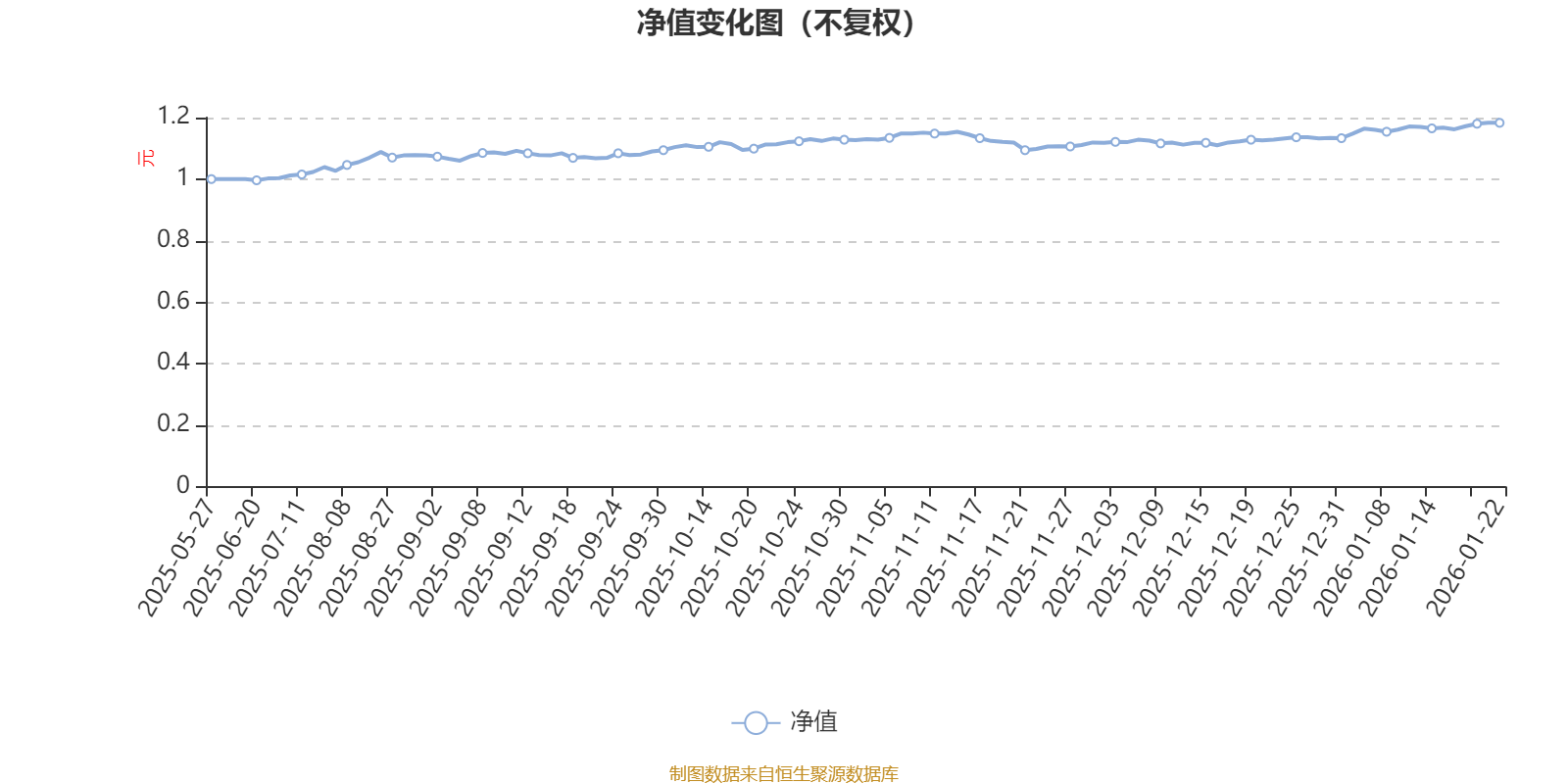
招商红利量化选股混合A:2025年第四季度利润612.81万元 净值增长率3.55%
Sou Hu Cai Jing· 2026-01-23 15:21
Group 1 - The core viewpoint of the article highlights the performance of the AI Fund, which reported a profit of 6.1281 million yuan in the fourth quarter of 2025, with a net value growth rate of 3.55% [3] - As of January 22, the fund's unit net value stands at 1.183 yuan, and the fund manager, Cai Zhen, oversees 13 funds [3] - The highest one-year return among the funds managed is 54.44% for the Zhaoshang CSI 1000 Enhanced Strategy ETF, while the lowest is 5.32% for Zhaoshang Anyang Bond A [3] Group 2 - The fund management indicated that the highest weight in their portfolio is in the banking sector, with a strategy to keep the allocation to the CSI Dividend Index below 3% [4] - The fund is currently overweight in the machinery and electronics sectors, while underweight in transportation and coal, based on growth potential considerations [4] - The top ten holdings of the fund as of the end of the fourth quarter of 2025 include BOE Technology Group, Sany Heavy Industry, Hikvision, Jiangsu Bank, Shanghai Bank, CRRC Corporation, Haier Smart Home, Ping An Insurance, Weichai Power, and Shanghai Rural Commercial Bank [4]