中国联通

Search documents
港股概念追踪 | 卫星物联网商用试验正式启动!千亿市场规模可期(附概念股)
智通财经网· 2025-11-23 23:23
Core Insights - The commercial trial of satellite IoT services in China has officially started, aiming to enhance the satellite communication market and support emerging industries like commercial space and low-altitude economy [1] - The satellite IoT business will create significant demand for satellite launches, driving growth in the satellite manufacturing and rocket launch sectors [1][2] - The satellite communication market in China is projected to exceed 80 billion yuan in 2023, with an expected annual growth rate of approximately 15% from 2024 to 2029, potentially reaching around 200 billion yuan by 2029 [2] Industry Developments - The satellite IoT trial is part of a broader strategy to optimize business access and promote the development of the satellite communication industry, aligning with technological innovation and industrial transformation [1] - The integration of satellite IoT is expected to revolutionize various sectors, including agriculture, energy, emergency communication, and low-altitude economy applications [2] - The satellite IoT will enable real-time tracking and data transmission for low-altitude vehicles, addressing communication gaps in the low-altitude economy [3] Company Activities - China Telecom is actively promoting satellite internet development and has achieved significant technological breakthroughs, enabling mobile devices to connect directly to satellites [4] - China Mobile has received a license to operate satellite mobile communication services, enhancing applications in emergency communication and remote area connectivity [5] - China Unicom has successfully launched low-orbit satellites that support narrowband IoT communication, marking a significant step in China's satellite IoT capabilities [5]



中国启动卫星物联网商用试验,低空经济与商业航天站上新风口
Di Yi Cai Jing· 2025-11-23 13:13
Group 1 - The core viewpoint is that the launch of satellite IoT commercial trials is a key link connecting commercial aerospace and low-altitude economy, aiming to enhance service capabilities and establish a regulatory framework for emerging industries [1][2] - The Ministry of Industry and Information Technology (MIIT) announced the official start of satellite IoT commercial trials, which will last for two years, to stimulate market vitality and support the healthy development of new industries [1][4] - Satellite IoT is expected to enable real-time tracking and data transmission for low-altitude vehicles, addressing communication gaps in the low-altitude economy and fostering deep integration between commercial aerospace and low-altitude sectors [2][3] Group 2 - The satellite IoT business connects various IoT devices through satellite communication technology, providing wide-area IoT connectivity in regions where terrestrial networks are unavailable [3][4] - The MIIT has proposed 19 specific measures to promote the development of the satellite communication industry, including organizing satellite IoT commercial trials and expanding market access for private enterprises [4][5] - Major telecommunications companies like China Telecom, China Mobile, and China Unicom are actively expanding their satellite communication services, enhancing applications in emergency communication and remote area connectivity [5][6] Group 3 - The integration of satellite IoT technology is expected to attract more capital and resources into the low-altitude sector, promoting collaborative development across various industry segments such as drone manufacturing and airspace management [3][5] - The commercial trials are anticipated to create opportunities for upstream and downstream enterprises in the satellite IoT industry chain, leading to a more complete industrial ecosystem [2][5] - The MIIT aims to enhance the synergy between industrial internet and artificial intelligence, promoting the development of smart manufacturing and digital infrastructure [6][7]
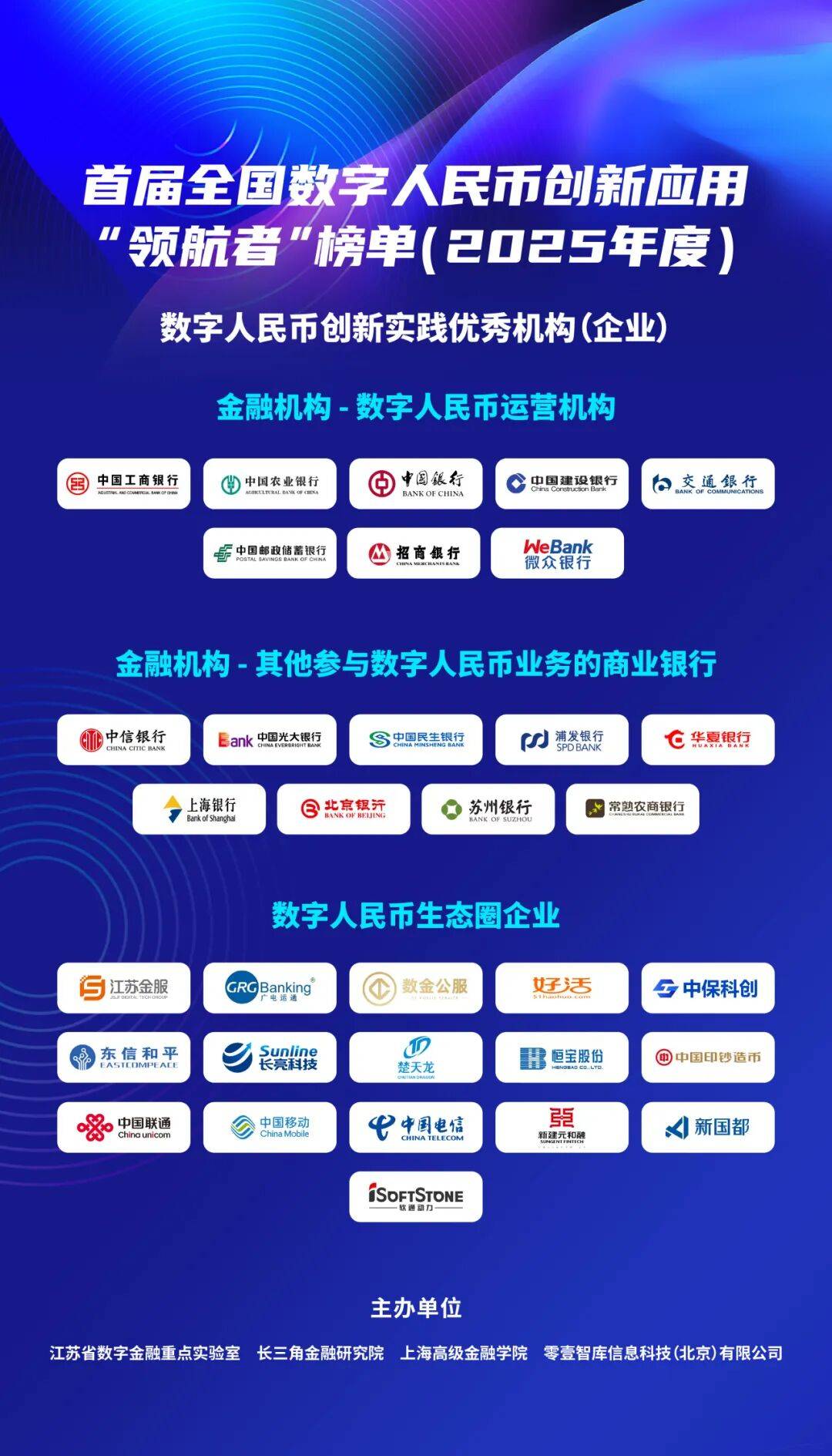
首届全国数字人民币创新应用“领航者”榜单(2025年度)揭晓!
Sou Hu Cai Jing· 2025-11-23 12:07
Core Insights - The "Pioneers" list for digital RMB innovation applications was officially announced at the Suzhou Digital Finance High-Quality Development Conference on November 20, 2023, showcasing significant advancements in the digital currency sector [1] Group 1: Event Overview - The event was co-hosted by the Jiangsu Provincial Digital Finance Key Laboratory, the Yangtze River Delta Financial Research Institute, Shanghai Advanced Institute of Finance, and Zero One Think Tank Information Technology (Beijing) Co., Ltd [1][11] - The selection process attracted numerous financial institutions and ecosystem enterprises from across the country, culminating in a comprehensive evaluation by experts [1] Group 2: Categories and Applications - The "Pioneers" list is divided into two main categories and six subfields, highlighting various innovative applications of digital RMB [1] - Notable applications include: - B-end scenarios such as cross-border payment applications using multi-central bank digital currency bridges and smart contracts for salary regulation in construction [5][6] - C-end scenarios featuring offline payment technologies for public transport and wealth management services [6][7] - G-end scenarios involving smart contracts for government procurement financing [9]


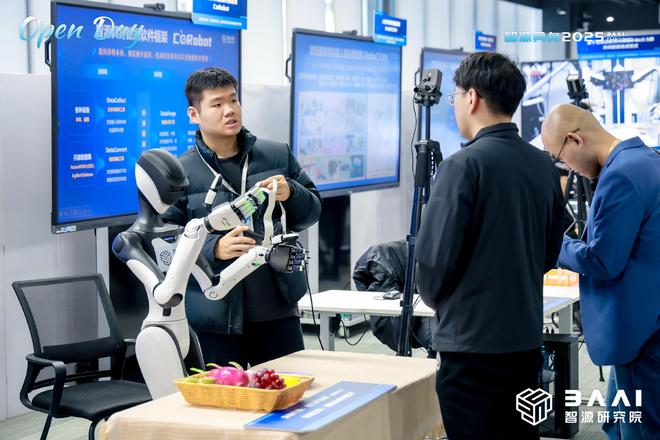
具身智能商业化大单“含金量”几何?从业者也看不明白
Nan Fang Du Shi Bao· 2025-11-23 05:50
Core Insights - The embodied intelligence robotics industry has seen significant commercial orders in the second half of this year, creating an optimistic outlook, but there are concerns about the authenticity of these orders and whether they address real problems [1][2] - Industry experts emphasize the need for companies to focus on genuine user demands and to refine specific scenarios to ensure sustainable demand and avoid potential market bubbles [1][2] Group 1: Industry Concerns - Questions have been raised about whether the current orders in the robotics sector are driven by real needs or merely by superficial demands, which could lead to a downturn if expectations are not met [1][2] - Experts suggest that government support should focus on policy guidance rather than directly creating demand, as true demand originates from businesses and users [1] Group 2: Technological Challenges - Despite the push for commercialization, the technology behind embodied intelligence remains immature, with companies facing challenges in both hardware and software development [3][4] - Hardware issues include overheating joints, low torque density, and limited computational power, which hinder the transition of robots into real industrial and domestic applications [4] - Software development is seen as a non-linear challenge, with uncertainties about when significant breakthroughs will occur, potentially taking years [4][5] Group 3: Data and Model Training - There is an ongoing debate in the industry regarding the importance of data quality versus quantity, with some companies advocating for high-quality real-world data while others emphasize the role of simulation data [5] - The high costs associated with training embodied intelligence models pose a significant barrier for many startups, leading them to seek partnerships with research institutions for support [5][6] Group 4: Future Outlook - Experts recommend that companies focus on developing specialized models for specific scenarios to achieve high accuracy and reliability before attempting broader applications [6] - The emphasis is on surviving potential market downturns to eventually reach a more advanced stage of embodied intelligence [6]
研判2025!中国量子科技行业发展历程、政策、市场规模、重点企业及前景展望:量子科技应用前景广阔,行业规模增长潜力巨大[图]
Chan Ye Xin Xi Wang· 2025-11-23 01:24
Core Insights - Quantum technology is a strategic emerging field crucial for national information security, experiencing rapid market growth under national strategic guidance, with China's market size projected to grow from 4.523 billion yuan in 2015 to 13.104 billion yuan in 2024, reflecting a compound annual growth rate of 12.55% [1][14] - Significant breakthroughs in quantum technology are anticipated globally in 2024, transitioning from theoretical research to practical applications, with advancements in quantum computing platforms and quantum communication systems [1][14] - The development of quantum technology is expected to drive the next technological revolution, providing new tools and perspectives for exploring the unknown [1][14] Industry Overview - Quantum technology integrates principles of quantum mechanics with information science, computing, and materials science, focusing on information acquisition, processing, and transmission through quantum effects [4][13] - The industry primarily encompasses three core areas: quantum computing, quantum communication, and quantum precision measurement [4][13] Industry Development History - The Chinese government has emphasized the importance of advancing quantum technology, with strategic planning and support increasing since 2020 [6][9] - Notable achievements include the successful development of the "Zu Chongzhi No. 3" quantum computing prototype in March 2025, positioning China among the global leaders in superconducting quantum computing [1][7] - Recent advancements include the establishment of a 300-kilometer quantum direct communication network, validating the feasibility of long-distance secure communication [1][7] Industry Policies - The Chinese government has prioritized quantum technology in its "14th Five-Year Plan," aiming to implement significant national projects in frontier fields like quantum information [9][10] - The upcoming "15th Five-Year Plan" is expected to further promote quantum technology as a new economic growth point, alongside other emerging industries [9][10] Industry Value Chain - The quantum technology industry chain includes upstream components and technology development, midstream core equipment and system development, and downstream applications across various sectors such as cloud computing, finance, and defense [10][11] Market Size and Trends - The global quantum technology market is projected to reach $8.02 billion in 2024, with a year-on-year growth of 10.77%, and is expected to grow to $11.93 billion by 2025 [13] - Quantum computing dominates the market, accounting for 64.92% of the total, with North America leading in technological breakthroughs and industry applications [13][14] Key Companies - Major players in the Chinese quantum technology sector include China Great Wall Technology Group, Keda Technology, State Grid Information Communication, and others, contributing to a diverse competitive landscape [2][16] - China Great Wall Technology has reported significant growth in its computing industry, achieving a revenue of 5.148 billion yuan in the first half of 2025, a year-on-year increase of 9.63% [16] - Wuhan Guangxun Technology focuses on optical electronic devices and has seen a substantial increase in revenue from its data and access business, growing by 149.16% year-on-year in the first half of 2025 [16][17] Future Development Trends - Quantum computing is expected to overcome hardware performance bottlenecks, enhancing stability and developing new quantum bit architectures [17] - Quantum communication aims to establish broader and faster quantum key distribution networks, facilitating the construction of a future quantum internet [18] - Quantum measurement technology is anticipated to achieve significant precision improvements, expanding its applications in various fields [19]




临平打造 国际人才“首站服务枢纽”
Mei Ri Shang Bao· 2025-11-22 22:22
Group 1 - The "FIND HZ" International Talent Port in Linping has officially opened, serving as an invitation to global talent and integrating various services for foreign experts [2] - The Digital Fashion Innovation Unit Partner Alliance has been established, including members such as Zhejiang Sci-Tech University and Zhejiang Yefuli Industrial Co., Ltd., creating a collaborative innovation network [1][2] - A graduate training base has been unveiled, implementing a "2 years university courses + 1 year enterprise practice" system to align talent cultivation with industry needs [1] Group 2 - The first digital fashion intellectual property empowerment center has been launched, utilizing blockchain technology for rapid rights confirmation of original designs and providing comprehensive services for infringement monitoring and rights protection [1] - The International Port offers 43 core services covering work, residency, innovation, entrepreneurship, and cultural life for foreign talent, establishing a primary service hub in Linping [2]
工信部部长:加快5G工厂建设,加强6G与工业融合的前瞻研究
Guan Cha Zhe Wang· 2025-11-22 09:58
Core Insights - The 2025 China 5G + Industrial Internet Conference opened in Wuhan, emphasizing the integration of the digital economy and the real economy as a key direction for industrial internet development [1][2][4] Group 1: Government Initiatives - The Ministry of Industry and Information Technology (MIIT) aims to promote high-quality development of the industrial internet, focusing on intelligent, green, and integrated approaches [2] - MIIT plans to implement actions that integrate industrial internet with artificial intelligence, optimize the industrial internet architecture, and enhance the "platform + intelligent body" services [2] - The conference highlighted the importance of new infrastructure, including the deployment of networks, platforms, and data security systems, to support industrial internet growth [2] Group 2: Regional Development - Hubei province is positioning itself as a leader in high-quality development driven by digital and intelligent technologies, with a focus on building a modern industrial system [4] - The province aims to accelerate the deployment of 5G-A and the research and validation of 6G technologies, establishing itself as a national demonstration zone for industrial internet innovation [4] - Hubei's strategy includes enhancing traditional industries through digital transformation and fostering emerging industries like quantum technology and brain-computer interfaces [4] Group 3: Conference Activities - The conference featured a showcase of "5G + Industrial Internet Innovation Achievements" and included keynote speeches from leaders of major telecommunications companies and banks [6] - MIIT launched a commercial trial for satellite IoT services, aimed at enriching the satellite communication market and supporting emerging industries [6] - Collaborative agreements were signed between Hubei government and major telecom companies, as well as a memorandum for regional cooperation among Jiangxi, Hubei, and Hunan provinces [6]

中国为什么没有人工智能泡沫论?
Sou Hu Cai Jing· 2025-11-22 05:45
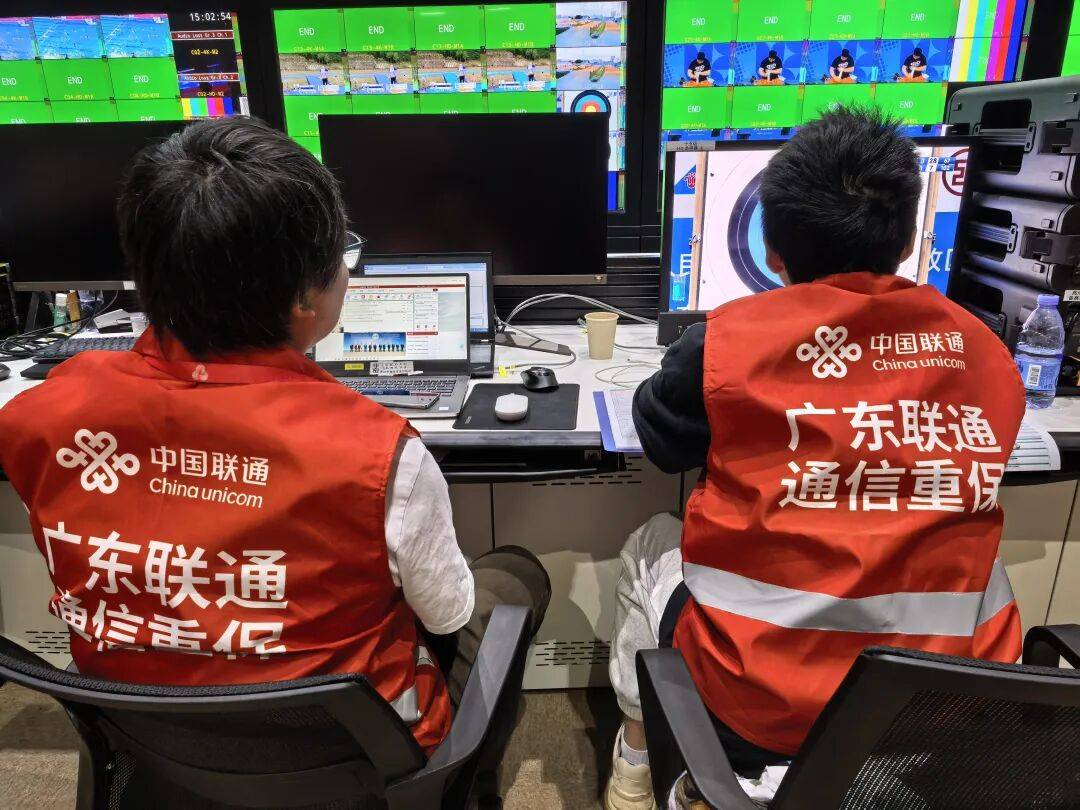
Core Viewpoint - The article discusses the contrasting perspectives on the artificial intelligence (AI) bubble in the United States and China, highlighting that while the U.S. faces skepticism and concerns about an AI bubble, China appears to be focused on practical applications and integration of AI into various sectors, minimizing the bubble discourse. Group 1: AI Bubble Concerns - In the U.S., there is a growing narrative around a serious AI bubble, especially following Nvidia's recent quarterly report which showed significant revenue growth but led to a sharp decline in stock price due to market skepticism about AI's sustainability [1] - Huang Renxun, CEO of Nvidia, expressed frustration that regardless of positive financial reports, the market questions Nvidia's role in the AI bubble, indicating a volatile perception of AI's future in the U.S. [1] Group 2: China's AI Development Model - China's approach to AI differs significantly from the U.S., with a focus on practical applications and collaboration between large internet companies and telecom operators like China Unicom, which actively participate in building AI infrastructure [2] - Chinese AI development emphasizes finding application scenarios and practical use cases from the outset, leading to a more grounded and less speculative environment compared to the U.S. [2][3] - Many AI computing centers in China have achieved a utilization rate of 70%, indicating effective deployment and integration of AI technologies into various industries [2] Group 3: Government and Industry Collaboration - The Chinese government plays a crucial role in promoting AI development by encouraging enterprises to focus on practical applications, which has led to a more comprehensive and integrated AI ecosystem [3] - Events like the recent sports competitions in China demonstrate the necessity of AI for managing large-scale operations, showcasing the immediate relevance and application of AI technologies in real-world scenarios [2]
中国5G+工业互联网大会武汉开幕
Zhong Guo Xin Wen Wang· 2025-11-22 05:43
中国5G+工业互联网大会作为中国"5G+工业互联网"领域国家级大会,已在武汉举办六届,成为推进中 国互联网技术创新与产业发展的重要平台。(完) (文章来源:中国新闻网) 据介绍,湖北数字经济发展强劲,规模总量突破3万亿元人民币。湖北已建成国家5G工厂101家,智能 网联汽车、智能制造、智慧港口等竞相出现。日前,全球首个智能体工厂落户湖北,全球首个天地一体 化智能遥感卫星系统和新一代北斗定位芯片等在湖北首发。 开幕式现场,湖北省政府与中国电信、中国移动、中国联通、中国信科、中国铁塔签署合作备忘录。江 西、湖北、湖南的工业和信息化主管部门签署长江中游城市群工业互联网产业区域协同发展合作备忘 录。 数据显示,中国5G基站总数达到470.5万个,建设超过2万张工业5G专网,国家级互联网骨干直联点和 新型互联网交换中心布局进一步完善。"5G+工业互联网"技术产品形成完整谱系,工业级5G网关、路由 器等产品款数占全球40%以上,模组成本较商用初期下降90%。 中新社武汉11月22日电 2025中国5G+工业互联网大会22日在武汉开幕,院士专家、行业翘楚和企业代表 聚焦5G、人工智能、大数据、工业互联网等前沿技术的深度融合 ...
2025中国5G+工业互联网大会在武汉开幕
Xin Lang Cai Jing· 2025-11-22 05:41
Core Viewpoint - The 2025 China 5G + Industrial Internet Conference was inaugurated in Wuhan, marking a significant step in the development of satellite IoT business trials, which will enhance the satellite communication market supply and support the growth of emerging industries such as commercial aerospace and low-altitude economy [1] Group 1 - The Ministry of Industry and Information Technology officially launched commercial trials for satellite IoT services during the conference [1] - The commercial trials aim to enrich the supply in the satellite communication market and support the safe and healthy development of new industries [1] - A cooperation memorandum was signed between the Hubei Provincial Government and major telecom companies including China Telecom, China Unicom, China Mobile, China Information Communication Technologies, and China Tower [1] Group 2 - The industrial and information technology departments of Jiangxi, Hubei, and Hunan provinces signed a memorandum for collaborative development of the industrial internet in the Yangtze River Middle Reaches urban agglomeration [1]