幻方量化

Search documents
都在等梁文锋
虎嗅APP· 2026-02-18 03:38
Core Viewpoint - The article discusses the competitive landscape of AI large models in China, highlighting the emergence of major players and the strategic moves of DeepSeek, led by Liang Wenfeng, amidst intense competition in the AI sector [4][19]. Group 1: Competitive Landscape - Major internet giants are aggressively competing to establish their AI large models as the primary traffic entry point, with significant cash incentives being offered to users [7][22]. - Companies like Tencent, Baidu, and Alibaba are investing heavily in user acquisition through cash giveaways, indicating a fierce battle for market share in AI applications [7][22]. - The release of new models by ByteDance and Alibaba demonstrates a coordinated competitive response, while DeepSeek appears to be taking a more subdued approach [9][10]. Group 2: DeepSeek's Position - DeepSeek, founded by Liang Wenfeng, gained recognition for its cost-effective AI model R1, which competes with top global models at a fraction of the cost [4][17]. - Despite speculation about the release of a new flagship model (V4), DeepSeek has maintained silence, opting for a quiet update that significantly increased its context window from 128K to 1M tokens [10][11]. - The company continues to recruit talent, indicating ongoing development and a commitment to innovation in AI technology [11][20]. Group 3: User Engagement and Market Strategy - DeepSeek is shifting focus towards understanding and addressing user needs, as evidenced by its recruitment for product management roles aimed at enhancing user experience [20][21]. - The competitive landscape is shifting towards meeting real user demands, with companies that can effectively solve user problems poised to dominate the AI market [24]. - The article emphasizes that the next decade of internet order will be defined by which companies can successfully engage users and leverage AI capabilities [24].


AI战事正酣,都在等梁文锋
3 6 Ke· 2026-02-15 03:45
Core Insights - The article discusses the competitive landscape of AI large models in China, highlighting the ambitions of major internet companies to dominate this space and the notable presence of DeepSeek, led by Liang Wenfeng, who previously made a significant impact with the release of their R1 model [2][4][12]. Group 1: Company Developments - DeepSeek, founded by Liang Wenfeng, gained recognition for its R1 model, which achieved top-tier performance at a fraction of the cost compared to competitors [12]. - Despite the competitive environment, DeepSeek has remained relatively quiet, with speculation about the release of their new model, V4, which is aimed at coding AI [6][12]. - On February 11, DeepSeek updated its model's context window from 128K tokens to 1M tokens, indicating ongoing development [6]. Group 2: Competitive Landscape - Major players like Tencent, Baidu, and Alibaba are aggressively promoting their AI products with substantial cash incentives, indicating a fierce competition for user engagement [4][15]. - ByteDance's new model, Doubao 2.0, and Alibaba's Qwen-Image 2.0 were launched around the same time, showcasing the rapid advancements in AI model capabilities [5][14]. - The competition is shifting towards understanding and addressing user needs, with companies focusing on enhancing user experience and engagement [14][17]. Group 3: Market Trends - The article suggests that the demand for AI applications in consumer markets is on the rise, with companies needing to address real user problems to establish themselves as key players in the AI era [16][17]. - The strategies employed by major companies, such as cash giveaways and user engagement initiatives, reflect a broader trend of cultivating user familiarity with AI technologies [15].

资管一线 | 头部量化私募“押注”AI,谁将定义行业新规则?
Zhong Guo Jin Rong Xin Xi Wang· 2026-02-14 08:32
Core Insights - The article highlights the increasing integration of AI technology within quantitative private equity firms, marking a significant shift in the industry towards a technology-driven competitive landscape [1][6]. Group 1: AI Developments in Quantitative Private Equity - The launch of the Apollo AI multi-agent system by Joy Investment aims to transform AI from a mere "auxiliary tool" to a "practical partner" within enterprises, focusing on task delivery, organizational collaboration, and governance [2][3]. - Joy Investment's Apollo AI system is designed to overcome the fragmentation of traditional AI tools, enabling stable integration of AI across various roles and business processes, thus creating a closed loop from problem identification to product realization [2][4]. Group 2: Industry Trends and Competitive Landscape - The convergence of quantitative investment and AI is seen as a natural fit due to the data-driven nature of quantitative strategies, which require high levels of automation in data processing, strategy backtesting, and risk analysis [3][6]. - Leading quantitative private equity firms, such as Huanfang Quantitative and Jiukun Investment, are also making significant strides in AI, with initiatives like open-source models and dedicated research platforms to enhance their technological capabilities [4][5]. Group 3: Talent and Resource Allocation - Ming Stone Fund emphasizes the importance of talent acquisition and technological implementation, actively recruiting AI scientists to drive innovation and application of AI in finance [5]. - The establishment of powerful computational infrastructure, such as the Supercomputing "Constellation Plan," is being pursued by Ming Stone Fund to support its AI initiatives [5]. Group 4: Future Outlook - The ongoing evolution of AI technology and increased investment from quantitative private equity firms are expected to yield new AI innovations, further embedding AI in the financial sector [7]. - The transformation of quantitative private equity firms into "AI-native technology companies" is anticipated, enhancing their capabilities in quantitative research while also contributing to the broader digital transformation of the financial industry [7].
都在等梁文锋:AI战事正酣梁文锋却静悄悄,有时候,越是平静,对手越是害怕
Xin Lang Cai Jing· 2026-02-14 07:13
Core Insights - The article discusses the intense competition among internet giants in the AI large model sector, highlighting the ambitions of companies to establish their AI applications as the primary traffic entry point [4][23] - DeepSeek, founded by Liang Wenfeng, emerged as a significant player in the AI landscape with its R1 model, which was launched at a surprisingly low cost, challenging the perception of high investment requirements for top-tier models [14][31] - Despite the competitive environment, DeepSeek has maintained a low profile, with recent updates suggesting a potential new model release, V4, but with no official confirmation [26][27] Industry Competition - Major companies are aggressively distributing cash incentives to attract users, with Tencent offering 1 billion yuan, Baidu 500 million yuan, and Alibaba 3 billion yuan, indicating a fierce battle for user engagement [25] - The launch of new models by ByteDance and Alibaba, including the 2.0 versions of their respective models, reflects a rapid evolution in AI capabilities and competition [8][25] - The article notes a peculiar competitive dynamic where companies are responding to each other's moves, creating a sense of mutual awareness in the market [8][25] DeepSeek's Position - DeepSeek's recent updates include an increase in context window length from 128K tokens to 1 million tokens, suggesting advancements in their technology [26] - The company continues to recruit talent despite a slowdown in hiring across the industry, indicating its commitment to innovation and development [27] - Liang Wenfeng's vision for DeepSeek is to lead in AI research and development, aiming to create a general-purpose AI that goes beyond existing models [31][32] User Engagement and Market Dynamics - The article emphasizes the importance of addressing user needs in the AI sector, with companies like DeepSeek beginning to focus on consumer-facing products [33] - The competition is framed as a quest to meet real user demands, which will determine the leading players in the AI landscape [36] - The article concludes that the current battle among internet giants is crucial for defining the next decade of internet order, highlighting the strategic significance of user engagement in AI applications [36]




都在等梁文锋
投资界· 2026-02-14 07:08
Core Viewpoint - The article discusses the intense competition among major internet companies in China to dominate the AI model application space, highlighting the strategic positioning of Deep Seek and its founder Liang Wenfeng as a significant player in this evolving landscape [2][4]. Group 1: AI Competition Landscape - Major internet giants are aggressively investing in user incentives, with Tencent distributing 1 billion yuan in cash red envelopes, Baidu offering 500 million yuan for promoting its Wenxin assistant, and Alibaba launching a 3 billion yuan campaign [4]. - The competition is characterized by rapid product releases, with ByteDance announcing its Doubao model 2.0 and Alibaba introducing its Qwen-Image 2.0 model, indicating a synchronized response among competitors [5][6]. Group 2: Deep Seek's Positioning - Deep Seek, founded by Liang Wenfeng, has maintained a low profile despite its significant achievements, including the release of the R1 model in early 2025, which matched top global models at a fraction of the cost [2][9]. - The company is rumored to be preparing to launch its next-generation model, V4, aimed at coding AI, but has remained silent on the exact timeline [6][10]. - Deep Seek's recent updates have increased its context window from 128K tokens to 1 million tokens, suggesting ongoing advancements in its technology [6]. Group 3: Liang Wenfeng's Background - Liang Wenfeng, born in 1985 in Guangdong, has a strong academic background in computer science and has been involved in AI and quantitative trading since his university days [7][8]. - He co-founded Hangzhou Huafang Technology, which became a significant player in quantitative trading, and later established Deep Seek to pursue general artificial intelligence [9]. Group 4: User-Centric Approach - Deep Seek is shifting its focus towards user experience and product innovation, as evidenced by its recent job postings aimed at enhancing C-end product functionality [10][11]. - The article emphasizes the importance of addressing real user needs in the AI sector, suggesting that the ability to solve genuine problems will determine the success of AI applications [11].

字节Seedance 2.0火了,海外博主锐评:一周前我还在看好可灵……
3 6 Ke· 2026-02-10 23:25
Core Insights - ByteDance has launched its AI video generation model Seedance 2.0, which has been described as a "game changer" in the industry, showcasing significant advancements in video generation capabilities [1][4][23]. Group 1: Product Development and Features - Seedance was initially developed as a text-to-video model in 2023, undergoing two years of internal testing before its public release in June 2025 [1]. - The model has undergone multiple updates, with three major versions (1.0, 1.0 pro, 1.5 pro, and 2.0) released in the last eight months, culminating in its current iteration, Seedance 2.0 [1]. - Seedance 2.0 is praised for its ability to generate complex multi-shot scenes with synchronized sound effects, music, and multilingual dialogue, earning it the title of "new king" in AI video models [4][9]. Group 2: Market Reception and Impact - The launch of Seedance 2.0 has generated significant buzz in both domestic and international markets, with notable creators and media outlets discussing its capabilities [4][6]. - Global media coverage has highlighted Seedance 2.0's role in establishing ByteDance as a key player in the global AI video market, with early users expressing high praise for its innovative features [9][14]. - The model has been compared favorably against competitors like OpenAI's Sora and Google's Veo, with reports indicating it surpasses them in video generation speed and narrative control [14][28]. Group 3: Competitive Landscape - The competitive landscape in AI video generation is intensifying, with other Chinese companies like Kuaishou also launching their models, such as Kling 3.0, which Seedance 2.0 has outperformed [14][30]. - Analysts believe that Seedance 2.0 could enhance ByteDance's valuation in the capital markets, reflecting its potential impact on the company's financial performance [14]. - The advancements in Seedance 2.0 signify a broader trend of Chinese tech companies leading in AI innovation, potentially reshaping the global technology landscape [30].
微信,给元宝“纠偏”
Sou Hu Cai Jing· 2026-02-05 22:46
Core Viewpoint - WeChat's decision to restrict the "Yuanbao" red envelope feature has sparked significant discussion on social media, highlighting the platform's commitment to user experience and its evolving business strategy [1][3][9] Group 1: WeChat's Strategy - WeChat is undergoing a transformation from a "technology-driven" model to a "user-driven" model, emphasizing user experience as a core principle [7][8] - The platform's evolution includes the integration of various features such as public accounts, mini-programs, and video accounts, which have created a complex ecosystem [7] - The restriction on Yuanbao links may serve as a strategic move to maintain user engagement and prevent the dilution of user experience [9][10] Group 2: Market Dynamics - The competitive landscape suggests that simply investing heavily in marketing, as seen with various tech companies, does not guarantee user retention or loyalty [11][12] - Historical context indicates that WeChat's success with the red envelope feature was rooted in its already strong user engagement, rather than just financial incentives [13][14] - The platform's ability to connect with 1.4 billion global users positions it as a fertile ground for AI development, requiring patience and strategic focus [15][17] Group 3: Future Outlook - The potential for AI within WeChat's ecosystem is significant, but it necessitates a strong commitment to enhancing user experience and product quality [14][18] - The narrative suggests that once the Yuanbao feature is adequately prepared, the value of WeChat as an AI platform will be fully realized [18]

私募大洗牌!量化称“王”,外资险资抄底入局!百亿只是入场券……
券商中国· 2026-02-03 23:34
Core Viewpoint - The private equity industry is at a significant turning point in 2025, with a shift from subjective strategies to quantitative strategies becoming the dominant force, alongside a notable increase in the number of firms managing over 500 billion yuan [1][2]. Group 1: Structural Changes - In 2025, the number of quantitative private equity firms surpassed subjective firms for the first time, marking a historic shift in the industry [2]. - By the end of 2025, the number of billion-yuan private equity managers rebounded to 112, close to the historical high of 117 in early 2022, with a total of nearly 19,000 products under management [2]. - As of January 23, 2026, the number of billion-yuan private equity firms reached 118, with 55 being quantitative, 48 subjective, and 12 mixed strategies [5]. Group 2: Performance and Trends - The average returns of billion-yuan quantitative private equity products showed positive growth in 2025, significantly outperforming subjective strategies [6]. - The rise of quantitative strategies is supported by improved market conditions, investor demand for stable returns, and advancements in technology [7]. Group 3: Head of the Pyramid - The first tier of private equity firms has expanded, with over 15 firms managing more than 500 billion yuan, including both quantitative and subjective strategies [8][11]. - The "billion" threshold remains, but its significance has changed, with top firms now requiring management capacities of 700 to 800 billion yuan to be considered competitive [11][12]. Group 4: Influx of Foreign and Insurance Capital - By early 2026, the number of billion-yuan foreign private equity firms increased to 2, and insurance capital firms to 3, indicating a shift in the competitive landscape [13][14]. - The entry of foreign and insurance capital is transforming the private equity ecosystem, moving from high volatility to a focus on long-term, stable returns [14]. Group 5: Future Outlook - The competition in the private equity industry is expected to evolve beyond mere scale, emphasizing the need for robust investment capabilities and diverse strategy systems [14]. - The transition to a quantitative-led era does not signify the end of subjective strategies but indicates a more rational and efficient market is forming [14].

量化“四大天王”、林园、杨东等明星私募都来抢……
Xin Lang Cai Jing· 2026-02-02 00:48
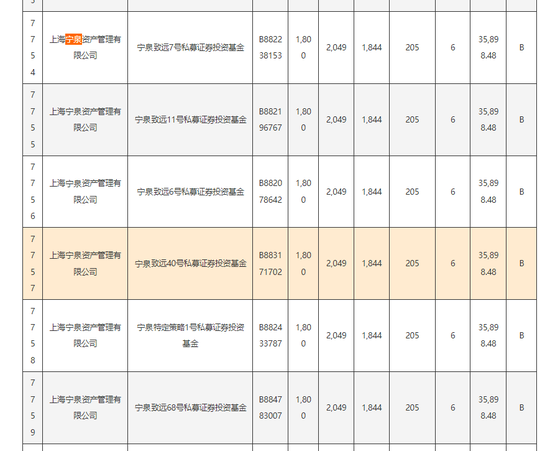
Core Viewpoint - The recent IPO of North Chip Life has attracted significant interest from well-known private equity firms, indicating a recovery in market sentiment and an increase in institutional participation in new stock subscriptions [1][10]. Group 1: Subscription Results - North Chip Life announced that the final strategic placement quantity was 11.4 million shares, accounting for 20% of the total issuance [2][11]. - After the adjustment mechanism was activated, the final offline issuance quantity was 31.92 million shares, representing 70% of the remaining shares after strategic placement [2][11]. - The online issuance quantity was 13.68 million shares, making up 30% of the remaining shares after strategic placement [2][11]. Group 2: Participation of Private Equity Firms - Notable private equity firms such as Mingyuan Investment, Huafang Quantitative, Jiukun Investment, Lingjun Investment, Linyuan Investment, and Ningquan Asset were included in the allocation list for North Chip Life [1][10]. - Ningquan Asset's products collectively received 30,700 shares, amounting to 538,500 yuan; Linyuan Investment's products received 4,416 shares, totaling 77,400 yuan; and Hainan Xiwa's products received 20,100 shares, totaling 353,000 yuan [3][12]. Group 3: Market Trends and Insights - As of January 30, 2026, a total of 159 private equity firms participated in the offline subscription of five newly listed stocks, with a total allocation of 15.76 million shares and a total investment amount of 338 million yuan [6][15]. - The most significant allocation was for Hengyun Chang, a leading domestic semiconductor equipment component company, with 1.236 million shares allocated, amounting to 11.4 million yuan [16][17]. - The increase in enthusiasm for new stock subscriptions is attributed to positive policy signals and a recovering market sentiment, with institutions generally optimistic about market performance in 2026 [7][19].
量化私募超额收益受追捧,逾七千亿元资金涌入量化,2025年全市场规模或超2万亿元
Hua Xia Shi Bao· 2026-01-29 11:52
Core Viewpoint - The domestic quantitative trading market in China is expected to reach a historical high of over 2 trillion yuan by 2025, despite regulatory constraints on frequency [2][3]. Group 1: Market Size and Growth - The domestic quantitative private equity management scale is projected to exceed 1.5 trillion yuan in 2025, with public funds managing over 400 billion yuan in quantitative assets, leading to a total market size surpassing 2 trillion yuan [2]. - Compared to the same period in 2024, the total scale of quantitative management is conservatively estimated to increase by 700 billion yuan, driven by significant returns of at least 50% for existing clients [2][3]. - By the end of Q3 2025, the public quantitative scale is expected to exceed 400 billion yuan, and the private quantitative management scale is around 1.49 trillion yuan, indicating a robust growth trajectory [3]. Group 2: Industry Trends and Strategies - The rapid growth of quantitative private equity is attributed to increased market efficiency, demand for stable returns, and the performance of quantitative strategies in volatile markets [3][4]. - Industry players are implementing measures to control scale, such as limiting fundraising and increasing investment thresholds, to balance strategy effectiveness and growth [4][5]. - The industry is anticipated to transition from "scale expansion" to "scale management" in 2026, focusing on strategy diversification to achieve sustainable excess returns [5]. Group 3: Performance and Returns - In 2025, the average return of nearly a thousand index-enhanced strategy products reached 45.08%, with an average excess return of 16.75%, showcasing strong alpha generation capabilities [6]. - The performance of small-cap index-enhanced products, particularly the CSI 1000 index, was notably strong, with average returns of 49.78% and a high percentage of positive excess return products [6][7]. - The high turnover rate and daily trading volume in the A-share market in 2025 are favorable for the performance of quantitative strategies [6]. Group 4: Investor Behavior and Risk Management - Despite proactive scale control by institutions, there is concern over investors' aggressive capital allocation due to high returns from quantitative strategies [6][8]. - Investment professionals emphasize the importance of guiding clients to understand the relationship between returns and risks, advocating for a long-term investment perspective [8]. - Recommendations include implementing mechanisms to reduce short-term redemption impacts and focusing on risk control to avoid excessive pursuit of short-term performance [8].