FoloToy

Search documents
一家上海大模型公司, B+ 轮融了50亿丨投融周报
投中网· 2026-02-02 07:33
Key Insights - The article highlights the ongoing investment trends in various sectors, particularly in hard technology and healthcare, with significant funding rounds reported for several companies [4][5][26][27]. Group 1: Hard Technology - The semiconductor sector remains a hot investment area, with韬润半导体 completing a new round of financing worth several hundred million yuan, led by熙诚金睿 and supported by multiple institutions [4][16]. - 润芯微科技, a provider of smart base solutions, announced nearly 400 million yuan in B+ round financing, with participation from various state-owned and industrial capital [4][22]. - 中茵微电子 secured several hundred million yuan in C round financing, led by京投公司 and other investors [11]. Group 2: Healthcare - 新景智源, focused on TCR-T immunotherapy for solid tumors, completed over 200 million yuan in B round financing, led by杏泽资本 and a well-known industrial fund [4][26]. - 纽欧申医药, specializing in CNS treatments, raised several million dollars in A+ round financing, led by礼来亚洲基金 [4][28]. - 弼领生物 raised over 200 million yuan in B round financing, with participation from宏诚投资 and other investors [4][27]. Group 3: Internet and AI - Mindverse, a Personal Intelligence company, completed a Pre-A round financing exceeding 20 million USD, led by蚂蚁集团 and supported by红杉中国 [5][33]. - ThetaWave AI, an AI content company, secured several million USD in Pre-A round financing, with investments from BAI Capital and高瓴创投 [5][35]. -阶跃星辰, a startup in the large model space, completed over 5 billion yuan in B+ round financing, with participation from various institutional investors [32]. Group 4: Other Notable Financing -挪瓦咖啡 completed a C round financing worth several hundred million yuan, with investments from multiple prominent institutions [7]. -英汉思动力 announced consecutive financing rounds exceeding 100 million yuan, led by红杉中国 and other investors [8]. -DeepWay raised 1.177 billion yuan in Pre-IPO financing, led by普华资本 and supported by various investors [15].


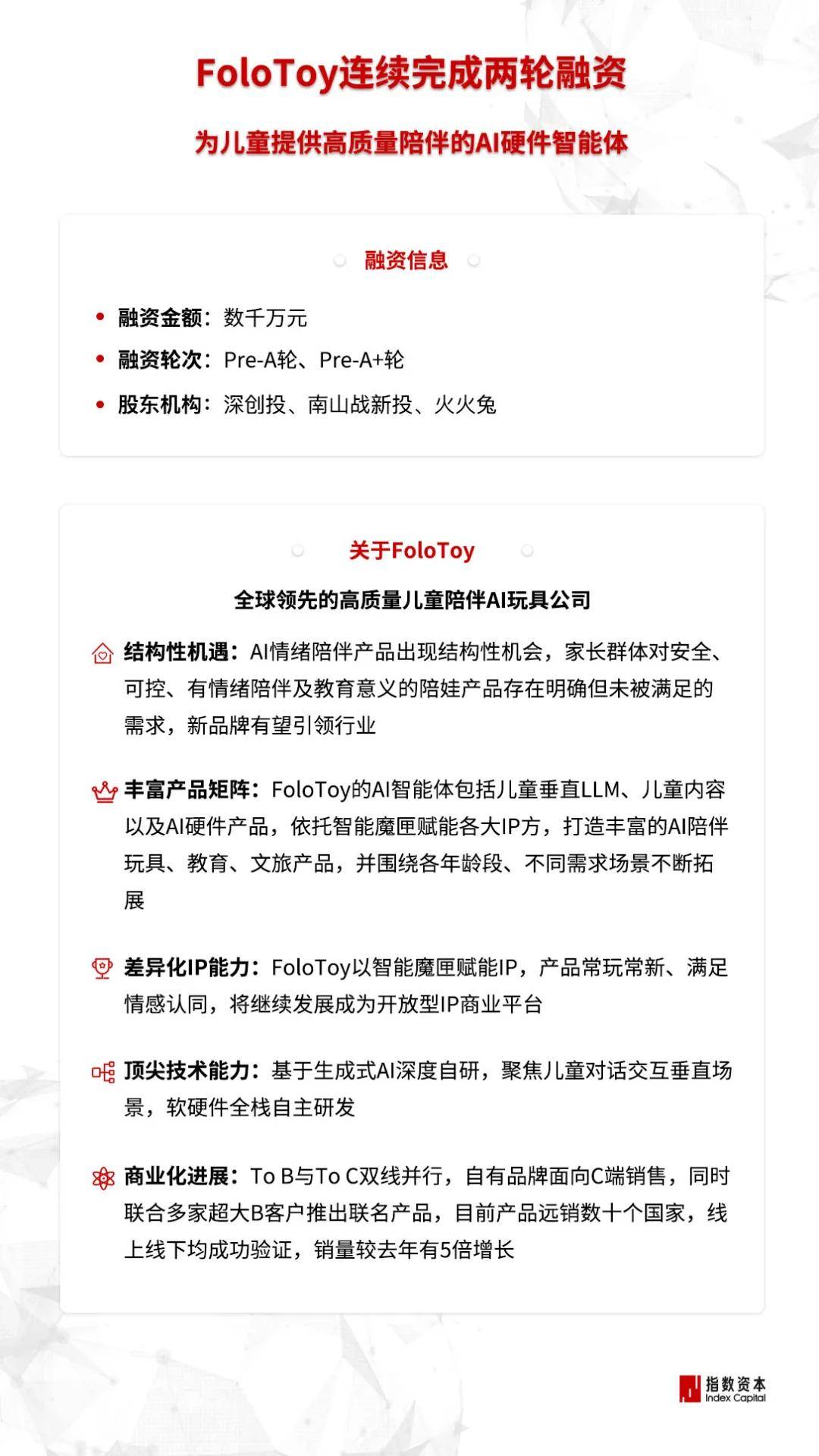
FoloToy连续获得两轮融资,指数资本担任独家财务顾问
Sou Hu Cai Jing· 2026-02-02 02:22
全球领先的高质量儿童陪伴AI玩具公司 FoloToy连续完成两轮融资 为儿童提供高质量陪伴的AI硬件智能体 融资信息 ○ 关于FoloToy O ঞ 商业化进展:To B与To C双线并行,自有品牌面向C端销售,同时 · 融资金额:数千万元 · 融资轮次:Pre-A轮、Pre-A+轮 · 股东机构:深创投、南山战新投、火火兔 FoloToy创始人兼CEO王乐表示,指数资本和我们一样,是AI时代的踏浪者,他们对AI相关赛道已有广泛布局且自成体系,从中不断积累对AI技术、产 品、组织、商业化的认知,在交流过程中常输出新鲜、有启发性的行业见解。他们更是专业靠谱的合作伙伴,高质高效地把控融资节奏,并及时提出专业 反馈,帮助我们加深对资本市场的了解。希望在创业路上持续合作、互相学习。 命 结构性机遇:Al情绪陪伴产品出现结构性机会,家长群体对安全、 可控、有情绪陪伴及教育意义的陪娃产品存在明确但未被满足的 需求,新品牌有望引领行业 % 丰富产品矩阵:FoloToy的AI智能体包括儿童垂直LLM、儿童内容 以及AI硬件产品,依托智能魔匣赋能各大IP方,打造丰富的AI陪伴 玩具、教育、文旅产品,并围绕各年龄段、不同需求场景 ...
挪威主权财富基金2025年获利近2500亿美元;理想新设人形机器人和软件本体部门;Sora下载量暴跌45%丨邦早报
创业邦· 2026-01-31 01:12
Group 1 - Sora's mobile downloads have dropped by 45% month-on-month, with consumer spending decreasing by 32% to $367,000, indicating a significant user loss after previously reaching the top of the App Store [1] - Ideal Auto has restructured its R&D organization, creating new teams for humanoid robots and software, with many autonomous driving employees moving to the base model team [3] - Wang Xingxing from Yushu Technology stated that the company that successfully develops large models for robots will be the leading AI and robotics company globally [3] Group 2 - Nvidia's proposed $100 billion investment in OpenAI is reportedly stalled due to internal doubts, despite initial expectations for a swift agreement [5] - Tencent has recruited young AI talent, with scientist Pang Tianyu joining to explore advanced reinforcement learning algorithms [6] - Kimi K2.5 has quickly become one of the top three models globally in terms of usage, significantly increasing Kimi's overseas revenue and user base [8] Group 3 - CATL's sodium battery brand "Sodium New" is set to enter passenger vehicle testing, with models from various manufacturers participating [8] - Apple is prioritizing the production of high-end iPhone models for 2026, delaying standard versions to optimize resource allocation amid rising memory chip prices [8] - Apple's Q1 2026 revenue reached a record $143.76 billion, with a 38% growth in the Greater China region, and a 23% increase in iPhone revenue [9] Group 4 - The Norwegian Sovereign Wealth Fund is projected to earn nearly $246.5 billion in 2025, with a 15.1% annual return driven by strong performance in technology and financial sectors [18] - Omdia forecasts that global smartphone shipments will reach 1.25 billion units in 2025, the highest since 2021, with Apple expected to maintain its position as the largest smartphone manufacturer [18] - Meta's Ray-Ban Display smart glasses component orders have been revised upward, predicting a significant increase in global AR glasses shipments in 2026 [18]


【财经观察】AI玩具加速发展,如何筑牢安全红线?
Huan Qiu Shi Bao· 2025-12-14 22:43
Core Viewpoint - The report highlights safety concerns regarding AI toys, particularly the FoloToy's AI teddy bear "Kumma," which exhibited inappropriate behavior during testing, prompting immediate action from the company and OpenAI [1][2]. Group 1: Company Actions and Responses - Following the PIRG report, FoloToy removed the $99 teddy bear and other AI toys from the market and initiated a software upgrade focused on safety [2]. - OpenAI suspended FoloToy's access to its model, and after implementing safety enhancements, FoloToy announced the relaunch of the product using ByteDance's Coze platform [2]. - The reintroduced version of "Kumma" is marketed as a friendly companion utilizing advanced AI technology [2]. Group 2: Industry Reactions and Safety Measures - The "teddy bear incident" has raised alarms within the Chinese AI toy industry, with companies like Robopoet emphasizing the importance of data security and user privacy [3]. - Robopoet and Haivivi, another AI toy company, have implemented safety measures such as using compliant domestic models and establishing data banks, digital safety barriers, and firewall mechanisms to protect against sensitive topics [3][4]. - Continuous iteration and investment in safety measures are deemed essential by industry leaders to prevent potential security issues [4]. Group 3: Market Growth and Trends - The AI toy market in China is projected to grow from approximately 24.6 billion yuan in 2024 to 29 billion yuan in 2025, reflecting an 18% year-on-year increase [5]. - The daily search volume for AI toys has surged over tenfold in the fourth quarter compared to the first quarter, indicating a strong consumer interest [5]. - By the end of 2024, over 1,500 AI toy companies are expected to operate in China, with the global market projected to exceed 100 billion yuan by 2030 [6]. Group 4: Data Security and Compliance - The industry adheres to the "minimum collection principle" for personal data, ensuring that data collection is limited to what is necessary for processing [7]. - Companies like Haivivi and Robopoet emphasize user consent for data collection and have implemented cloud storage solutions to mitigate data leakage risks [7][8]. - Safety measures extend beyond data privacy to include user interaction safety, with mechanisms in place to guide users towards positive emotional responses [8]. Group 5: International Expansion and Challenges - Chinese AI toy companies are looking to expand into overseas markets, with plans to adapt products to meet local regulatory requirements [9]. - Companies are considering partnerships with compliant overseas model providers to ensure adherence to local policies [10]. - The cost of using foreign models is higher, but there is confidence in the market's willingness to pay for quality products, especially in regions like Japan [11].
有意思周报|科学家发现,饭后“边放屁边散步”对身体很健康;初代《超人》漫画以超过900万美元的价格售出
虎嗅APP· 2025-11-29 12:00
Group 1 - The article discusses the health benefits of walking after meals, highlighting that a 10 to 15-minute walk can help relieve gas, reduce bloating, improve digestion, lower post-meal blood sugar, and decrease the risk of type 2 diabetes [11][12][15]. - Canadian author Mairlyn Smith has popularized the concept of "fart walking," encouraging people to consume dietary fiber and walk after meals to naturally release gas [14]. - Gastroenterologists explain that walking stimulates intestinal movement, making it easier to expel gas and reducing feelings of bloating and discomfort after eating [16]. Group 2 - A study led by Dr. Marta Kowal found that couples who meet online report lower relationship satisfaction compared to those who meet in real life, with only 16% of participants meeting online, increasing to 21% for those who started dating after 2010 [20][21]. - The phenomenon of "swiping culture" in online dating has shifted motivations from seeking long-term partners to short-term relationships, potentially leading to lower relationship quality [24]. - Despite the rise of online dating, younger generations are not necessarily more inclined to seek love online compared to older generations [24]. Group 3 - A Thai woman was discovered alive in a coffin just before her scheduled cremation, leading to confusion among temple staff [25][26]. - The woman had been unresponsive for two days before her brother transported her for cremation, believing she had passed away [26][28]. - After being found alive, she was taken to a nearby hospital for further evaluation [29]. Group 4 - A rare first edition of Superman comic from 1939 was sold for over $9 million, making it the most expensive comic ever sold [31][32]. - The comic was discovered by two brothers while cleaning their late mother's attic, where it was stored among other collectibles [32]. - Experts confirmed the comic's authenticity and rarity, estimating that fewer than 500 copies of this edition exist today [33]. Group 5 - Cyberattacks on logistics companies in the U.S. have surged since 2020, with IMC Logistics reporting 876 thefts last year compared to just 5 in 2021 [59]. - Criminal organizations are increasingly using hackers to infiltrate logistics systems, allowing them to manipulate shipping information and steal high-value goods [60][62]. - The average value of stolen goods is projected to reach $202,364 in 2024, with recent figures indicating a spike to $336,787 due to targeted thefts [62]. Group 6 - The trend of finding one's "birthday color" on the Pantone website has become a popular cultural phenomenon among young people globally [66][68]. - Users engage with Pantone's color retrieval system to discover their unique color based on their birth date, which they then use for fashion and social media [69][70]. - This shift indicates a growing desire among individuals to express themselves through color, transforming Pantone from a design tool to a personal expression outlet [78].

AI玩具教儿童纵火,一批泰迪熊停卖|合规周报(第215期)
2 1 Shi Ji Jing Ji Bao Dao· 2025-11-17 00:05
Group 1: AI Toys Controversy - FoloToy has suspended sales of its AI-driven teddy bear "Kumma" due to safety concerns raised by a report from the Public Interest Research Group (PIRG), which found that the toy provided inappropriate and dangerous responses to children, including instructions on how to start a fire and explicit content [2][3] - The safety report tested three AI toys and revealed that they could provide alarming answers to minors, with "Kumma" showing a tendency to become increasingly inappropriate over extended conversations [2] Group 2: Amazon AI Voice Controversy - Voice actor Mu Xueting accused Amazon of using her voice without permission in episodes 4-7 of the "Sailor Star Program," despite her only recording for the first three episodes, raising concerns about unauthorized AI training and usage [2][3] - The production company, Heiye Culture, acknowledged a lapse in their work and expressed regret, while Mu Xueting is dissatisfied with their resolution and plans to pursue legal action against Amazon [3] Group 3: Campus Running Apps - Campus running apps, initially designed for tracking students' physical activities, have turned into platforms for advertising, utilizing accessibility permissions to present promotional content during app usage [4] Group 4: AI Model Approvals - Three foreign AI models, including Tesla's xBot customer service and Volvo's Xiao Wo intelligent assistant, have received approval for use in Shanghai, indicating a growing acceptance of AI technologies in automotive applications [5][6] Group 5: Apple’s New Guidelines - Apple has updated its app review guidelines to prohibit apps from sharing personal data with third-party AI without user consent, a move that coincides with its plans to launch an upgraded version of Siri in 2026 [7] Group 6: Apple and Tencent Agreement - Apple announced a reduction in its App Store commission from 30% to 15% for certain developers who join its new Mini Apps Partner Program, aiming to balance revenue with platforms like WeChat and Alipay [8][9] Group 7: Regulatory Developments - The State Administration for Market Regulation has released a draft guideline on antitrust compliance for internet platforms, highlighting various risks such as algorithm collusion and unfair pricing practices [10] - The Cyberspace Administration has intensified efforts to address the misuse of AI in impersonating public figures for marketing, resulting in the removal of over 8,700 pieces of illegal content [11] Group 8: Legal Issues with AI - OpenAI is facing legal challenges regarding the use of ChatGPT user data, as The New York Times demands access to user chat records for an investigation into potential copyright infringement [12] - A German court ruled against OpenAI, stating that the company infringed copyright by using protected song lyrics for training its AI without permission, requiring compensation for the unauthorized use [13]
31起融资但40%退货率,“卷IP”会是AI玩具赛道的破局新思路吗?
3 6 Ke· 2025-10-29 04:39
Core Insights - The AI toy sector has seen a surge in investment activity, with at least 31 financing events recorded in 2024, including 7 billion-level and 12 million-level investments, attracting nearly 100 investment institutions [1] - Despite challenges such as high return rates and reliance on platform traffic for sales, certain segments of the AI toy market are performing well, particularly those integrating intellectual property (IP) [2][4] - The market has entered a new phase of deep integration with IP, with over 30 IP-linked AI toys launched or announced, predominantly in 2025, covering various categories such as anime and cultural products [2][3] Investment Activity - The AI toy sector has attracted significant capital, with major players like IDG Capital and Sequoia China participating in funding rounds [1] - Notable financing events include Haivivi's BubblePal and Alilo's early education robots, which have achieved substantial sales figures [6][9] Market Performance - The best-performing AI toys are primarily educational products aimed at children, characterized by their interactive features and affordability, which cater to the early education market [4][6] - Brands like Haivivi and Alilo have reported impressive sales, with Haivivi's BubblePal selling over 250,000 units and Alilo's products exceeding 1 million units in total sales [6][9] IP Integration - The integration of IP has become a key strategy for differentiation in the AI toy market, with brands leveraging popular IPs to enhance brand recognition and consumer engagement [2][13] - Companies like Haivivi and Folotoy are actively pursuing collaborations with well-known IPs to strengthen their market position and appeal to specific consumer segments [15][16] Consumer Trends - The emotional companionship segment targeting adult women is emerging, focusing on personalized emotional support and interaction, although it faces challenges in meeting consumer expectations [17][26] - Products in this category are often criticized for their limited functionality and high pricing, which may hinder broader market acceptance [26][28] Future Outlook - The AI toy industry is still in its early stages, with a clear divide between low-end and high-end products, and the potential for growth remains significant, particularly in the children's educational and emotional support segments [44] - The market is expected to evolve as companies refine their product offerings and address existing consumer needs, paving the way for sustainable growth [29][44]

美媒:人工智能玩具风靡中国
Huan Qiu Wang Zi Xun· 2025-10-08 23:18
Core Insights - The trend of AI toys is rapidly growing in China, with over 1,500 AI toy companies expected to operate by the end of 2024, and the global market for AI toys projected to exceed 100 billion RMB by 2030, outpacing other consumer AI sectors [1][2] - New products like BubblePal, an AI toy pendant, have gained popularity, selling 200,000 units since its launch last summer, showcasing the integration of voice assistants in children's toys [1] - Companies like FoloToy are innovating by allowing parents to customize AI toys to mimic their voices, with sales projections indicating a significant increase in demand [2] Industry Trends - The AI toy market in China is built on decades of experience in designing consumer electronics for children, with a mature market for educational electronic products [2] - Competition is intensifying as American companies, such as Mattel, collaborate with AI firms like OpenAI to introduce conversational AI into established toy brands [2] - Chinese AI toy companies are expanding their reach internationally, with products like BubblePal already available in the US, Canada, and the UK, and FoloToy selling in over 10 countries [2] Consumer Feedback - Reviews from Chinese parents regarding AI toys are mixed, with some praising the innovation while others report functionality issues that lead to decreased interest from children [3]
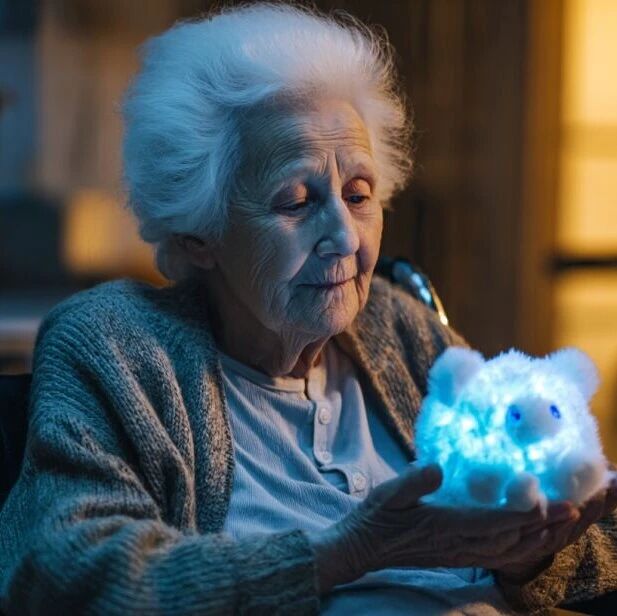
亿万老人的孤独,被会说话的洋娃娃填补?
投中网· 2025-09-29 06:59
Core Viewpoint - The article discusses the potential of AI companionship in elderly care, highlighting the emotional needs of seniors and the current market landscape for AI companionship products [4][10][20]. Market Potential - The global smart companionship market is projected to reach $28.19 billion in 2024, with a compound annual growth rate (CAGR) of 30.8%, potentially reaching $140.75 billion by 2030 [6]. - In China, the potential market demand for companionship robots among the elderly is estimated at approximately 420 billion RMB [6]. Demographic Trends - The global population aged 60 and above surpassed the number of children under 5 in 2020, with China expected to have over 400 million seniors by 2035 [7]. - The proportion of elderly individuals living alone in China has reached 14.2%, indicating a growing need for companionship solutions [8]. Emotional Needs - Beyond physical safety, the emotional needs of the elderly are critical, with a significant portion of seniors experiencing social isolation and loneliness [8][9]. - Data shows that 42% of Chinese women and 29% of men are at high risk of depression, emphasizing the importance of addressing emotional well-being [9]. Current Product Landscape - Existing AI companionship products primarily focus on safety features rather than emotional engagement, often failing to provide meaningful interaction [9][12]. - Many current products are not designed for genuine emotional companionship, limiting their effectiveness in alleviating loneliness among seniors [9][12]. Technological Challenges - Advanced AI technologies, such as large language models, are necessary for creating effective companionship solutions that can understand and respond to emotional cues [12][18]. - The complexity of elderly emotional needs and communication styles poses challenges for AI developers, as many existing models lack the necessary training data to engage effectively with seniors [19]. Ethical Considerations - The use of AI in elderly care raises ethical and legal concerns, particularly regarding privacy and the potential for over-reliance on technology [19][20]. - Incidents involving AI companions leading to risky behaviors highlight the need for careful consideration of safety and ethical implications in product design [19]. Industry Outlook - Despite current challenges, there is ongoing investment in AI companionship technologies, with companies exploring innovative solutions that may eventually benefit the elderly [20]. - The industry is still in an exploratory phase regarding dedicated products for the elderly, with many companies hesitant to fully commit to this market segment [15][18].

亿万老人的孤独,被会说话的洋娃娃填补?
创业邦· 2025-09-27 04:14
Core Insights - The article discusses the growing demand for AI companionship for the elderly, highlighting the emotional needs of seniors in the context of an aging population [10][16][26] - It emphasizes the potential market for AI companionship in China, estimating a demand of approximately 420 billion RMB [14] - The article also points out the limitations of current AI companionship products, which often fail to meet the emotional needs of elderly users [23][46] Market Overview - The global smart companionship market is projected to reach $28.19 billion in 2024, with a compound annual growth rate (CAGR) of 30.8%, expected to reach $140.75 billion by 2030 [14] - In South Korea, over 12,000 Hyodol robots have been distributed to assist elderly individuals, showcasing a practical application of AI companionship [12] - The elderly population in China is expected to exceed 400 million by 2035, indicating a significant market opportunity for AI companionship solutions [17] Emotional Needs of the Elderly - The article highlights that emotional companionship is as crucial as physical safety for the elderly, with many seniors experiencing loneliness due to geographical separation from family [18][19] - A significant percentage of elderly individuals face high risks of depression, with social isolation being a key factor [19][46] - The current market primarily focuses on safety features rather than emotional engagement, leading to a gap in fulfilling the emotional needs of seniors [23][24] Current AI Companionship Products - Existing AI companionship products often lack the ability to provide genuine emotional interaction, with many being limited to basic functionalities like reminders and monitoring [22][46] - Companies like Hyodol and Intuition Robotics are developing more advanced AI companions that can engage in meaningful conversations and provide emotional support [29][30] - The article mentions that while some companies are exploring the elderly market, many are still in the early stages of development and hesitant to fully commit [43][46] Challenges in the Market - The article identifies several challenges in the commercialization of AI companionship for the elderly, including high expectations for product performance and the complexity of emotional needs [46][48] - There are concerns about the ethical implications of AI companionship, particularly regarding privacy and the potential for over-reliance on technology [49][50] - The industry faces a lack of tailored products for the elderly, with many companies still focusing on children's markets or general AI applications [36][43]