
IMF

Search documents
Is A Stock Market Crash In Sight? Insiders Are Bailing At The Fastest Pace Since 2021 - Invesco QQQ Trust, Series 1 (NASDAQ:QQQ), State Street SPDR S&P 500 ETF Trust (ARCA:SPY)
Benzinga· 2026-02-02 13:46
Core Insights - The U.S. stock market has experienced significant growth over the past three years, but corporate insiders are now selling at a rate not seen since the last major market peak [1][2] - The sell-to-buy ratio for corporate insider selling has reached its highest level in five years, indicating a trend of profit-taking among executives [2] - Major institutions and analysts are expressing caution regarding the sustainability of the market rally, particularly in light of high valuations and concentration in AI-linked stocks [3][4] Corporate Insider Activity - Corporate insiders are capitalizing on high valuations, with the current sell-to-buy ratio being the highest in five years, reminiscent of the pre-bear market selling in 2021 [2] - The aggressive selling by insiders coincides with a significant rally in the S&P 500, which rose 23.3% in 2024, 16% in 2025, and 1.4% in January 2026, pushing the index above 7,000 for the first time [2] Market Valuation Concerns - The International Monetary Fund (IMF) has warned that elevated stock valuations are increasing the risk of disorderly corrections, particularly for U.S. equities linked to AI [3] - Fidelity International's January 2026 market outlook noted that high valuations and index concentration have led to profit-taking and increased volatility across various sectors [4] Overall Market Sentiment - The combination of aggressive insider selling and warnings from global institutions suggests a growing concern about stretched valuations and the potential for market corrections [5] - While the market rally may continue, the behavior of insiders indicates a cautious sentiment among those closest to the financial data [6]


美国强掳马杜罗、觊觎格陵兰,为美元霸权“续命”!
Mei Ri Jing Ji Xin Wen· 2026-01-10 09:23
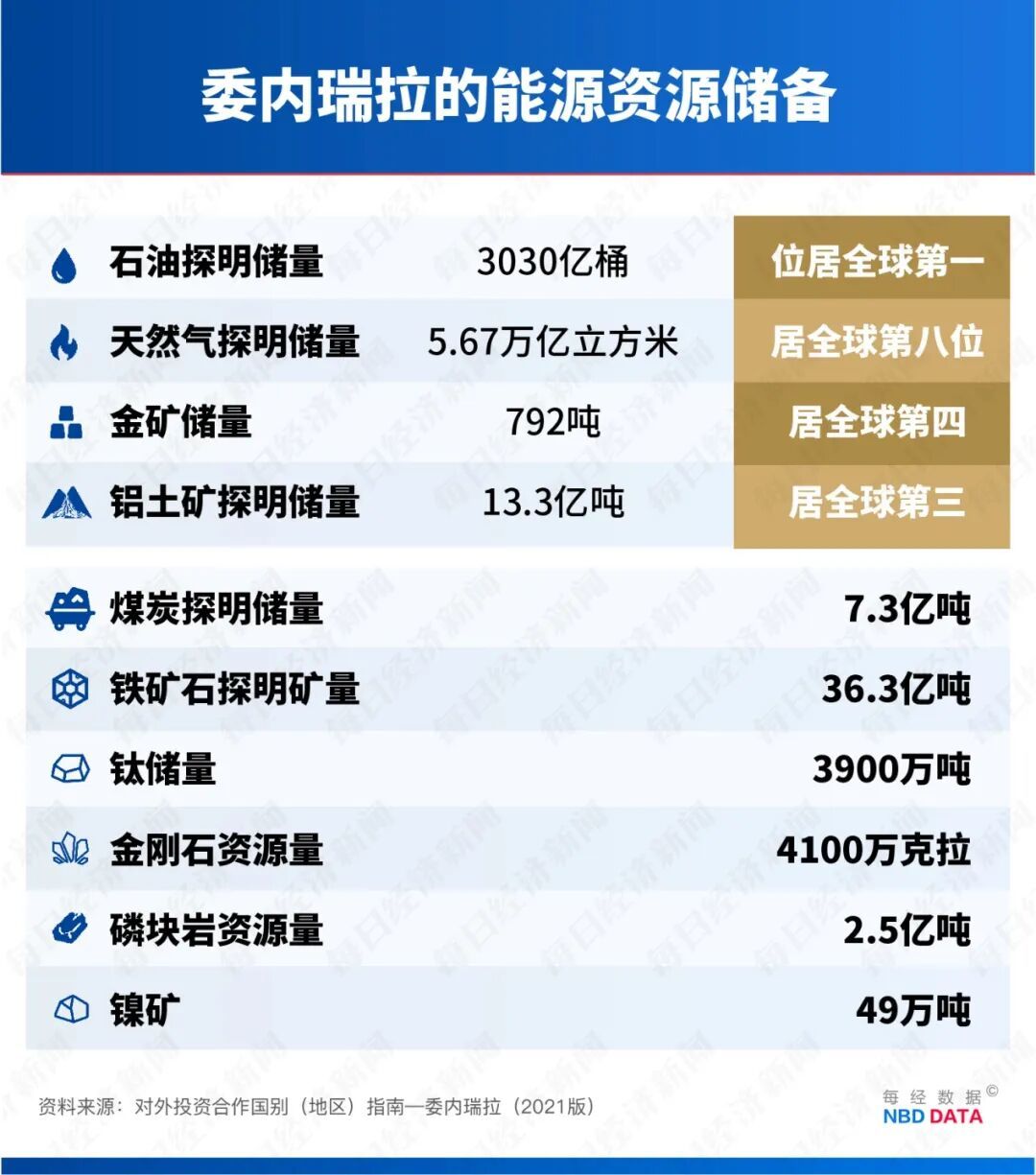
Group 1 - The U.S. government is attempting to exert control over Venezuela's oil resources and Greenland's rare earth minerals, with plans to invest $100 billion in Venezuela's oil industry [1][4][5] - Approximately 20% of global oil trade is now conducted without using the U.S. dollar, indicating a significant decline in the dollar's dominance in oil transactions [1][22] - The U.S. is facing a dual challenge of diminishing dollar hegemony and a national debt exceeding $38 trillion, prompting aggressive resource acquisition strategies [1][26] Group 2 - Venezuela has proven oil reserves of 303 billion barrels, making it the country with the largest oil reserves globally, which aligns with U.S. energy needs [6][9] - Greenland is home to 1.5 million tons of rare earth elements and various strategic minerals, making it a target for U.S. resource control efforts [10][12] - The U.S. aims to secure energy and resource dominance as a means to stabilize the dollar and U.S. Treasury bond attractiveness, which has been declining [25][28] Group 3 - The U.S. Secretary of State has prioritized energy and resource dominance in foreign policy, reflecting the strategic importance of these resources [3] - The U.S. plans to control the sale of Venezuelan oil and has stated that it will begin extracting and selling up to 50 million barrels of oil from Venezuela [5][19] - The U.S. is exploring various options to acquire Greenland, including financial purchase and military intervention, highlighting its strategic importance [10][18]
财政主导风险加大!耶伦警告低利率或让美国沦为“香蕉共和国”!
Sou Hu Cai Jing· 2026-01-08 06:56
Core Viewpoint - Janet Yellen warns of increasing risks associated with "fiscal dominance" in the U.S. economy, suggesting that the Federal Reserve's independence may be compromised, leading to potential capital flight, currency pressure, and rising long-term interest rates, which could result in the U.S. losing its dollar pricing power and becoming akin to a "banana republic" [1][10] Group 1: Fiscal Dominance Characteristics - Fiscal dominance occurs when fiscal policy overrides traditional boundaries, forcing monetary policy to serve fiscal objectives, which is a dangerous signal for Western economies but less problematic for Eastern models [1][3] - The U.S. is showing clear signs of fiscal dominance, with the government pressuring the Federal Reserve to lower interest rates to alleviate debt burdens, leading to a scenario where monetary policy is subordinated to fiscal needs [3][5] Group 2: Economic Implications of Fiscal Dominance - The formation of fiscal dominance relies on continuous fiscal deficits and debt expansion, which are often pursued without corresponding fiscal consolidation mechanisms, resulting in a growing debt burden [5][10] - The Congressional Budget Office projects that the federal deficit will reach $1.9 trillion by 2026, with total debt as a percentage of GDP rising to 100%, and potentially 118% over the next decade, which is a key driver forcing monetary policy to yield [3][5] Group 3: Monetary Policy and Inflation Risks - When central banks are compelled to finance fiscal deficits, it leads to increased money supply, which may mask inflation pressures in the short term but can result in long-term inflation spikes due to excessive money supply [7][8] - Yellen's warnings highlight the risk of rising inflation expectations as the Federal Reserve neglects its core responsibility to control inflation, with the IMF predicting global inflation to remain high at 4.2% in 2026, with the U.S. facing even greater inflation risks due to fiscal stimulus and compromised monetary policy independence [8][10] Group 4: Political Influence on Economic Policy - Fiscal dominance reflects a shift in economic logic driven by political demands, where short-term economic performance and public support take precedence over long-term debt sustainability [9][10] - The current U.S. situation exemplifies this trend, with political interference in monetary policy undermining the professional separation of macroeconomic management and leading to a closed loop of public demand, political action, and policy implementation [9][10]

九万里:全球货币政策为何出现明显分化?
Sou Hu Cai Jing· 2025-12-28 00:17
Core Viewpoint - The global financial market is experiencing a "Super Central Bank Week" at the end of 2025, with significant divergence in monetary policies among major economies, marking a transition from synchronized monetary control to a new phase characterized by high volatility and low coordination [1][4]. Group 1: Monetary Policy Divergence - Major economies are adopting three distinct monetary policy approaches: rate cuts, rate hikes, and maintaining current rates [4]. - The U.S. Federal Reserve completed its third rate cut of the year in December, lowering the federal funds rate target range to 3.5%-3.75%, a total reduction of 75 basis points for the year [5]. - The Bank of England cut its benchmark rate by 25 basis points to 3.75% on December 18, totaling a 100 basis point reduction for the year, as it faces high inflation and economic weakness [5]. - The Russian Central Bank lowered its benchmark rate by 50 basis points to 16%, marking the fifth consecutive cut since starting its easing cycle, with a total reduction of 500 basis points from a peak of 21% [6]. - Japan's Central Bank raised its rate by 25 basis points to 0.75%, ending nearly 30 years of ultra-loose monetary policy, driven by rising inflation and a depreciating yen [7]. Group 2: Economic Implications - The European Central Bank maintained its key rates, reflecting a cautious approach amid fragile economic conditions, with GDP growth expected at 1.4% for the EU and 1.3% for the Eurozone, below the global average of 3.0% [10]. - The ECB's decision to hold rates steady indicates a shift from a rate-cutting cycle to an observation phase, as inflation in the Eurozone stabilized at 2.1% in November [11]. - Other countries like Switzerland, Canada, and Australia also kept their rates unchanged, contributing to a neutral policy stance [12]. Group 3: Global Economic Restructuring - The historical divergence in global monetary policies is reshaping the economic and financial landscape through capital flows and trade interactions [13]. - The shift in capital flows is moving from "chasing high interest" to "stabilizing expectations," with the U.S. and U.K. rate cuts leading to a decrease in the attractiveness of domestic assets [14]. - The depreciation of the dollar due to rate cuts is benefiting export-oriented companies in economies like China and ASEAN, while the yen's appreciation from rate hikes negatively impacts Japanese exporters [17]. Group 4: Future Economic Outlook - The divergence in monetary policies is indicative of a multi-polar and multi-cycle global economy, with predictions of global GDP growth between 2.8% and 3.1% in 2026, highlighting a growing divide between developed and emerging markets [20]. - The potential for increased financial volatility, trade friction, and uneven growth due to rate divergence is expected to become the new normal in the global economy [20].
X @CoinDesk
CoinDesk· 2025-12-23 19:09
Economic Progress - IMF praises El Salvador's economic progress [1] Bitcoin Holdings - Tensions over El Salvador's bitcoin holdings ease [1]
X @Cointelegraph
Cointelegraph· 2025-12-23 05:00
🇸🇻 NEW: The IMF says El Salvador's economy is expanding faster than anticipated with GDP projected to reach ~4% this year.Bitcoin project discussions will continue focusing on transparency. https://t.co/EvS2vaTyXI ...
人民币温和升值是红利,大幅升值是灾难!戳破专家伪逻辑,这才是对老百姓负责的解读
Sou Hu Cai Jing· 2025-12-20 22:42
Core Viewpoint - The recent appreciation of the Renminbi (RMB) is seen as beneficial for domestic consumption and reducing import costs, but there are concerns about calls for a significant appreciation that could harm the economy [1][3][21] Group 1: Economic Impact of RMB Appreciation - The moderate appreciation of the RMB aligns well with the domestic strategy to expand internal demand, leading to lower import costs and increased disposable income for consumers [3][21] - China, as the world's largest crude oil importer, has seen a 3.2% year-on-year increase in crude oil imports, totaling 521.87 million tons in the first eleven months [3] - The reduction in import costs for crude oil and other commodities, such as synthetic fiber and soybeans, alleviates financial pressure on households, allowing for increased spending in sectors like tourism, education, and health [3][4] Group 2: Risks of Significant RMB Appreciation - Experts advocating for a drastic appreciation of the RMB by 50% may overlook the potential negative consequences, such as the risk of economic instability similar to Japan's experience post-Plaza Accord [4][20] - A rapid appreciation could severely impact export-oriented businesses, which typically operate on thin profit margins of 3% to 5%, potentially leading to cash flow issues and the elimination of many small and medium enterprises [17][21] - The argument for significant appreciation based on purchasing power parity is criticized for ignoring the differences in economic structures and cost compositions between countries [12][14][16]


X @Bloomberg
Bloomberg· 2025-12-15 11:15
Monetary Policy - Pakistan's central bank unexpectedly cut interest rates [1] International Finance - The interest rate cut follows the IMF's approval of another loan payment to Pakistan [1]
krungsri Research:2026年全球经济展望报告(英文版)
Sou Hu Cai Jing· 2025-12-14 08:03
Global Economic Outlook - The global economic growth outlook is bleak, with the IMF projecting a slowdown in 2026 due to rising protectionism and prolonged uncertainty [1][10][27] - Global economic activity is expanding modestly, primarily driven by the services sector, but tariff pressures are constraining trade and manufacturing [12][34] China - China's economic growth is losing momentum, with manufacturing contracting for seven consecutive months, the longest period in over nine years [42][44] - Retail sales growth is significantly below pre-pandemic levels, and GDP growth is expected to slow from 4.8% in 2025 to 4.4% in 2026 without substantial stimulus measures [1][42] - The real estate slump and oversupply issues continue to pose challenges, with recovery efforts expected to take time [44][51] United States - The U.S. economy is projected to grow moderately at 2.1% in 2026, slightly up from 2.0% in 2025, supported by fiscal expansion and service sector activity [2][21] - Labor market slowdown and various risks, including political uncertainty and tariff impacts, are expected to cloud the economic outlook [21][27] - The Federal Reserve is anticipated to lower the federal funds rate to a range of 3.25%-3.50% amid sticky inflation and economic headwinds [21][27] Eurozone - The Eurozone is expected to continue its recovery with modest GDP growth of 1.1% in 2026, supported by fiscal policies and an expanding service sector [28][30] - However, persistent weaknesses in manufacturing and external demand due to geopolitical tensions may weigh on overall growth [28][34] Japan - Japan's economy shows potential for recovery, bolstered by fiscal stimulus and strong service sector activity, despite challenges from weak manufacturing and global demand [3][35] - The government has introduced a JPY 21.3 trillion stimulus package to address inflation and promote growth [3][37] - The Bank of Japan is expected to cautiously normalize its monetary policy as inflation remains above the target [38][41] Thailand - Thailand's economic growth is projected to slow to 1.8% in 2026, the lowest in five years, due to the impact of U.S. tariffs and global trade tensions [3][52] - The tourism sector is recovering but has not yet returned to pre-pandemic levels, and domestic political uncertainties may affect public spending [3][52] - Stimulus measures and growth in emerging industries may provide some support to the economy [3][52]

X @Bloomberg
Bloomberg· 2025-12-10 11:38
Mozambique bonds were among top performers in emerging markets after the country’s president said he expects to secure a new IMF funding program early next year https://t.co/zIidZ403HF ...