企业盈利能力

Search documents
铁近科技冲刺北交所IPO 多名核心成员出身同业巨头
Mei Ri Jing Ji Xin Wen· 2026-01-13 12:53
Core Viewpoint - Suzhou Tiejin Electromechanical Technology Co., Ltd. (Tiejin Technology) has submitted its listing application to the Beijing Stock Exchange, with a notable founding team background linked to the international bearing giant, NMB, which is a major competitor of Tiejin Technology [1] Group 1: Company Background - The actual controller of Tiejin Technology, Chen Zhiqiang, and several shareholders and core technical personnel previously worked at Shanghai NMB Precision Electromechanical Co., Ltd., a subsidiary of NMB [1][2] - The founding of Tiejin Technology in 2012 involved a "shadow holding" arrangement to mitigate career risks, with Chen Zhiqiang's shares initially held by his father [2] - The core team of Tiejin Technology includes several members with experience at Shanghai NMB, forming a distinct "NMB faction" within the company [3] Group 2: Shareholding Structure - Chen Zhiqiang currently holds 29.47% of the shares directly and controls additional partnerships, totaling 39.45% of the voting rights [3][4] - To strengthen his control, Chen Zhiqiang signed a "unanimous action agreement" with other key shareholders, raising his effective voting rights to 55.18% [4] Group 3: Financial Performance - Tiejin Technology's revenue has shown growth, with figures of 2.07 billion, 2.74 billion, and 2.84 billion yuan for the years 2022, 2023, and 2024 respectively, but the net profit is projected to decline by approximately 18.77% in 2024 [7] - The company's gross profit margin has been decreasing, with rates of 42.16%, 41.31%, 37.49%, and 37.38% over the same period, attributed to price adjustments and increased management costs [7][8] - The average sales price per unit has also decreased from 1.14 yuan to 0.93 yuan during the reporting period [7]

享受春季躁动主升浪
AVIC Securities· 2026-01-12 01:47
Market Overview - The market sentiment is significantly active, with the Wind All A Index rising by 5.11% in the first week of 2026, indicating a potential main upward wave of spring excitement[8] - The A-share market has surpassed the 30 trillion yuan mark in trading volume for the fifth time in history, after 73 trading days[8] Economic Indicators - In December, the Consumer Price Index (CPI) increased by 0.8% year-on-year, marking the highest level since March 2023, with a month-on-month increase of 0.1 percentage points[9] - The Producer Price Index (PPI) shows a significant upward trend since June 2025, indicating a recovery in the manufacturing sector[9] Sector Performance - Key sectors such as defense, electric power equipment, communication, and biomedicine have shown continuous improvement in revenue and net profit over the past two quarters, reflecting high-quality fundamental recovery[17] - The technology sector, particularly commercial aerospace, AI applications, and humanoid robotics, continues to lead market performance[8] Investment Strategy - The report suggests focusing on sectors with improving profitability, including beauty care, communication, basic chemicals, automotive, electric power equipment, biomedicine, electronics, and machinery[19] - The investment ratings for companies are categorized as "Buy" for expected growth of 5%-10%, "Hold" for -10% to +5%, and "Sell" for declines over 10%[25] Risk Factors - The report highlights potential risks associated with market volatility and regulatory changes impacting various sectors[24]
图说中国宏观专题-经济动能等待变化
2025-12-31 16:02
Summary of Key Points from the Conference Call Industry Overview - The macroeconomic data for November indicates a weakening in China's economy, particularly in domestic demand, with consumption, fixed asset investment, and the real estate market showing signs of decline [1][4] - Industrial enterprises are experiencing negative growth in revenue and profit for two consecutive months, raising concerns about corporate profitability and its impact on stock valuations [1][5] Core Insights and Arguments - **Economic Performance**: November's industrial value added showed a slight increase of 0.44% month-on-month, but high-tech industries grew at a slower pace, with some sectors like smartphones and solar batteries experiencing negative growth [2][4] - **Consumer Spending**: Retail sales growth was only 1.3% year-on-year, with significant declines in categories such as jewelry and home appliances due to high base effects and recent price fluctuations [2][3] - **Investment Trends**: Fixed asset investment decreased by 2.6% year-on-year, with manufacturing, infrastructure, and real estate investments all showing declines [2][4] - **Real Estate Market**: The real estate sector continues to struggle, with sales volume and area reaching their lowest points of the year, indicating a lack of recovery [3][4] - **Corporate Profitability**: Industrial enterprises reported a revenue decline of 0.3% and a profit drop of 13.1% year-on-year, with the profit margin decreasing to 5.3% [5][6] - **Inventory and Debt Levels**: Industrial inventories are on the rise, with nominal and actual inventories increasing by 4.6% and 6.8% year-on-year, respectively, indicating growing operational pressures [7] - **Monetary Policy**: M1 and M2 money supply growth has slowed, reflecting weak consumer demand, while short-term loans to households decreased significantly [8] - **Fiscal Policy**: General public fiscal revenue fell to -0.02% year-on-year, with government spending growth lagging behind previous years, particularly in infrastructure [8][9] Additional Important Insights - **Government Initiatives**: The Central Economic Work Conference emphasized the need to stimulate economic potential, stabilize the real estate market, and boost investment, which may enhance risk appetite in the market [2][4][15] - **Sectoral Performance**: High-tech manufacturing and related raw material industries are showing resilience, while traditional consumer goods and public utilities face challenges [8][10] - **Future Outlook**: The fiscal rhythm is expected to accelerate in 2026, with a focus on timely implementation of policies to support economic recovery and corporate profitability [10][11] This summary encapsulates the critical insights from the conference call, highlighting the current challenges and potential policy responses within the Chinese economy and specific industries.
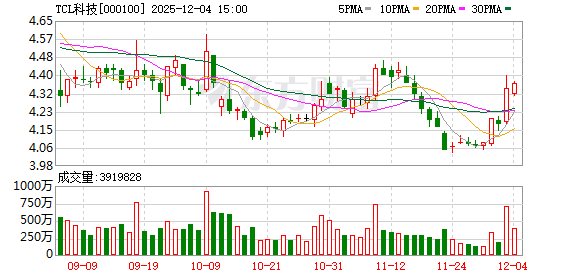
TCL科技:公司致力于将半导体显示、新能源光伏与半导体材料三大核心业务做强做优
Zheng Quan Ri Bao· 2025-12-04 13:39
Core Viewpoint - TCL Technology emphasizes its commitment to strengthening its three core businesses: semiconductor display, new energy photovoltaic, and semiconductor materials, while maintaining a focus on strategic guidance, innovation, advanced manufacturing, and global operations [2] Business Operations - The company reports stable operations across all its business segments and plans to enhance profitability and core competitiveness through various initiatives [2] - Future strategies include deepening core business operations, optimizing asset structure, improving operational efficiency, and strengthening shareholder returns [2] Value Creation - TCL Technology aims to achieve a dynamic balance between intrinsic value and market value, with a focus on creating long-term sustainable returns for investors [2]

坤彩科技:将坚持以生产经营为基础,不断提升企业核心竞争力和盈利能力
Zheng Quan Ri Bao Wang· 2025-11-05 13:40
Core Viewpoint - The management of Kuncai Technology (603826) expresses confidence in the industry and the company's core competitiveness, emphasizing a commitment to enhancing operational capabilities and profitability to create greater value for shareholders [1] Group 1 - The company will continue to focus on production and operations as a foundation for growth [1] - There is a strong emphasis on improving core competitiveness and profitability [1] - The management aims to provide substantial returns to all shareholders [1]

建信基金:投资全球权益市场,主要看哪些指标?
Xin Lang Ji Jin· 2025-10-10 09:38
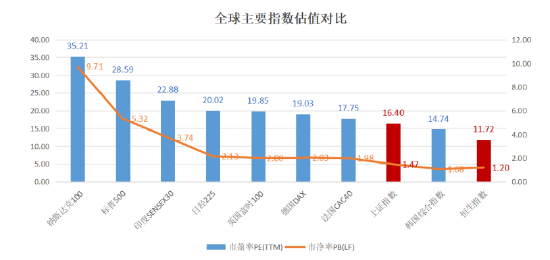
Core Viewpoint - The article emphasizes the importance of investing in global equity markets to overcome limitations posed by local economic cycles and geopolitical risks, highlighting the potential for long-term stable returns through diversified investments across different economies [2][18]. Group 1: Investment Rationale - Investing in global equity markets allows for capturing differentiated growth opportunities across regions, mitigating risks associated with concentrated local markets [2]. - The global equity market encompasses a broader range of high-quality companies with global competitiveness, providing a solid foundation for long-term wealth preservation and appreciation [2]. Group 2: Key Investment Metrics - Valuation is a critical metric for assessing asset price versus intrinsic value, particularly in global asset allocation, serving as a tool for identifying quality targets and comparing market attractiveness [4]. - Current valuations indicate that indices such as the Hang Seng Index, Korea Composite Index, and Shanghai Composite Index are still at relatively low levels compared to major global capital markets [4]. - Dividend yield is a key indicator of a company's profitability and market risk resilience, with higher yields suggesting robust cash flow and strong business models [8]. - Markets such as France, Hong Kong, and Germany currently exhibit higher dividend yields, making them attractive for global investors [8]. - Return on Equity (ROE) is highlighted as a vital measure of a company's profitability, with firms maintaining ROE above industry averages demonstrating stronger risk resilience and potential for long-term capital gains [12]. - Economic growth of the underlying economy is crucial, as it directly impacts corporate revenue expansion and the long-term appreciation potential of equity assets [13]. Group 3: Economic Context - The International Monetary Fund (IMF) projects that the United States will lead global GDP rankings in 2024, followed by China, with China's GDP reaching approximately $18.94 trillion [14]. - The article outlines the importance of investing in economies with strong growth momentum and healthy structures to maximize profit-sharing opportunities while minimizing risks associated with economic stagnation [16]. Group 4: Industry Initiatives - A series of activities aimed at promoting high-quality development in the public fund industry has been launched in Beijing, focusing on investor education and enhancing the industry's service capabilities to the real economy [18].
财报小知识:什么是公允价值变动收益?怎么看待其波动性对利润的影响?
Sou Hu Cai Jing· 2025-10-04 01:21
Group 1 - The core concept of "fair value changes" reflects unrealized gains or losses from financial assets or liabilities due to market price fluctuations, which include trading financial assets, investment properties, and certain derivatives [1] - Fair value changes are highly dependent on external market factors such as interest rates, stock markets, exchange rates, and commodity prices, making them volatile and not directly indicative of a company's operational capabilities [1][2] - Investors should focus on net profit after excluding non-recurring gains and losses, as well as the cash flow from core business operations, rather than relying heavily on fair value changes for profit growth [1] Group 2 - Companies may have different accounting policies and valuation methods for similar assets, which can affect the comparability of profits; thus, investors should assess the source and reasonableness of fair value changes by reviewing the notes [2] - Fair value changes serve as a window to observe a company's financial performance but should not be the primary basis for evaluating long-term value; a rational perspective on their volatility can help in accurately assessing a company's true profit quality and risk resilience [2]
财报小知识:什么是息税前利润(EBIT)?怎么看待它排除资本结构影响后的盈利能力?
Sou Hu Cai Jing· 2025-10-04 01:21
Group 1 - EBIT (Earnings Before Interest and Taxes) is a crucial financial metric that reflects a company's operating performance by excluding interest and tax expenses, allowing for a clearer comparison of core business profitability across different firms [1][2] - The exclusion of interest and tax allows for a more accurate assessment of a company's operational efficiency, as different companies may have varying capital structures and tax burdens that could distort net profit comparisons [1] - EBIT helps investors focus on the core business's earning potential, minimizing the impact of external factors such as financing structure and tax policies [1] Group 2 - For ordinary investors, understanding EBIT is essential for identifying a company's true operational strength, as consistent EBIT growth indicates a strengthening core business regardless of financing methods [2] - A comprehensive analysis that includes industry characteristics and overall financial conditions is necessary to avoid misinterpretation of EBIT figures [2]
中报点评|保利发展:规模稳居行业第一,拿地力度明显加大
克而瑞地产研究· 2025-08-27 09:25
Core Viewpoint - The company is facing increasing inventory clearance pressure despite maintaining a leading position in the industry, with a notable decline in profit margins and overall financial performance [2][3][21]. Sales Performance - In the first half of 2025, the company achieved total sales of 145.17 billion yuan, a year-on-year decrease of 16.25%, with a sales area of 7.1354 million square meters, down 25.23% [2][5]. - The sales amount from inventory projects acquired in 2021 and earlier was 51.4 billion yuan, accounting for 35.4% of total sales, indicating a focus on inventory clearance [2][5]. - The company maintained a high signing ratio of 78.7% for signed building area rights, slightly down from 79.3% the previous year, which supports revenue and scale matching [5][11]. Land Acquisition Strategy - The company significantly increased its land acquisition efforts, with new land area of 2.28 million square meters and acquisition costs of 50.9 billion yuan, representing year-on-year growth of 96.6% and 304% respectively [12][13]. - The proportion of land acquired in first-tier cities reached 23.8%, indicating a strategic focus on these markets [15][19]. - The average land acquisition cost was 22,325 yuan per square meter, slightly up by 0.5% compared to the previous year [15]. Financial Performance - The company reported operating revenue of 116.857 billion yuan in the first half of 2025, a decrease of 16.08% year-on-year, with pre-received housing payments reaching 330.301 billion yuan, indicating a solid reserve for future revenue [3][21]. - Gross profit margin fell to 14.6%, down 1.4 percentage points year-on-year, while net profit margin and attributable net profit margin decreased to 5.6% and 2.3%, respectively [21][22]. - The company’s cash holdings increased by 3.3% to 138.562 billion yuan, with a non-restricted cash to short-term debt ratio of 1.19, indicating a stable liquidity position [24]. Debt and Financing - The company maintained a net debt ratio of 59.64%, down 3.03 percentage points from the beginning of the year, and the asset-liability ratio after excluding pre-received payments was 64.56%, a decrease of 1.31 percentage points [24]. - The comprehensive financing cost decreased to 2.89%, reflecting the company's ability to secure low-cost financing [24].


国产仪器上市公司“人效榜”:榜2人均年创收166万
仪器信息网· 2025-06-18 07:01
Core Viewpoint - The article provides a comprehensive analysis of the revenue and profit per employee of 52 listed instrument companies in China for the year 2024, highlighting the disparities in operational efficiency and management capabilities within the industry [1][2]. Revenue Per Employee Ranking - The top company, Mindray Medical, achieved a revenue per employee of 1.94 million yuan, with total revenue of 36.73 billion yuan and 21,667 employees [4][7]. - Titan Technology and Meiya Optoelectronics follow with revenue per employee of 1.66 million yuan and 1.65 million yuan, respectively, indicating strong operational performance in their respective fields [4][7]. - A total of 10 companies reported revenue per employee exceeding 1 million yuan, showcasing their leading positions in technology innovation and market expansion [7]. - The overall average revenue per employee for the 52 companies is 770,000 yuan, suggesting significant room for improvement across the industry [7]. Profit Per Employee Ranking - Mindray Medical also leads in profit per employee with 620,000 yuan, reflecting its strong brand and diversified product matrix [10][13]. - Meiya Optoelectronics ranks second with a profit per employee of 460,000 yuan, demonstrating effective cost control and profitability [12][13]. - Notably, 9 companies reported negative profit per employee, indicating challenges in maintaining profitability amidst competitive pressures [13][14]. - The overall data reveals that only 3 companies have a profit per employee exceeding 300,000 yuan, highlighting the profitability challenges faced by the majority of listed instrument companies [14]. Industry Insights - The analysis indicates that many companies struggle with low revenue and profit per employee, emphasizing the need for enhanced operational efficiency and management practices [16]. - Companies are encouraged to invest in talent development, optimize product structures, and enhance research and development efforts to improve competitiveness [16]. - The article suggests that government and industry associations should play a role in fostering innovation and creating a fair competitive environment to support the growth of the instrument industry [16].