供应链本土化

Search documents
瑞迈特(301367) - 2026年2月26日投资者关系活动记录表
2026-02-27 09:58
Company Overview - Beijing Ruimait Medical Technology Co., Ltd. was established in 2001 and launched its first multi-channel sleep monitor in 2003. The first CPAP sleep respirator was released in 2007, and the company received CE certification in 2008 and FDA certification in 2012. It successfully listed on the Shenzhen Stock Exchange's Growth Enterprise Market on November 1, 2022 [2]. - The company focuses on providing comprehensive treatment solutions for OSA and COPD patients, covering diagnosis, treatment, and chronic disease management. It is a leading domestic enterprise in home non-invasive ventilators and has obtained multiple certifications including NMPA, FDA, CE, and others, exporting to over 140 countries and regions [2][3]. Research and Development - As of June 30, 2025, the company holds 666 valid domestic patents, including 116 invention patents, 404 utility model patents, and 146 design patents. It also has 266 overseas authorized patents, including 45 in the U.S. and 38 in Europe [3]. Market Position - According to data from Sullivan in August 2024, the company holds a 12.4% market share in the global home non-invasive ventilator market, ranking second, while its domestic market share is 30.6%, making it the top domestic brand [4]. - The company aims to enhance brand building, optimize channel management, and strengthen cooperation with agents to further increase market share [4]. Strategic Investments - The company has invested in Shenzhen Deda Xing Drive Technology Co., Ltd., a leading provider of precision motors and solutions, to ensure the stability of core component supplies and promote business expansion into upstream industries [5]. - This investment aligns with the company's long-term strategic direction and enhances its core competitiveness [5]. Supply Chain Localization - The company has achieved significant progress in localizing its supply chain, with core component domestic replacement nearly complete, ensuring supply chain security and cost advantages [5]. - Future efforts will focus on optimizing domestic industrial chain collaboration to enhance business stability and risk resistance [5].
康林松陪同德国总理访华:奔驰本土化脚步“不停歇” 称将加速全产业链本土化升级
Zhong Guo Jing Ying Bao· 2026-02-27 03:51
"令人惊叹。" 这是德国总理默茨(Friedrich Merz)2月26日在北京街头亲身体验由梅赛德斯-奔驰与中国科技公司Momenta合作开发的智能辅助驾驶系统后, 给出的直接而有力的评价。 2月26日,梅赛德斯-奔驰集团董事会主席康林松(Ola Kllenius)陪同默茨试乘新一代S级轿车,亲身体验由梅赛德斯-奔驰与中国科技公司Momenta联合打 造、可实现"从车位到车位"的城区及高速领航辅助驾驶系统。此行恰逢默茨中国之行的最后一天,这次试乘成为默茨就任德国总理后首次访华行程中极具分 量的活动。 《中国经营报》记者从梅赛德斯-奔驰方面获悉,就在同一天,梅赛德斯-奔驰中国与Momenta在北京签署升级合作谅解备忘录,进一步深化双方在智能辅助 驾驶领域的合作。 这些动向释放了汽车仍是中德双边合作的核心纽带这一明确而清晰的信号。在试乘活动后,默茨听取了康林松和Momenta首席执行官曹旭东关于智能辅助驾 驶合作内容的相关介绍,并高度赞扬了中德两国企业在智能汽车时代携手共进的价值。梅赛德斯-奔驰与中国科技公司Momenta合作的深化,成为中德高端 制造相向而行、共谋未来的生动注脚。 "中国为奔驰辅助驾驶全球创新 ...


库克兑现6000亿美元承诺:苹果加速休斯顿AI服务器生产,Mac mini将首次实现“美国制造”
Hua Er Jie Jian Wen· 2026-02-24 13:22
在去年宣布6000亿美元美国投资承诺后,苹果正加速推进本土制造战略落地。2月24日,苹果宣布将于 今年晚些时候在休斯顿启动Mac mini生产,这将是该产品首次实现"美国制造"。新工厂将落户休斯顿 园区,使园区面积翻倍,并创造数千个就业岗位。 与此同时,苹果将同步扩大该厂的先进AI服务器产能。该业务自2025年启动以来已提前完成生产目 标,所组装的服务器(含本地生产的逻辑板)已供应苹果在全美各地的数据中心。 苹果CEO蒂姆·库克表示: "苹果对美国制造业的未来有着深厚承诺,我们很自豪能够大幅扩大在休斯顿的业务规模。 我们已提前完成休斯顿AI服务器的出货目标,并将进一步加速推进这项工作。" 6000亿美元承诺加速兑现,供应链本土化多点开花 自去年宣布6000亿美元美国投资计划以来,苹果及其美国制造计划合作伙伴已达成多项里程碑。 芯片采购方面,苹果已超额完成目标,从分布于12个州、共24家工厂采购逾200亿颗美国本土制造芯 片,合作伙伴包括台积电、博通及德州仪器。2026年,苹果预计将从台积电亚利桑那州工厂采购逾1亿 颗先进芯片,较2025年大幅增长。 上游材料环节,环球晶圆在德克萨斯州谢尔曼启动40亿美元裸硅晶 ...

通用汽车:在华供应链本土化率已超 95%,将持续深耕中国市场
Zhong Guo Qi Che Bao Wang· 2026-02-14 02:07
Core Viewpoint - General Motors emphasizes its commitment to fair and non-discriminatory principles in global procurement, stating that suppliers will not be excluded based on their country of origin [1] Group 1: Supplier Selection Criteria - The company prioritizes core business factors such as comprehensive cost, service and technical capabilities, supply stability, product quality, and compliance in its supplier selection process [1] Group 2: Business Strategy in China - China is highlighted as a crucial part of General Motors' global strategy, with plans to deepen its business presence in the region [1] - The company has achieved a localization rate of over 95% in its supply chain in China through long-term stable partnerships with local suppliers [1]

2026中国车企欧洲本土化动真格
Zhong Guo Qi Che Bao Wang· 2026-02-04 08:04
Group 1 - The EU is considering extending anti-subsidy tariffs on Chinese electric vehicles to include hybrid vehicles due to the rapid increase in sales of Chinese plug-in hybrids in Europe [3][4] - In October 2023, the EU initiated an anti-subsidy investigation into Chinese electric vehicles, claiming they distort the European market due to unreasonable subsidies [3][4] - The EU's investigation could lead to additional tariffs on Chinese electric vehicles, with rates potentially reaching up to 35.3% for certain manufacturers [3][4] Group 2 - Chinese car manufacturers are accelerating local production in Europe, with companies like Chery, Xpeng, and GAC already establishing assembly operations [2][6] - BYD plans to start trial production at its Hungarian passenger car factory in Q1 2026, with full production expected in Q2 2026 [2][8] - The overall sales of Chinese plug-in hybrids in Europe are projected to grow significantly, with a 645% increase expected in 2025, capturing a market share of 14% [4][5] Group 3 - The local production strategy of Chinese car manufacturers is characterized by a comprehensive approach, including supply chain, R&D, and service localization [6][9] - Xpeng is establishing a localized supply chain team in Europe and has opened a R&D center in Munich to better align with local market demands [9][10] - BYD has set up its European headquarters in Budapest, focusing on sales, after-sales, and local vehicle design, indicating a commitment to the European market [9][10] Group 4 - GAC aims to achieve an overseas sales target of 250,000 units by 2026, with Europe being a key market for its expansion [10][11] - NIO is establishing user experience centers in Norway and Germany to enhance brand perception and service offerings in Europe [11] - Xpeng leads the European market in customer satisfaction with an 81% rating, surpassing Tesla, while NIO ranks seventh among traditional luxury brands [11]


【IPO一线】获华为哈勃、长安汽车加持 车载SerDes芯片厂商瑞发科启动IPO辅导
Ju Chao Zi Xun· 2026-02-02 13:29
Core Insights - The China Securities Regulatory Commission has disclosed the initial public offering (IPO) guidance report for Ruifake Semiconductor (Tianjin) Co., marking the company's formal entry into the capital market as a domestic player in the automotive high-speed SerDes chip sector [1] - The company has garnered significant support from both industrial and financial capital, with notable shareholders including Huawei's Hubble Technology, which holds 11.62% of the shares, and various investment funds from Changan Automobile and National Development Bank [1][2] - The global automotive SerDes chip market is projected to grow at a compound annual growth rate (CAGR) of 20.28%, increasing from USD 447 million in 2023 to USD 1.677 billion by 2030 [1] Company Overview - Ruifake has developed a comprehensive product matrix and scalable delivery capabilities, having mass-produced over 20 types of automotive SerDes chips with transmission rates ranging from 2 Gbps to 12.8 Gbps [2] - The company has achieved a shipment volume of over 17 million chips by November 2025, demonstrating its full-process autonomous control from chip design to large-scale production [2] - The initiation of the IPO guidance signifies a new phase in Ruifake's journey towards replacing core automotive chips domestically, driven by the dual forces of automotive intelligence and supply chain localization [2]

富创精密(688409.SH):2025年预亏600万元至1200万元
Ge Long Hui A P P· 2026-01-28 07:38
Core Viewpoint - Fuchuang Precision (688409.SH) expects to report a net loss attributable to shareholders of the parent company for the fiscal year 2025, with projected losses ranging from -12 million to -6 million yuan [1] Company Summary - The company anticipates a net profit attributable to shareholders, excluding non-recurring gains and losses, to be between -60 million and -40 million yuan for the fiscal year 2025 [1] - Since its listing on the Sci-Tech Innovation Board in October 2022, the company has focused on seizing opportunities from industry restructuring and has increased investments in key resources, advanced capacity, and talent reserves to strengthen its long-term development foundation and enhance future profitability [1] Industry Summary - The domestic equipment and components industry is experiencing a "dual-driven" positive trend due to global semiconductor development: on one hand, leading overseas wafer fabs are returning to an expansion cycle, leading to increased demand; on the other hand, domestic downstream customers are accelerating supply chain localization, resulting in a rapid increase in demand for domestic equipment and components [1]

从“千里调货”到“同城配送”
Xin Hua Ri Bao· 2026-01-06 19:49
Group 1 - The completion of the JieJieXi digital energy equipment project in Jiangyin's Lingang Economic Development Zone marks a significant milestone, with local supply chain construction accelerating [1] - Localizing the supply chain can reduce costs by 12% to 19%, shorten delivery times by 20%, and improve the first-time delivery rate by 15% [1] - The local production rate for core components, such as plungers used in hydraulic motors, has reached 70%, with plans for a second factory to achieve 99% localization [1] Group 2 - The "chain symbiosis" model is creating a ripple effect, with companies like Jiangsu Dena Precision Bearing Co., Ltd. investing significantly in technology upgrades and achieving annual supply agreements worth 18 million yuan, expected to reach 23 million yuan by 2026 [1] - The Lingang Development Zone is reconstructing its industrial ecosystem with a "chain thinking" approach, covering the entire manufacturing chain from design to equipment manufacturing [2] - The zone encompasses 30 out of 31 manufacturing categories defined by national standards, with 4,676 manufacturing enterprises interconnected within the ecosystem [2]
2025年美国制造业全景调研报告
Sou Hu Cai Jing· 2025-12-19 17:34
Group 1 - The core viewpoint of the article indicates that the U.S. manufacturing industry remains optimistic for 2025, despite facing challenges such as tariffs, supply chain issues, and workforce and technology transitions [1][3] - 79% of manufacturing decision-makers rate current business conditions as good or excellent, and 80% have a positive outlook for the next 12 months [1][26] - Financial concerns are significant, with 67% of companies worried about inflation, 64% about tariffs, and 63% about high interest rates [1][24] Group 2 - Tariffs and supply chain disruptions are major pain points, with 68% of manufacturers concerned about rising raw material costs and 63% about price pressures and profit margins [1][55] - To address tariff policies, 49% of companies are increasing inventory, 41% are investing in domestic manufacturing, and 40% are diversifying suppliers [1][45] - 61% of manufacturers view current supply chain disruptions as a serious challenge, with 66% concerned about future risks [1][55] Group 3 - Workforce challenges are prominent, with 37% of companies prioritizing attracting and retaining qualified employees, and 64% considering workforce recruitment and retention a long-term issue [2][16] - 49% of manufacturers see technology investment (AI, automation, robotics) as a significant business opportunity, with AI being a primary focus [2][32] - 91% of manufacturers have partially or fully adopted inventory management systems, and 83% are using IoT devices [2][17] Group 4 - Regulatory compliance pressures are increasing, with 87% of companies concerned about supply chain delays due to trade policy changes and 85% worried about cost increases from regulatory adjustments [2][19] - 89% of manufacturers report being significantly affected by recent regulatory changes, with compliance costs and new technology investment being major impacts [2][19] Group 5 - Overall, the U.S. manufacturing industry is optimistic for 2025, focusing on supply chain localization, supplier diversification, technology upgrades, and workforce strategy optimization to navigate multiple pressures [3]

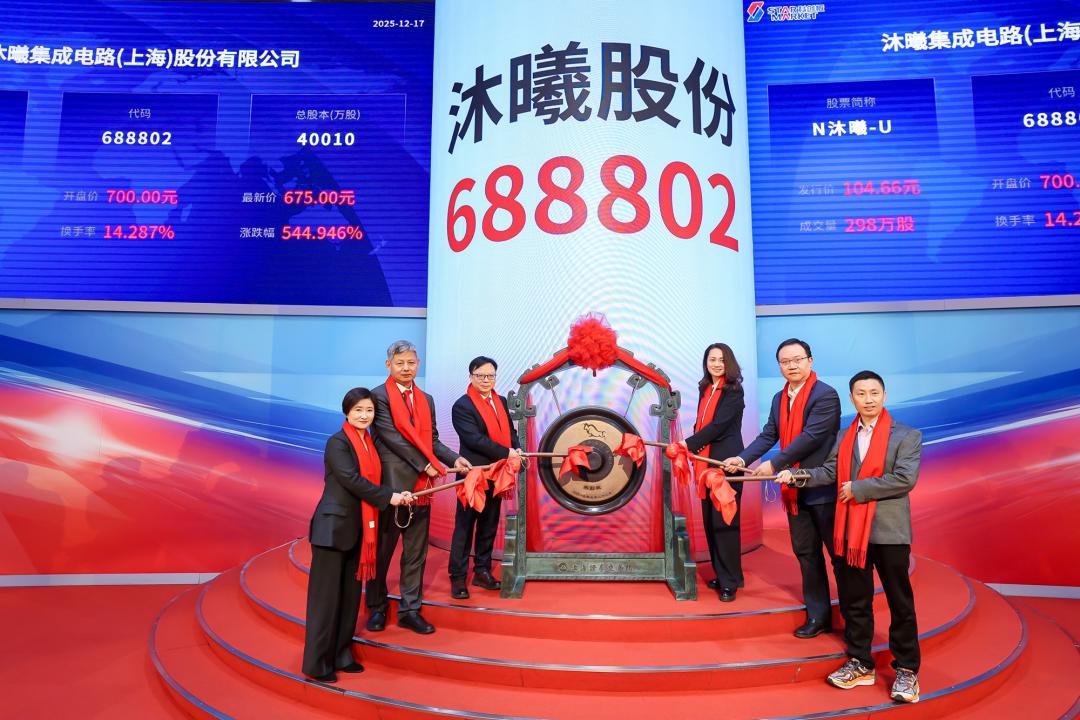
沐曦上市背后:那些陪它穿越“死亡谷”的投资人
3 6 Ke· 2025-12-17 11:43
Core Insights - Muxi Co., Ltd. officially listed on the Shanghai Stock Exchange's Sci-Tech Innovation Board, becoming the second company among the "domestic GPU four dragons" to go public after Moore Threads [1][29] - The initial offering price was 104.66 yuan per share, with a total market capitalization of 419 billion yuan at the time of listing. On the first trading day, the stock opened at 700 yuan, representing a 568.83% increase, and closed at 829.9 yuan, a 692.95% increase from the offering price, resulting in a total market capitalization of 3320.43 billion yuan [1][30] - The listing signifies a milestone in the development of domestic GPUs, marking the transition from the "technical narrative phase" to the "capital verification phase" [31][30] Investment Background - Early investors in Muxi, including prominent venture capital firms such as Sequoia Capital China and GSR Ventures, faced significant challenges during the investment journey, particularly in the semiconductor sector characterized by high capital requirements and long cycles [3][19] - The investment journey began with nearly 100 million yuan in angel round financing led by He Li Capital in November 2020 [4][18] - The founding team of Muxi, composed of former AMD China engineers, was a key factor in attracting investment due to their deep technical expertise and experience in building supercomputing centers in China [13][16] Challenges and Resilience - The semiconductor industry faced severe challenges starting in 2022, including U.S. sanctions against China's semiconductor sector, leading to a significant cash burn for Muxi, which reportedly reached 50 million yuan per month during critical periods [22][23] - Despite pressures from investors to divest due to concerns over supply chain security, Muxi's leadership maintained a strong commitment to the company's vision, which ultimately reassured investors [24][25] - Support from investors included proactive measures to ensure supply chain safety and financial backing during difficult fundraising rounds, demonstrating a commitment to long-term investment in Muxi [25][26] Product Development and Market Position - Muxi's new product, the Xiyun C600, is based on advanced domestic processes and has established a closed-loop domestic supply chain, with plans for risk mass production by the end of 2025 [28][26] - The company is also developing the next-generation Xiyun C700 series, which aims to enhance performance and support a wide range of applications, including AI training and inference [28][26] - The successful listing and product development indicate Muxi's strategic positioning in the GPU market, which is critical for the overall computing power landscape in China [30][31] Future Outlook - Muxi's listing is seen as a signal of confidence for the domestic semiconductor industry, encouraging continued investment and development in the sector [31][35] - The company faces ongoing challenges, including the need to establish a robust software ecosystem and address limitations in advanced process technologies [33][34] - The journey for Muxi and other domestic GPU companies is just beginning, with the need for sustained innovation and market adaptation to ensure long-term success [36][35]