全产业链思维

Search documents
粤字号“土特产”如何成链成群?2026年广东各地农业农村高质量发展这样谋划
Nan Fang Nong Cun Bao· 2026-02-27 01:30
Core Viewpoint - The article discusses the strategic planning for high-quality agricultural and rural development in Guangdong province for 2026, emphasizing the integration of agriculture with manufacturing and service industries to enhance value and drive economic growth [2][76]. Group 1: Agricultural Development Strategies - Various cities in Guangdong are focusing on high-quality agricultural development, presenting unique plans and tasks tailored to their local resources [5][76]. - Guangzhou aims to strengthen its characteristic industries such as flowers, fruits, vegetables, and fisheries, leveraging its dual advantages as a "thousand-year commercial capital" and a "manufacturing hub" [9][10]. - Shenzhen is adopting a "flyover" model through the construction of the Deep-Shan Special Cooperation Zone, which integrates advanced manufacturing with local agricultural development [15][16]. Group 2: Integration of Industries - Zhuhai reported a significant increase in rural collective economic income, with an annual growth rate of over 14% in the last three years, showcasing the successful integration of manufacturing and service industries [18][21]. - Foshan is focusing on developing industries that enrich rural communities, emphasizing the need for industrialized thinking to transform traditional agriculture and enhance product value [23][24]. - Meizhou is promoting the development of the "sixth industry" and enhancing local brands to stimulate rural economic growth through cultural and tourism integration [32][35]. Group 3: Regional Highlights - Yangjiang is setting ambitious goals for its marine economy and health food industry, aiming to create a "blue granary" while integrating various sectors such as tourism and agriculture [60][62]. - Clear water and tea tourism in Qingyuan has attracted 220,000 visitors, demonstrating the successful fusion of tea culture and tourism, which is a model for extending agricultural value into the service sector [51][56]. - Zhanjiang is committed to advancing rural revitalization and modernizing its marine fisheries, focusing on the integration of agriculture with cultural and tourism industries [73][75]. Group 4: Overall Trends - The overarching trend across Guangdong's 2026 plans is the emphasis on a full industrial chain approach to strengthen local specialties, expand agricultural value, and activate county-level development through reforms [76][78]. - The integration of agriculture with manufacturing, service, and digital industries is seen as a key strategy to drive economic growth and modernize the agricultural sector in Guangdong [79][80].


如何推动县域产业成链成群高质量发展?广东这场研讨干货满满!
Nan Fang Nong Cun Bao· 2026-02-24 13:05
Core Viewpoint - The seminar on "Strengthening County Characteristic Industries" emphasizes the importance of county economies as a foundation for high-quality development, focusing on how to promote industrial clustering and integration at the county level [7][10]. Group 1: Industrial Transfer and Upgrading - The Guangdong government aims to address the issue of "where industries come from" by enhancing external industrial input and establishing a policy system for orderly industrial transfer [12][14]. - A new cooperative mechanism has been established to promote cross-regional collaboration, creating industrial transfer parks and characteristic industrial parks to facilitate mutual development between regions [16][27]. - Foshan has invested over 2.4 billion yuan in cooperative assistance to Maoming and Yunfu, achieving significant results in industrial transfer and collaboration [20][25]. Group 2: Traditional Industry Transformation - The Chaozhou district of Shantou is focusing on upgrading its traditional toy manufacturing industry towards high-end, intelligent, and branded production, aiming to create a globally influential industrial cluster [30][40]. - The district has invested over 10 billion yuan in five major projects, establishing three specialized manufacturing parks and attracting 510 enterprises [32][34]. Group 3: Agricultural Product Processing - Guangzhou Restaurant Group has invested over 800 million yuan in deep processing of agricultural products, creating over 2,000 jobs and enhancing the quality of local agriculture [43][45]. - The company is developing a full industry chain from farm to table, promoting standardized and large-scale agricultural practices [46][48]. Group 4: Cultural and Industrial Integration - Guangdong Xuelei Aroma Culture Co., Ltd. is exploring the integration of industrial and cultural development by participating in the construction of an aromatic industry base [58][60]. - The company aims to enhance market competitiveness through a collaborative model involving government, research, and enterprises, focusing on the development of local aromatic resources [72][73]. Group 5: Overall Strategy for High-Quality Development - The seminar highlights that achieving high-quality development in county characteristic industries requires a comprehensive approach, emphasizing platform construction, technological innovation, brand building, and regional cooperation [75][76].
(新春走基层)“中国白首乌之乡”江苏滨海:文化赋能“土特产” 打造多元消费场景
Sou Hu Cai Jing· 2026-02-12 14:30
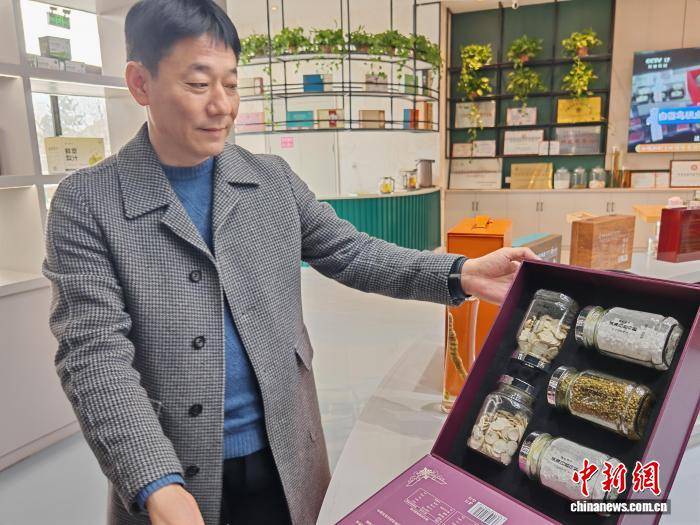
Core Viewpoint - Jiangsu Binhai, known as the "Home of Chinese Polygonatum," is leveraging cultural empowerment to enhance local specialty products and create diverse consumption scenarios [1]. Group 1: Industry Overview - Binhai produces 95% of China's Polygonatum, with plans to expand the planting area to over 5,000 acres by 2025 [1]. - The region's unique natural environment, characterized by alkaline, potassium-rich soil and a diverse water system, contributes to the high quality and yield of Polygonatum [3]. Group 2: Company Initiatives - Chen's Food Company, led by Chen Huawen, employs an "Internet + cooperative + base + farmers" business model to enhance local employment and income [3]. - The company has developed a range of Polygonatum products, including fresh juice, wine, and flower tea, through collaboration with universities and institutions, promoting specialization and scale in the industry [4]. Group 3: Cultural and Tourism Development - The establishment of the Polygonatum Intangible Cultural Heritage Museum showcases the plant's growth environment, historical legends, and traditional techniques, providing immersive experiences for visitors [7]. - Investments in a rural complex, including a camping and industry model, aim to create a tourism area that integrates Polygonatum cultivation, ecological planting, and recreational activities, thereby driving industry growth [7].
肇庆市委书记:实施“成百上千”工程,建设农业强市丨市委书记抓乡村振兴2025年度盘点
Nan Fang Nong Cun Bao· 2026-02-09 13:03
Core Viewpoint - The article emphasizes the implementation of the "Hundreds and Thousands" project in Zhaoqing to build a strong agricultural city, focusing on rural revitalization and modern agricultural development [8][10][18]. Group 1: "Hundreds and Thousands" Project - The "Hundreds and Thousands" project is a key initiative for modern agricultural development in Zhaoqing, aimed at promoting agricultural industrialization and clustering [14][18]. - The project involves the continuous expansion of six agricultural industry clusters, each valued at over 10 billion [12][18]. - The city has integrated agricultural investment and a full industry chain approach into the project, emphasizing the importance of industrialization in agriculture [15][31]. Group 2: Rural Aesthetics Workshop - The Rural Aesthetics Workshop is a unique initiative in Zhaoqing aimed at enhancing the aesthetic quality of rural areas [20][22]. - The project focuses on creating operational and visually appealing rural demonstration projects, with an emphasis on professional design and community involvement [24][26]. - The initiative encourages collaboration with universities to foster rural aesthetic value creation [26]. Group 3: Full Industry Chain Approach - The full industry chain approach is identified as a core strategy for developing modern agriculture in Zhaoqing, focusing on both upstream and downstream processes [29][31]. - The city aims to strengthen local specialties through deep processing of agricultural products, enhancing quality and scale [33][41]. - The approach is reinforced by the need to integrate industrialization concepts into agricultural practices [31][35]. Group 4: Agricultural and Cultural Tourism Integration - Zhaoqing is advancing a pilot program for integrating agriculture and cultural tourism, which is seen as a central strategy for rural development [43][45]. - The initiative aims to leverage local agricultural products and cultural resources to enhance tourism experiences [46][48]. - The city is focusing on developing a coordinated approach to promote unique agricultural and cultural tourism offerings [48]. Group 5: Heritage Protection - The article highlights the importance of protecting and revitalizing ancient villages and buildings, distinguishing Zhaoqing's approach from other cities [51][52]. - Efforts include comprehensive land management and the preservation of traditional architectural styles [53][55]. - The goal is to create spaces that embody local cultural heritage and memories [55][56].
从“会种地”到“慧种地”:惠来81名稻农的全产业链赋能之旅
Nan Fang Nong Cun Bao· 2026-01-17 03:02
Core Insights - The article discusses a training program aimed at enhancing the efficiency and profitability of rice farming in Hui Lai County, focusing on a comprehensive approach that integrates production and market strategies [9][12]. Group 1: Training Program Overview - The training program, organized by the Hui Lai County Agricultural and Rural Bureau, successfully completed its curriculum with 81 participants, emphasizing "grain and oil production capacity enhancement" [9][10]. - The program included 56 hours of instruction, covering various aspects of the rice industry, from production techniques to market strategies [10][12]. Group 2: Addressing Industry Challenges - The training specifically targeted the issue of "high yield but low efficiency" in rice production, aiming to improve the economic returns for farmers [15][16]. - Course content was designed to connect various elements of the rice supply chain, including green pest control, smart machinery, quality management, processing, storage, and e-commerce marketing [18][19]. Group 3: Practical Learning Experience - The training shifted from traditional lecture-based learning to hands-on experiences, allowing participants to apply their knowledge in real-world settings [25][26]. - Participants operated drones for precision farming and learned to analyze rice quality using professional equipment, enhancing their understanding of product standards [36][37]. Group 4: Market and Sales Strategies - The program emphasized the importance of storytelling and effective marketing in selling rice, encouraging participants to rethink traditional sales approaches [40][41]. - The use of the "Cloud Smart Farmer" app was introduced to help participants access market information and connect with expert resources, facilitating a shift from producers to business operators [48][49]. Group 5: Future Development and Support - The Hui Lai County Agricultural and Rural Bureau plans to continue supporting the participants through online communities and technical follow-ups, aiming to foster the adoption of new ideas and practices among a broader group of farmers [53][55].
德庆贡柑已售近八成,黄果批量上市成为年前“抢手货”
Nan Fang Nong Cun Bao· 2026-01-16 03:31
Core Viewpoint - The article highlights the successful sales and market strategies of Deqing Gonggan, a premium citrus fruit from Deqing County, Guangdong, which has seen nearly 80% of its production sold ahead of the peak season, showcasing its growing brand value and innovative marketing approaches [1][3][10]. Group 1: Production and Sales - In 2025, Deqing County's Gonggan harvesting area is projected to reach 43,700 acres, with a total output of 83,500 tons and an estimated total value of approximately 940 million yuan [2][3]. - Currently, nearly 80% of the Gonggan has been sold, indicating strong market demand [3]. Group 2: Brand Value and Market Strategy - Deqing Gonggan, known as the "King of Citrus" in China, has a brand value of 10.8 billion yuan, supported by a systematic approach to production and marketing [6][7]. - The county has initiated a comprehensive marketing strategy involving media partnerships and various promotional activities to enhance the Gonggan brand value chain [8][9]. Group 3: Product Innovation and Diversification - Deqing Gonggan has expanded beyond fresh fruit sales to include value-added products such as NFC (Not From Concentrate) Gonggan juice and plans for Gonggan wine, with 300,000 pounds of Gonggan purchased for juice production this year [15][18]. - The Gonggan peel is being processed into a product similar to dried tangerine peel, which has seen sales increase from 400 pounds in 2021 to 1,100 pounds in 2025 [20]. Group 4: Logistics and Distribution - A new logistics model has been established, allowing for a "next-day delivery" service for Deqing Gonggan, ensuring that fresh fruit reaches consumers within 24 hours of harvest [24][25][26].
这是一场将要改变广东蔬菜产业的大会
Nan Fang Nong Cun Bao· 2026-01-12 04:06
Core Viewpoint - The upcoming conference in Guangdong aims to transform the vegetable industry, focusing on high-quality development and integrating various stakeholders to enhance the industry's ecosystem [2][33]. Group 1: Conference Details - The "High-Quality Development Conference" will take place from January 19 to 21, 2026, in Huai Ji, known as the "Hometown of Lingnan Vegetables" [3][4]. - The theme of the conference is "Advancing in the New Era, Writing a New Huai Ji" [4]. - The event will gather over 300 industry elites, including government officials, academicians, and representatives from various sectors [8][9]. Group 2: Industry Development Focus - The conference will emphasize a full industry chain approach to reshape the vegetable industry ecosystem in Guangdong [5][6]. - Huai Ji has approximately 250,000 acres of vegetable planting area, with over 20,000 acres dedicated to large-scale vegetable production [6][7]. - The event aims to address key issues such as enhancing the green agricultural product distribution capabilities in the Guangdong-Hong Kong-Macao Greater Bay Area and developing a comprehensive agricultural model [15][16]. Group 3: Key Highlights and Initiatives - The opening ceremony will feature keynote speeches from top experts, focusing on new production capabilities, branding strategies, and variety innovations [19][20]. - The formal release of Huai Ji's vegetable industry standards will promote the industry's standardized development [20]. - Several projects, including mobile cold storage factories and cold chain logistics networks, will be signed to support industry upgrades [21][22]. Group 4: Broader Implications - The conference represents a self-reform initiative for the Guangdong vegetable industry, aiming to leverage small-scale vegetable production to impact the larger agricultural sector [25][26]. - The event will explore new pathways for rural revitalization, linking urban and rural resources to enhance economic quality and farmer income [29][30]. - The collaboration of academic insights, business practices, and policy support will create a conducive environment for high-quality development in the vegetable industry [31].
“三农”新蓝图已绘就!——河南省专家结合河南实际解读中央农村工作会议精神
He Nan Ri Bao· 2025-12-30 23:31
Core Insights - The Central Rural Work Conference emphasizes the importance of ensuring stable and safe supply of grain and key agricultural products as a top priority for building a strong agricultural nation [2] - The conference outlines key agricultural and rural development tasks, focusing on enhancing grain production capacity and promoting agricultural modernization through technology and innovation [5] Group 1: Grain Security - The conference highlights the need to stabilize grain and oil production and implement a new round of actions to increase grain production capacity by a billion jin [2] - Experts stress that Henan, as a major grain-producing province, plays a crucial role in national food security and must actively implement the central government's directives [2] - The focus is on improving grain yield through the integration of quality land, seeds, machinery, and methods, while also promoting technological, green, quality, and brand agriculture [2] Group 2: Agricultural Technology - The conference calls for strengthening key agricultural technology research and efficient application of scientific achievements to develop new agricultural productivity [5] - Experts emphasize the importance of addressing industry challenges through targeted technological advancements, particularly in the sesame industry, where Henan leads in production [5] - Successful transformation of scientific research into practical applications is deemed essential for agricultural innovation [5] Group 3: Rural Income and Employment - The conference stresses the need to promote stable income growth for farmers and establish a mechanism to ensure the profitability of grain farmers [4] - A comprehensive approach is advocated to enhance farmers' income beyond traditional farming, focusing on the entire agricultural value chain [4] - Support for returning entrepreneurs and enhancing employment opportunities for migrant workers is highlighted as vital for rural revitalization [6][7] Group 4: Disaster Prevention and Climate Resilience - The conference underscores the importance of enhancing meteorological monitoring and disaster prevention capabilities in agriculture [3] - Measures will be taken to improve early warning systems and integrate meteorological data into agricultural practices to shift from passive to proactive disaster management [3] - The goal is to protect over 88 million acres of high-standard farmland and ensure food security in the face of climate change [3]
徽县:全链思维“破题”生猪产业高质量发展
Xin Lang Cai Jing· 2025-12-22 09:04
Core Viewpoint - The article emphasizes the comprehensive development of the pig industry in Huixian, focusing on modernization, brand marketing, and ecological agriculture to achieve high-quality growth and establish the "Huixian Pig" regional public brand [1] Group 1: Industry Development Strategy - Huixian is transforming its pig industry from traditional free-range farming to modern large-scale breeding and brand marketing, aiming to reduce costs, weight, and pollution while enhancing epidemic prevention and overall efficiency [1] - The strategy includes a full industry chain approach to promote high-quality development in the pig sector, ensuring cost reduction and improved profitability across all stages of the supply chain [4] Group 2: Breeding and Genetic Improvement - The breeding strategy focuses on "protection first, short introduction and long cultivation," utilizing "reciprocal hybridization" and "supporting systems" to develop the best hybrid combinations suited for local conditions [2] - Plans are in place to establish a core breeding farm with an investment from Huifeng Agricultural and Animal Husbandry Co., aiming to introduce 1,200 great-grandparent breeding pigs by 2025, increasing the total breeding stock to over 30,000 with a good breed rate exceeding 99% [2] Group 3: Technological Advancement - A three-tier technical service network is being established to promote superior breeds and efficient farming techniques, enhancing the technological capabilities of farmers through training and on-site guidance [3] - Automation in large-scale farms has led to a 15% reduction in overall costs, with a 98% conception rate for sows, showcasing the effectiveness of modern farming practices [3] Group 4: Value Chain Enhancement - The industry is adopting a full value chain approach to reduce intermediary costs and ensure profitability at every stage, fostering collaboration between companies, cooperatives, and farmers [4] - The establishment of 1,314 large-scale pig farms, including seven leading enterprises with over 10,000 pigs, has significantly increased income for participating farmers, averaging an annual increase of 32,000 yuan per household [4] Group 5: Sustainable and Ecological Practices - The integration of organic recycling and ecological protection is a key focus, with the introduction of a project to process 20,000 tons of organic fertilizer annually, utilizing livestock waste and straw [4] - This initiative not only addresses pollution and waste management but also supports local economies by providing stable dividends and job opportunities, contributing to a multi-faceted win in economic, ecological, and social benefits [4]
专家:《理响中国·解码经济+》让理论“飞入寻常百姓家”
Sou Hu Cai Jing· 2025-12-05 11:56
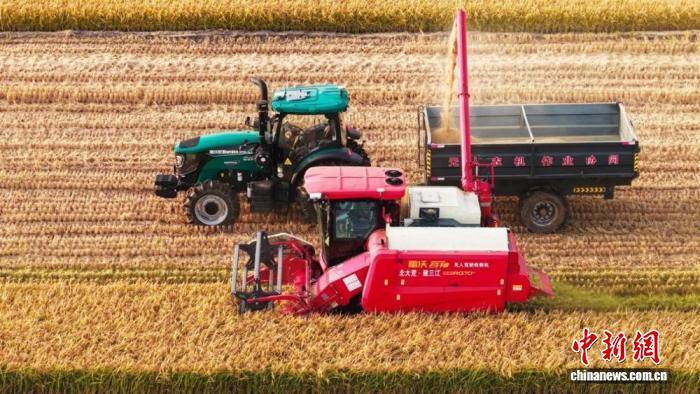
Core Viewpoint - The program "Decoding Economy+" has gained significant attention for its engaging storytelling and relatable expression, effectively interpreting macroeconomic theories through individual stories, thus being referred to as "walking Chinese economics" [1][3]. Group 1: Program Impact - The program showcases a narrative that reflects the collective efforts of millions in China, presenting a "new Shanhaijing" and "new wealth creation" through artistic expression [1]. - It emphasizes the transformation from traditional practices to modern economic activities, such as the shift from logging to eco-tourism, highlighting a harmonious relationship between humans and nature [1]. - The program illustrates the value addition in agricultural products, exemplified by the increase in the value of a goose from 80 yuan to over 300 yuan through deep processing, showcasing the principles of circular economy and full industry chain thinking [1]. Group 2: Technological Integration - The integration of advanced technologies in agriculture is highlighted, with examples of unmanned harvesters and drones being utilized to enhance productivity, demonstrating a practical application of innovation in farming [3]. - The narrative connects the efforts of scientists and ordinary farmers, presenting a complete innovation-driven development loop that addresses contemporary challenges in food security [3]. Group 3: Communication and Engagement - The program addresses the challenge of transforming theoretical communication from a one-way model to a two-way resonance, making economic concepts accessible and relatable to the general public [5]. - It encourages individuals to see themselves as participants and contributors to the larger economic narrative, fostering a sense of collective identity and shared prosperity [5].